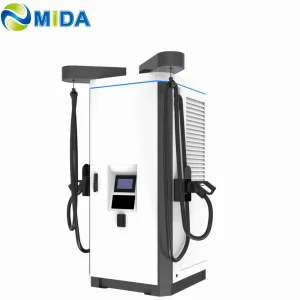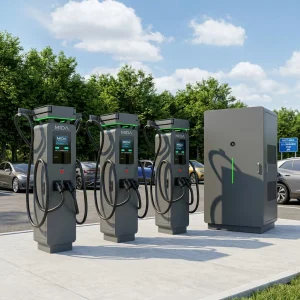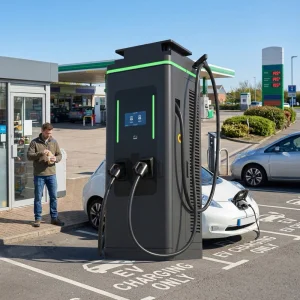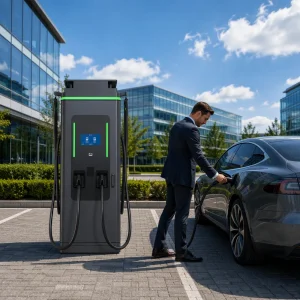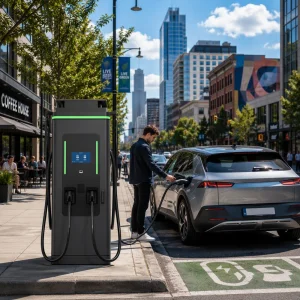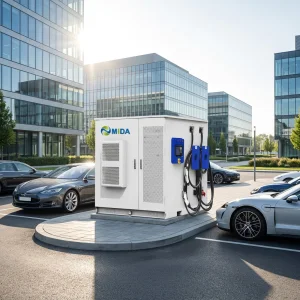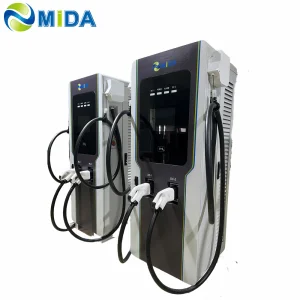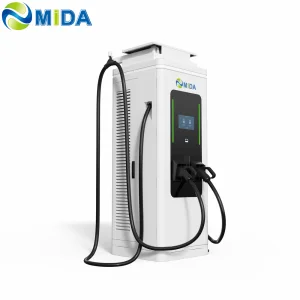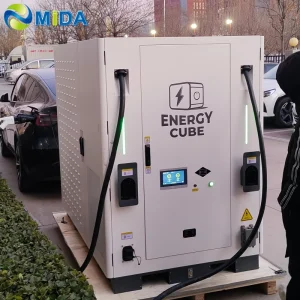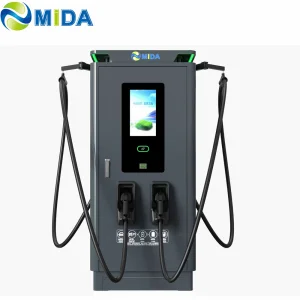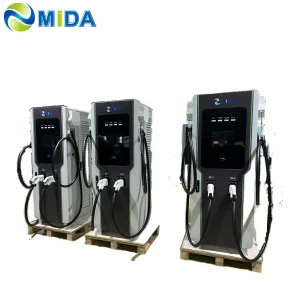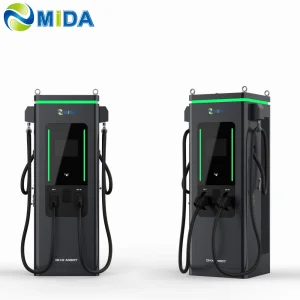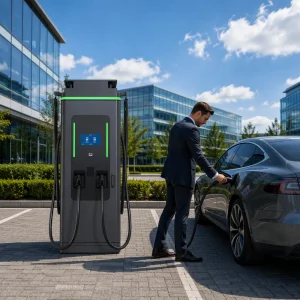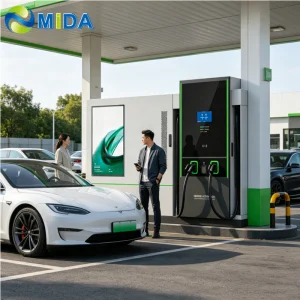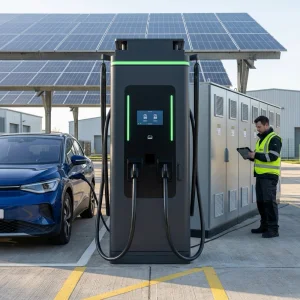
Explore our cutting-edge DC fast chargers and liquid-cooled systems manufactured under stringent UL, ETL, CE, and ISO standards.
The global transition to electric vehicles (EVs) has graduated from a consumer novelty to a strategic priority for commercial fleets, municipal transit systems, and highway corridor operators. Regulatory tailwinds like the European Union's AFIR (Alternative Fuels Infrastructure Regulation) mandate a minimum level of charging power along major transit corridors. Similarly, the United States' NEVI (National Electric Vehicle Infrastructure) formula program is channeling billions to scale charging setups. Consequently, the demand for high-power, reliable DC fast charging solutions has escalated dramatically.
As standard grid connections become congested, high-power DC chargers are evolving from simple power distribution terminals into sophisticated local energy management hubs. Operating at power outputs from 60kW up to 1.4MW, modern DC stations handle heavy-duty heat management, secure encrypted communications, and smart-grid integration. In this environment, Chinese factories lead globally. They leverage massive economies of scale, extensive testing setups, and advanced research in power electronics to deliver cost-effective, high-performing chargers.
The industry is transitioning toward three major technological benchmarks: liquid-cooled charging cables and connectors, wide-bandgap (SiC) semiconductors, and BESS (Battery Energy Storage System) integration. These shifts directly address pain points for operators, including heat dissipation, thermal management, reliability, and installation costs.
| Standard | Region Focus | Max Nominal Power | Voltage Range | Target Vehicles |
|---|---|---|---|---|
| CCS1 / CCS2 | North America / Europe | Up to 350-400 kW | 200V - 1000V DC | Light & Medium Duty Passenger Vehicles |
| NACS (J3400) | North America | Up to 400 kW | 200V - 1000V DC | Tesla Ecosystem & Universal Retrofit |
| CHAdeMO | Japan & Legacy Europe | Up to 400 kW | 150V - 1000V DC | Passenger Cars & Utility Vehicles |
| GB/T (China DC) | China & Selected Markets | Up to 900 kW | 200V - 1000V DC | Domestic Passenger, Fleets & Heavy Transit |
| MCS (Megawatt Charging) | Global Core Corridors | Up to 3.75 MW | 200V - 1250V DC | Heavy-Duty Trucks, Marine, & Logistics |
Our comprehensive production facility covers AC chargers, DC fast charging stations, and battery-buffered storage platforms.
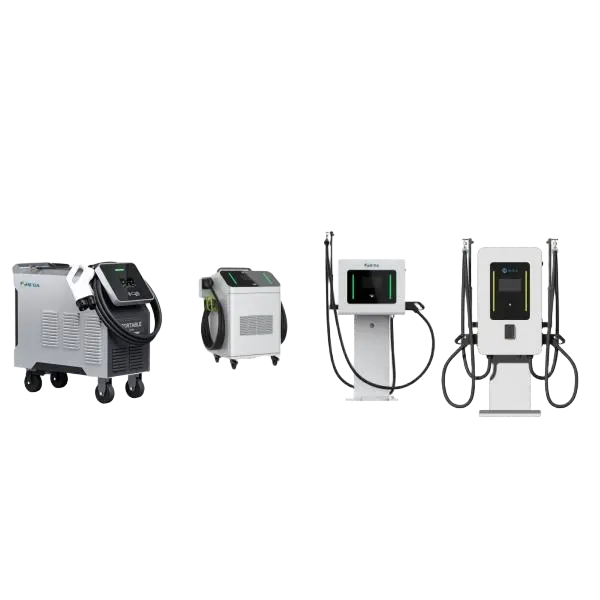
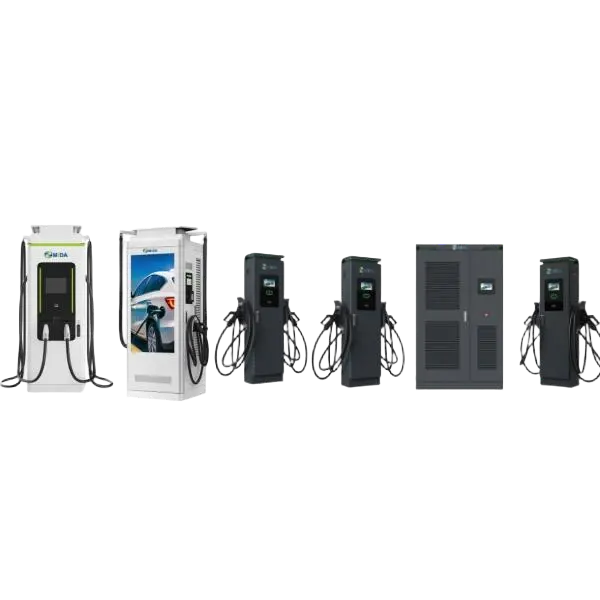
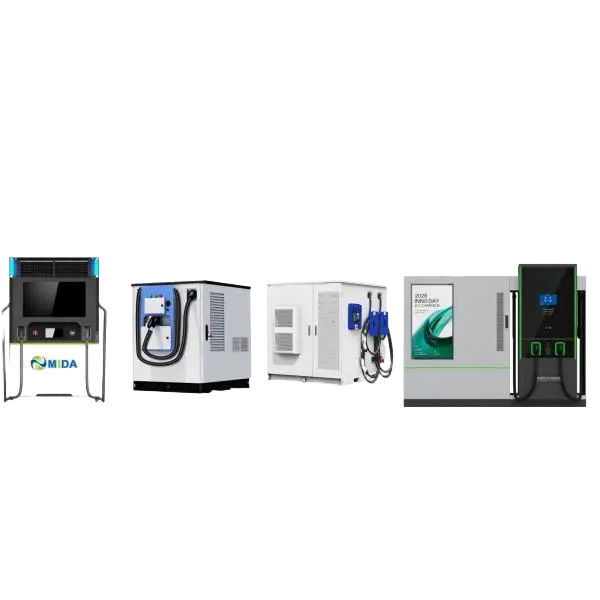
Shanghai Mida Cable Group Ltd. operates through its wholly owned subsidiaries: Shanghai Mida EV Power Co., Ltd., Shenzhen Mida EV Power Co., Ltd., and Shanghai Mida New Energy Co., Ltd.
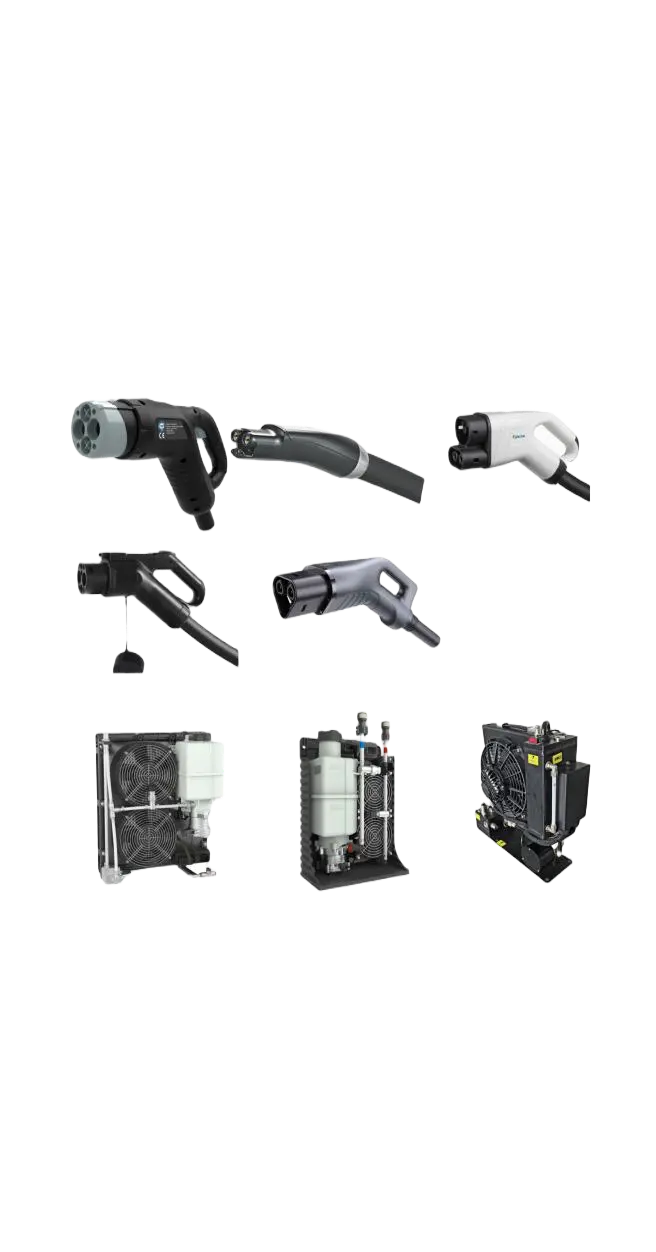
As a global manufacturer, we engineer and supply heavy-duty EV infrastructure components. Our cable division manufactures J1772 and IEC 62196-2 Type 2 cables (16A to 80A), alongside ultra-fast liquid-cooled DC charging cables. These support CCS1 (80A to 500A), CCS2 (125A to 1000A), CHAdeMO (125A to 300A), GB/T (200A to 1000A), and NACS (250A to 600A) connectors.
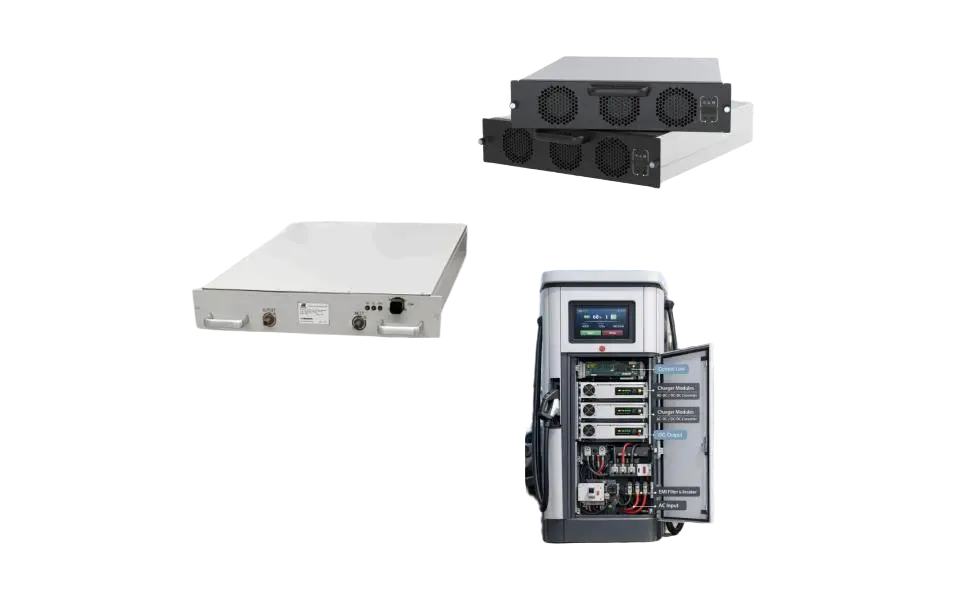
MIDA EV Power delivers commercial DC fast charging stations from 20kW wall-mounted units up to 1440kW split-type systems. At the same time, MIDA New Energy develops the underlying hardware: high-density power modules, liquid-cooled power conversion modules, and bidirectional V2G power electronic boards.

Delivering high electrical conversion efficiency, reliability, and robust safety protocols.
Intelligent power sharing across multiple charging outlets. This setup increases station efficiency by matching each EV's exact power capacity.
Integrated insulation monitoring, residual current devices (RCD Type B), and surge protection. These systems maintain reliability in harsh weather conditions.
Dual-voltage range support (200V-1000V) that charges both legacy 400V EVs and new 800V architectures like Porsche Taycan, Hyundai Ioniq, and electric trucks.
Hot-swappable 30kW, 40kW, and 60kW power modules allow operators to replace components in minutes, keeping chargers running.
In high-power charging, conventional air cooling becomes a bottleneck once continuous charging currents exceed 200A. The electrical resistance of standard copper cabling generates heat that can damage connectors and cables. To address this, MIDA Group developed active liquid cooling units. These pump coolant to the plug contact points, keeping temperatures stable even during 600A continuous charging. This reduces the weight and diameter of the charging cable, making it easier for users to handle.
Instead of assigning a fixed power capacity to each cable, MIDA uses a matrix-based power routing architecture. This allows multiple charging dispensers to share a single grid connection. For example, a 720kW centralized power cabinet can route power dynamically across 8 dispensers. If one vehicle demands 300kW while others need only 50kW, the central controller allocates modules in real-time. This increases station utilization rates, lowers initial capital expenditure, and speeds up charging times.
In many regions, utility grid capacity cannot support multiple 350kW DC chargers running at the same time. Upgrading grid transformers is often costly and time-consuming. BESS-integrated charging stations address this by storing energy in local batteries. During low-demand periods, the batteries charge slowly from the grid. When an EV arrives, the batteries discharge rapidly to deliver high-power charging, reducing peak demand charges for operators.
Detailed technical specifications of our primary product lines.
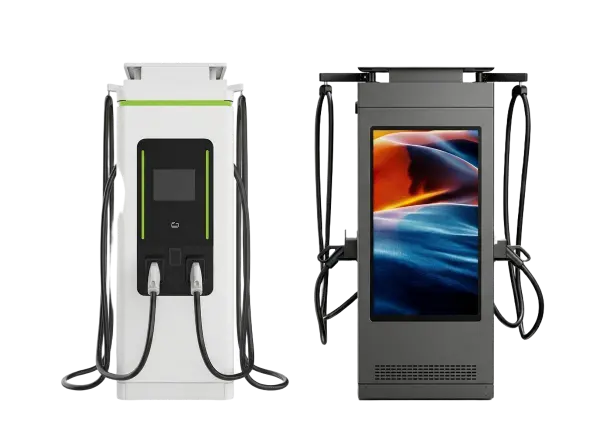
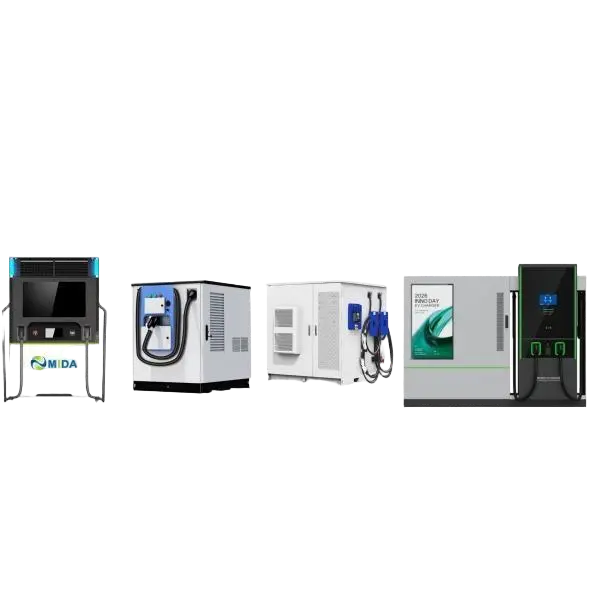
Read about new designs, pantograph developments, and heavy transit fast-charging solutions.
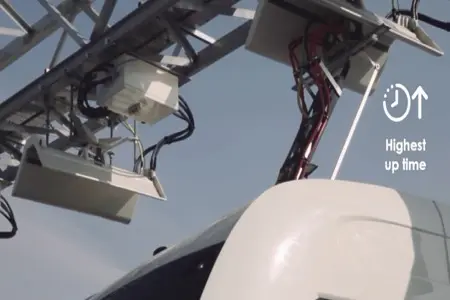
What are the advantages of an e-bus pantograph dome? In contrast to classic plug-in charging systems, e-bus pantograph charging simplifies automated connections, reduces cable wear, and supports MW-level charging capacities.
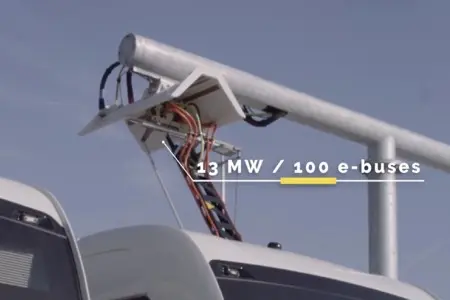
How long does it take to charge with an e-bus pantograph? Charging time depends on battery capacity, chemistry, and output power. Typical depot and opportunity charging cycles range from 5 to 20 minutes.
How to Install the Pantograph Up Charger System Dome for Electric Bus. This guide covers physical alignment, civil engineering site requirements, safety zones, and software integration using OCPP and ISO 15118 protocols.
Get answers to common technical, standard compliance, and project planning questions.
Explore our selection of heavy-duty charging cabinets, BESS units, and high-capacity chargers.