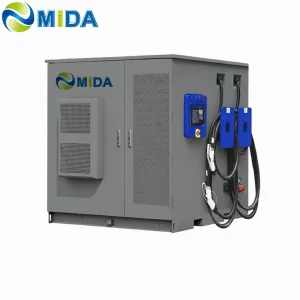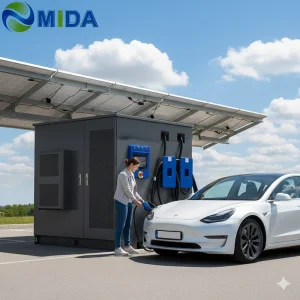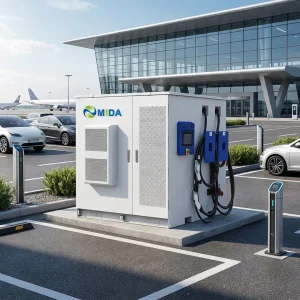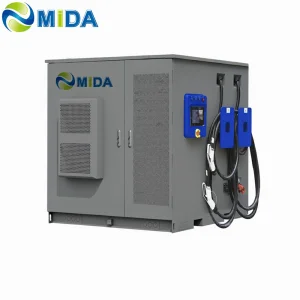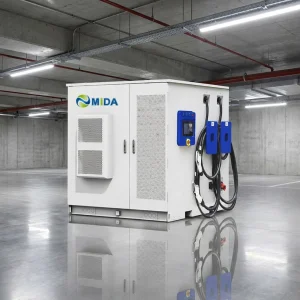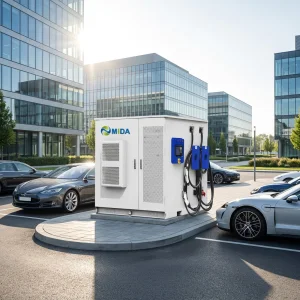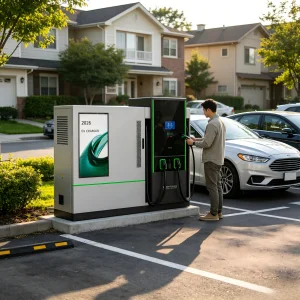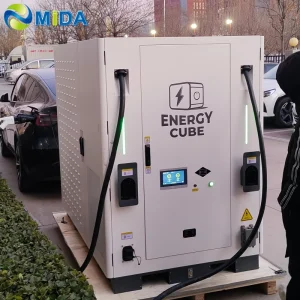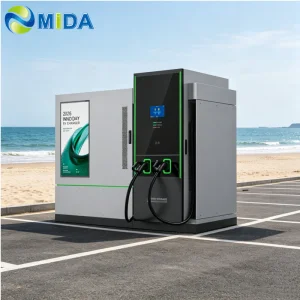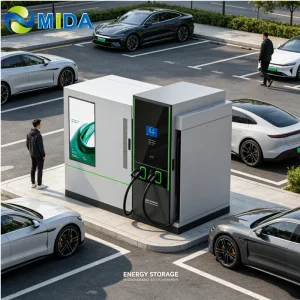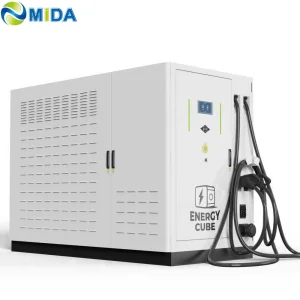
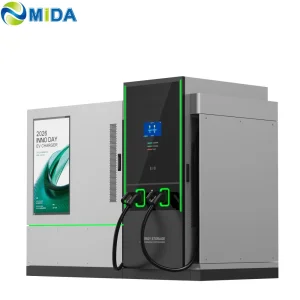
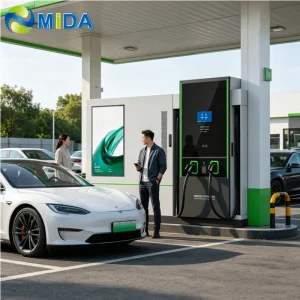
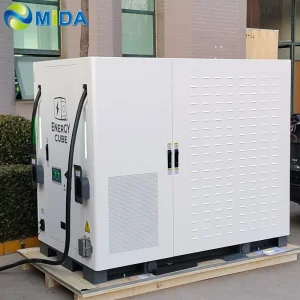
Explore our flagship integration of high-performance battery storage and fast EV charging units engineered for dynamic grid support.
An in-depth analysis of battery storage integration, grid stability, and deployment strategies.
As battery capacities of passenger and commercial electric vehicles grow, the demand for DC fast charging infrastructure is rising at an exponential rate. However, connecting high-power DC chargers (typically 120kW to 480kW and above) directly to the municipal low-voltage grid presents severe technical challenges, including extreme peak-load spikes, transformer saturation, and high peak-demand charges. Battery Energy Storage Systems (BESS) represent the missing link, serving as a buffer to decouple the grid capacity from the vehicle's immediate high-power demands.
By leveraging an integrated BESS charging station, developers can store energy during periods of low local demand and discharge it rapidly when an EV requires high-voltage DC charging. This configuration prevents voltage drops in local distribution systems and completely eliminates the need for expensive sub-station grid upgrades.
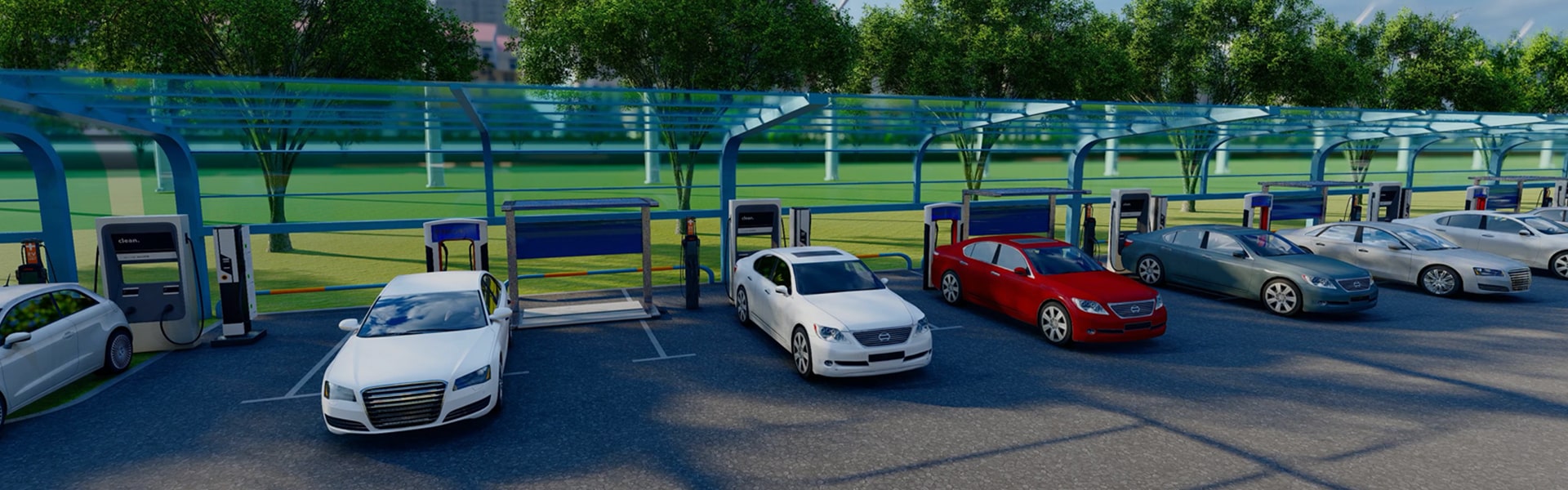
Charge systems during low-rate off-peak times and dump energy into vehicles when demand peaks, optimizing the grid footprint.
Easily pair with local solar PV arrays via high-efficiency MPPT modules to run off-grid or semi-independent EV charging networks.
Integrated systems support dual-standard configurations including CCS1, CCS2, NACS, CHAdeMO, and high-current GB/T.
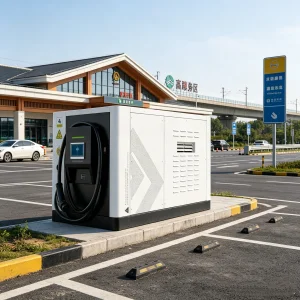
As businesses transition their logistics, commercial fleets, and workplace amenities to meet zero-emission targets, energy availability becomes a primary operational challenge. Distribution companies cannot wait 18-24 months for public utilities to approve new substation permits. They require modular, deployable, and scalable charging systems with integrated batteries. In sectors like mining, large-scale construction, and logistics hubs, high-capacity portable BESS chargers offer rapid tactical deployment in locations where grid connections are completely non-existent.
Moreover, modern real estate developers are integrating commercial BESS units into office complexes and malls. By using the BESS as a multi-functional asset, they can dynamically shift electricity consumption, capture peak-valley tariff differences (arbitrage), and provide fast-charging amenities to tenants without risking building power outages.
Why global procurement leaders choose MIDA GROUP for advanced battery energy storage integrations.
The manufacturing infrastructure behind BESS units requires strict vertical integration of battery cell pack engineering, sophisticated thermal management, high-frequency power electronics, and electrical safety components. Based in the critical high-tech manufacturing corridors of Shanghai and Shenzhen, MIDA Group utilizes Industry 4.0 automation systems to achieve optimal yield rates, robust electrical isolation, and rigorous temperature testing protocols.
Our vertical integration ensures that everything from raw copper liquid-cooled charging cables to high-power DC-DC and bidirectional AC-DC power modules is produced under unified quality standards. This greatly reduces lead times, optimizes thermal transfer efficiency across components, and results in a lower Total Cost of Ownership (TCO) for global operators deploying energy storage charging networks.
Browse our optimized divisions of AC chargers, portable DC stations, ultra-fast charging points, and battery storage setups.
Designed for residential, parking, and fleet applications requiring reliable AC power delivery with smart network integrations.
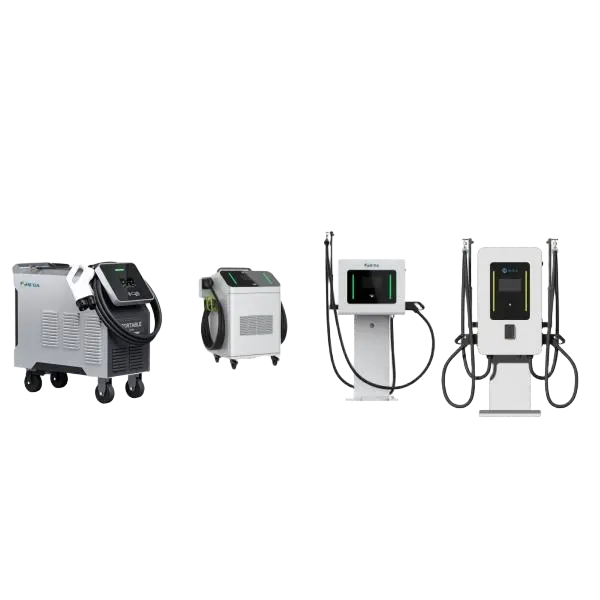
7kW 20kW 30kW 40kW 60kW 80kW
Ideal for agile deployments, rapid roadside assistance, and locations needing flexible DC options.
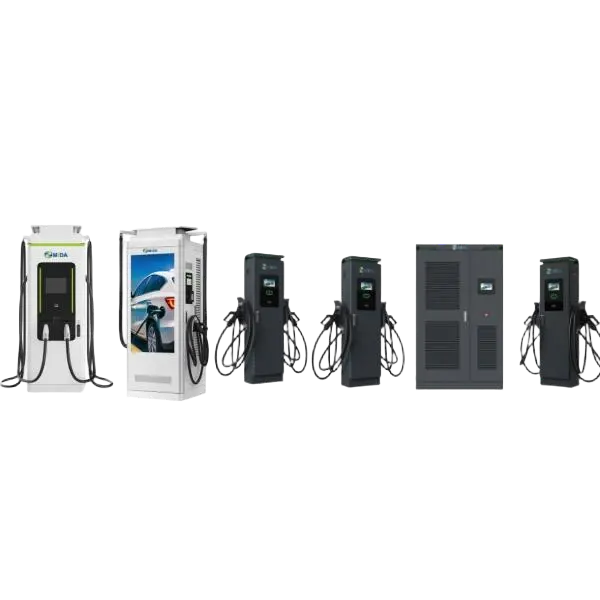
60kW-480kW 360kW-1440kW
High-powered ultra-fast charging infrastructures built for heavy-duty highways and commercial grids.
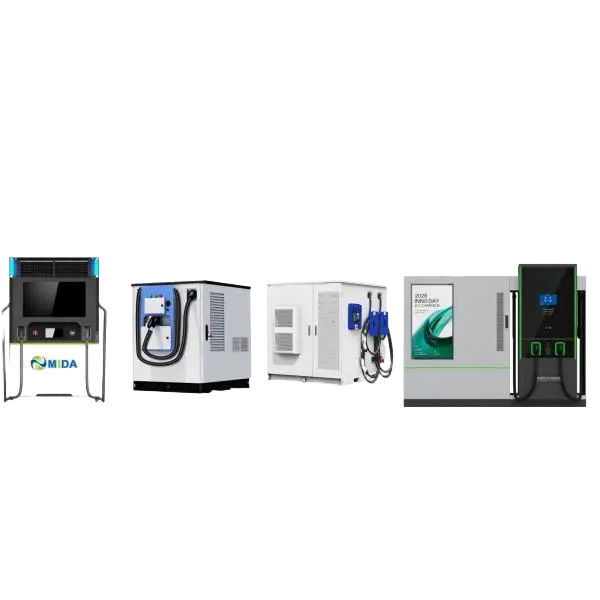
60kWh 261kWh 418kWh 625kWh 2MkWh
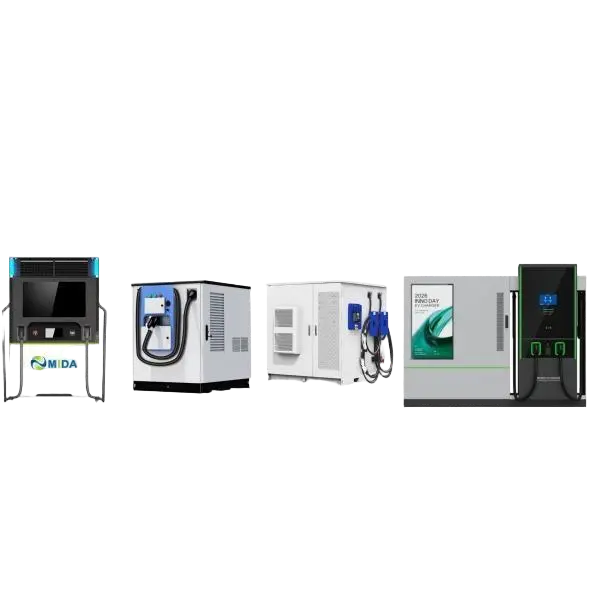
Integrated energy storage + high power EV chargers. Scalable capacities for grid-stress mitigation.
Shanghai Mida Cable Group Ltd. operates through its wholly owned subsidiaries: Shanghai Mida EV Power Co., Ltd., Shenzhen Mida EV Power Co., Ltd., and Shanghai Mida New Energy Co., Ltd.
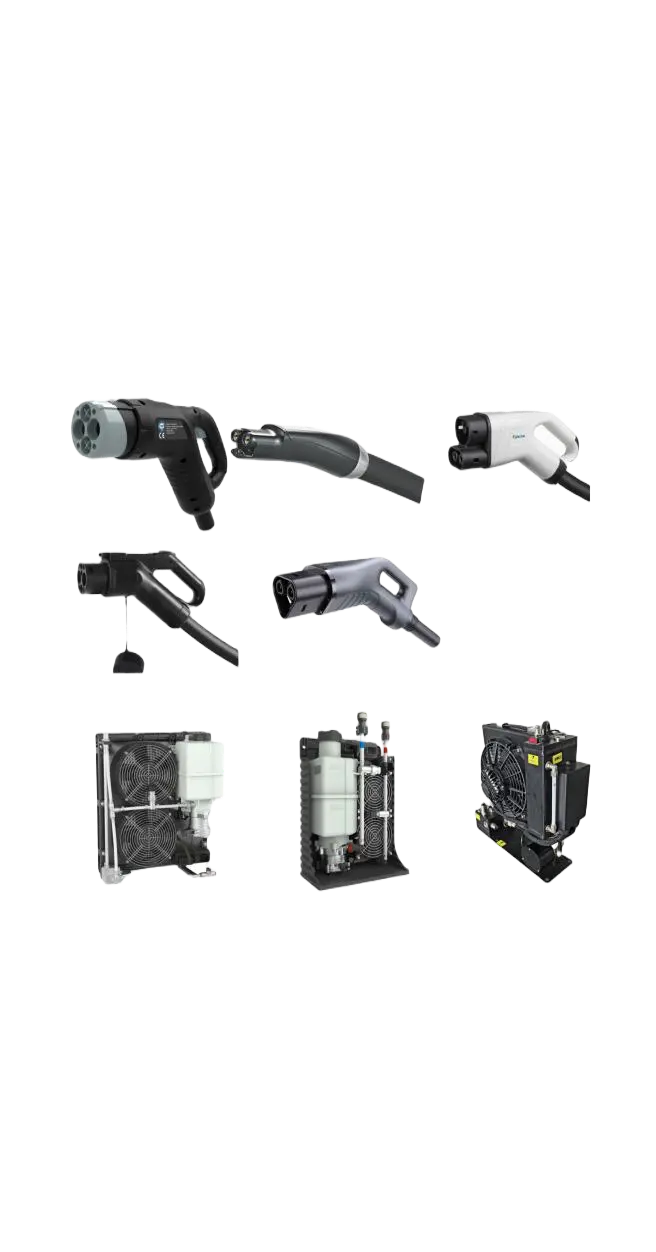
Mida Cable manufactures a comprehensive range of EV charging cables, including 16A–80A J1772 cables, 16A–63A IEC 62196-2 Type 2 cables, and DC fast charging cables: CCS1 (80A–500A), CCS2 (125A–1000A), CHAdeMO (125A–300A), GBT (200A–1000A), and NACS connectors (250A–600A).
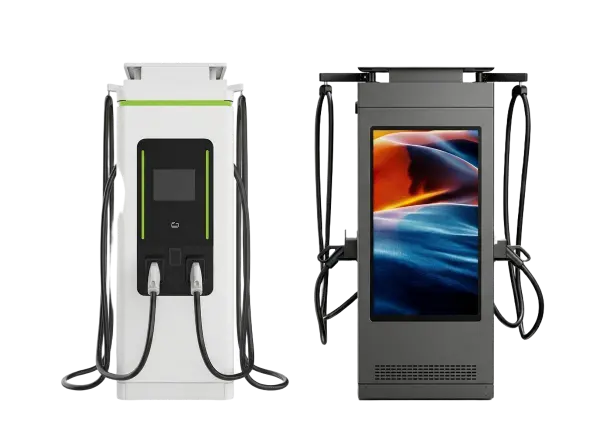
MIDA EV Power produces a full lineup of EV charging stations, such as 7kW–50kW mobile chargers, 3.6kW–7.2kW portable DC chargers, 360kW–1440kW split-type DC fast chargers, 20kW–50kW wall-mounted DC chargers, and 60kW–480kW floor-standing DC fast charging stations.
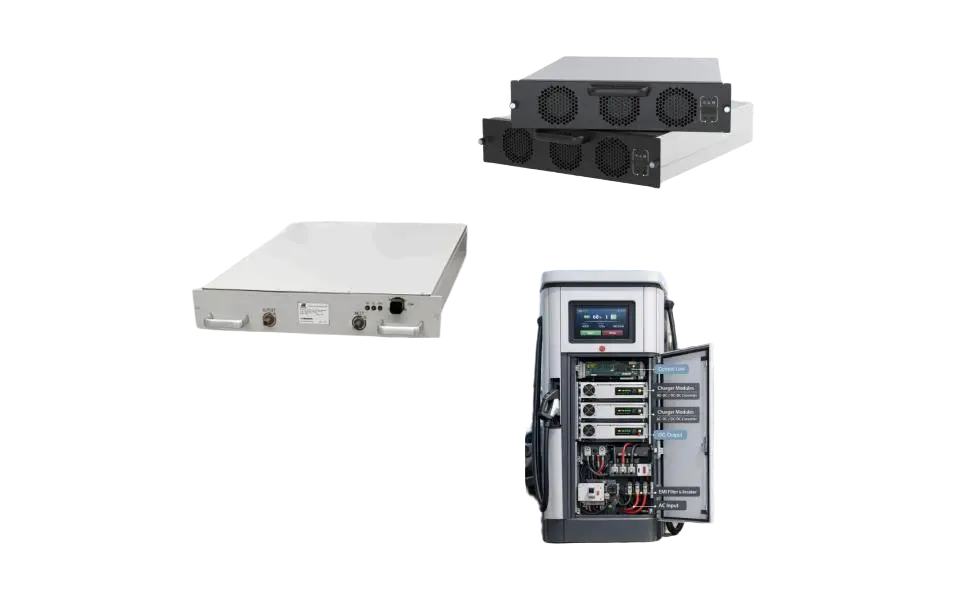
MIDA New Energy specializes in EV charger power modules, offering 20kW–60kW standard modules, 40kW–125kW liquid-cooled modules, 30kW–62.5kW bidirectional modules, and 20kW–45kW V2G charging modules.

Explore the full hardware stack driving zero-emission heavy charging networks.
Stay up to date with new developments in vehicle-to-grid operations and next-generation bus charging interfaces.
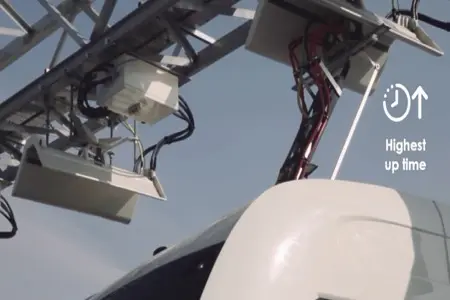
What are the advantages of an e-bus pantograph dome? In contrast to classic plug-in charging systems, e-bus pantographs allow automatic connection and support higher currents...
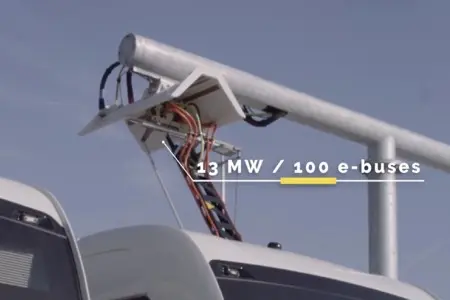
How long does it take to charge with an e-bus pantograph? The charging time depends on the battery capacity and the station's configuration. With modern MW scale outputs...
How to Install the Pantograph Up Charger System Dome for Electric Bus. Installing a "Pantograph Up" system requires rigorous structural testing, alignment controls, and grid interfaces...
Addressing core technical questions regarding deployment, power management, and grid integration.
Browse our larger industrial grade energy storage units designed for fleets, public utility rescue, and heavy cargo infrastructure.