1 / 5

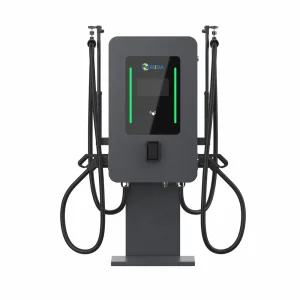
| Item | DC 360kW EV Charger | DC 480kW Charging Station | 720kW DC Charger |
| Input | Input Voltage | 3-phase 400V ±15% AC | |
| Input Voltage Type | TN-S (Three Phase Five Wire) | ||
| Working Frequency | 45~65Hz | ||
| Power Factor | ≥0.99 | ||
| Efficiency | ≥94% | ||
| Output | Rated Voltage | DC - CHAdeMO 500Vdc; CCS 1000Vdc; GBT 1000Vdc; AC - Type-2 400V; GBT 400V | |
| Max. Output Current | DC - CHAdeMO 125A; CCS 200A; GBT 250A; | AC - Type-2 63A; GBT 32A | |
| Interface | Display | 8'' LCD Touchscreen | |
| Language | Chinese, English, French, German, Spanish, Russian, etc. | ||
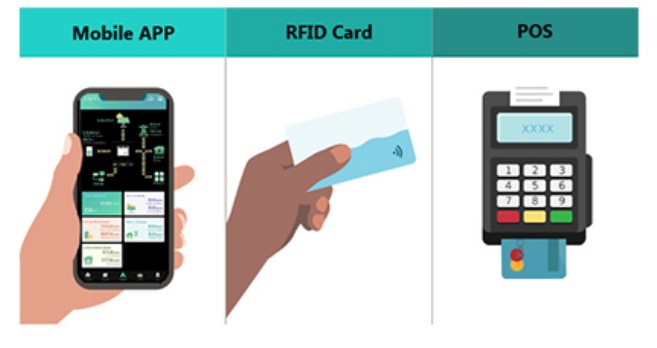
| Payment | Mobile APP/RFID/POS | ||
| Communication | Network Connection | 4G(GSM or CDMA)/Ethernet | |
| Communication Protocols | OCPP1.6J or OCPP2.0 | ||
| Working Environment | Working Temperature | -30°C ~ +55°C | |
| Storage Temperature | -35°C ~ +55°C | ||
| Operating Humidity | ≤95% Non-Condensing | ||
| Protection | IP54 | ||
| Acoustic Noise | <60dB | ||
| Cooling Method | Forced Air-Cooling | ||
| Mechanical | Dimension(W x D x H) | 700*1900*650mm | |
| No. of Charging Cable | Single | Dual | |
| Cable Length | 5m or 7m | ||
| Regulation | Certificate | CE/IEC61851-1/IEC61851-23/IEC61851-21-2 | |


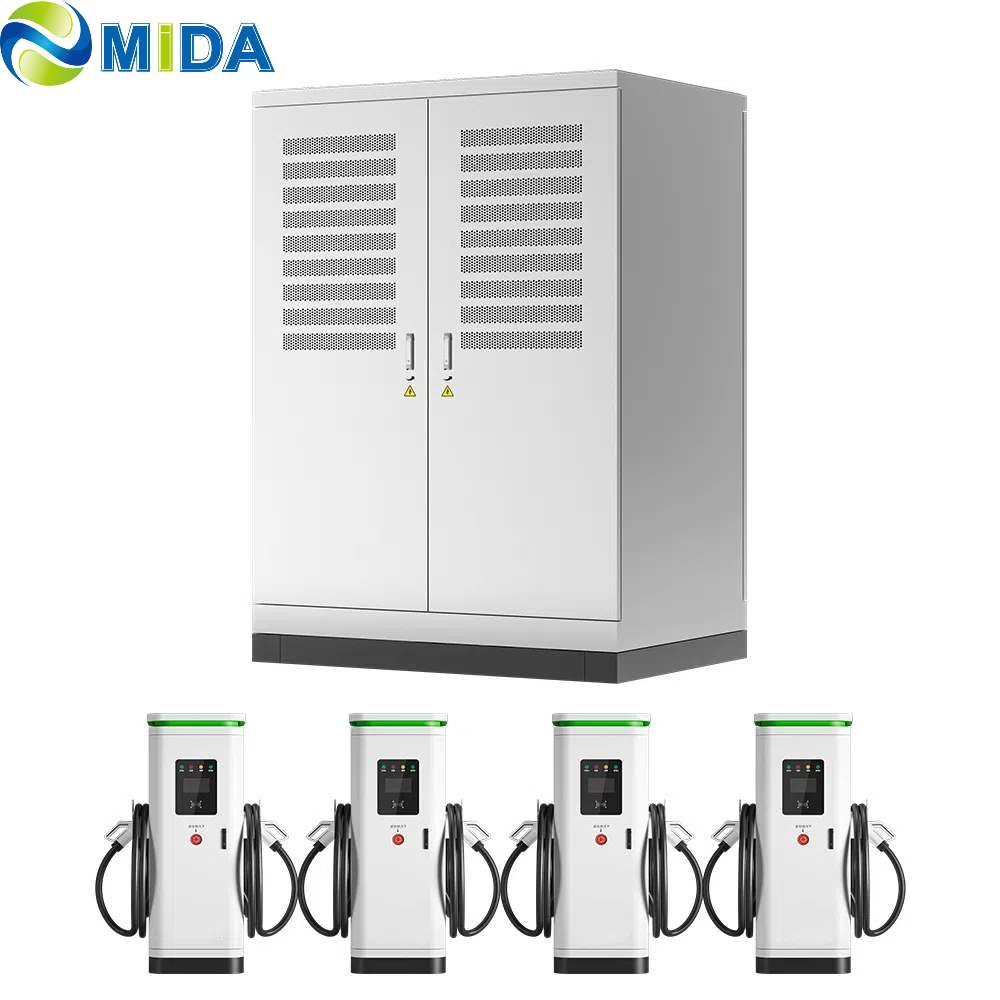
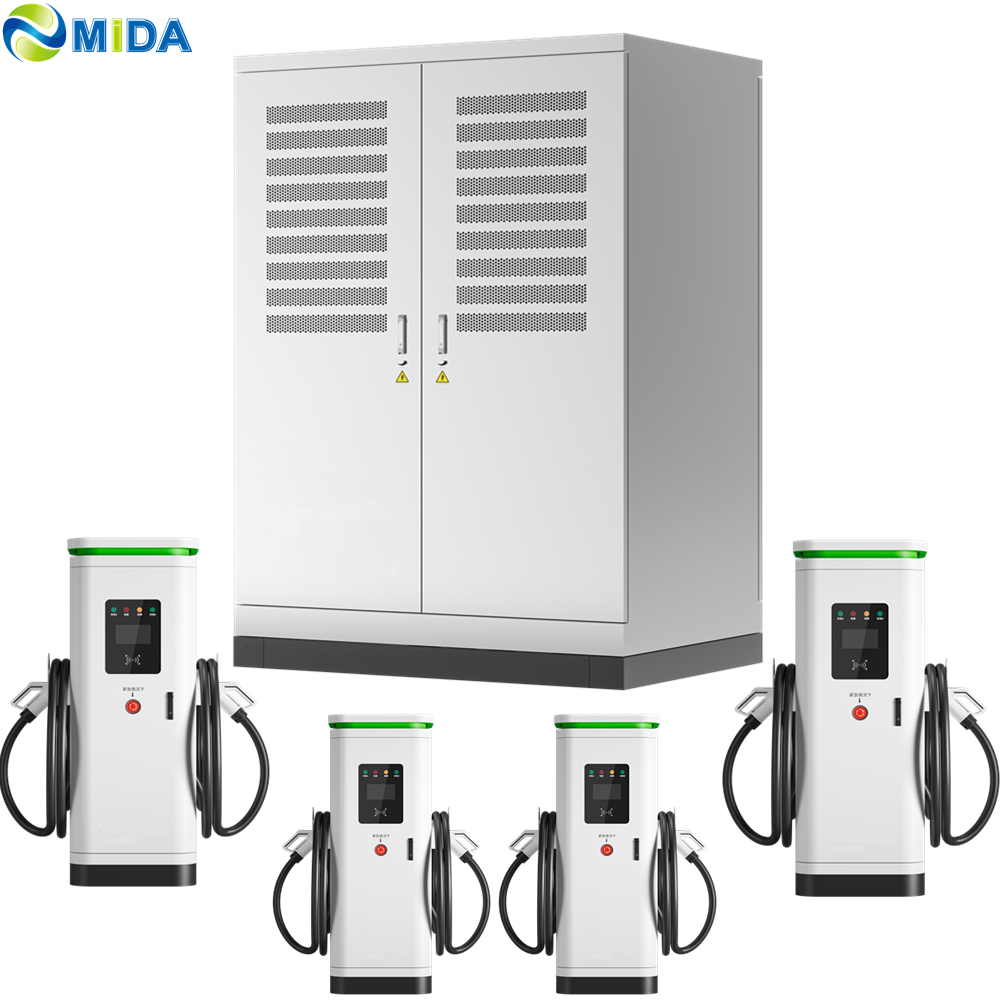
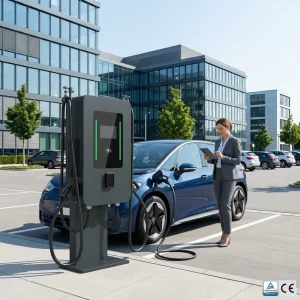
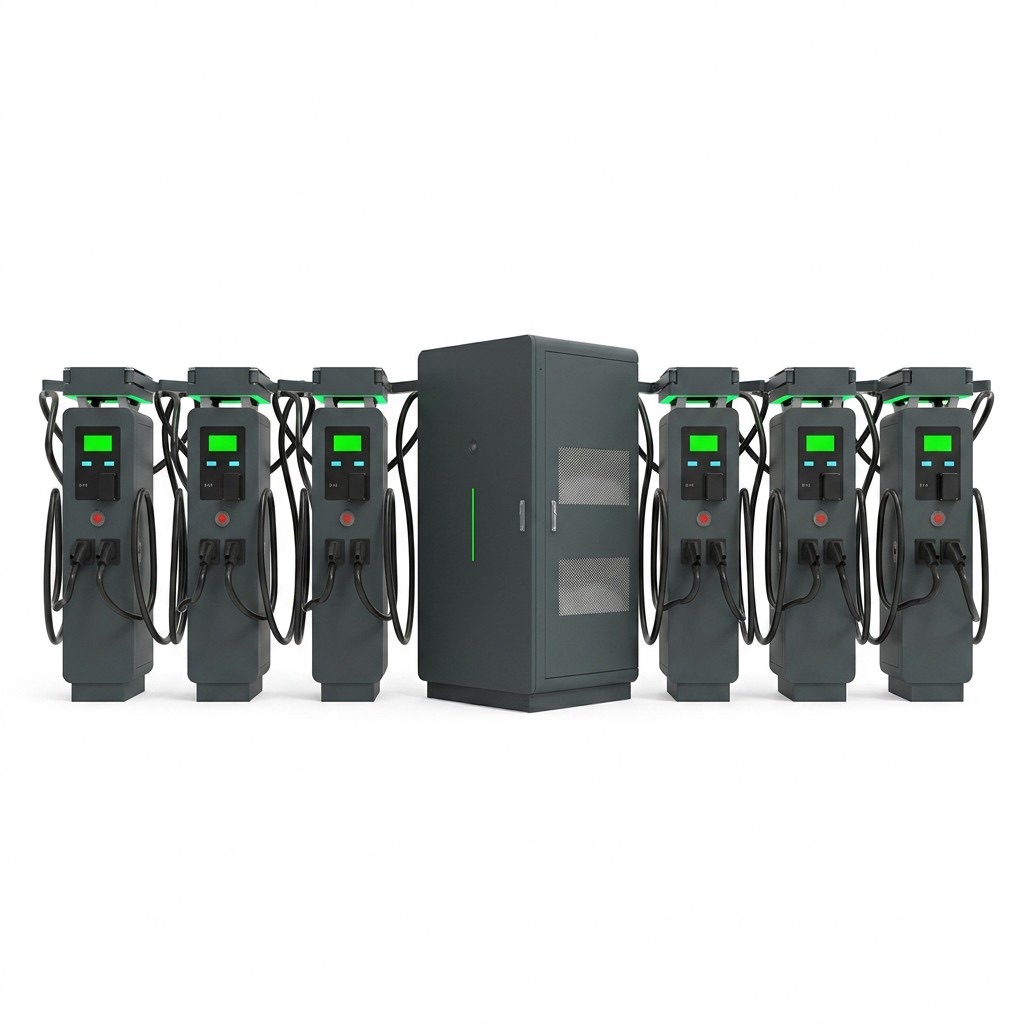
Simultaneously charging up to 3 EVs
The global electric vehicle (EV) landscape is undergoing a paradigm shift. As automotive giants transition their flagship models to 800V high-voltage architectures, the demand for infrastructure that can keep pace has never been more urgent. The era of the 50kW "fast" charger is fading, giving way to a new generation of High-Power Charging (HPC). Engineered to deliver "refueling-like" speed and unmatched operational flexibility, this system is the definitive answer for the next decade of green mobility.
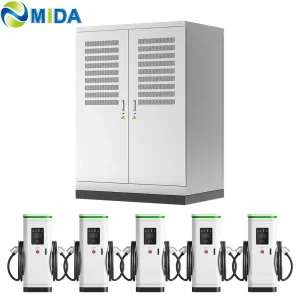
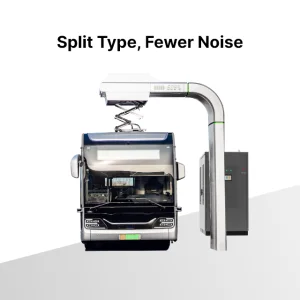
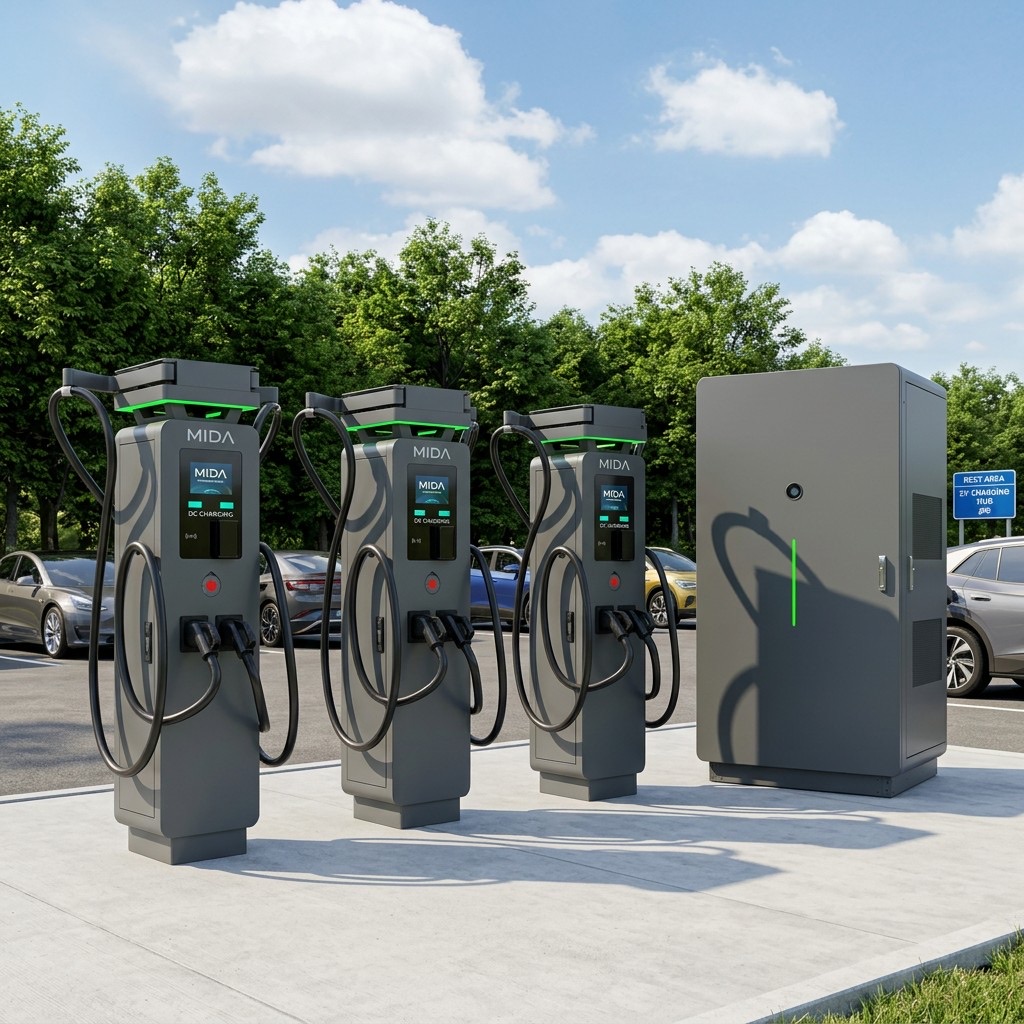
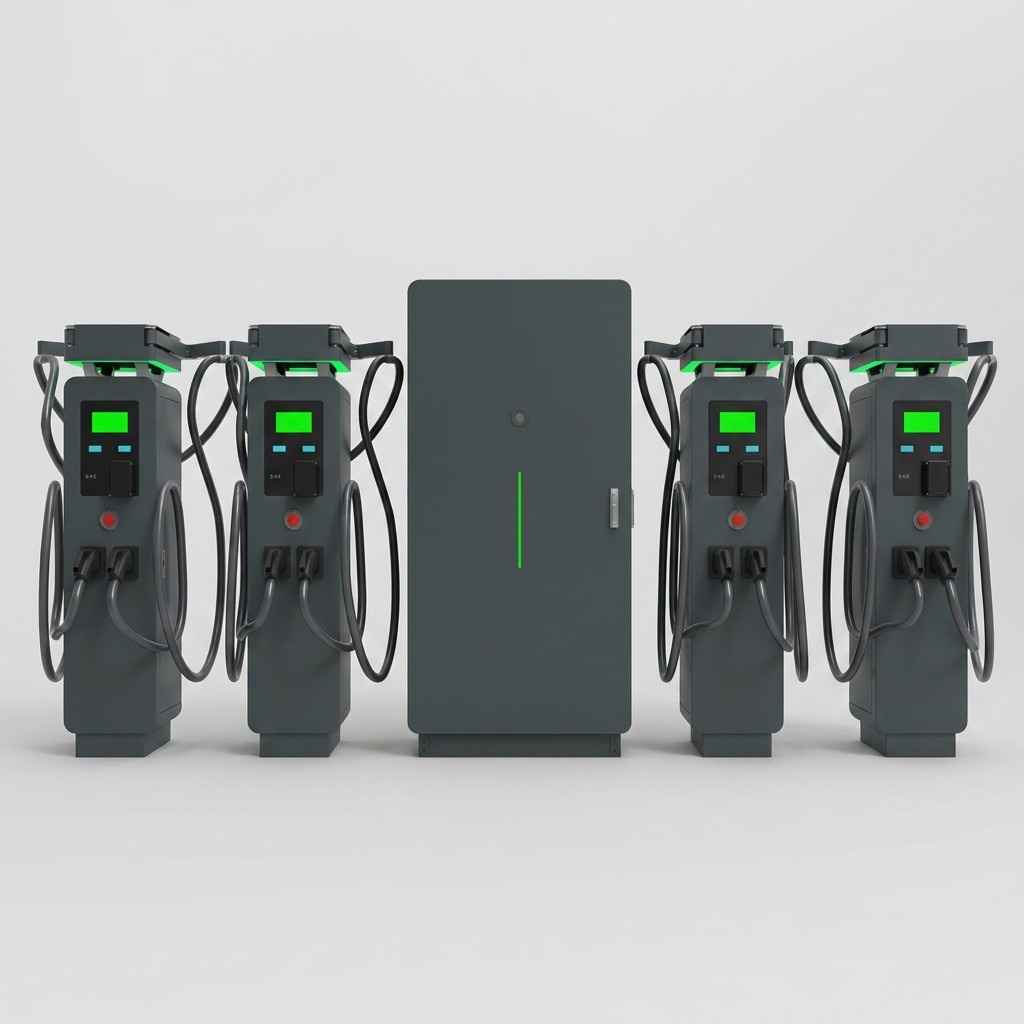
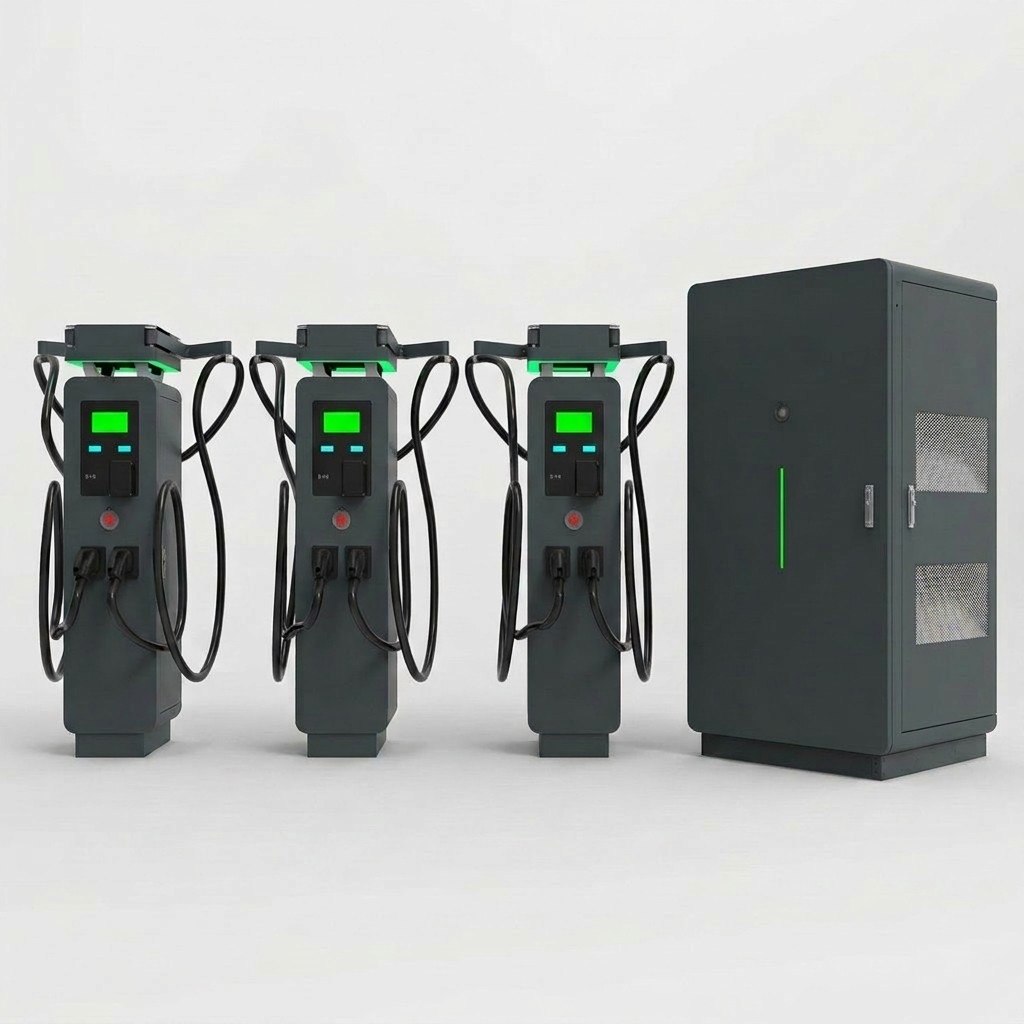
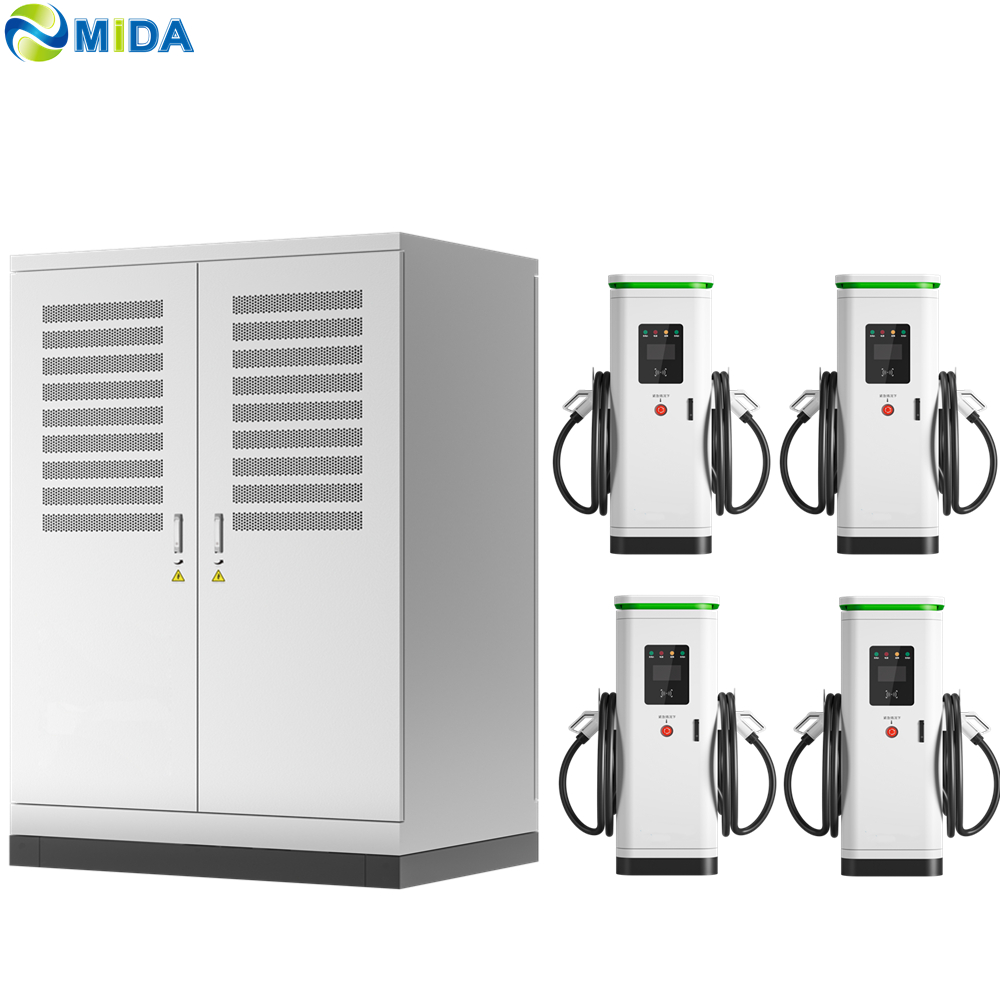
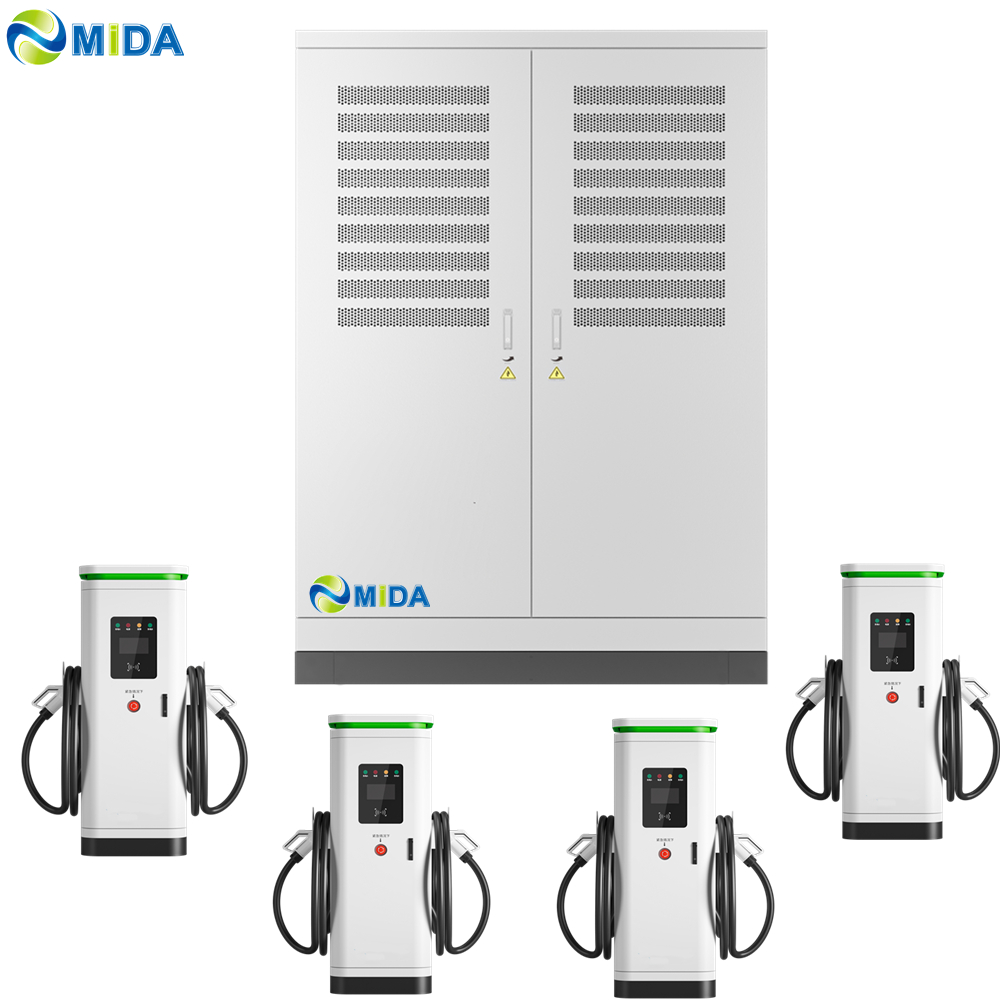
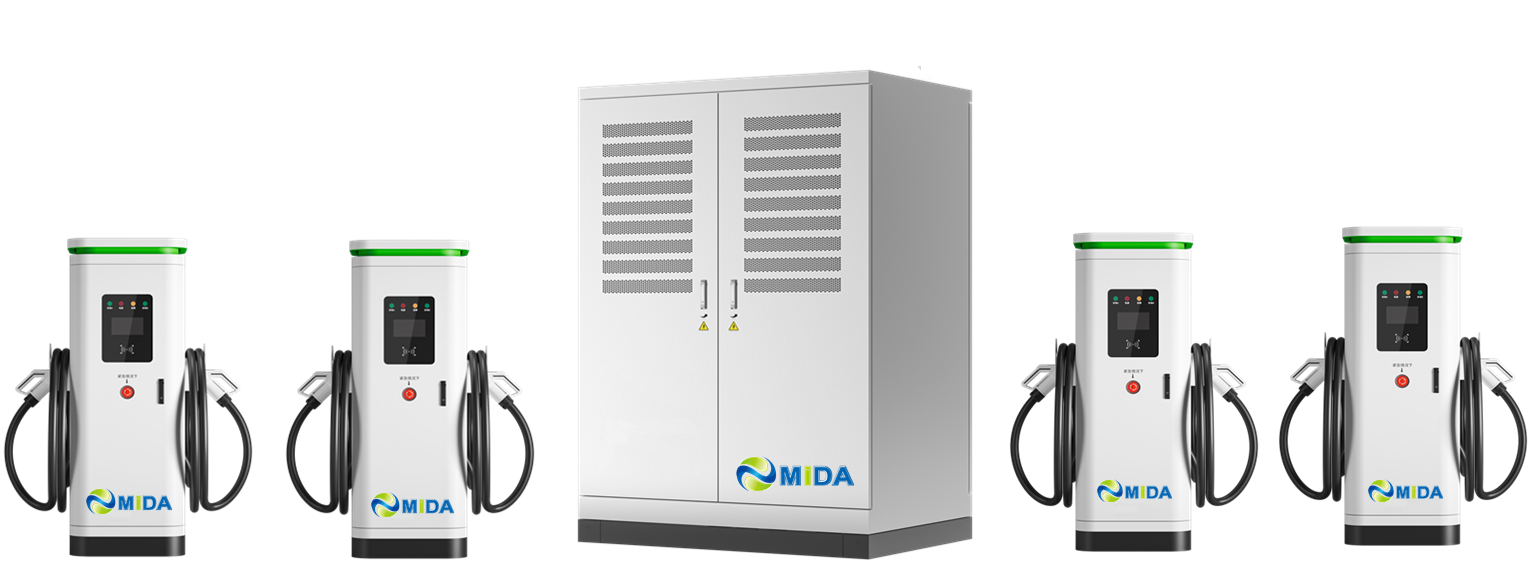
Traditional all-in-one charging piles often face a trade-off between power and footprint. To achieve 600kW or 800kW, a single unit would be prohibitively bulky. The Split-Type Architecture solves this by decoupling the core power conversion from the user interface.
The heart of the system is a centralized power cabinet, typically housed away from the primary parking area. This cabinet contains industrial-grade IP65-rated isolated air-duct power modules. By concentrating the power electronics in one place, operators can perform maintenance more efficiently and protect the sensitive SiC (Silicon Carbide) modules from the elements.
At the parking spot, sleek, space-saving charging terminals are provided. Because these terminals do not contain the heavy power conversion hardware, they are slim, aesthetically pleasing, and easy to install in tight urban spaces or premium charging hubs.
The 800kW system is designed for the ultimate user experience: speed. In a market where time is the most valuable commodity, this HPC system can add up to 300km of range in just 5 minutes for vehicles equipped with 800V battery systems.
To manage the immense heat generated by such high currents (up to 800A), advanced Liquid-Cooling Technology is utilized. The charging cables and connectors are equipped with a proprietary coolant circulation system that keeps the handle and cable temperature within a safe, comfortable range (below 50K rise), even during continuous full-load operation.
One of the biggest challenges for Charge Point Operators (CPOs) is power utilization. A fixed 800kW pile would be a wasted asset if a car only requests 100kW.
The Dynamic Matrix Power Sharing algorithm intelligently allocates power modules based on real-time vehicle demand. If two vehicles are charging, the system might split the 800kW into 400kW+400kW. If four vehicles are connected, it can dynamically adjust to 200kW each. This ensures that the grid capacity is used to its maximum potential, increasing the turnover rate of the charging station and accelerating the Return on Investment (ROI).
Technical obsolescence is a risk in any emerging industry. This risk is mitigated by adhering to the most advanced international standards:
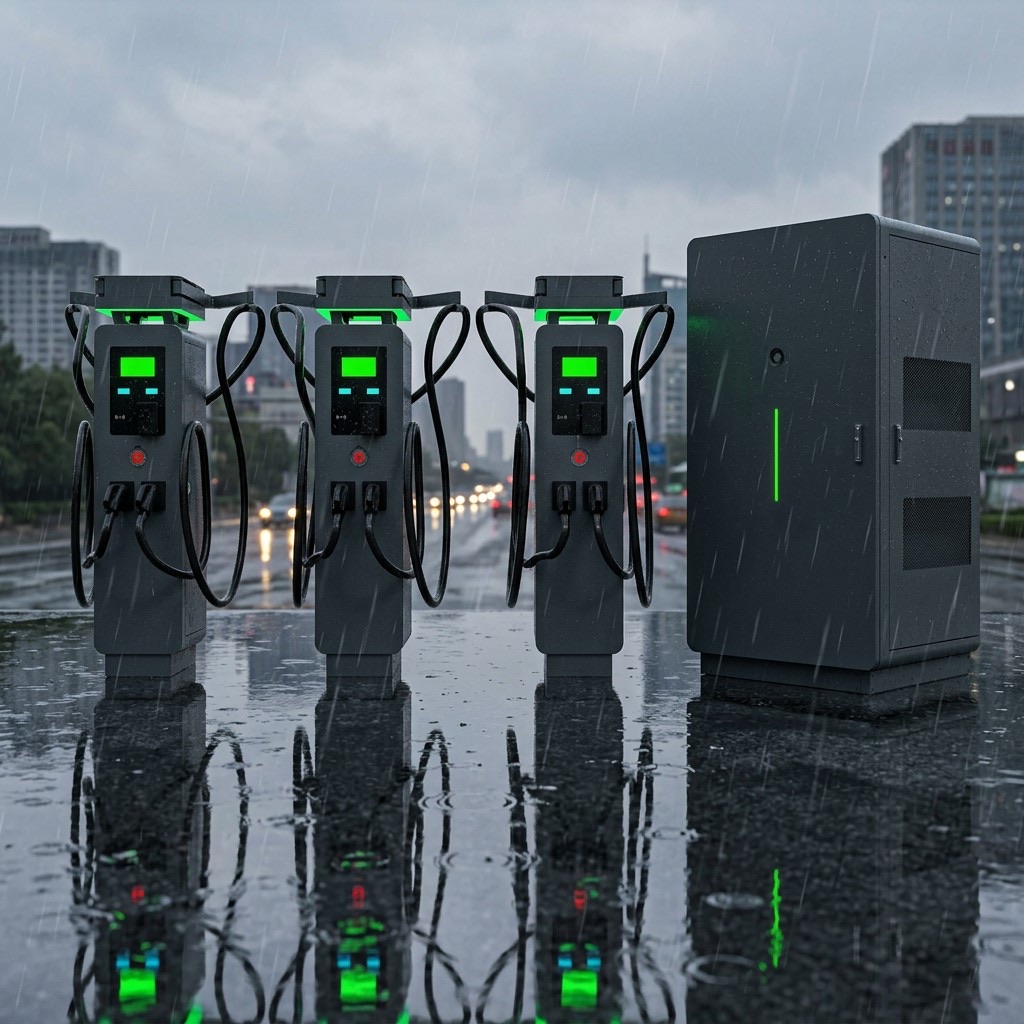
Safety is never compromised. The 600kW/800kW system is built to withstand the harshest environments, from the sub-zero winters of Scandinavia to the humid, salty air of coastal regions.
For CPOs and fleet owners, the 600kW/800kW Split-Type Charging System is not just a product—it is a strategic asset. It combines ultra-high-speed performance with architectural flexibility and intelligent power management. As the world shifts toward heavy-duty electric transport and premium 800V consumer EVs, this system provides the robust, reliable, and future-ready infrastructure needed to lead the charge. Invest in the fastest. Invest in the smartest. Invest in the future.
| Specification | HPC 600kW | HPC 800kW |
| Architecture | Split-Type (Cabinet + Satellites) | Split-Type (Cabinet + Satellites) |
| Max Output Voltage | 150V - 1000V DC | 150V - 1000V DC |
| Max Output Current | 600A (Liquid-Cooled) | 800A (Liquid-Cooled) |
| Efficiency | ≥ 96.5% | ≥ 96.5% |
| Power Modules | SiC High-Frequency IP65 | SiC High-Frequency IP65 |
| Communication | OCPP 1.6J / 2.0.1 / ISO 15118 | OCPP 1.6J / 2.0.1 / ISO 15118 |
| Protection Grade | Cabinet IP55 / Module IP65 | Cabinet IP55 / Module IP65 |