
Premium grade DC fast chargers designed to power public highways, fleet yards, and heavy-duty logistics hubs across Bangkok and regional routes.
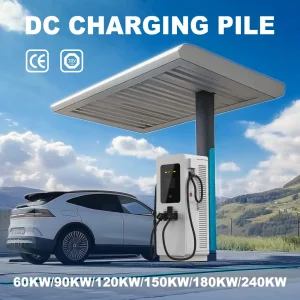
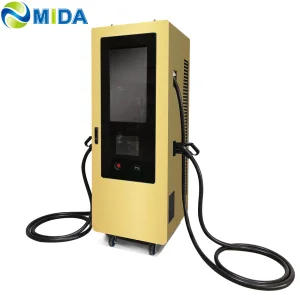
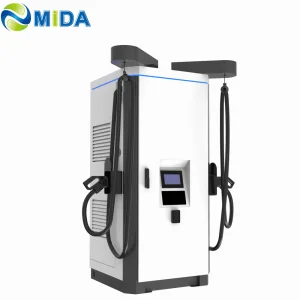
Thailand is accelerating towards becoming the primary Southeast Asian hub for electric vehicle (EV) manufacturing and deployment under the government's ambitious "30@30" national policy. This initiative mandates that Zero Emission Vehicles (ZEVs) must account for at least 30% of total domestic vehicle manufacturing by 2030. However, the execution of this national strategy depends heavily on the deployment of robust commercial and industrial DC charging grids. As the Metropolitan Electricity Authority (MEA) and the Provincial Electricity Authority (PEA) define local standards, global fleet operators, commercial shopping complexes, and industrial sites face unique technical requirements.
Operating high-voltage DC fast chargers in Thailand presents severe challenges, specifically ambient temperatures regularly exceeding 40°C combined with relative humidity up to 90%. High heat drives rapid thermal buildup within electric vehicle charger power modules, which triggers automatic de-rating and drops operational output power. Additionally, grid infrastructure stability varies outside metropolitan Bangkok, demanding strict control over total harmonic distortion (THD), reactive power integration, and wide input voltage tolerances.
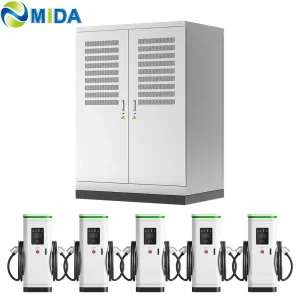
The Eastern Economic Corridor (EEC)—comprising Chonburi, Rayong, and Chachoengsao provinces—serves as the logistics and industrial engine of Thailand. Thousands of commercial trucks, fleet vehicles, and worker shuttle buses operate 24/7. Electrifying these fleet operations requires multi-megawatt split-cabinet charging stations capable of fast-charging multiple high-voltage batteries simultaneously. Standard commercial AC chargers are insufficient; industrial-grade DC split charging cabinets paired with liquid-cooled satellite dispensers are now the benchmark for operational efficiency.
MIDA leverages China’s highly integrated EV supply chain to deliver high-capacity power electronics with unmatched price-to-performance metrics. Operating through our advanced design and production centers in Shenzhen and Shanghai, MIDA controls the entire production cycle from component-level manufacturing to full assembly validation.
This localized cluster ecosystem enables rapid prototyping and allows us to customize DC charging stations with bespoke configurations (e.g., dual CCS2, custom NACS ports, and integrated solar inverter pathways) in a fraction of the time required by Western competitors. Every power module and liquid cooling unit we produce undergoes rigorous HAST (Highly Accelerated Stress Test) protocols, ensuring long-term field reliability in challenging environments like Thailand.
A comprehensive ecosystem of charging components, high-power systems, and energy storage integrations.
Adapting advanced power architectures to practical infrastructure scenarios across Thailand's transport networks.
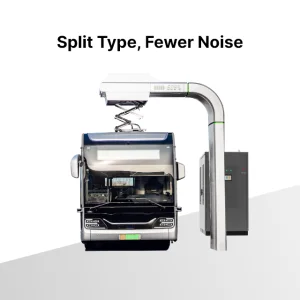
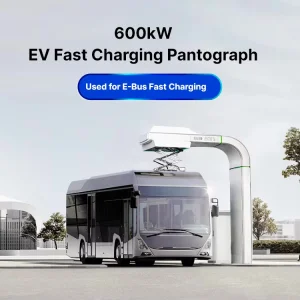
Powering the mass electrification of Bangkok's municipal bus system. High-power split-type pantograph systems provide rapid dynamic charging during short terminal stops, keeping buses running efficiently on tight schedules.
Optimizing transport routes between Bangkok, Laem Chabang Port, and Rayong industrial sites. High-power 360kW-720kW split cabinet chargers with liquid-cooled CCS2 dispensers enable heavy logistics vehicles to charge rapidly during scheduled driver rest breaks.
Easing high demand on commercial properties. Combining solar arrays, battery energy storage systems (BESS), and DC fast chargers allows retail malls and corporate centers to shave peak loads while offering stable ultra-fast charging to customers.
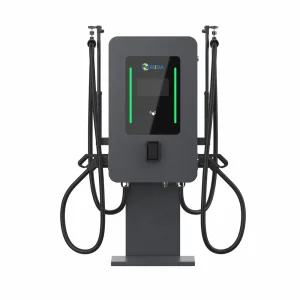
Explore our complete lineup of liquid-cooled systems, vehicle bus pantographs, and wall-mounted DC fast chargers designed for premium efficiency.
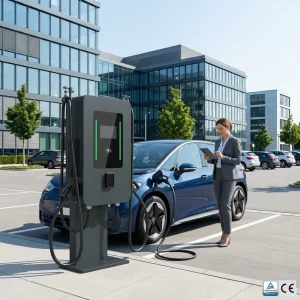
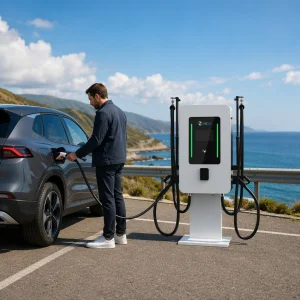
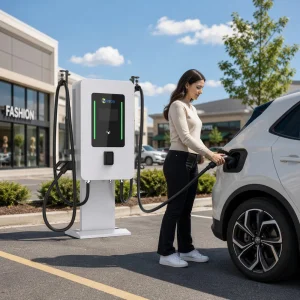
Engineered for minimal cable weight and peak high-power continuous energy delivery.
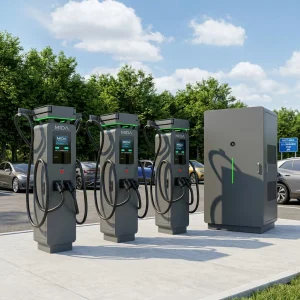
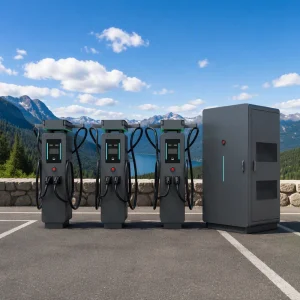
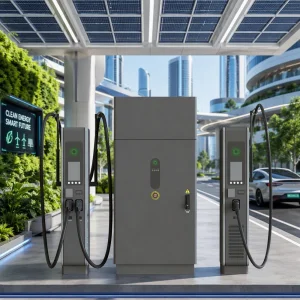
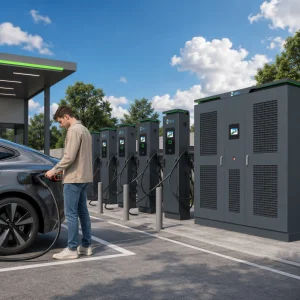
The global EV infrastructure market is shifting away from low-voltage AC chargers towards ultra-fast, high-power DC systems. In metropolitan transport hubs, transit planners are deploying megawatt-level systems (MCS) to support electric heavy trucks and mass transit systems. These systems are designed to deliver extremely high currents safely, requiring integrated liquid cooling units to manage heat generated during charging.
Liquid-cooled charging connectors route cooling fluid directly through the conductor cable, dramatically reducing cable diameter and stiffness. This design keeps the charging cables light and flexible for users, while supporting fast-charging currents up to 600A without overheating. For operators, this ensures maximum continuous power delivery and extends equipment lifespan, even under heavy usage in hot, tropical climates.
To reduce local grid strain, modern DC charging hubs are integrating Battery Energy Storage Systems (BESS) and on-site solar systems. These setups store energy during low-demand periods and discharge it during peak charging times, lowering peak demand charges and supporting the grid. This approach is becoming the standard for highway charging plazas and industrial depots that need to install ultra-fast charging capabilities without paying for costly grid upgrades.
Stay informed with technical insights on e-bus pantograph systems, dynamic charging setups, and installation best practices.
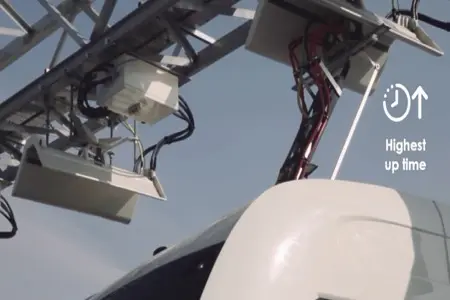
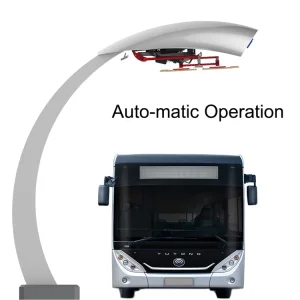
In contrast to classic plug-in charging systems, e-bus pantograph dome systems simplify urban route charging. Drivers can charge hands-free at transit stops, minimizing cable wear and streamlining operations.
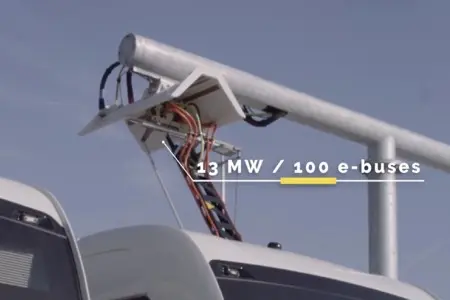
Charging times depend on battery capacity and grid connection power. Using high-power 450kW-600kW systems, transit fleets can gain up to 50% capacity in under 10 minutes during brief driver breaks.
Installing a "Pantograph Up" dome system requires precise alignment and structural prep. Proper grid integration is vital to ensure peak charging rates and meet municipal transport safety standards.
Detailed technical advice for operators deploying EV charging infrastructure in Thailand.
Get in touch with MIDA's engineering team for custom configurations, MEA/PEA compliance documentation, and project quotes.
Send Inquiry Now