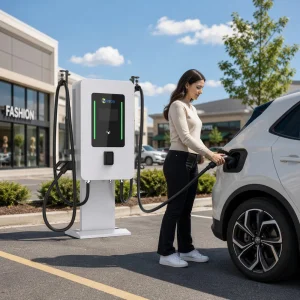
High-efficiency, weatherproof charging terminals designed for Togo's national roads, commercial hubs, and private logistics depots.
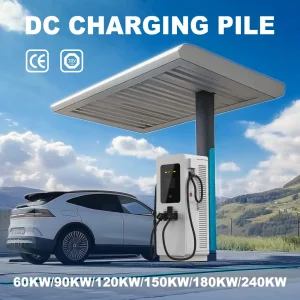
Togo is rapidly positioning itself as a commercial and logistics gateway for West Africa, particularly through the deepwater Port of Lomé. In alignment with Togo’s National Development Plan (PND) and commitments to international climate frameworks, electrification of the transit sector is shifting from a long-term goal to an active commercial imperative. Reducing dependence on imported fossil fuels is vital to strengthening national economic resilience.
As micro-grid technologies, large-scale solar projects (such as the Sheikh Mohamed Bin Zayed photovoltaic plant in Blitta), and regional transmission infrastructure improve, industrial clusters in Lomé, Kara, and Sokodé require highly reliable DC Charging Station Infrastructure. These terminals must manage severe dust, coastal humidity, high temperatures, and voltage fluctuations, ensuring smooth uptime for electric passenger fleets, delivery vehicles, and freight trucks.
Adapting global charging standard performance to West African climatic and grid realities.
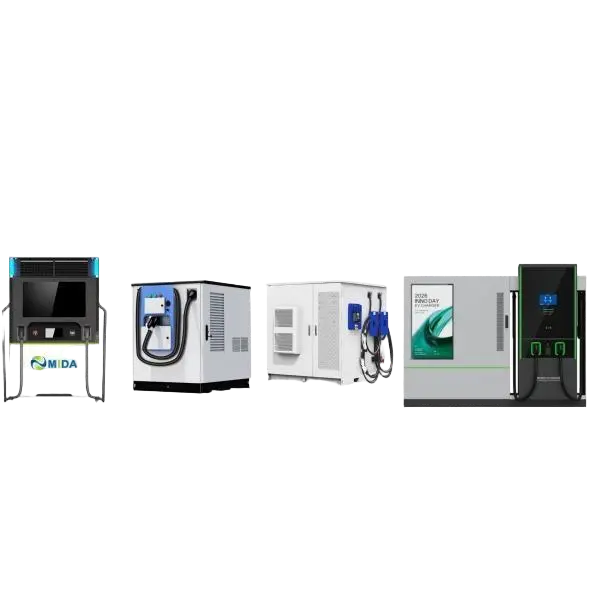
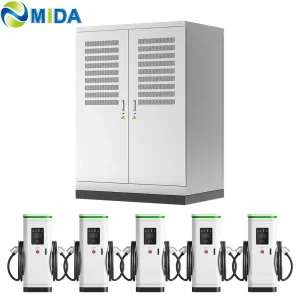
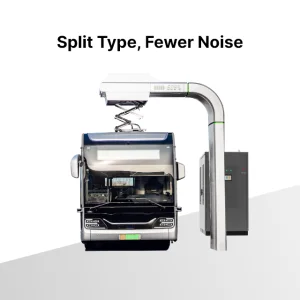
Heavy-duty split-type charging systems (600kW–1080kW) and container terminal automation. These high-voltage systems deliver immediate charge turnarounds for heavy haulage electric trucks running transit corridors between Togo and landlocked neighboring states like Burkina Faso, Niger, and Mali.
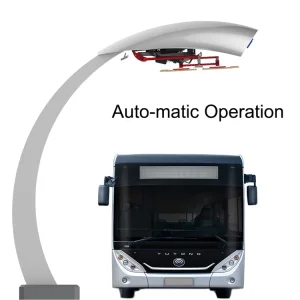
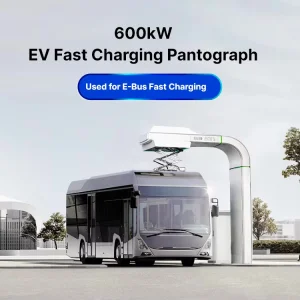
Overhead Pantograph charging (300kW–600kW) deployed at key municipal bus terminal centers. Integrated automatic charging cycles occur during short 5-to-10 minute layovers, stabilizing citywide mass public transit without relying on overnight long-cycle depot layouts.
Battery Energy Storage System (BESS) coupled chargers deployed in areas with limited grid capacity. These systems offset power fluctuations and avoid peak demand surcharges from the local electric utility (CEET) by storing off-peak energy or solar power.
Engineered to support varying load capacities, grid interfaces, and vehicle classes.
Shanghai Mida Cable Group Ltd. operates through its wholly owned subsidiaries: Shanghai Mida EV Power Co., Ltd., Shenzhen Mida EV Power Co., Ltd., and Shanghai Mida New Energy Co., Ltd.
Mida Cable manufactures a comprehensive range of EV charging cables, including 16A–80A J1772 cables, 16A–63A IEC 62196-2 Type 2 cables, and DC fast charging cables: CCS1 (80A–500A), CCS2 (125A–1000A), CHAdeMO (125A–300A), GBT (200A–1000A), and NACS connectors (250A–600A).
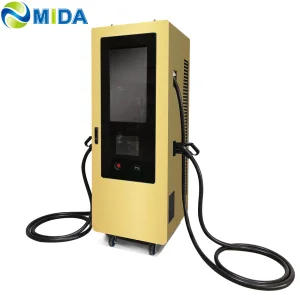
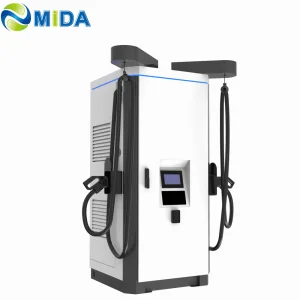
MIDA EV Power produces a full lineup of EV charging stations, such as 7kW–50kW mobile chargers, 3.6kW–7.2kW portable DC chargers, 360kW–1440kW split-type DC fast chargers, 20kW–50kW wall-mounted DC chargers, and 60kW–480kW floor-standing DC fast charging stations.
MIDA New Energy specializes in EV charger power modules, offering 20kW–60kW standard modules, 40kW–125kW liquid-cooled modules, 30kW–62.5kW bidirectional modules, and 20kW–45kW V2G charging modules.
Partner with Mida Group
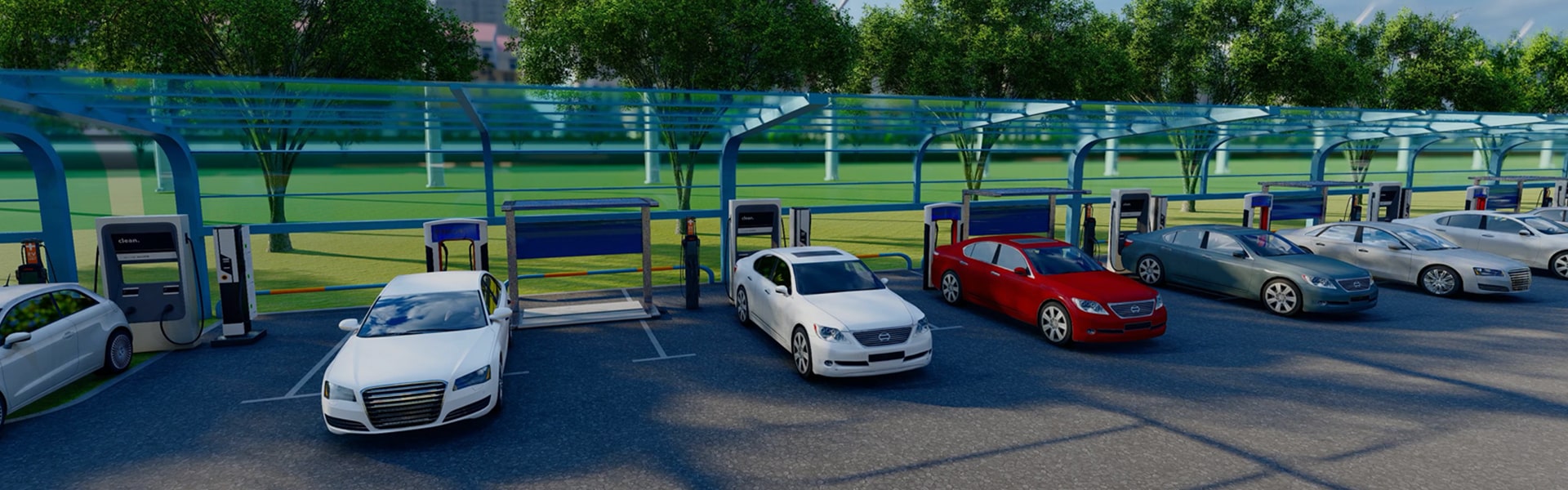
MIDA Group leverages Industry 4.0 manufacturing processes across its domestic industrial parks. We utilize fully automated SMT (Surface Mount Technology) assembly lines, automated optical inspection (AOI), and precise robotic wiring stations to eliminate assembly errors and maximize the lifespan of internal PCBs and power modules.
By producing critical components—such as EV charging cables, cooling units, custom control boards, and power modules—in-house, we prevent external supply chain delays. This allows us to guarantee shorter lead times and strict compliance with global certifications (TUV, CE, ISO 15118, OCPP) for buyers in West Africa.
Technical specifications of core component systems for specialized industrial procurement.
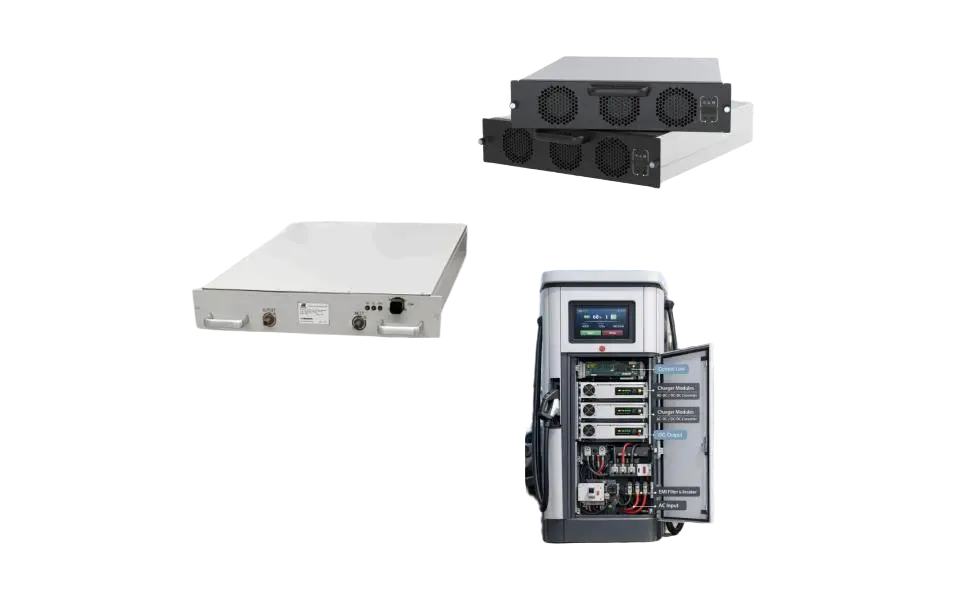
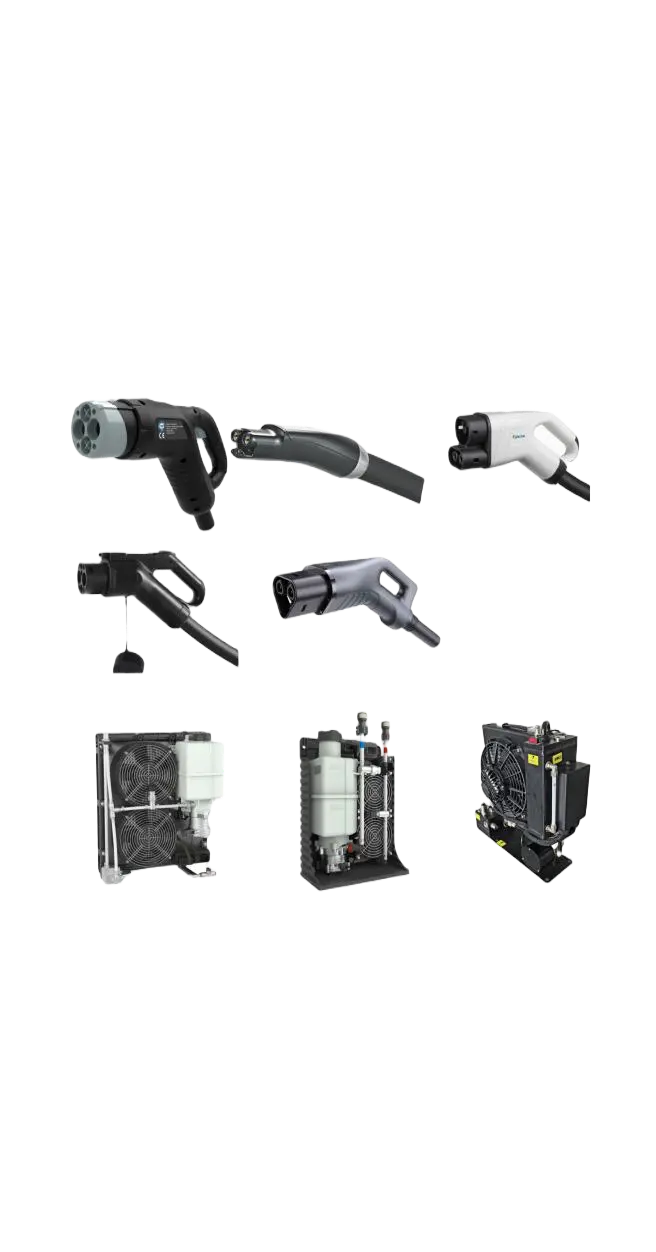
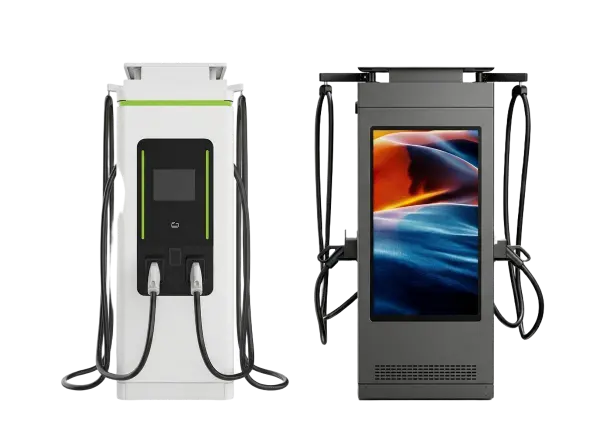
Follow our engineering and integration whitepapers regarding ultra-fast transit systems.
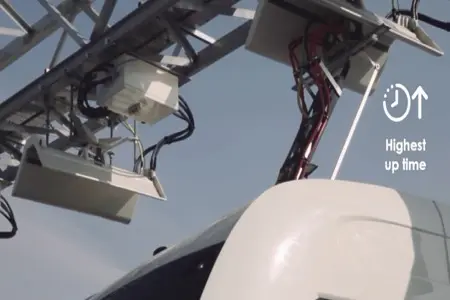
What are the advantages of an e-bus pantograph dome? In contrast to classic plug-in charging systems, e-bus pantographs offer high-capacity, hands-free charging during service halts.
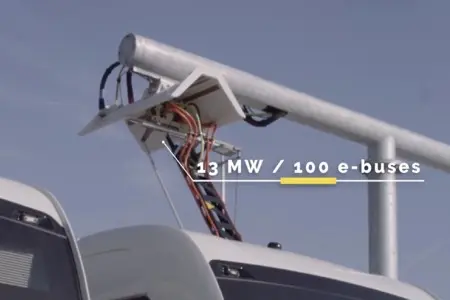
How long does it take to charge with an e-bus pantograph? The charging time depends on the battery capacity and the station's max power delivery (typically 300kW to 600kW).
How to Install the Pantograph Up Charger System Dome for Electric Bus. Installing a "Pantograph Up" system requires structurally sound overhead gantries integrated with local grid safety breakers.
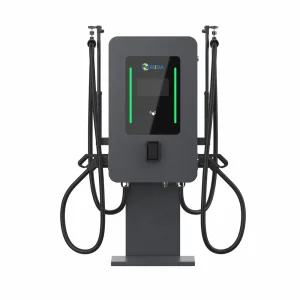
Explore our technical portfolio of high-power DC chargers and space-saving wall terminals.
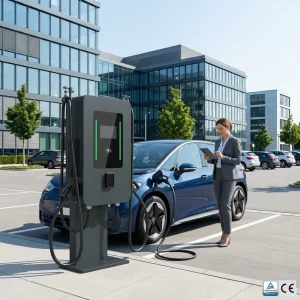
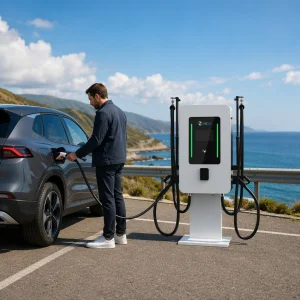
Answers to common engineering, procurement, and deployment questions for West African markets.
Yes. Our DC fast charging systems are built with wide input voltage tolerance ranges (typically ±15% to ±20%) to handle under-voltage and over-voltage scenarios common in the West African grid. Additionally, the system incorporates comprehensive industrial protection units, including overcurrent, short-circuit, ground fault, surge protection (SPD Type 2), and phase loss detection, ensuring the internal electronics remain undamaged during grid events.
Absolutely. For coastal regions like Lomé, where saline air, high humidity, and dust are common, we supply cabinets with IP54 rating protection for standard cabinets and IP65 protection for key modular compartments. We also apply anti-corrosion protective coatings to PCBs to prevent premature wear from humidity and salt air.
Most commercial fleet initiatives in West Africa rely on the European standard, CCS Type 2 (CCS2), for DC charging. However, some imported vehicles use the Chinese GB/T standard. MIDA stations can be customized with dual cables supporting both CCS2 and GB/T, or split setups to handle various vehicle types at the same station.
All MIDA DC chargers support Open Charge Point Protocol (OCPP 1.6J and OCPP 2.0.1). This lets operators connect charging points to cloud management platforms, enabling real-time remote diagnostics, user billing, smart charging profiles, and automatic firmware updates over cellular or Ethernet networks.
Yes. We offer BESS (Battery Energy Storage System) coupled DC charging solutions. These systems allow operators to connect photovoltaic inputs directly to the storage batteries, which then charge vehicles via local DC-to-DC modules. This reduces reliance on local grid capacity and maximizes solar energy usage.
Standard chargers (60kW to 240kW) are manufactured and undergo quality inspection within 3 to 4 weeks. High-power split-type units (600kW+) or customized BESS integrations take approximately 6 to 8 weeks. Transit time from Chinese ports to Lomé Port via ocean shipping typically ranges between 35 to 45 days, depending on shipping lines.
Consult with our engineers to receive customized wiring layouts, local grid calculations, and factory-direct pricing for your commercial project.
Send Inquiry Now