
Engineered for public fast-charging networks, heavy fleet centers, and commercial hubs across Berlin's grid environment.
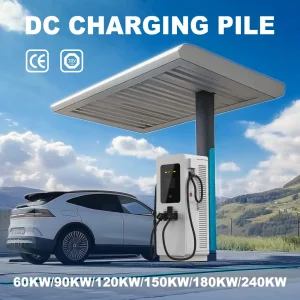
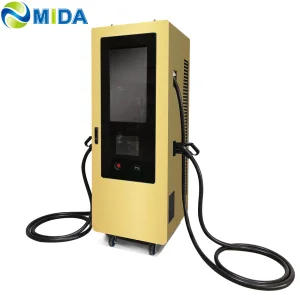
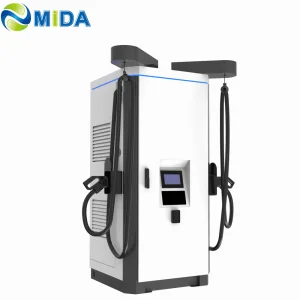
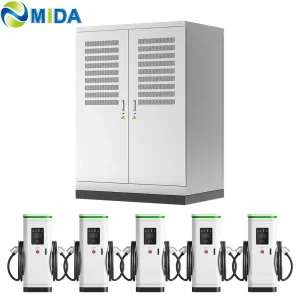
As Berlin accelerates toward its goal of climate neutrality by 2045 under the Berliner Energie- und Klimaschutzprogramm (BEK 2030), the electrification of commercial fleets, municipal buses (BVG), logistics centers, and public charging hubs has surged. However, this massive expansion faces a critical obstacle: regional medium-voltage grid congestion. Connecting multi-megawatt DC charging stations directly to Berlin’s historical metropolitan grid often leads to prolonged approval timelines, costly grid expansion fees, and peak-load surcharges.
This is where Battery Energy Storage System (BESS) Charging Stations serve as a transformative technology. By integrating localized LFP (Lithium Iron Phosphate) storage arrays, BESS charging units buffer energy from the grid during off-peak hours and discharge it at high rates (up to 1200 kW) during ultra-fast EV charging cycles. This peak-shaving mechanism mitigates grid stress, eliminates high power-demand charges, and enables immediate installation of HPC (High Power Charging) sites without extensive local grid upgrading.
For a standard depot deployment of 10 ultra-fast 300kW chargers, the required 3MW grid capacity can take 18–24 months to secure. By integrating a 1MWh BESS, the required grid connection capacity can be reduced to just 500kW, cutting waiting times by 80% and peak demand fees significantly.
Discuss Your Grid Connection ProfileNavigating Germany's strict regulatory framework for grid-interactive energy storage and vehicle charging.
Our commercial charging solutions and storage stacks conform to the latest German grid requirements for low-voltage (VDE-AR-N 4100) and medium-voltage (VDE-AR-N 4110) connections, guaranteeing clean power factor correction, harmonic control, and dynamic grid support.
Equipped with native ISO 15118-20 communication for bidirectional power flows (V2G/V2H) and secure encrypted authentication. Our public charging setups are compatible with German Eichrecht calibration requirements for transparent billing.
Manufactured strictly under certified quality management. The entire product lineup holds valid CE, TÜV, ETL, and RCM markings, satisfying strict European directives on electrical safety and electromagnetic compatibility.
Why global purchasing departments and energy developers choose MIDA Group for utility-scale charging infrastructure projects.
Unlike typical assemblers, MIDA Group controls the entire supply chain. We manufacture our own EV charging cables, high-power CCS1/CCS2 liquid-cooled connectors (up to 1000A), and 40kW–125kW power modules, reducing assembly tolerances and costs.
Our split-type chargers and BESS enclosures utilize advanced liquid cooling technology. This maintains cell temperature within optimal limits, preventing degradation and delivering continuous 600kW–1200kW charging without thermal throttling.
Integrated multi-tier safety layers including IP55/IP65 ingress protection, active fire suppression systems (Aerosol/Novec 1230), intelligent leakage detection, and real-time state-of-health monitoring of battery arrays.
Modular, scalable systems designed to meet varying power, deployment, and spatial requirements.
Reliable, smart wall-mount and pedestal units for overnight fleet depot parking and workplace settings.
View MoreCompact DC solutions: 7kW, 20kW, 30kW, 40kW, 60kW, and 80kW for dynamic maintenance operations and workshops.
View MoreScale output from 60kW–480kW (integrated floor cabinets) to 360kW–1440kW (split architecture setups).
View MoreStorage capacities: 60kWh, 261kWh, 418kWh, 625kWh, and 2MWh cabinets. Perfect for high-density fast charging hubs with restricted grid feeds.
Shanghai Mida Cable Group Ltd. operates through its wholly owned subsidiaries: Shanghai Mida EV Power Co., Ltd., Shenzhen Mida EV Power Co., Ltd., and Shanghai Mida New Energy Co., Ltd.
Mida Cable manufactures a comprehensive range of EV charging cables, including 16A–80A J1772 cables, 16A–63A IEC 62196-2 Type 2 cables, and DC fast charging cables: CCS1 (80A–500A), CCS2 (125A–1000A), CHAdeMO (125A–300A), GBT (200A–1000A), and NACS connectors (250A–600A).
MIDA EV Power produces a full lineup of EV charging stations, such as 7kW–50kW mobile chargers, 3.6kW–7.2kW portable DC chargers, 360kW–1440kW split-type DC fast chargers, 20kW–50kW wall-mounted DC chargers, and 60kW–480kW floor-standing DC fast charging stations.
MIDA New Energy specializes in EV charger power modules, offering 20kW–60kW standard modules, 40kW–125kW liquid-cooled modules, 30kW–62.5kW bidirectional modules, and 20kW–45kW V2G charging modules.
The technological foundation of our high-uptime charging solutions.
Engineered for large logistics terminals, public depots, and highway transit corridors.
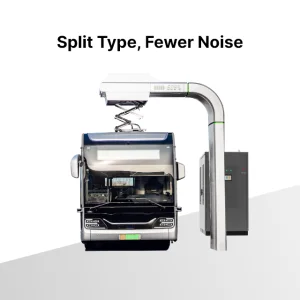
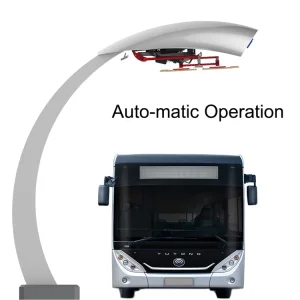
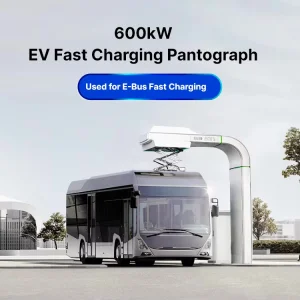
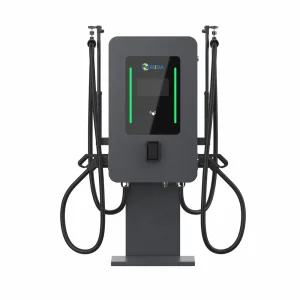
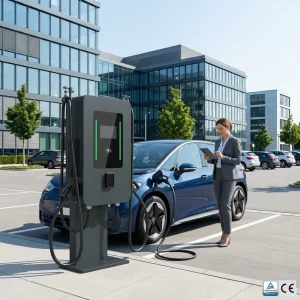
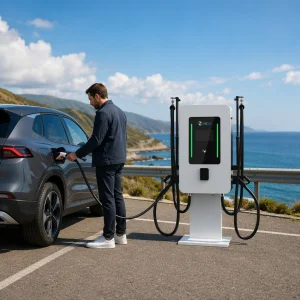
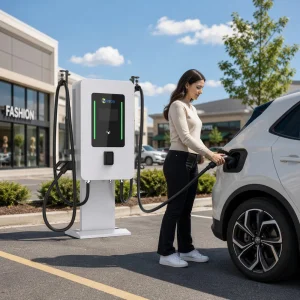
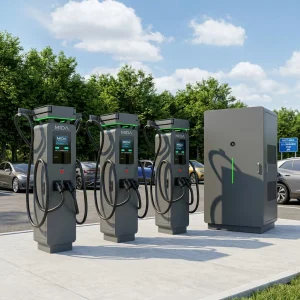
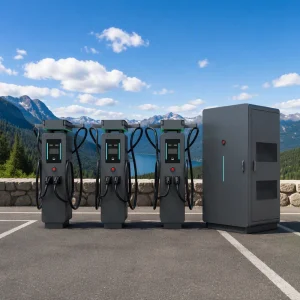
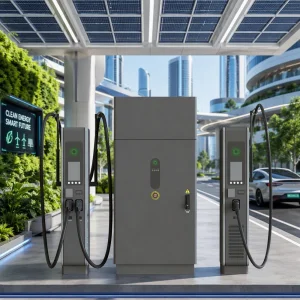
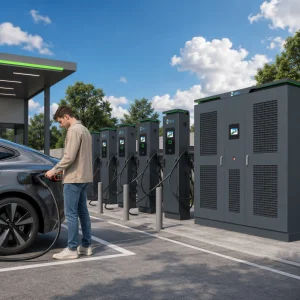
Insights into grid-buffered electric bus and commercial fleet operations.
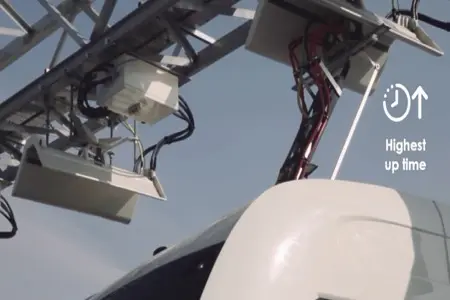
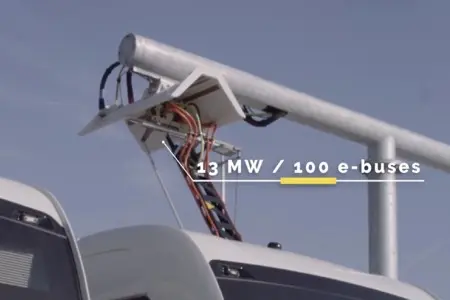
Electrifying public bus networks in major European metropolitan areas requires automated charging solutions that integrate seamlessly into short scheduled layovers. Our pantograph charging systems deliver 300kW–600kW of continuous power, utilizing roof-mounted contacts to charge bus battery packs in 5 to 8 minutes.
By pairing a pantograph stack with a localized 261kWh to 418kWh battery storage cabinet, fleet operators can draw a stable 100kW feed from the grid while outputting up to 600kW during the vehicle connection window. This buffer configuration protects the local distribution transformer from high-frequency voltage fluctuations.
Get System Architecture Simulation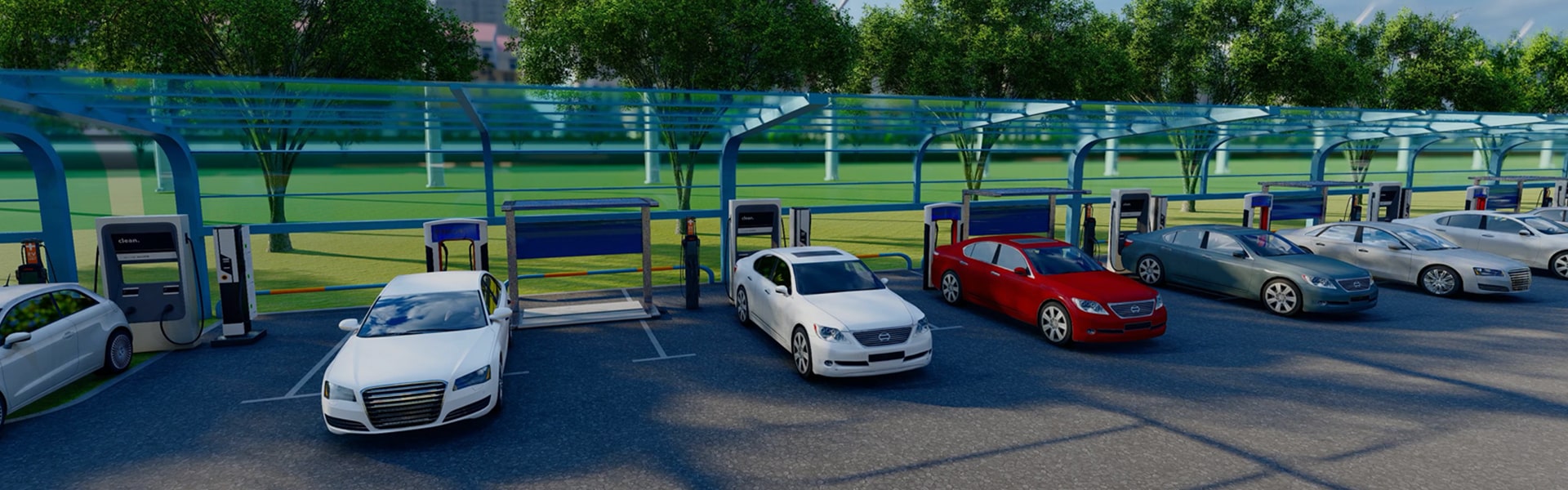
Stay updated on our latest product releases, technical insights, and transit electrification solutions.
Technical answers regarding grid integration, system safety, standards, and import operations.
BESS chargers store energy at low, steady rates (e.g., 50kW–100kW) during off-peak times and discharge it at high rates (e.g., 300kW–600kW) during active fast-charging sessions. This shields the local network from sudden load spikes, allowing you to deploy high-power charging without waiting for grid upgrades.
Yes. Our commercial systems are designed to comply with VDE-AR-N 4100 (low-voltage connections) and VDE-AR-N 4110 (medium-voltage connections). They feature integrated grid protection parameters, dynamic reactive power control, and harmonic filter systems.
We use Lithium Iron Phosphate (LFP) cells. LFP is selected for its high thermal stability, safety profile, and long cycle life (typically over 6,000 charge cycles at 80% Depth of Discharge), making it suitable for high-duty commercial and industrial energy storage.
Yes, our latest DC fast chargers and power modules support ISO 15118-20. This allows for automated Plug & Charge authentication and bidirectional energy transfer (Vehicle-to-Grid and Vehicle-to-Home), enabling integration with smart grid networks.
Standard configurations generally ship within 6 to 8 weeks from our factory, with shipping to European ports (such as Hamburg or Rotterdam) taking an additional 4 to 5 weeks. Customized megawatt-level charging configurations or large-capacity BESS systems typically require a 12 to 16 week manufacturing lead time.
Yes. Our integrated BESS setups can be configured with internal DC-DC converter modules, allowing direct coupling with solar PV arrays. This maximizes on-site self-consumption and reduces conversion losses from solar to storage to vehicle.
Our high-power split systems utilize active liquid-cooling. Ethylene glycol coolant is circulated through internal copper cooling plates and the charging cable itself to manage heat dissipation, allowing continuous high-current operation.
Yes. For billing compliance in the German public network, we can equip our DC fast chargers with Eichrecht-compliant energy meters and data handling systems, ensuring legal transparency for commercial public charging services.
Our charging stations support OCPP 1.6J and OCPP 2.0.1, enabling connection to standard charging network management platforms (such as Hubject, Has-to-be, or Virta) via Ethernet, Wi-Fi, or 4G/5G connections.
Our BESS units feature multi-level safety protections, including per-cell voltage and temperature monitoring, aerosol-based active fire suppression systems, deflagration vents, and automatic electrical isolation contactors.
Get in touch with our team of technical sales engineers to request customized layout plans, grid connection analysis, and pricing quotes.
Contact MIDA Engineering Team