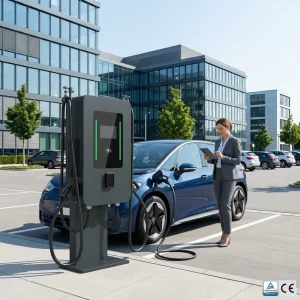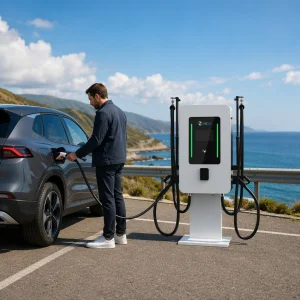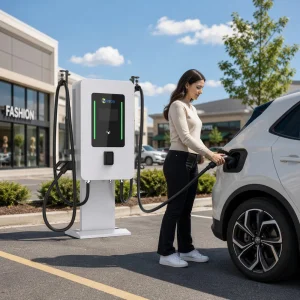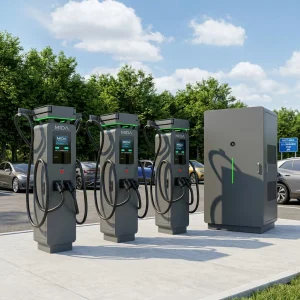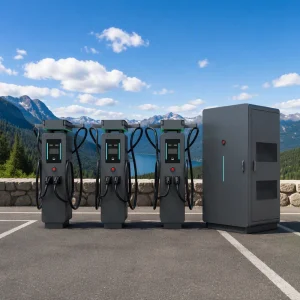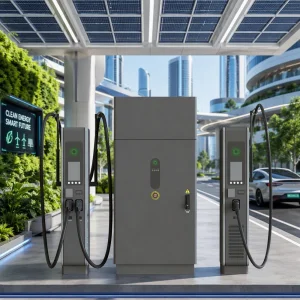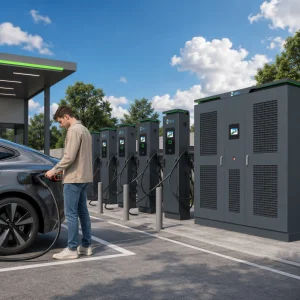
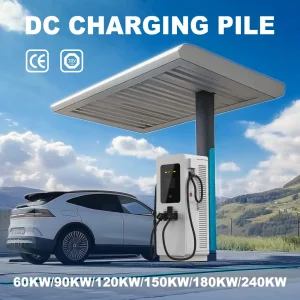
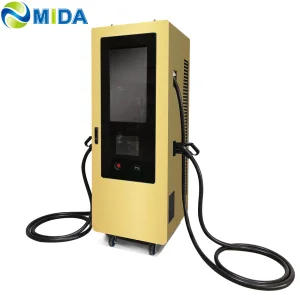
BESS Charging Station Manufacturer & Suppliers for the Houston Market

High-Power DC Fast Chargers Integrated with Battery Energy Storage Systems (BESS) for Commercial, Industrial, and Fleet Electrification in Texas

Send Inquiry Now

Houston Commercial & Industrial Energy Landscape: The Case for BESS

The Greater Houston Metropolitan Area, known globally as the energy capital of the world, is facing a unique energy transition. Commercial and industrial (C&I) sectors, fleet operations, and logistics centers are increasingly electrifying their fleets and facilities. However, the Texas electricity market, regulated by the Electric Reliability Council of Texas (ERCOT), presents distinct challenges. Severe weather events, peak demand spikes, volatile pricing mechanisms, and grid stability concerns make direct-to-grid megawatt-level EV charging a high-risk operational strategy.

This is where Battery Energy Storage System (BESS) charging stations become an operational necessity. By pairing ultra-fast DC charging infrastructure with behind-the-meter battery energy storage, Houston enterprises can mitigate high demand charges, insulate their operations from grid instability, and even generate revenue by participating in ERCOT demand response programs.

420kW
Peak Fast Charge
2MWh+
BESS Storage Capacity
98%
System Efficiency
NACS
Native Support

Why Houston C&I Operators Are Turning to Integrated BESS Chargers

Traditional high-power charging projects often trigger costly utility upgrade requirements that can delay deployments by 12 to 24 months. Our integrated BESS charging systems resolve these delays. By utilizing lower-capacity grid hookups to continuously charge a local battery unit, the battery can then discharge at high power rates (up to 600kW or more) during rapid EV charging cycles. This buffer reduces the peak demand registered by the utility, yielding immediate operational savings.

  • Demand Charge Mitigation: Peak demand charges can make up to 50% of a commercial electricity bill in Houston. Local BESS discharges during peak pricing intervals, flattening your load profile.
  • Grid Independence & Resiliency: During blackouts or brownouts, the BESS acts as a microgrid power source, ensuring your commercial vehicle fleet keeps moving.
  • Capex Postponement: Avoid expensive substation and distribution transformer upgrades by utilizing a smaller, controlled grid connection.
  • ERCOT Market Arbitrage: Store energy when wholesale prices are low (or negative) and discharge to charge vehicles or back to the grid during high-pricing periods.

Macro Industry Solutions & The Tech Transition to NACS

The North American EV charging ecosystem is rapidly consolidating around the North American Charging Standard (NACS / SAE J3400). As a premier global manufacturer, we have engineered dual-protocol dispensers that support both legacy CCS1 (Common Charging Standard) and native NACS connectors. This dual compatibility ensures that your capital investments remain future-proofed for the next two decades.

Furthermore, the integration of liquid-cooled technology allows modern DC fast chargers to output continuous currents of up to 500A and 600A without overheating. Our proprietary liquid-cooled cables and power distribution units maintain optimal thermal performance, ensuring maximum uptime even in Houston's demanding summer temperatures, which frequently exceed 100°F (38°C).

System Parameter DC Charging Station (Standard Grid) BESS-Integrated DC Charging Station
Grid Connection Required Full charging load (e.g., 360kW grid connection) Fractional load (e.g., 60kW - 100kW grid connection)
Demand Charge Impact High (proportional to peak simultaneous charging) Low (buffered by battery storage peak-shaving)
Emergency Islanding Capable No Yes (provides local microgrid functionality)
Deployment Lead Time 12–24 months (often requires utility upgrades) 3–6 months (standard commercial grid hookups)
Thermal Resilience Standard air-cooling threshold Liquid-cooled module options optimized for high-ambient climates

Regulatory Standards, Local Compliance & Safety Protocols

Installing high-power infrastructure and energy storage systems in the Houston market requires strict compliance with local, state, and national standards. Houston's Permitting Center enforces the National Electrical Code (NEC), alongside specific ordinances governed by the City of Houston Fire Department (HFD).

Key Compliance Requirements for BESS and DC Fast Chargers:

  • UL 9540 & UL 9540A: These standards govern the safety of energy storage systems and equipment, detailing thermal runaway fire propagation testing. Any BESS installation in commercial zones within Houston must carry UL 9540 certification and provide test data in accordance with UL 9540A to local fire marshals.
  • NFPA 855: The Standard for the Installation of Stationary Energy Storage Systems. This dictates structural setbacks, spatial separation, fire detection, and suppression systems required for indoor and outdoor BESS installations.
  • UL 2202 & UL 2231: These apply to DC fast charging equipment, ensuring safety requirements for personnel protection systems in charging circuits.
  • OCPP 1.6J / OCPP 2.0.1: Open Charge Point Protocol compliance ensures that chargers can communicate seamlessly with localized fleet management systems or billing networks without vendor lock-in.

Our engineering team works closely with Houston contractors, providing full documentation, PE-stamped electrical schematics, and compliant system layouts to accelerate the permitting and utility interconnect approval process.

MIDA Group Corporate Infrastructure
A premier manufacturer delivering globally certified cable and power module systems.

WELCOME TO MIDA GROUP

Shanghai Mida Cable Group Ltd. operates through its wholly owned subsidiaries: Shanghai Mida EV Power Co., Ltd., Shenzhen Mida EV Power Co., Ltd., and Shanghai Mida New Energy Co., Ltd.

Mida Cable manufactures a comprehensive range of EV charging cables, including 16A–80A J1772 cables, 16A–63A IEC 62196-2 Type 2 cables, and DC fast charging cables: CCS1 (80A–500A), CCS2 (125A–1000A), CHAdeMO (125A–300A), GBT (200A–1000A), and NACS connectors (250A–600A).

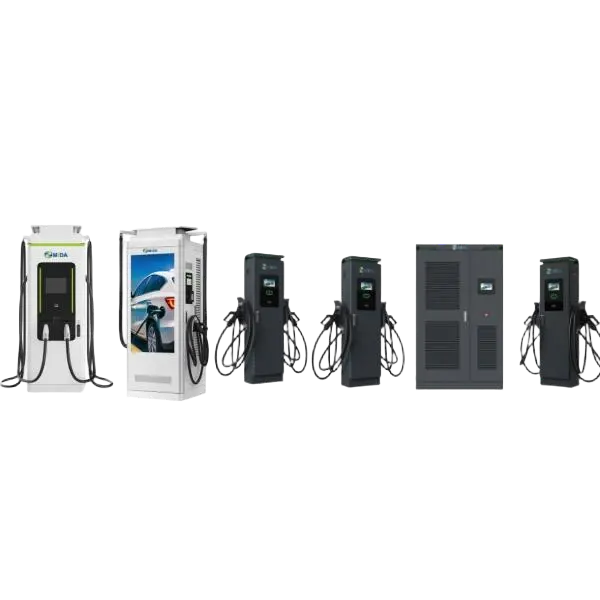
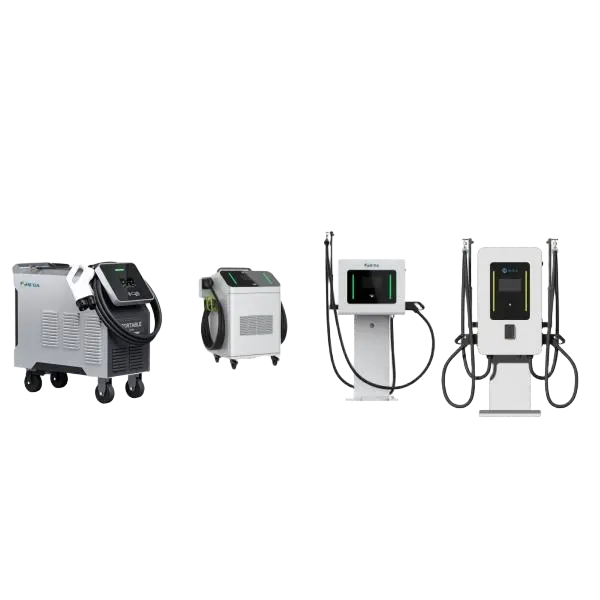
MIDA EV Power produces a full lineup of EV charging stations, such as 7kW–50kW mobile chargers, 3.6kW–7.2kW portable DC chargers, 360kW–1440kW split-type DC fast chargers, 20kW–50kW wall-mounted DC chargers, and 60kW–480kW floor-standing DC fast charging stations.

MIDA New Energy specializes in EV charger power modules, offering 20kW–60kW standard modules, 40kW–125kW liquid-cooled modules, 30kW–62.5kW bidirectional modules, and 20kW–45kW V2G charging modules.

MIDA Corporate Certificate Showcase
AC EV Charger
Designed for residential, overnight commercial, and destination charging. Options ranging from 7kW to 22kW.
View More
Wall-Mounted/Mobile EV Charger
Compact high-performance chargers. Output ranges from 7kW, 20kW, 30kW, 40kW, 60kW, up to 80kW.
View More
Wall-Mounted EV Charger
DC Charger Station
Ultra-fast public and fleet stations. Configurations available in 60kW–480kW and 360kW–1440kW.
View More
DC Charger Station
BESS Charging Station
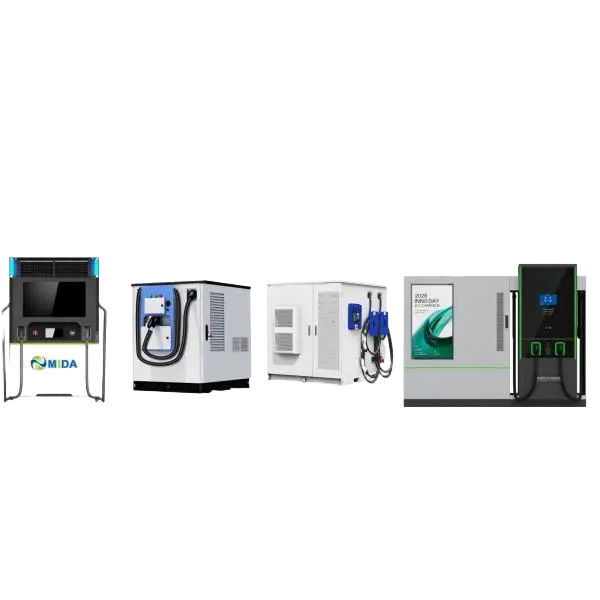
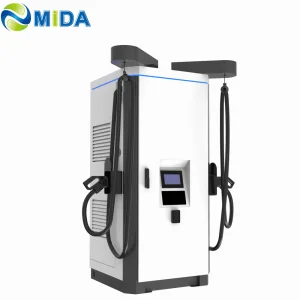
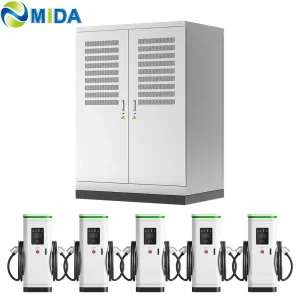
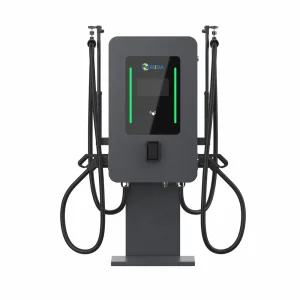
Battery storage integrated chargers. Available capacities: 60kWh, 261kWh, 418kWh, 625kWh, and 2MWh+.
View More
BESS Charging Station

Main Manufacturing Portfolio

Our industrial production lines are structured to supply certified electrical sub-components and complete assemblies to Tier 1 charging operators, fleet developers, and global infrastructure projects.
EV Charging Power Modules

  • 30kW, 40kW, 50kW, 60kW, 80kW AC/DC Charger Modules
  • 30kW, 40kW, 50kW, 60kW DC/DC EV Charger Modules
  • 40kW, 60kW, 75kW, 125kW Liquid Cooled Power Modules
  • 20kW, 22kW, 30kW, 40kW, 45kW V2G Power Modules
  • 30kW, 40kW, 50kW, 60kW MPPT Power Modules
  • 20kW, 50kW, 62.5kW Bidirectional AC/DC Power Modules

DC Charging Connectors & Cooling Units

  • 500A, 600A CCS1 & CCS2 & GBT Connectors
  • 125A, 250A, 300A, 350A NACS & CHAdeMO Connectors
  • 1500A MCS Connector & CHAOJI Connectors
  • 3.5kW, 4.5kW, 6kW, 9kW Integrated Liquid Cooling Units
  • 2.4kW, 3.5kW Split Type Cooling Units
  • 25kW ~ 72kW Cooling Units for HPC Charging
Deep Technical Q&A (FAQ)
Essential insights on engineering, sizing, and deploying BESS fast-charging systems in the Houston and wider Texas market.
How does BESS resolve grid integration delays in Houston?
In Houston, obtaining utility approval from CenterPoint Energy for megawatts of new grid capacity can take over 12 months. An integrated BESS stores energy continuously using a lower-capacity connection (e.g., 50kW) and discharges at peak speeds (e.g., 350kW) when a vehicle connects. This bypasses the need for high-voltage grid upgrades, lowering initial CAPEX and accelerating implementation timelines.
How does a BESS-integrated station perform under Texas ambient heat?
High temperatures can accelerate battery degradation and reduce charger output efficiency. Our BESS cabinets and high-power DC chargers use liquid-cooling units (ranging from 3.5kW to 72kW capacities). This maintains internal cell temperatures within the optimal 68°F to 86°F (20°C to 30°C) range, preventing thermal throttling and maintaining steady 350kW+ charging speeds even in summer.
Can these stations support the transition from CCS1 to NACS?
Yes. Our DC fast charging systems are built on a modular configuration. They support dual-connector setups (CCS1 and NACS) sharing the same power block. Built-in controllers dynamically allocate energy based on the vehicle's request protocol, making your deployment compatible with both legacy commercial vehicles and newer NACS fleets.
What safety certifications are required for BESS in urban Houston?
Installations must comply with NFPA 855 (stationary energy storage) and hold certifications to UL 9540 (system safety) and UL 9540A (large-scale fire testing). These tests demonstrate that if thermal runaway occurs in a module, it remains isolated and will not cause safety issues for adjacent structures.
Corporate Insights & News
Stay updated on electrification standards, pantograph designs, and modern infrastructure advances.
E-bus pantograph dome advantages
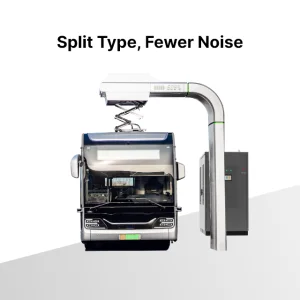
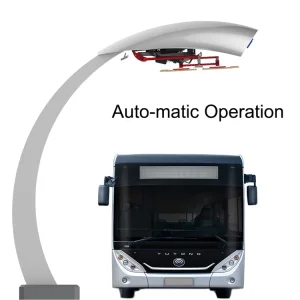
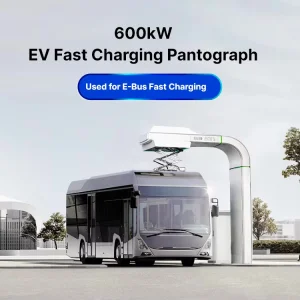
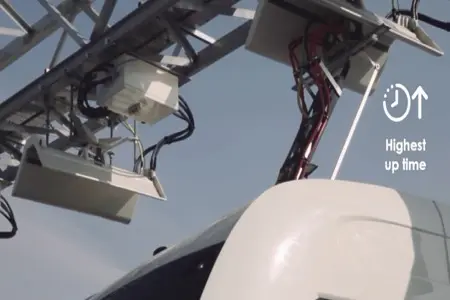
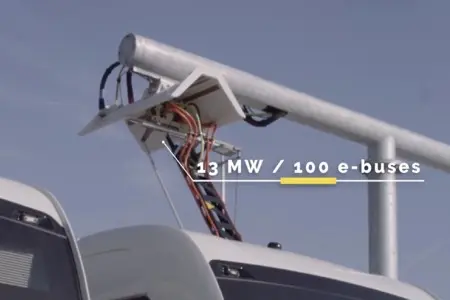
What are the advantages of an e-bus pantograph dome? In contrast to classic plug-in charging systems, e-bus pantographs offer automated connections, high safety standards, and ultra-high power transfer rates.
26-07-12 View More
E-bus pantograph charging time
How long does it take to charge with an e-bus pantograph? The charging time depends on the battery capacity and the station's configuration, with modern systems achieving full charges in minutes during layovers.
26-07-12 View More
Pantograph Up Charger System Dome installation
How to Install the Pantograph Up Charger System Dome for Electric Bus. Installing a “Pantograph Up” system requires precision structural alignment and seamless grid integration.
26-07-12 View More

Deploy Reliable High-Power Infrastructure in Houston

Get in touch with our applications engineering team to receive customized CAD layouts, SLDs (Single Line Diagrams), and pricing proposals tailored to your project requirements.

Send Inquiry Now