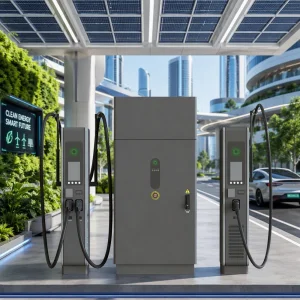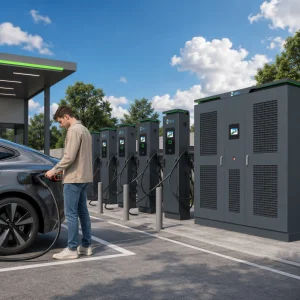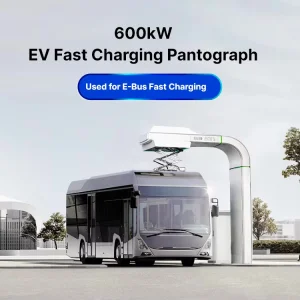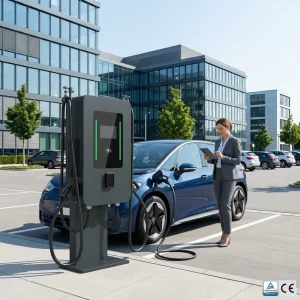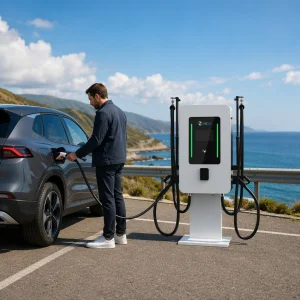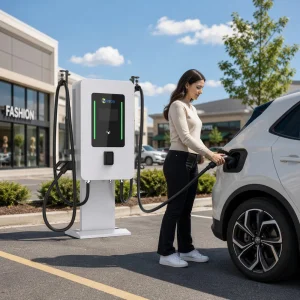
BESS Charging Station Manufacturer & Supplier for Nigeria

Pioneering Grid-Independent Commercial & Industrial EV Charging Solutions. Engineered with High-Capacity Solar Storage Systems to Redefine Nigeria's Infrastructure Landscape.

Send Inquiry Now

Addressing Nigeria's Energy Imperative: The Shift to Solar-BESS & DC Fast Charging

Nigeria's commercial and industrial landscape is undergoing a monumental shift. As fuel subsidy reforms alter transport operational economics, logistics companies, public transit networks, and private enterprises are turning aggressively to electric mobility. However, deploying a reliable electric vehicle (EV) infrastructure in Nigeria is unique: grid instability, frequent power disruptions, and the high cost of diesel generation demand a system independent of traditional utility constraints.

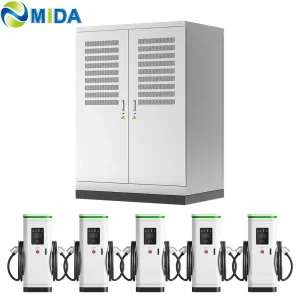
Key Market Reality: Traditional grid-tied chargers are highly vulnerable to localized drop-outs. MIDA's integrated Battery Energy Storage Systems (BESS) act as a reliable buffer, capturing renewable solar energy and discharging it at high rates (up to 480kW) for rapid vehicle charging.

By blending battery storage with high-efficiency EV power modules, operators can bypass local substation limitations, achieve 99.9% uptime, and leverage peak shaving. This drastically reduces dependence on diesel microgrids and ensures zero-emission transit is truly sustainable.

70%
Reduction in OpEx vs. Diesel Generators
99.9%
Charging Infrastructure Uptime
0 to 80%
Under 25 Mins via Ultra-Fast DC

Industrial-Grade BESS & DC Charger Integration Architecture

Explore our integrated modules, customized to power operations across Nigeria's major logistics hubs in Lagos, Abuja, and Port Harcourt.

Grid-Isolated BESS

Storage capacity ranging from 60kWh to 2MWh, ideal for remote industrial compounds and metropolitan charging hubs suffering from weak grid support.

  • Active thermal management for stable performance up to 50°C ambient temperatures.
  • Intelligent peak shaving to reduce utility demand charges.
  • High-capacity Lithium Iron Phosphate (LiFePO4) chemistry.

Smart DC Fast Charging

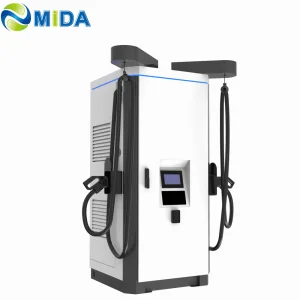
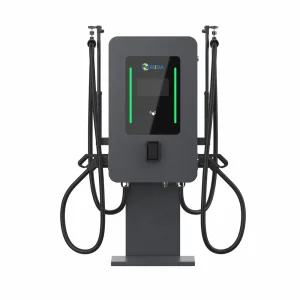
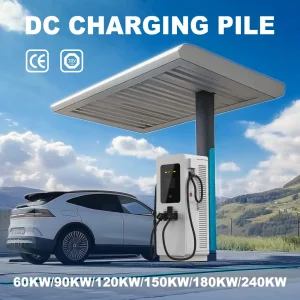
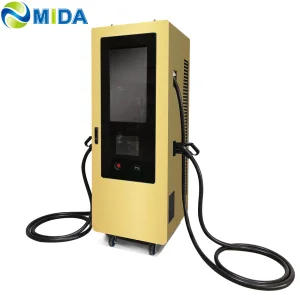
Dynamic power allocation distributing between 60kW and 480kW outputs. Dual-gun systems optimized for immediate electric transit requirements.

  • Compatibility with global connector profiles: CCS1, CCS2, NACS, and GBT.
  • Efficiency ratings exceeding 96% to limit thermal losses.
  • OCPP 2.0.1 implementation for smart billing and fleet integration.

Severe Environment Engineering

Customized dust-proofing and humidity resistance protocols tailored specifically for West African climates and coastal environments.

  • IP55/IP65 ratings ensuring reliable protection against particulates and water ingress.
  • C5 anti-corrosion coating for coastal facilities in Lagos.
  • Robust lightning and surge protection systems (Type 2 SPD standard).

WELCOME TO MIDA GROUP

Shanghai Mida Cable Group Ltd. operates through its wholly owned subsidiaries: Shanghai Mida EV Power Co., Ltd., Shenzhen Mida EV Power Co., Ltd., and Shanghai Mida New Energy Co., Ltd.

Mida Cable manufactures a comprehensive range of EV charging cables, including 16A–80A J1772 cables, 16A–63A IEC 62196-2 Type 2 cables, and DC fast charging cables: CCS1 (80A–500A), CCS2 (125A–1000A), CHAdeMO (125A–300A), GBT (200A–1000A), and NACS connectors (250A–600A).

MIDA EV Power produces a full lineup of EV charging stations, such as 7kW–50kW mobile chargers, 3.6kW–7.2kW portable DC chargers, 360kW–1440kW split-type DC fast chargers, 20kW–50kW wall-mounted DC chargers, and 60kW–480kW floor-standing DC fast charging stations.

MIDA New Energy specializes in EV charger power modules, offering 20kW–60kW standard modules, 40kW–125kW liquid-cooled modules, 30kW–62.5kW bidirectional modules, and 20kW–45kW V2G charging modules.

Liquid-Cooled Superchargers: The Future of Transit in Lagos & Abuja

Engineered for high-throughput depots, these premium liquid-cooled stacks offer optimal charging speeds under high temperatures.

Integrated Systems & Technical Subsystems

Understanding MIDA's component-level superiority, ensuring maximum thermal reliability and long-term durability in industrial environments.

EV Charging Power Modules

The core component of our systems, converting alternative current into stable direct current. Customized modules provide high conversion efficiencies to limit power wastage.

  • 30kW, 40kW, 50kW, 60kW, and 80kW AC/DC Power Modules.
  • 30kW, 40kW, 50kW, and 60kW DC/DC Buck-Boost Modules.
  • 40kW, 60kW, 75kW, and 125kW Liquid-Cooled Modules.
  • 20kW, 22kW, 30kW, 40kW, and 45kW Bidirectional V2G Power Modules.
  • 30kW, 40kW, 50kW, and 60kW MPPT Solar Optimization Modules.
  • 20kW, 50kW, and 62.5kW Bidirectional AC/DC Modules.

High-Power Connectors & Cooling Units

Ensuring stable electrical connections. Systems support high current and active cooling to prevent overheating during multi-hour fast charging sessions.

  • 500A-600A CCS1, CCS2, and GB/T Connectors.
  • 125A-350A NACS and CHAdeMO High-Power Connectors.
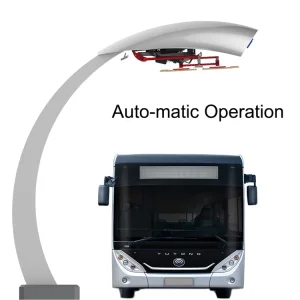
  • 1500A Megawatt Charging System (MCS) & ChaoJi Connectors.
  • 3.5kW, 4.5kW, 6kW, and 9kW Integrated Liquid Cooling Units.
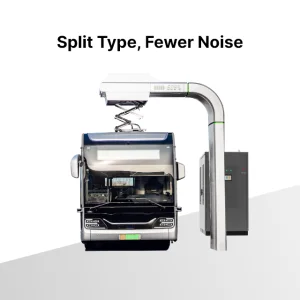
  • 2.4kW and 3.5kW Split-Type Cooling units.
  • 25kW to 72kW Industrial Cooling Units designed for HPC stations.

Industrial Standards, Compliance, and Localized Support

A breakdown of compliance metrics, grid stabilization technologies, and site security protocols deployed for West African installations.

Grid Stabilization & Protection

MIDA's engineering adapts to fluctuating grid frequencies. Built-in stabilization protects downstream EV batteries from sudden dropouts.

  • Under/Overvoltage protection to maintain charging stability.
  • Automated Phase-Balance algorithms to reduce transformer strain.
  • Dynamic grid feedback integration supporting local microgrids.

Local Regulatory Compliance

Our units conform to Nigerian regulatory guidelines while preserving international certifications for absolute site-safety validation.

  • IEC 62196 & IEC 61851 global security standards compliant.
  • CE, TUV, ETL, and RCM manufacturing verifications.
  • Compatible with local solar and hybrid energy distribution systems.

Operational Support & Telemetry

Through robust internet-of-things (IoT) integrations, MIDA enables remote diagnostics and status checks, cutting maintenance latency by 80%.

  • Real-time telemetry reports detailing battery bank health.
  • On-demand remote OTA firmware updates and diagnostic checks.
  • Local partnerships for prompt physical maintenance and site support.

Ready to discuss your commercial EV charging and storage project in Nigeria?

Send Inquiry Now

BESS Charging Stations in Nigeria: Frequently Asked Questions

In-depth responses to technical, financial, and logistical inquiries regarding commercial EV charging deployments in West Africa.
1. Why is BESS (Battery Energy Storage System) integration critical for EV chargers in Nigeria?
Nigeria's power infrastructure experiences recurring grid instabilities, localized brownouts, and voltage sags. Implementing standard high-power DC fast chargers without local storage puts immense strain on municipal distribution grids. A BESS acts as a reliable buffer, charging slowly from solar or grid systems during low-demand periods and discharging quickly to electric vehicles when needed. This ensures consistent charging speeds (up to 480kW) independent of grid status.
2. How does a BESS EV charging station save on operational costs (OpEx) compared to diesel generators?
Operating high-capacity DC chargers on diesel generators is costly due to fuel prices and maintenance overheads. By integrating solar energy storage systems (BESS), businesses can reduce utility costs by up to 70%. BESS stores solar energy during the day to power fleet chargers overnight, avoiding peak demand charges and minimizing reliance on expensive diesel backups.
3. Can MIDA charging equipment withstand Nigeria's high ambient temperatures and dust conditions?
Yes, MIDA chargers are specifically engineered for tropical and dust-prone climates. Our systems feature IP55/IP65 ratings, protective anti-corrosion coatings, and active thermal management. For high-demand stations, we provide liquid-cooled charging stacks (600kW-1200kW) that operate reliably in ambient temperatures up to 50°C.
4. What connector standards are most suitable for the Nigerian market?
Nigerian EV fleets use a mix of charging standards, with CCS2 and GB/T being the most common for commercial passenger and utility vehicles. MIDA offers dual-gun systems and split cabinet hubs that support CCS2, GBT, and NACS outputs on a single platform, allowing operators to charge multiple vehicle models simultaneously.
5. What remote monitoring and billing features do MIDA BESS systems offer?
Our systems utilize OCPP 2.0.1, enabling seamless integration with local network management tools. Operators can monitor battery storage levels, track charging speeds, set dynamic billing tariffs, and run system diagnostics remotely, reducing on-site maintenance requirements.