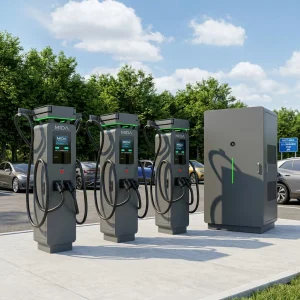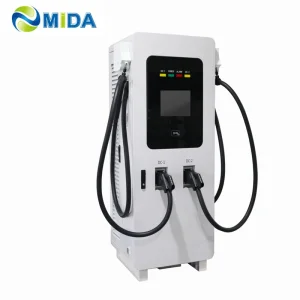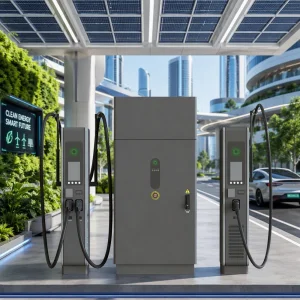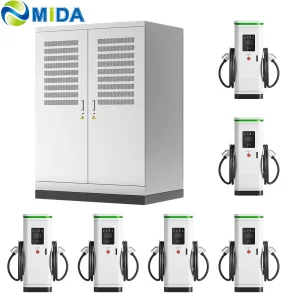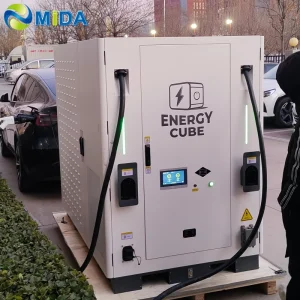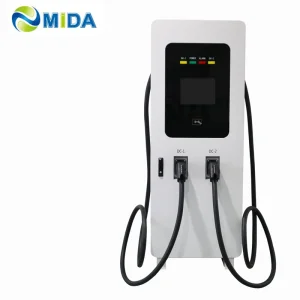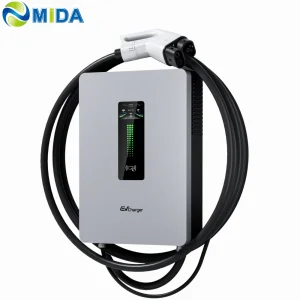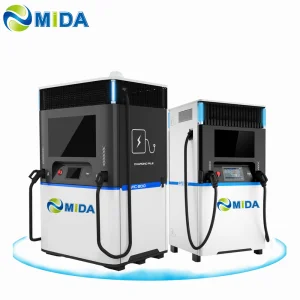
Discover our primary lineup of industry-proven DC fast charging systems, distributed power hubs, and hybrid grid-independent battery-buffered stations.
The global transition to medium and heavy-duty electric vehicle fleets, long-range passenger cars, and electric public transit has triggered an unprecedented technological shift toward high-power DC fast charging infrastructure. In order to minimize dwell time and maximize fleet utilization rates, municipal operators, highway service plazas, logistics providers, and charge point operators (CPOs) are rapidly transitioning from legacy low-power systems to ultra-fast High-Power Charging (HPC) networks. Implementing megawatts-scale power hubs requires a deep mechanical understanding of thermal management, power conversion topologies, communications standards, and regulatory frameworks.
Modern ultra-fast charging systems (600kW to 1500kW and above) face severe engineering limitations when deploying standard cable insulation and natural convection systems. High current draw generates substantial thermal energy, requiring liquid-cooled charging cables and dynamic liquid-cooled power module cabinets. Additionally, integration with Battery Energy Storage Systems (BESS) is no longer a luxury but an operational necessity to manage grid integration limits, prevent excessive demand charges from utilities, and store renewable energy generated on-site. By coupling heavy-duty DC fast chargers with local energy storage buffers, developers can build grid-resilient charging points capable of multi-megawatt delivery without overloading local substations.
Shanghai Mida Cable Group Ltd. operates through three specialized, wholly owned subsidiaries to provide complete, end-to-end electrical mobility solutions:
Shanghai Mida EV Power Co., Ltd., Shenzhen Mida EV Power Co., Ltd., and Shanghai Mida New Energy Co., Ltd. represent the ultimate combination of research, design, production, and certification. Through vertical integration, Mida Group controls the entire supply chain—from high-voltage charging cable extrusion to control board logic, and up to the power conversion modules inside the charging stacks.
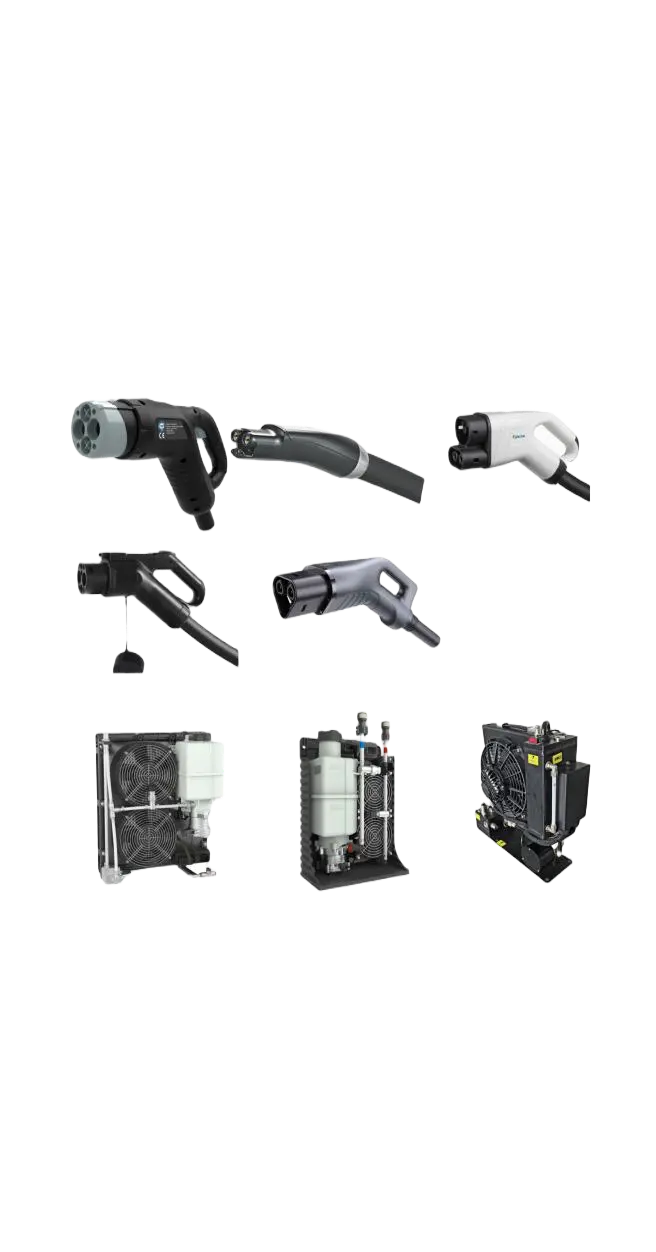
Mida Cable specializes in fabricating specialized conductive cable assemblies. The product line includes standard 16A–80A J1772 cables (North America Type 1), 16A–63A IEC 62196-2 Type 2 cables (Europe), and extreme duty DC fast charging cables. Mida’s DC catalog boasts CCS1 (80A–500A), CCS2 (125A–1000A), CHAdeMO (125A–300A), GB/T (200A–1000A), and high-current NACS connectors (250A–600A) designed to interface with modern Tesla and unified North American vehicle sockets.
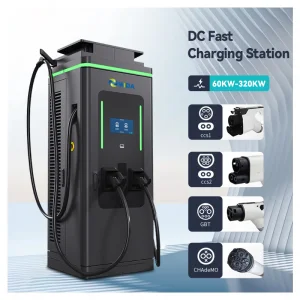
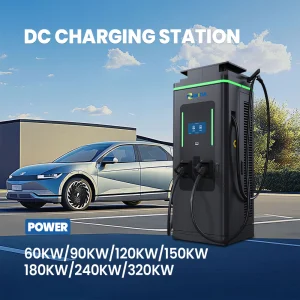
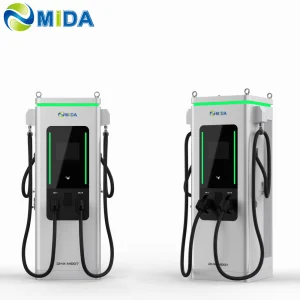
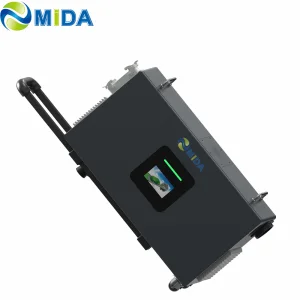
MIDA EV Power focuses on station design and final assembly, producing 7kW–50kW mobile charging units, 3.6kW–7.2kW portable DC rescue modules, 360kW–1440kW split-type heavy commercial DC systems, 20kW–50kW wall-mounted units, and 60kW–480kW standard floor-standing DC charging points.
MIDA New Energy sits at the heart of our research and development, building power conversion hardware including 20kW–60kW air-cooled standard modules, 40kW–125kW active liquid-cooled modules, 30kW–62.5kW bidirectional modules for energy arbitrage, and 20kW–45kW vehicle-to-grid (V2G) power modules.

Our industrial products span four distinct core sectors, designed to handle power requirements ranging from residential AC installations to megawatt highway hubs.
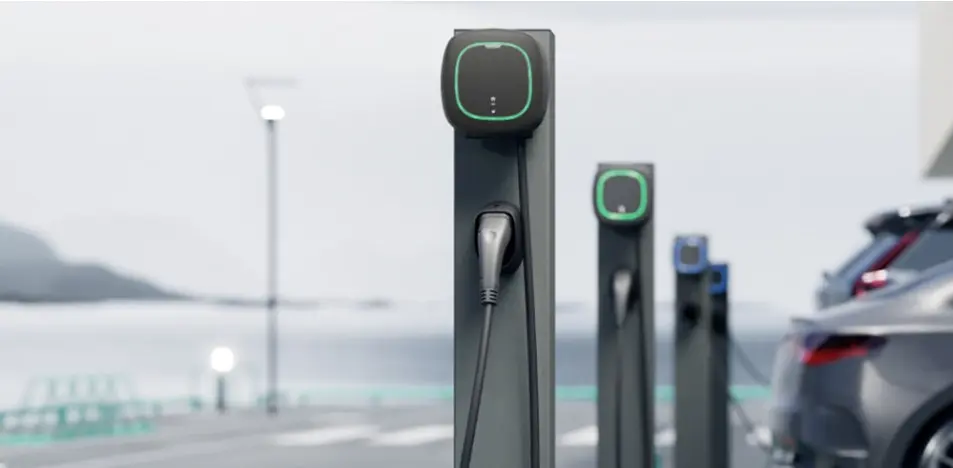
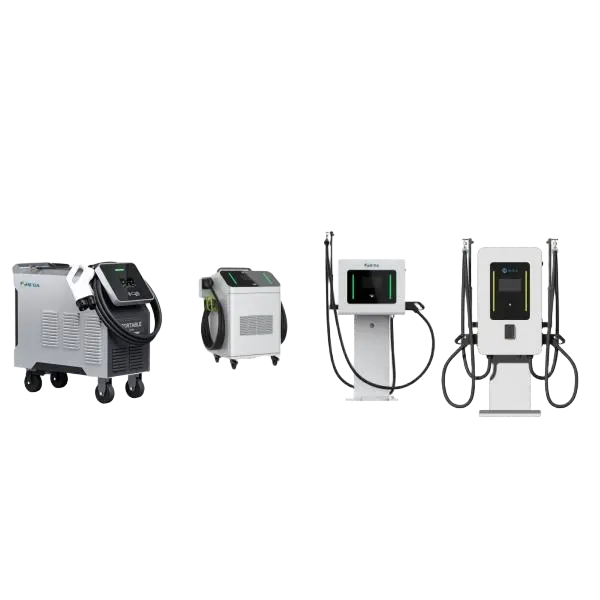
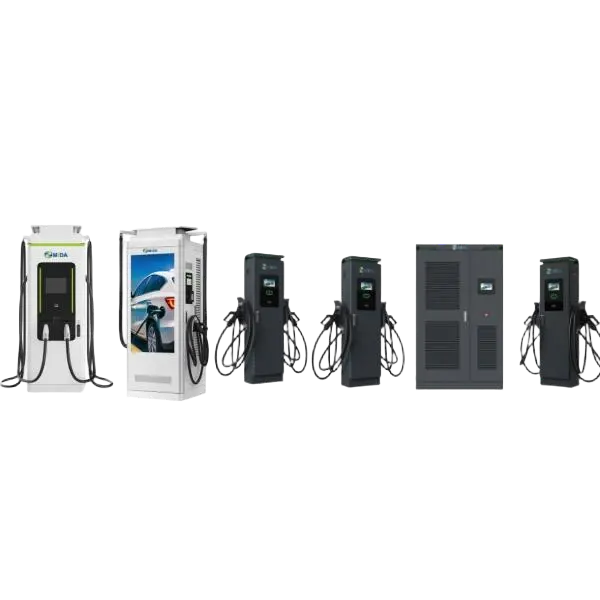
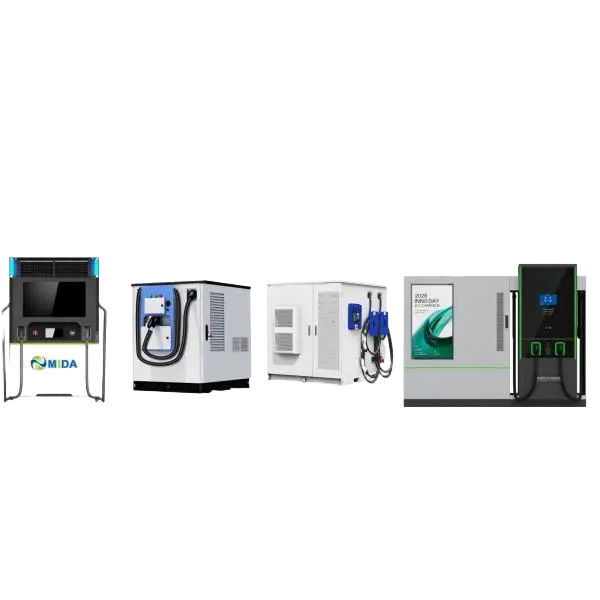
A detailed look at Mida Group's core products, including power modules, liquid cooling units, high-current connectors, and station architecture.
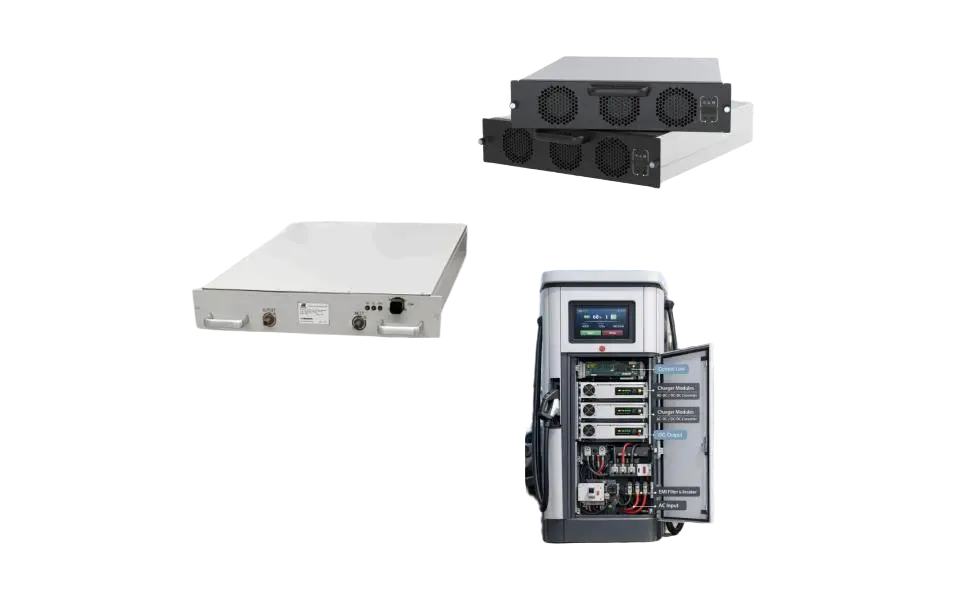
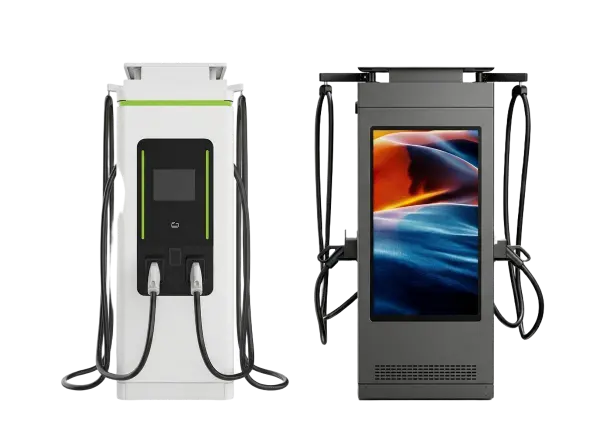
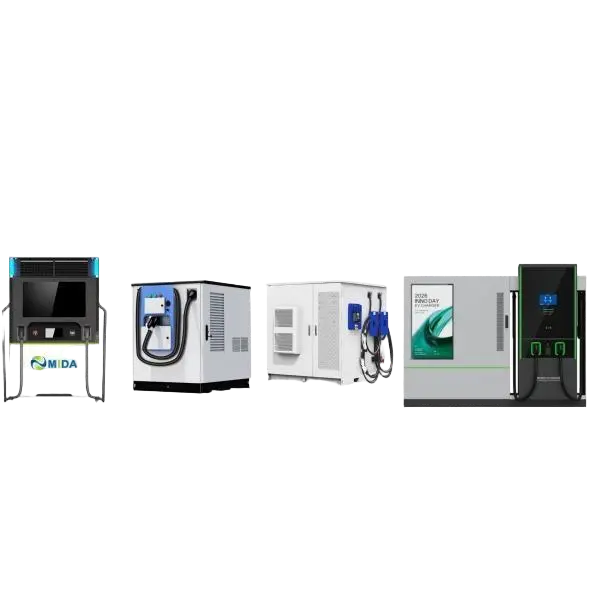
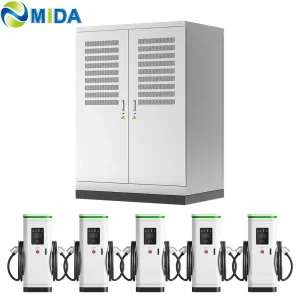
Large commercial fleets—such as electric delivery vans, port terminal trucks, and city buses—require high power delivery on strict duty cycles. Standard point-to-point AC charging cannot support these rapid operational demands. Mida Group provides centralized split DC architectures that allow operators to separate the power conversion electronics from the actual dispensing unit.
By placing centralized power modules in a secure, climate-controlled substation room, operators reduce site noise, extend component life, and optimize maintenance access. The outdoor parking area only needs compact charging dispensers, maximizing space in tight depots.
Connecting several megawatts of charging load to local grids can trigger high peak-demand charges or destabilize local distribution transformers. Our modern split chargers address this by using intelligent dynamic load balancing algorithms.
The controller continuously monitors the state of charge (SoC) and battery temperature of all connected vehicles. It dynamically distributes active power modules in 20kW or 40kW increments to where they are needed most. This prevents grid overload while ensuring fleets are charged and ready for service.
Deploying public high-voltage charging networks requires strict compliance with international safety, grid integration, and measurement standards. Mida Group designs its products to comply with major global regulatory standards, including TÜV Rheinland, CE, UL, CSA, UKCA, and AS/NZS. Our charging controllers support standard communication protocols such as DIN 70121 and ISO 15118, which enable Plug & Charge and secure Transport Layer Security (TLS) data encryption between the vehicle and the charger.
Our complete software stack supports OCPP 1.6J and OCPP 2.0.1 (JSON format). This allows operators to easily connect Mida hardware to any third-party back-office billing platform, mobile app, or smart grid orchestrator. We work closely with international engineering partners, EPC firms, and local distributors to simplify installation, verify grid compliance, and offer rapid spare parts support. Our local service networks help keep down-time to a minimum, ensuring reliable operation for high-utilization public and commercial charging projects.
As heavy commercial vehicles, electric ships, and mining haulers transition to electric drivetrains, the industry requires even faster charging rates. The Megawatt Charging System (MCS) standard is designed to deliver up to 3.75 megawatts (3,000A at 1,250V DC) of continuous power. Mida Group is at the forefront of this shift, actively designing new high-current connectors and liquid cooling units capable of handling these high loads.
Additionally, bidirectional vehicle-to-grid (V2G) applications are transitioning from pilot phases to commercial deployments. Using our bidirectional charging modules, parked commercial fleets can act as distributed virtual power plants (VPPs). By returning battery power to the grid during peak demand, fleet operators can offset their energy costs and help stabilize local grids, turning charging depots into active revenue generators.
Keep up with the latest updates from Mida Group's engineering divisions, focusing on overhead pantograph charging and transit bus solutions.

Discover how top-down pantograph systems provide automated, high-power connection points for transit buses. These overhead systems reduce physical footprint and simplify fleet operation at busy depots.
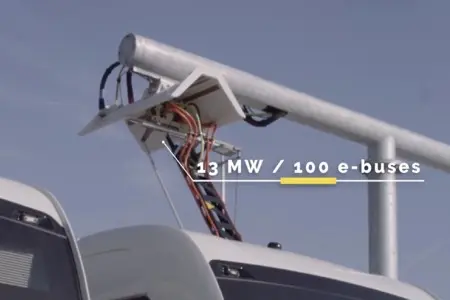
Operational tests show that pantograph-equipped electric buses can achieve 150kW to 450kW opportunistic charging during regular passenger stops. This extends daily transit routes without requiring overnight charging breaks.
A detailed installation guide for municipal transit teams, covering structural support alignment, electrical connections, and automated sensor setup for reliable docking.
Clear, detailed answers to technical and procurement questions regarding Mida Group's charging equipment.
Explore our high-power, liquid-cooled, split-type, and energy storage-integrated charging stations designed for long-term industrial reliability.