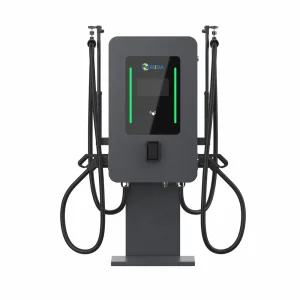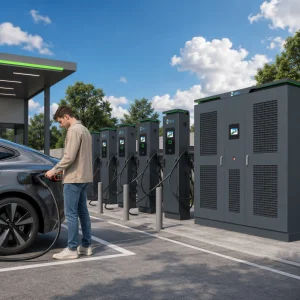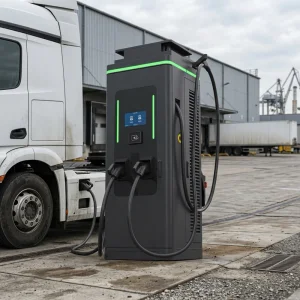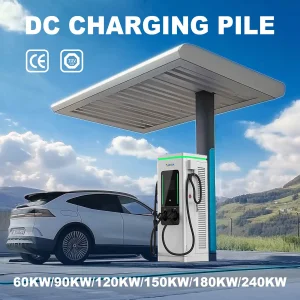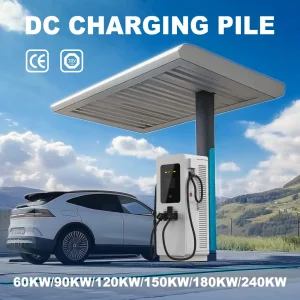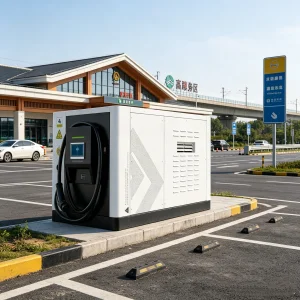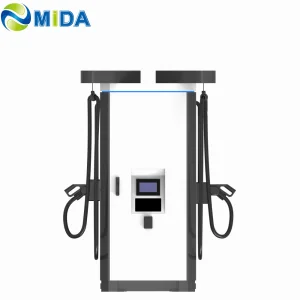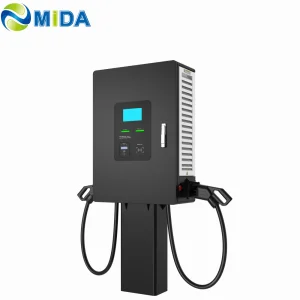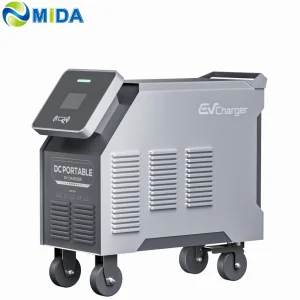
Explore our high-performance DC fast charging stations designed for commercial fleets, public networks, and heavy-duty applications.
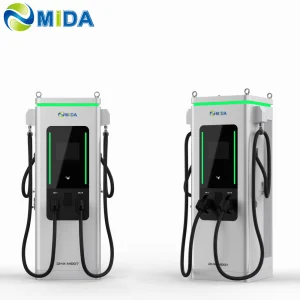
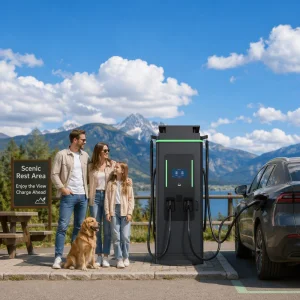
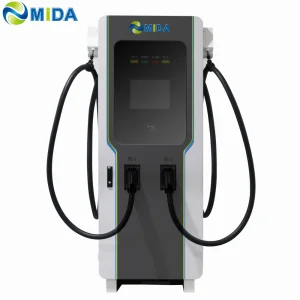
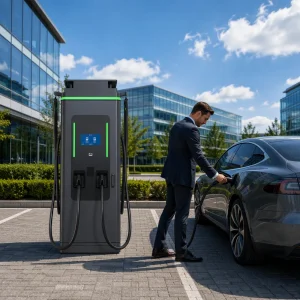
The global transition to electric mobility has reached an inflection point where grid-scale DC fast charging infrastructure is no longer an optional luxury, but the primary bottleneck for electrification. Central to this infrastructure expansion is the Combined Charging System (CCS) standard—predominantly CCS Type 1 (North America) and CCS Type 2 (Europe and rest-of-world)—which combines single-phase AC, three-phase AC, and high-speed DC charging in a single, robust interface.
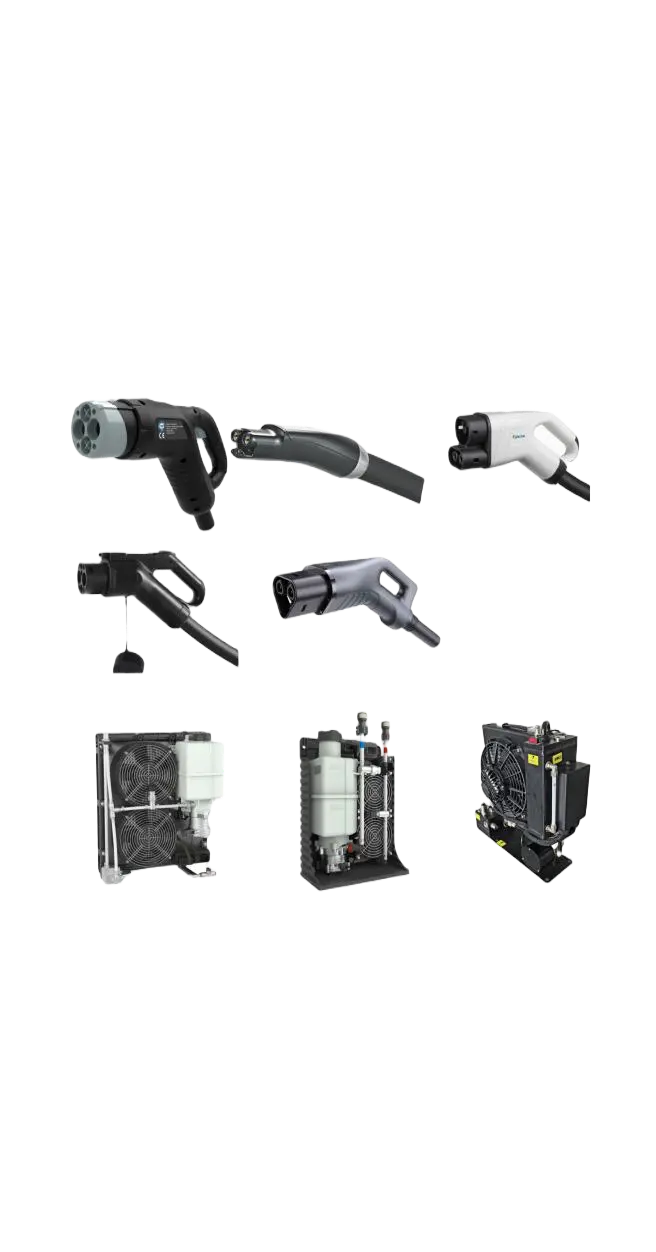
Currently, global logistics, public transport, and commercial fleet operators are shifting from 50kW-150kW class chargers to Ultra-Fast Charging (UFC) and Megawatt-class solutions (spanning 300kW to 1500kW). In heavy commercial vehicle sectors, the demands are even more extreme. High-voltage vehicle architectures (800V to 1000V+) require charging networks capable of delivering extreme currents safely. The industrial focus has shifted from standard air-cooled systems to active liquid-cooled solutions that manage thermal loads directly in the power cable, connector, and module matrix.
SEO Insight & Information Gain: Standard DC chargers experience severe thermal throttling at currents above 250A. True high-power charging (HPC) environments utilize specialized coolant mixtures (ethylene glycol/water or synthetic esters) circulated through low-impedance cables to keep the operational temperature below 50°C, sustaining flat 500A+ charging curves.
Chinese EV charger manufacturers have achieved a structural cost and performance advantage that cannot be easily replicated. This edge is built on three pillars:
Choosing the correct charger format depends entirely on the operational environment:
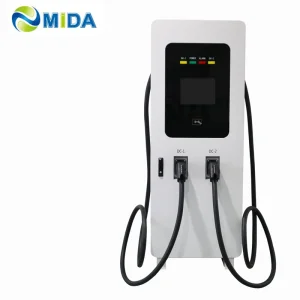
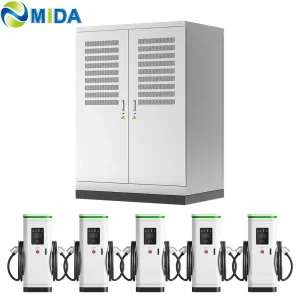
1. Highway Corridor Fast Charging Stations: These environments demand high-voltage resilience (150V - 1000V output range) and dynamic power allocation. Multi-gun configurations (split charging systems) dynamically route power modules to vehicle ports, ensuring that a single 360kW stack can charge four passenger vehicles or two electric logistics trucks simultaneously without overloading local grid capacity.
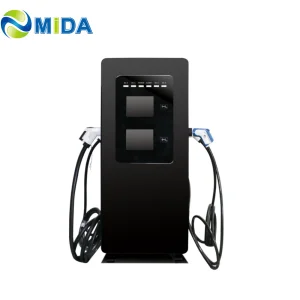
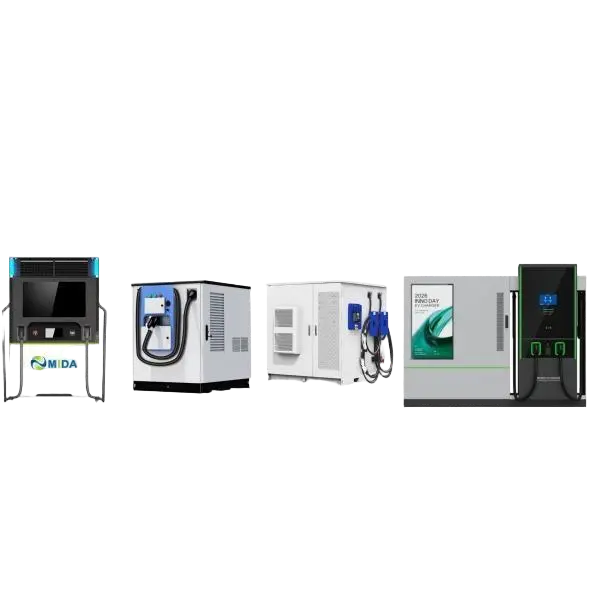
2. Urban Commercial Fleets & Depot Charging: Distribution hubs hosting electric trucks or vans operate on strict scheduling. Here, wall-mounted 60kW to 80kW DC chargers offer space-saving footprints, allowing direct installation onto structural pillars, while large-scale depots opt for centralized split power cabinets coupled with remote charging satellite units.
3. BESS-Integrated Off-Grid Solutions: In remote regions or sites with grid constraints, integrating Battery Energy Storage Systems (BESS) directly with the DC charging network allows chargers to pull steady low-power current from the grid, storing it in localized lithium batteries, and discharging it at high rates (up to 300kW+) during vehicle charging cycles.
The sector is moving rapidly toward three major technological benchmarks:
Active cooling technology enables ultra-thin, highly flexible cables that safely deliver up to 600A continuously, reducing driver fatigue and accelerating charging cycles.
Bidirectional power modules allow electric vehicle fleets to act as mobile batteries, discharging power back into commercial buildings or local distribution networks during peak demand periods.
Ensuring end-to-end data security, TLS-encrypted communications, and native Plug & Charge capability for zero-friction transaction processing at public terminals.
A global manufacturing powerhouse driving next-generation power electronics and electric vehicle connection technology.
Shanghai Mida Cable Group Ltd. operates through its wholly owned subsidiaries: Shanghai Mida EV Power Co., Ltd., Shenzhen Mida EV Power Co., Ltd., and Shanghai Mida New Energy Co., Ltd.
Mida Cable manufactures a comprehensive range of EV charging cables, including 16A–80A J1772 cables, 16A–63A IEC 62196-2 Type 2 cables, and heavy-duty DC fast charging cables: CCS1 (80A–500A), CCS2 (125A–1000A), CHAdeMO (125A–300A), GBT (200A–1000A), and NACS connectors (250A–600A).
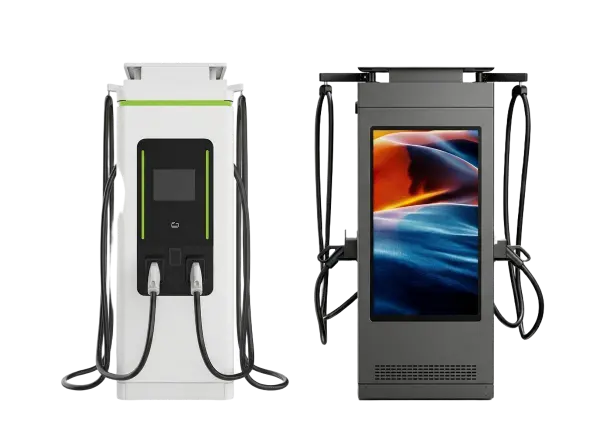
MIDA EV Power produces a full lineup of EV charging stations, such as 7kW–50kW mobile chargers, 3.6kW–7.2kW portable DC chargers, 360kW–1440kW split-type DC fast chargers, 20kW–50kW wall-mounted DC chargers, and 60kW–480kW floor-standing DC fast charging stations.
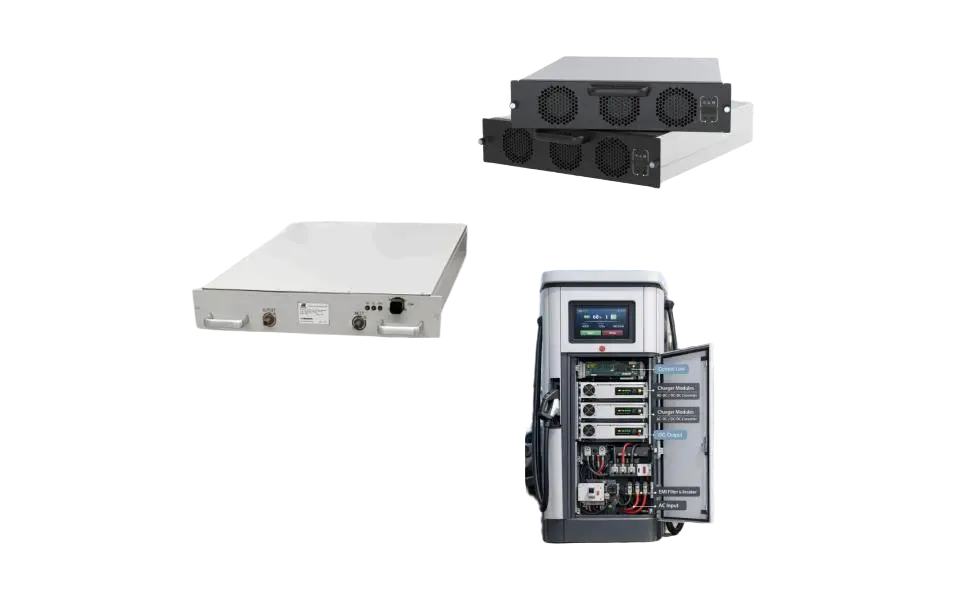
MIDA New Energy specializes in EV charger power modules, offering 20kW–60kW standard modules, 40kW–125kW liquid-cooled modules, 30kW–62.5kW bidirectional modules, and 20kW–45kW V2G charging modules.

Engineered to deliver exceptional reliability, high conversion efficiency, and seamless software integration.
In-depth responses from our engineering directors regarding global deployment and procurement specifications.
Follow our latest industry updates, engineering breakthroughs, and case studies in electric mass transit solutions.

What are the advantages of an e-bus pantograph dome? In contrast to classic plug-in charging systems, e-bus pantograph systems allow for high-power hands-free charging during scheduled stops.
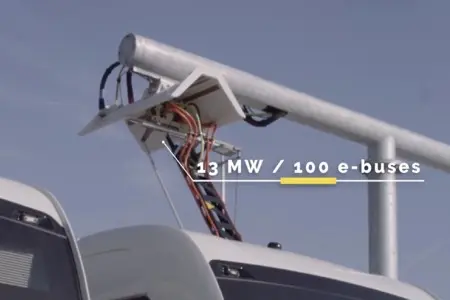
How long does it take to charge with an e-bus pantograph? The charging time depends on the battery capacity and the station's configuration, offering multi-megawatt flow to charge transit vehicles in minutes.
How to Install the Pantograph Up Charger System Dome for Electric Bus. This guide details structural alignment, high-voltage integration requirements, and safety isolation testing protocols.
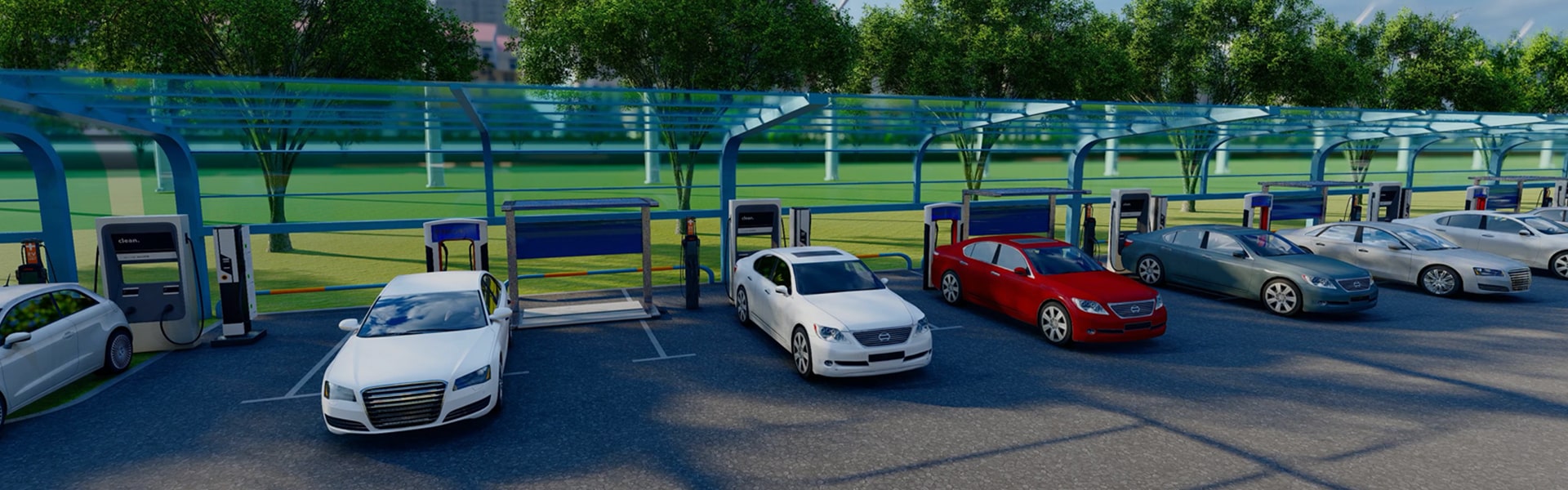
Explore the remainder of our technical portfolio, optimized for extreme duty, wall-mount requirements, and liquid-cooled configurations.