China CHAdeMO DC Charging Station Manufacturer & Factories

Pioneering multi-protocol high-power EV charging infrastructure, delivering certified reliability, V2G integration, and advanced liquid-cooled solutions for global utility grids and fleets.

1500+ A
MCS Connector Output
1440 kW
Max Combined Charging Stack
V2G / Bidirectional
Smart Grid Technology
PSE & CE TUV
International Compliance

The Evolution and Global Viability of CHAdeMO Fast Charging Technology

Although standardizations have branched globally, the **CHAdeMO** protocol remains a crucial fast-charging architecture, specifically in the East Asian, Japanese, and select European fleet sectors. Originated in 2010 by the CHAdeMO Association, this protocol was the first widely adopted DC fast-charging standard globally, demonstrating the commercial viability of high-voltage direct current charging interfaces.

"Direct Current (DC) fast-charging infrastructure dictates electric fleet availability. Utilizing bidirectional power handshakes, modern CHAdeMO systems bridge the gap between traditional vehicle logistics and active micro-grid load balancing."

For global procurement managers, understanding the design variations of CHAdeMO stations is essential. Unlike standard plug-and-play AC mechanisms, CHAdeMO relies on localized Controller Area Network (CAN) bus communications. The protocols facilitate real-time safety handshakes regarding thermal profiles, dynamic resistance, and current bounds, creating a direct feed loop between the electric vehicle battery management system (BMS) and the external charging rack. Choosing an experienced manufacturer ensures that these CAN communication modules are properly isolated and capable of negotiating varying vehicle parameters without faulting.

Technical Advancements in Multi-Protocol Stations

Modern commercial infrastructure demands versatility. In the current landscape, standalone charging protocols represent potential dead-ends for infrastructure investments. The industry has shifted toward dual and triple-connector configurations. Leading systems integrate CHAdeMO alongside CCS1, CCS2, and GBT, supported by unified high-efficiency power modules. This allows operators to serve legacy Japanese EVs (such as the Nissan LEAF and Mitsubishi Outlander PHEV) while simultaneously providing high-performance CCS or NACS charging to modern vehicles.

Industrial Product Segments

Comprehensive solutions designed for varied infrastructural deployment parameters

AC EV Charger
High-Efficiency Level 2 Solutions

Reliable residential and commercial destination charging points supporting J1772 and Type 2 systems.

View More
Wall-Mounted/Mobile EV Charger
7kW 20kW 30kW 40kW 60kW 80kW

Flexible wall-box designs and portable rapid chargers ideal for fleets and on-the-road emergency recovery.

View More
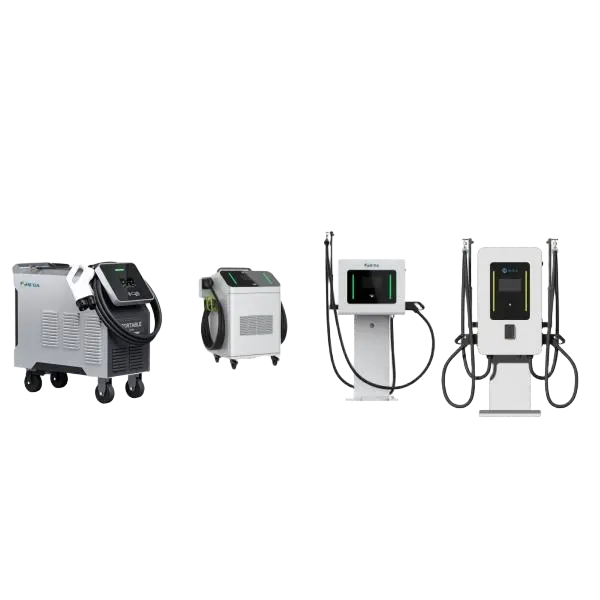
Wall-Mounted and Mobile EV Charger Category Image
DC Charger Station
60kW-480kW 360kW-1440kW

Ultra-fast charging hubs with dynamic power allocation and smart grid load balancing capabilities.

View More
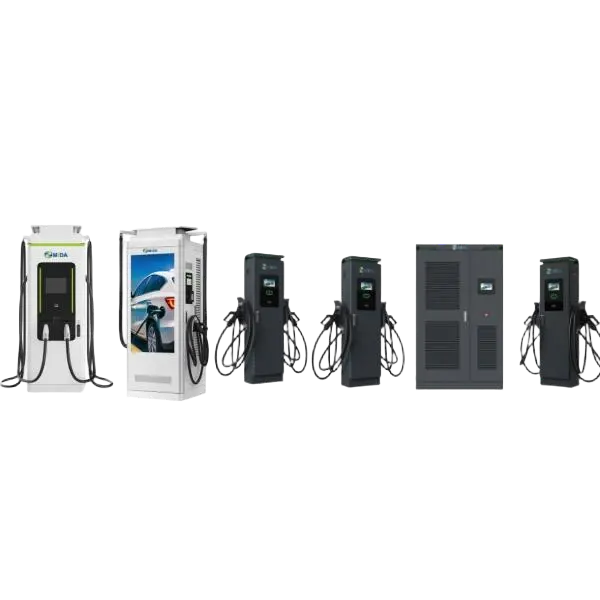
DC Charger Station Category Image
BESS Charging Station
60kWh 261kWh 418kWh 625kWh 2MkWh

Integrated Battery Energy Storage Systems designed to support high-power DC fast chargers without straining local distribution transformers.
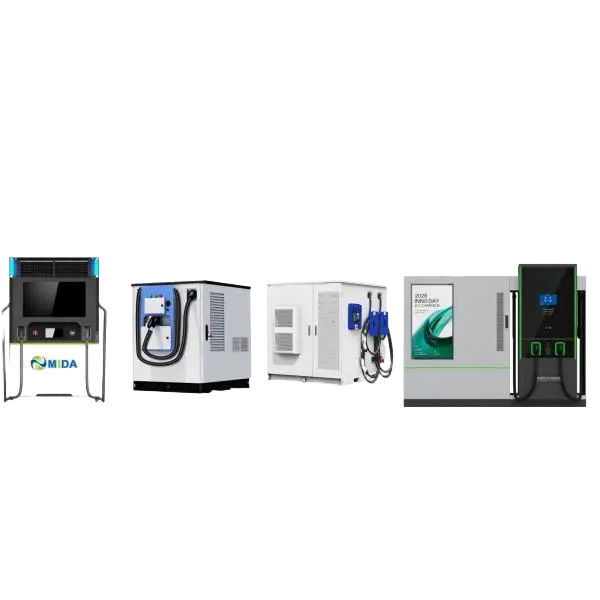
BESS Charging Station Category Image
Global Industrial Capability

WELCOME TO MIDA GROUP

Shanghai Mida Cable Group Ltd. operates through its wholly owned subsidiaries: Shanghai Mida EV Power Co., Ltd., Shenzhen Mida EV Power Co., Ltd., and Shanghai Mida New Energy Co., Ltd. We offer integrated design, custom engineering, component fabrication, and final station certification under one roof.

**Mida Cable** manufactures a comprehensive range of EV charging cables, including 16A–80A J1772 cables, 16A–63A IEC 62196-2 Type 2 cables, and DC fast charging cables: CCS1 (80A–500A), CCS2 (125A–1000A), CHAdeMO (125A–300A), GBT (200A–1000A), and NACS connectors (250A–600A).

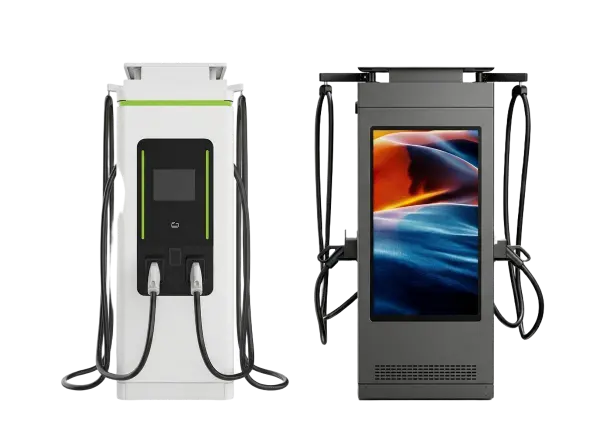
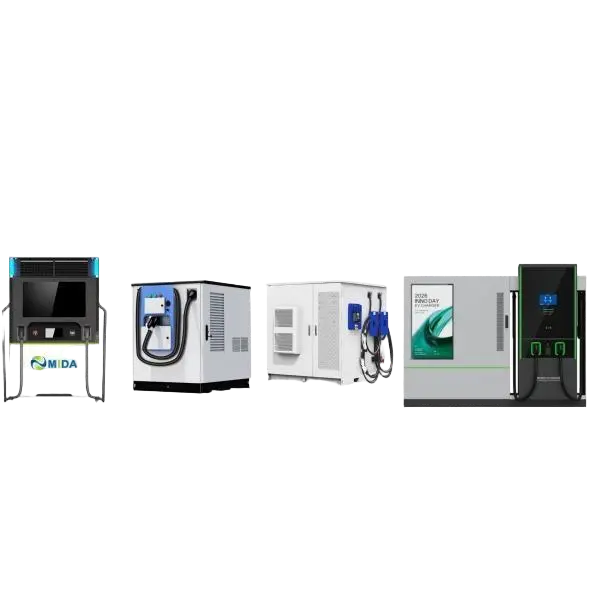
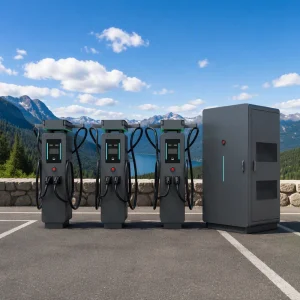
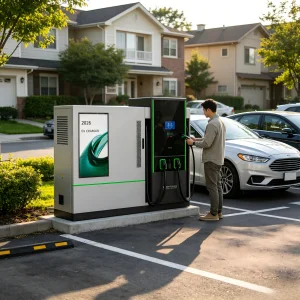
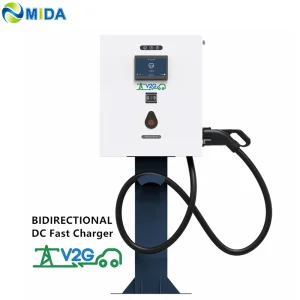
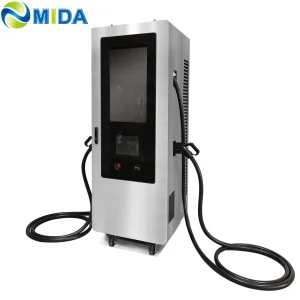
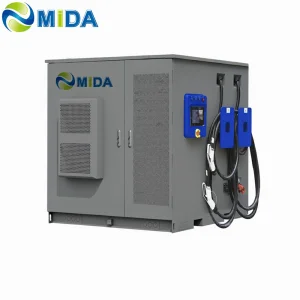
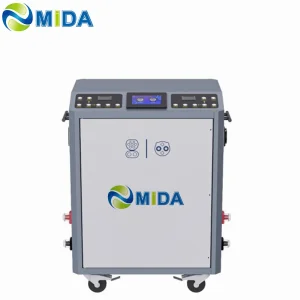
**MIDA EV Power** produces a full lineup of EV charging stations, such as 7kW–50kW mobile chargers, 3.6kW–7.2kW portable DC chargers, 360kW–1440kW split-type DC fast chargers, 20kW–50kW wall-mounted DC chargers, and 60kW–480kW floor-standing DC fast charging stations.

**MIDA New Energy** specializes in EV charger power modules, offering 20kW–60kW standard modules, 40kW–125kW liquid-cooled modules, 30kW–62.5kW bidirectional modules, and 20kW–45kW V2G charging modules.

Vertical Integration
Cables, Modules, and Stations engineered and produced in-house.
Global Standards
Certified for CE, TUV, UL, PSE, NACS, and GBT interfaces.
Future-Ready
Dedicated V2G, Bidirectional modules, and Liquid Cooling technology.
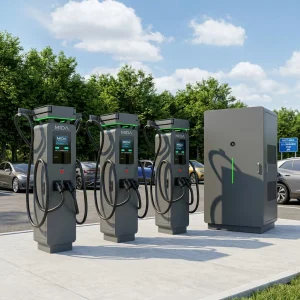
MIDA EV Power Factory and Engineering Layout Image

MAIN PRODUCTS

Explore the complete technological range of MIDA Group components and integrated assemblies
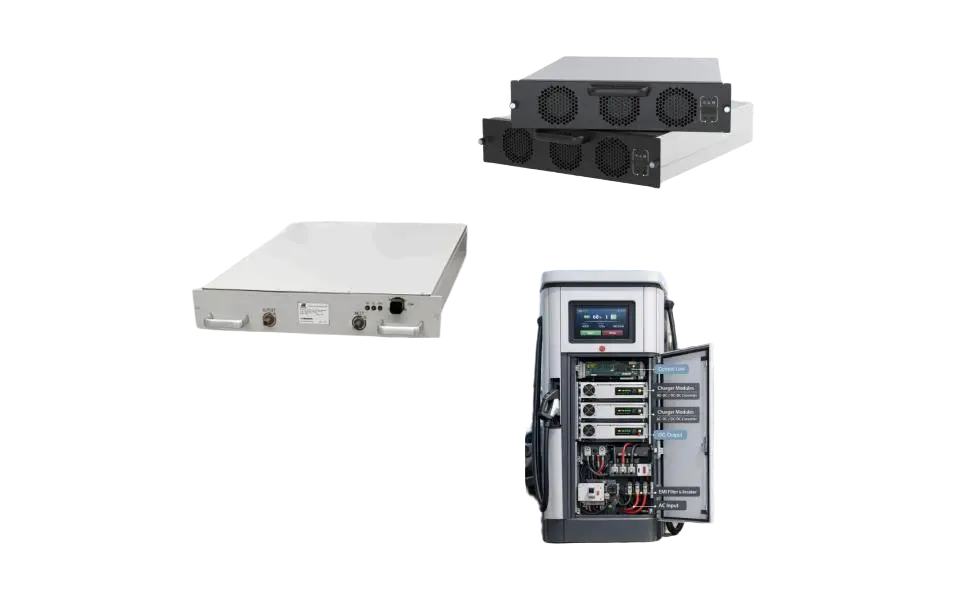
EV Charging Power Module
  • 30kW 40kW 50kW 60kW 80kW AC DC EV Charger Module
  • 30kW 40kW 50kW 60kW DC DC EV Charger Module
  • 40kW 60kW 75kW 125kW Liquid Cooled Power Module
  • 20kW 22kW 30kW 40kW 45kW V2G Power Module
  • 30kW 40kW 50kW 60kW MPPT Power Module
  • 20kW 50kW 62.5kW Bidirectional AC DC Power Module
View More
EV Charging Power Module Showcase
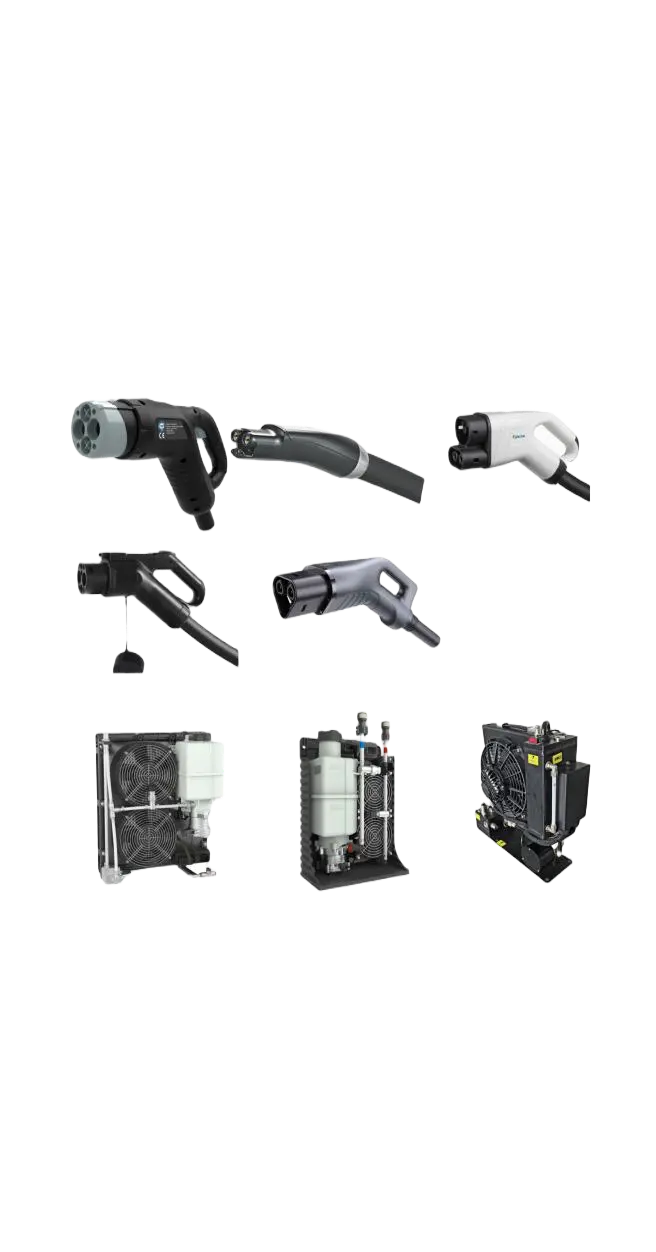
DC Charging Connector & Liquid Cooling Unit
  • 500A 600A CCS1 & CCS2 & GBT Connector
  • 125A 250A 300A 350A NACS & CHAdeMO Connector
  • 1500A MCS Connector & CHAOJI Connector
  • 3.5kW 4.5kW 6kW 9kW Integrated Liquid Cooling Unit
  • 2.4kW 3.5kW Split Type Cooling Unit
  • 25kW ~72kW Cooling Unit for HPC Charging
View More
DC Charging Connector and Cooling System Showcase
DC Fast Charger Station
  • 7kW~ 60kW Mobile DC Charging Station
  • 20kW ~80kW Wall Mounted DC Charging Station
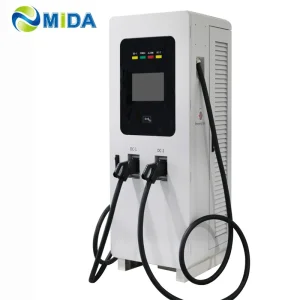
  • 60kW ~480kW Floor Mounted Charging Station
  • 60kW~240kW Advertising Charging Station (43inch , 55inch )
  • 600kW ~1080kW Liquid Cooled Charging Station
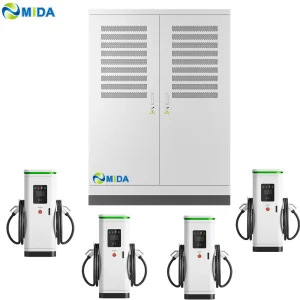
  • 360kW ~ 1680kW Split Type DC Charging Station
View More
DC Fast Charger Station Showcase
Energy Storage Charging Station
  • 15kW~480kW Mobile ESS Charging Station
  • 60kW ~ 400kW Integrated ESS Charging Piles
  • 65kWh~200kWh Emergency Rescue Charging Station
  • 165kwh Automatic Charging Robot
  • 800kwh~2000kwh Solar Energy Charging System
View More
Energy Storage and ESS Charging System Showcase

Globally Compatible CHAdeMO Systems: Localized Compliance and V2G Strategy

Japanese Market Access: Demystifying PSE and JARI Compliance

For buyers targeting the Japanese market, compliance goes beyond standard IEC guidelines. The **Electrical Appliance and Material Safety Act (DENAN)** dictates that fast-charging apparatus must bear the **PSE Mark (Product Safety Electrical Appliance & Material)**. Obtaining PSE certification requires rigorous safety testing of components, isolation circuits, and leakage protection mechanisms.

Additionally, registration with the **Japan Automobile Research Institute (JARI)** is vital. JARI verification validates interoperability across vehicle brands under realistic thermal stress. MIDA's specialized CHAdeMO systems (spanning 90kW to 150kW) are engineered to meet these strict standards, featuring built-in Class A type ground-fault circuit interrupters (GFCI) and advanced surge protective devices (SPD) to withstand seismic activity and typhoons common in East Asian coastlines.

Micro-Grid Interaction: The Power of Bidirectional V2G Integration

As electric vehicle fleet densities increase, local distribution grids face significant peak capacity challenges. The CHAdeMO protocol was an early adopter of native vehicle-to-grid (**V2G**) protocols. By implementing bidirectional power conversion modules (e.g., MIDA's 20kW to 45kW V2G modules), EV charging stations can draw energy from the vehicle's battery during peak grid demands and return it when electricity rates stabilize.

This functionality transforms a passive fleet depot into an active grid asset, allowing operators to monetize idle battery capacity through demand-response programs. The integration of high-efficiency V2G power conversion stages requires complex galvanic isolation, low harmonic distortion (THD < 5%), and an active power factor correction (PFC) above 0.99 to ensure energy conversion remains stable, clean, and lossless.

Future Roadmap: ChaoJi and Next-Generation Ultra-High Power Charging

To address the charge-time limitations of legacy systems, the CHAdeMO Association partnered with the China Electricity Council (CEC) to develop **ChaoJi**. This collaborative standard supports charging outputs exceeding 900kW (up to 1500V and 600A). The ChaoJi design incorporates backward compatibility with legacy CHAdeMO and GB/T standards, while reducing connector weight, adding liquid-cooling pathways, and upgrading security parameters. Investing in hardware platforms that support these developmental upgrades ensures long-term operational viability.

CORPORATE NEWS

Insights and developments from the forefront of e-mobility infrastructure
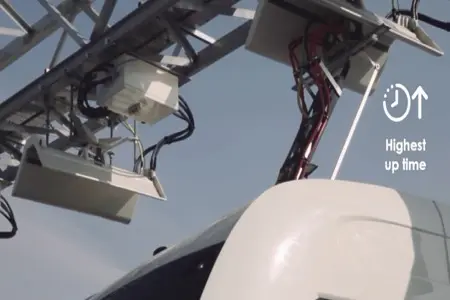
E-Bus Pantograph Dome Details

What are the advantages of an e-bus pantograph dome?

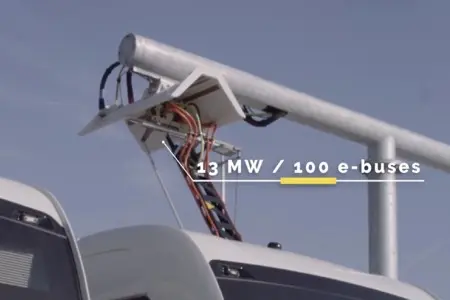
In contrast to classic plug-in charging systems, e-bus pantograph systems allow for automatic rapid charging during passenger boarding, reducing the weight and size of vehicle battery packs.
E-Bus Pantograph Charging Durations

How long does it take to charge with an e-bus pantograph?

The charging time depends on the battery capacity and output power. Typical high-power opportunity charging systems range from 150kW to 450kW, allowing complete cycles in 5 to 10 minutes.
Pantograph Installation Guidelines

How to Install the Pantograph Up Charger System Dome for Electric Bus

Installing a “Pantograph Up” system requires precise mechanical alignment, structural support brackets, high-voltage isolators, and secure interfaces with local power grids.
View More Corporate News
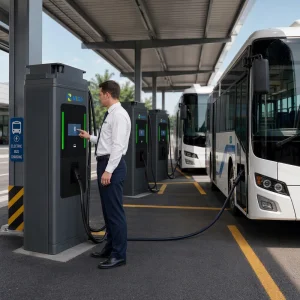
Modern EV Bus Charging Station Infrastructure Overview

Expert Q&A: CHAdeMO & High-Power DC Infrastructure

In-depth insights into engineering standards, procurement challenges, and site preparation requirements.
How does CHAdeMO compare directly to CCS and NACS standards?
The CHAdeMO standard relies on Controller Area Network (CAN) bus communication protocol for its handshakes with the electric vehicle, which allows for fast, native bidirectional charging (V2G) without additional translation protocols. Conversely, CCS (Combined Charging System) and NACS (North American Charging Standard) use Powerline Communication (PLC) over HomePlug Green PHY. While CCS and NACS support higher raw outputs (up to 350kW+ on single cables), modern CHAdeMO systems continue to serve Japanese models (such as Nissan LEAF) and are highly valued in microgrids due to their bidirectional charging capability.
What certifications are required to import CHAdeMO DC fast-chargers to Japan?
Importers must verify compliance with the Japanese Electrical Appliance and Material Safety Act (DENAN), which requires the PSE Circle or Diamond mark depending on the configuration. In addition, the equipment should undergo testing and registration by the Japan Automobile Research Institute (JARI). JARI verification guarantees that the charger's signaling protocol matches the exact tolerances of Japanese OEMs, preventing electrical faults or vehicle communication lockouts.
What is ChaoJi, and will it replace current CHAdeMO systems?
ChaoJi is a collaborative standard developed by the CHAdeMO Association and China Electricity Council (CEC) to enable ultra-high-power charging (up to 900kW). It is designed to replace legacy standards eventually, but features backward compatibility via adapters and multi-protocol control boards. This allows current CHAdeMO infrastructure investments to remain viable through simple modular upgrades.
Why is dynamic power sharing essential in high-power charging depots?
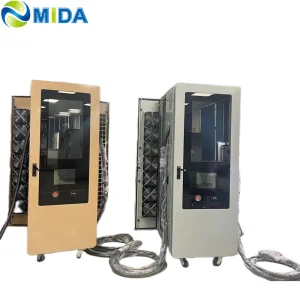
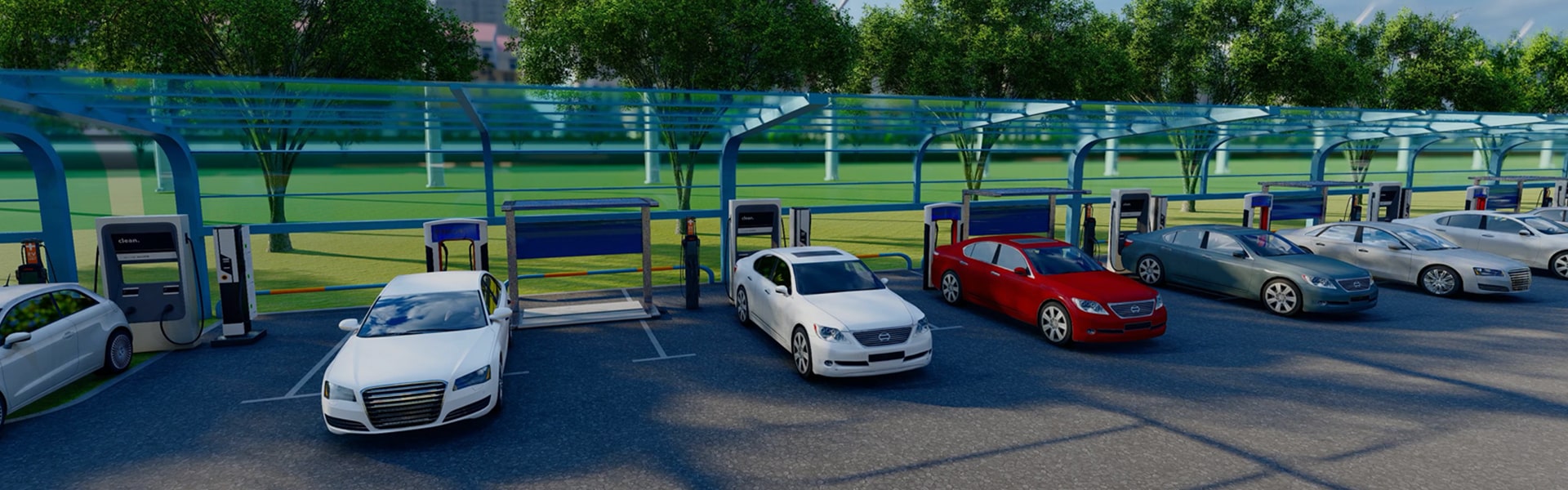
Dynamic power sharing allows a centralized rectifier matrix (charging stack) to distribute electricity to individual dispensers based on vehicle demand and battery state of charge (SoC). For example, rather than dedicating fixed 150kW allocations to empty bays, a 600kW split system can route 200kW to a vehicle at a low SoC while supplying 50kW to others nearing full capacity. This optimizes charging speeds, reduces peak grid demands, and lowers installation costs.
How does an integrated Battery Energy Storage System (BESS) benefit fast-charging hubs?
Integrating BESS allows charging stations to store power during low-rate periods (or from on-site solar panels) and discharge it during peak charging events. This reduces grid connection capacity requirements, avoids high demand charges from utility companies, and provides reliable emergency backup power during grid disruptions.