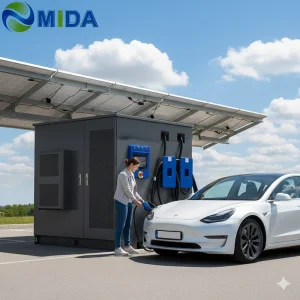
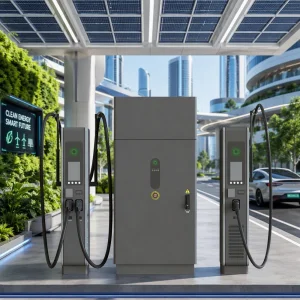
As global transport electrification accelerates towards mega-scale deployment, the transition from destination charging to ultra-fast High-Power Charging (HPC) networks is no longer a luxury—it is a critical infrastructural prerequisite.
For C-level executives, utility distributors, public transport entities, and commercial charge point operators (CPOs), identifying the right fast charge electric car stations manufacturer is the foundation of long-term commercial viability. Modern EV networks demand scalable engineering architectures that can support output capacities up to 1440kW, integration with local grid networks via battery energy storage, and dynamic thermal management systems.
Conventional air-cooled cables restrict charging thresholds to 200A. Liquid-cooled assemblies, integrated with synthetic coolants or water-glycol mixtures, allow safe execution at 500A-1000A, bringing charging times down to under 10 minutes without thermal stress on components.
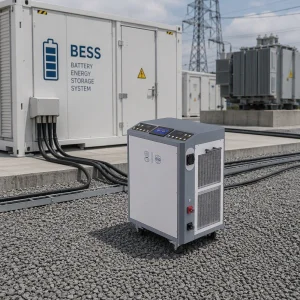
Mass ultra-fast charging risks destabilizing localized grids. Integrating Battery Energy Storage Systems (BESS) acts as a buffer—storing energy during low demand and discharging during peak vehicle charging intervals, reducing operational expenditure and demand charges.
Interoperability is crucial. Leading fast charge electric car stations manufacturers must deliver multi-standard options integrating CCS1, CCS2, NACS (SAE J3400), CHAdeMO, and GB/T alongside modern communication protocols such as ISO 15118 (Plug & Charge) and OCPP 2.0.1.
Shanghai Mida Cable Group Ltd. operates through its wholly owned subsidiaries: Shanghai Mida EV Power Co., Ltd., Shenzhen Mida EV Power Co., Ltd., and Shanghai Mida New Energy Co., Ltd.
As a recognized tier-one fast charge electric car stations manufacturer, our combined capabilities span the entire technological supply chain of EV charging infrastructure.
Mida Cable manufactures a comprehensive range of EV charging cables, including 16A–80A J1772 cables, 16A–63A IEC 62196-2 Type 2 cables, and DC fast charging cables: CCS1 (80A–500A), CCS2 (125A–1000A), CHAdeMO (125A–300A), GBT (200A–1000A), and NACS connectors (250A–600A).
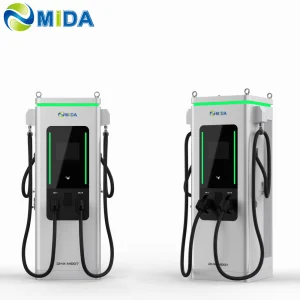
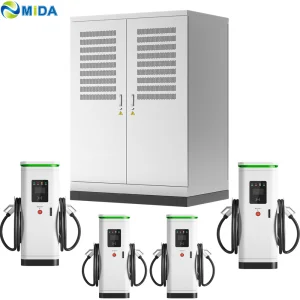
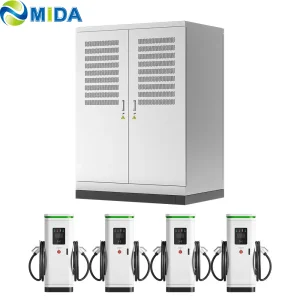
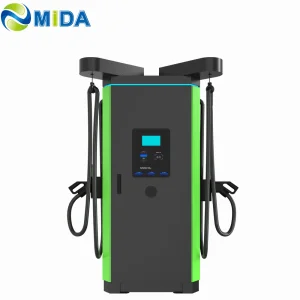
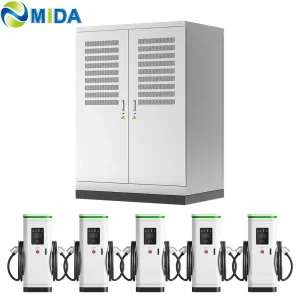
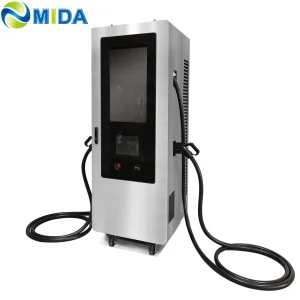
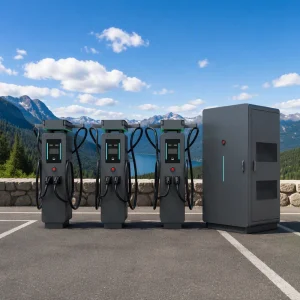
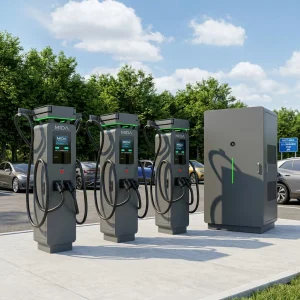
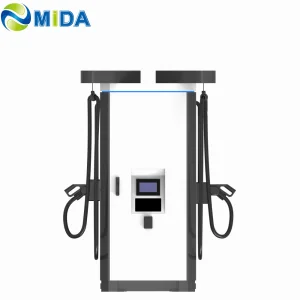
MIDA EV Power produces a full lineup of EV charging stations, such as 7kW–50kW mobile chargers, 3.6kW–7.2kW portable DC chargers, 360kW–1440kW split-type DC fast chargers, 20kW–50kW wall-mounted DC chargers, and 60kW–480kW floor-standing DC fast charging stations.
MIDA New Energy specializes in EV charger power modules, offering 20kW–60kW standard modules, 40kW–125kW liquid-cooled modules, 30kW–62.5kW bidirectional modules, and 20kW–45kW V2G charging modules.

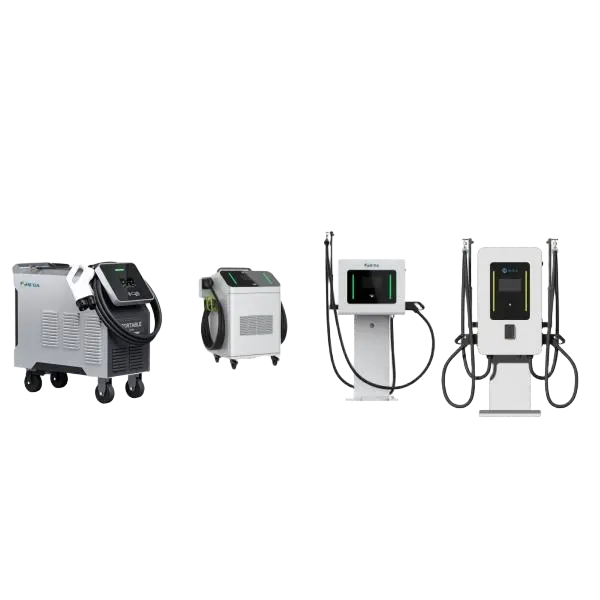
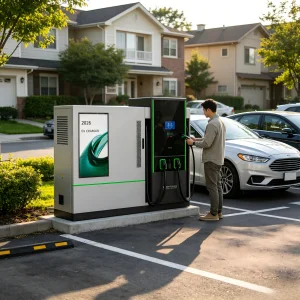
High-durability wall units and mobile modules supporting 7kW, 20kW, 30kW, 40kW, 60kW, and 80kW outputs. Engineered for residential developments, depots, and fleet destination networks.
View Products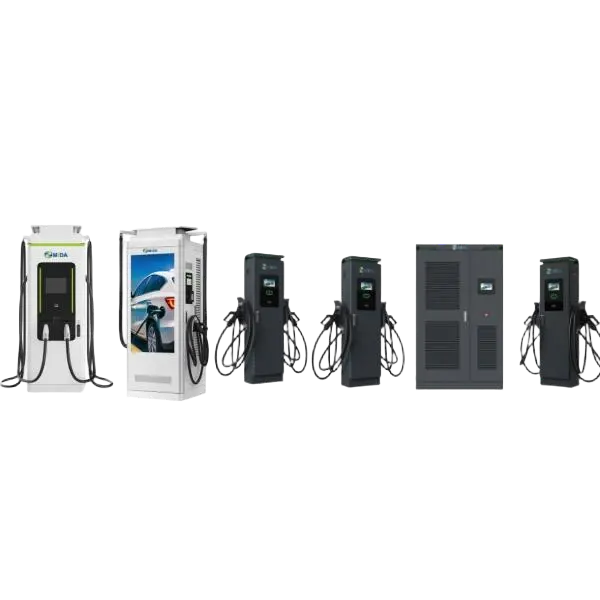
Ultra-fast charging columns and split dispenser configurations scaling from 60kW-480kW up to 360kW-1440kW. Ideal for commercial highways, public hubs, and high-frequency bus terminals.
View Products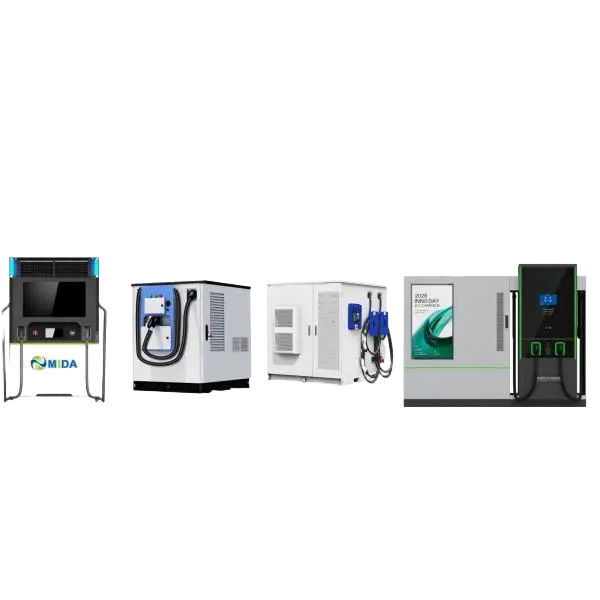
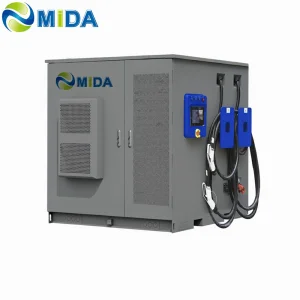
Fully integrated energy storage with capacities of 60kWh, 261kWh, 418kWh, 625kWh, and up to 2MWh. Built-in smart BMS and peak-shaving capabilities for grid independence.
View ProductsExplore MIDA Group's engineering categories, detailing component-level design to industrial turnkey station hardware.
Deploying public DC infrastructure requires strict compliance with international utility, safety, and electrical guidelines. Every region maintains distinct criteria, demanding that procurement partners verify all relevant certifications prior to site mobilization.
For deployment in the US and Canada, charging stations must carry UL 2202 (for DC charging equipment) and UL 2594 (for AC charging). Interoperability with regional utility programs demands full integration with Open ADR 2.0b and conformance to SAE J3400 (NACS standards). In addition, units must feature robust NEMA 3R or NEMA 4 enclosures to withstand harsh environments.
European installations require CE marking in accordance with EN 61851-1 and EN 61851-23. For public commercial networks in Germany and neighboring countries, compliance with German Calibration Law (Eichrecht) is required. This guarantees transparent, tamper-proof billing through certified OCM hardware and cryptographic signatures.
Stay up to date with MIDA Group's latest product announcements, heavy commercial vehicle solutions, and engineering deployments.
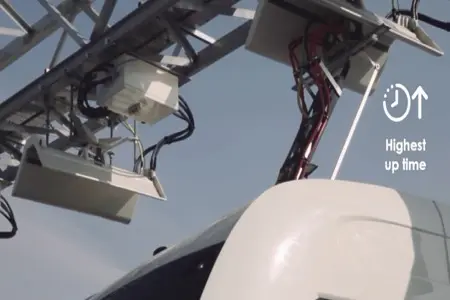
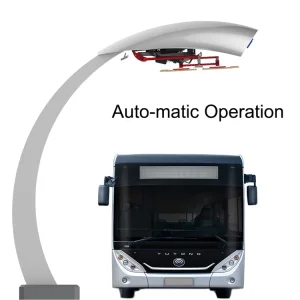
What are the advantages of an e-bus pantograph dome? In contrast to classic plug-in charging systems, e-bus pantograph connections facilitate high-power opportunity charging...
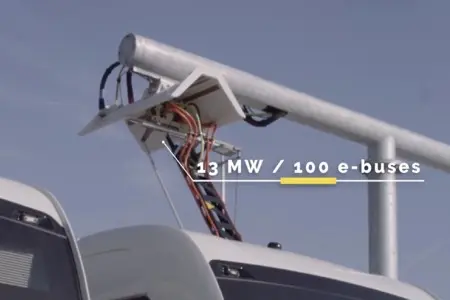
How long does it take to charge with an e-bus pantograph? The charging time depends on the battery capacity and the station's output, enabling swift top-offs in minutes...
How to Install the Pantograph Up Charger System Dome for Electric Bus. Installing a "Pantograph Up" system requires rigorous alignment and grid synchronization...