Best EV Charger DC Supplier & Factory

High-Performance Megawatt Power Conversion & Intelligent DC Fast Charging Infrastructure Solutions

Industry Analysis

Scaling the High-Voltage EV Infrastructure: Technical Realities of Megawatt DC Fast Charging

The global transition to battery electric vehicles (BEVs) is shifting from basic public accessibility to high-performance, rapid-energy transfer. As battery chemistries transition from 400V architectures to 800V and even 1000V levels, the demands placed upon DC fast charging (DCFC) suppliers and factories have escalated exponentially. High-power charging is no longer just about voltage and current output; it is an engineering challenge encompassing thermal dynamics, active power factor correction (APFC), electromagnetic compatibility (EMC), and robust protocol handshake safety.

For fleet operators, highway service plazas, and commercial charging network investors, sourcing critical hardware from a qualified and certified factory is paramount. System component longevity must reach a minimum of 10 years in harsh environments (-30°C to +50°C), requiring extreme insulation protection, advanced liquid-cooling mechanisms, and dynamic load balancing capabilities. MIDA Group integrates vertical engineering design with a highly resilient production model to deliver EV charging components that exceed industrial expectations.

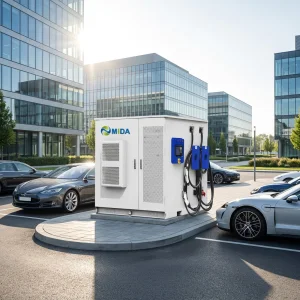
Megawatt Charging System Infrastructure and Assembly Factory Showcase
1,000+ V
Supported Charger Voltage Range
Up to 97%
SiC Power Module Conversion Efficiency
IP65 / IP54
Harsh Environment Protection Level
1500A MCS
Megawatt Charging System Capacity
ESTABLISHED INDUSTRY LEADER

WELCOME TO MIDA GROUP

Global Electrification Infrastructure Innovator

Shanghai Mida Cable Group Ltd. serves as a premier manufacturer and designer of EV charging solutions globally, operating through its specialized, wholly-owned business units: Shanghai Mida EV Power Co., Ltd., Shenzhen Mida EV Power Co., Ltd., and Shanghai Mida New Energy Co., Ltd.

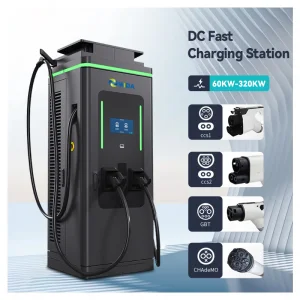
With an extensive history in cable manufacturing and power systems design, the group is structurally aligned to provide complete end-to-end component sourcing. Mida Cable produces a comprehensive range of EV charging cables, including 16A–80A J1772 cables, 16A–63A IEC 62196-2 Type 2 cables, and heavy-duty DC fast charging cables: CCS1 (80A–500A), CCS2 (125A–1000A), CHAdeMO (125A–300A), GB/T (200A–1000A), and NACS connectors (250A–600A).

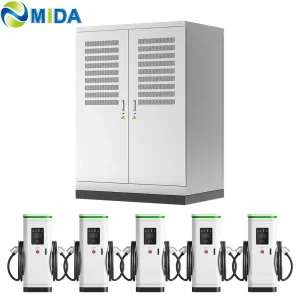
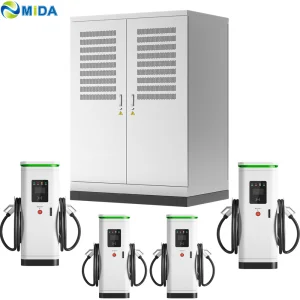
Concurrently, MIDA EV Power designs and manufactures fully integrated charging stations, from 7kW–50kW mobile chargers, 3.6kW–7.2kW portable DC chargers, up to 360kW–1440kW split-type DC fast charging networks. MIDA New Energy focuses specifically on EV charger power modules, offering standard air-cooled modules (20kW–60kW), high-efficiency liquid-cooled modules (40kW–125kW), and specialized bidirectional V2G power modules (20kW–45kW) that bridge the gap between EVs and grid stability.

MIDA EV Power Factory Floor and Testing Lab Equipment
MIDA Main Product Architecture

A comprehensive range of high-power hardware components designed for global compatibility, long-term efficiency, and robust mechanical performance.

EV Charging Power Modules

High-Efficiency AC/DC & DC/DC Rectifiers
EV Charging Power Module Rectifier
  • 30kW, 40kW, 50kW, 60kW, 80kW AC/DC Power Modules
  • 30kW, 40kW, 50kW, 60kW DC/DC Buck-Boost Converters
  • 40kW, 60kW, 75kW, 125kW Liquid-Cooled Closed-Loop Modules
  • 20kW, 22kW, 30kW, 40kW, 45kW Bidirectional V2G Modules
  • 30kW–60kW MPPT Solar-Coupled DC Charging Modules
  • 20kW, 50kW, 62.5kW Bidirectional AC/DC Inverter Modules
Explore Modules

DC Connectors & Cooling Units

High-Current Cable Assembly & Thermal Control
DC Charging Connector & Liquid Cooling Unit
  • 500A & 600A High-Power CCS1, CCS2, & GB/T Plugs
  • 125A, 250A, 300A, 350A NACS & CHAdeMO Plugs
  • 1500A MCS (Megawatt) & ChaoJi Next-Gen Connections
  • 3.5kW, 4.5kW, 6kW, 9kW Integrated Fluid Cooling Compressors
  • 2.4kW & 3.5kW Split-Type Dynamic Cooling Units
  • 25kW to 72kW Industrial Chiller Modules for HPC Hubs
Explore Connections

DC Fast Charger Stations

Fully Integrated Public & Fleet Systems
DC Fast Charger Station
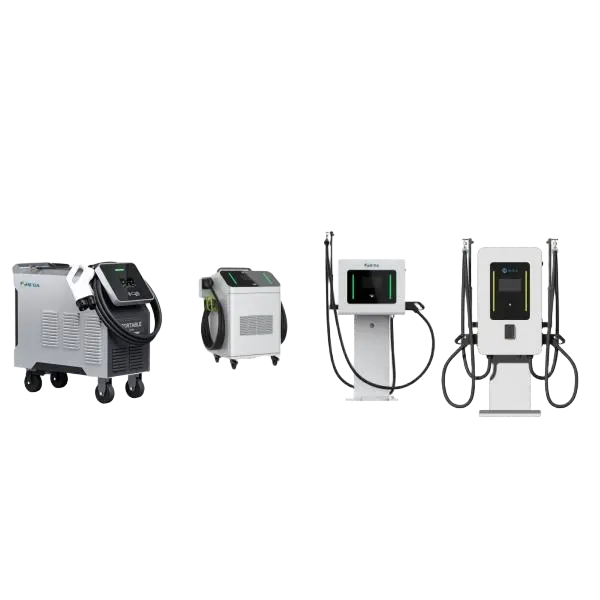
  • 7kW to 60kW Mobile & Portable DC Service Chargers
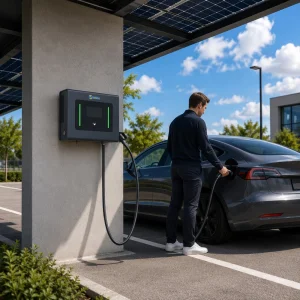
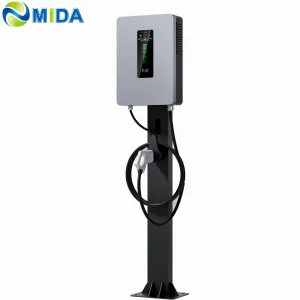
  • 20kW to 80kW Wall-Mounted Compact DC Chargers
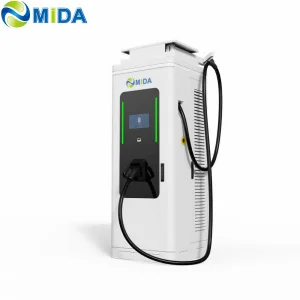
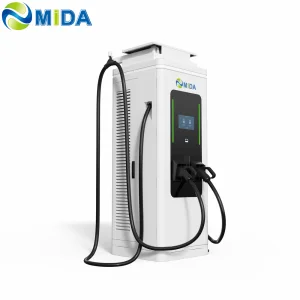
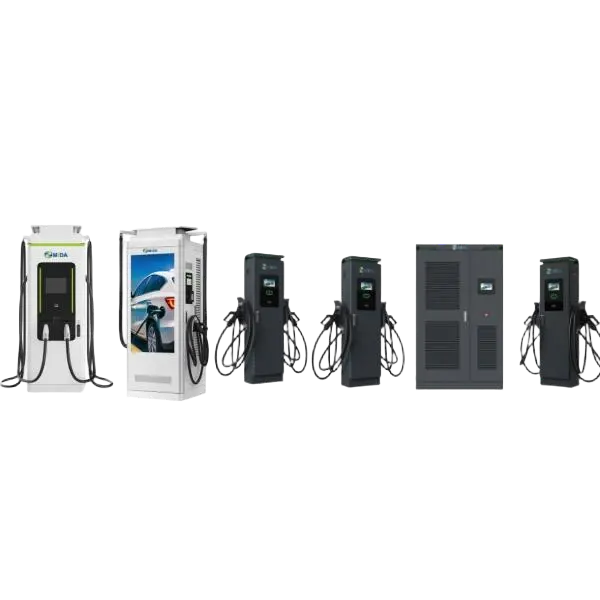
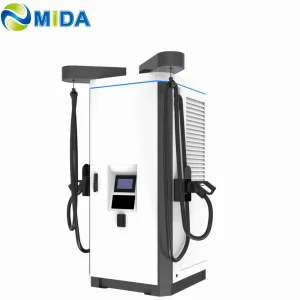
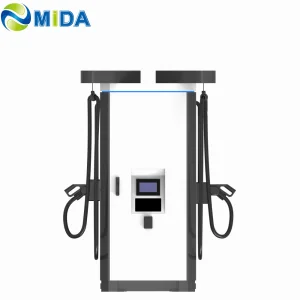
  • 60kW to 480kW Single/Dual Gun Floor-Standing Stations
  • 60kW to 240kW Smart Interactive Ad-Screen Chargers
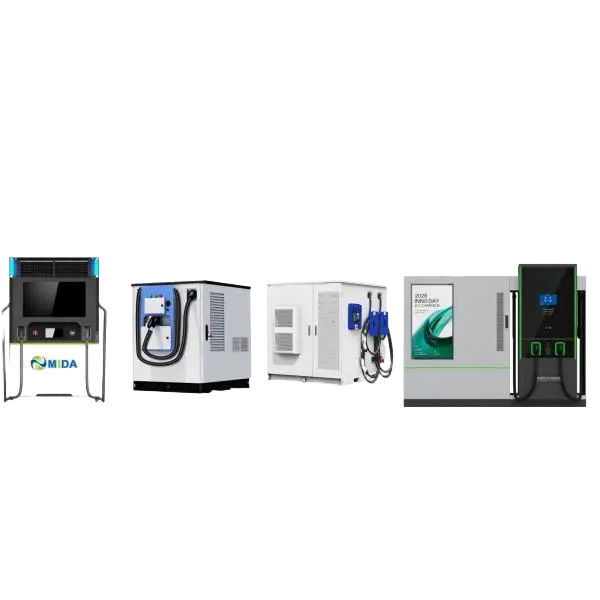
  • 600kW to 1080kW Liquid-Cooled Ultra-Fast Dispensers
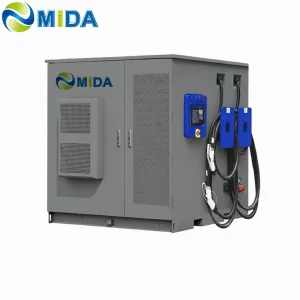
  • 360kW to 1680kW Split-Type Modular Charging Reservoirs
Explore Stations
Energy Storage Charging Stations (BESS Integration)

Bridging energy storage and grid-constrained high-power charging needs to achieve dynamic peak-shaving and off-grid EV support.

Integrated BESS System and Solar Charging Station

Battery Energy Storage (BESS) Charging Piles

  • Configurable Capacity: 60kWh, 261kWh, 418kWh, 625kWh, 2MkWh Containerized BESS
  • Power Levels: 15kW to 480kW dynamic output allocation
  • Integrated Peak-Shaving, Micro-Grid and local Solar input control
  • Automatic fire suppression (Aerosol / Liquid coolant loop options)
Request Engineering Drawing →
Mobile Energy Storage Charging Unit

Mobile ESS Emergency Rescue Piles

  • 65kWh to 200kWh Emergency Tow/Rescue trailer configurations
  • 165kWh Automatic Autonomous Charging Robotic Cart
  • 800kWh to 2000kWh Large Utility Solar Storage Charging Architecture
  • Supports dual-standard output (CCS1, CCS2, NACS, and GB/T combinations)
Request Engineering Drawing →
China Factory Supply Chain Resilience & Efficiency Advantages

Why sourcing DC fast charging infrastructure components directly from a vertically integrated factory ensures competitive delivery timelines and design flexibility.

In the highly competitive DC fast charger market, manufacturing speed, component quality, and cost containment determine commercial viability. Direct factory procurement from MIDA Group’s facilities in China provides distinct strategic advantages. Our fully integrated cable extrusion workshops, cleanroom surface mount technology (SMT) lines for PCB controllers, and dedicated structural assembly floors allow for complete control over the bill of materials (BOM).

Instead of relying on third-party suppliers for core elements like liquid-cooled cable terminals or communication controllers (EVCC), MIDA designs, builds, and tests them in-house. This vertical integration mitigates typical supply chain bottlenecks, ensures strict compliance with ISO 9001 quality management procedures, and yields a significant reduction in total cost of ownership (TCO) for global charge point operators (CPOs). Furthermore, having research and engineering teams adjacent to manufacturing facilities accelerates rapid prototyping—allowing custom cable modifications, customized aesthetic wraps, or custom firmware profiles to be compiled, validated, and shipped in record time.

⚙️

Vertical Integration

From base copper wire drawing to terminal silver-plating and control PCB printing, every step is executed under a unified quality assurance regime.

🧪

Rigorous Safety Validation

Every single DC cable assembly and power module undergoes intensive automatic testing, including high-voltage insulation tests and helium leak detection for liquid-cooling channels.

🚢

Strategic Export Logistics

Proximity to Shanghai and Shenzhen ports ensures rapid international shipping access with reliable freight forwarding partnerships.

Localized Application Scenarios & Commercial Realities

Tailoring high-power DC infrastructure to meet the demands of public highway networks, logistics depots, and smart city grids.

DC fast charging applications are highly contextual. A public shopping mall station requires reliable credit card terminals and robust user interfaces, whereas a transit bus depot requires scheduled high-current delivery, overhead pantographs, and automated power sharing. By analyzing commercial requirements, MIDA Group optimizes its configurations for key target applications:

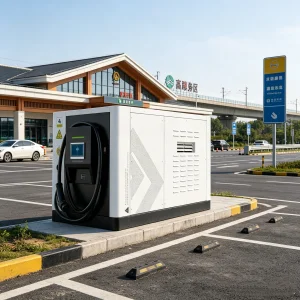
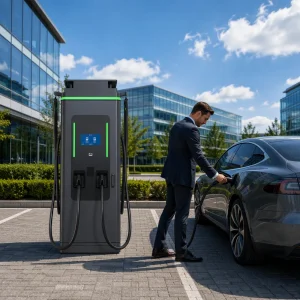
  • Highway Charging Hubs: Utilizing ultra-fast 350kW to 500kW liquid-cooled CCS2 or NACS dispensers allows passenger vehicles to recover up to 80% battery capacity in less than 15 minutes, maximizing throughput and station profitability.
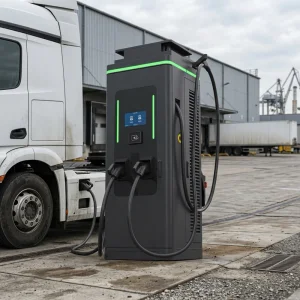
  • Commercial Fleet Depots (Buses & Heavy-Duty Trucks): Deploying centralized power cabinets with split dispensers. By dynamically shifting capacity, fleet operators can charge vehicles overnight at 30kW–60kW or rapidly top up a single truck at 360kW during driver shift changes.
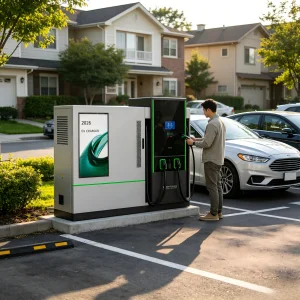
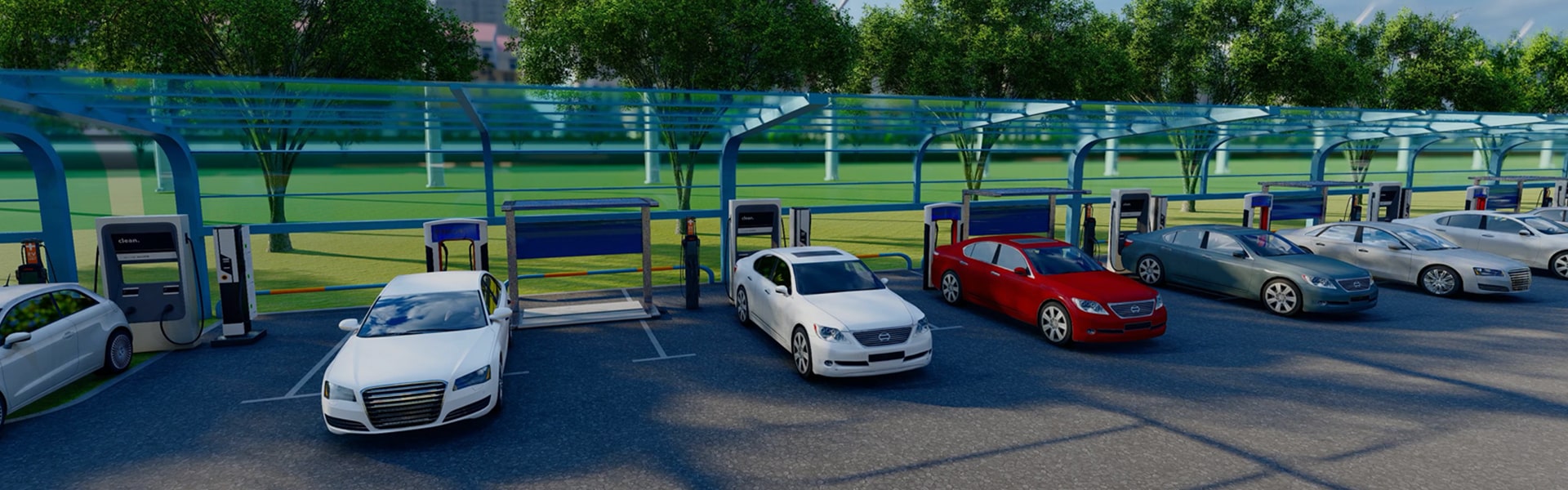
  • Urban Public Parking & Workplace Garages: Utilizing compact wall-mounted or slim dual-gun floor-standing 20kW to 60kW DC chargers. These units offer faster turnaround than Level 2 AC chargers without demanding costly high-voltage utility grid upgrades.
  • Bidirectional V2G Fleet Integration: Deploying 20kW–45kW bidirectional V2G DC chargers in fleet environments. These systems allow utility companies to draw power back from parked EVs during peak usage times, turning vehicle fleets into distributed battery energy resources.
Technical Roadmap & Future Outlook

Anticipating the technological paradigm shifts in high-power charging: Silicon Carbide, Megawatt Systems, and Smart Grid Protocols.

Wide Bandgap Semiconductors (SiC) Integration

Moving from traditional silicon-based IGBTs to Silicon Carbide (SiC) MOSFETs in our 40kW and 60kW rectifier modules. SiC technology yields higher switching frequencies, lower thermal dissipation, and overall module efficiencies exceeding 97.2%.

Transitioning to Megawatt Charging Systems (MCS)

For heavy transport, maritime vessel, and aviation projects, MIDA is pioneering MCS systems capable of handling up to 1,250V and 1,500A. This standard will replace multi-gun CCS setups for heavy commercial vehicles.

ISO 15118-20 & Advanced Plug & Charge Implementation

Integrating bidirectional communication capabilities within our EVCC controllers, supporting automated vehicle identification, secure encrypted billing handshakes, and bidirectional energy flows (V2G) without secondary card swipes.

Advanced EV Charging Controller and Logic Module Assembly
Localized Support & Compliance Assurance

Meeting stringent global regulatory frameworks to ensure safety, reliability, and grid compatibility.

Navigating global grid and safety compliance is one of the biggest hurdles in EV infrastructure deployment. MIDA Group products undergo strict type-testing to secure certifications from internationally recognized bodies. Our charging cables, power modules, and complete charging stations are designed to meet CE (LVD, EMC), TUV, UL, KC, CB, and RoHS requirements. Additionally, we integrate comprehensive security features such as over-temperature protection, residual current monitoring (Type B RCD), leakage current detection, and short-circuit protection. To ensure smooth local installations, we provide engineering documentation, STEP files, wiring diagrams, and OCPP 1.6J/2.0.1 cloud integration support to backend network operators.

Corporate & Technology News

Stay updated on our latest product launches, factory expansions, and technical breakthroughs in public transit pantograph systems.

Electric Bus Pantograph Dome Installation
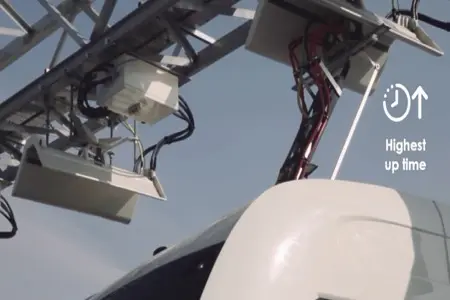
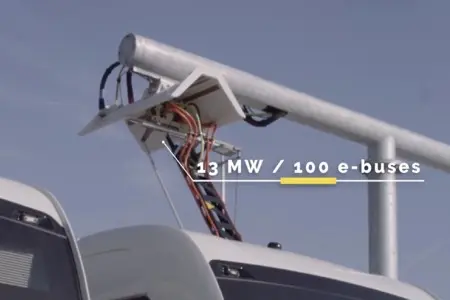
What are the advantages of an e-bus pantograph dome? In contrast to classic plug-in charging systems, e-bus pantographs enable fully automated charging, allowing high-power energy transfers up to 600kW during brief passenger boarding stops.
26-07-12 View More
Electric Bus Fast Charging Process
How long does it take to charge with an e-bus pantograph? The charging time depends on the battery capacity and the station's configuration. High-power opportunity chargers can recharge buses in 5 to 10 minutes, maintaining service schedules.
26-07-12 View More
Pantograph Installation and Commissioning
How to Install the Pantograph Up Charger System Dome for Electric Bus. Installing a "Pantograph Up" system requires precise structural coordination, alignment calibrations, and rugged electrical protection systems to guarantee all-weather reliability.
26-07-12 View More
EV Fast Charging Infrastructure FAQ

Direct answers to core engineering, compliance, and integration questions raised by system integrators and charge point network developers.

⚡ What is the primary difference between air-cooled and liquid-cooled power modules?

Air-cooled modules rely on internal fans and heatsinks to dissipate thermal energy. While cost-effective, they are susceptible to particulate matter, dust, and humidity ingress, which can reduce component lifespan. Liquid-cooled modules utilize a closed-loop coolant cycle, separating the electronics from external ambient air. This design achieves an IP65 protection rating, silent operation, and reliable thermal dissipation, making them ideal for heavy-duty commercial environments.

⚡ How does a bidirectional AC/DC power module facilitate V2G applications?

A bidirectional module features symmetrical, dual-quadrant power stages. When charging, it converts grid AC power to vehicle-compatible DC. During discharge (V2G / Vehicle-to-Grid), it reverses this path, converting vehicle DC power back to grid-synchronous AC. This active bidirectional control allows operators to peak-shave local demand, supply micro-grids, and monetize fleet energy storage capacity.

⚡ What role does the EVCC (Electric Vehicle Communication Controller) play in DC charging?

The EVCC serves as the primary gateway for communication between the charging station and the vehicle's battery management system (BMS). It translates signals between PLC (Power Line Communication, used in CCS/NACS) and CAN-bus protocols. The controller manages crucial safety handshakes, parameters negotiation (such as maximum allowable voltage and current), and security keys required for automated Plug & Charge (ISO 15118) billing.

⚡ Why is liquid cooling essential for DC cables operating above 250A?

Without cooling, the internal copper conductors of a charging cable generate heat proportional to the square of the current (I²R losses). To safely conduct 500A or more without overheating or becoming too heavy for users, liquid cooling is necessary. Circulating synthetic coolant or water-glycol mixtures through the cable assembly allows for smaller copper cross-sections, resulting in lightweight, flexible cables that can deliver high power levels safely.

⚡ Does the factory support custom OCPP integration for backend networks?

Yes, MIDA Group fast-charging stations feature built-in compliance with OCPP 1.6J and OCPP 2.0.1 protocols. This allows our hardware to integrate with third-party software backends. We provide comprehensive documentation for command mapping, remote troubleshooting, tariff configuration, and over-the-air (OTA) firmware updates.

⚡ How does a split-type DC charging architecture improve ROI for fleet operators?

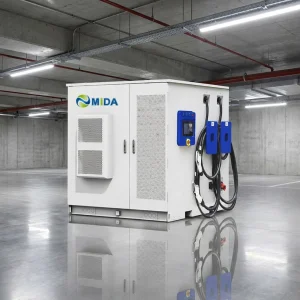
Split-type architecture separates the primary rectifiers (housed in a central power cabinet) from the user-facing dispensers. By dynamically routing power modules to different dispensers based on real-time vehicle demand, the system minimizes idle capacity. For instance, instead of assigning dedicated 180kW units to every parking space, a split system can dynamically allocate power where it is needed most, lowering initial capital expenditure and improving station utilization.