Pioneering EVSE technologies engineered for commercial networks, highway transit corridors, and specialized vehicle operations.
The global electric vehicle infrastructure landscape is undergoing a monumental transition. In the early stages of electrification, procurement centered on low-power AC destination chargers. Today, grid-scale operators, municipal transit systems, and enterprise fleet managers demand highly integrated, resilient, and adaptive power electronics.
As modern battery chemistries adopt 800V architectures and Megawatt charging requirements emerge, the Levelized Cost of Charging (LCOC) has become the key metric. Sourcing from top-tier electric charging car stations manufacturers and factories is no longer just about acquiring hardware; it is about establishing system interoperability, hardware durability under extreme thermal loads, and guaranteed path to software upgradeability.
According to international grid integration studies, charger downtime is most frequently caused by localized thermal bottlenecks, sub-standard cable connectors, and software handshake failures between the EV’s Battery Management System (BMS) and the charger. Working with certified tier-1 factories guarantees compliance with strict global standards (UL 2202, IEC 61851, CE-RED, and Eichrecht conformity).
Procuring electric charging car stations on a global scale requires navigating a complex matrix of regional safety standards, grid code requirements, and local subsidies (such as the NEVI program in North America or AFIR standards in Europe).
Requires strict adherence to OCPP 1.6J/2.0.1, direct ad-hoc payment mechanisms (POS integrations), calibration law (Eichrecht) conformity, and dual-connector configuration (primarily CCS2 and Type 2 AC).
Rapid shift towards the SAE J3400 (NACS) standard alongside CCS1. Sourcing protocols demand UL 2202 safety certification, FCC Part 15 compliance, and CTEEP/NTEP calibration compliance.
Deployment of high-capacity DC charging infrastructure utilizing GB/T and CHAoJi standards, alongside specialized CCS2 solutions tailored to tropical and high-humidity environments.
Why are leading charge point operators (CPOs) and industrial distributors turning to China's EVSE manufacturing powerhouses? The answer lies in the deep horizontal integration of the supply chain. From copper drawing for liquid-cooled high-power cables to the precision surface mounting of power module PCBs, the entire manufacturing cycle is concentrated in highly automated cluster environments.
This proximity significantly reduces lead times for complex custom projects. While conventional manufacturers struggle with component shortages, vertically integrated groups control the manufacturing of power modules, connectors, and control logic boards in-house. This closed-loop design cycle guarantees optimal performance and seamless hardware-level component integration.
Explore our core infrastructure platforms designed to support municipal grid scaling and commercial enterprise fleet operations.
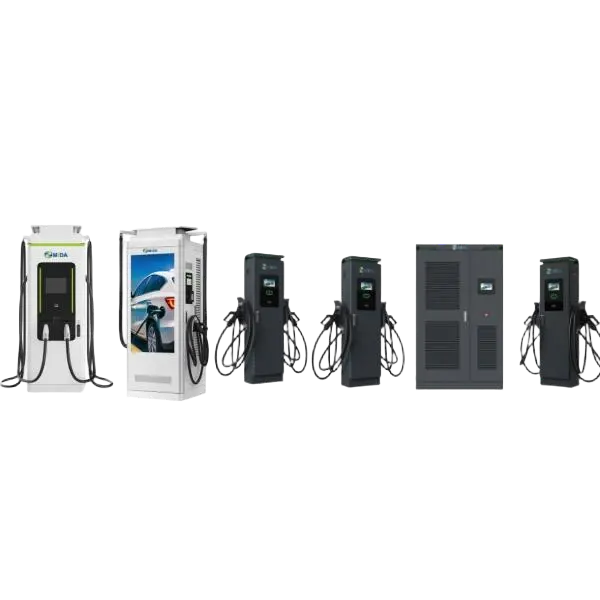
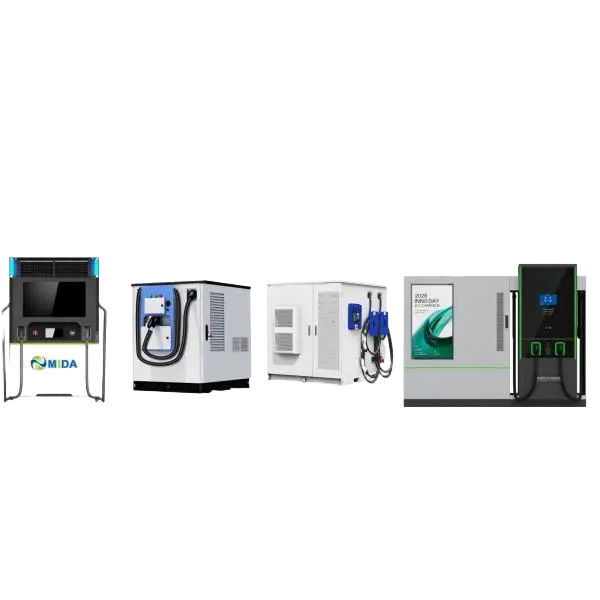
A global leader in vertically integrated EV charging component design, manufacturing, and systems engineering.
Shanghai Mida Cable Group Ltd. operates through its wholly owned subsidiaries: Shanghai Mida EV Power Co., Ltd., Shenzhen Mida EV Power Co., Ltd., and Shanghai Mida New Energy Co., Ltd. This strategic division of manufacturing capabilities ensures specialized focus on cable extrusion, power electronic development, and system-level EVSE assembly.
Mida Cable manufactures a comprehensive range of EV charging cables, including 16A–80A J1772 cables, 16A–63A IEC 62196-2 Type 2 cables, and DC fast charging cables: CCS1 (80A–500A), CCS2 (125A–1000A), CHAdeMO (125A–300A), GBT (200A–1000A), and NACS connectors (250A–600A).
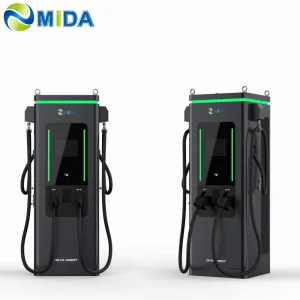
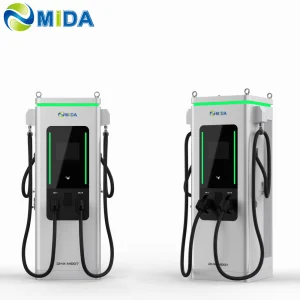
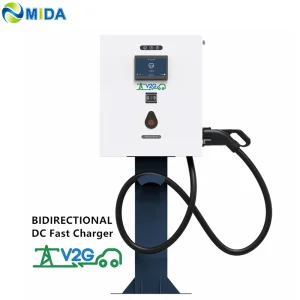
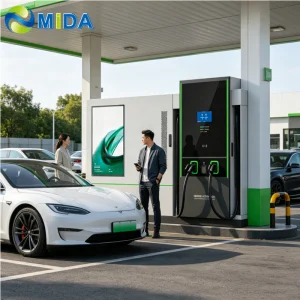
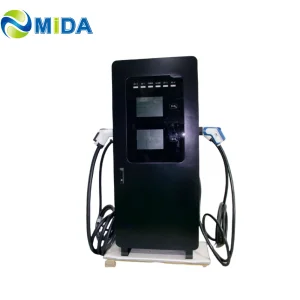
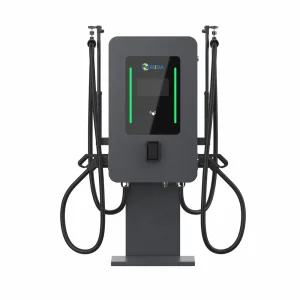
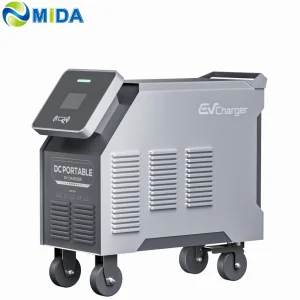
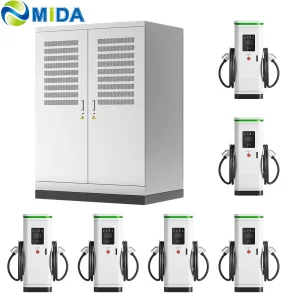
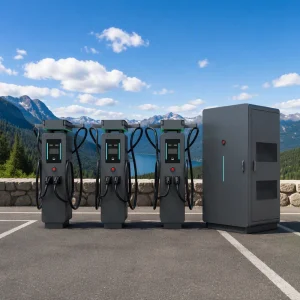
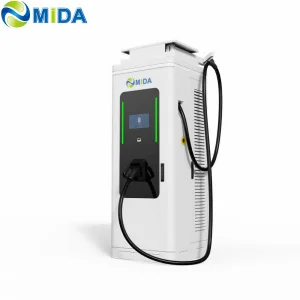
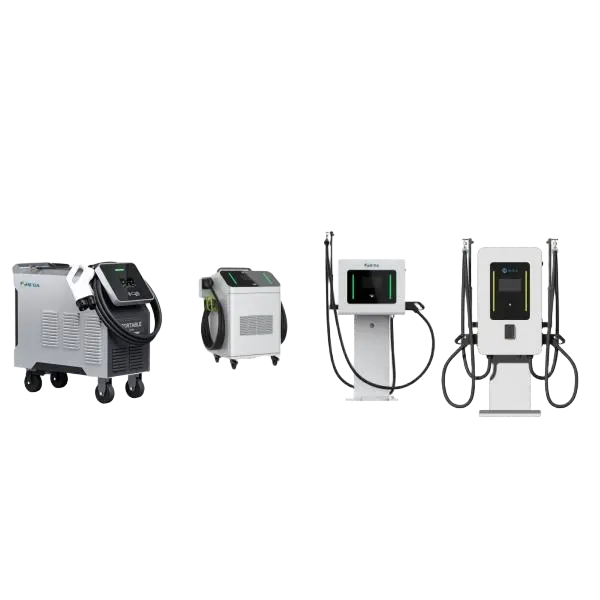
MIDA EV Power produces a full lineup of EV charging stations, such as 7kW–50kW mobile chargers, 3.6kW–7.2kW portable DC chargers, 360kW–1440kW split-type DC fast chargers, 20kW–50kW wall-mounted DC chargers, and 60kW–480kW floor-standing DC fast charging stations.
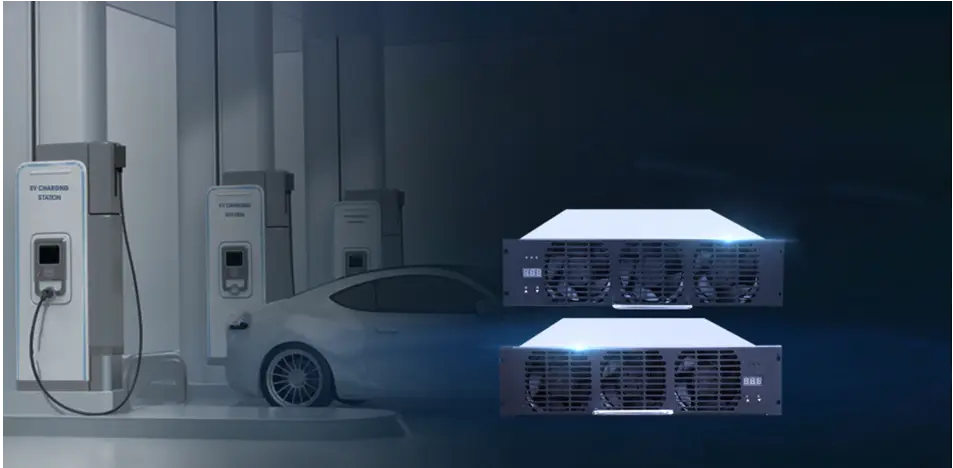
MIDA New Energy specializes in EV charger power modules, offering 20kW–60kW standard modules, 40kW–125kW liquid-cooled modules, 30kW–62.5kW bidirectional modules, and 20kW–45kW V2G charging modules.

Explore our deep manufacturing competence across EV charging stations and core sub-components.
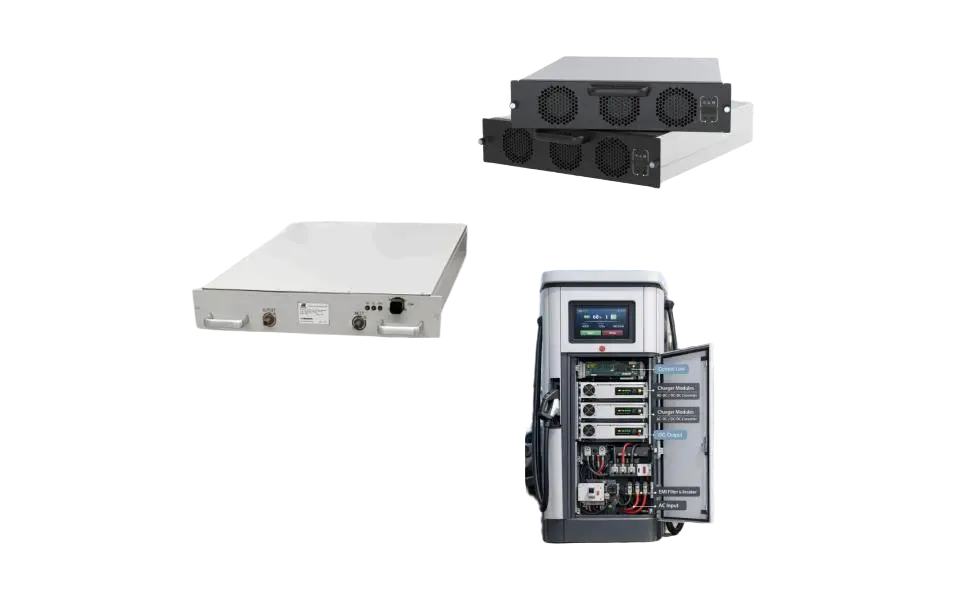
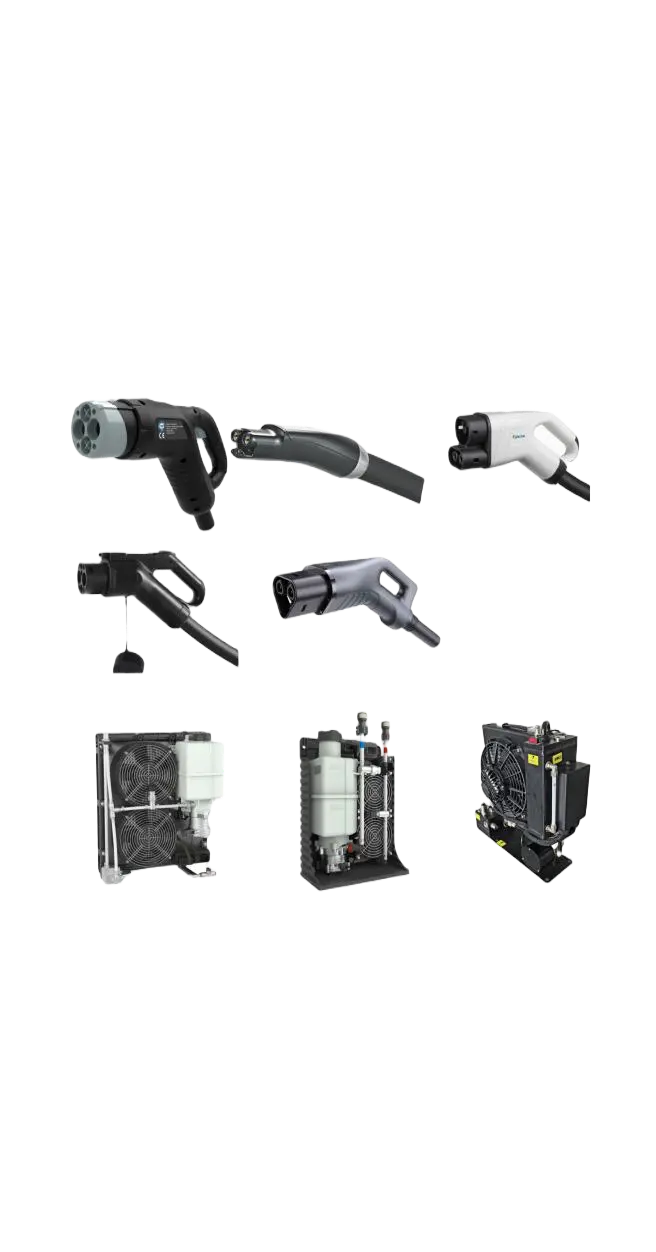
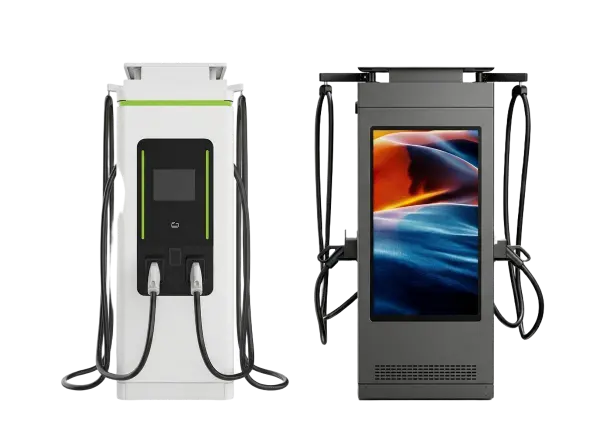
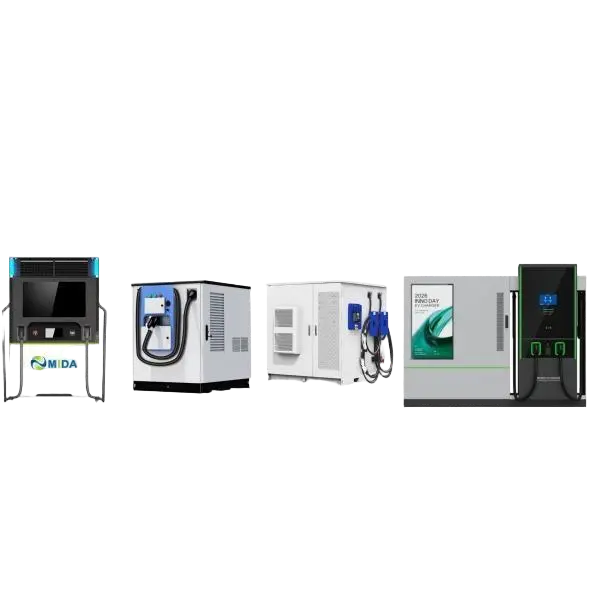
Deploying commercial EVSE solutions requires tailoring system architecture to specific localized workloads. Below are the primary application domains where our advanced DC platforms and BESS integration solve critical energy issues.
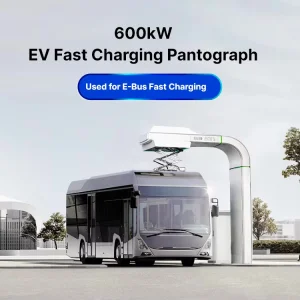
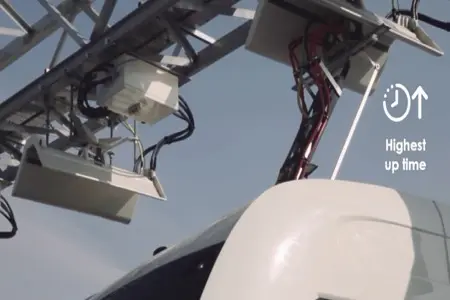
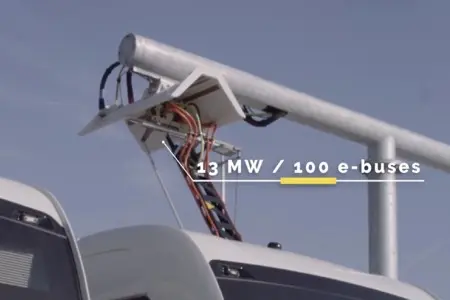
Integrating high-power overhead pantograph chargers (up to 600kW) allows heavy-duty transit buses to charge during scheduled passenger transfers, reducing the size of vehicle batteries.
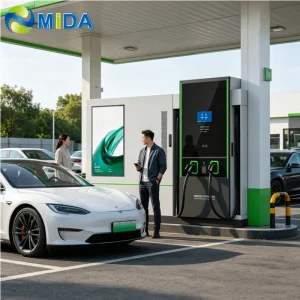
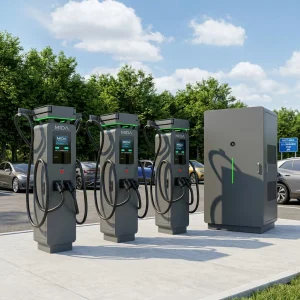
For long-distance routes, liquid-cooled split-type DC systems (360kW-1440kW) offer fast 10-minute top-ups. This ensures minimal queue times and high user throughput.
By pairing battery energy storage systems (BESS) with DC charger piles, operators can install ultra-fast charging systems without costly and delayed utility grid upgrades.
Stay informed about the latest developments in transit charging systems, high-capacity pantographs, and automated fleet installations.
Read detailed technical answers addressing key grid integration, liquid cooling, and vehicle-to-grid (V2G) systems questions.
Explore our high-capacity DC charger piles, integrated BESS platforms, and OCPP-compliant charging stations.