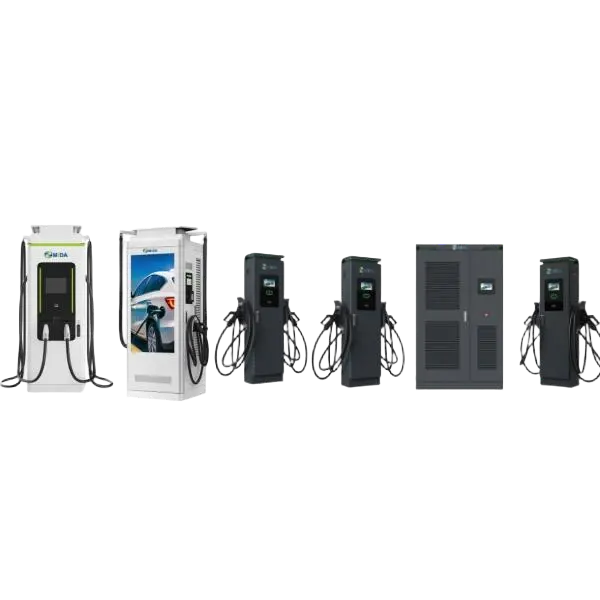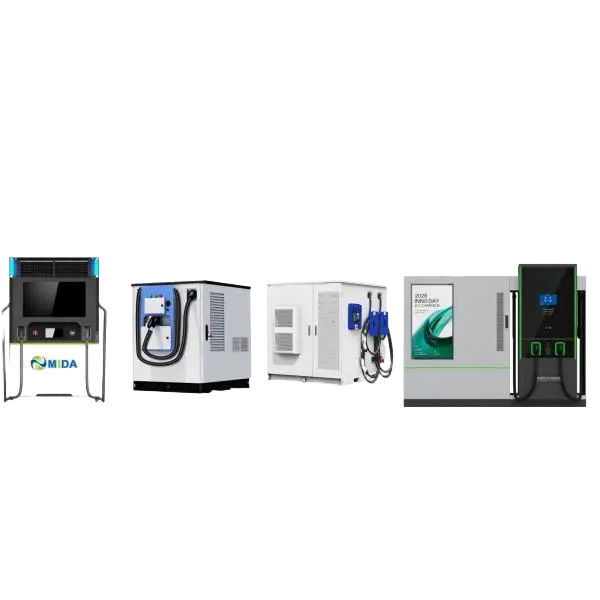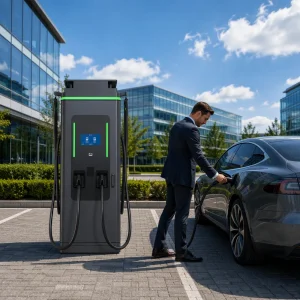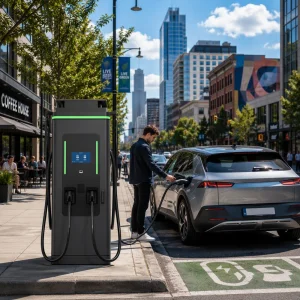
Explore our elite collection of engineered DC Fast Charging systems and infrastructure solutions, designed for scalability, longevity, and high return on investment.
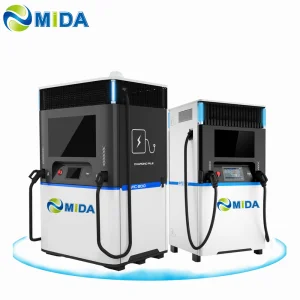
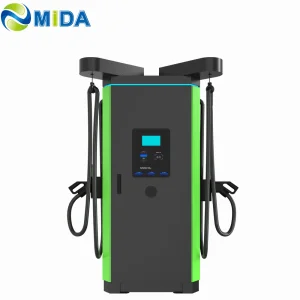 China Customized 60kW 90kw 120kw 180kw Dual Gun CCS2 Charger Fast DC Charging Station Manufacturers, Supplier
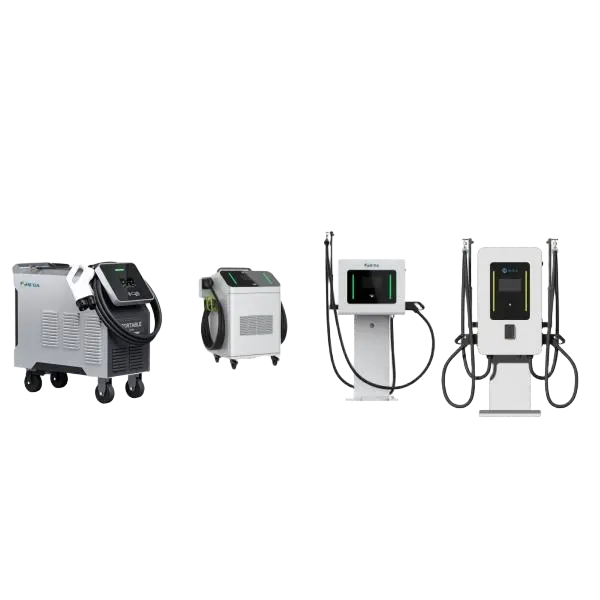
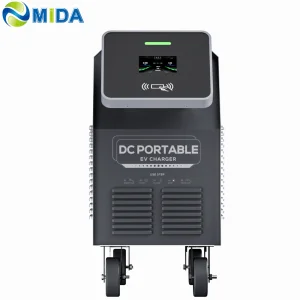 Best Mobile Charger 20kw 30kW Portable DC Charger Station Manufacturers, Factories
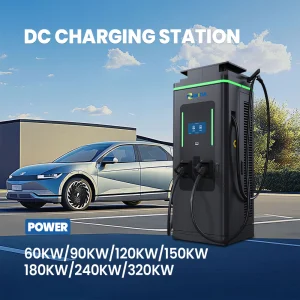 Best CCS GBT ChadeMO DC Charging Station 120kW 150kW 180kW 240kW EV Charger Station Supplier, Factory
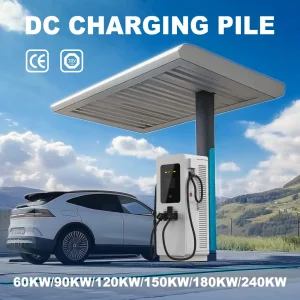 China Smart EV DC Charger 150kW, 180kW, 200kW, 240kW, 300kW, 360kW, 420kW fast charging station Manufacturer, Factory
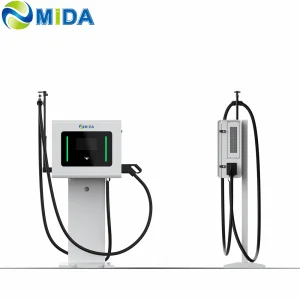 Best Commercial Ev Charging Station Pillar Dc Charger 20kw 30kw 40kw Manufacturer, Manufacturers
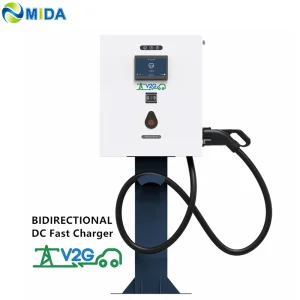
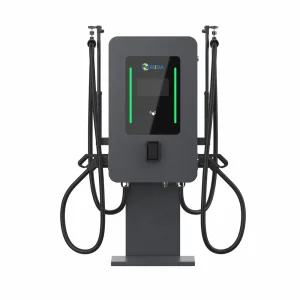 China MIDA 60kW 80kW Wall-mounted DC Fast Charger Dual Gun EV Charging Station Suppliers, Factories
How high-capacity DC fast charging systems are driving productivity across international logistics hubs, passenger fleets, and metropolitan utility networks.
For last-mile delivery fleets, heavy municipal buses, and commercial transport agencies, vehicle downtime is a direct loss of revenue. A 150kW DC fast charging station can replenish over 100 kilometers of driving range in less than 15 minutes, allowing fleet operators to design structured quick-turnaround charging schedules between shifts or routes.
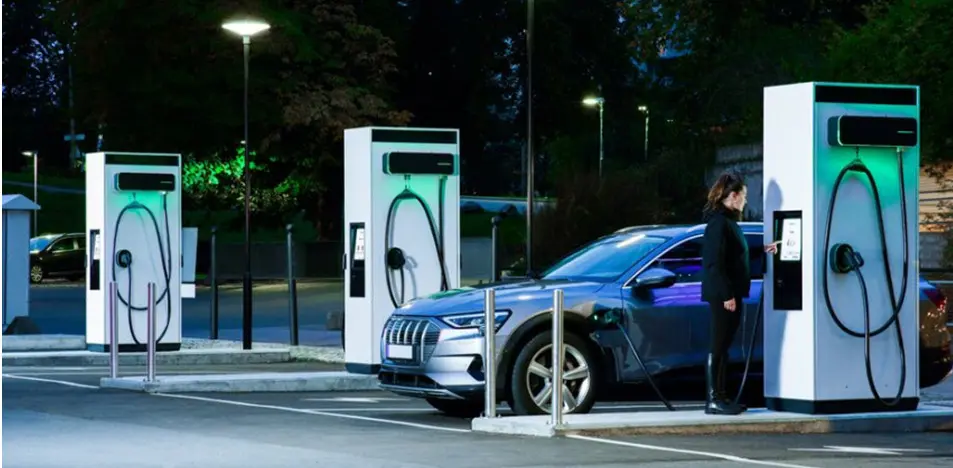
Deploying 150kW fast chargers in shopping malls, hotel complexes, and highway service plazas elevates site attractiveness. High-turnover charging stations attract premium EV drivers, driving higher foot traffic and secondary retail expenditures while providing commercial property owners with reliable, recurring revenue from charging service monetization.
Large-scale deployment of high-power charging assets introduces substantial electrical demand profiles. Our 150kW platforms incorporate advanced local and cloud-based load management technologies, adapting power delivery dynamically in real-time to respect regional grid thresholds, prevent peak-demand charges, and optimize local energy storage.
Inside the modular sub-systems that achieve over 95% electrical efficiency and sustain high-rate charging across diverse environments.
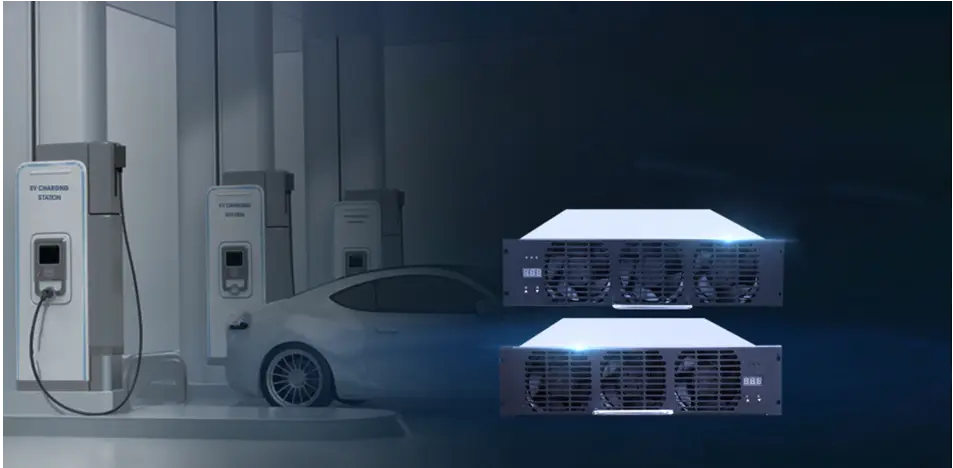
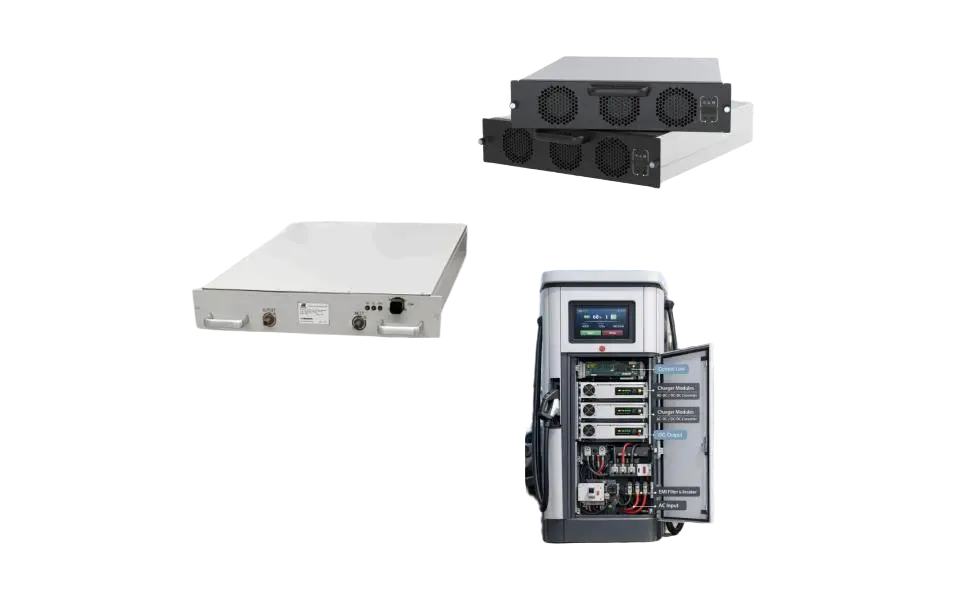
A reliable 150kW charging station is not just a single high-current power module; it is a meticulously engineered cluster of power conversion, control, thermal management, and communications electronics. By utilizing Silicon Carbide (SiC) MOSFETs within our high-density power modules, MIDA systems reduce switching losses and internal heat generation, allowing for prolonged continuous duty cycles at maximum rated output.
Additionally, modern electric vehicles operate across different battery voltage platforms. Older configurations and many light commercial vehicles use 400V architectures, while next-generation passenger cars and heavy transit systems utilize 800V class batteries. Our 150kW chargers dynamically adapt their voltage output envelope (typically from 150V DC up to 1000V DC) to ensure backward and forward compatibility, safeguarding infrastructure investments for years to come.
Evaluating the practical realities of high-capacity DC infrastructure deployment and how integrated technology mitigates local grid limits.
As commercial charging locations scale up their charger counts, the cumulative load on regional distribution networks can quickly exceed substation limits. Building a multi-pile charging hub with multiple 150kW chargers can demand megawatts of grid capacity. In many metropolitan markets, waiting for utility substations to upgrade transformers can delay project deployment timelines by months or years.
To address these critical global bottlenecks, MIDA Group focuses heavily on hybrid solutions. By integrating Battery Energy Storage Systems (BESS) alongside DC fast chargers, we enable operators to create local microgrids. The integrated battery storage discharges to support the charging station during high-occupancy intervals and recharges during off-peak windows, minimizing impact on the local electrical grid and eliminating peak-load demand charges.
Meeting the strict technical specifications and safety criteria required across European, North American, and Asian markets.
Open Charge Point Protocol compatibility guarantees that our hardware interfaces seamlessly with any central management network or billing platform, preventing vendor lock-in and allowing fleet operators to scale their networks globally with diverse software integrations.
Eliminating physical cards or app-based authentication, ISO 15118 enabling allows EV drivers to simply connect the cable. The charger instantly reads the vehicle’s encrypted secure certificate, handles authentication, and handles billing automatically.
MIDA Group prioritizes safety and international market compliance. Our charging stations, modules, and connectors carry rigorous regulatory listings including ETL, UL, CE, and FCC, meeting standards like UL2231, IEC 62196, and local grid interconnection rules.
Discover how our vertically integrated operations in cabling, power modules, and station assembly ensure industry-leading reliability.
Shanghai Mida Cable Group Ltd. operates through its wholly owned subsidiaries: Shanghai Mida EV Power Co., Ltd., Shenzhen Mida EV Power Co., Ltd., and Shanghai Mida New Energy Co., Ltd.
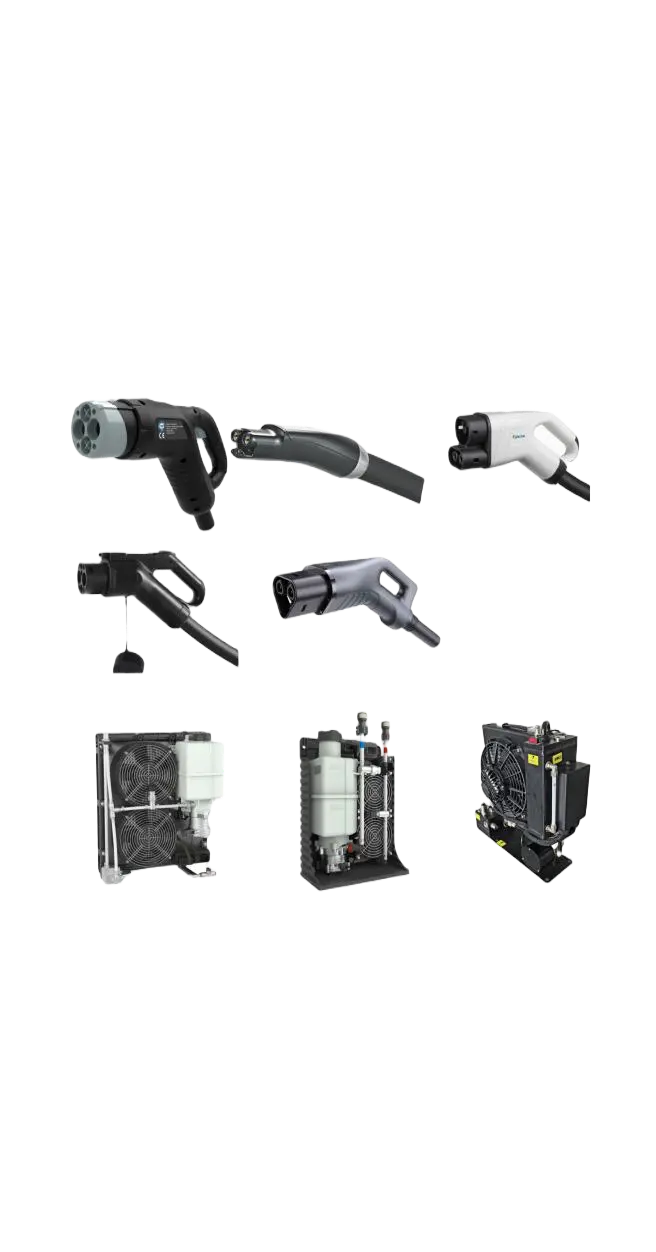
Mida Cable manufactures a comprehensive range of EV charging cables, including 16A–80A J1772 cables, 16A–63A IEC 62196-2 Type 2 cables, and DC fast charging cables: CCS1 (80A–500A), CCS2 (125A–1000A), CHAdeMO (125A–300A), GBT (200A–1000A), and NACS connectors (250A–600A).
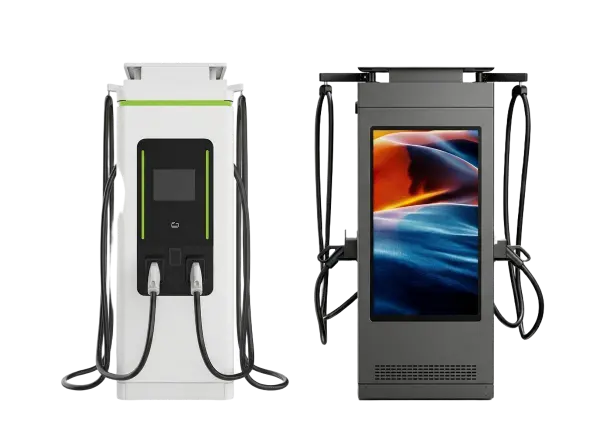
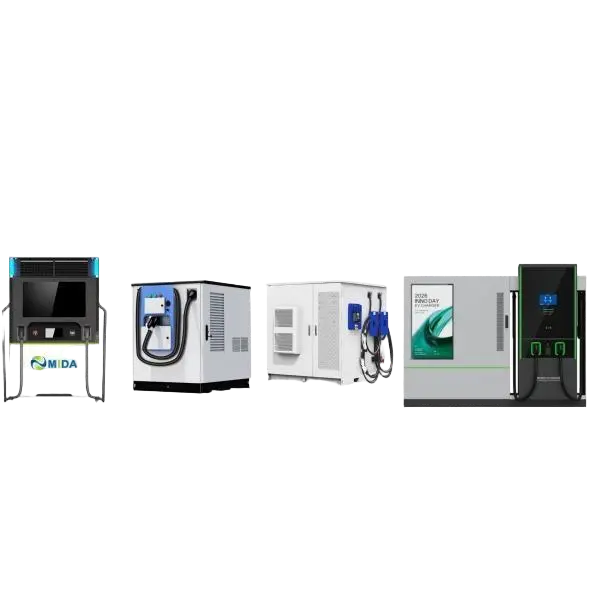
MIDA EV Power produces a full lineup of EV charging stations, such as 7kW–50kW mobile chargers, 3.6kW–7.2kW portable DC chargers, 360kW–1440kW split-type DC fast chargers, 20kW–50kW wall-mounted DC chargers, and 60kW–480kW floor-standing DC fast charging stations.
MIDA New Energy specializes in EV charger power modules, offering 20kW–60kW standard modules, 40kW–125kW liquid-cooled modules, 30kW–62.5kW bidirectional modules, and 20kW–45kW V2G charging modules.

Our structured product portfolios covering residential AC options, dynamic high-speed DC highway chargers, and battery-buffered systems.
Discover how MIDA Group's vertically integrated product catalogue supports custom charging configurations for any fleet or municipal system.
Anticipating trends and driving innovations that will shape the next generation of high-power charging infrastructure.
As the EV market matures, charging demands will shift from simple electricity supply to intelligent vehicle-to-grid grid integration. Key technical trends include:
Stay updated on recent trends, infrastructure deployments, and key engineering innovations from the MIDA research labs.

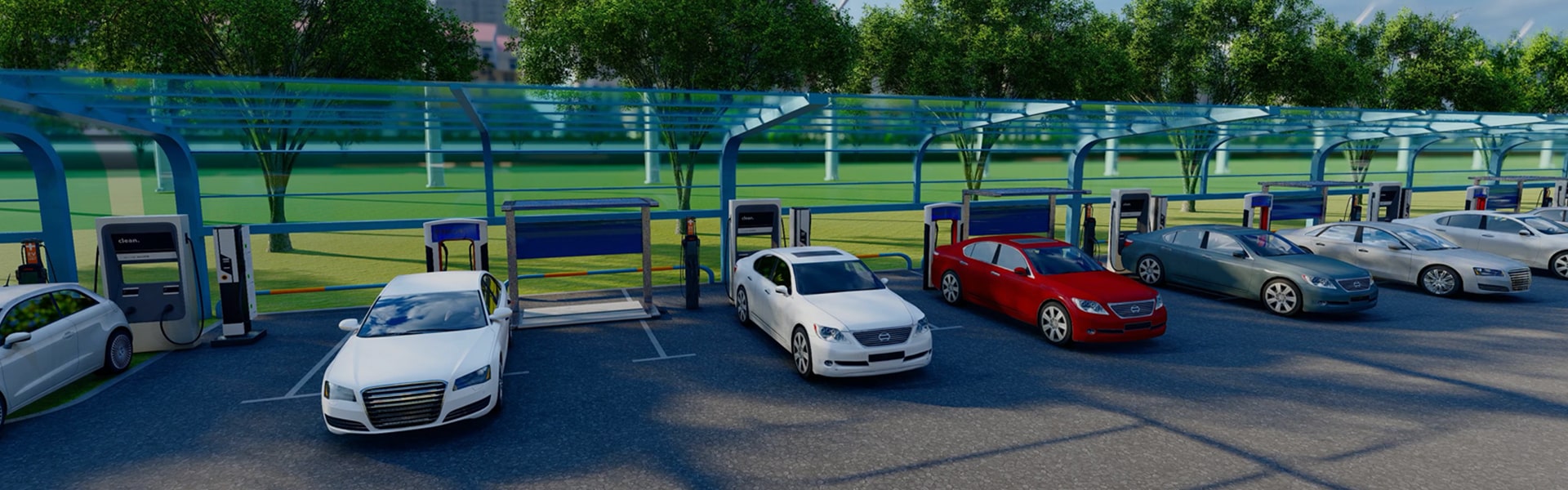
Answering key technical and operational inquiries regarding 150kW fast charger installation, layout, and efficiency.
The exact time is determined by the vehicle's battery state of charge (SoC) and curve profile. On average, a 150kW fast charger can replenish a typical commercial vehicle battery from 20% to 80% charge in approximately 20 to 30 minutes, delivering up to 75kWh of energy in that timeframe.
A 150kW DC charging system typically requires a 380V to 480V 3-phase AC input supply. Accounting for efficiency losses and auxiliary operations, the system requires a grid service connection capable of providing approximately 165kVA to 180kVA of input power per pile.
When a single EV is connected, the station routes its full 150kW capacity to that vehicle. If a second vehicle connects, the station's controller splits the capacity—allocating either a fixed 75kW/75kW split or dynamically sharing the load (e.g., 90kW/60kW) based on each vehicle's real-time battery request.
Liquid cooling is necessary when charging currents exceed 250A to 300A continuous. By circulating coolant through the cable and connector, we can use thinner, lighter copper wires, making the cable easier for users to handle while preventing overheating during fast-charging sessions.
Explore our specialised range of high-voltage chargers, battery-backed storage systems, and advanced power management hardware.
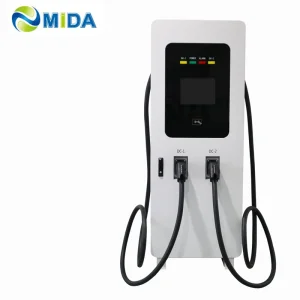 Best CE approved CCS2 GBT Gun 90kW 120kW Commercial Fast DC Charging Station Supplier, Factories
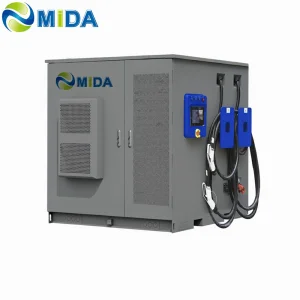 China 400kW 625kwh BESS Charger Station Mobile Charging Battery Energy Storage System Manufacturers, Suppliers
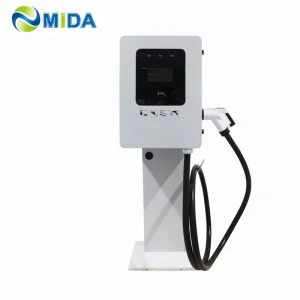 Best 20kW CCS2 Wall Mounted DC EV Charging Station with 4G Wifi OCPP 2.1 Supplier, Factory
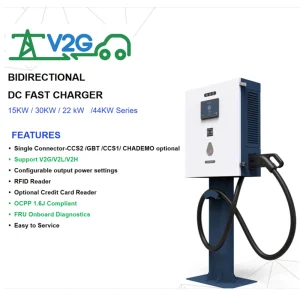 Best 15kW 30kW Vehicle to Grid V2G Charger CCS CHAdeMO Bidirectional EV Charging Station Manufacturer, Supplier
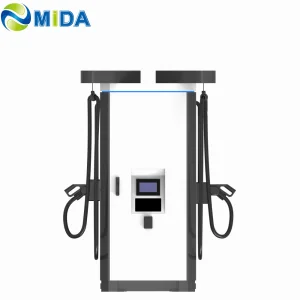 China UL / ETL Certificate ISO15118 300kw 350kw CCS1 NACS DC Fast Charging Station Manufacturer, Suppliers
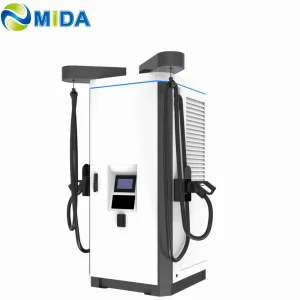 China ETL Listed 60kw 90kw 120kw 150kw CCS NACS CHAdeMO OCPP1.6 UL2231 DC Charging Station Manufacturers, Factory