High-Efficiency, UL/CE-Compliant Infrastructure Direct from Top Chinese Manufacturer
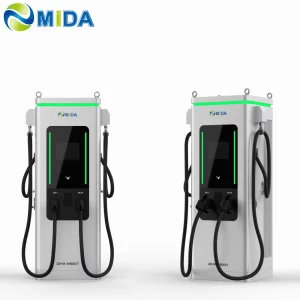
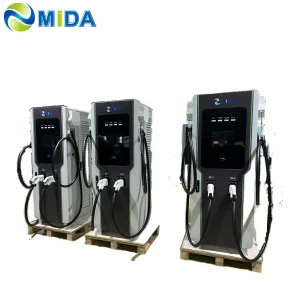
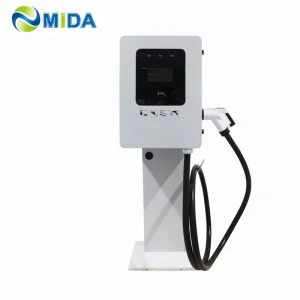
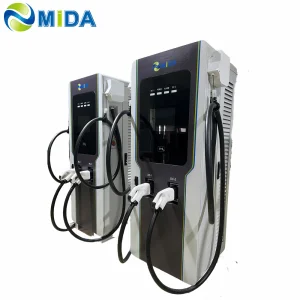
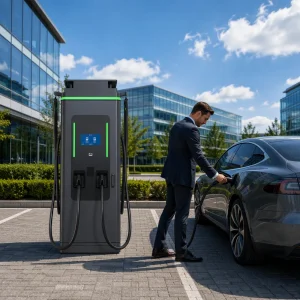
The global shift toward electric mobility requires an unprecedented scaling of reliable, high-capacity electric vehicle charging infrastructure. As regulatory pressures in the United States and the European Union intensify—driven by initiatives like the US National Electric Vehicle Infrastructure (NEVI) formula program and Europe’s Alternative Fuels Infrastructure Regulation (AFIR)—fleet operators, commercial properties, municipalities, and charging networks face a key challenge: securing a reliable, high-volume supply chain for direct-current (DC) fast chargers and high-power charging (HPC) ecosystems.
In the US market, requirements for Buy America compliance, UL safety listing, NACS (SAE J3400) connectors, and CCS1 backward compatibility have reshaped the competitive landscape. Operators require charging stations that can perform under diverse grid conditions and harsh outdoor environments, maintaining high efficiency while minimizing total cost of ownership (TCO). A strategic alignment between global engineering hubs, cost-effective industrial manufacturing in China, and regional compliance networks is the optimal path for scaling electric vehicle supply equipment (EVSE) worldwide.
“Scaling global EV charging capacity is not simply an assembly problem; it is a complex systems engineering task involving advanced thermal management, high-density power electronics, secure communication protocols, and grid-integration capabilities. Shanghai Mida Cable Group bridges the gap between state-of-the-art Chinese manufacturing and localized global standards.”
Currently, commercial operators are shifting focus from Level 2 AC installations to Level 3 High-Power DC systems ranging from 120kW up to 480kW and megawatt charging systems (MCS) for transit and heavy duty freight. Modern fleet logistics hubs require intelligent dynamic load-sharing matrices, where a centralized rectifying unit distributes power on demand to multiple satellite dispensers. This reduces peak load grid demand, lowers installation footprint, and maximizes fleet uptime.
As the largest producer and consumer of electric vehicles globally, China has cultivated a highly integrated, vertically complete EVSE supply chain ecosystem. Unlike regional suppliers who assemble outsourced components, top-tier Chinese manufacturers like Shanghai Mida Cable Group control every step of the value chain. This integration spans copper refining and wire drawing for ultra-flexible charging cables, raw PC-ABS plastic compounding for outer casing injection molding, surface-mount technology (SMT) for controller PCBs, and the winding of high-frequency transformer cores for power modules.
This vertical integration translates into distinct competitive advantages for international OEMs, network operators, and distributors:
Direct communication between structural engineers and electronics designers eliminates interface mismatch risks between power modules and cooling units.
Our highly automated production lines quickly scale to meet multi-megawatt project orders, significantly reducing standard industry lead times.
Every sub-component, from V2G modules to liquid-cooled charging gun connectors, undergoes 100% full-load burn-in testing and environmental chamber cycling.
By optimizing assembly structures and utilizing domestic semiconductor components for auxiliary systems, China-based factories can reduce the capital expenditure (CapEx) of a Level 3 DC Charger by up to 35-50% compared to Western-assembled equivalents. This cost advantage enables operators to deploy double the number of charging points, accelerating geographical coverage and network ROI.
The electric vehicle industry is rapidly transitioning toward high-voltage architectures. Standard 400V battery packs are giving way to 800V and even 1000V platforms (such as those used in Porsche, Hyundai, and Lucid). High-voltage architecture allows passenger vehicles to charge at rates up to 350kW+ and reduces thermal losses. Adapting to this shift requires a structured technology roadmap for both hardware and software.
To support this evolution, Mida's development plan centers on four key technical areas:
Standard air-cooled charging systems face physical limits when delivering currents over 250A; cable weight and connector temperature rise to unsafe levels. Liquid-cooled charging technology circulates a dielectric coolant or water-glycol mixture directly through the internal copper busbars of the charging cable and the pin terminals of the connector. This enables continuous delivery of up to 600A/1000V (600kW) while maintaining a slim, flexible cable that is easy for users to handle. Our integrated liquid cooling systems range from 3.5kW to 72kW cooling capacities, ensuring optimal thermal management for ultra-fast charging stations.
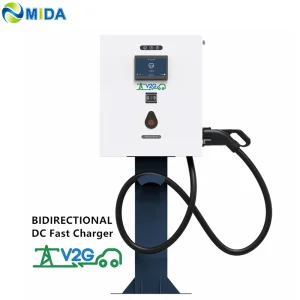
Rather than acting as static loads on the grid, future EV charging networks will serve as distributed energy resources (DERs). Mida's bidirectional AC/DC power modules (20kW to 62.5kW) and completed V2G charging systems allow energy to flow from grid to vehicle, and back from vehicle to grid. This supports utility peak-shaving, load leveling, and frequency regulation, transforming stationary fleets into virtual power plants (VPPs) that can generate new revenue streams for operators.
Connecting multiple 350kW chargers to a localized distribution network often exceeds transformer capacities, requiring expensive utility grid upgrades. Integrating BESS (such as our 400kW/625kWh mobile charging battery energy storage system) creates a buffer between the grid and the EVSE. The battery storage system charges slowly at low-cost periods and discharges rapidly during high-draw vehicle charging sessions. This reduces peak demand charges and allows high-power DC fast charging in areas with limited grid capacity.
Scalable Charging Infrastructure Solutions Engineered for Global Applications
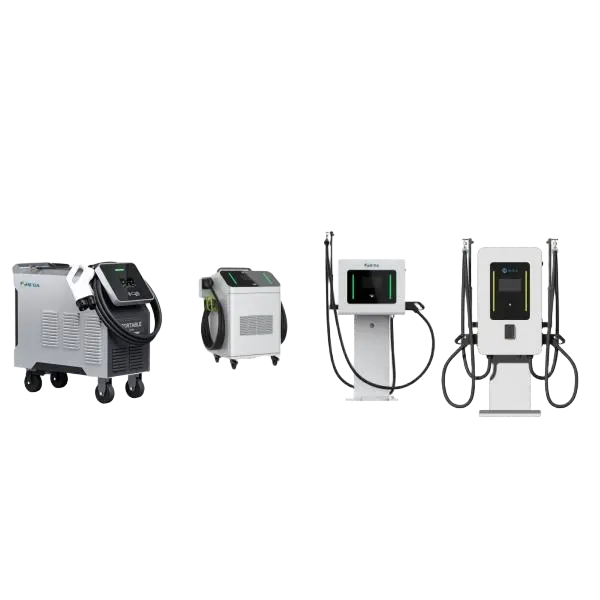
Residential, commercial fleet parking, and workplace installations. Output ratings: 7kW, 20kW, 30kW, 40kW, 60kW, 80kW.
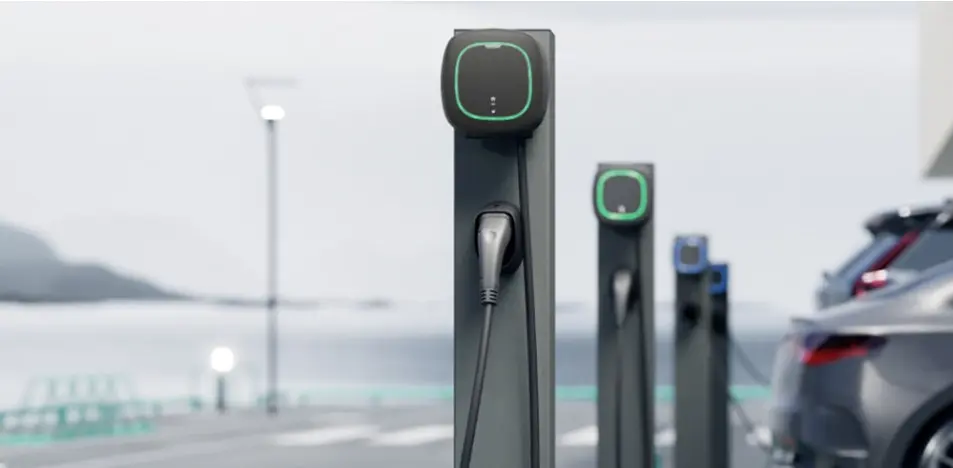
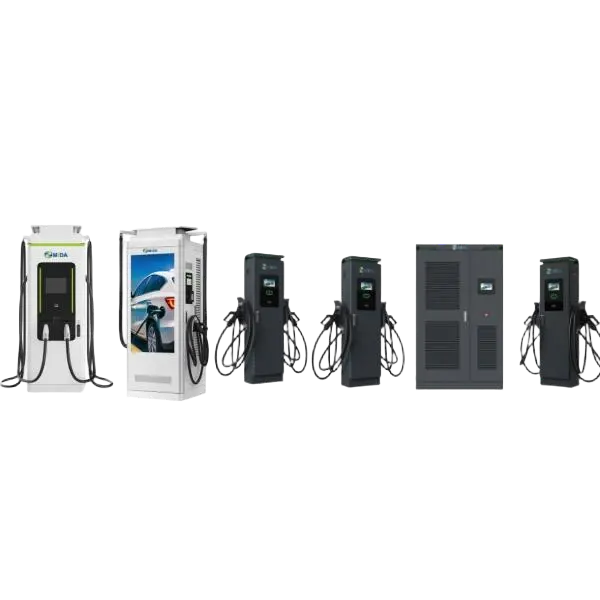
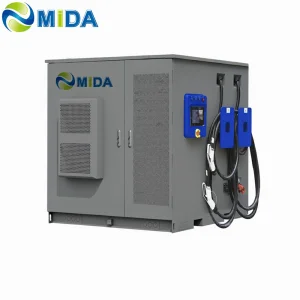
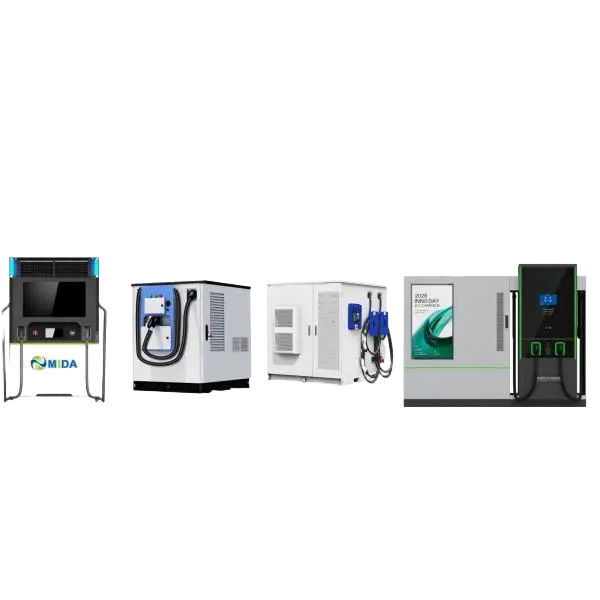
High-speed highway rest stops, commercial charging hubs, and public spaces. Configurations: 60kW-480kW, 360kW-1440kW split-type systems.
Micro-grid battery storage charging solutions. Capacities: 60kWh, 261kWh, 418kWh, 625kWh, up to 2MkWh systems.
Deploying EV charging equipment requires adapting to local physical, operational, and regulatory environments. The requirements for charging hardware can vary significantly across different applications:
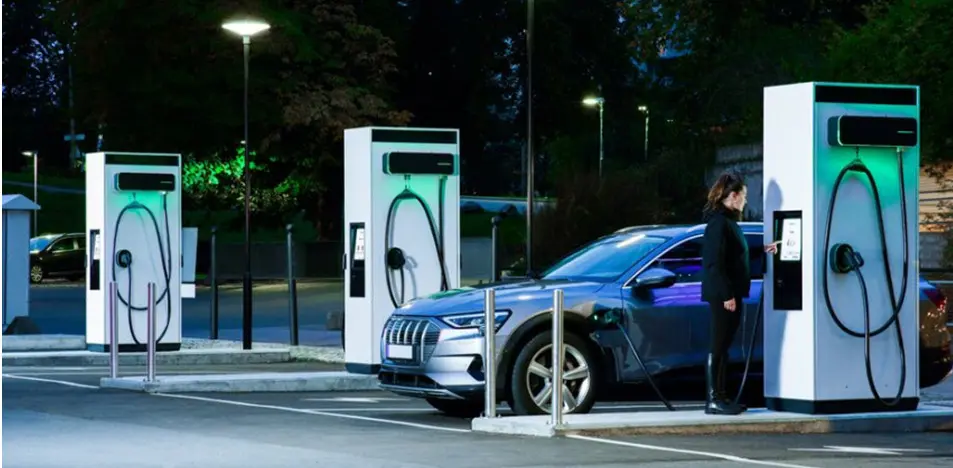
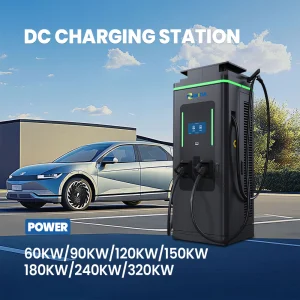
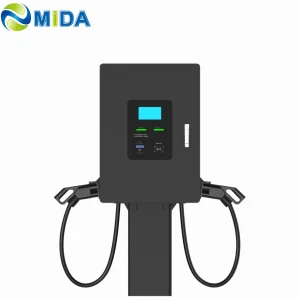
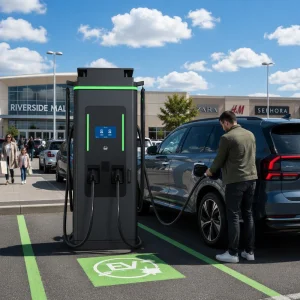
For shopping centers, hotels, and office parks, EV charging is an amenity that attracts high-value customers. Our floor-standing dual-port DC charging units (60kW to 120kW) balance charge speed and dwell time. Equipped with integrated credit card payment systems (POS) and high-visibility digital advertising screens, these stations convert parking spaces into revenue centers while supporting OCPP 1.6J/2.0.1 for integration with municipal utility charging management software.
For cross-country route networks, reducing range anxiety requires ultra-fast high-power charging. Systems must deliver a minimum of 150kW to 350kW per vehicle. To support these installations, our liquid-cooled split-type DC charging hubs (up to 1440kW) allow multiple power cabinets to pool resources, directing maximum current to vehicles that can accept it. Robust outdoor protection (IP55/NEMA 3R or NEMA 4) ensures reliable operation under extreme weather conditions, from hot desert climates to freezing temperatures.
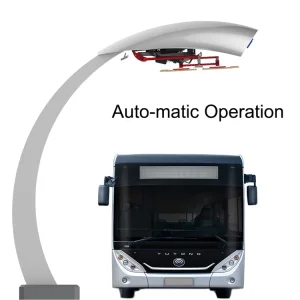
Commercial trucks and transit buses demand continuous high-output power. To charge large bus fleets overnight within limited garage space, overhead pantograph charging dome systems (300kW to 600kW) are the ideal solution. In contrast to manual plug-in connections, roof-mounted pantographs automate the charging process, reducing human labor requirements, improving safety, and saving valuable yard space.
Shanghai Mida Cable Group Ltd. operates through its wholly owned subsidiaries: Shanghai Mida EV Power Co., Ltd., Shenzhen Mida EV Power Co., Ltd., and Shanghai Mida New Energy Co., Ltd.
Mida Cable manufactures a comprehensive range of EV charging cables, including 16A–80A J1772 cables, 16A–63A IEC 62196-2 Type 2 cables, and DC fast charging cables: CCS1 (80A–500A), CCS2 (125A–1000A), CHAdeMO (125A–300A), GBT (200A–1000A), and NACS connectors (250A–600A).
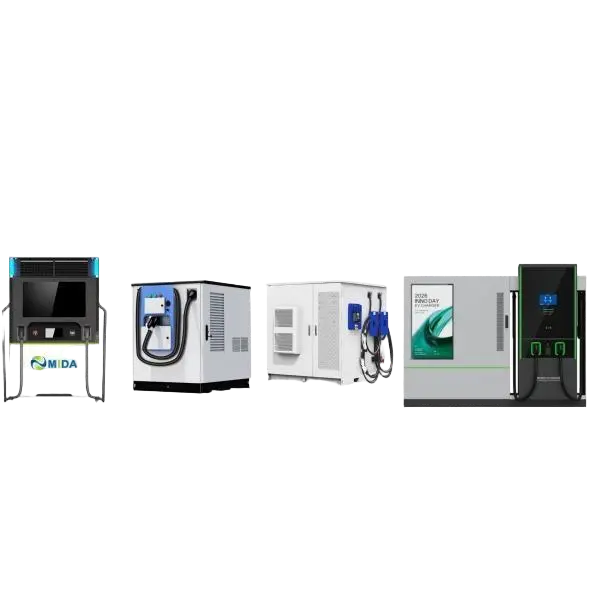
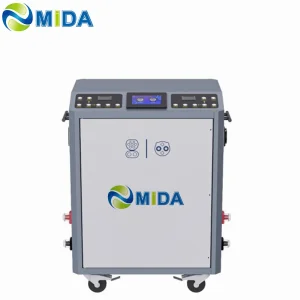
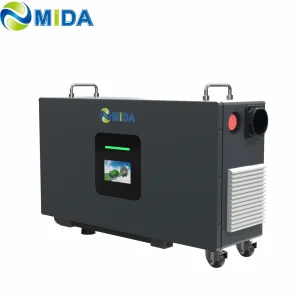
MIDA EV Power produces a full lineup of EV charging stations, such as 7kW–50kW mobile chargers, 3.6kW–7.2kW portable DC chargers, 360kW–1440kW split-type DC fast chargers, 20kW–50kW wall-mounted DC chargers, and 60kW–480kW floor-standing DC fast charging stations.
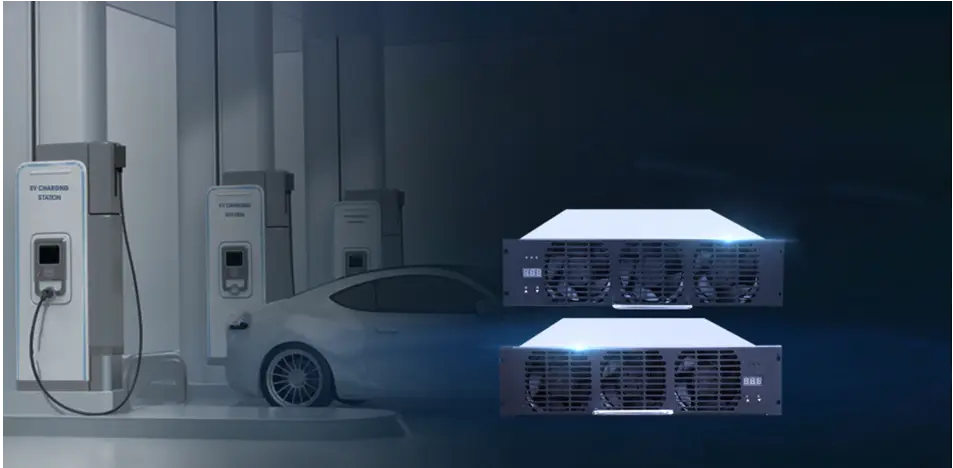
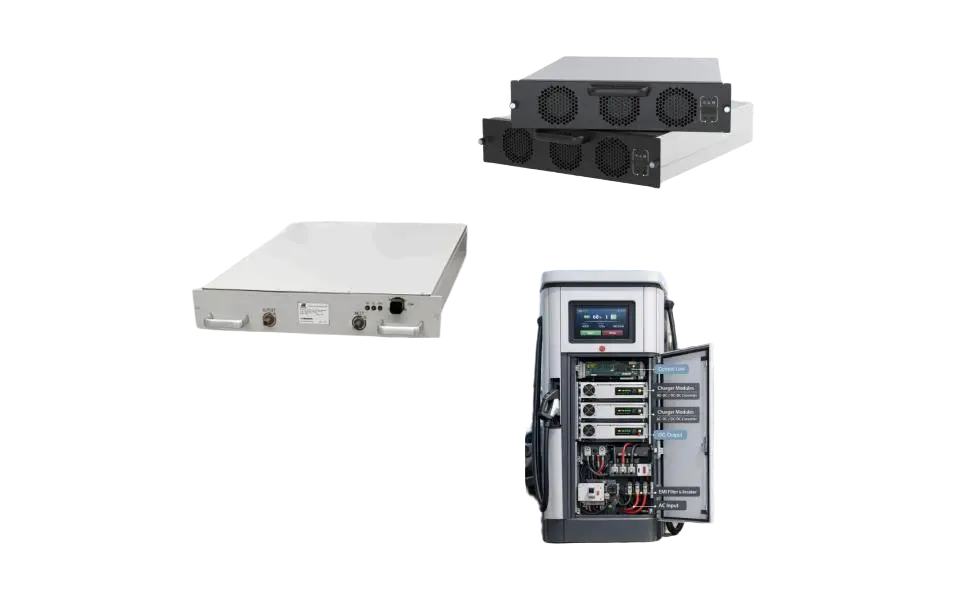
MIDA New Energy specializes in EV charger power modules, offering 20kW–60kW standard modules, 40kW–125kW liquid-cooled modules, 30kW–62.5kW bidirectional modules, and 20kW–45kW V2G charging modules.

Engineered components built for maximum efficiency, safety, and durability
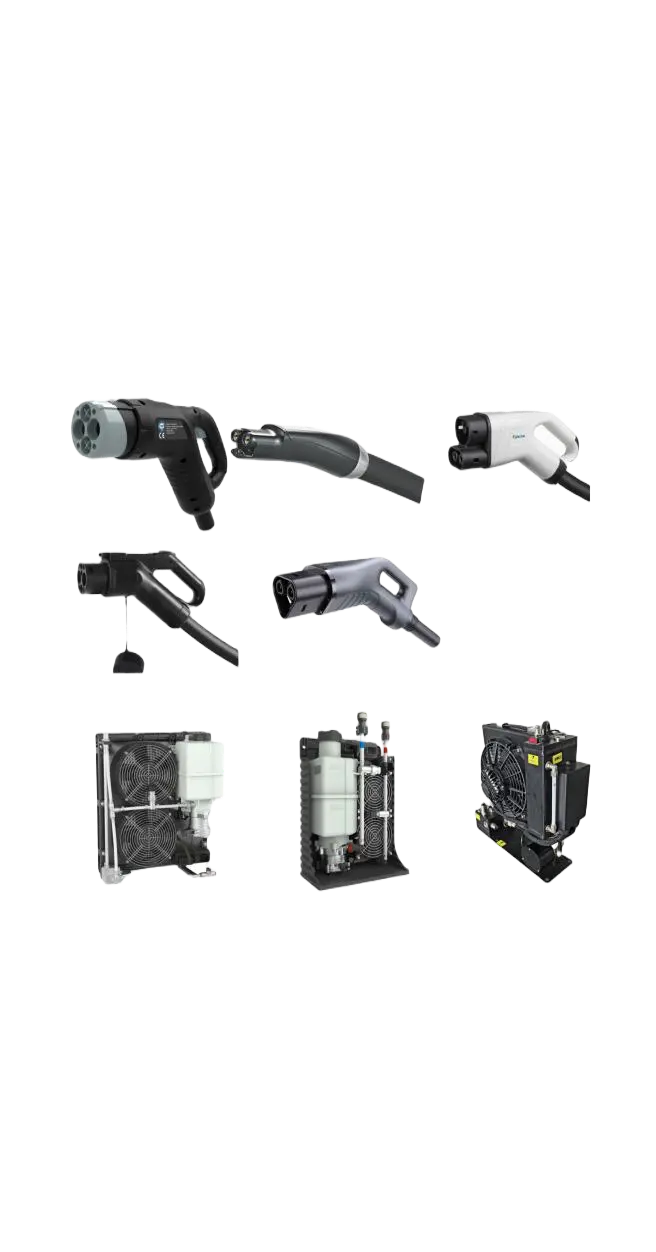
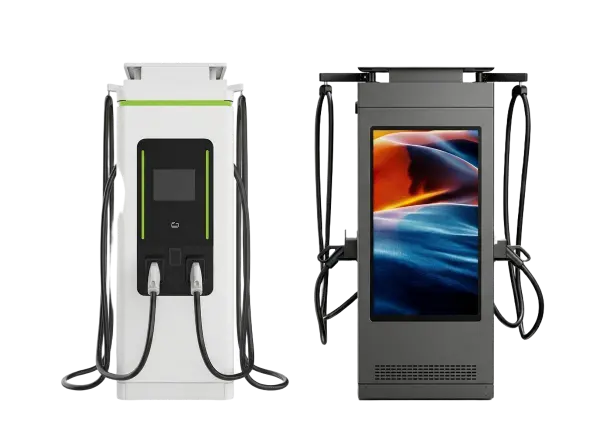
High-Current, Liquid-Cooled, and Fleet-Grade Systems for Commercial Environments
Technical analyses on automated charging infrastructure for heavy duty public transportation
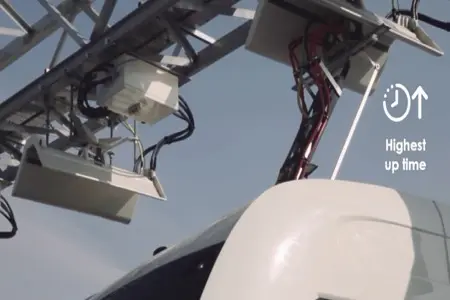
What are the advantages of an e-bus pantograph dome? In contrast to classic plug-in charging systems, e-bus pantographs allow automatic connection and support high-power charging rates up to 600kW. This dynamic interface reduces bus turnaround times and optimizes depot space usage.
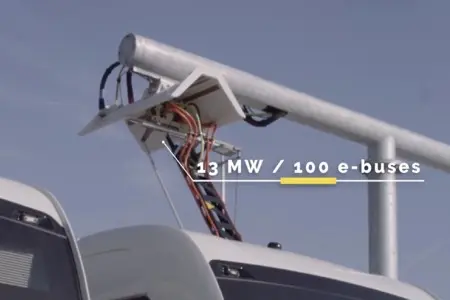
How long does it take to charge with an e-bus pantograph? The charging time depends on the battery capacity and the station's power output. Delivering 600kW via a pantograph system can charge a typical electric transit bus from 20% to 80% state of charge in 15 to 25 minutes, facilitating on-route charging during driver breaks.
How to Install the Pantograph Up Charger System Dome for Electric Bus. Installing a “Pantograph Up” system requires precise alignments between structural masts, the electrical substation interface, and overhead gantries. Aligning the dome interface with the vehicle's automatic guide rail system ensures reliable connection, safe power transfer, and structural stability.
Securing project approval and public funding in international markets requires compliance with local standards and certifications. Shanghai Mida Cable Group products are built to meet the following requirements:
1. UL/cUL Certification: Our DC charging systems and high-power connectors are designed to conform to UL 2202 (standard for DC fast charging equipment) and UL 2594 (standard for EVSE safety). Testing by NRTL-accredited laboratories ensures compliance with North American building and safety codes.
2. CE and IEC Compliance: For European and Middle Eastern markets, our charging equipment meets the requirements of EN 61851-1 and EN 61851-23. High-quality electrical insulation, surge protective devices (SPD), and ground fault monitoring ensure safe operation under demanding usage conditions.
3. Open Charge Point Protocol (OCPP): Seamless network interoperability is essential. Mida chargers support OCPP 1.6J and OCPP 2.0.1, allowing connection with major charge point management software (CPMS) platforms. This supports dynamic tariffs, real-time diagnostics, and remote firmware updates.
4. Localized Maintenance and Engineering Support: We collaborate with local system integrators, EPC contractors, and certified technicians worldwide. This ensures rapid dispatch of spare parts, on-site commissioning support, and telephone diagnostic service, maximizing station uptime and reliability.
Technical and regulatory guidance for operators, engineers, and distributors