Explore our tier-one range of intelligent charging hardware, fully certified for global distribution.
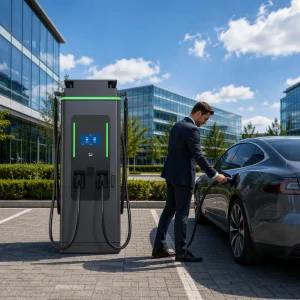
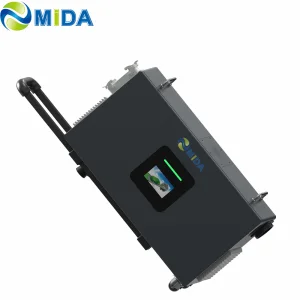

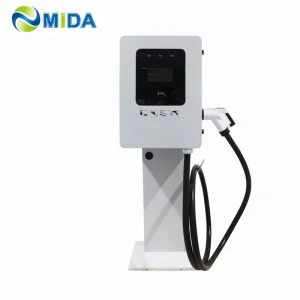
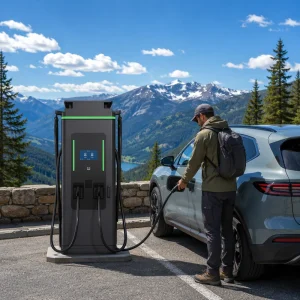
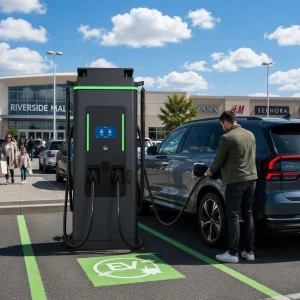
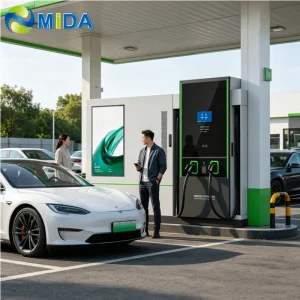
Shanghai Mida Cable Group Ltd. operates through its wholly owned subsidiaries: Shanghai Mida EV Power Co., Ltd., Shenzhen Mida EV Power Co., Ltd., and Shanghai Mida New Energy Co., Ltd.
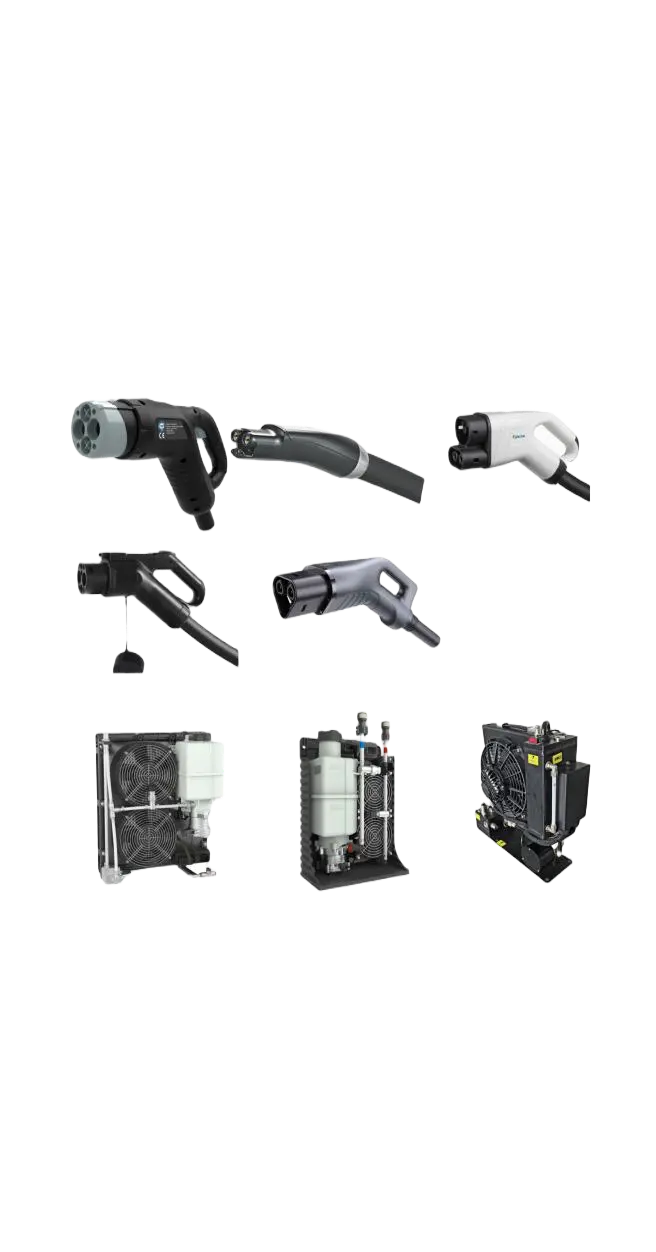
Mida Cable manufactures a comprehensive range of EV charging cables, including 16A–80A J1772 cables, 16A–63A IEC 62196-2 Type 2 cables, and DC fast charging cables: CCS1 (80A–500A), CCS2 (125A–1000A), CHAdeMO (125A–300A), GBT (200A–1000A), and NACS connectors (250A–600A).
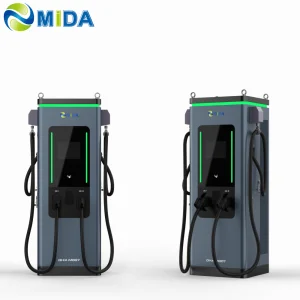
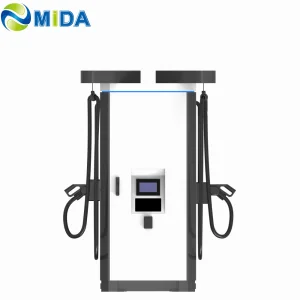
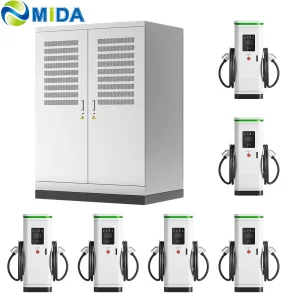
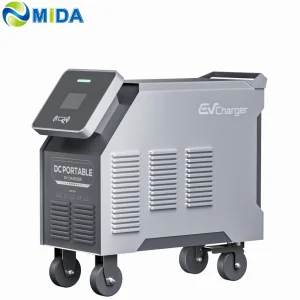
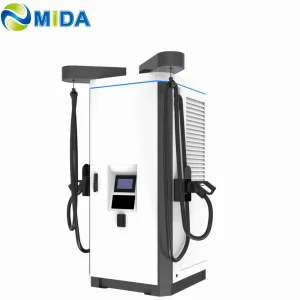
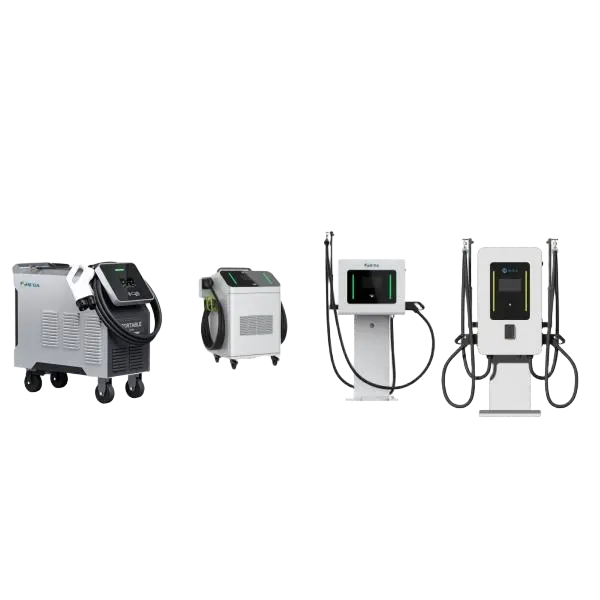
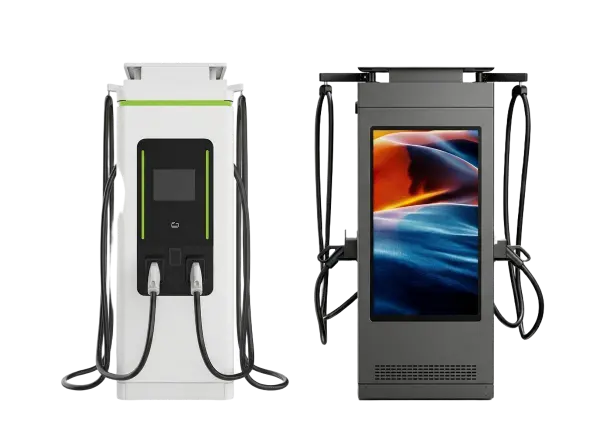
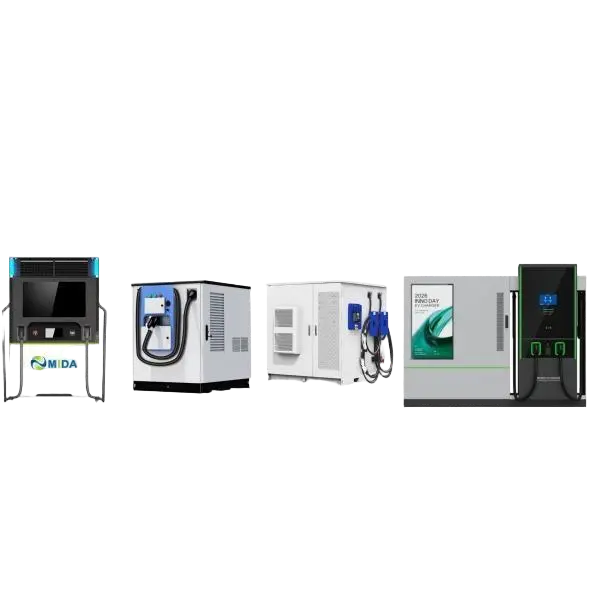
MIDA EV Power produces a full lineup of EV charging stations, such as 7kW–50kW mobile chargers, 3.6kW–7.2kW portable DC chargers, 360kW–1440kW split-type DC fast chargers, 20kW–50kW wall-mounted DC chargers, and 60kW–480kW floor-standing DC fast charging stations.
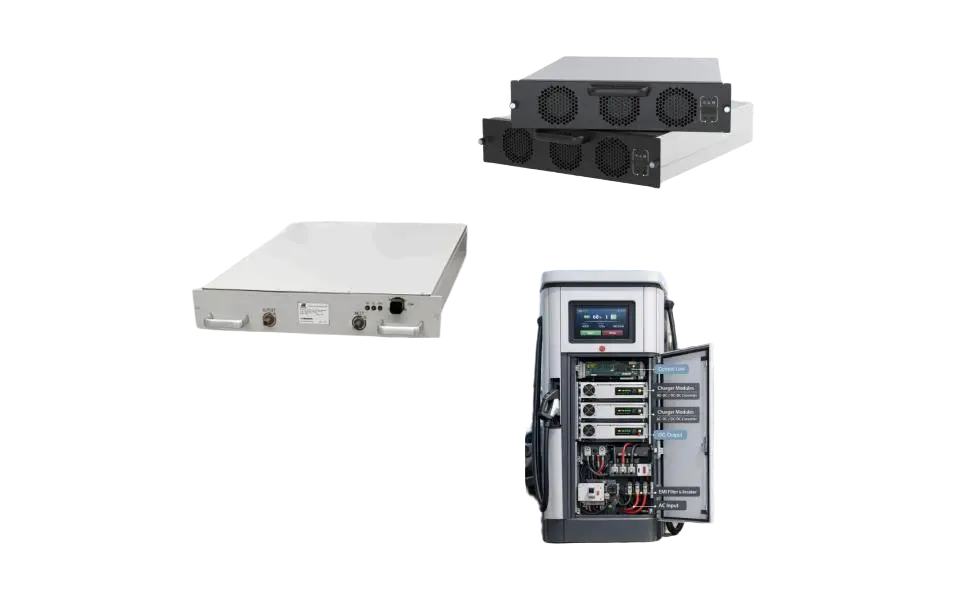
MIDA New Energy specializes in EV charger power modules, offering 20kW–60kW standard modules, 40kW–125kW liquid-cooled modules, 30kW–62.5kW bidirectional modules, and 20kW–45kW V2G charging modules.

Hardware configurations mapped to global charging topologies.
Intelligent, space-saving smart charging units designed for residential and destination applications.
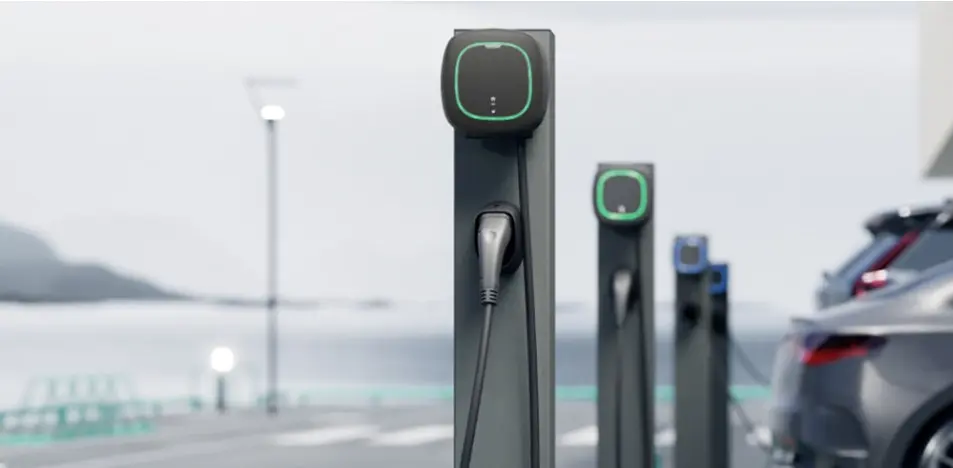
Dynamic configurations: 7kW, 20kW, 30kW, 40kW, 60kW, 80kW systems for fleet deployment.
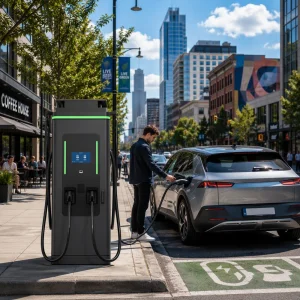
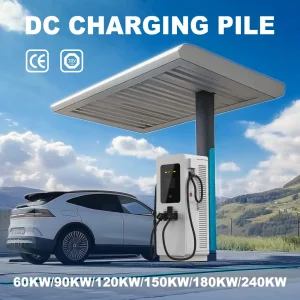
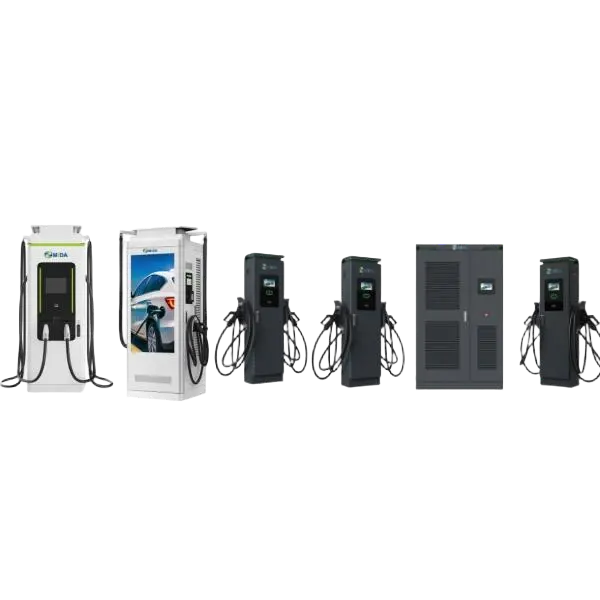
Ultra-fast public and commercial infrastructure from 60kW to 480kW and split-architectures up to 1440kW.
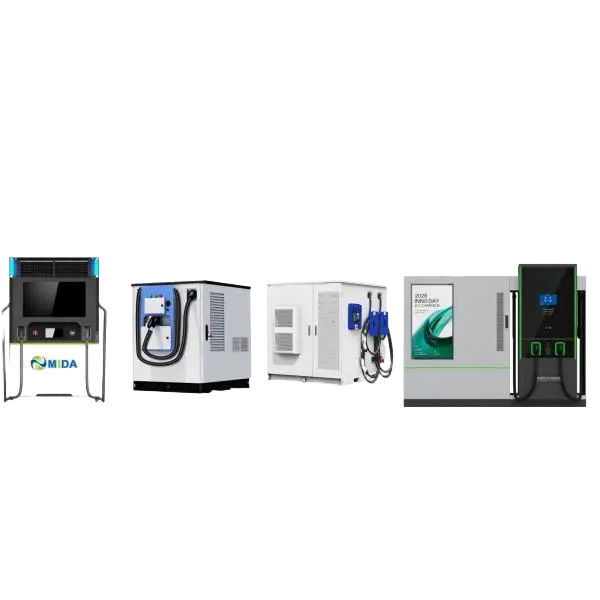
Grid-tied and off-grid Battery Energy Storage Systems (BESS) integrating 60kWh, 261kWh, 418kWh, 625kWh, and up to 2MkWh configurations with high-power output capability.
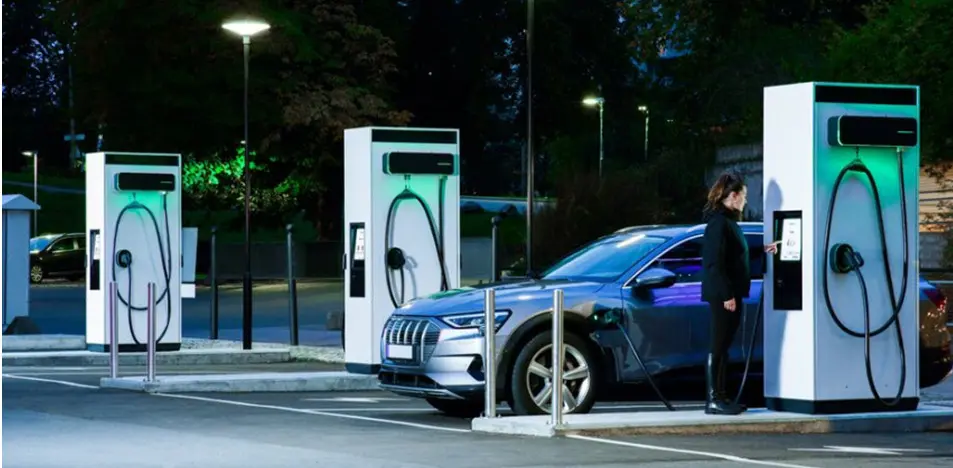
An executive briefing on supply chain optimizations, technology transitions, protocol integration, and structural cost efficiencies.
Sourcing Electric Vehicle Supply Equipment (EVSE) from leading Chinese manufacturers offers structural advantages rooted in industrial cluster integration, advanced research and development cycles, and massive production capacities. By leveraging a highly centralized supply chain within key industrial zones in Shanghai and Shenzhen, manufacturers like MIDA Group can secure raw copper inputs, sub-component semiconductor modules, high-frequency transformer technologies, and advanced outdoor-rated plastics at significant cost advantages.
Chinese factories operate at scale, enabling speed-to-market and accelerated R&D turnaround times. While typical design and testing loops for high-power DC infrastructure take up to 18 months in Western markets, Chinese manufacturers regularly deliver complex OEM and ODM hardware designs—such as customized liquid-cooled systems or split-type topologies—in under 6 months. This speed ensures global charging point operators (CPOs) can adapt rapidly to local regulatory updates, such as the sudden transition to the North American Charging Standard (NACS) or the deployment of high-voltage 1000V DC architectures.
The global EV industry is migrating away from standard 50kW–150kW fast chargers toward Ultra-Fast, High-Power Charging (HPC) solutions starting at 240kW and peaking up to 1440kW. Achieving these power levels without cable thermal degradation requires advanced **Liquid-Cooled Charging Systems**. MIDA Group integrates premium internal coolant pumps and special glycol-water solutions directly into 500A and 600A CCS2/NACS connectors. This allows the charging cable to remain lightweight and highly flexible while carrying extreme electrical currents without risk of overheating.
Simultaneously, the integration of **Vehicle-to-Grid (V2G)** and bidirectional power modules (ranging from 20kW to 62.5kW) enables EVs to act as distributed energy storage assets. When connected to smart grids, fleet vehicles can feed power back during peak demand, stabilizing local grids while generating revenue for fleet operators.
On the software front, compliance with **OCPP 2.0.1** and the **ISO 15118** protocol is critical for next-generation charging infrastructure. Sourcing hardware that is pre-validated with these standards ensures:
EV infrastructure deployment is not a one-size-fits-all model. Hardware configurations must align with specific local scenarios:
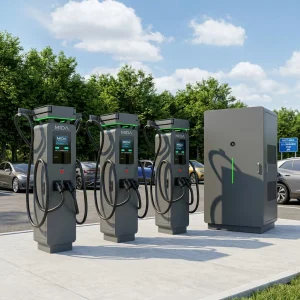
Commercial & Fleet Depots: Logistics operators deploying electric delivery vans or buses require reliable overnight charging. In these cases, deploying massive standalone chargers is cost-prohibitive. Instead, **Split DC Charging Systems** (e.g., 360kW to 1440kW) are ideal. A centralized power cabinet distributes energy dynamically across multiple satellite dispenser posts. This optimizes floor space at the depot and reduces utility connection costs.
Highway Charging Stations: Highway corridors require rapid turnover. Drivers expect to charge from 10% to 80% in under 15 minutes. Liquid-cooled 480kW dispensers equipped with dual CCS2 or NACS connectors deliver maximum throughput. To avoid expensive grid upgrades, these sites can integrate local BESS units (Battery Energy Storage Systems) to buffer high-power demand spikes.
Destination & Residential Projects: Shopping malls, workplaces, and apartment blocks utilize AC EV Chargers (7kW to 22kW) or low-power wall-mounted DC units (20kW to 40kW). In these settings, integration with Dynamic Load Balancing (DLB) is essential to prevent overloading the building's electrical system when multiple vehicles plug in at the same time.
Forward-thinking enterprise procurement focuses on complete macro-level energy systems. The combination of Solar PV, Energy Storage, and EV Chargers—collectively known as **Solar-BESS-EV Charging Microgrids**—is transforming the energy landscape. Energy generated by on-site photovoltaic panels is stored within containerized lithium-iron-phosphate (LFP) battery packs (ranging from 65kWh to 2MkWh). The system's intelligent energy management controller then distributes this stored energy to high-power DC chargers. This approach minimizes demand charges, reduces operational costs, and supports corporate sustainability initiatives.
When importing charging stations from China, confirming compliance with local electrical safety codes is essential. Sourcing non-compliant hardware can result in import delays, grid connection denials, or safety liabilities. Ensure your manufacturing partner has verified third-party certificates:
For OEMs and localized builders, MIDA Group offers supply-chain components to develop customized charging points.
Commonly asked technical questions regarding compliance, integration, and performance specifications.
Latest technical perspectives and analysis from the frontlines of transit electrification.
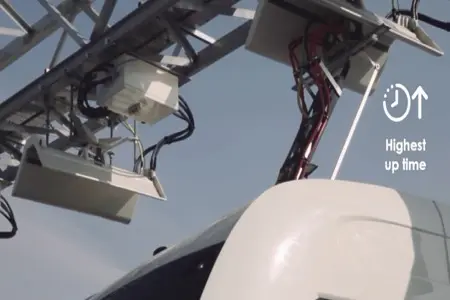
What are the advantages of an e-bus pantograph dome? In contrast to classic plug-in charging systems, e-bus pantograph charging optimizes route uptime and eliminates manual handling...
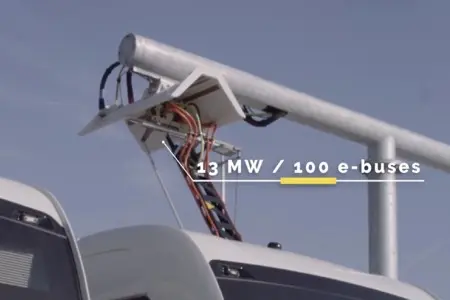
How long does it take to charge with an e-bus pantograph? The charging time depends on the battery capacity, state of charge, and system configuration...
How to Install the Pantograph Up Charger System Dome for Electric Bus. Installing a "Pantograph Up" system requires rigorous alignment and structural support integration...
Precision power distribution platforms and highly configurable accessories.