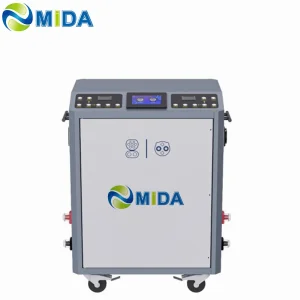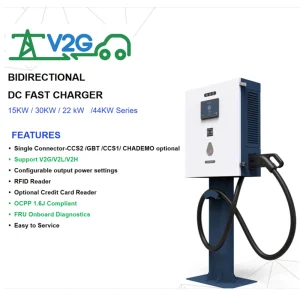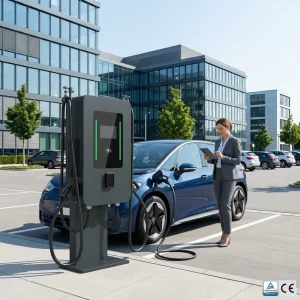
Explore our high-performance line of DC chargers, battery storage integrations, and grid testing equipment optimized for commercial fleet depots, public infrastructure, and heavy-duty logistics.
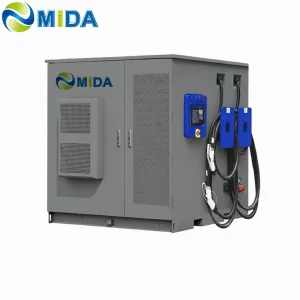
A deep dive into regulatory framework, local infrastructure demands, and the necessity of direct manufacturer-to-site supply networks.
California is globally recognized as the epicenter of the electric vehicle transition in North America. Under the aggressive mandates set by the California Air Resources Board (CARB) and Governor Gavin Newsom's executive order requiring all new passenger vehicles sold in the state to be zero-emission by 2035, the requirement for high-density charging networks is expanding exponentially. Achieving this monumental transition requires more than just local assembly; it mandates deep access to highly integrated, mature, and efficient manufacturing ecosystems, notably those developed in China's advanced industrial corridors.
As California enterprises, fleet managers, municipality leads, and developers build out transit electrification schemes, they face a critical challenge: finding highly customized, cost-efficient, and technologically advanced DC Fast Chargers (DCFC) that meet local grid codes, National Electric Vehicle Infrastructure (NEVI) formula standards, and stringent safety criteria. This is where partnering directly with specialized Chinese manufacturing centers like Mida Group becomes a decisive competitive advantage.
"Sourcing DC charging stations from mature Chinese industrial clusters provides a crucial information and performance gain. Operators can deploy liquid-cooled hardware and advanced load-balancing solutions that are 30% to 50% more cost-effective than standard local equivalents, maintaining rapid deployment timetables."
Select your equipment scale to see the parameters, power envelopes, and application architectures for each core category.
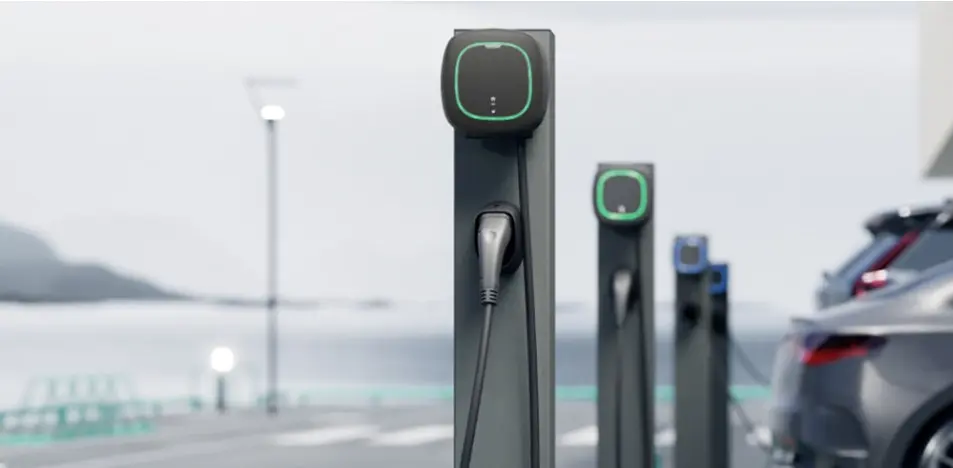
Ideal for long-dwell workplaces, multi-family residences, and municipal overnight depots. Supports J1772 and NACS protocols with smart billing capabilities.
 Explore AC Options
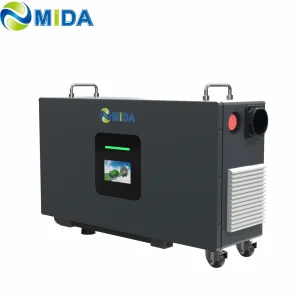
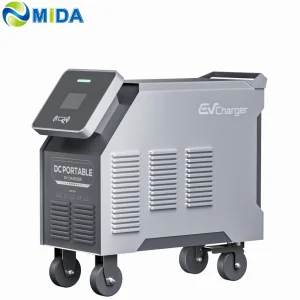
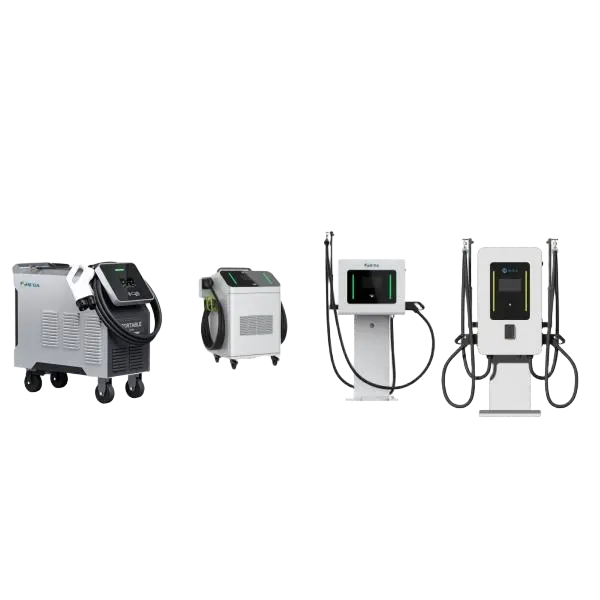
Deployable power ranges from 7kW to 80kW. Features ultra-portable designs or space-saving wall-mount hardware for fleet service bays and dealership workshops.
 Explore Mobile & Wallmount
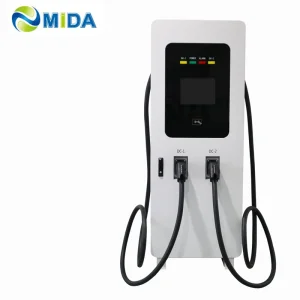
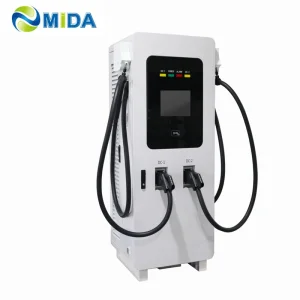
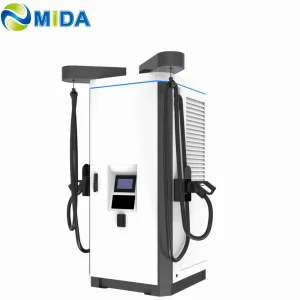
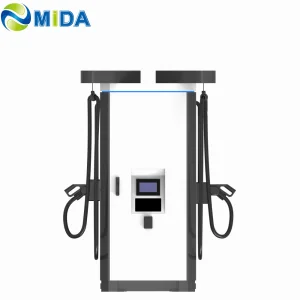
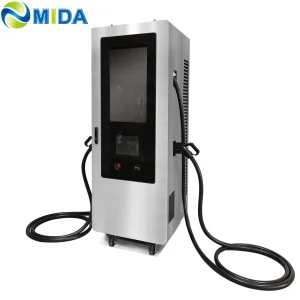
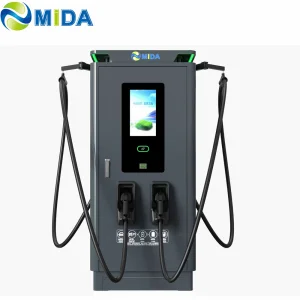
Engineered for corridor charging hubs. Scalable matrices from 60kW to 1440kW. Incorporates state-of-the-art dynamic power routing and dual-nozzle designs.
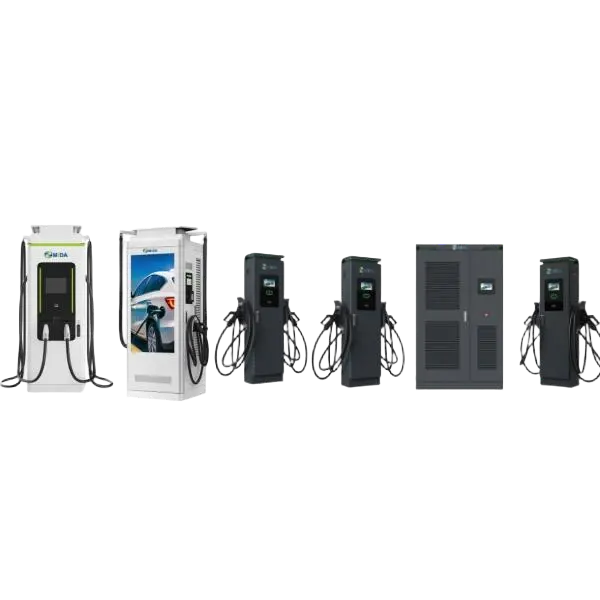 Explore DC Infrastructure
Capacities spanning 60kWh to 2MWh+. Designed to mitigate high utility demand charges in California by buffering grid draw with integrated lithium storage.
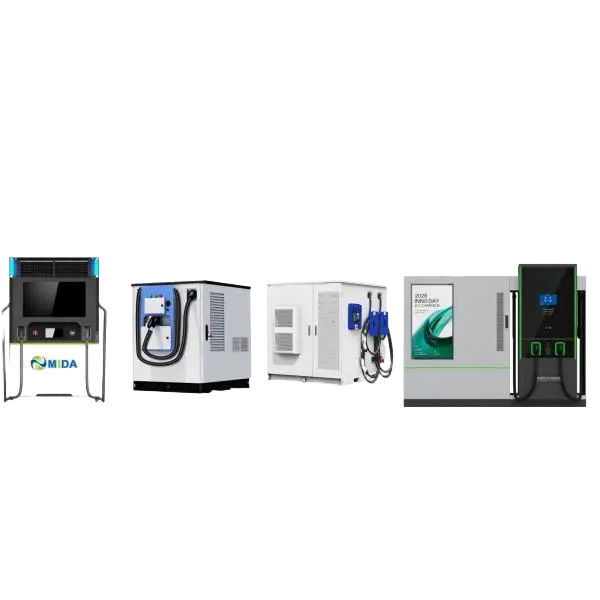 Explore BESS Systems
Vertically integrated production capabilities from premium cables and custom liquid-cooled modules to multi-megawatt storage installations.
Mida Group operates via its dedicated subsidiaries—Shanghai Mida EV Power Co., Ltd., Shenzhen Mida EV Power Co., Ltd., and Shanghai Mida New Energy Co., Ltd. This multi-disciplinary organizational footprint ensures complete control over the value chain, yielding superior reliability and compliance profiles for the California import market.
Our manufacturing scale allows us to produce high-specification 16A–80A J1772 cables and 16A–63A IEC 62196-2 Type 2 cables alongside high-current DC liquid-cooled lines. To address the rapidly evolving North American landscape, Mida produces CCS1 (80A–500A), CCS2 (125A–1000A), CHAdeMO (125A–300A), GB/T (200A–1000A), and NACS (250A–600A) connectors. Whether deploying a standard wallbox or high-power megawatt transit chargers, our cable integration prevents premature thermal throttling.

Our proprietary charging module matrix forms the heart of our high-uptime infrastructure, engineered for maximum heat dissipation and grid compliance.
How Mida's hardware catalog solves real-world engineering and regulatory issues within the California energy ecosystem.
In high-congestion metropolitan areas, property owners must offer fast EV charging to maintain tenant tenancy. Our Wall-Mounted DC Chargers (20kW-80kW) provide rapid power boost capabilities without requiring costly utility substation retrofits. Equipped with OCPP 2.0.1 and ISO 15118 compliance, these stations allow seamless "Plug & Charge" functionality, bypassing complex app auth steps.
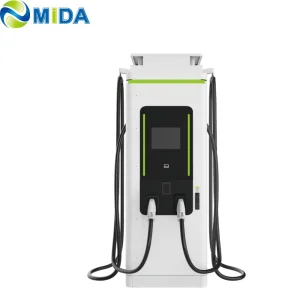
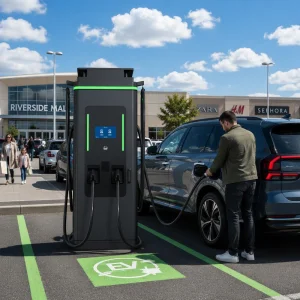
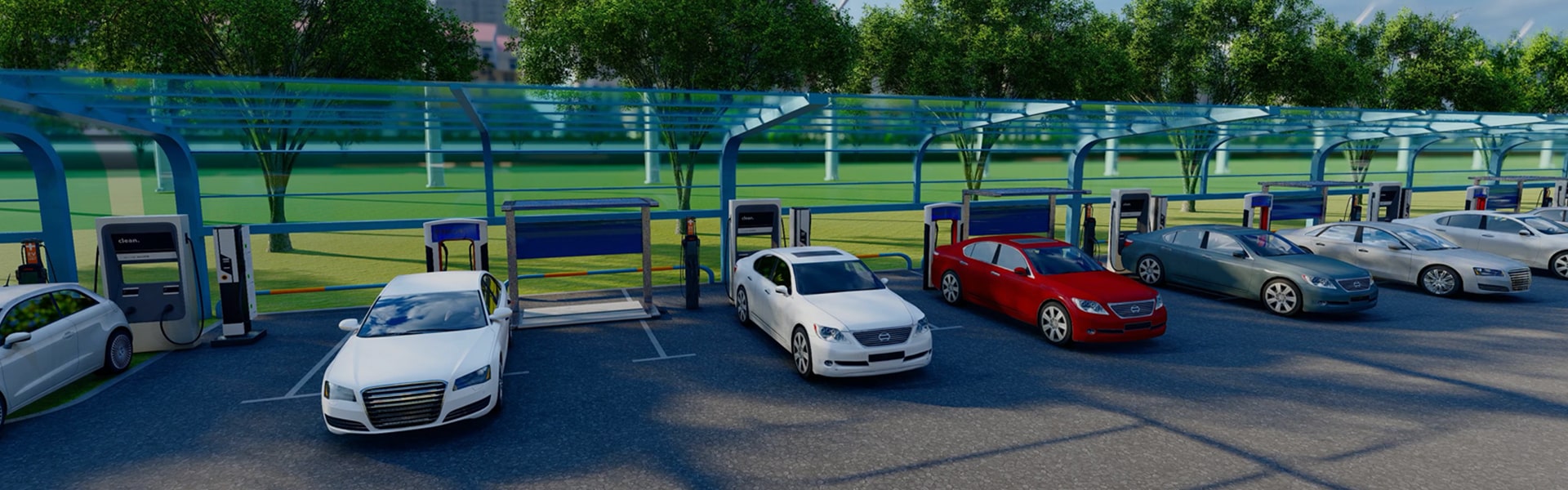
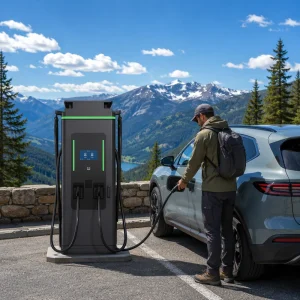
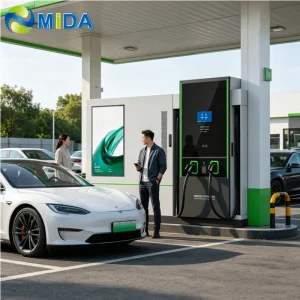
California's major interstates require high-density charging plaza deployments. By implementing Mida's 360kW to 1680kW Split Type DC Fast Charging Stations, developers can dynamically distribute power to multiple parking spaces. If a single vehicle requires high throughput, the system routes maximum capacity via liquid-cooled CCS1 or NACS dispensers. If multiple vehicles park, the power matrix automatically divides energy to prevent grid overload.
Heavy-duty electric trucks and delivery vans require sustained megawatt charging. Mida's specialized Integrated DC Chargers (160kW–320kW) are configured with dual CCS1/NACS ports to charge commercial trucks overnight. These stations integrate directly with on-site Solar Photovoltaic (PV) arrays and battery energy storage, reducing utility demand charges during California's peak pricing windows (4 PM - 9 PM).
Stay up to date with Mida Group's ongoing technological advancements in regional transit systems, automated pantograph chargers, and smart grid integrations.
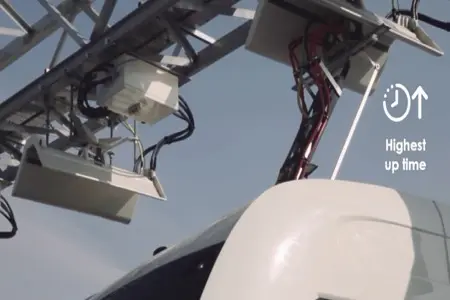
What are the advantages of an e-bus pantograph dome? In contrast to classic plug-in charging systems, e-bus pantograph solutions allow for high-power hands-free depot charging, reducing physical wear and automated scheduling overhead.
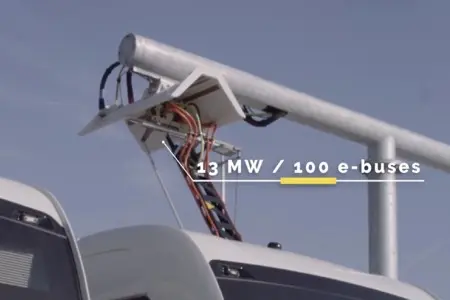
How long does it take to charge with an e-bus pantograph? The charging time depends on the battery capacity and the station's configuration, with output potentials exceeding 450kW for rapid depot turnaround.
How to Install the Pantograph Up Charger System Dome for Electric Bus. Installing a "Pantograph Up" system dome requires precise mechanical alignment, structural support, and integration with high-voltage supply lines.
Critical compliance, engineering, and logistics answers for sourcing Chinese EV charging hardware for deployments in the state of California.
Review additional system certifications, portable emergency units, high-voltage load testing modules, and custom split-cabinet systems.