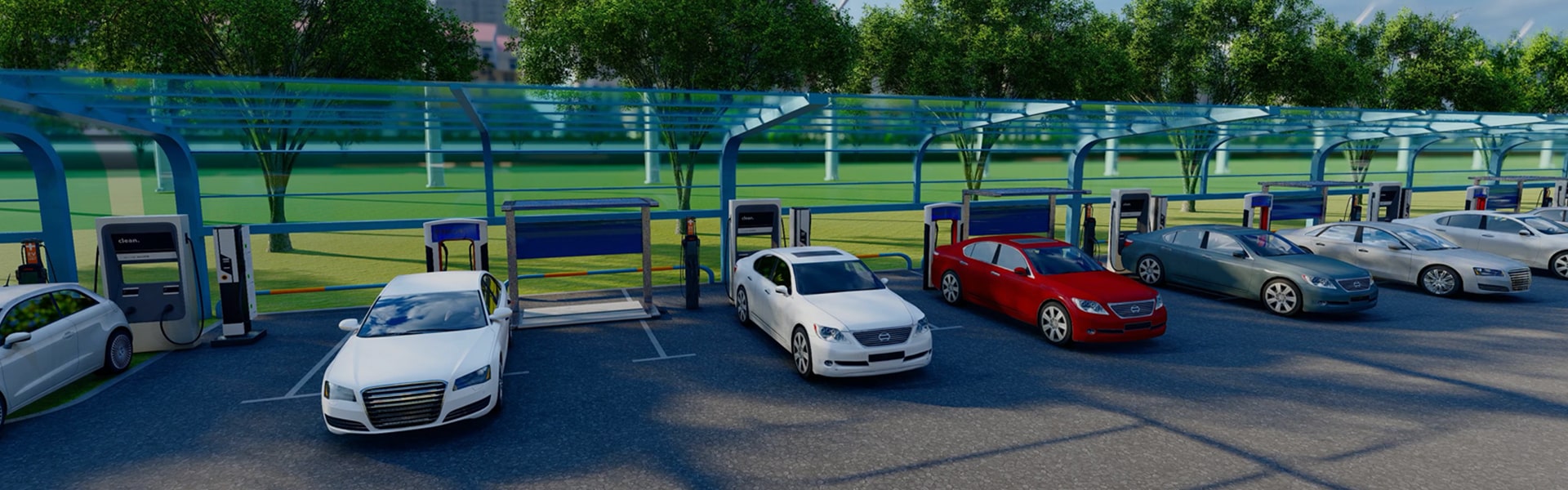
A comprehensive analysis of rapid EV charging ecosystems, advanced liquid-cooling engineering, Chinese manufacturing localization, and global regulatory compliance standards.
The global transition to electric mobility demands robust high-power charging (HPC) networks capable of matching the refueling speed of internal combustion engines. As Charge Point Operators (CPOs), fleet operators, and real estate developers scale up fast-charging infrastructures, selecting the correct hardware partner becomes a critical long-term financial decision. Industrial fast charging is no longer just about supplying raw power; it is about smart thermal management, high efficiency power conversion, dynamic power sharing, and seamless grid-integration.
This document details the technological advancements of Shanghai Mida Cable Group Ltd. and its specialised subsidiaries. By integrating power electronics engineering, manufacturing resilience, and strict adherence to global compliance standards, we configure robust platforms designed to minimize total cost of ownership (TCO) and maximize infrastructure longevity.
Engineered for high availability, extreme climate durability, and flexible grid integration.

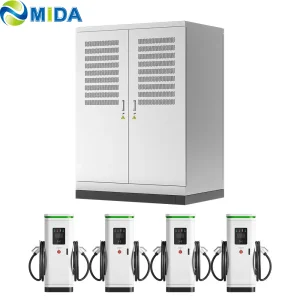
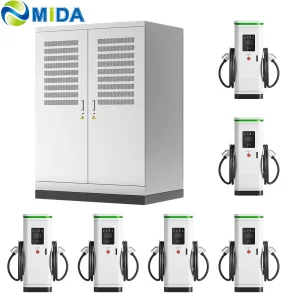
Shanghai Mida Cable Group Ltd. operates through its wholly owned subsidiaries: Shanghai Mida EV Power Co., Ltd., Shenzhen Mida EV Power Co., Ltd., and Shanghai Mida New Energy Co., Ltd. This unified organizational structure ensures complete quality control across all hardware layers of the charging infrastructure: from high-current cable design to power module topology and end-user dispenser logic.
Our manufacturing capacity incorporates modern automatic extrusion lines, automated module validation machinery, and climatic test chambers. By operating specialized business units for cable extrusion, module engineering, and system integration, we ensure that every system component functions harmoniously under all environmental conditions.
Mida Cable manufactures a comprehensive range of EV charging cables, including 16A–80A J1772 cables, 16A–63A IEC 62196-2 Type 2 cables, and heavy-duty DC fast charging cables: CCS1 (80A–500A), CCS2 (125A–1000A), CHAdeMO (125A–300A), GBT (200A–1000A), and NACS connectors (250A–600A) designed to interface with modern North American vehicle inlets.
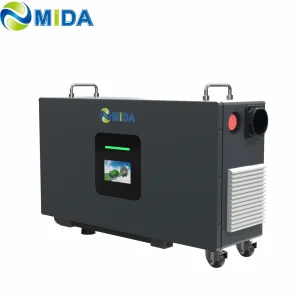
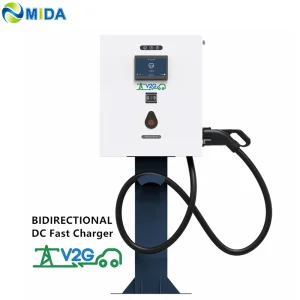
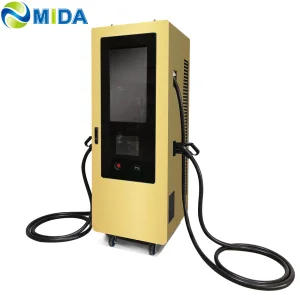
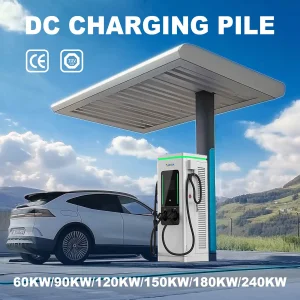
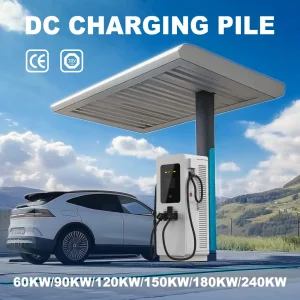
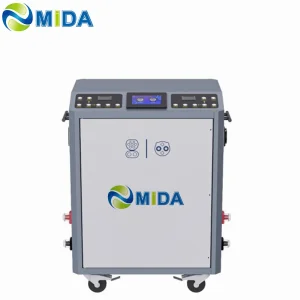
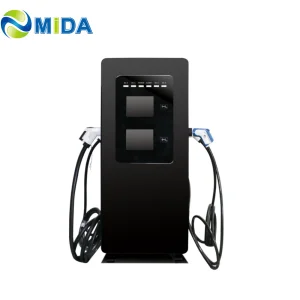
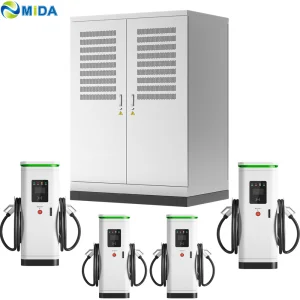
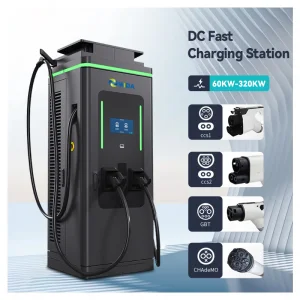
MIDA EV Power produces a full lineup of EV charging stations, such as 7kW–50kW mobile chargers, 3.6kW–7.2kW portable DC chargers, 360kW–1440kW split-type DC fast chargers, 20kW–50kW wall-mounted DC chargers, and 60kW–480kW floor-standing DC fast charging stations designed for long-term reliability.
MIDA New Energy specializes in EV charger power modules, offering 20kW–60kW standard modules, 40kW–125kW liquid-cooled modules, 30kW–62.5kW bidirectional modules, and 20kW–45kW V2G charging modules representing the leading edge of modern power conversion design.

Resolving geographic, environmental, and spatial constraints across key operational sectors.
Long-distance travel corridors require ultra-fast power delivery to minimize dwell times. By deploying split-system liquid-cooled DC fast chargers (up to 1440kW), operators can service high-voltage vehicle architectures in under 15 minutes, maintaining high station throughput during peak travel periods.
Logistics depots and municipal bus transit networks require predictable high-volume power delivery. Our Megawatt Charging Systems (MCS) and customized automated overhead pantograph systems charge high-capacity batteries safely during scheduled driver breaks or vehicle loading operations.
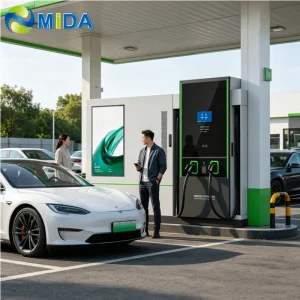
In dense metropolitan areas where upgrading distribution transformers is cost-prohibitive, battery-buffered charging stations (BESS) offer a practical solution. Integrating a 1MWh battery pack allows operators to buffer energy from the grid at low rates and deliver high-power charging without putting stress on local substation transformers.
Transitioning from basic electrical dispensers to intelligent, grid-interactive distributed energy systems.
The global EV infrastructure is shifting away from traditional Silicon IGBT switch topologies in favor of Silicon Carbide (SiC) MOSFETs. SiC devices operate at higher frequencies and temperatures, which helps reduce switching energy losses and keeps overall thermal dissipation in check. This transition allows Mida Group to manufacture more compact 40kW and 60kW charging modules that deliver over 96% efficiency under typical operating conditions. This reduction in heat production directly translates to improved long-term reliability and reduced cooling demands.
Electric vehicle batteries can also serve as mobile energy storage resources. Using bidirectional power conversion topologies, our Vehicle-to-Grid (V2G) DC systems (ranging from 20kW to 60kW) enable fleets to return excess energy back to local distribution networks during peak demand periods. This interactive energy management allows logistics facilities to lower electricity bills, participate in demand response programs, and provide emergency backup power during grid outages.
As charging currents exceed 350A, standard copper cable cross-sections become too heavy and stiff to handle easily. To keep cable weight manageable for users, our high-power charging systems use specialized cooling units. These units circulate a dielectric fluid through the cable and connector assembly, maintaining internal temperatures below 50°C even when delivering continuous currents up to 600A.
Explore our main component systems and dynamic grid infrastructures.
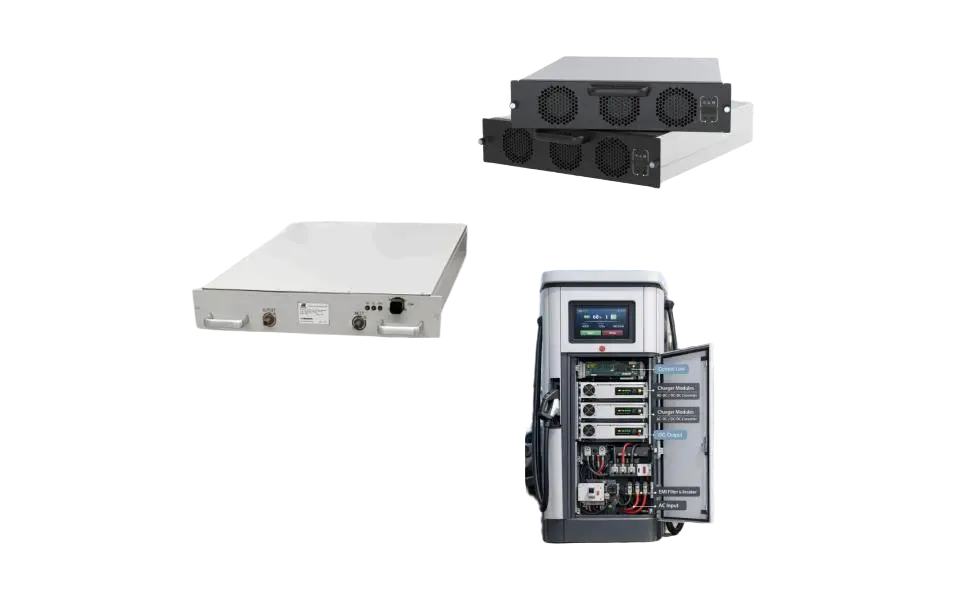
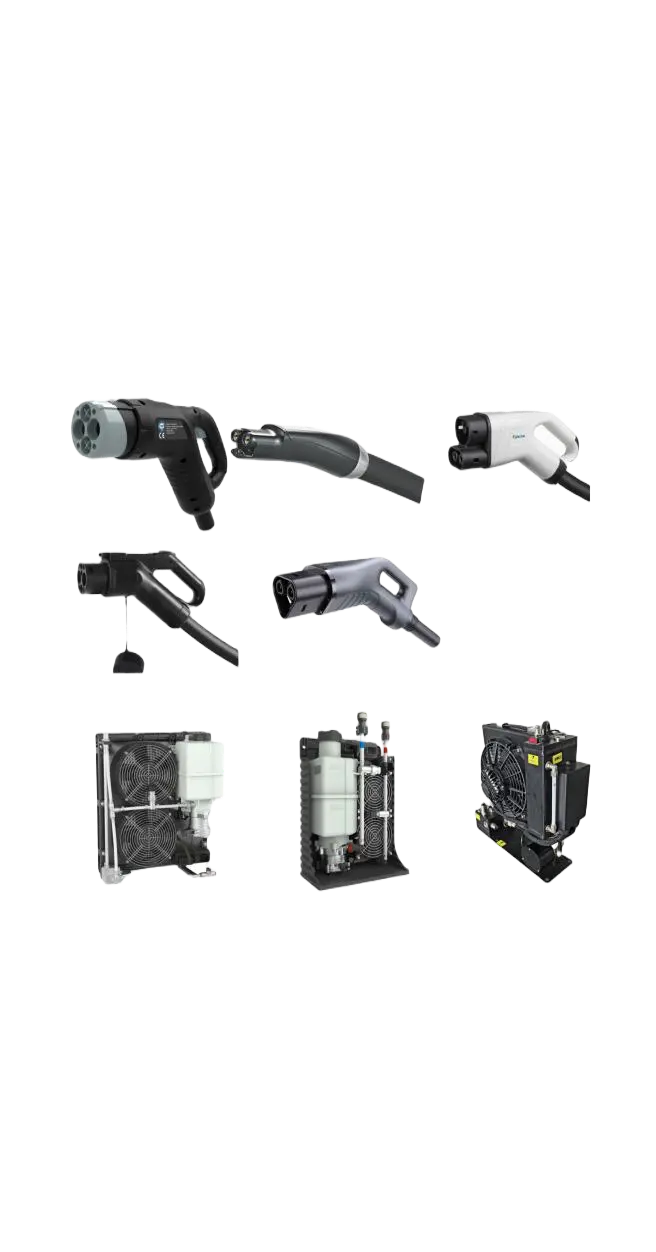
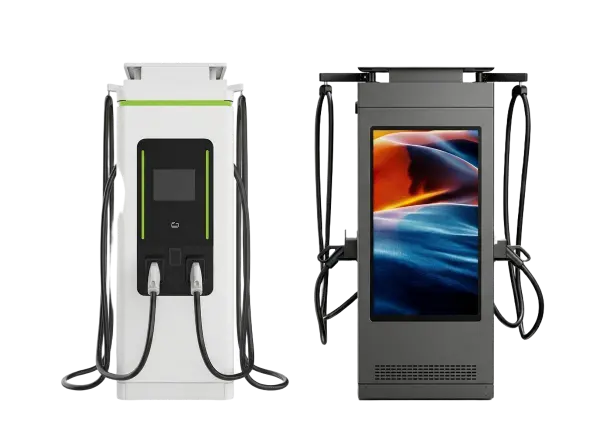
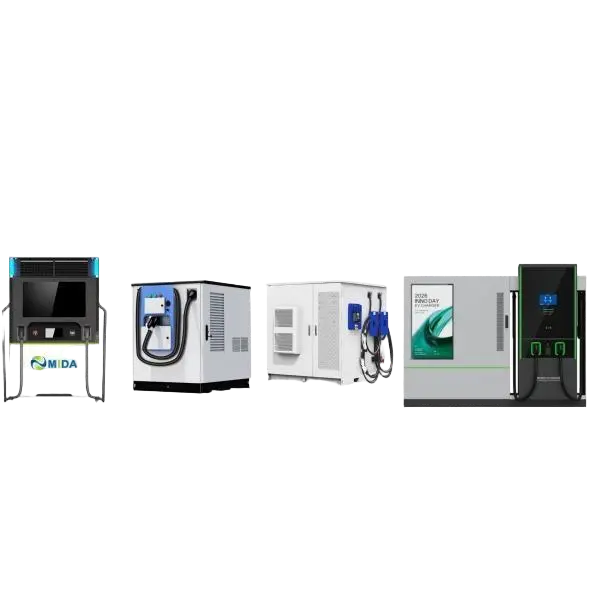
Leveraging deep industrial clusters to ensure high component availability and pricing advantages.
The Yangtze and Pearl River Delta regions house complete manufacturing ecosystems for the components required in modern EV infrastructure. Our facility in Shanghai draws directly from these established supply networks. This local concentration of electronic component suppliers, sheet metal fabricators, and advanced copper processors helps shorten production times and simplifies raw material transport.
By producing our own charging cables and power modules in-house, Mida Group maintains control over component tolerances and final assembly quality. This vertical integration reduces reliance on third-party suppliers, helping to insulate our production schedules from global supply disruptions and keeping system pricing competitive.
In addition, our manufacturing setup uses automated optical inspection (AOI) and comprehensive functional testing on all power module assemblies. This structured testing process helps identify potential defects early, ensuring that finished charging stations meet reliable operating standards before shipment.
Certified configurations designed for seamless integration with regional grid networks worldwide.
Full CE-LVD and CE-EMC certifications. Support for OCPP 1.6J and 2.0.1, combined with ISO 15118 and DIN 70121, ensures compatibility across European charging networks.
Configured with heavy-duty UL-listed components. Supports both CCS1 and NACS connection options, keeping equipment compatible with regional power grids and grid safety regulations.
Complies with specialized local standards such as TR25 in Singapore and CE-RED in EEA territories. Systems are designed to meet regional requirements for grid safety and billing transparency.
Follow our recent product applications, engineering updates, and new deployment installations.
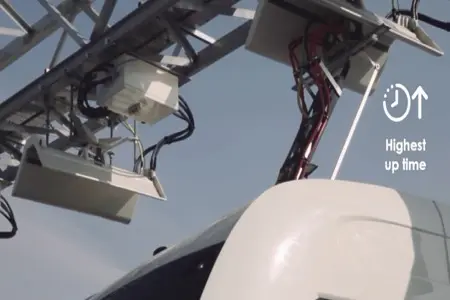
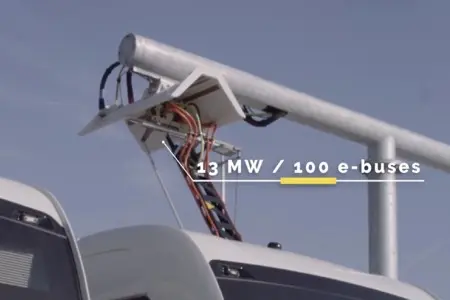
Heavy-duty charging terminals, diagnostic test tools, and high-capacity battery-integrated setups.
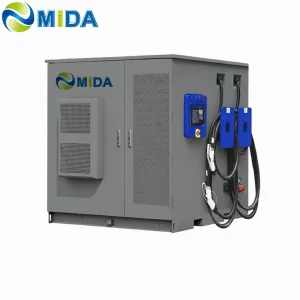
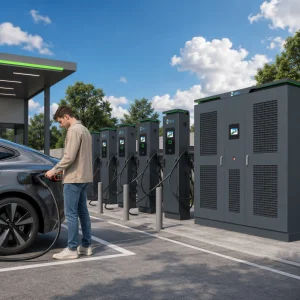
Direct technical answers addressing system design, performance, and international deployment.