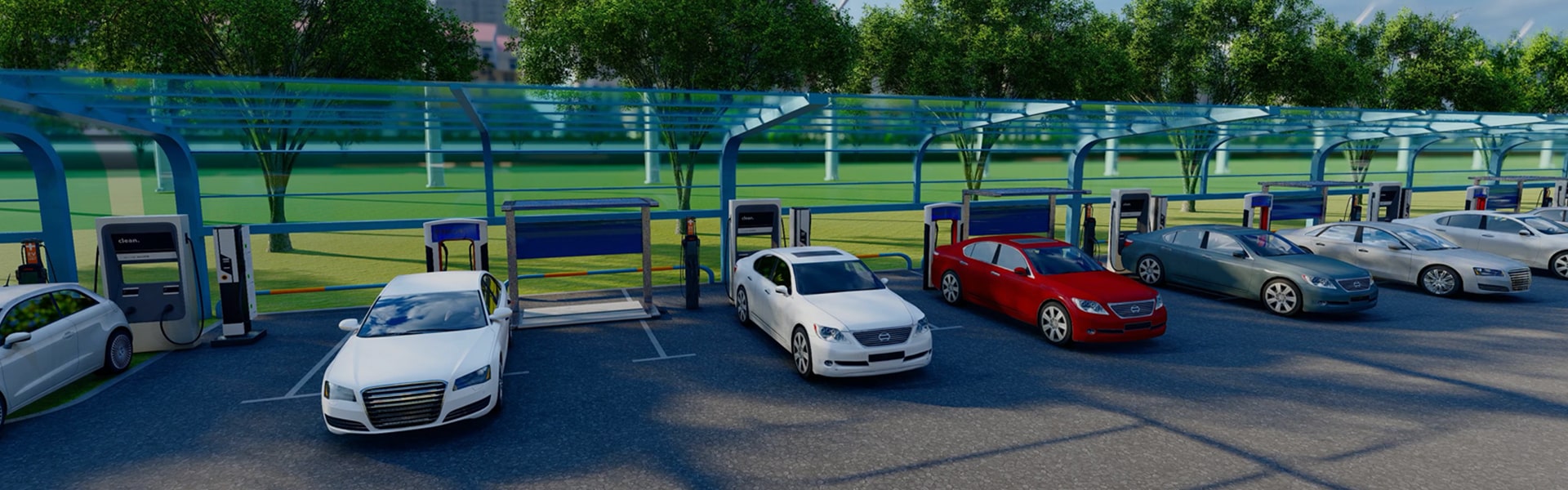
Deploy industry-leading charging equipment engineered for reliability, safety, and rapid deployment across utility networks, commercial hubs, and transit systems.
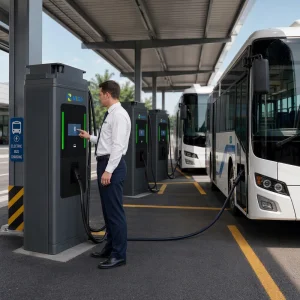
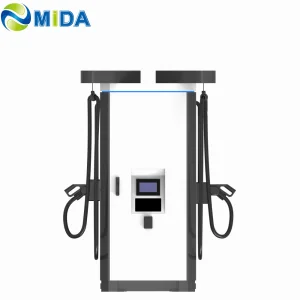
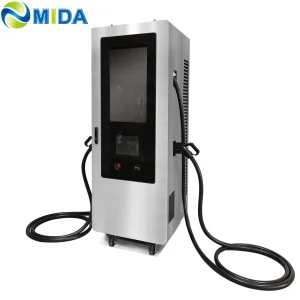
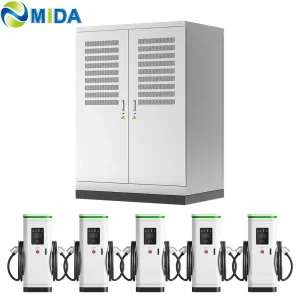
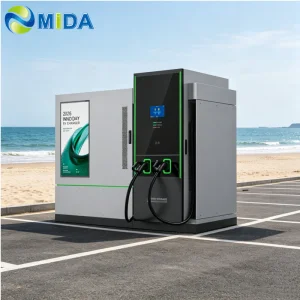
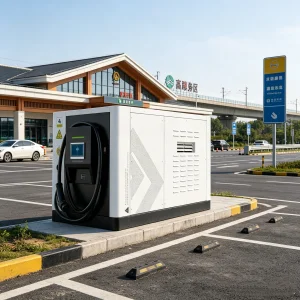
Electric vehicle (EV) charging stations rely fundamentally on the performance of their internal power conversion modules. As vehicles transition from 400V architectures to advanced 800V and 1000V systems, the requirement for highly efficient, thermally optimized, and compact sub-components has never been greater. High-frequency EV charging modules convert grid AC power into stable, high-voltage DC power to directly charge vehicle battery packs. Advanced topologies, such as three-phase Vienna rectifiers combined with interleaved LLC resonant converters, allow modern modules to operate at high switching frequencies, resulting in reduced weight and footprint while achieving conversion efficiencies above 96%.
For charging point operators (CPOs) and fleet logistics managers, selecting the right EV charger module is critical. Key metrics like MTBF (Mean Time Between Failures), power density, voltage range (typically 150V DC to 1000V DC), and electromagnetic compatibility determine the long-term operational cost (OPEX) and durability of the charging site. Silicon Carbide (SiC) MOSFETs are rapidly replacing traditional Silicon IGBTs, yielding lower switching losses and enabling reliable operation under extreme environmental conditions.
Shanghai Mida Cable Group Ltd. operates through its wholly owned subsidiaries: Shanghai Mida EV Power Co., Ltd., Shenzhen Mida EV Power Co., Ltd., and Shanghai Mida New Energy Co., Ltd.
Mida Cable manufactures a comprehensive range of EV charging cables, including 16A–80A J1772 cables, 16A–63A IEC 62196-2 Type 2 cables, and heavy-duty DC fast charging cables: CCS1 (80A–500A), CCS2 (125A–1000A), CHAdeMO (125A–300A), GBT (200A–1000A), and NACS connectors (250A–600A).
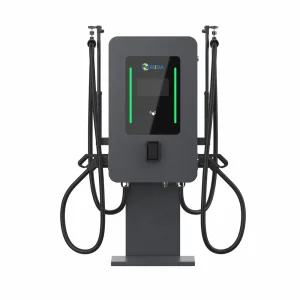
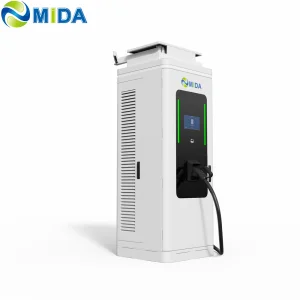
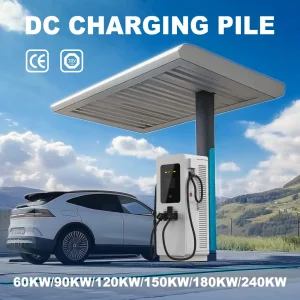
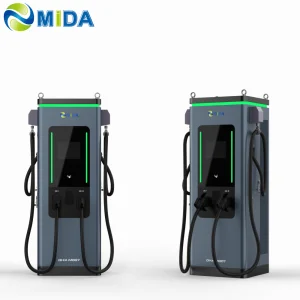
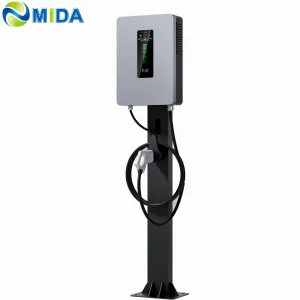
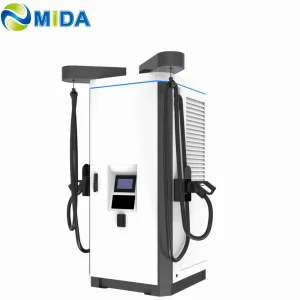
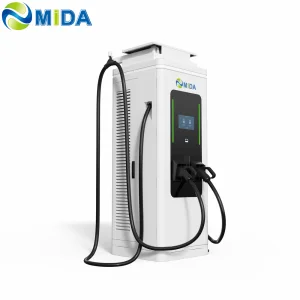
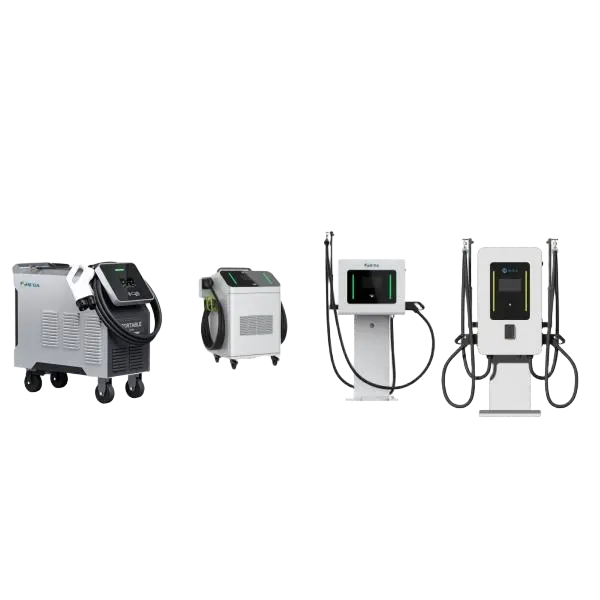
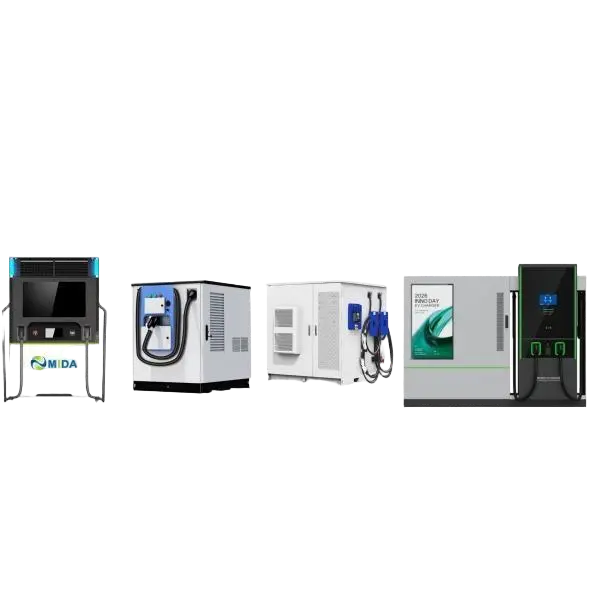
MIDA EV Power produces a full lineup of EV charging stations, such as 7kW–50kW mobile chargers, 3.6kW–7.2kW portable DC units, 360kW–1440kW split-type DC fast chargers, 20kW–50kW wall-mounted DC chargers, and 60kW–480kW floor-standing DC fast charging stations.
MIDA New Energy specializes in the development of EV charger power modules, offering 20kW–60kW standard modules, 40kW–125kW liquid-cooled modules, 30kW–62.5kW bidirectional modules, and 20kW–45kW V2G charging modules.

From standard AC units to heavy-duty liquid-cooled highway megawatt installations, explore our diverse catalog of high-efficiency charging systems.
Intelligent AC units with smart connectivity, dynamic load balancing, and rugged structures. Perfect for overnight fleet charging and workplace parking lots.
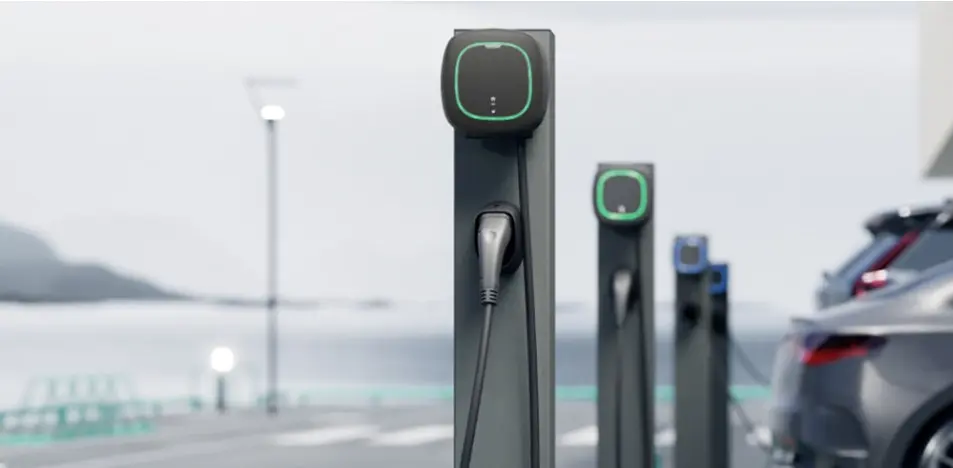
Compact, space-saving wall-mount chargers and mobile units for versatile charging deployments inside workshops, parking garages, and mobile fleet support vehicles.
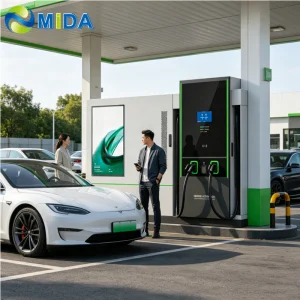
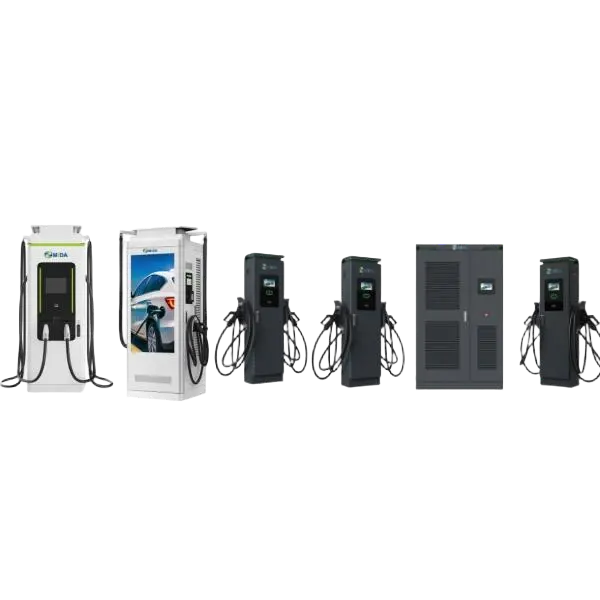
Ultra-fast DC dispensing networks. Designed for heavy-duty commercial transport hubs, public charging corridors, and high-frequency logistics yards.
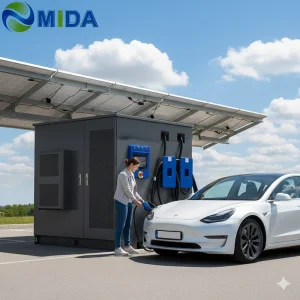
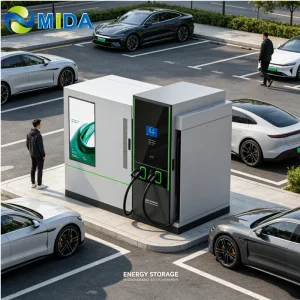
Battery Energy Storage System integrated charging units designed to bypass grid constraints, peak-shave site demand, and support smart microgrids with clean backup power.
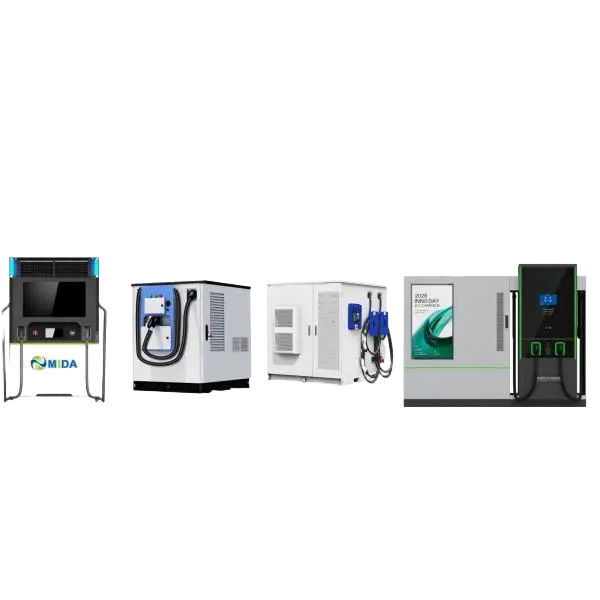
An in-depth analysis of module topologies, liquid-cooling advantages, global compliance, and supply chain strategies.
Today's smart grid infrastructures require energy flow flexibility. Vehicle-to-Grid (V2G) technology allows EV batteries to export energy back to the grid during peak loads. This is achieved by utilizing bidirectional AC/DC power modules. Unlike conventional unidirectional modules, bidirectional modules incorporate dual-active bridge (DAB) or CLLC resonant converter topologies. These topologies employ dual-direction active switching elements that maintain soft-switching across the entire voltage range, drastically lowering switching losses and preventing thermal spikes.
Additionally, modern modules implement digital signal processors (DSPs) to coordinate complex pulse-width modulation (PWM) schemes. This enables real-time adjustment of phase shifting, keeping total harmonic distortion (THD) under 5% and the power factor above 0.99, protecting local transformer equipment and ensuring compliance with strict utility regulations.
Thermal management is the single biggest factor influencing the lifespan of high-power electronics. Traditional forced-air modules rely on fans to pull ambient air through the chassis. In dusty, humid, or coastal environments, airborne contaminants build up on components, leading to localized heating, dielectric breakdown, and eventual module failure.
Liquid-cooled modules address these risks by sealing all power electronics inside an IP67 enclosure. Heat is transferred via a thermal interface material (TIM) to an internal cold plate, through which a water-glycol mixture circulates. The fluid channels carry heat away to an external heat exchanger. Liquid cooling eliminates dust ingestion, reduces fan noise to zero, and allows the module to operate at full load in ambient temperatures up to 55°C without de-rating, extending the typical operational lifetime of the charger from 3–5 years to over 10 years.
The concentration of raw material processing, semiconductor packaging, and component assembly in China gives domestic factories an unmatched competitive edge. MIDA Group leverages this integrated ecosystem to secure high-quality magnetic cores, high-reliability capacitors, and advanced power semiconductor switches at stable prices. Our vertically integrated production model spans raw copper drawing for charging cables to automated surface-mount technology (SMT) for power control boards.
By streamlining component logistics, Chinese factories significantly reduce engineering design cycles and product development costs. This allows MIDA Group to quickly implement the latest Silicon Carbide (SiC) advancements into mass production, providing global operators with premium hardware at a lower total cost of ownership (TCO).
Deploying charging stations globally requires strict adherence to localized certifications and safety standards. In North America, modules must comply with UL 2231 and UL 2202, ensuring robust electrical insulation and shock prevention. In Europe, CE marking and TÜV compliance verify compliance with electromagnetic compatibility (EMC) Class B standards. For Japan, the PSE certificate is mandatory to confirm electrical safety.
Grid integration is another critical factor. Power modules must adhere to local utility rules, including voltage ride-through capabilities and active/reactive power controls. Furthermore, seamless integration with OCPP 1.6J and OCPP 2.0.1 backend software is required to enable remote diagnostics, dynamic tariff management, and automated power de-rating during peak utility periods.
Explore our complete catalog of industrial charging modules, high-current liquid-cooled cable assemblies, and grid-tied energy systems.
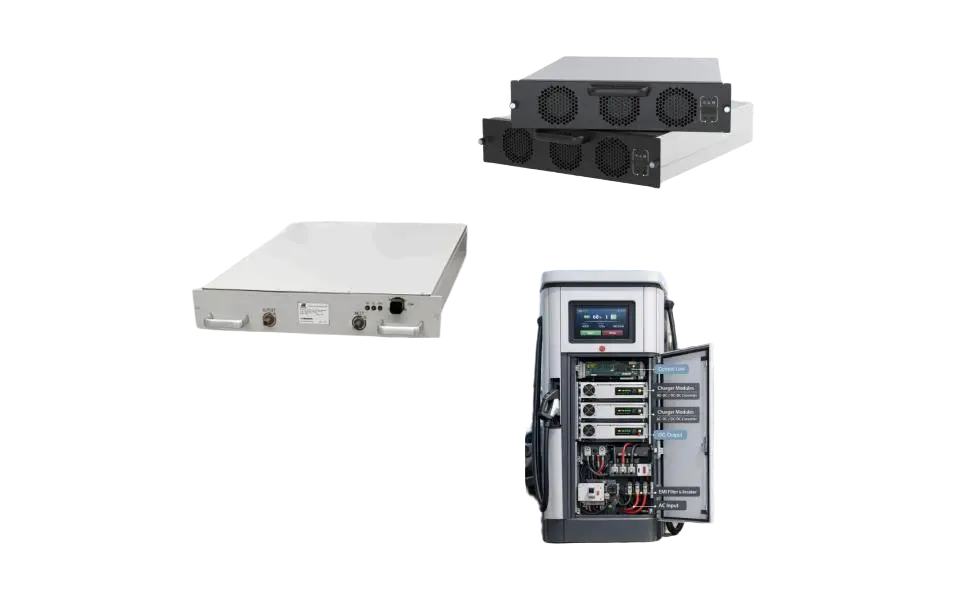
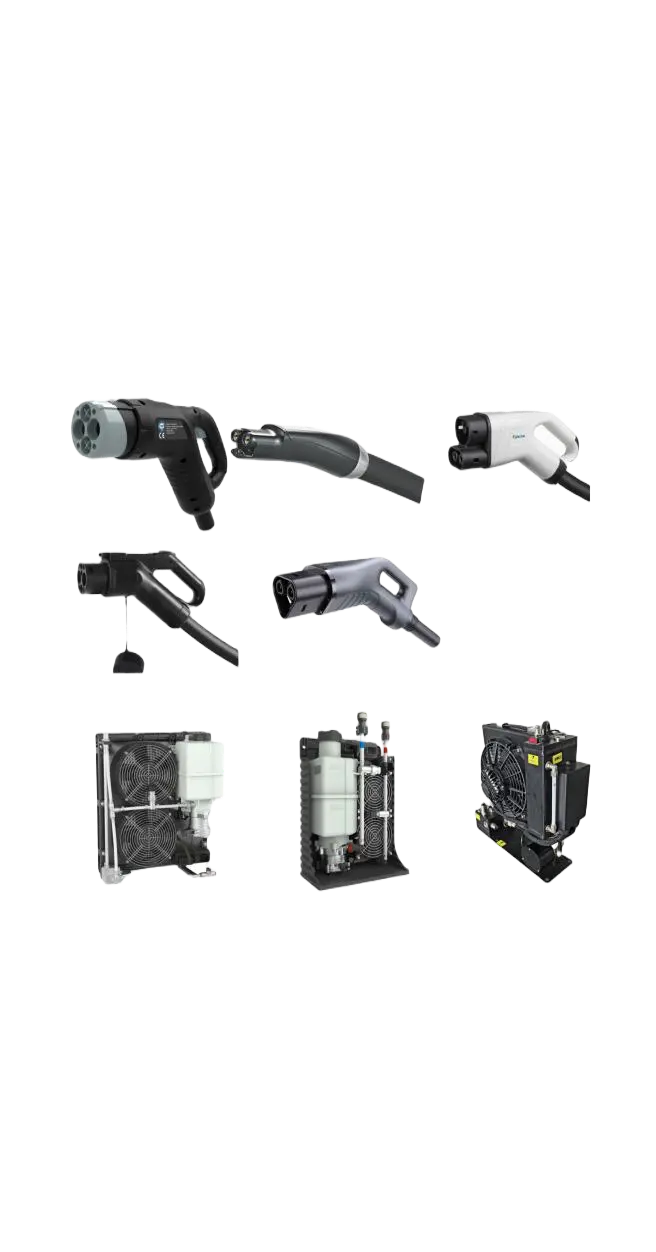
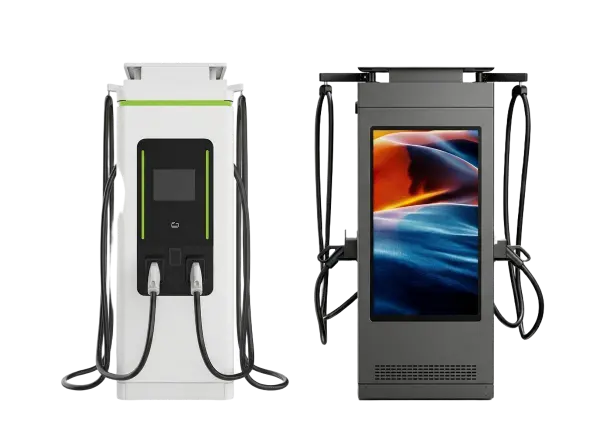
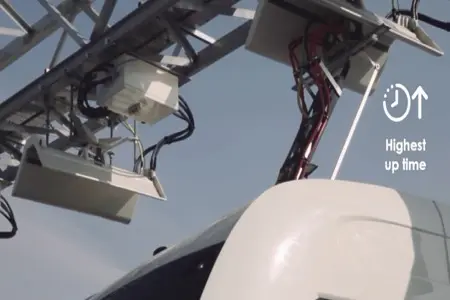
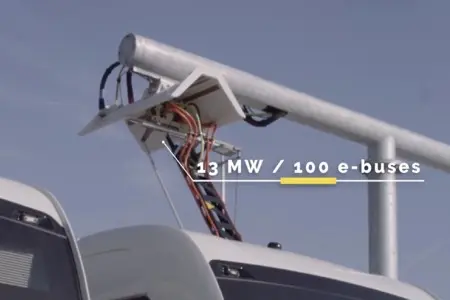
Stay informed about our latest technological breakthroughs, product rollouts, and installation guides for modern mass transit systems.
Select from our comprehensive list of field-proven DC chargers, smart mobile systems, and energy storage integrations.