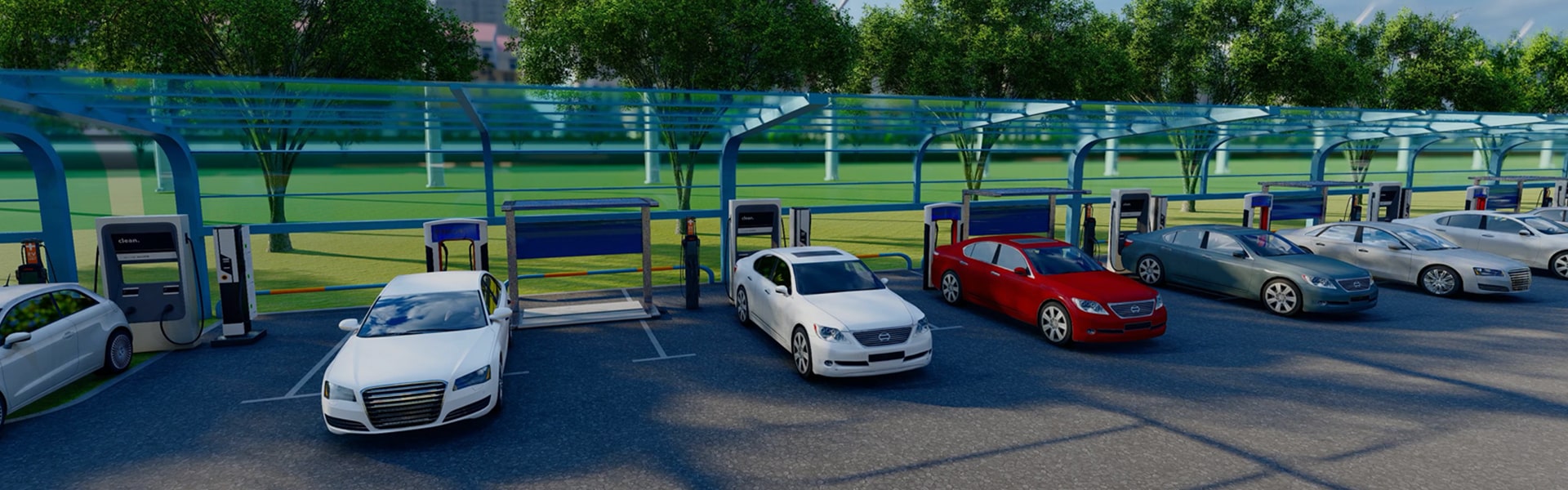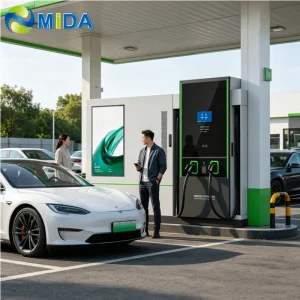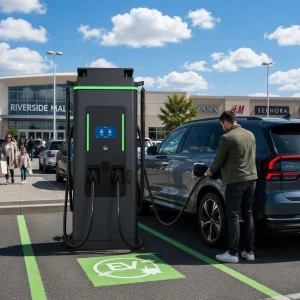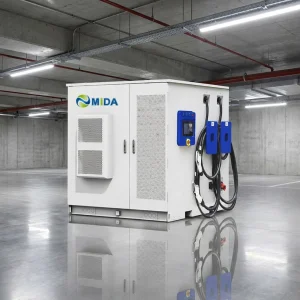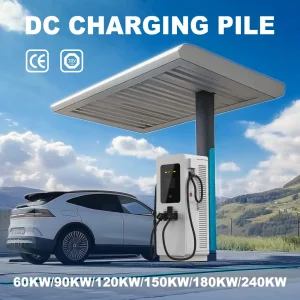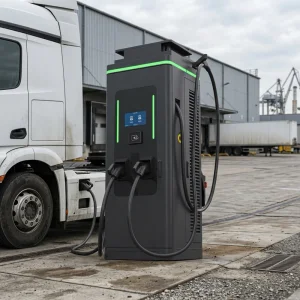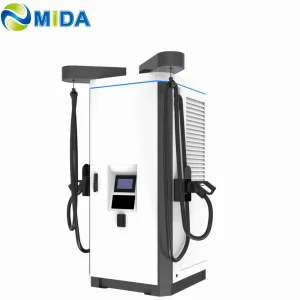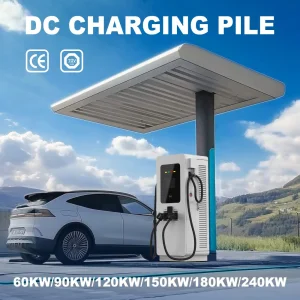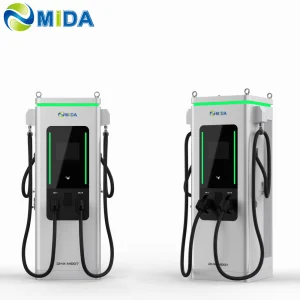
Explore our high-performance DC charger lineup engineered for fleet hubs, highway hubs, public charging operators, and heavy machinery sites.
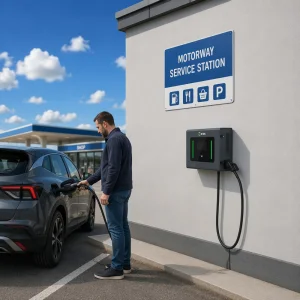
The international transition toward heavy-duty vehicle electrification, fleet conversion, and highway corridors has changed the demands on electric vehicle supply equipment (EVSE). Simple, lower-power AC solutions no longer suffice for high-intensity commercial models. High-capacity DC Charging Stations, operating at voltages from 150V up to 1000V DC and currents above 500A, are now essential to maintain quick fleet turnaround times.
Grid constraint is one of the most prominent challenges worldwide. Operators require smart power-sharing capabilities, dynamic load shedding, and integrated Battery Energy Storage Systems (BESS) to manage high peak utility demand charges. By pairing DC chargers with integrated local batteries, businesses can mitigate expensive substation upgrades while providing continuous ultra-fast charging capabilities.
Our charging topologies are built to satisfy international standards including ISO 15118 (for plug-and-charge interoperability), OCPP 1.6J/2.0.1, DIN 70121, CE-TUV, ETL/UL compliance, and MID/PTB billing standards.
From low-profile, modular 30kW/50kW DC Wallboxes ideal for corporate facilities and premium automotive dealerships, up to multi-megawatt split-type highway setups running liquid-cooled dispensers, our manufacturing ecosystem provides custom designs tailored to regional requirements.
Review our core hardware categories designed to provide reliable power delivery and advanced grid integration.
Standard level 2 smart charging structures optimized for commercial workplaces, light duty fleets, and residential spaces.
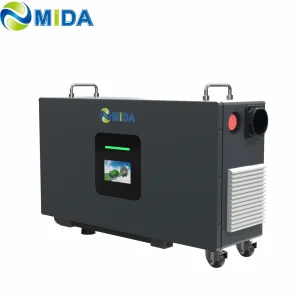
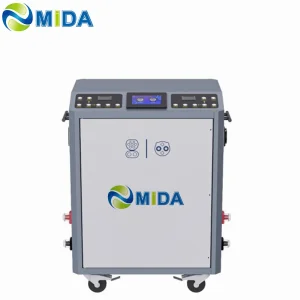
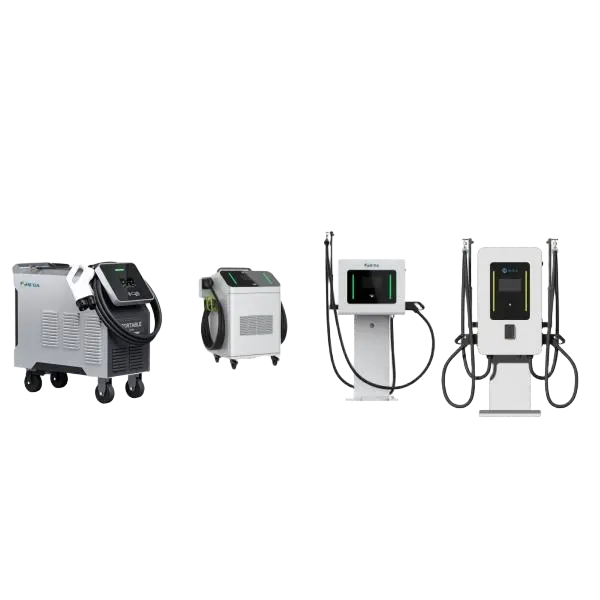
Versatile portable and compact DC fast charging modules designed for roadside assistance, dynamic testing, and low-footprint wall installations.
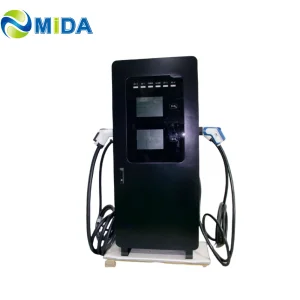
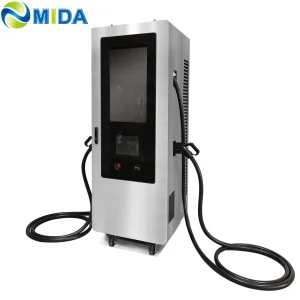
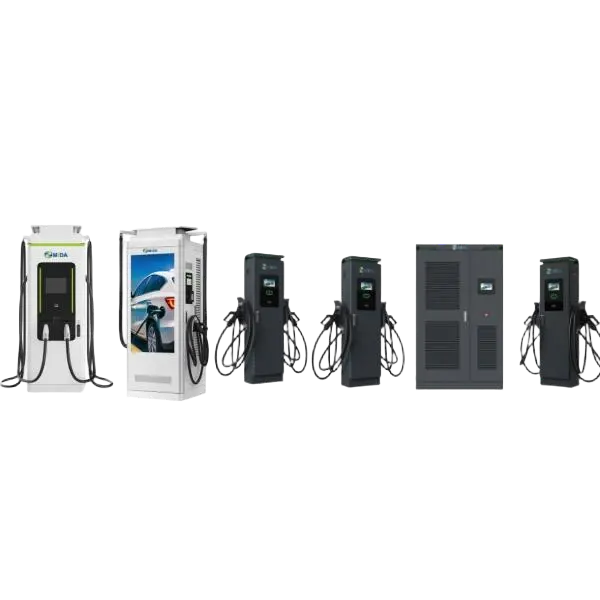
High-capacity split and integrated charging structures designed to power highway corridors, e-bus terminals, and heavy-duty logistics operations.
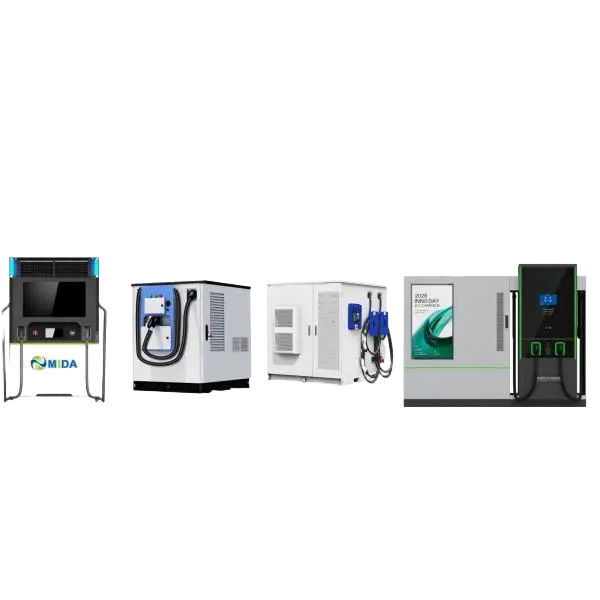
Combined Battery Energy Storage Systems designed for peak-shaving, microgrid connectivity, and seamless charging in grid-constrained areas.
Shanghai Mida Cable Group Ltd. operates through its wholly owned subsidiaries: Shanghai Mida EV Power Co., Ltd., Shenzhen Mida EV Power Co., Ltd., and Shanghai Mida New Energy Co., Ltd.
Mida Cable manufactures a comprehensive range of EV charging cables, including 16A–80A J1772 cables, 16A–63A IEC 62196-2 Type 2 cables, and DC fast charging cables: CCS1 (80A–500A), CCS2 (125A–1000A), CHAdeMO (125A–300A), GBT (200A–1000A), and NACS connectors (250A–600A).
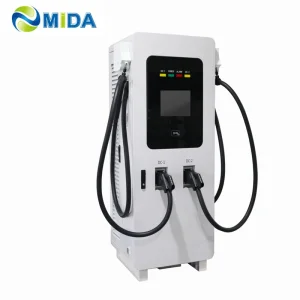
MIDA EV Power produces a full lineup of EV charging stations, such as 7kW–50kW mobile chargers, 3.6kW–7.2kW portable DC chargers, 360kW–1440kW split-type DC fast chargers, 20kW–50kW wall-mounted DC chargers, and 60kW–480kW floor-standing DC fast charging stations.
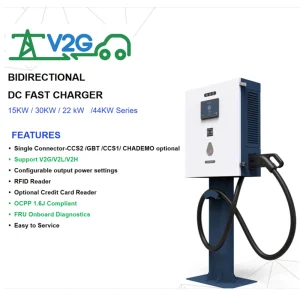
MIDA New Energy specializes in EV charger power modules, offering 20kW–60kW standard modules, 40kW–125kW liquid-cooled modules, 30kW–62.5kW bidirectional modules, and 20kW–45kW V2G charging modules.
Discover our underlying technology, showing how we develop and manufacture key fast-charging components in-house.
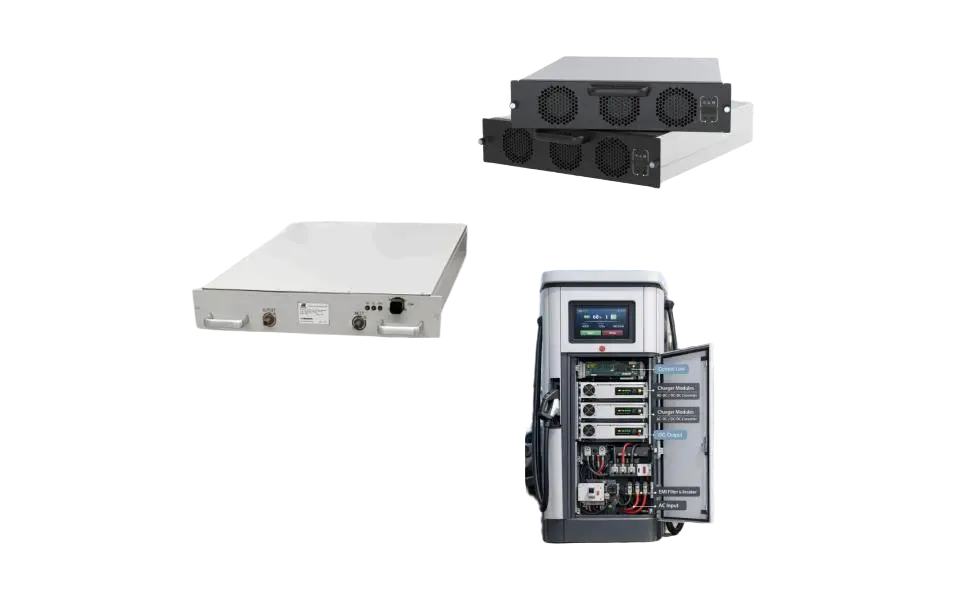
The power module is the core component of any DC charging station, converting AC grid power into regulated DC electricity for the vehicle battery. MIDA utilizes advanced Silicon Carbide (SiC) MOSFET technologies, providing up to 96% power conversion efficiency. This ensures reduced heat output, lower energy loss, and more reliable continuous high-temperature performance.
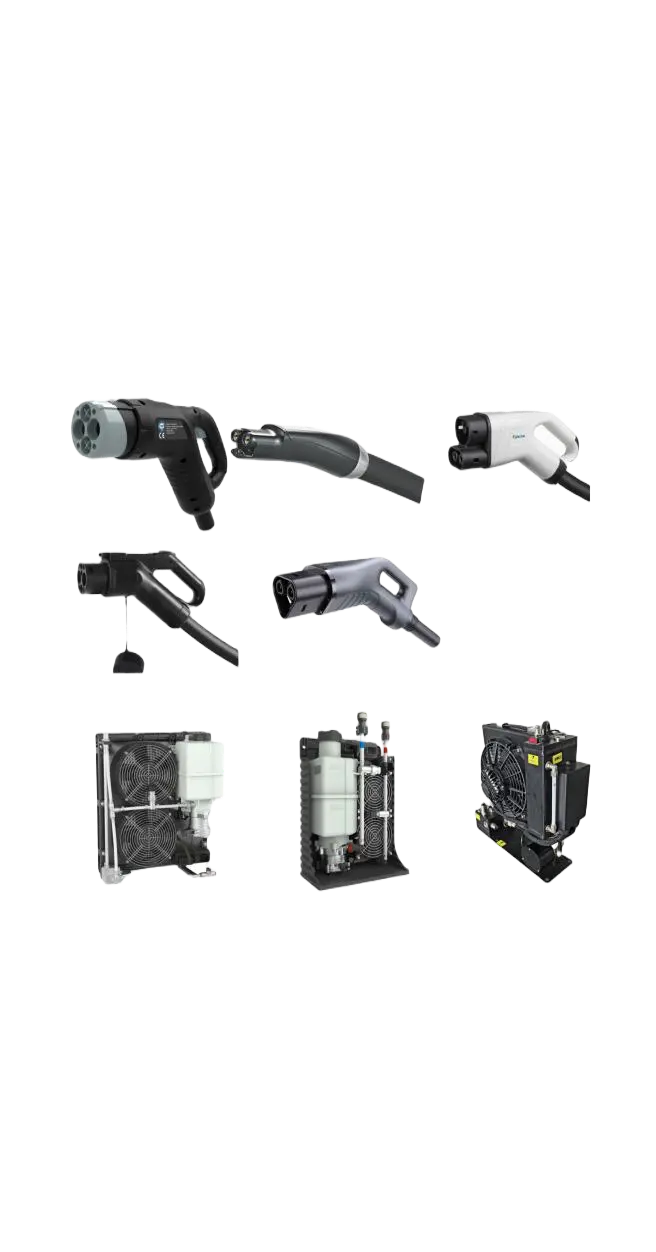
High-current charging relies on safe heat management at the vehicle interface. Our liquid-cooled connector assemblies circulate specialized coolant through the cable to keep pin temperatures below safety limits, even during high-power 500A+ delivery cycles.
How MIDA leverages regional advantages to deliver cost-effective and reliable infrastructure equipment.
By managing the production of cables, connectors, power modules, and enclosures in-house, we reduce assembly friction, streamline compatibility testing, and avoid supply chain delays.
Every DC charging cabinet undergoes full-load burn-in testing, insulation resistance validation, and communication sequence checks using real-time simulators prior to dispatch.
We engineer systems to meet local utility and regulatory codes, including PTB/MID approval in Europe, ETL/UL listings in North America, and CE certifications globally.
| Feature Spec | Floor-Mounted (Integrated) Charger | Split-Type (Power Cabinet + Dispenser) Charger |
|---|---|---|
| Power Range | 60kW - 480kW | 360kW - 1440kW (and above) |
| Enclosure Design | All-in-one cabinet (modules inside unit) | Centralized power cabinet with satellite dispensers |
| Cable Configuration | Dual outlet (CCS1, CCS2, NACS, or CHAdeMO) | Up to 8 active dispensers sharing a dynamic power bank |
| Best Suited For | Retail parking, workplace hubs, logistics bays | Highway rest areas, heavy truck depots, bus terminals |
| Thermal Management | Forced Air Cooling | Liquid Cooling / High-Capacity Air Cooling |
Explore how MIDA's hardware answers localized deployment challenges and energy environments around the world.
Our split-type architectures support dynamic power matrix allocation, allowing power to shift between vehicles to maximize dispenser utilization along key transport routes.
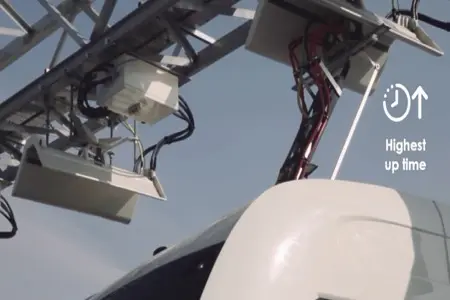
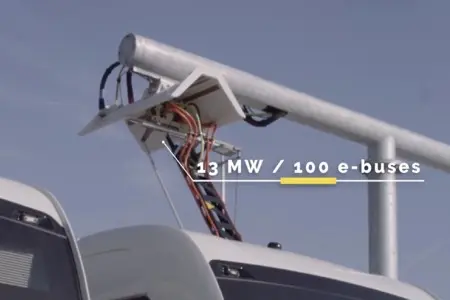
Designed for public transport systems and shipping fleets, supporting automated pantograph overhead connectivity or heavy-duty manual systems to keep vehicles moving.
Ideal for commercial sites with limited utility capacity. By storing off-peak power, operators can discharge high current during charging cycles to avoid high grid demand charges.
Compact, durable mobile DC units and battery trailers engineered for emergency roadside assistance, proving site power, and auto testing facilities.
Stay updated on our technological developments, product rollouts, and global industry research.
Find answers to common questions about choosing, installing, and running high-power DC fast-charging networks.
Explore our certified charging systems engineered for continuous operation, fleet applications, and commercial networks.