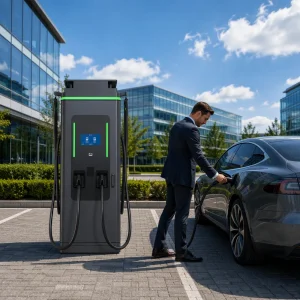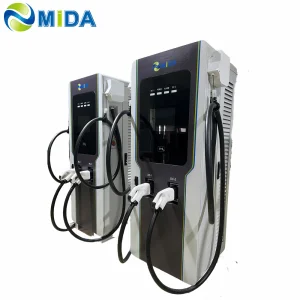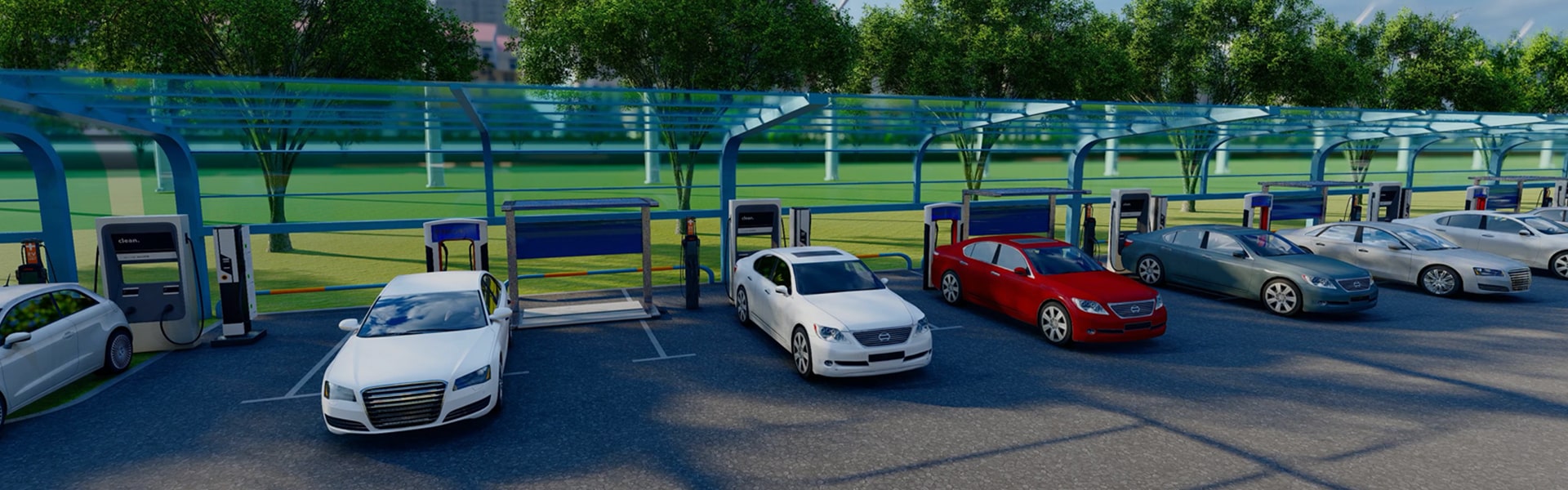
Explore our selection of commercial and industrial DC fast chargers, mobile rescue systems, and dynamic grid integration solutions.
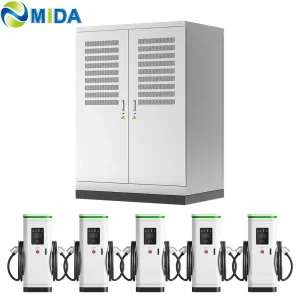
China China EV Charging Station 700kW 1500kW GB/T CCS2 Split DC Charging Hub Suppliers, Factory
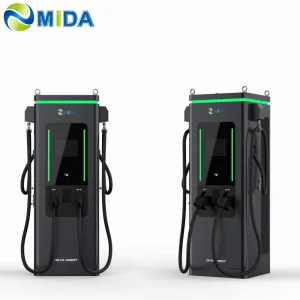
China 200kW 240kW 300KW DC EV Charger RS485 CCS2 GBT Charging Station Supplier, Factories
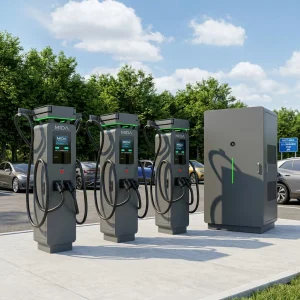
Best CCS2 Liquid Cooled EV Charger 600kW 800kW Ultra Fast Charging Station Manufacturer, Supplier
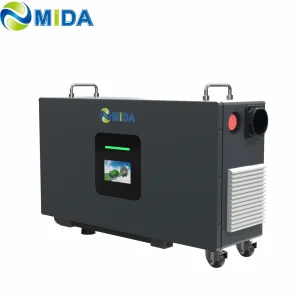
China 20kW 30kW 50kW Mobile Charging Station CCS Portable DC Level 3 EV Charger Supplier, Suppliers
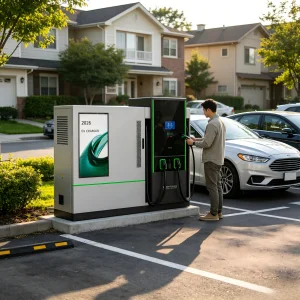
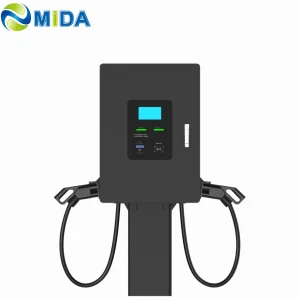
Best 20kw 30kw 40kw Commercial EV Charging Station Pillar DC Charger Point Manufacturer, Supplier
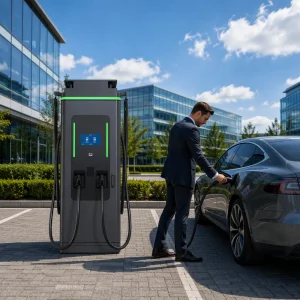
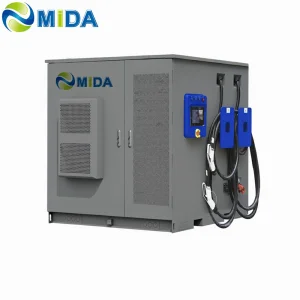
As electric vehicle battery capacities scale upwards and fleet operators target rapid turnaround times, the 120kW DC charging system has emerged as the architectural "sweet spot" for modern charging infrastructure. Balancing grid connection costs, equipment footprints, and heat dissipation dynamics, a 120kW configuration delivers a high-velocity charge without requiring the capital-intensive substation modifications typically demanded by ultra-fast 350kW+ units.
For fleet managers, retail hubs, and destination charging networks, sourcing the best DC charger EV 120kW supplier involves looking beyond standard unit cost metrics. It requires evaluating the efficiency curves of internal power modules, structural thermal margins, compatibility protocols (OCPP 1.6J and OCPP 2.0.1), and long-term hardware reliability. With a dual-gun configuration, a 120kW charger provides intelligent load balancing, split-routing 60kW of power to two simultaneous vehicles or directing a full 120kW surge to a single premium EV. This flexibility maximizes return on investment (ROI) and keeps charging lane utilization rates high.
Intelligent routing modules switch seamlessly between single 120kW output and dual 60kW outputs, matching real-time battery request profiles.
Delivers high-voltage charging profiles ranging from 150V to 1000V DC, ensuring compatibility with standard 400V packs and next-gen 800V architectures.
Over-current, over-voltage, over-temperature, ground leakage protection, and built-in type-A RCDs ensure compliance with international functional safety standards.
Seamless communication translation across OCPP 1.6J/2.0.1, DIN 70121, ISO 15118, and localized payment protocols like RFID, NFC, and POS integration.
Shanghai Mida Cable Group Ltd. operates through its wholly owned subsidiaries: Shanghai Mida EV Power Co., Ltd., Shenzhen Mida EV Power Co., Ltd., and Shanghai Mida New Energy Co., Ltd. By vertically integrating our manufacturing pathways, we manage every step of production: from drawing raw copper wires to formulating insulation compounds, designing custom charging control boards, and assembling complete DC charging kiosks.
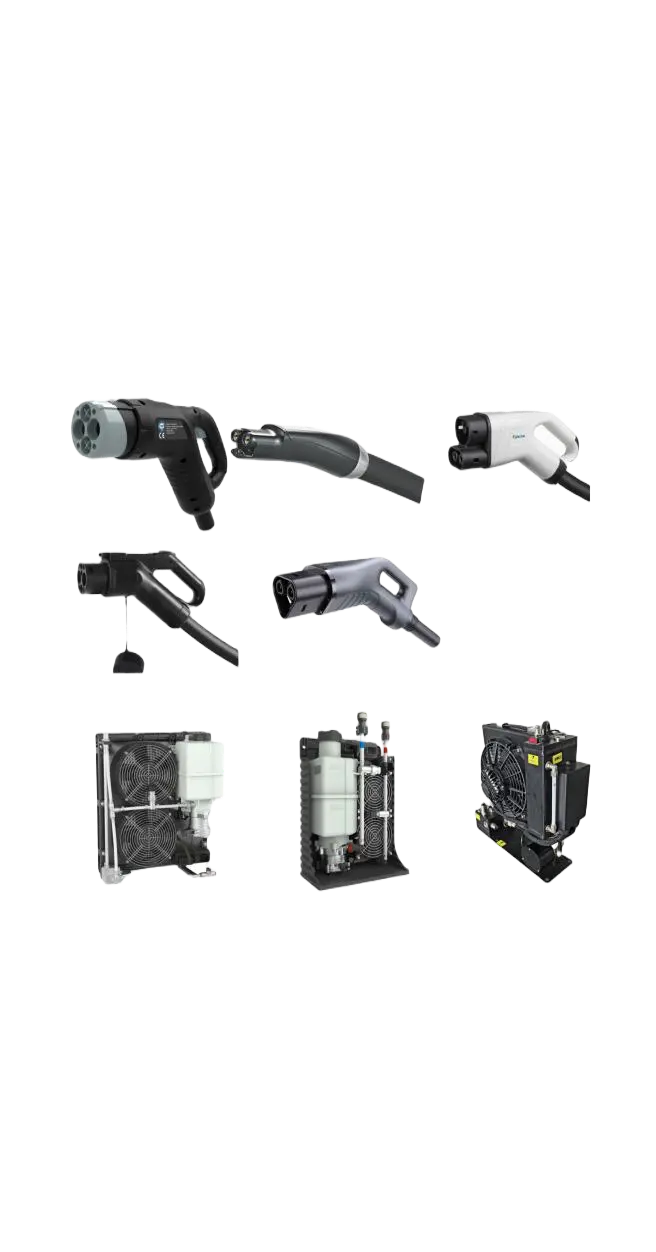
Mida Cable manufactures a comprehensive range of EV charging cables, including 16A–80A J1772 cables, 16A–63A IEC 62196-2 Type 2 cables, and heavy-duty DC fast charging cables: CCS1 (80A–500A), CCS2 (125A–1000A), CHAdeMO (125A–300A), GB/T (200A–1000A), and NACS connectors (250A–600A) optimized for high power transfer and minimal resistance.
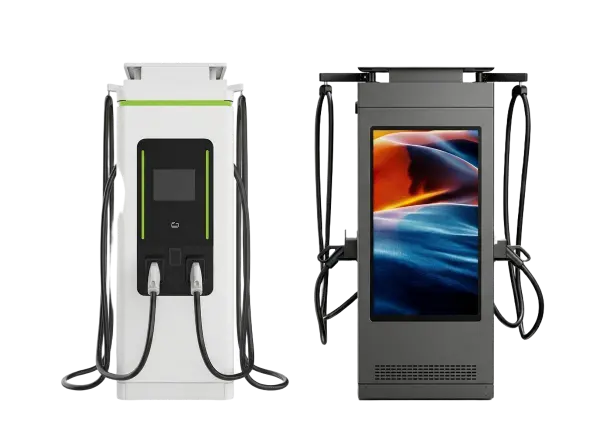
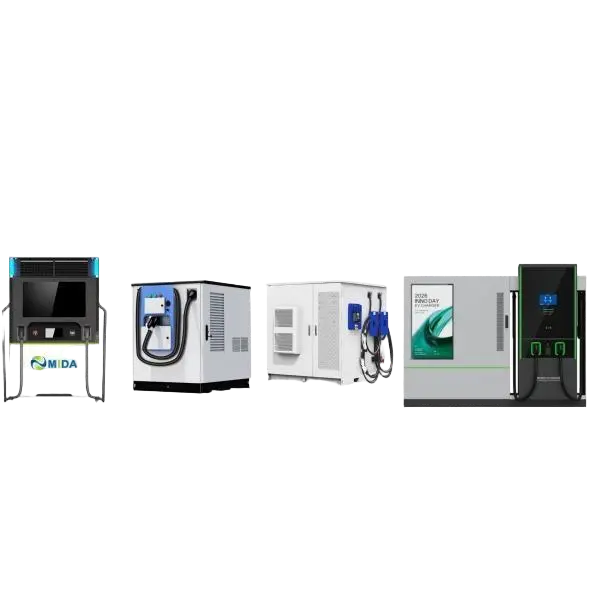
MIDA EV Power produces a full lineup of EV charging stations, such as 7kW–50kW mobile chargers, 3.6kW–7.2kW portable DC chargers, 360kW–1440kW split-type DC fast chargers, 20kW–50kW wall-mounted DC chargers, and 60kW–480kW floor-standing DC fast charging stations designed for long lifespans in tough outdoor conditions.
MIDA New Energy specializes in EV charger power modules, offering 20kW–60kW standard modules, 40kW–125kW liquid-cooled modules, 30kW–62.5kW bidirectional modules, and 20kW–45kW V2G charging modules that serve as the high-efficiency power-conversion core for global charging network systems.

From hardware components to unified charging systems, discover how MIDA engineering scales up the global transition to electric mobility.
Robust commercial-grade and residential AC units providing charging solutions for municipal structures and corporate fleets.
Scalable options ranging from 7kW, 20kW, 30kW, 40kW, 60kW, to 80kW, delivering DC charging capabilities in a compact enclosure.
High-powered ultra-fast DC systems scaling from 60kW–480kW standard pillars up to 360kW–1440kW split-type charging hubs.
Integrated Battery Energy Storage System (BESS) solutions featuring 60kWh, 261kWh, 418kWh, 625kWh, up to 2MkWh options. This setup enables localized peak-shaving, emergency backup power support, and stable off-grid DC charging capabilities.
View MoreExplore our engineering capabilities across power modules, liquid cooling systems, charging piles, and storage architectures.
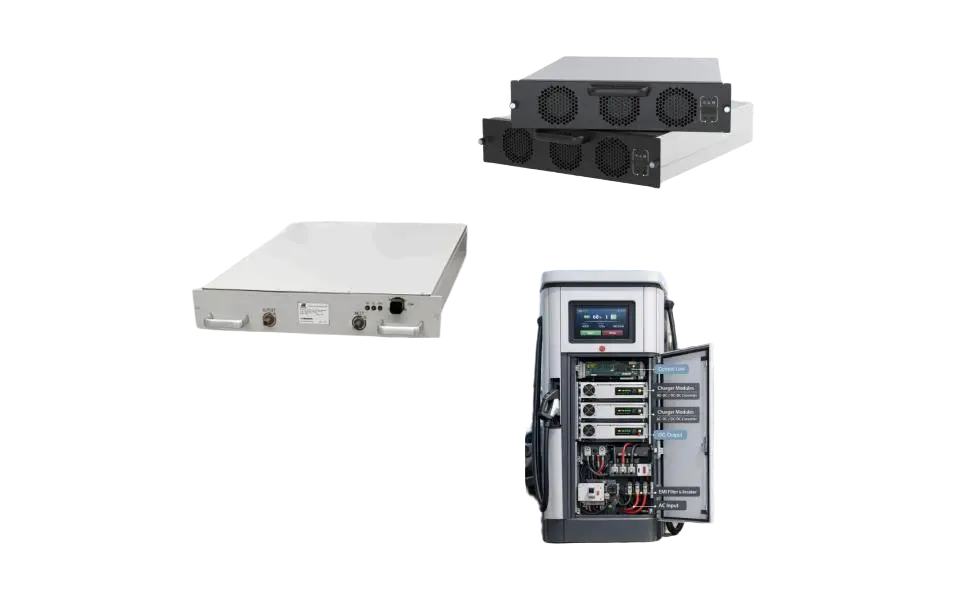
Sourcing from China's leading charging hubs allows global procurement managers to benefit from advanced, mature manufacturing ecosystems. China's industrial sector offers complete vertical integration—from sourcing basic minerals and refining metals to producing silicon-carbide (SiC) switches, assembling high-density power modules, and manufacturing complete charger enclosures. This integration allows MIDA Group to shorten design cycles and bring products to market faster than regional competitors.
This ecosystem also offers major cost-to-performance advantages. MIDA manages a specialized component supplier network, securing high-grade insulated copper lines, reliable thermal management heat sinks, and advanced semiconductor modules at stable prices. As a result, global clients receive high-performance charging systems that meet strict international testing standards without the premium markup. Additionally, MIDA’s integrated factories can rapidly scale up production, allowing operators to launch massive highway and municipal charging networks on tight timelines.
Our direct access to major Chinese copper mills and advanced polymer factories ensures stable material pricing and long-term durability for our liquid-cooled cables.
We assemble our control boards and power modules using fully automated, high-precision surface-mount technology (SMT) lines to minimize failure rates.
Every commercial charging market has unique electrical, software, and physical installation requirements. A standard off-the-shelf solution rarely fits the grid architectures of different regions. Global procurement managers need charging systems that can be customized to match local grid parameters and software backend platforms.
Our engineering services address these localized requirements directly:
A 120kW DC charging station provides versatile performance across many commercial environments. Below are typical scenarios where this configuration delivers high efficiency and reliable operation:
In fleet depots, delivery vehicles and mid-sized trucks operate on tight, predictable schedules. A 120kW charger provides rapid top-offs during loading cycles. Dual-gun configurations can split output to charge two delivery vans at 60kW each overnight, maximizing yard efficiency without overloading local grid connections.
For shopping centers, hotels, and business parks, a 30-to-45-minute charge aligns well with average visitor dwell times. This setup provides a reliable amenity for customers while generating auxiliary charging revenue for property operators.
In areas with limited grid capacity, our 120kW DC charger can be paired directly with a MIDA Battery Energy Storage System (BESS). This storage system buffers power from solar arrays or off-peak grid periods, delivering high-speed charging without drawing peak power from the utility grid.
Stay up to date with the latest advancements in electric bus pantograph systems, charging automation, and industrial installation protocols.
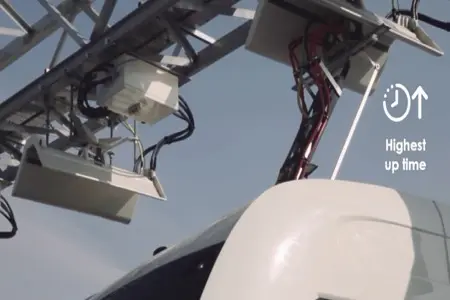
In contrast to classic plug-in charging systems, e-bus pantograph dome configurations allow hands-free, high-power automated energy transfers. This approach optimizes fleet charging space, minimizes physical wear on cables, and guarantees driver safety during high-voltage connection sequences.
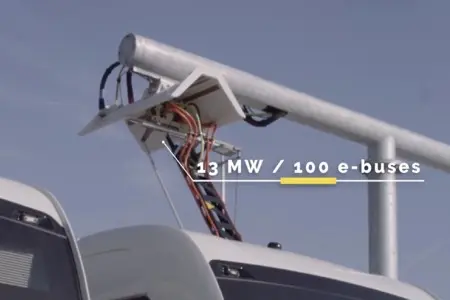
The charging time depends on the battery capacity and the dynamic output of the power module matrix. Using high-powered pantographs, transit agencies can complete top-off charges during scheduled 5-to-10-minute layovers, keeping electric buses in continuous service throughout the day.
Installing a "Pantograph Up" system dome requires precise mechanical alignment, structural concrete base preparation, and robust grid integration. MIDA provides complete on-site engineering coordination to ensure smooth installation and reliable automated charging operations.
Find answers to common questions about technical specifications, grid integration, and custom options for our 120kW DC charging systems.
Compare our wall-mounted DC fast chargers, ultra-high capacity hubs, and specialized commercial charging systems.
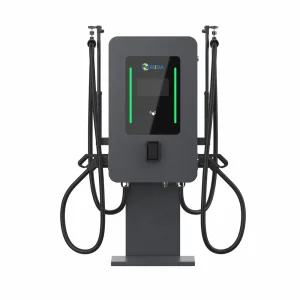
China MIDA 60kW 80kW Wall-mounted DC Fast Charger Dual Gun EV Charging Station Suppliers, Factories
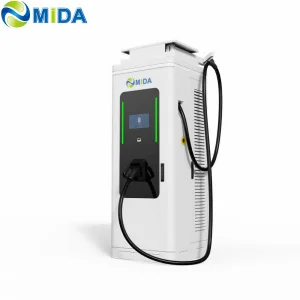
Best 150kW 180kW 200kW DC Charging Station Ultra Fast Charger Piles Manufacturers, Suppliers
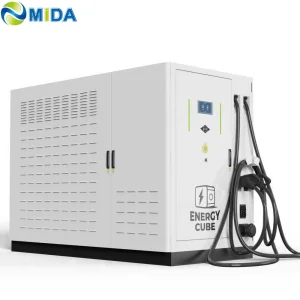
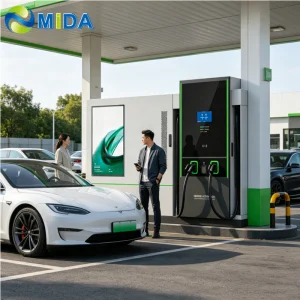
Best 241kwh 120kw BESS EV Charger CCS NACS Integrated EV Charging Station Manufacturers, Factory
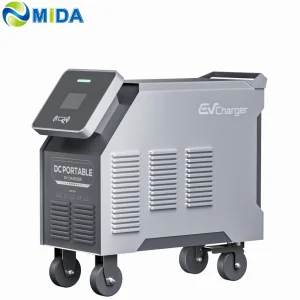
China 20kw 30kw 40kw Portable DC Charger GBT CCS DC Charging Station Suppliers, Factory
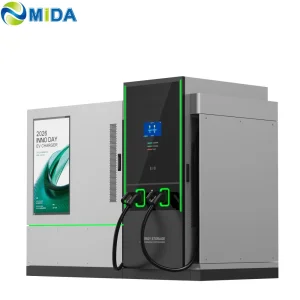
China 120kwh 60kw CCS2 GBT BESS Charger Energy Storage Charging Station Manufacturer, Supplier