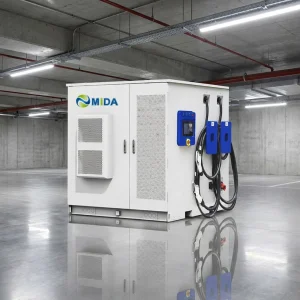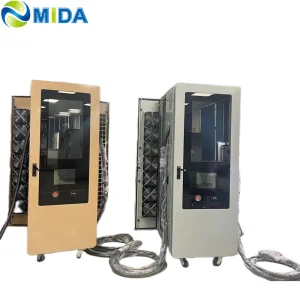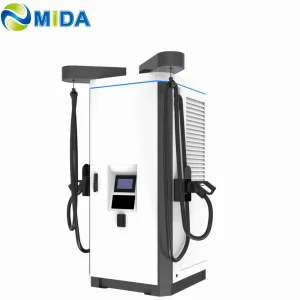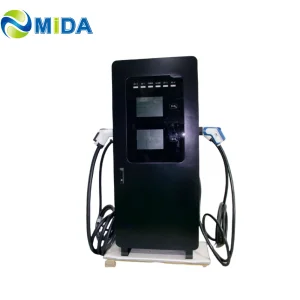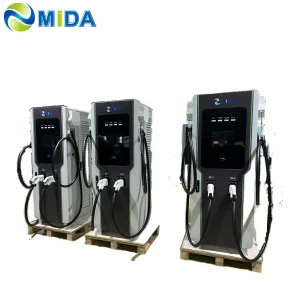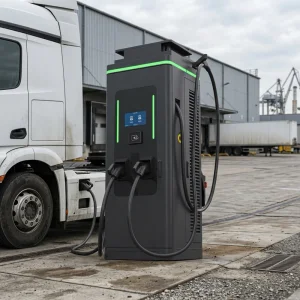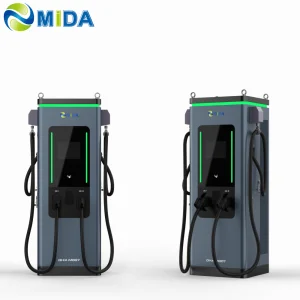
Select commercial-grade EVSE infrastructure designed to sustain continuous operation under demanding grid requirements. Engineered for reliability, interoperability, and future-proof scaling.
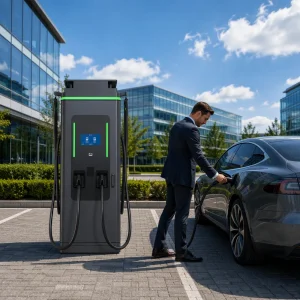
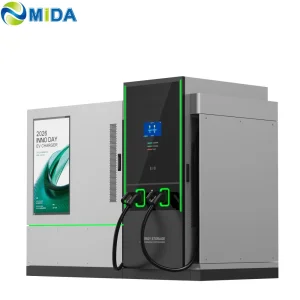
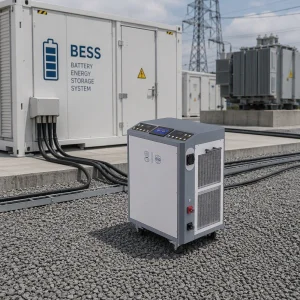
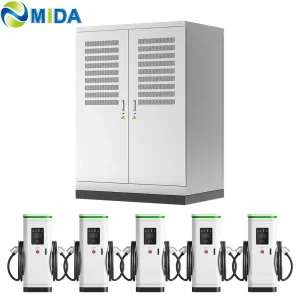
Shanghai Mida Cable Group Ltd. operates through its wholly owned subsidiaries: Shanghai Mida EV Power Co., Ltd., Shenzhen Mida EV Power Co., Ltd., and Shanghai Mida New Energy Co., Ltd.
We are dedicated to designing and manufacturing heavy-duty electric vehicle supply equipment (EVSE) that bridges the gap between clean energy generation and vehicular grid consumption. By controlling the entire engineering pipeline—from raw charging cable extrusion to ultra-high-efficiency bidirectional power module development—we deliver unparalleled cost efficiency and quality assurance to global OEMs, charging point operators (CPOs), and fleet directors.

As the global transportation industry transitions from internal combustion engines to electrified powertrains, the demands on regional utility grids have reached unprecedented levels. Large-scale EV fleet operators and public charge point operators require modular, high-efficiency power architectures capable of mitigating peak demands while maximizing charging uptime.
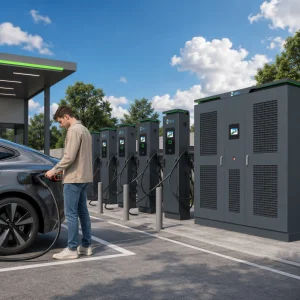
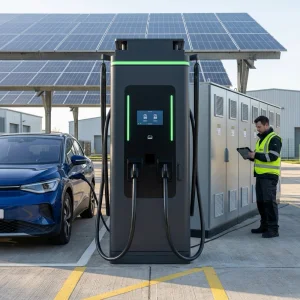
Utilizing high-voltage grid connections, our Megawatt-level split-type architectures distribute power dynamically across multiple satellite dispenser units. By utilizing intelligent scheduling algorithms and liquid-cooled liquid lines, our systems optimize charge curves to minimize thermal throttling and keep heavy transport vehicles in continuous rotation.
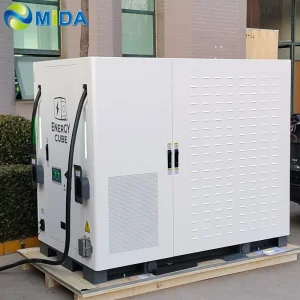
Mitigate high utility demand charges by decoupling grid draw from direct charging events. By utilizing integrated lithium-iron-phosphate (LFP) chemistries with modular capacities ranging from 60kWh to 2MWh, our BESS-backed charging stations store low-tariff nocturnal energy to deploy during peak daytime charging surges, avoiding localized grid stress.
Convert stationary vehicle fleets into virtual power plants (VPPs). MIDA's V2G bidirectional charging modules support automated load shifting. Utilizing clean grid communication protocols, they return energy from parked vehicle batteries back to utility companies during grid emergencies, creating alternative monetization paths for fleet operators.
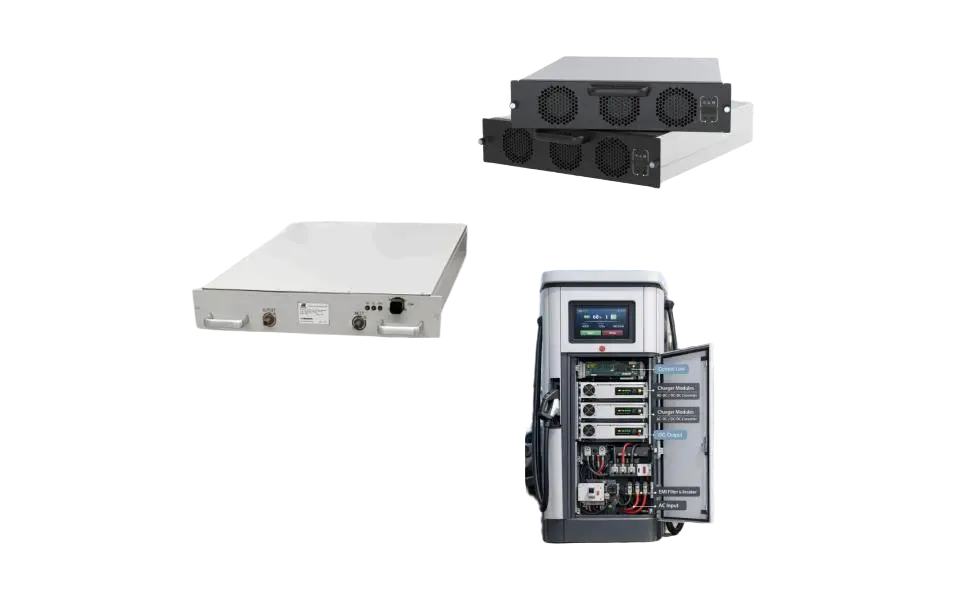
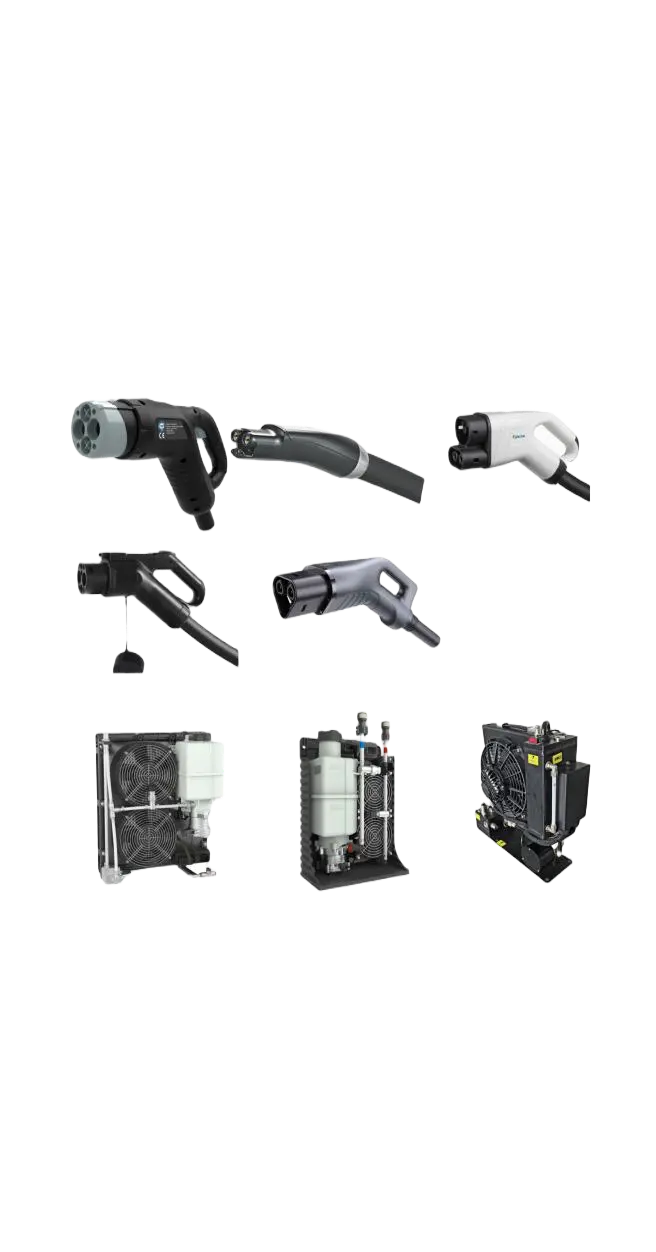
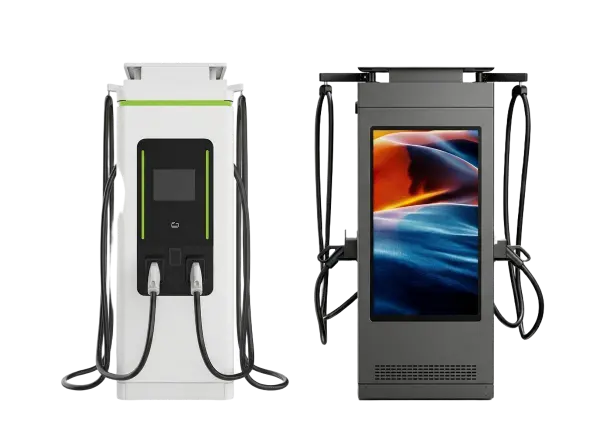
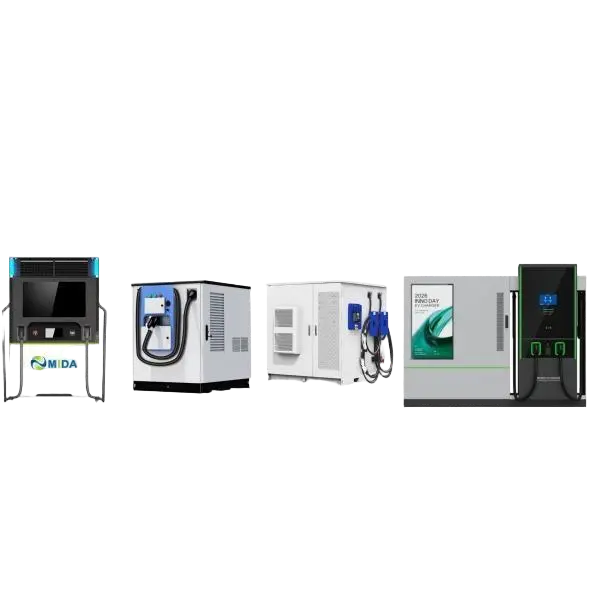
Explore the full scope of products built to sustain harsh climates and industrial environments. Choose between core internal power hardware or finished floor-mounted user interface terminals.
A critical metric for implementing infrastructure projects is compliance with local safety and billing regulations. MIDA Group hardware undergoes third-party audits to guarantee trouble-free municipal permits and utility interconnect agreements.
European and particularly German markets demand absolute metering accountability. Our PTB-approved, MID-compliant charging solutions integrate hardware-based fiscal billing modules, assuring the user that energy delivered matches recorded transactions without digital manipulation.
For operations in Canada and the United States, our commercial chargers meet rigorous ETL listings. Incorporating robust ground-fault circuit interruption (GFCI), automated surge isolation, and thermal runaway protocols protects end-users and shields charge point operators from liabilities.
Avoid vendor lock-in. Every MIDA EV Power station supports native OCPP 1.6J and 2.0.1 JSON protocols, facilitating instant integration with remote network platforms, charge billing APIs, local smart grids, and real-time diagnostic systems.
Our active development track keeps fleet operators and municipalities ahead of shifting structural standards. Below is the technical horizon we design for today.
Readying heavy duty industrial depots for the next stage of transport. Incorporating MCS protocols to allow power throughput up to 1.5MW per connection, enabling complete replenishment of commercial semi-trucks under 20 minutes.
Moving from traditional convective fan cooling to fully sealed liquid heat exchange structures. This design protects sensitive switching rectifiers from dust, salt air, and metallic particles, reducing long-term maintenance costs.
Supporting North American and European standard consolidation. Implementing interchangeable connector models supporting CCS1, CCS2, GBT, and NACS natively, allowing quick swapping of dispenser cables to meet regional demand shifts.
Incorporating artificial intelligence at the site edge to monitor grid pricing indicators, local solar generation, and charging histories. Automatically handles peak-shaving without manual intervention.
Answers to key technical questions from procurement teams, grid connection engineers, and operations managers.
Keep informed on technological transitions, heavy industrial projects, and local deployment studies.

What are the advantages of an e-bus pantograph dome? In contrast to classic plug-in charging systems, e-bus pantographs allow high-voltage connection without manual operator contact, optimizing high-speed turnarounds for public municipal systems.
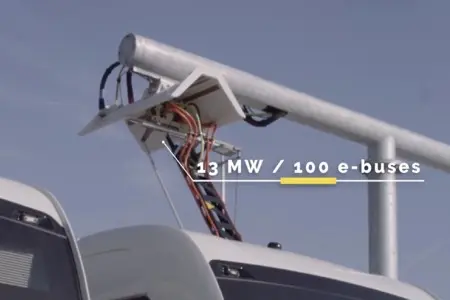
How long does it take to charge with an e-bus pantograph? The charging time depends on the battery capacity and the station's energy output. With megawatt overhead transfer rails, large buses can replenish 80% charge in minutes.
How to Install the Pantograph Up Charger System Dome for Electric Bus. Discover the critical engineering processes needed to align municipal grid transformers with transit center overhead frames.
Select mobile energy systems and high-power grid integration accessories. Engineered to support commercial environments requiring versatile power options.