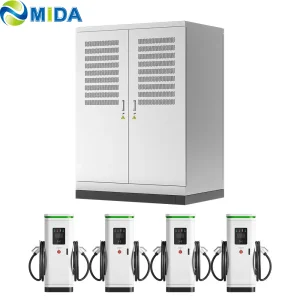
High-performance charging stations, mobile power systems, and battery-buffered configurations engineered to international compliance standards.
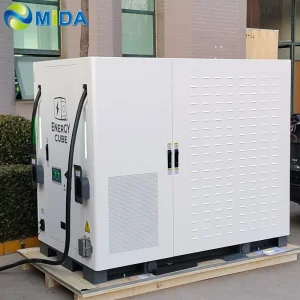
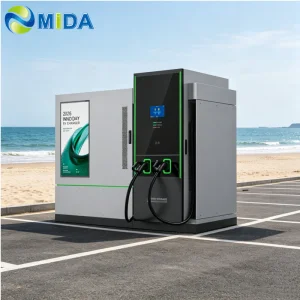
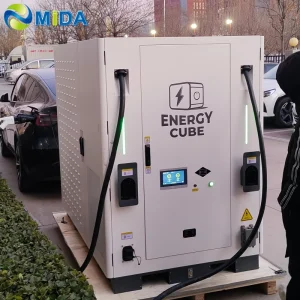
A technical whitepaper examining design protocols, supply-chain dynamics, and high-power infrastructure architectures for industrial charge point operators.
China stands as the global epicentre for electric vehicle supply equipment (EVSE) production. The unmatched supply chain clustering in Yangtze and Pearl River delta regions provides manufacturers with direct, cost-optimized access to foundational inputs. Raw copper processing, magnetic cores, power semiconductors, and smart microcontrollers are assembled within tightly integrated geographic hubs, yielding significant capital efficiencies.
For global B2B procurement managers, sourcing CCS2 chargers from top-tier Chinese manufacturers guarantees high production scale, fast prototyping loops, and cost structures that accelerate project payback periods. Top-tier factories operate under rigorous quality management structures, holding certifications like ISO 9001, ISO 14001, and IATF 16949, ensuring reliability across critical hardware sub-assemblies.
Expanding charging networks into Europe, the Middle East, South-East Asia, and Oceania requires absolute alignment with localized standards. For CCS2 hardware, this mandates complete conformity to IEC 62196-2 and IEC 61851-23/24 protocols. B2B operators must verify that suppliers provide products carrying valid CE, TÜV, CB, and UKCA markings.
Beyond mechanical connectivity, high-power DC systems require firmware alignment, utilizing standard stacks like OCPP 1.6J and the advanced OCPP 2.0.1, coupled with ISO 15118 implementation. This compatibility allows secure 'Plug and Charge' functionalities and dynamic load management, critical tools for mitigating high peak-demand grid fees.
The global EV transit landscape is shifting from standard 50kW stations towards Ultra-Fast Charging (UFC) systems ranging from 240kW to 480kW, and up to Megawatt Charging Systems (MCS) designed for heavy duty commercial transit. Liquid-cooled cabling technologies have emerged as the standard approach to manage thermal dissipation during high-power deliveries.
Additionally, the deployment of Battery Energy Storage Systems (BESS) integrated directly into EV charging piles is rising. These hybrid systems utilize localized battery storage buffers to deliver high charging capacity without stressing local grid configurations, lowering operating capital requirements for network developers.
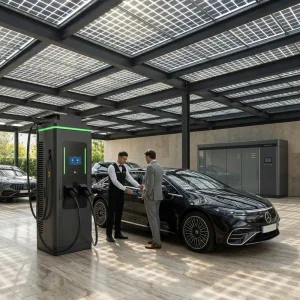
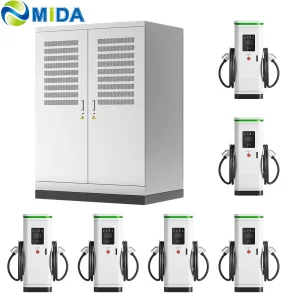
Different environments demand tailored charging configurations. Highway corridors require split-type high-power DC systems capable of fast throughput. In urban public transport structures, bus transit depots require pantograph charging interfaces to facilitate fast charging loops within tight schedules.
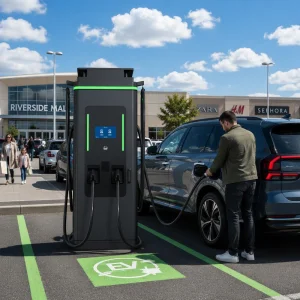
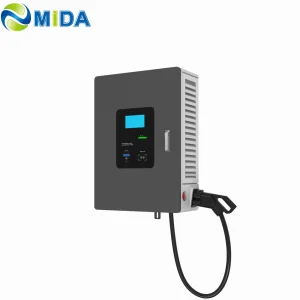
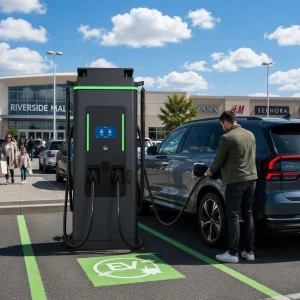
For commercial centers and multi-tenant offices, low-profile wall-mounted DC systems (20kW–40kW) balance grid footprints with fast turnaround times. Off-grid mine locations and industrial complexes use mobile BESS-integrated solar trailers to provide reliable power independent of the main utility network.
Shanghai Mida Cable Group Ltd. operates through its wholly owned subsidiaries: Shanghai Mida EV Power Co., Ltd., Shenzhen Mida EV Power Co., Ltd., and Shanghai Mida New Energy Co., Ltd. We are a vertically integrated industrial manufacturer specializing in the development, production, and distribution of advanced electric vehicle charging systems.
Mida Cable manufactures a comprehensive range of EV charging cables, including 16A–80A J1772 cables, 16A–63A IEC 62196-2 Type 2 cables, and DC fast charging cables: CCS1 (80A–500A), CCS2 (125A–1000A), CHAdeMO (125A–300A), GBT (200A–1000A), and NACS connectors (250A–600A).
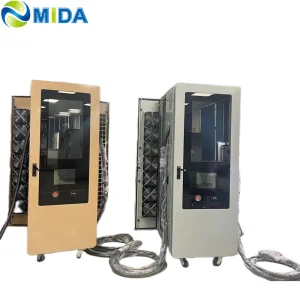
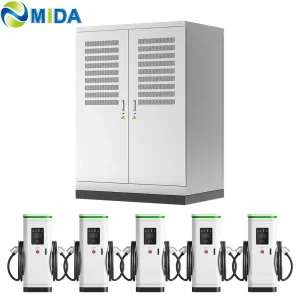
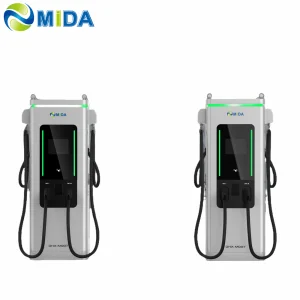
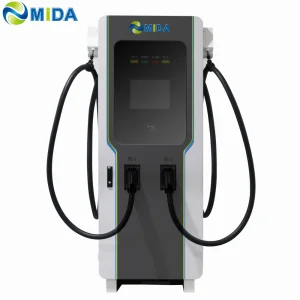
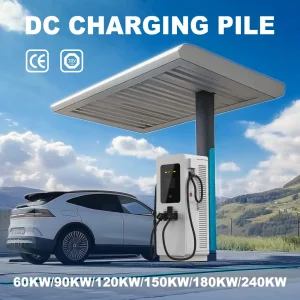
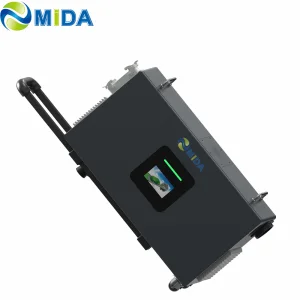
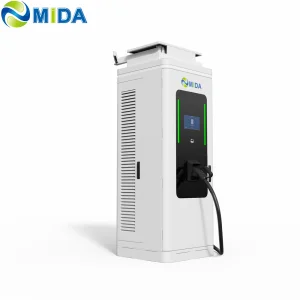
MIDA EV Power produces a full lineup of EV charging stations, such as 7kW–50kW mobile chargers, 3.6kW–7.2kW portable DC chargers, 360kW–1440kW split-type DC fast chargers, 20kW–50kW wall-mounted DC chargers, and 60kW–480kW floor-standing DC fast charging stations.
MIDA New Energy specializes in EV charger power modules, offering 20kW–60kW standard modules, 40kW–125kW liquid-cooled modules, 30kW–62.5kW bidirectional modules, and 20kW–45kW V2G charging modules.

Engineered for endurance and performance. Our major architecture lines encompass the entire range of modern EV grid-to-vehicle power delivery systems.
16A to 63A Standard Power Supplies
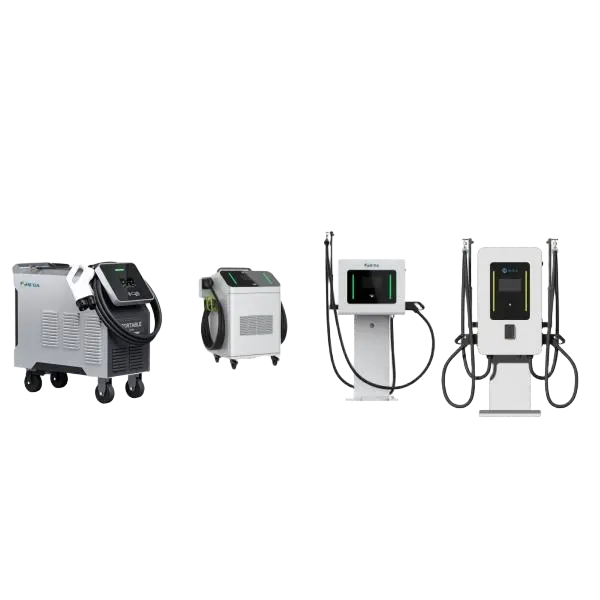
Reliable AC power charging points for retail, workplace, and destination charging schemes.
View MorePower outputs: 7kW | 20kW | 30kW | 40kW | 60kW | 80kW
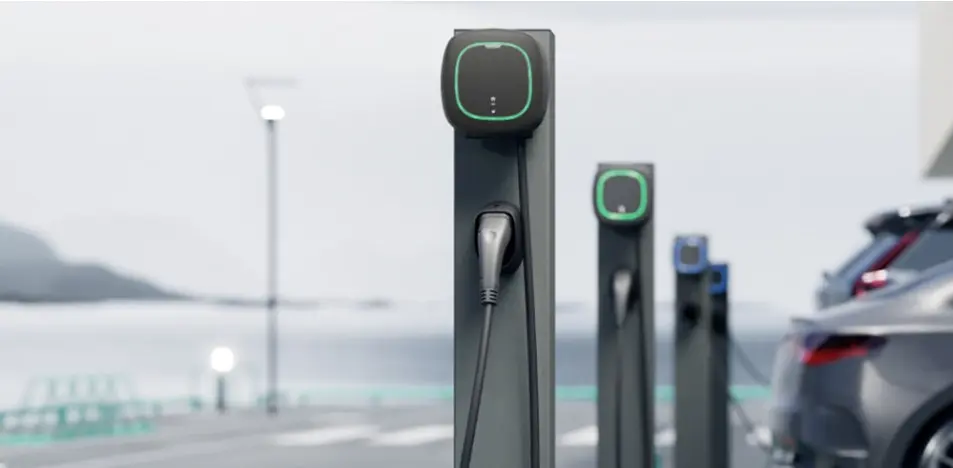
Flexible DC systems for small commercial operators, garages, emergency vehicle response, and quick installations.
View MoreHigh-Power Delivery: 60kW–480kW & 360kW–1440kW
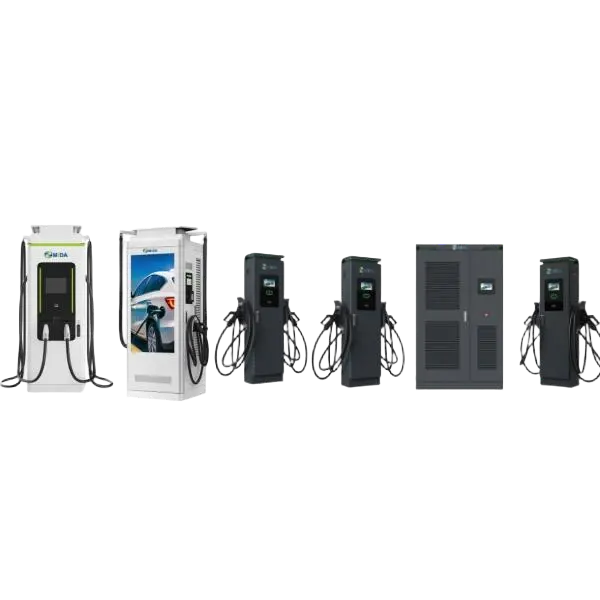
High speed DC fast charging cabinets designed for commercial highway services and high density depots.
View MoreEnergy Storage Capacities: 60kWh | 261kWh | 418kWh | 625kWh | 2MkWh
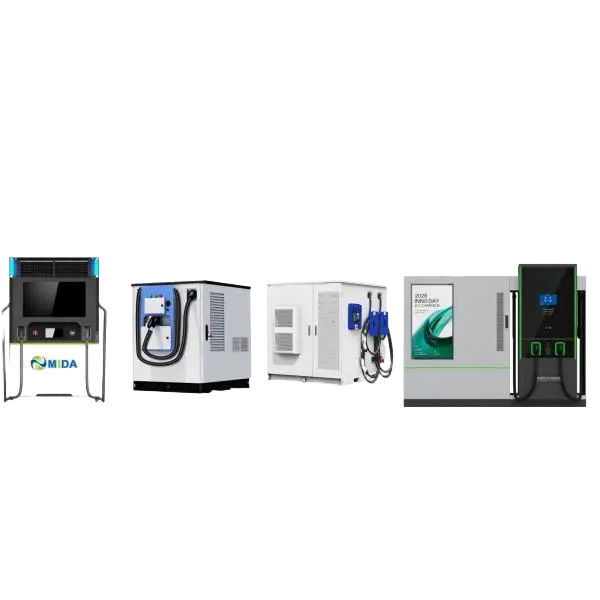
Buffer system demand utilizing intelligent battery systems. Ideal for peak-shaving, grid-capacity limitations, and off-grid EV infrastructure deployments.
Explore BESS Storage OptionsExplore the exact technical parameters of our components, from dynamic power modules to megawatt cooling structures.
Keep abreast of our technical engineering advancements, automated charging projects, and bus fleet systems worldwide.
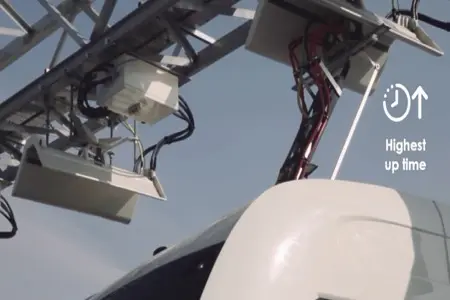
What are the advantages of an e-bus pantograph dome? In contrast to classic plug-in charging systems, e-bus pantograph charging simplifies fleet logistics.
Read Article →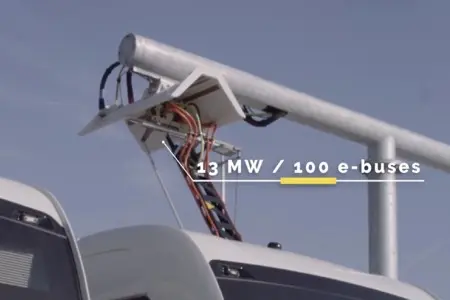
How long does it take to charge with an e-bus pantograph? The charging time depends on the battery capacity and output voltage profile.
Read Article →
How to Install the Pantograph Up Charger System Dome for Electric Bus. Installing a "Pantograph Up" dome system requires precise alignment and engineering integration.
Read Article →
Technical specifications, compliance, and custom configuration answers for utility planning, procurement, and operations.
Flexible configurations and high-power split systems designed to meet localized grid codes and heavy commercial fleet logistics.