Explore our premium product portfolio designed for high duty cycle deployments, interoperability, and future-proof grid compliance.
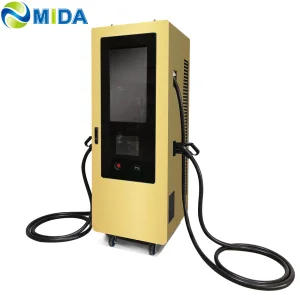
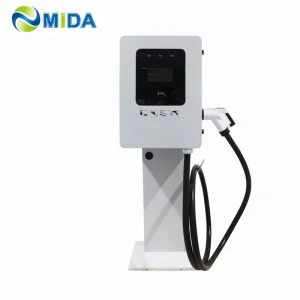
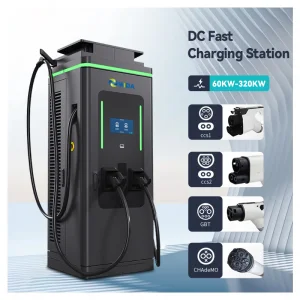
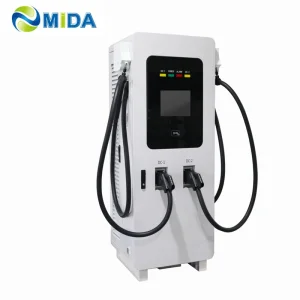
Shanghai Mida Cable Group Ltd. operates through its wholly owned subsidiaries: Shanghai Mida EV Power Co., Ltd., Shenzhen Mida EV Power Co., Ltd., and Shanghai Mida New Energy Co., Ltd.
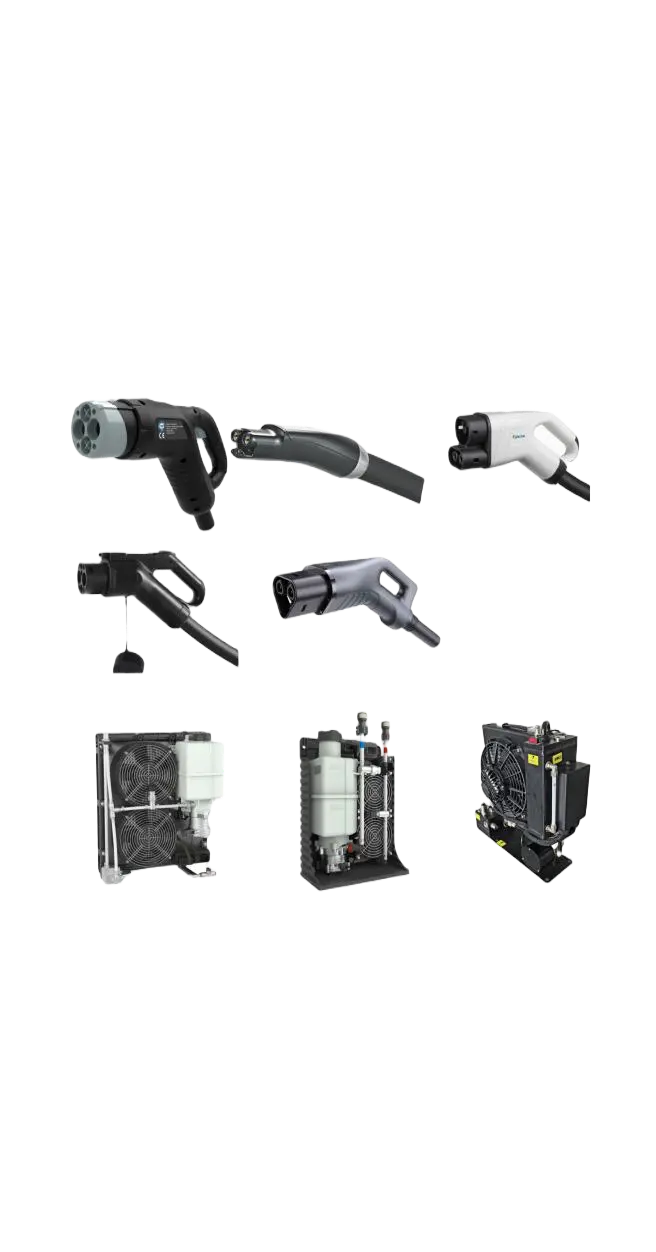
Mida Cable manufactures a comprehensive range of EV charging cables, including 16A–80A J1772 cables, 16A–63A IEC 62196-2 Type 2 cables, and DC fast charging cables: CCS1 (80A–500A), CCS2 (125A–1000A), CHAdeMO (125A–300A), GBT (200A–1000A), and NACS connectors (250A–600A).
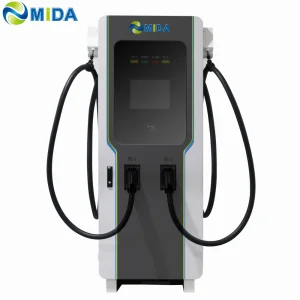
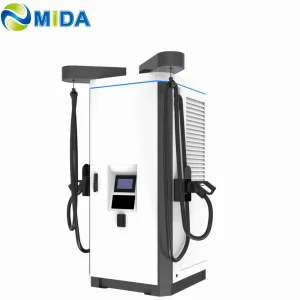
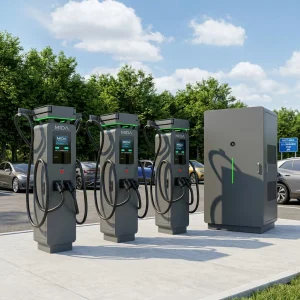
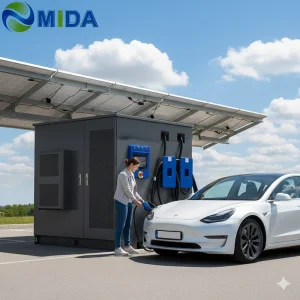
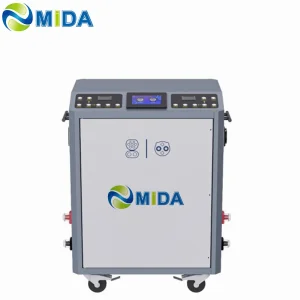
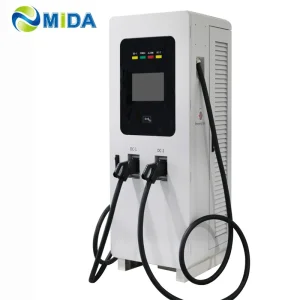
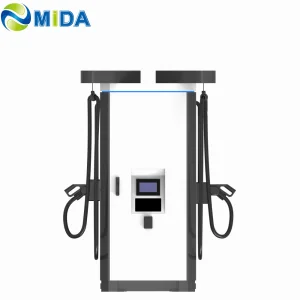
MIDA EV Power produces a full lineup of EV charging stations, such as 7kW–50kW mobile chargers, 3.6kW–7.2kW portable DC chargers, 360kW–1440kW split-type DC fast chargers, 20kW–50kW wall-mounted DC chargers, and 60kW–480kW floor-standing DC fast charging stations.
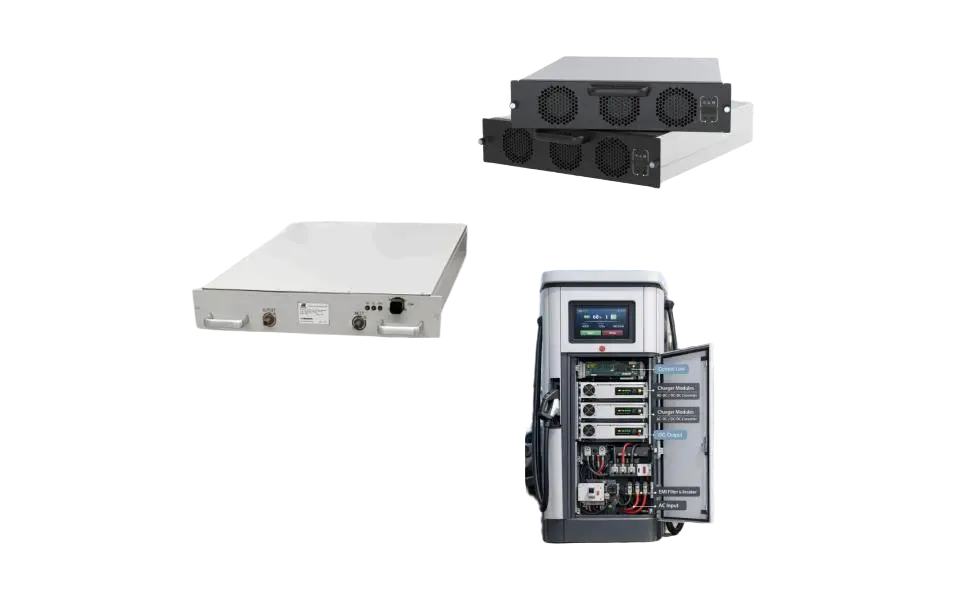
MIDA New Energy specializes in EV charger power modules, offering 20kW–60kW standard modules, 40kW–125kW liquid-cooled modules, 30kW–62.5kW bidirectional modules, and 20kW–45kW V2G charging modules.

Analyzing the role of 60kW DC Fast Chargers in optimizing Total Cost of Ownership (TCO) and grid stability for commercial environments.
In the rapidly evolving landscape of public and private electric vehicle charging infrastructures, selecting the optimal power output is a multi-dimensional challenge. For decades, operations faced a binary decision: low-capacity AC level 2 charging (7kW to 22kW) or ultra-fast, high-power DC charging (150kW to 350kW). The former resulted in long dwell times, while the latter imposed prohibitive grid connection fees, peak-demand charges, and severe transformer stress.
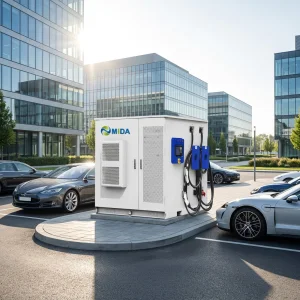
The 60kW DC EV charger represents the optimal compromise for modern utility management. Operating at a capacity that fits well within typical medium-voltage commercial service limits, it delivers a substantial speed enhancement over AC charging (restoring up to 200 kilometers of range in under 45 minutes) without triggering massive infrastructure upgrade expenditures. For delivery fleets, workplace grids, destination hospitality, and multi-tenant housing, this "sweet spot" ensures optimal turnaround times and asset utilization.
Modern EV charger reliability is directly tied to thermal performance and component isolation. A high-quality 60kW DC charging system relies on hot-swappable power modules (such as our 20kW, 30kW, or 40kW standard variants). This modular structure prevents total system failure; if one module experiences an anomaly, the controller isolates it, allowing the remaining modules to continue operating at a slightly reduced power output.
Thermal management within MIDA’s 60kW DC systems combines advanced aerodynamic design with intelligent fan speed control. By utilizing a closed-air loop design for delicate circuit boards and an isolated duct for the high-temperature power components, we limit dust intrusion and corrosive humidity. For harsh industrial environments, we offer customized liquid-cooled architectures that prevent thermal derating even at ambient temperatures exceeding 50°C.
As commercial facilities scale their EV charging fleets, local grid capacity quickly becomes a bottleneck. To counter this, our chargers feature Dynamic Load Balancing (DLB). When multiple vehicles connect to a dual-connector 60kW station, the controller communicates with the EV's Battery Management System (BMS) via ISO 15118 to allocate power dynamically based on the state-of-charge (SoC) and temperature of each vehicle's pack.
Furthermore, integration with local Building Management Systems (BMS) and smart grids enables Peak Shaving. By responding to external OpenADR (Open Automated Demand Response) signals, the charger can modulate its peak draw to prevent the facility from crossing tariff thresholds, drastically reducing operational energy costs.
Discover our specialized engineering verticals, from advanced silicon-carbide power modules to ultra-durable liquid-cooled connector cables.
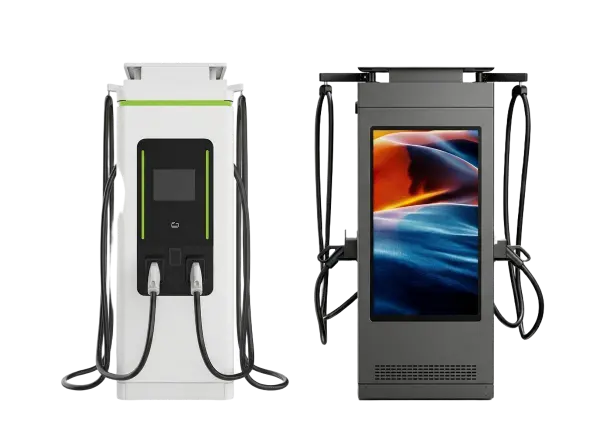
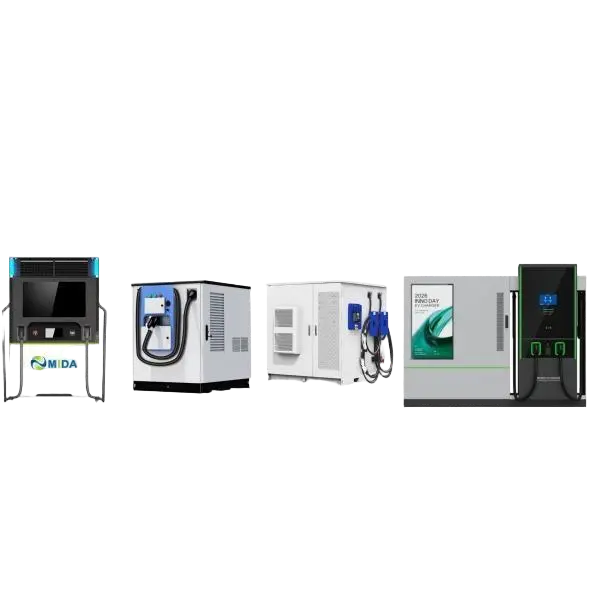
Comprehensive layout of technical criteria and design variables for MIDA 60kW DC Charging Infrastructure.
| Parameter / Feature | MIDA 60kW DC Floor Station | Industry Standard Requirement | MIDA Strategic Advantage |
|---|---|---|---|
| Efficiency Rating | ≥ 96.5% at nominal load | 92% - 94% | Reduced energy losses, lower heat output, extended component lifespan. |
| Power Factor (PF) | ≥ 0.99 (at 100% load) | ≥ 0.95 | Minimal reactive power draw, optimizing utility transformer capacity. |
| Input Voltage Range | 3-Phase 380V / 400V / 480V AC ± 15% | AC ± 10% | Excellent tolerance to grid fluctuations in remote or industrial zones. |
| Output Voltage | 150V DC - 1000V DC (wide range) | 200V DC - 750V DC | Compatible with legacy 400V packs and modern 800V high-voltage platforms. |
| Ingress Protection | IP54 / NEMA 3R (Outdoor ready) | IP44 | Enhanced resistance to sand, moisture, rain, and corrosive coastal salt air. |
| Communication Protocol | OCPP 1.6J / OCPP 2.0.1 API / ISO 15118 | OCPP 1.6J only | Ready for future Plug & Charge functionality, grid certificates, and V2G. |
Procuring charging equipment for diverse global markets requires navigating strict compliance frameworks. MIDA Group mitigates international compliance risks by certifying all products under local safety and metrology systems prior to shipment.
In Europe, our stations conform to the CE directive and are certified by TUV Rheinland. For billing compliance, we offer stations conforming to the German Eichrecht (PTB MID) standard, which ensures that customers are billed precisely for active kilowatt-hours delivered.
For the North American market, our systems are manufactured using components certified to UL 2202 and UL 2231 standards, ensuring eligibility for state and federal infrastructure incentives (such as NEVI funding programs).
Our deep vertical integration—manufacturing cables, connectors, power modules, and enclosures in-house—ensures absolute traceability. This approach limits typical lead times to 4-6 weeks, whereas industry averages exceed 16 weeks.
Get answers to common technical, electrical, and commercial integration questions regarding 60kW DC Fast Chargers.
Select from our range of high-capacity DC fast charging systems, testing equipment, and localized connectors.
Stay informed with technical analyses and product updates straight from the MIDA R&D labs.