
Best 300kW 360kW 400kW Level 3 DC EV Fast Charger & Pedestal Unit Power Cabinet Manufacturers, Factories

240kw 300kW 360kW 400kW Ultra-fast charging is changing the EV experience, Ultra-fast charging represents the cutting edge of EV charging technology. In the industry.Powerful 300kW-400kW Level 3 DC Fast Charger with centralized Power Cabinet and Pedestal. Optimizes large-scale energy management for transit depots and high-traffic EV infrastructure hubs.

Product Description

240kW 300kW 360kW 400kW Level 3 DC EV Fast Charger Station

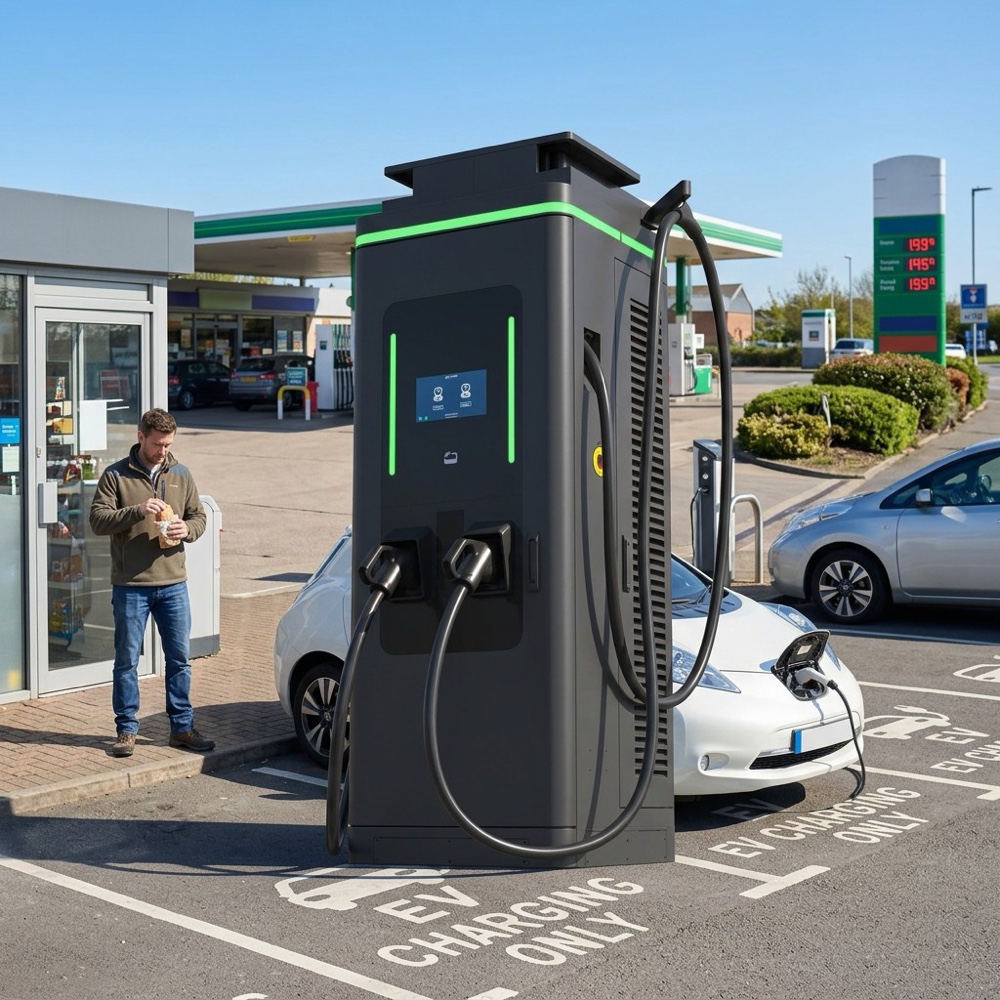
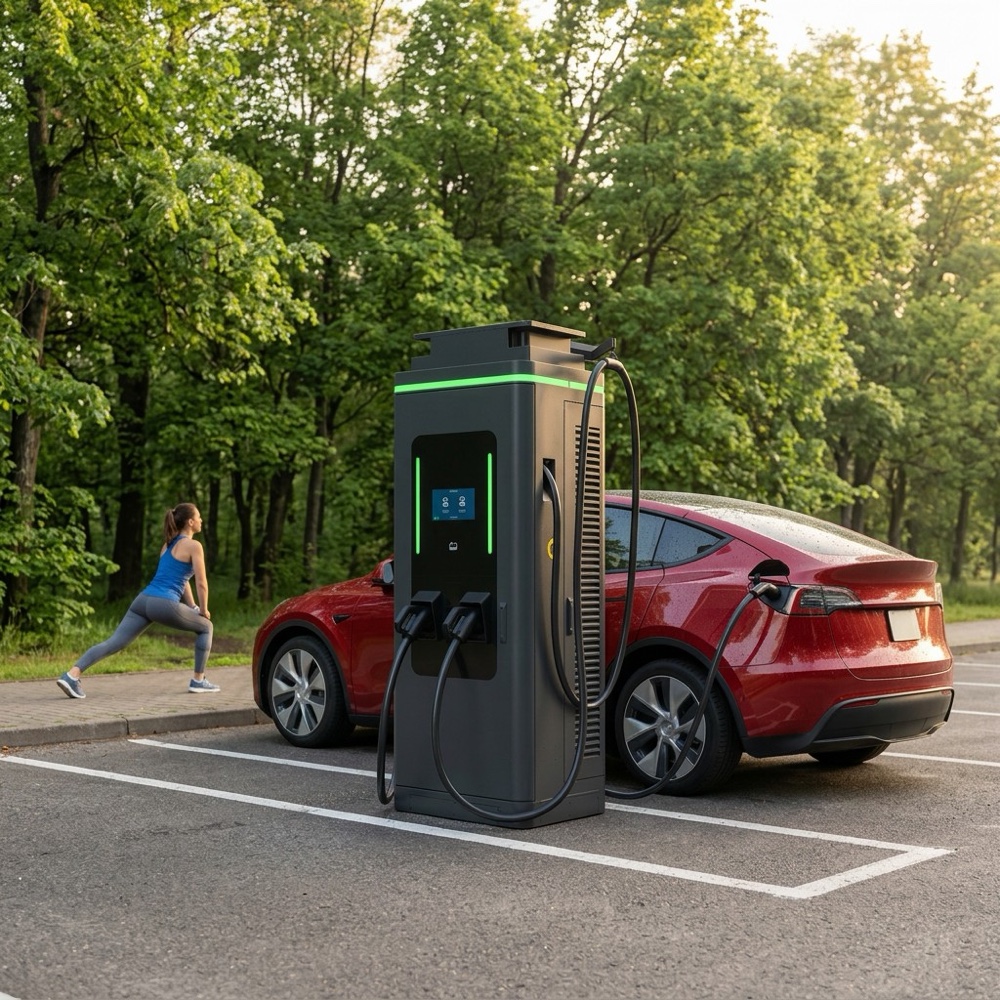
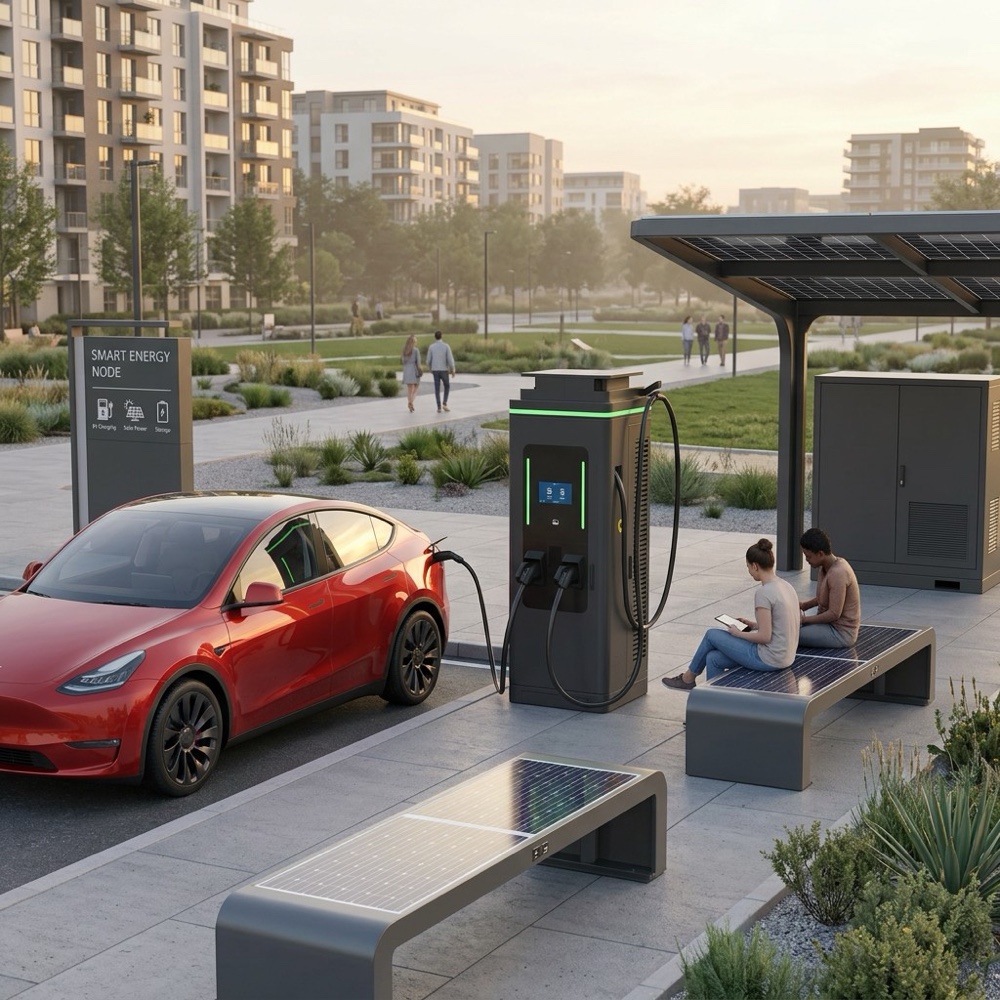
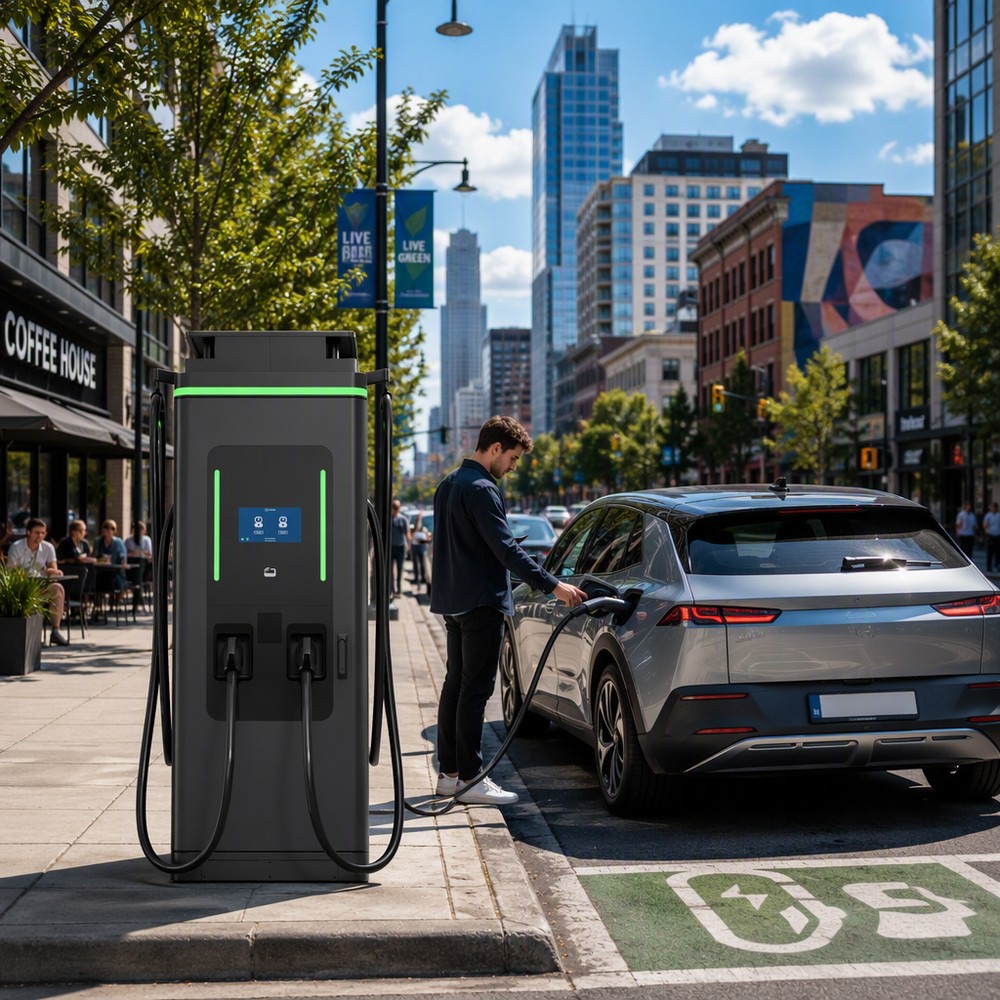
Ultra EV Charger 300kW, 360kW, or 400kW DC fast charging station belongs to the high-power charging (HPC) or "Ultra-Fast / Supercharging" tier of electric vehicle supply equipment (EVSE). These units are designed primarily for commercial public charging hubs, highway service areas, logistics depots, and passenger/heavy-duty fleet electrification.

Liquid-Cooled Cables & Guns Air-cooled CCS2 or NACS cables are generally thermal-limited to ~200A–300A continuous. To safely deliver 400A to 600A output at high power without overheating, liquid-cooled charging cables (utilizing a glycol or synthetic coolant loop) are standard for 360kW and 400kW configurations.
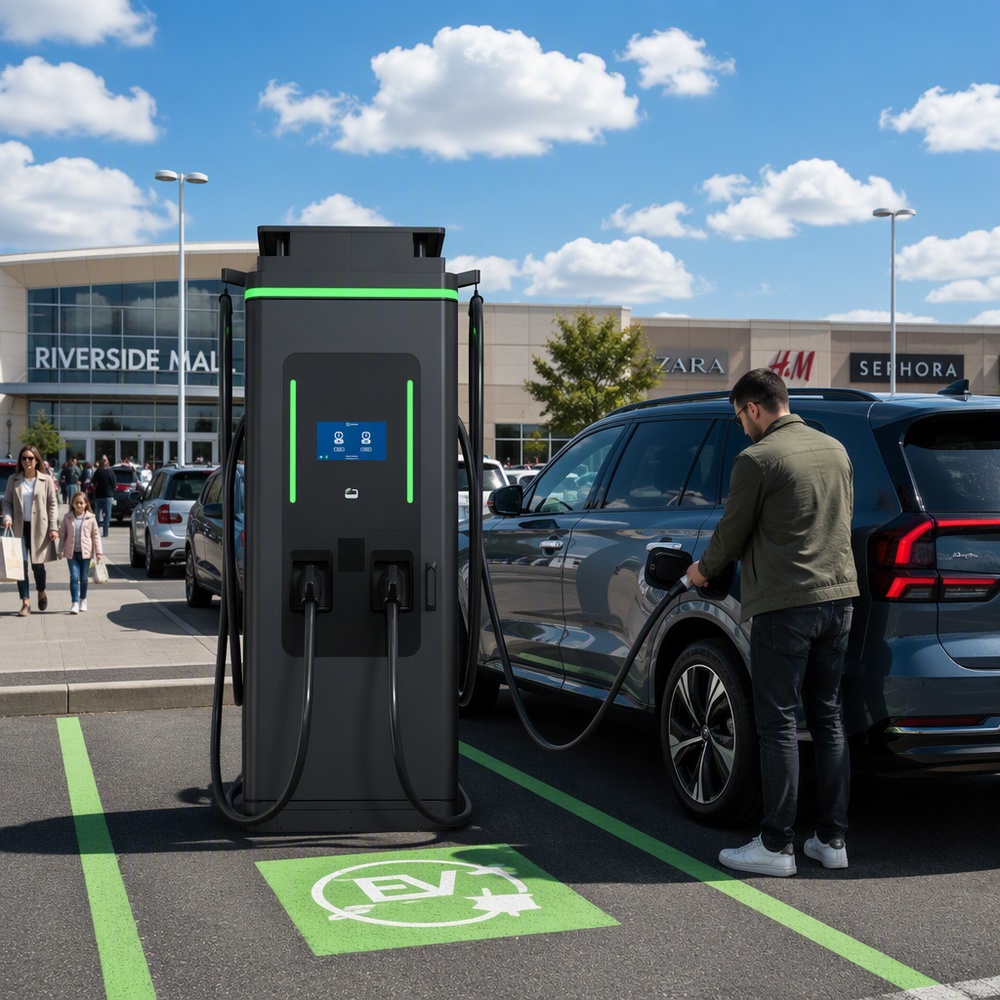
Dual-Gun / Multi-Port Dynamic Power Sharing These units almost always feature 2 to 4 charging connectors (CCS1, CCS2, NACS, GB/T, or CHAdeMO). Dynamic Load Balancing: When two vehicles plug in simultaneously to a 360kW station, the charger dynamically matrix-switches power (e.g., 180kW + 180kW or 240kW + 120kW) based on each vehicle's real-time state of charge (SoC) and capability.
Backend Communication & Standards Protocols: Built on OCPP 1.6J or OCPP 2.0.1 for network integration, remote monitoring, and billing backend connections. User Authentication: Supports Plug & Charge (ISO 15118), RFID card authorization, mobile app control, and POS credit card readers. Enclosure Rating: Typically IP54 / IP55 weatherproof and IK10 vandal-resistant for outdoor installation.

Product Introduction

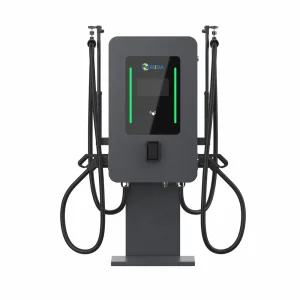
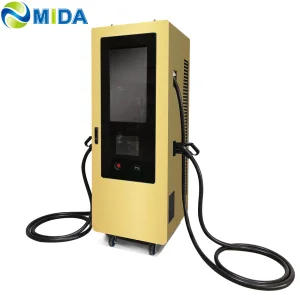
300kW-DC-EV-Charger-Highway

Specifications for 60kW-480kW DC Fast Charger Station

  • Rated Power : 60kW 80kW 120kW 180kW 240kW 300kW 400kW 480kW
  • AC Input Voltage :400 Vac ±10%, 480 Vac ±10%
  • Wide output voltage range of 150~1000VDC
  • Rated Frequency: 50/60 Hz
  • Output Current: 200/250/300A
  • Output Efficiency: ≥95%
  • IP/IK Degree: IP55 / IK10
  • Cooling: Force Fan Cooling
  • Plug & Charge Capable
  • Dynamic Load Balancing
  • Manage Any OCPP Compatible
  • CCS1 ,CCS2 ,NACS ,GBT,CHAdeMO ,MCS
  • Dimension (W*H*D): 800*800*1800mm
  • Certificate: TUV,CE,UKCA,EMC,LVD,CB,ETL, RoHS

Smart DC Charging Station (240kW 300kW 360kW 400kW 480kW)

  • Support OEM & ODM
  • White-labeled available
  • Tailored charging station management sub-portals
  • IP54 protection rating, waterproof, dust-proof, and corrosion-resistant
  • Protection against over-voltage, over-temperature, under-voltage, short circuit, leakage, over-current, etc

Manage Any OCPP Compatible: Chargers Using Our Cloud Portal.

Remote Update & Diagnostics: Supported by Charge Cloud + App SaaS system, Reduce Operational Costs. Remote control and monitoring.

Plug & Charge Capable: Supports ISO 15118 Standard.

Dynamic Load Balancing: Balance the Load to Better Adapt to Your Infrastructure.

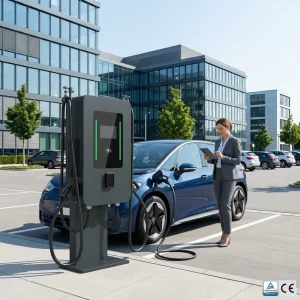
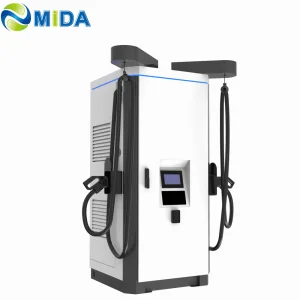
400kW-DC-EV-Charger-Commercial
300kW-NACS-DC-EV-Charger

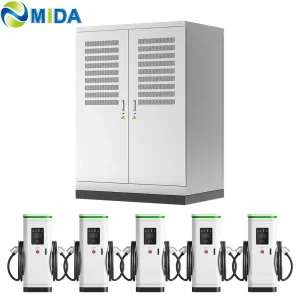
Centralized Energy Management for Large-Scale Deployments

Large-scale EV infrastructure deployments require a different approach to power management and site layout. The 300kW, 350kW, and 400kW Level 3 DC Fast Charger system utilizes a centralized Power Cabinet and remote Pedestal Unit architecture.

Charging Speed: Capable of adding 100–200+ miles of range in 10 to 15 minutes. An 800V-architecture vehicle (such as the Porsche Taycan, Hyundai Ioniq 5, or Kia EV6) can charge from 10% to 80% in roughly 15 to 20 minutes.

Voltage Range: Typically 200V to 1000V DC, accommodating both 400V standard passenger EVs and high-voltage 800V/1000V commercial vehicles or luxury sports cars.

Modular Power Architecture: Most 300kW–400kW cabinets utilize internal power conversion modules (e.g., 30kW, 40kW, or 50kW power units connected in parallel). This modular setup enables dynamic power distribution, load sharing, and service redundancy.


Technical Specifications

Item 300KW DC Charger 350KW DC Charger 400KW DC Charger
System Architecture Central Cabinet + Pedestals Central Cabinet + Pedestals Central Cabinet + Pedestals
Max Power Output 300kW 350kW 400kW
Output Voltage Range 150V - 1000V DC 150V - 1000V DC 150V - 1000V DC
Module Efficiency ≥ 95.5% ≥ 95.5% ≥ 95.5%
Pedestal Reach Up to 100 meters Up to 100 meters Up to 100 meters
Communication OCPP 1.6J / 2.0.1 OCPP 1.6J / 2.0.1 OCPP 1.6J / 2.0.1

Key Technical Features

1. Centralized Power Cabinet

Consolidates power electronics for easier maintenance, improved cooling, and superior site security, while reducing the footprint of the charging stalls.

2. Flexible Pedestal Deployment

Compact, remote pedestals can be installed up to 100 meters away from the power cabinet, allowing for highly optimized parking layouts.

3. Scalable Modular Design

The power cabinet supports modular expansion, allowing operators to increase charging capacity as vehicle demand grows without replacing the entire system.

4. Advanced Energy Hub Capabilities

Integrated smart meters and cloud-connected diagnostics provide real-time visibility into energy flow, facilitating efficient site-wide energy management.
Frequently Asked Questions

What is the typical charging speed of these Level 3 DC fast chargers?
These stations are capable of adding 100 to 200+ miles of range in 10 to 15 minutes. Vehicles featuring an 800V architecture can charge from 10% to 80% capacity in approximately 15 to 20 minutes.
How does dynamic power sharing work with multi-port charging?
Through Dynamic Load Balancing, the charger automatically manages power distribution. For instance, if two vehicles connect to a 360kW charger simultaneously, the station dynamically adjusts output (such as 180kW+180kW or 240kW+120kW) depending on each vehicle's real-time state of charge (SoC) and capability.
Why are liquid-cooled cables necessary for high-power DC charging?
Standard air-cooled cables are limited to around 200A–300A continuous. To safely support 400A to 600A output levels on 360kW and 400kW stations without overheating, liquid-cooled charging cables using a dedicated coolant loop are essential.
What communication and backend standards are supported?
The charging stations are compatible with standard industry protocols like OCPP 1.6J and OCPP 2.0.1. They also support user authentication via Plug & Charge (ISO 15118), RFID cards, mobile app controls, and integration with credit card readers.
Can these chargers accommodate both low-voltage and high-voltage EVs?
Yes, the systems support a broad output voltage range of 150V to 1000V DC. This versatility allows them to service standard 400V passenger EVs as well as high-voltage 800V/1000V commercial vehicles and specialty sports cars.
What environmental protection ratings do the chargers possess?
The charging enclosures are built with IP54 or IP55 weatherproof protection and hold an IK10 vandal-resistance rating, ensuring safe, continuous outdoor operation even in harsh environmental conditions.

Related Products