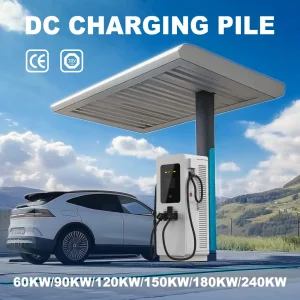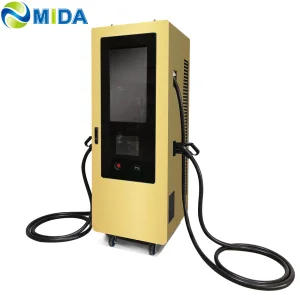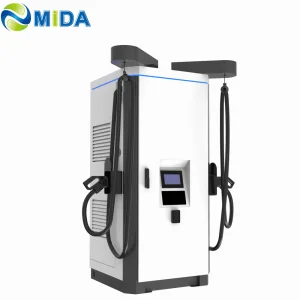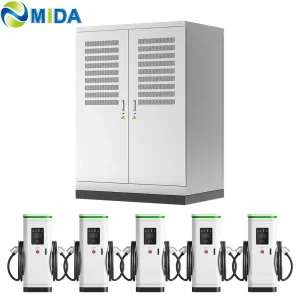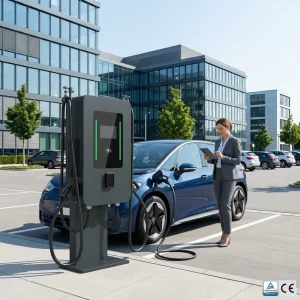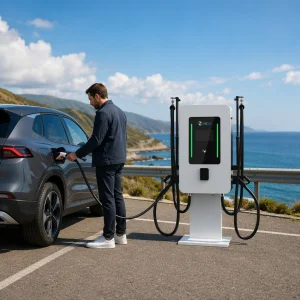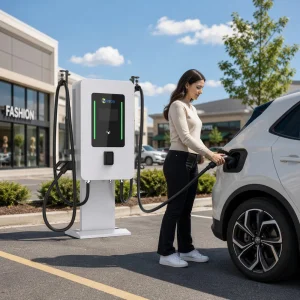
Explore our flagship, field-proven EV charging technologies optimized for metropolitan networks, commercial fleets, and localized smart grid integration in Seoul.
The Seoul Metropolitan Area is undergoing a massive transformation toward electric mobility. As part of South Korea's national net-zero target and the Seoul Metropolitan Government's aggressive policies to phase out internal combustion engine vehicles, the demand for fast-charging infrastructure is escalating. However, installing ultra-fast chargers in a dense metropolitan area like Seoul faces a primary bottleneck: grid capacity.
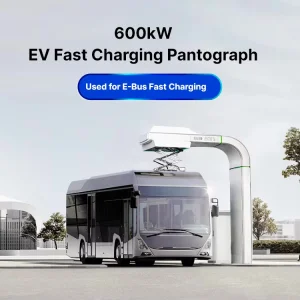
The Korea Electric Power Corporation (KEPCO) grid in core commercial sectors—such as Gangnam, Yeouido, and Gwanghwamun—is heavily loaded. Upgrading the local grid to support multiple units of 350kW and 600kW fast chargers requires millions of dollars in infrastructure investment and long lead times. This is where Battery Energy Storage System (BESS) integrated charging stations step in as the most viable, cost-effective, and future-proof solution.
By pairing high-power DC fast chargers with modular lithium-iron-phosphate (LFP) BESS units, fleet operators and commercial properties can utilize peak shaving. The BESS unit discharges during high-demand EV charging events and recharges from the grid during off-peak hours (e.g., late-night periods when KEPCO power rates are lowest), reducing demand charge tariffs and protecting the local distribution grid from voltage drops.
Globally, the transition to high-power EV charging is driving a paradigm shift toward distributed energy resources (DERs). Major EV charging hubs in Europe and North America are adopting BESS-buffered chargers to bypass grid upgrades. In South Korea, specifically Seoul, this trend is accelerated by the government's mandate to electrify public bus fleets and commercial logistics networks. Urban zoning regulations and high land acquisition costs in Seoul dictate that infrastructure must occupy the smallest footprint possible, demanding highly integrated, high-energy-density packaging.
Modern charging infrastructure requires high compatibility with native communication protocols such as OCPP 2.0.1 and ISO 15118-20, which enables advanced Plug & Charge (PnC) functionality and bidirectional charging (V2G - Vehicle-to-Grid). Pairing this with local battery storage units enables active participation in KEPCO's demand response (DR) programs, turning a cost center (charging fleet) into a profit-generating virtual power plant (VPP).
An effective BESS-buffered charging system consists of four primary blocks: the grid connection interface, the bidirectional AC/DC power conversion system (PCS), the energy storage system (battery modules and active BMS), and the high-power DC charging dispenser. The technology relies on liquid-cooled architectures to ensure long life cycles and thermal stability under rapid charging-discharging conditions.
Intelligent power allocation algorithm dynamically routes energy between the local utility grid, the BESS battery, and multiple charging dispensers based on real-time vehicle demand.
Leverages Time-of-Use (ToU) electricity tariffs in Seoul by charging the local BESS during low cost brackets and discharging to EVs during high-peak, expensive tariff brackets.
Active liquid cooling loops handle thermal management of both power modules and battery cells, ensuring temperatures remain within optimal ranges even during heavy cycle runs.
Shanghai Mida Cable Group Ltd. operates through its wholly owned subsidiaries: Shanghai Mida EV Power Co., Ltd., Shenzhen Mida EV Power Co., Ltd., and Shanghai Mida New Energy Co., Ltd.
Mida Cable manufactures a comprehensive range of EV charging cables, including 16A–80A J1772 cables, 16A–63A IEC 62196-2 Type 2 cables, and DC fast charging cables: CCS1 (80A–500A), CCS2 (125A–1000A), CHAdeMO (125A–300A), GBT (200A–1000A), and NACS connectors (250A–600A).
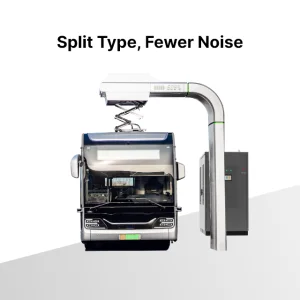
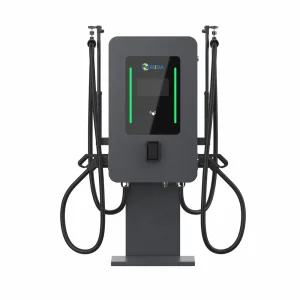
MIDA EV Power produces a full lineup of EV charging stations, such as 7kW–50kW mobile chargers, 3.6kW–7.2kW portable DC chargers, 360kW–1440kW split-type DC fast chargers, 20kW–50kW wall-mounted DC chargers, and 60kW–480kW floor-standing DC fast charging stations.
MIDA New Energy specializes in EV charger power modules, offering 20kW–60kW standard modules, 40kW–125kW liquid-cooled modules, 30kW–62.5kW bidirectional modules, and 20kW–45kW V2G charging modules.

Explore our structured technology pillars, engineered to scale EV charging infrastructure from high-efficiency modules to utility-scale energy storage deployments.
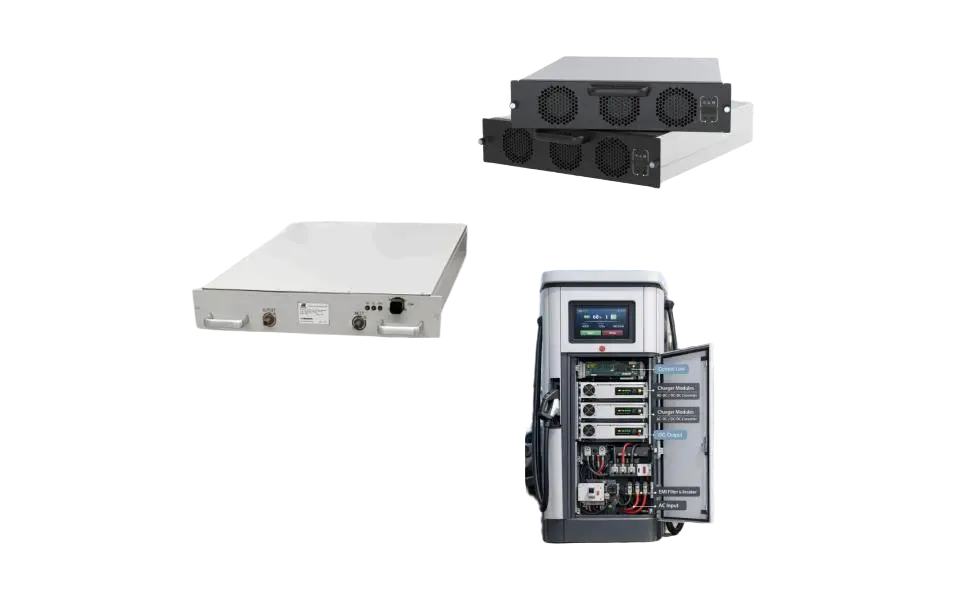
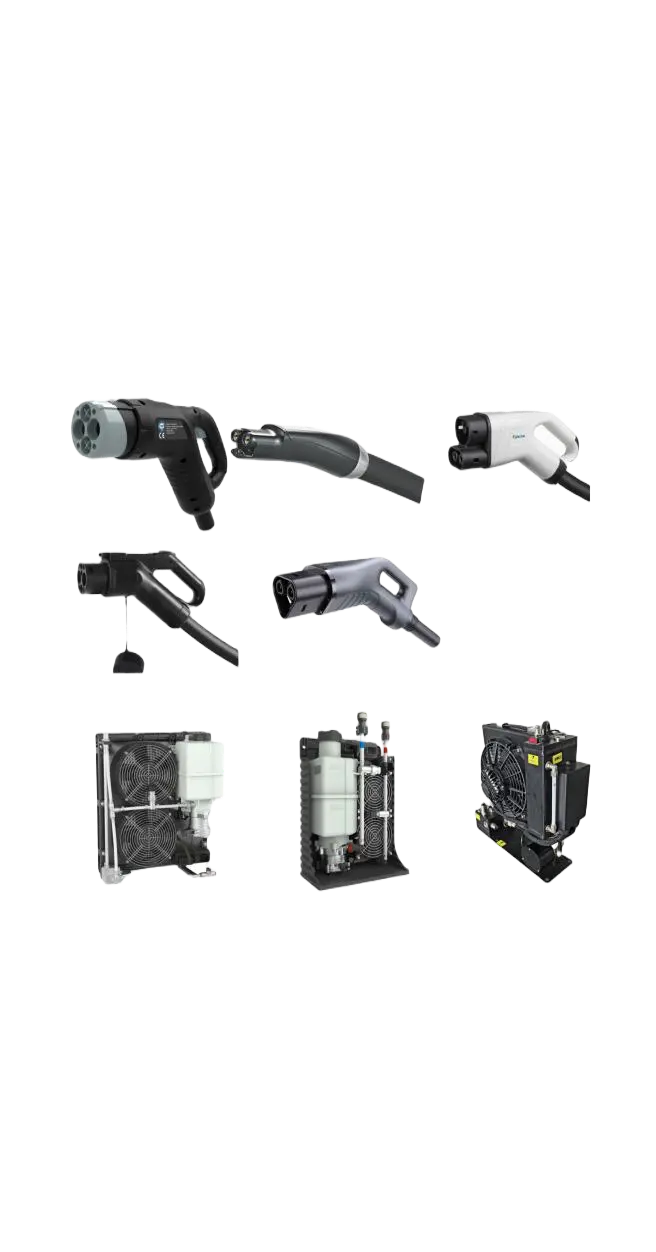
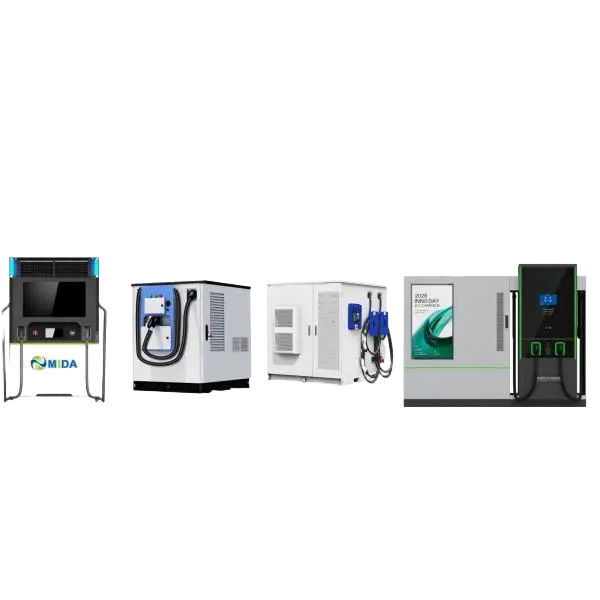
Designed for continuous operation under demanding fleet and transit conditions. High power transfer meets thermal intelligence.
Get quick answers regarding technical architecture, grid interface, safety parameters, and deploying battery-backed EV stations in Seoul.
Seoul features deep, high-load urban grids. Upgrading power grids to deliver 300kW–1200kW loads poses high civil costs and regulatory delays. A battery energy storage system (BESS) stores power during off-peak times and discharges to feed vehicle chargers during peak hours. This maintains local grid stabilization, bypasses KEPCO peak demand charges, and avoids high capital expenditure for utility transformer upgrades.
All modules and cabinets comply with international safety standards, including TUV, CE, ETL, RCM, and RoHS. To comply with South Korea’s rigorous electrical safety guidelines, we adapt system elements to align with KC (Korea Certification) benchmarks and local safety standards, incorporating triple-layer thermal mitigation and fast circuit breaker systems.
Traditional air cooling suffers from thermal limitations when pushing charges past 300A continuously. Liquid-cooled cables, power units, and BESS modules transfer heat away with greater efficiency. This keeps operating temperatures below critical thresholds, reduces hardware wear, improves efficiency, and reduces charging footprint by up to 40% compared to air-cooled models.
Yes. Utilizing MIDA's bidirectional AC/DC power modules (available in 20kW, 50kW, and 62.5kW), the BESS station supports vehicle discharging mechanisms, enabling dual energy transfer patterns. This supports the dynamic deployment of virtual power plant schemes aligned with Korea's future carbon reduction targets.
Our chargers support industry-standard protocols including OCPP 1.6J and OCPP 2.0.1. Hardware modules are built with ISO 15118 compliance, allowing features like Plug & Charge (PnC) and high-tier cybersecurity encryption for fleet authentication.
Our engineering support services help plan BESS sizing, thermal calculations, and peak-shaving optimization models to match your site configuration in Seoul. Contact our product specialists to secure a customized infrastructure design today.