China Rapid EV Charging Stations Manufacturers & Supplier

Empowering the Global E-Mobility Transition with Megawatt-Scale, Liquid-Cooled & Smart Integrated Energy Storage charging Infrastructure.

Executive Summary: Scaling the Next Generation of EV Charging Infrastructure

As the global transition to zero-emission transportation accelerates, the demand for high-power, reliable, and intelligent charging infrastructure has reached an unprecedented scale. Commercial fleet operators, public utility providers, and charge point operators (CPOs) face a critical imperative: deploy rapid charging systems that minimize vehicle downtime while preserving grid stability. Choosing the right China rapid EV charging stations manufacturer is no longer simply about finding a low-cost equipment provider. It is a strategic partnership requiring exceptional technical depth, global compliance capabilities, and an innovative technology roadmap.

480kW
Ultra-Fast Output
1000A
Liquid-Cooled Cap.
OCPP 2.0.1
Protocol Ready
1.2MW
Split System Limit

Key Global Development Trends in Rapid EV Charging Systems

The rapid EV charging landscape is currently defined by three distinct macro-technical transformations:

1. The Transition from Fast to Ultra-Fast Charging (HPC)

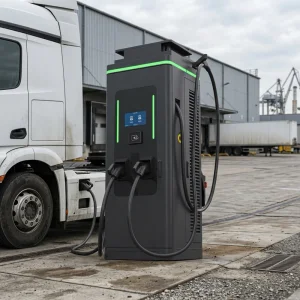
Standard DC fast chargers ranging from 50kW to 120kW are rapidly giving way to Ultra-Fast Chargers (HPCS) capable of delivering 240kW, 360kW, or even 480kW of continuous power. For heavy industrial transportation, passenger bus terminals, and high-turnover logistics depots, megawatt-scale systems (exceeding 1000kW) represent the new frontier of high-speed charging.

2. Liquid-Cooled Charging Tech Dominance

Traditional air-cooled cables become heavy, rigid, and thermally constrained when carrying currents above 250A. Liquid-cooled connectors and cables manage the thermal load efficiently, allowing safe, lightweight operations even at currents up to 600A-1000A, ensuring users can handle high-performance cables with minimal physical strain.

3. Battery Energy Storage System (BESS) Integration

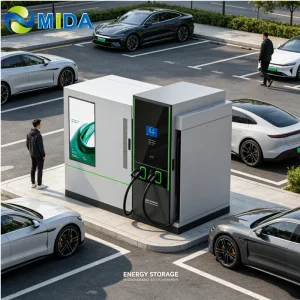
High-power charging stations put immense stress on local distribution grids. By integrating BESS (60kWh to 2MWH capacities) directly into charging stations, operators can leverage "peak-shaving" to store electricity during low-tariff periods and discharge during peak charging demands. This reduces utility costs and enables rapid charging in locations with restricted grid connection capacities.

Macro Industry Insight: The integration of localized BESS with multi-megawatt split charging systems constitutes the most resilient architecture for highway charging plazas and logistics terminals over the next decade.

Global Procurement Demands & Site Integration Strategies

Procuring fast-charging infrastructure for global deployment demands strict alignment between hardware specifications and local market realities. International operators prioritize several fundamental factors during the vendor selection phase:

  • Grid-Interactive Capabilities: Dynamic load balancing and bidirectional V2G (Vehicle-to-Grid) power modules (typically 20kW to 62.5kW units) are essential for modern Smart Grid configurations.
  • Interoperability and Open Standards: Full compliance with OCPP 1.6J and OCPP 2.0.1 protocols ensures hardware compatibility with third-party billing, network monitoring, and security management platforms.
  • Rugged Enclosures for Outdoor Durability: Charging piles must feature robust ingress protection (IP54 / IP55 or higher) and IK10 impact protection to withstand extreme environmental parameters without hardware degradation.

WELCOME TO MIDA GROUP

Shanghai Mida Cable Group Ltd. operates through its wholly owned subsidiaries: Shanghai Mida EV Power Co., Ltd. Shenzhen Mida EV Power Co., Ltd. Shanghai Mida New Energy Co., Ltd.

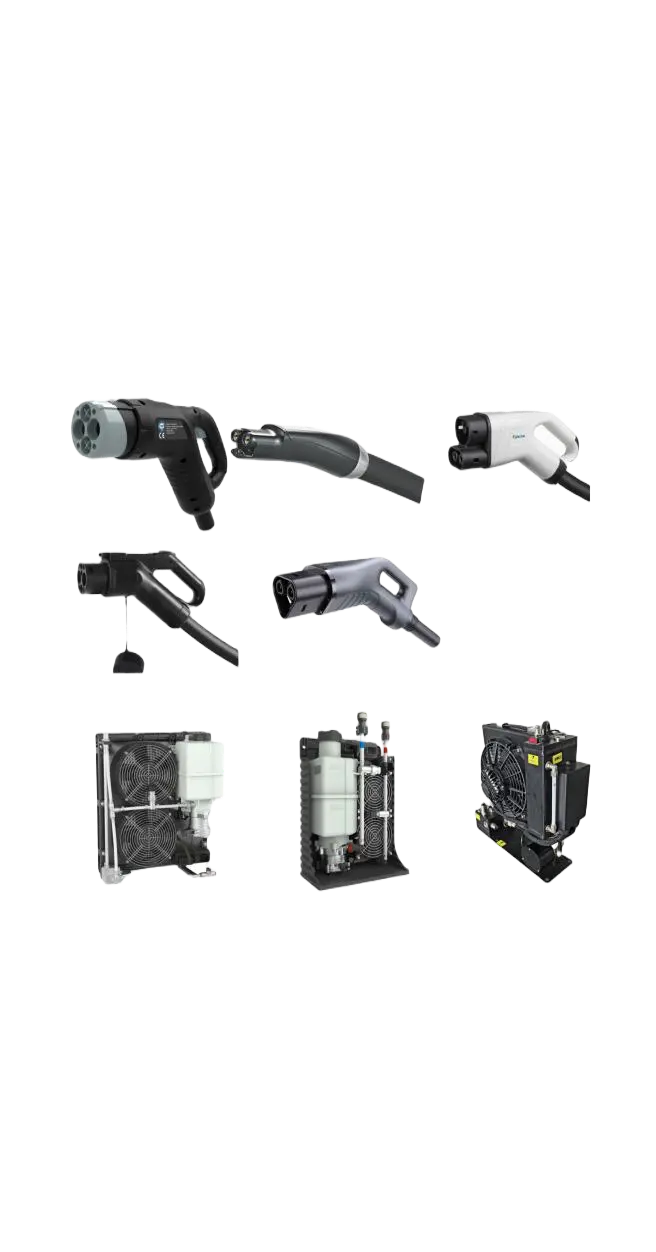
Mida Cable manufactures a comprehensive range of EV charging cables, including 16A–80A J1772 cables, 16A–63A IEC 62196-2 Type 2 cables, and DC fast charging cables: CCS1 (80A–500A), CCS2 (125A–1000A), CHAdeMO (125A–300A), GBT (200A–1000A), and NACS connectors (250A–600A).

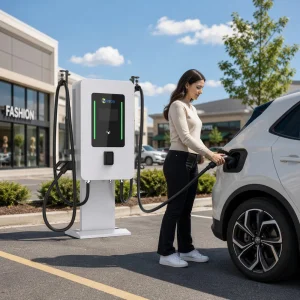
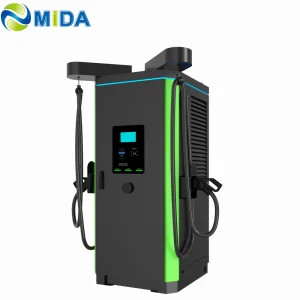
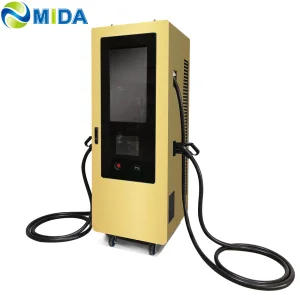
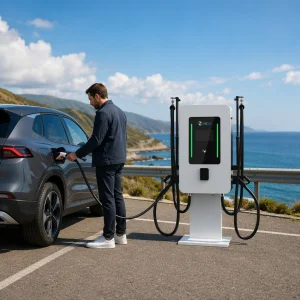
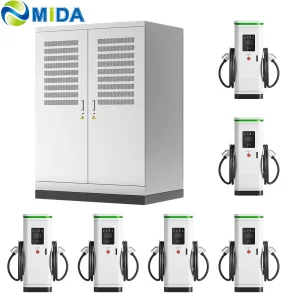
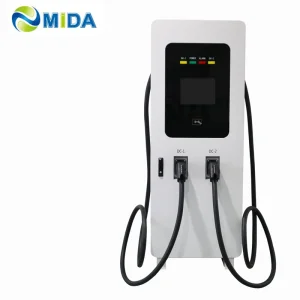
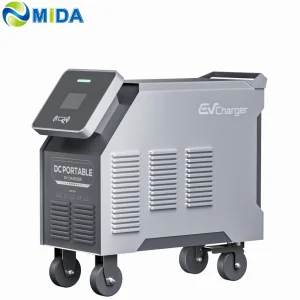
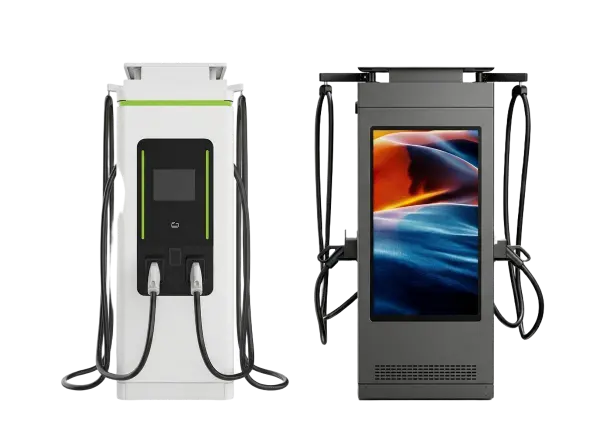
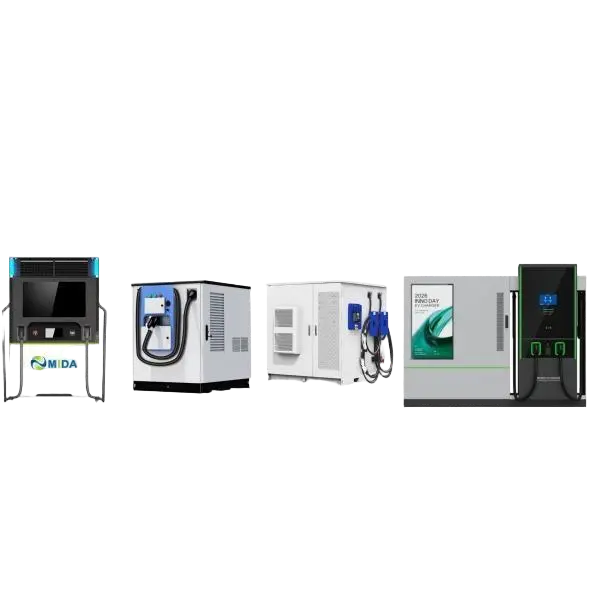
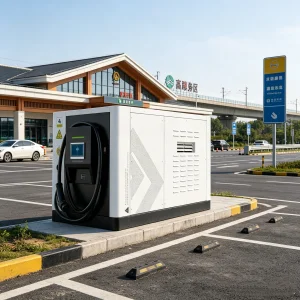
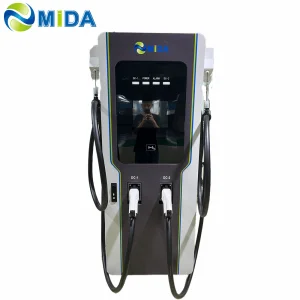
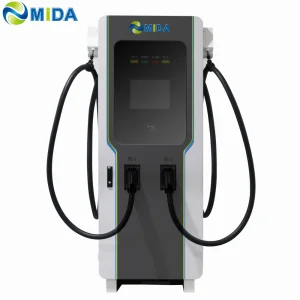
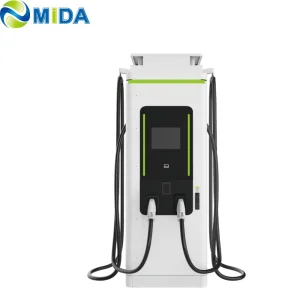
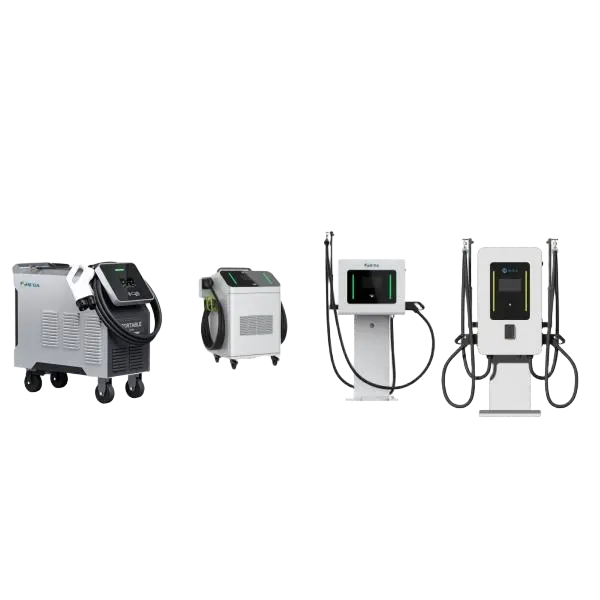
MIDA EV Power produces a full lineup of EV charging stations, such as 7kW–50kW mobile chargers, 3.6kW–7.2kW portable DC chargers, 360kW–1440kW split-type DC fast chargers, 20kW–50kW wall-mounted DC chargers, and 60kW–480kW floor-standing DC fast charging stations.

MIDA New Energy specializes in EV charger power modules, offering 20kW–60kW standard modules, 40kW–125kW liquid-cooled modules, 30kW–62.5kW bidirectional modules, and 20kW–45kW V2G charging modules.

Mida Group Accreditation

Product Architecture Catalog

Explore our diverse segments of advanced power electronics, heavy duty connectors, and integrated battery energy stations.
AC EV Charger
AC EV Charger
Wall-Mounted/Mobile EV Charger

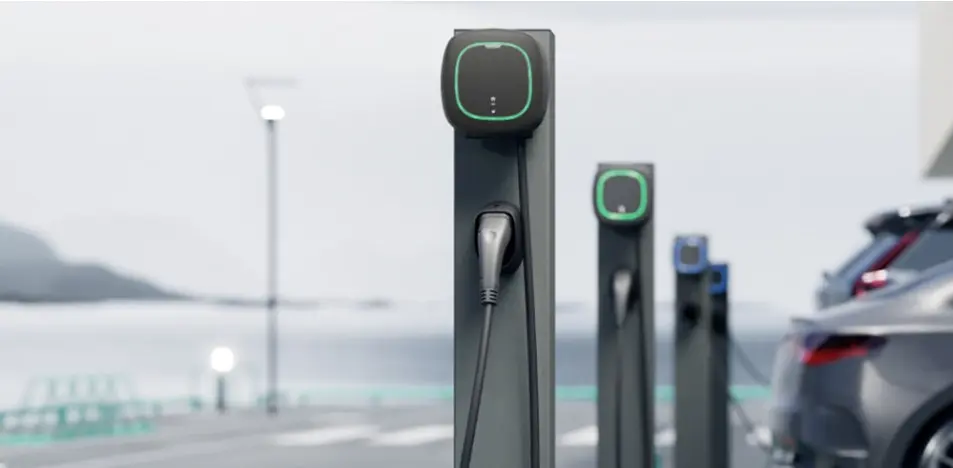
Power output options ranging from 7kW, 20kW, 30kW, 40kW, 60kW, up to 80kW designed for flexible wall or mobile applications.
DC Charger Station
DC Charger Station
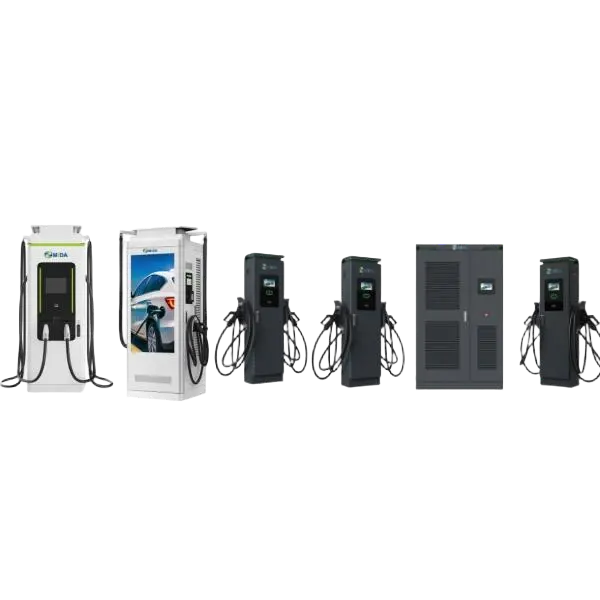
60kW-480kW | 360kW-1440kW

High performance public charging systems and decentralized modular supercharger setups designed for continuous duty operation.
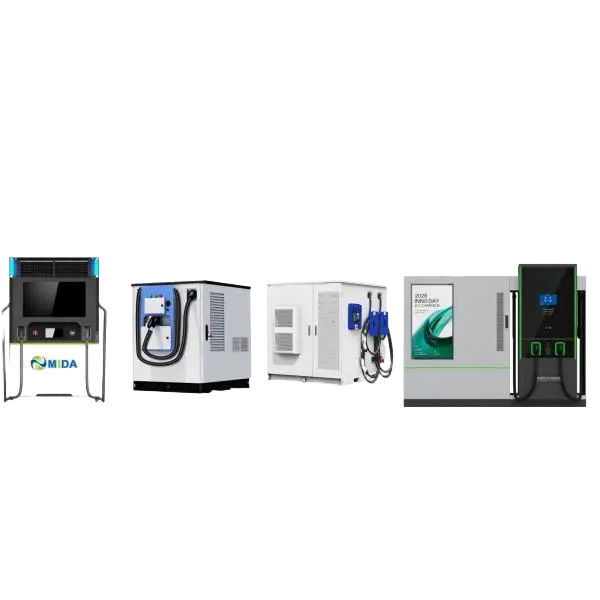
BESS Charging Station
60kWh - 2MkWh Storage Solutions

Smart solar integrated energy storage units, giving your site buffer power and off-grid high speed charging capabilities.

Main Product Segments & Technical Capabilities

Dive deeper into our specific component and high-power station portfolios.
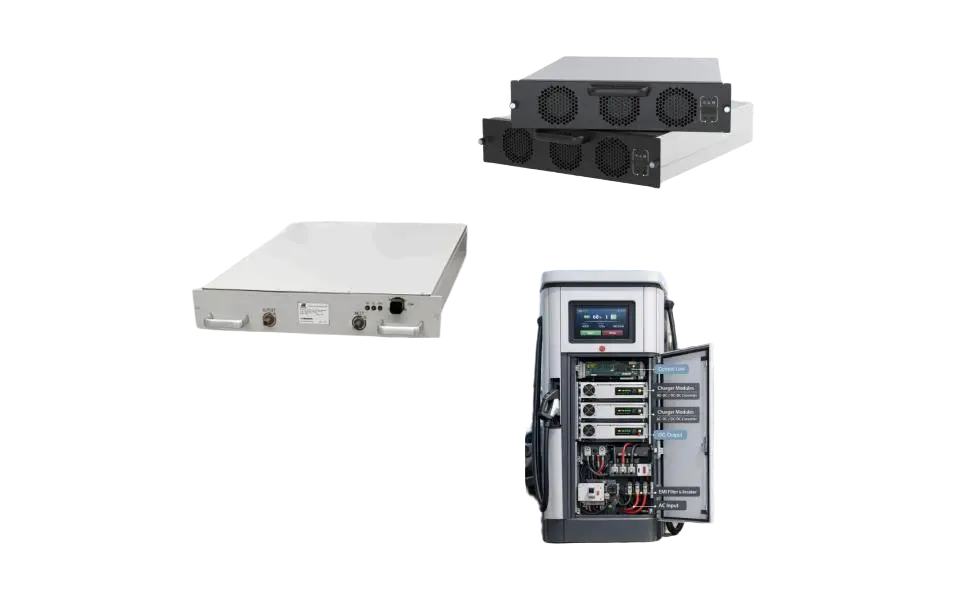
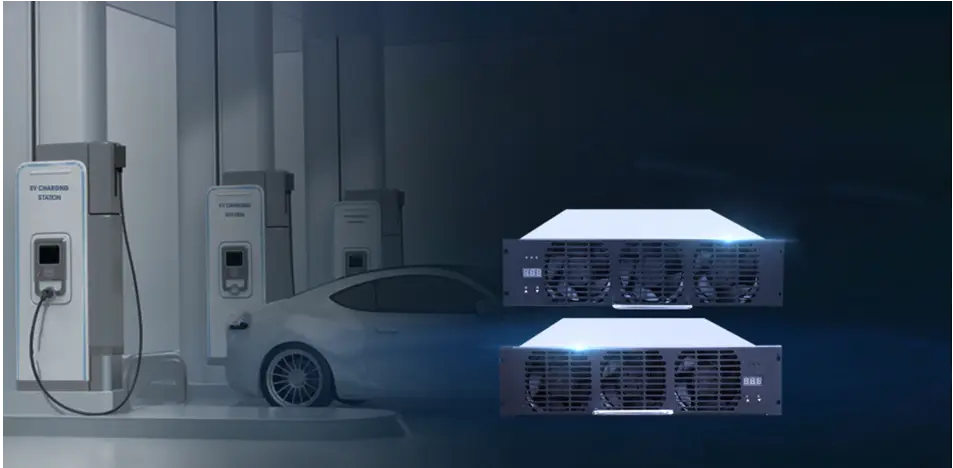
EV Charging Power Module

EV Charging Power Module

  • 30kW 40kW 50kW 60kW 80kW AC DC EV Charger Module
  • 30kW 40kW 50kW 60kW DC DC EV Charger Module
  • 40kW 60kW 75kW 125kW Liquid Cooled Power Module
  • 20kW 22kW 30kW 40kW 45kW V2G Power Module
  • 30kW 40kW 50kW 60kW MPPT Power Module
  • 20kW 50kW 62.5kW Bidirectional AC DC Power Module
DC Charging Connector

DC Charging Connector & Liquid Cooling Unit

  • 500A 600A CCS1 & CCS2 & GBT Connector
  • 125A 250A 300A 350A NACS & CHAdeMO Connector
  • 1500A MCS Connector & CHAOJI Connector
  • 3.5kW 4.5kW 6kW 9kW Integrated Liquid Cooling Unit
  • 2.4kW 3.5kW Split Type Cooling Unit
  • 25kW ~72kW Cooling Unit for HPC Charging
DC Fast Charger Station

DC Fast Charger Station

  • 7kW~ 60kW Mobile DC Charging Station
  • 20kW ~80kW Wall Mounted DC Charging Station
  • 60kW ~480kW Floor Mounted Charging Station
  • 60kW~240kW Advertising Charging Station (43inch , 55inch )
  • 600kW ~1080kW Liquid Cooled Charging Station
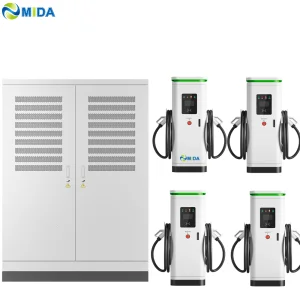
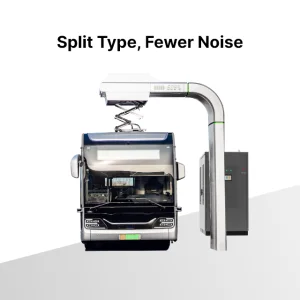
  • 360kW ~ 1680kW Split Type DC Charging Station
Energy Storage Charging Station

Energy Storage Charging Station

  • 15kW~480kW Mobile ESS Charging Station
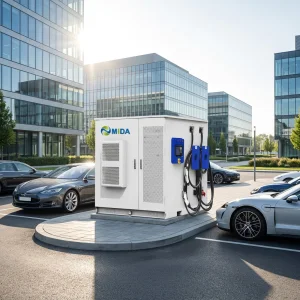
  • 60kW ~ 400kW Integrated ESS Charging Piles
  • 65kWh~200kWh Emergency Rescue Charging Station
  • 165kwh Automatic Charging Robot
  • 800kwh~2000kwh Solar Energy Charging System

Technical Safety, Local Standards Compliance & Global Certifications

Operating DC fast charging machinery internationally requires strict adherence to localized technical standards. To ensure safety, reliability, and authorization for regional grid connections, our manufacturing processes strictly integrate the following parameters:

  • Europe (CE / TUV / RCM / PTB MID): Compliance with EN 61851-1, EN 61851-23, and electromagnetic compatibility directives. Standard integration of PTB certified MID energy meters for precise commercial billing transactions.
  • North America (UL / cUL / ETL / FCC): Our NACS & CCS1 wall-mounted and floor-standing stations meet UL 2202 and UL 2231-1/2 requirements for comprehensive personnel protection systems.
  • Smart Energy Communication (ISO 15118 & DIN 70121): Enabling Plug & Charge protocols. The vehicle identifies itself automatically to the station upon connector plug-in, handling security tokens, negotiation, and billing actions autonomously.
E-E-A-T Quality Note: Dynamic software updates over the air (OTA) ensure that our control systems stay up to date with the latest revisions of electric vehicle communication layers (ISO 15118-2/20).

Future Infrastructure Roadmap: Megawatt Charging & Fleet Autonomy

The next phase of global logistics operations involves heavy commercial transportation (electric semi-trucks) and large municipal bus fleets. These operations demand localized solutions that can deliver massive energy volumes in minutes rather than hours:

Megawatt Charging Systems (MCS)

With voltage ratings up to 1250V and current limits reaching 1500A, Megawatt Charging Systems (MCS) will become the global gold standard for long-haul logistics corridor charging hubs. This system delivers massive power packages using liquid-cooled connection systems and active sub-cooling units.

Automated Pantograph Up and Down Charging Systems

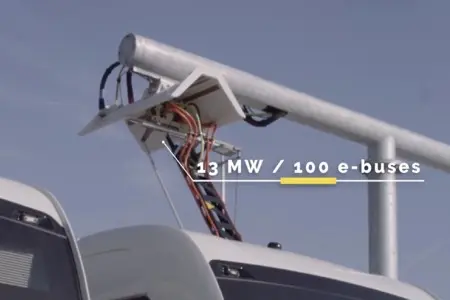
For city-bus networks, automatic pantographs mounted on station canopies connect to the bus roof contact bars. By supplying 300kW to 600kW of charging energy during short passenger boarding intervals, bus transit systems can run continuously without requiring heavy, high-capacity onboard battery packs.

Corporate Insights & Transit News

Technical updates regarding the development of heavy-duty fleet systems and automated bus charging technologies.

E-bus pantograph dome advantages

What are the advantages of an e-bus pantograph dome? In contrast to classic plug-in charging systems, e-bus pantograph setups offer fully automated operation, eliminating manual cable handling and optimizing transit route operations.
26-07-12 View More
E-bus pantograph charging time

How long does it take to charge with an e-bus pantograph? The charging time depends on the battery capacity and the station's capability, typically delivering operational top-ups within 5 to 10 minutes at route terminal stops.

26-07-12 View More
How to install pantograph dome

How to Install the Pantograph Up Charger System Dome for Electric Bus. Discover step-by-step structural guidelines, alignment sensor tuning, and power connection protocols for successful municipal integration.

26-07-12 View More

Automating Heavy Transport Networks

Deploying modular overhead pantograph stations and liquid-cooled high power cabinets to power transition terminals for zero-emission logistics.

Download Integration Guide

Technical & Procurement FAQ

Critical engineering and compliance responses for grid integration, smart charging protocols, and localization.

Q1: What are the main electrical requirements for integrating a 480kW Ultra-Fast Charger?
A 480kW DC station typically requires a 3-phase AC input voltage of 380V/400V/480V (depending on region) with a nominal frequency of 50Hz/60Hz. It demands input currents around 800A at the transformer tier. Standard deployments call for dedicated medium-to-low voltage step-down substations, combined with smart active harmonic filters to ensure THD (Total Harmonic Distortion) remains below 5% under full-load operation.
Q2: How does integrated Battery Energy Storage (BESS) lower operational costs for charging stations?
Integrated BESS cabinets allow for peak shaving. By drawing power from the grid during low-cost, off-peak hours and storing it in high-density Lithium Iron Phosphate (LFP) cells, the station can discharge this stored power directly to the EV during peak demand periods. This minimizes demand charges imposed by utility grid operators and avoids grid upgrade delays in resource-constrained deployment locations.
Q3: Why is ISO 15118 compatibility crucial for modern fleet and commercial operations?
ISO 15118 establishes a standardized communication protocol for electric vehicles. It supports advanced features like "Plug & Charge," which enables automated TLS-encrypted communication and billing verification simply by connecting the charger. It also handles bidirectional power flows (V2G/V2H), allowing fleet batteries to function as dynamic grid balancing assets.
Q4: What is the differences between NACS, CCS1, CCS2, and GB/T standard connectors?
These represent regional connector footprints: CCS1 is predominant in North America; CCS2 is standard across Europe, Oceania, and parts of South America; GB/T is the Chinese national standard; NACS (North American Charging Standard), developed by Tesla and standardized as SAE J3400, is now being widely adopted across North America. Our systems support all these interfaces with optional single or dual gun configurations.
Q5: How does liquid cooling protect high-power charging systems from overheating?
Liquid cooling systems circulate a specialized dielectric coolant or a water-glycol mixture through internal conduits in the cable and connector contacts. This design continuously absorbs thermal energy from the high current lines (allowing up to 1000A transmission) and dissipates it via an active heat exchanger or chiller within the charger cabinet, maintaining cable temperatures below safety thresholds.