Engineered for ultimate durability, reliability, and interoperability across global networks
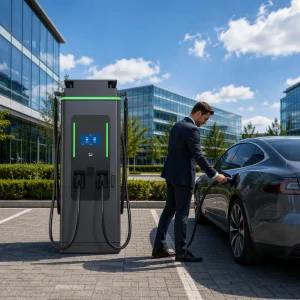
The global transition to electric mobility has transformed EV charging infrastructure from a niche market convenience into a high-capacity utility necessity. As dynamic grid management and mega-watt power demands redefine highway corridors, logistics fleets, and urban commercial centers, sourcing equipment from experienced **China Fast Charging EV Station Manufacturers & Factories** has become a cornerstone strategy for global operators. Leveraging mature industrial clusters allows Chinese manufacturers to offer uncompromised technical innovations at scale.
This comprehensive technical whitepaper explores the critical procurement strategies, technological advances, and structural advantages of partnering with top-tier Chinese original equipment manufacturers (OEMs). From understanding core power electronics vertical integration to analyzing international compliance grids (CE, UL, ISO 15118, NACS, and OCPP 2.0.1 JSON protocols), this guide details how forward-looking enterprises secure high uptime, long-term ROI, and future-proof charging grids.
Unifying global requirements through certified charging ports and smart communication layers.
Seamless integration with third-party Charging Station Management Systems (CSMS). Real-time telemetry, remote diagnostics, smart charging algorithms, and automated billing synchronization.
Encrypted certificate-based handshakes enabling drivers to authenticate and initiate charging by simply plugging in the connector, without mobile apps or RFID tokens.
Strict compliance with IEC 61851, IEC 62196, UL 2202, and UL 2231. Ensures maximum hardware safety, electrical protection, and EMC compatibility across European and North American markets.
| Target Region | Connector Standards | Communication Protocol | Key Certifications Needed |
|---|---|---|---|
| North America | CCS1, NACS (SAE J3400) | DIN 70121, ISO 15118-2/3 | UL Listed, FCC Class A/B |
| Europe | CCS2, Type 2 AC | ISO 15118, OCPP 1.6J/2.0.1 | CE (LVD, EMCD, RED), TUV |
| Asia-Pacific & Japan | CHAdeMO 2.0/3.0, GBT | CHAdeMO Protocol, GB/T 27930 | TELEC, JARI, CQC |
From space-saving wallboxes to multi-megawatt public fast charging stations
Reliable Level 2 charging systems with smart connectivity for workplace and residential applications.
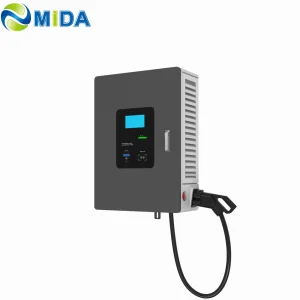
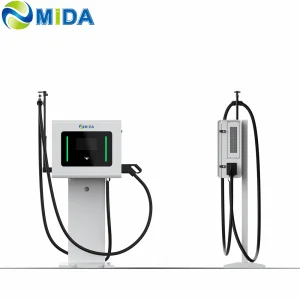
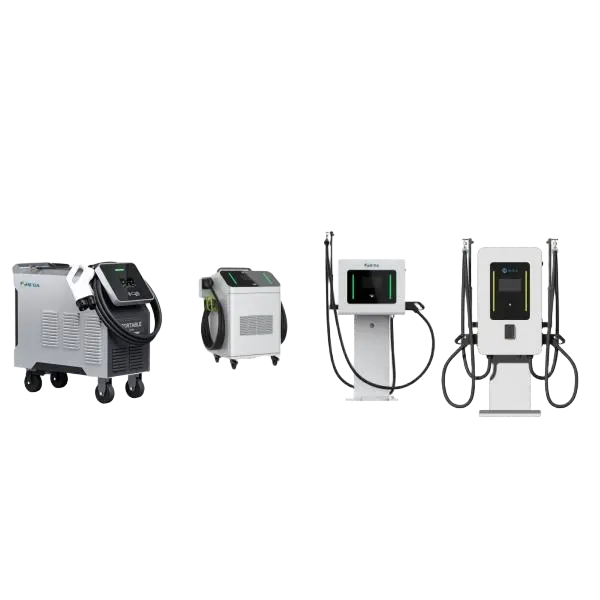
7kW to 80kW systems for compact parking spaces, service depots, and testing environments.
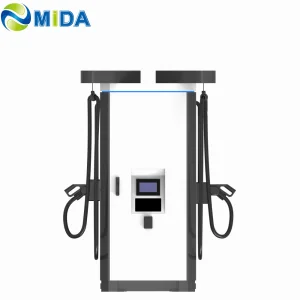
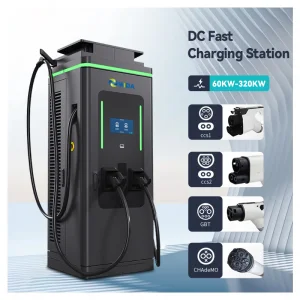
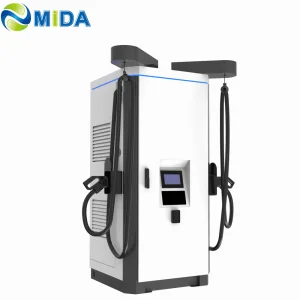
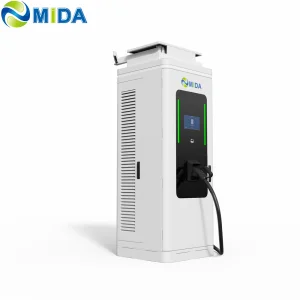
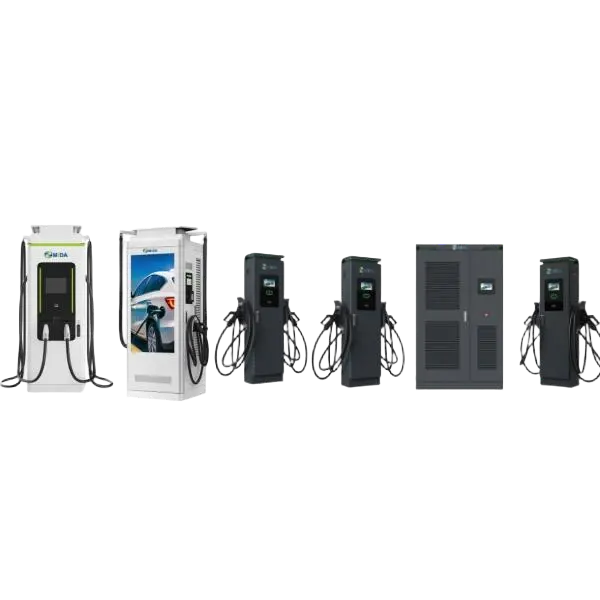
Ultra-fast charging powerhouses designed for highway corridors and fast-turnaround commercial operations.
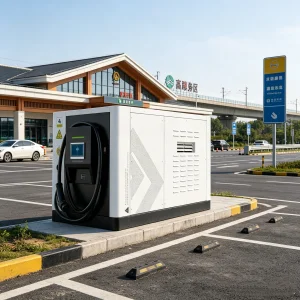
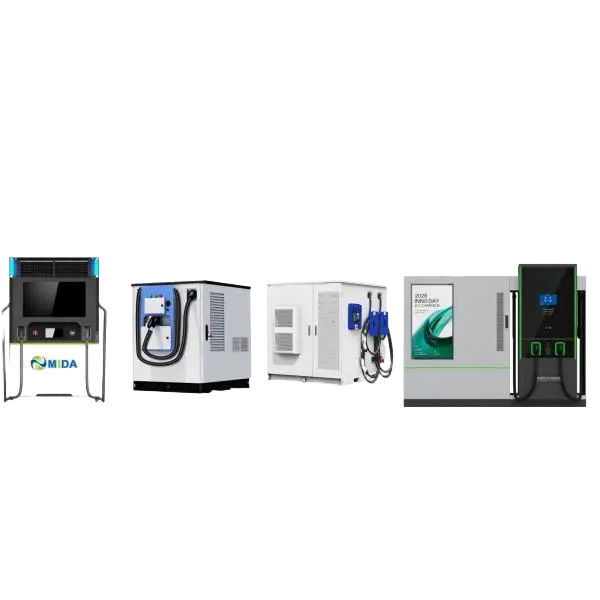
Battery-buffered fast charging stations for locations with limited grid connection capacity.
Shanghai Mida Cable Group Ltd. operates through its wholly owned subsidiaries: Shanghai Mida EV Power Co., Ltd., Shenzhen Mida EV Power Co., Ltd., and Shanghai Mida New Energy Co., Ltd. This structure allows for vertical integration of EVSE components, starting from basic raw copper and cooling hoses to advanced power modules and high-power DC fast stations.
Mida Cable manufactures a comprehensive range of EV charging cables, including 16A–80A J1772 cables, 16A–63A IEC 62196-2 Type 2 cables, and DC fast charging cables: CCS1 (80A–500A), CCS2 (125A–1000A), CHAdeMO (125A–300A), GBT (200A–1000A), and NACS connectors (250A–600A). This deep component-level expertise guarantees reliability at the connection interface.
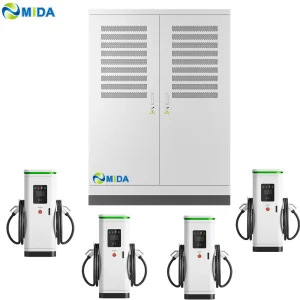
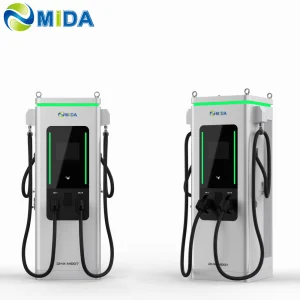
MIDA EV Power produces a full lineup of EV charging stations, such as 7kW–50kW mobile chargers, 3.6kW–7.2kW portable DC chargers, 360kW–1440kW split-type DC fast chargers, 20kW–50kW wall-mounted DC chargers, and 60kW–480kW floor-standing DC fast charging stations.
MIDA New Energy specializes in EV charger power modules, offering 20kW–60kW standard modules, 40kW–125kW liquid-cooled modules, 30kW–62.5kW bidirectional modules, and 20kW–45kW V2G charging modules.

Discover how MIDA's internal supply chains deliver robust components and high-output DC charging equipment.
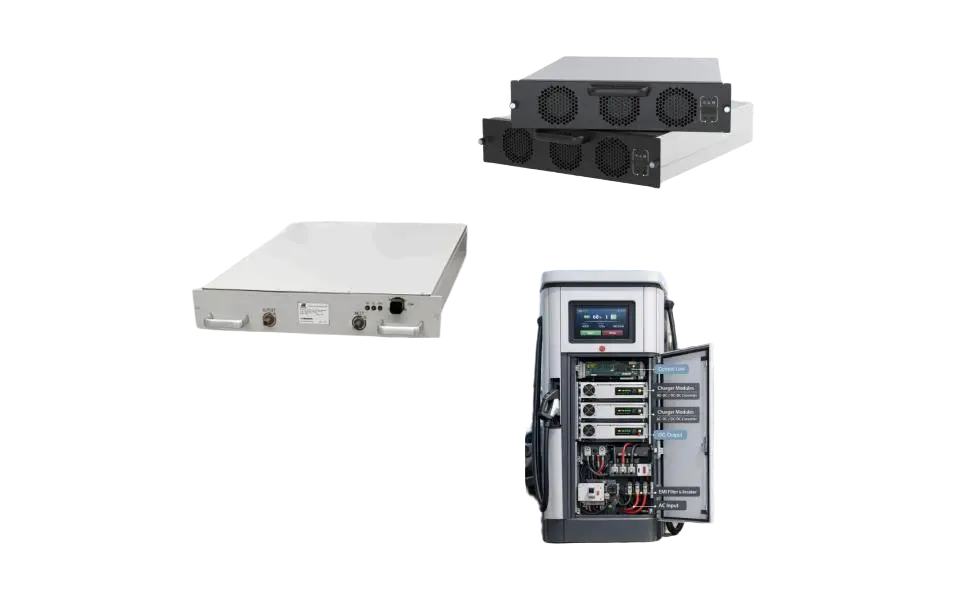
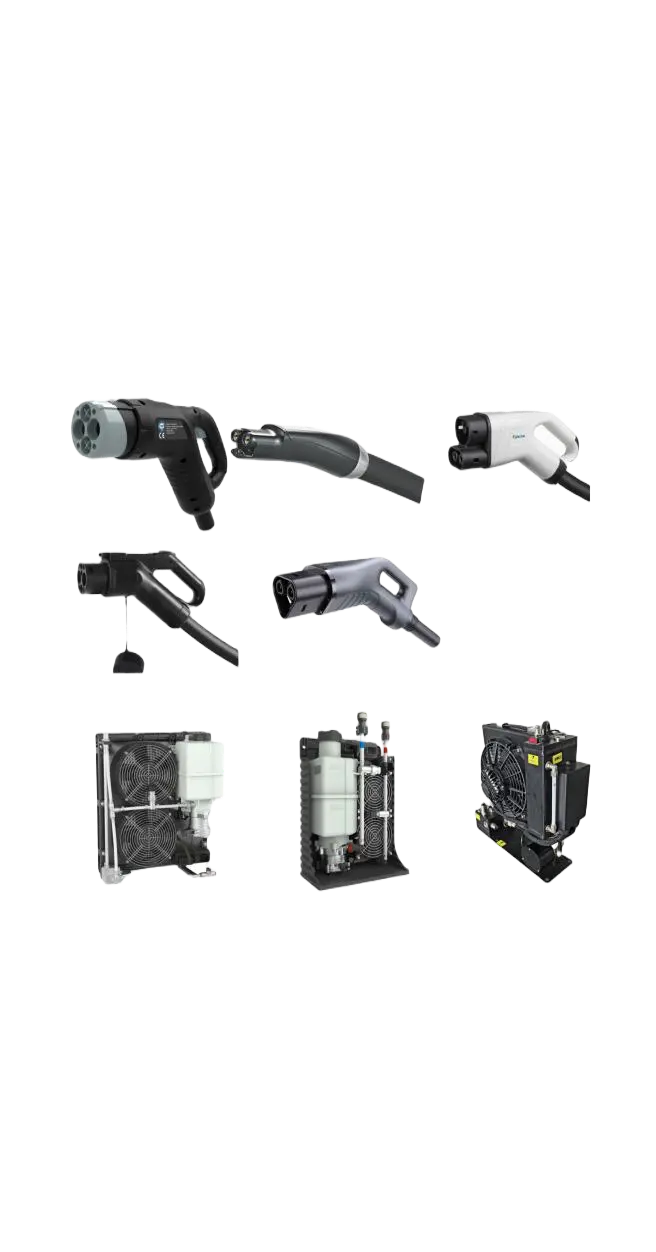
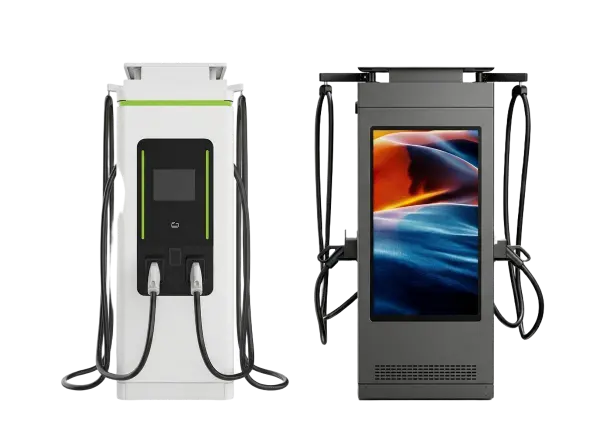
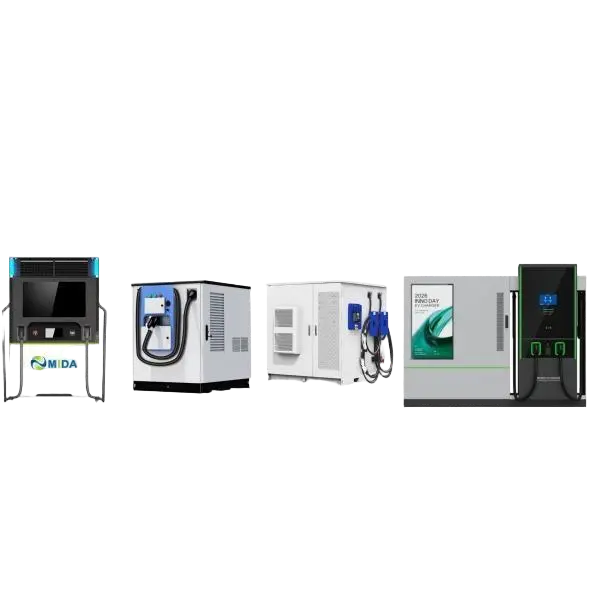
The core cost structure of a DC fast charging station is dominated by the power electronics module (accounting for approximately 35% to 45% of the bill of materials). By housing R&D, silicon carbide (SiC) design integration, magnetic components, and sheet metal fabrication within unified industrial hubs in Shanghai and Shenzhen, MIDA Group controls hardware quality and minimizes lead times.
Unlike assembly-only manufacturers, MIDA's in-house production of liquid-cooled cables and CCS/NACS connectors protects against thermal throttling. High-power charging generates significant heat at the contact points; standard systems throttle output to prevent damage. By integrating proprietary liquid cooling units (3.5kW to 9kW capacities) with internally developed 500A+ CCS2 connectors, our systems maintain peak charging speeds without premature power degradation.
Our charging modules utilize premium SiC MOSFETs, yielding higher switching frequencies, lower thermal dissipation, and up to 98.5% efficiency compared to traditional IGBT modules.
In-house cable extrusion, copper drawing, and connector molding eliminate external margins, reducing total equipment capital expenditure (CAPEX).
Power blocks are designed to be hot-swappable. If a single 30kW module experiences an anomaly, the remaining array redistributes load, keeping the station operational.
How our fast charging configurations adapt to grid limits and operational requirements.
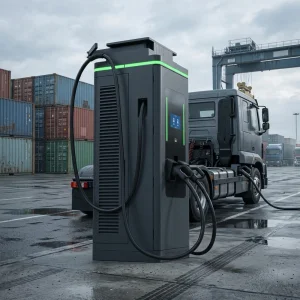
Heavy-duty fleet logistics require consistent, predictable charging cycles. MIDA provides pantograph-up charging and split-type high-power stacks (up to 1440kW) with dynamic power allocation to charge dozens of commercial trucks or electric buses simultaneously during overnight or off-peak windows.
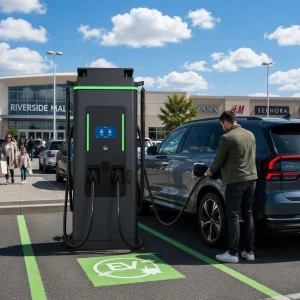
For long-distance corridors, minimizing charging times is essential. Our 360kW to 600kW liquid-cooled ultra-fast dispensers allow modern high-voltage EVs (800V architectures) to add up to 300 kilometers of range in under 12 minutes, optimizing station turnover rates.
Upgrading local transformers to support high-draw DC fast chargers is often cost-prohibitive. By installing MIDA **Battery Energy Storage Systems (BESS)** integrated chargers (418kWh to 2MWh), operators can draw constant, low-level power from the grid to buffer energy, discharging at up to 240kW during peak vehicle arrivals.
The future of EV charging is centered on grid integration. Bidirectional charging—popularly classified under **V2G (Vehicle-to-Grid)** and **V2X (Vehicle-to-Everything)** frameworks—is shifting EVs from passive loads to active decentralized energy assets. Utilizing MIDA's bidirectional power modules, charging operators can purchase electricity at low rates, store it within connected vehicle fleets or integrated station batteries, and feed power back to the grid during peak pricing windows, creating new revenue streams.
Simultaneously, the industry is moving toward the **Megawatt Charging System (MCS)** standard to support heavy-duty transport, aviation, and maritime vessels. Charging currents exceeding 1000A require specialized thermal dissipation technology. MIDA's integrated liquid-cooling loops protect terminal pins, keeping connector contact resistances below 0.1 mΩ during extended use.
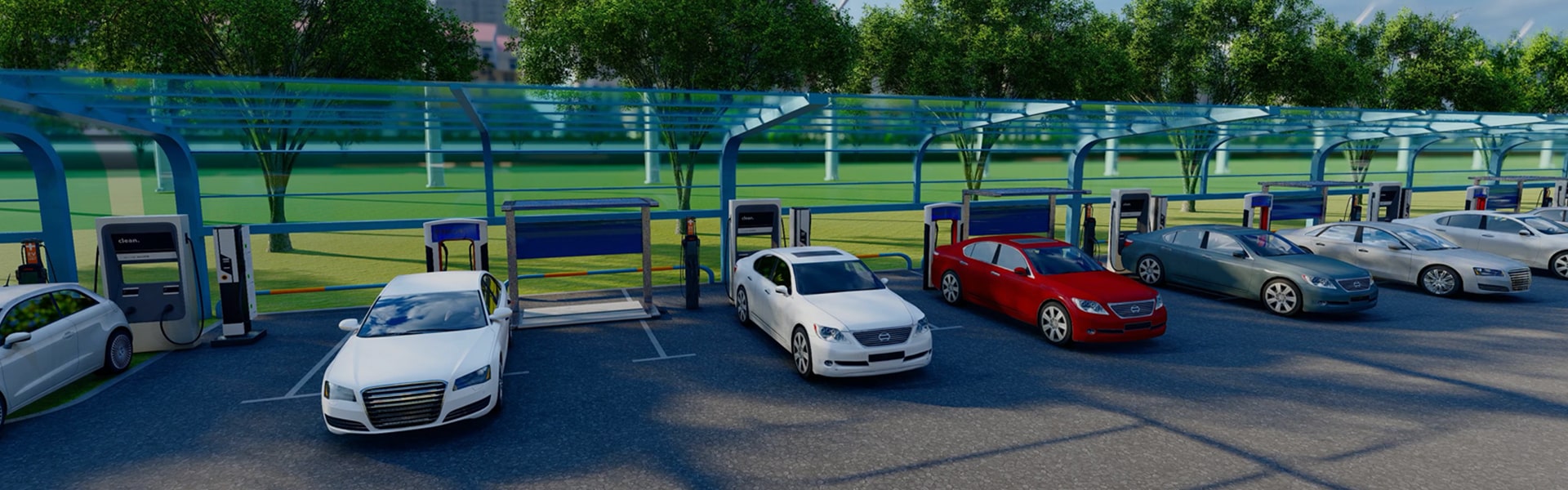
Technical answers directly from MIDA's engineering and export compliance teams.
For standard configurations, lead times range from 4 to 6 weeks. For custom OEM branding—including custom cabinet paint colors, integrated POS payment terminals, RFID reader configurations, and specific OCPP software configurations—lead times typically range from 8 to 10 weeks, depending on component availability and certification requirements.
MIDA manufactures certified NACS (SAE J3400) connectors capable of delivering up to 350kW at 1000V. Our dual-port fast chargers can be configured with one NACS connector and one CCS1/CCS2 connector, controlled by a dynamic power distribution algorithm that supports both vehicle architectures on a single charging station.
MIDA's standard power modules have an MTBF (Mean Time Between Failures) exceeding 100,000 operational hours. In standard conditions with regular filter cleaning and maintenance, the power modules are designed to last over 8 to 10 years.
Yes. Our OCPP-compliant stations feature local and cloud-based load management. When multiple dispensers share a single grid feed, the controller dynamically adjusts output per vehicle based on state of charge (SoC), thermal parameters, and local grid limits, preventing substation overloads.
MIDA's BESS mobile charging units house standard LFP battery packs (e.g., 60kWh to 418kWh) paired with high-efficiency bidirectionals. The system charges via solar arrays, small generators, or standard single-phase grid connections, and outputs DC fast charging via CCS2 or CHAdeMO at up to 240kW, decoupling charging speed from local grid constraints.
Stay updated with MIDA's latest engineering milestones and international projects.
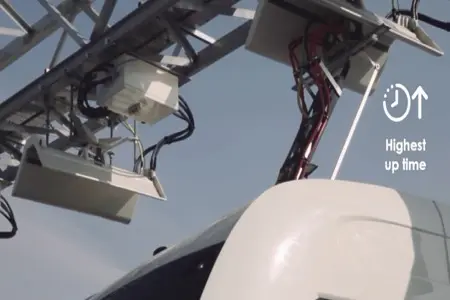
What are the advantages of an e-bus pantograph dome? In contrast to classic plug-in charging systems, e-bus pantograph connections provide high-power delivery with automated, hands-free charging.
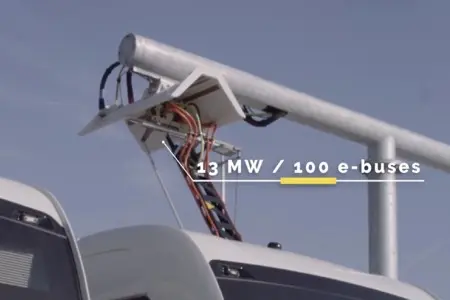
How long does it take to charge with an e-bus pantograph? The charging time depends on the battery capacity and the station's configuration, with high-power systems reaching up to 450kW.
How to Install the Pantograph Up Charger System Dome for Electric Bus. Installing a “Pantograph Up” system requires precise alignments, stable structural framing, and grid integration.
Designed for logistics hubs, high-volume public stations, and high-voltage vehicle fleets.