Explore our industrial-grade charging solutions designed for heavy-duty commercial deployment and extreme weather reliability.
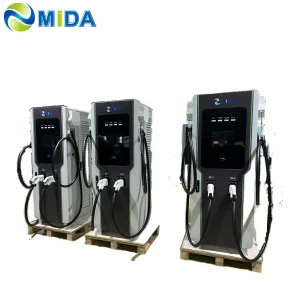
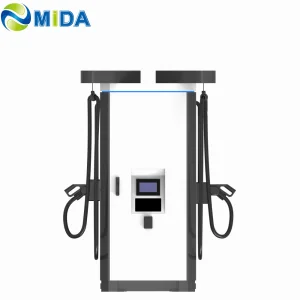
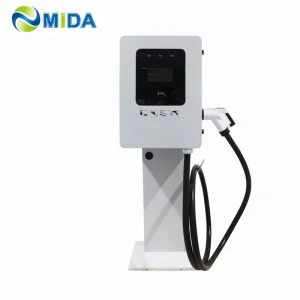
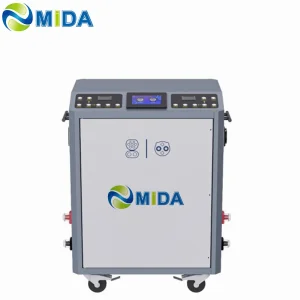
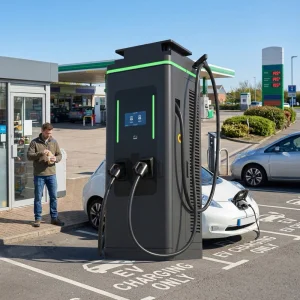
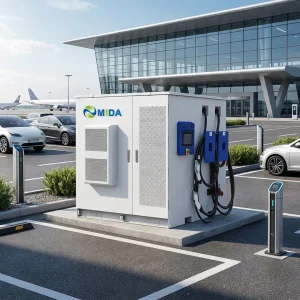
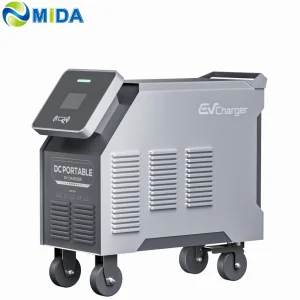
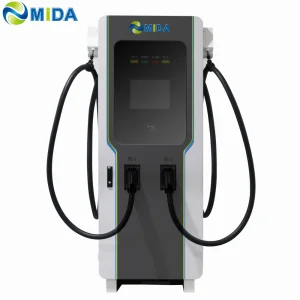
Shanghai Mida Cable Group Ltd. stands at the forefront of the global electric vehicle infrastructure transition. Operating through its highly specialized and wholly owned subsidiaries—Shanghai Mida EV Power Co., Ltd., Shenzhen Mida EV Power Co., Ltd., and Shanghai Mida New Energy Co., Ltd.—the group delivers state-of-the-art power electronics, heavy-duty thermal management systems, and high-conductivity transmission technologies.
As an industry-leading E-Car charging station manufacturer and technology partner, MIDA Group integrates advanced R&D, structural design, and vertical supply-chain manufacturing to deliver turnkey charging solutions. Our manufacturing capacity covers all global standard protocols, including CCS1, CCS2, CHAdeMO, GBT, NACS, and the upcoming Megawatt Charging System (MCS) for ultra-high-power applications.
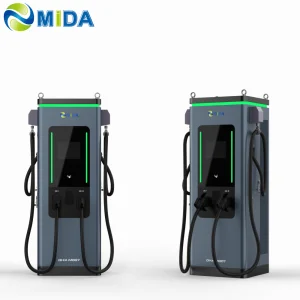
Our core product architecture ranges from standard AC residential chargers to complex megawatt-level split DC charging systems and integrated Battery Energy Storage Systems (BESS). With manufacturing plants engineered for quality control under strict ISO 9001 and IATF 16949 standards, we provide robust commercial infrastructure to utility operators, transit authorities, automotive OEMs, and global charging networks.

MIDA Group controls the entire supply chain, manufacturing the foundational cables, modules, and cooling units that define hardware reliability.
We manufacture a comprehensive, highly durable range of EV transmission links, designed to sustain repeated mechanical stress and environmental exposure:
The core intelligence of our DC Fast Chargers. Built with silicon carbide (SiC) MOSFETs for maximum power density and high thermal efficiency:
Preventing thermal throttling in high-power setups. Our specialized cooling units maintain stable temperatures for extended charging cycles:
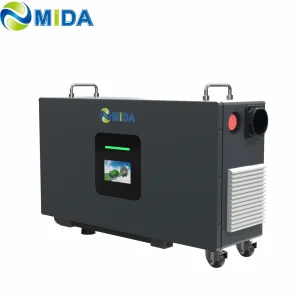
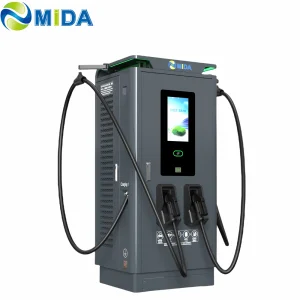
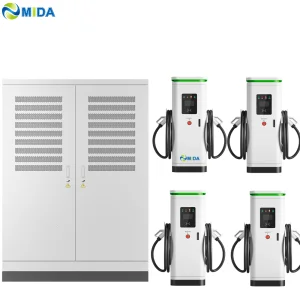
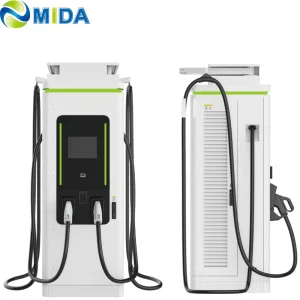
Scalable, modular systems built to survive harsh operating conditions and optimize grid utilization:
An expert-level evaluation of the components, engineering standards, and logistical advantages driving China's dominant position in global EV charging manufacturing.
China's dominance in the E-car charging station manufacturing industry is a result of mature industrial clusters, deep vertical integration, and extensive raw material supply loops. The manufacturing corridor spanning the Yangtze River Delta and Pearl River Delta contains all crucial steps: from high-purity copper smelting for heavy cables to Silicon Carbide (SiC) semiconductor fabrication for power conversion modules. This geographic density eliminates long transit delays, allowing rapid iterations and custom engineering modifications in days rather than months.
MIDA Group harnesses this supply chain infrastructure to maintain a production efficiency advantage. Because we manufacture our own cables, connectors, and power modules internally, we avoid double margins on subcomponents. This internal control allows us to source specific, high-grade polymers (such as TPU jackets with high flame-retardant and oil-resistance ratings) and ensure tight tolerances on critical contact pins. Our automated production facilities deploy CNC machines, ultrasonic welding, and real-time automated optical inspection (AOI) to eliminate assembly defects, assuring high reliability in foreign markets.
The EV industry is moving beyond standard fast charging towards ultra-high-power dispensing. This evolution is defined by two key technologies: liquid-cooled charging cables and bidirectional vehicle-to-grid (V2G) systems. As passenger cars adopt 800V architectures and commercial vehicles transition to electric drivetrains, the demand for 360kW+ chargers has surged. Standard gas-station-style turnaround speeds require currents exceeding 500A. Handling this current without heavy, unmanageable cables requires active cooling. MIDA’s liquid-cooled dispensers pump a non-conductive synthetic coolant directly through the cable jacket to the connector pins, maintaining temperatures below 50°C and allowing continuous high-power delivery.
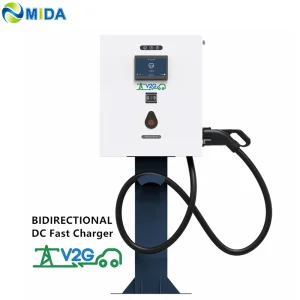
Simultaneously, V2G technology converts electric cars from passive energy consumers into active, grid-balancing assets. By adopting ISO 15118-20 protocol standards and bidirectional power modules, MIDA's hardware enables utility operators to extract power from fleet vehicles during peak demand hours, returning it during low tariff periods. This bidirectional integration mitigates grid stability concerns caused by high-density urban EV charging networks.
Air-cooled systems, CCS1/CCS2, limited to 150A. Standard utility connections, basic billing protocols, and simple local monitoring.
Liquid-cooled cables, dynamic power sharing, V2G capabilities, OCPP 1.6J/2.0.1 integration, and built-in credit card terminal compliance.
Active liquid-cooled MCS systems, BESS buffering, bidirectional utility synchronization, and automated robot plug-in operations.
Deploying E-Car charging stations globally requires strict compliance with international standards and grid codes. Because electric utilities operate under differing voltage ranges, harmonic distortion limits, and safety regulations, a standardized approach is ineffective. MIDA Group designs its units for modular configuration, allowing us to adapt the underlying hardware to local grid standards like 400V AC in Europe or 480V AC in North America.
Our certifications demonstrate our commitment to safety and compliance:
Different operating environments demand distinct hardware solutions. Our stations are custom-configured for maximum longevity and uptime.
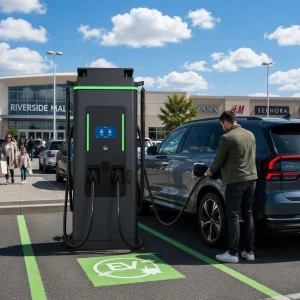
Designed for high tenant turnover. Incorporates RFID readers, POS payment terminals, and dynamic load balancing to share existing utility feeds without overloading the building’s main circuit breakers.
Heavy-duty charging cycles requiring split-type systems or automated pantographs. Designed to deliver continuous high power (up to 480kW per vehicle) under strict scheduling constraints.
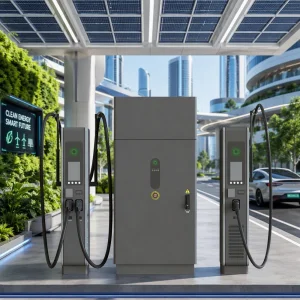
BESS-integrated charging stations utilize local battery storage to charge EVs when grid power is limited, mitigating expensive peak demand fees and grid reinforcement costs.
Get direct answers regarding logistics, installation, power optimization, and system integration.
Stay informed about technological advancements, installation guidelines, and infrastructure innovations from our engineering team.
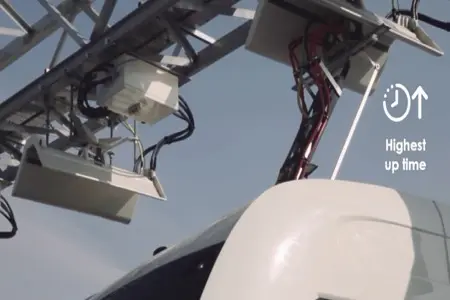
Discover how top-down pantograph systems improve depot efficiency and charging speeds compared to manual plug-in setups.
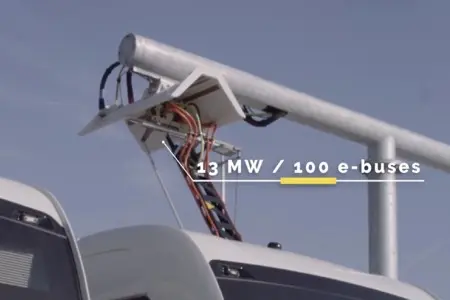
An analysis of thermal tolerances and charging curves for megawatt-level bus pantograph connections during short depot layovers.
A step-by-step engineering guide for installing and aligning overhead charging domes for commercial urban bus lines.
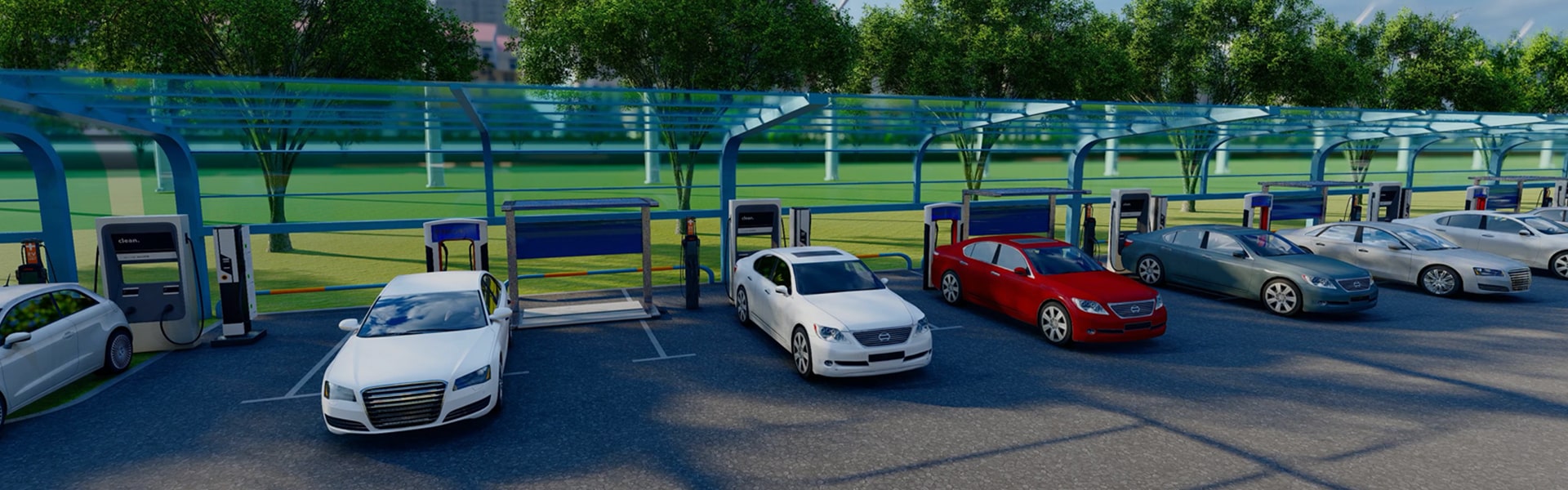
Explore our industrial energy storage configurations, bidirectional V2G power stations, and custom liquid-cooled architectures.