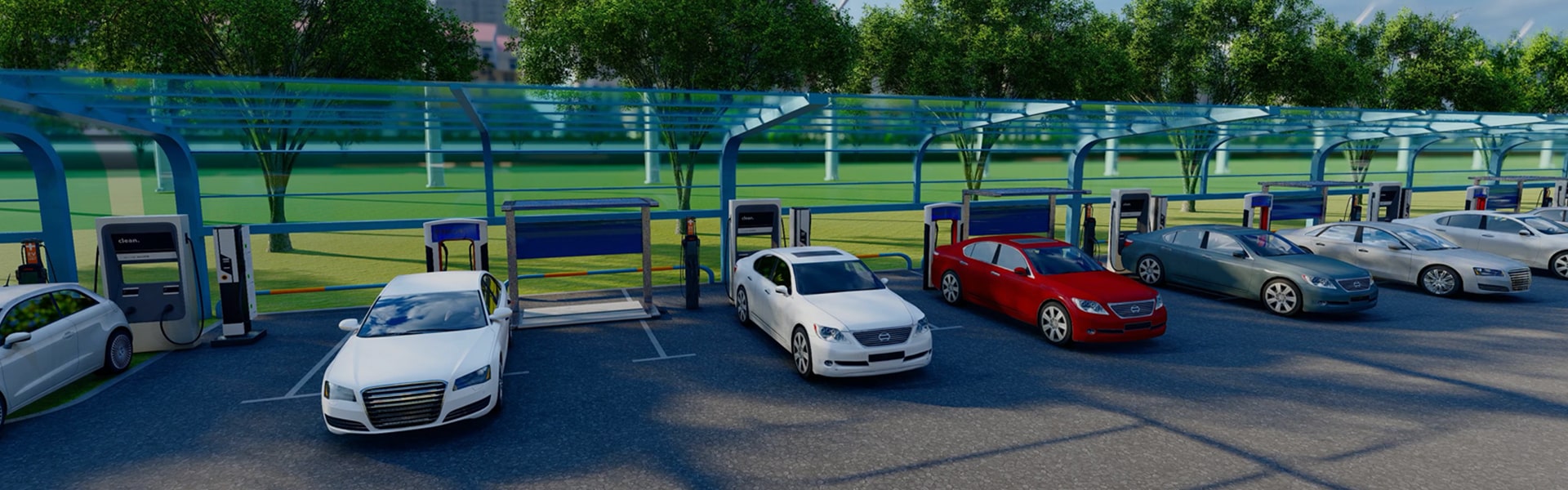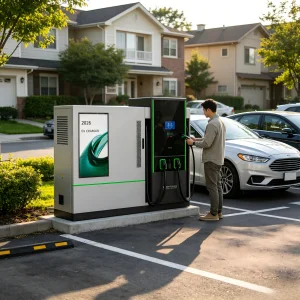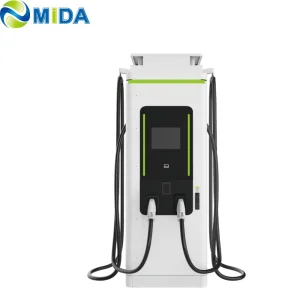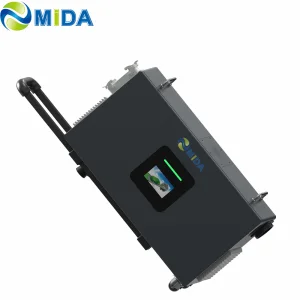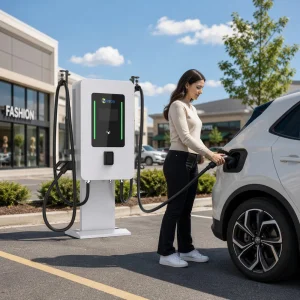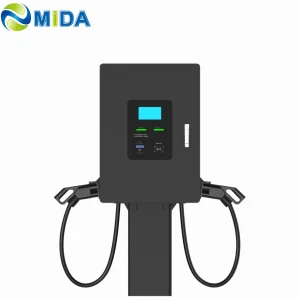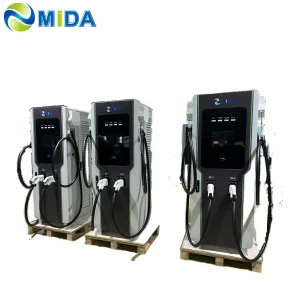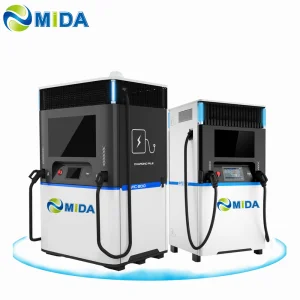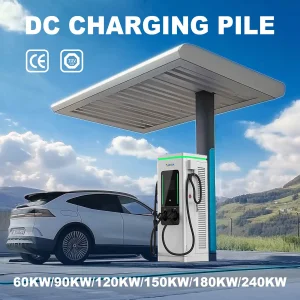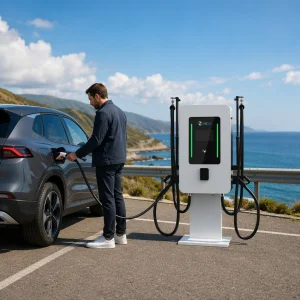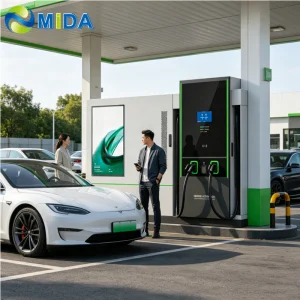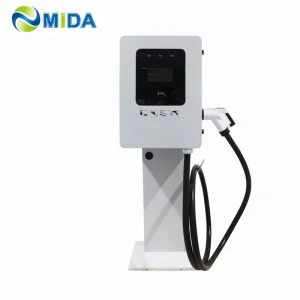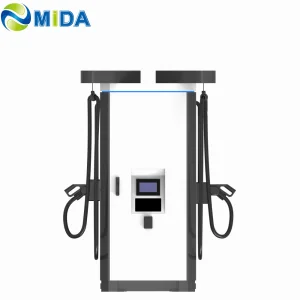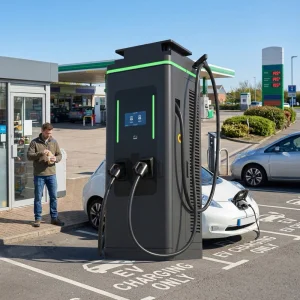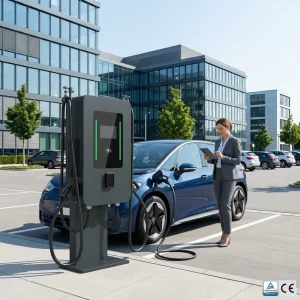
As global transport moves inexorably toward zero-emission powertrains, utility providers, commercial site operators, and fleet managers are encountering unprecedented infrastructure challenges. The primary obstacle is no longer the availability of electric vehicles, but the scalability and thermal efficiency of the grid-connected charging systems supporting them. Among modern Level 3 Direct Current (DC) Fast Chargers, the 60kW EV DC charger has emerged as the definitive global benchmark for balancing installation CAPEX, grid-load constraints, and rapid power delivery.
Unlike legacy alternating current (AC) destination chargers, which rely on the vehicle's limited onboard charger (typically restricted to 7kW to 22kW), a high-performance 60kW DC charger bypasses the onboard converter to feed power directly into the electric vehicle's lithium-ion pack. This reduces average recharge cycle durations from several hours to under 45 minutes, matching the dwell-time patterns of retail parks, urban delivery depots, workplace hubs, and municipal parking zones. MIDA Group coordinates the engineering and manufacturing of these precision EVSE devices, providing the robust electrical safety, dynamic load balancing, and high-frequency power electronics required to scale next-generation networks.
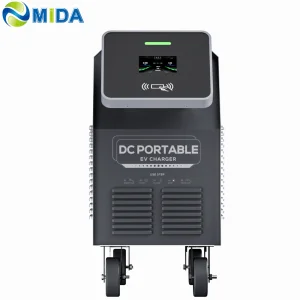
Explore our high-performance DC fast charging stations, mobile rescue units, and BESS integrated systems configured for heavy-duty fleet and utility deployment.
Shanghai Mida Cable Group Ltd. coordinates a vertically integrated manufacturing infrastructure designed to deliver high-reliability components and complete stations. Through our wholly owned subsidiaries—Shanghai Mida EV Power Co., Ltd., Shenzen Mida EV Power Co., Ltd., and Shanghai Mida New Energy Co., Ltd.—we control the design, fabrication, and testing of our technologies.
Our production capabilities range from high-conductivity EV cables (16A to 80A J1772; 16A to 63A IEC 62196-2 Type 2) to liquid-cooled megawatt cables. MIDA’s connection portfolio includes CCS1 (80A to 500A), CCS2 (125A to 1000A), CHAdeMO (125A to 300A), GB/T (200A to 1000A), and NACS connectors (250A to 600A), ensuring cross-platform compatibility.
By manufacturing our own 20kW to 60kW power conversion modules, liquid-cooled power cores, and bidirectional vehicle-to-grid (V2G) systems in-house, we eliminate external supply chain risks and enforce rigorous testing protocols directly at the factory.

Engineered to support charging configurations across residential, fleet, commercial, and utility-scale grids.
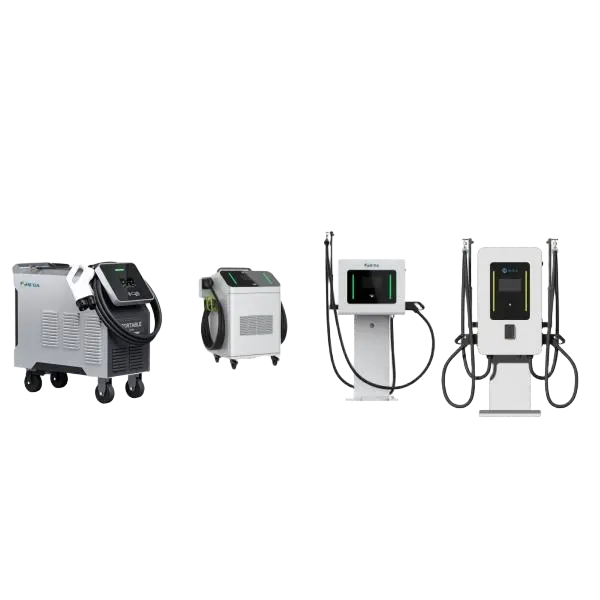
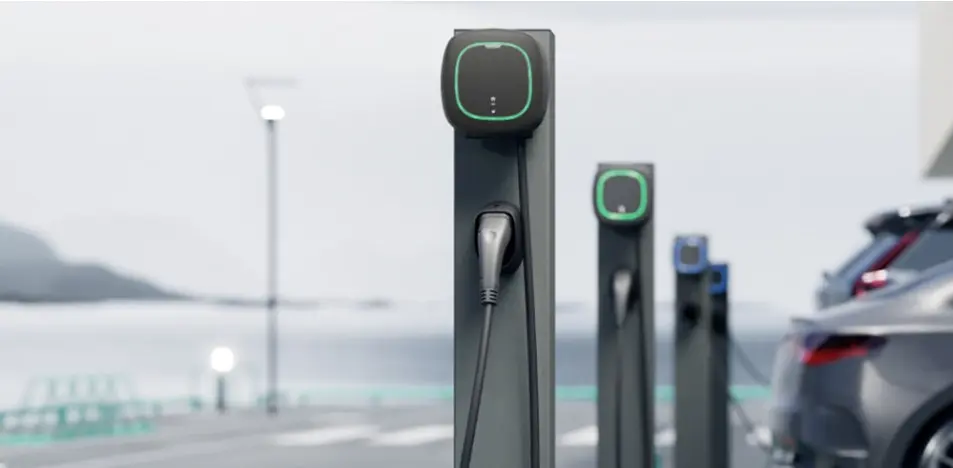
High-durability residential and commercial AC stations equipped with standard J1772, Type 2, and customized tethered configurations.
 View Details
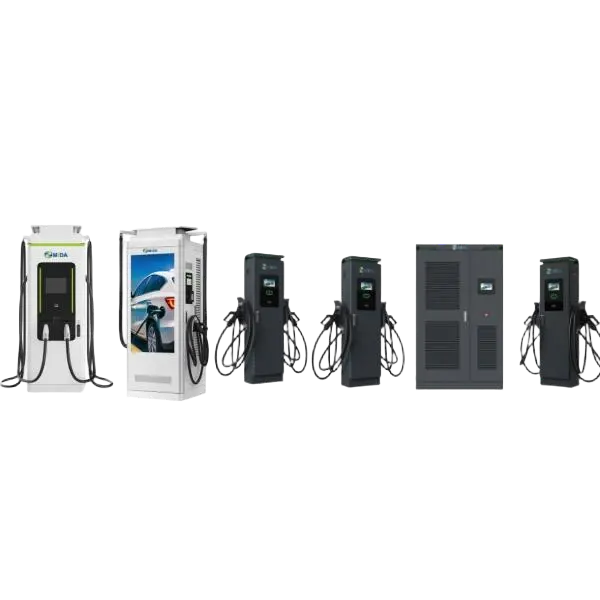
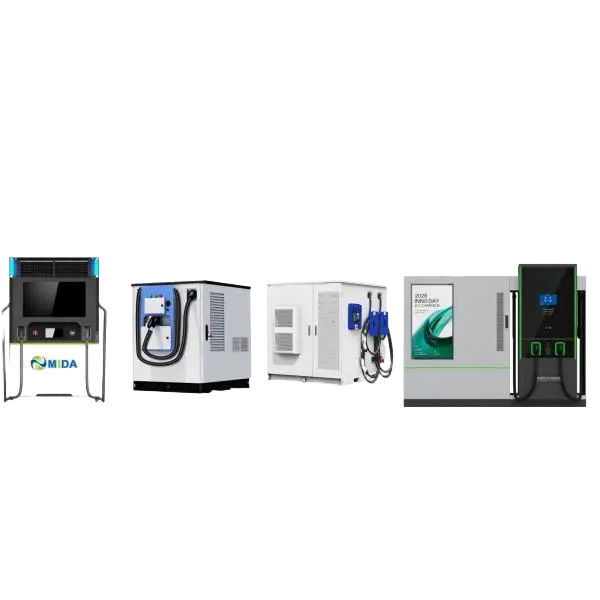
High-power Level 3 DC charging piles featuring active dynamic matrix power sharing, ideal for heavy highway corridors and fleets.
 View Details
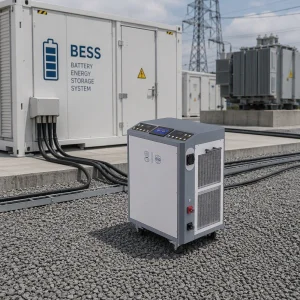
Peak-shaving infrastructure combining lithium-iron-phosphate (LFP) energy storage with DC fast dispensers to minimize grid connection impacts.
 View Details
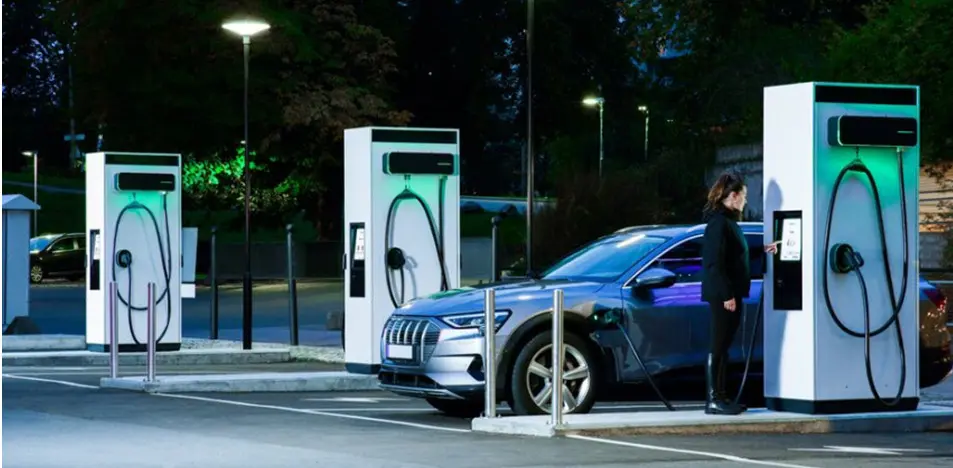
The adoption profile of electric passenger cars, medium-duty logistics trucks, and municipal bus fleets varies widely between regions. In the European Union, the Alternative Fuels Infrastructure Regulation (AFIR) mandates specific distances and total power outputs along primary corridors. Similarly, the United States National Electric Vehicle Infrastructure (NEVI) program sets strict requirements for fast chargers. The 60kW DC charger sits at the center of these developments. Its compact footprint makes it highly adaptable for space-constrained installations, such as underground retail park spaces, workplace parking decks, and urban transport depots.
For sites with restricted utility service entries, installing higher-power systems (such as 150kW or 350kW systems) often requires costly service upgrades, new medium-voltage transformers, and long utility approval queues. A 60kW EV DC charger operates efficiently within typical 100A to 125A three-phase 400VAC / 480VAC service capacities. This allows site operators to install fast charging infrastructure without overhauling local grid connections, minimizing upfront capital investment.
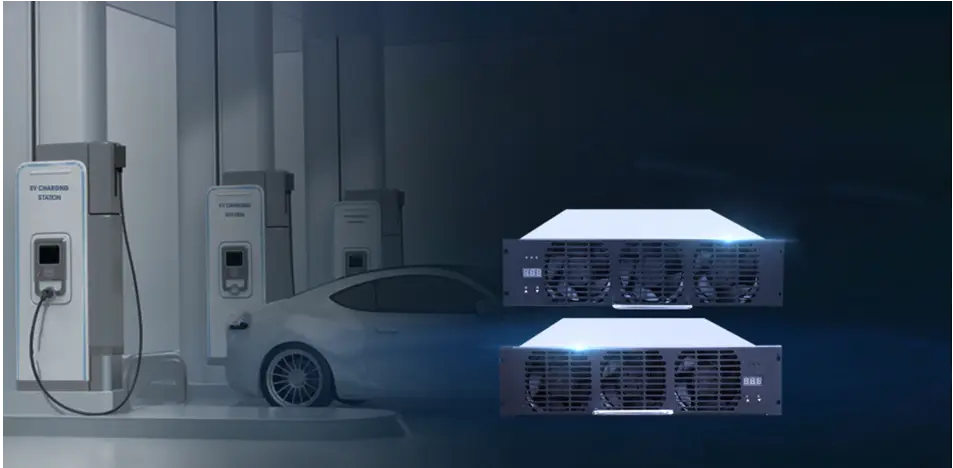
Modern high-efficiency charging systems depend on modular power conversion architectures. Rather than utilizing a single massive, non-redundant transformer core, MIDA Group's 60kW DC fast chargers use internal multi-module clusters (typically dual 30kW or triple 20kW power modules). These modules are configured in a parallel N+1 redundant matrix. If one module experiences a thermal or electrical fault, the system isolation relays isolate the compromised module while allowing the station to continue charging vehicles at reduced capacity.
At the silicon level, the transition from traditional Silicon IGBTs to Silicon Carbide (SiC) MOSFET switches has increased switching frequencies, reduced switching losses, and improved thermal dissipation. Consequently, MIDA’s modular components maintain conversion efficiencies above 96% across wide output voltage bands (150VDC to 1000VDC). This wide voltage range accommodates both legacy 400V battery architectures and modern 800V passenger and commercial EV platforms.
Thermal management is a critical factor in determining long-term system reliability. Standard air-cooled chargers use variable-speed fans to draw outside air through dust filters. While cost-effective, this exposure to ambient air introduces humidity, salt fog, and particulate matter to the inner circuitry. For harsh environments (such as marine ports, high-dust mining facilities, or regions with high ambient temperatures), MIDA Group manufactures closed-loop liquid-cooled power modules. Circulating coolant directly through cold plates isolates high-power switching elements from environmental contaminants, extending the operational life of the unit and reducing ambient acoustic noise levels below 55 dBA.
As an industrial manufacturer, MIDA Group supplies raw components, cooling assemblies, and connectors to international charger assemblers.
Technical analyses on the integration of automated high-power connection interfaces for municipal transit and electric bus networks.

What are the advantages of an e-bus pantograph dome? In contrast to classic plug-in charging systems, e-bus pantographs enable automated overhead energy transfer, reducing physical wear and operator intervention in transit fleets.
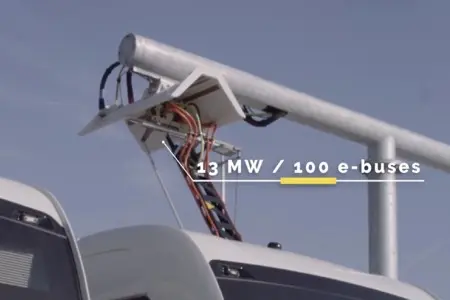
How long does it take to charge with an e-bus pantograph? Charging time depends on the vehicle's battery capacity, operating state of charge, and the output of the overhead dispenser system (ranging from 150kW to 600kW).
How to Install the Pantograph Up Charger System Dome for Electric Bus: A comprehensive installation guide addressing overhead infrastructure, structural load-bearing tolerances, electrical cabling, and communication alignment.
Answers to common engineering questions regarding the procurement, deployment, and operation of 60kW DC charging systems.
Explore our specialized heavy-duty commercial line, featuring high-voltage BESS integrations and liquid-cooled CCS/NACS solutions.