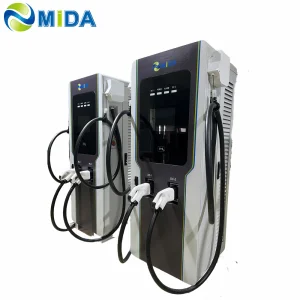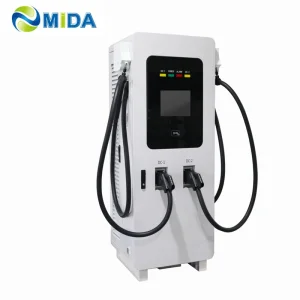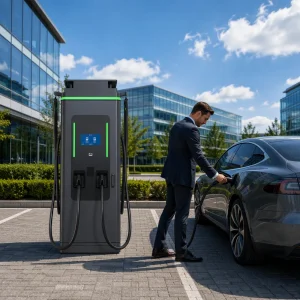
Engineered for extreme performance, thermal intelligence, and universal interoperability with global standards including CCS1, CCS2, CHAdeMO, GBT, and NACS.
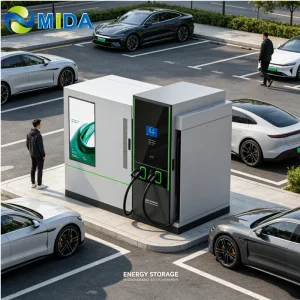
Max Output Power Capacity
CCS2 Liquid Cooled Cable Output
Power Conversion Efficiency
Compliant Plug & Charge
Shanghai Mida Cable Group Ltd. serves as a vanguard in the global electric vehicle infrastructure space. Operating through specialized subsidiaries—Shanghai Mida EV Power Co., Ltd., Shenzhen Mida EV Power Co., Ltd., and Shanghai Mida New Energy Co., Ltd.—we control the complete industrial stack. From ultra-flexible high-power cabling to complex bidirectional silicon-carbide (SiC) power modules, MIDA delivers integrated charging ecosystems engineered for unparalleled uptime.
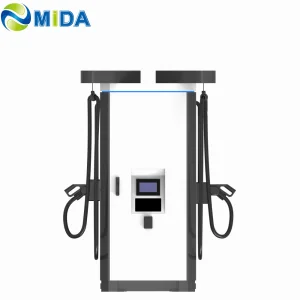
Our cable manufacturing line develops highly resilient EV charging cables, including 16A–80A J1772, 16A–63A IEC 62196-2 Type 2, and high-performance DC fast charging cables supporting CCS1 (80A–500A), CCS2 (125A–1000A), CHAdeMO (125A–300A), GB/T (200A–1000A), and NACS connectors (250A–600A). Through MIDA EV Power and MIDA New Energy, we provide charging stations from 3.6kW up to 1440kW split-architecture configurations, alongside high-density 20kW–125kW power modules.
Developing next-gen high-power charging technology up to 1500kW utilizing MCS connectors. Designed for heavy-duty commercial fleets and electric aviation, featuring active liquid-cooling systems and real-time thermal telemetry to maintain peak performance.
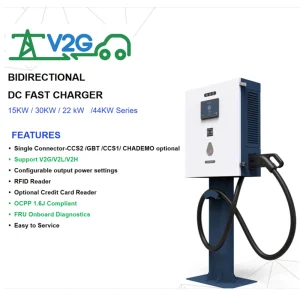
Pioneering vehicle-to-grid (V2G) interfaces utilizing our 20kW-45kW active rectification modules. By supporting ISO 15118-20, our systems enable EVs to act as distributed energy resources (DERs), stabilizing municipal grids during peak loads.
Migrating to Silicon Carbide (SiC) semiconductor matrices within our 30kW-125kW power modules. This transition achieves peak power conversion efficiencies exceeding 96.5%, dramatically reducing thermal waste and system footprint.
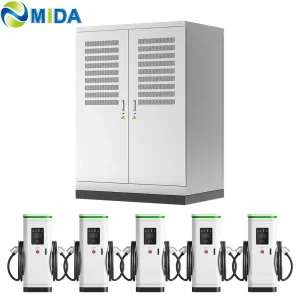
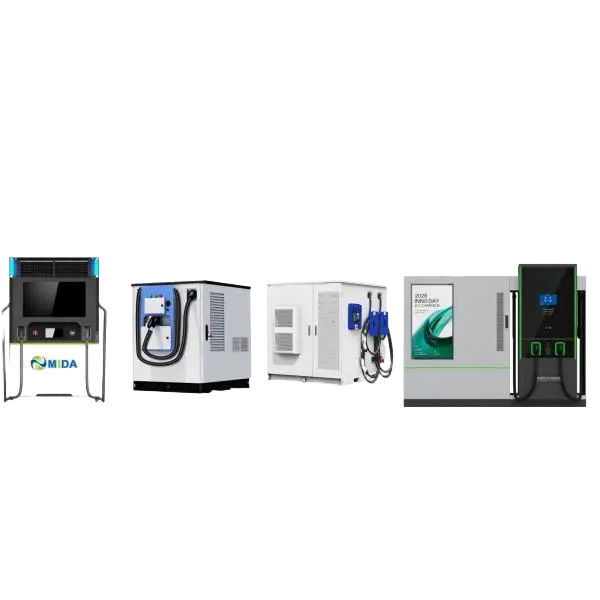
As EV adoption expands globally, grid integration poses the single largest bottleneck to rapid scaling. MIDA Group mitigates this through dynamic power sharing, integrated battery energy storage systems (BESS), and smart scheduling algorithms (OCPP 1.6J / OCPP 2.0.1). By utilizing microgrid topologies, we allow high-capacity DC fast charging stations to deploy in locations with constrained grid connections. Our 2MWH energy storage solutions work in tandem with 960kw chargers to buffer power demand, shaving peaks and providing grid stability.
MIDA Group operates fully integrated smart manufacturing centers in Shanghai and Shenzhen. Operating under strict Industry 4.0 guidelines, our facilities utilize automated assembly lines, robotic optical testing systems (AOI), and continuous thermal chambers to simulate extreme environments. Our vertical integration strategy—controlling the assembly of EV cables, copper machining, liquid cooling module manufacturing, and system integration—insulates global supply lines from volatility, ensuring stable production and quick lead times.
A complete breakdown of our industrial-grade components, charging stations, and energy storage systems.
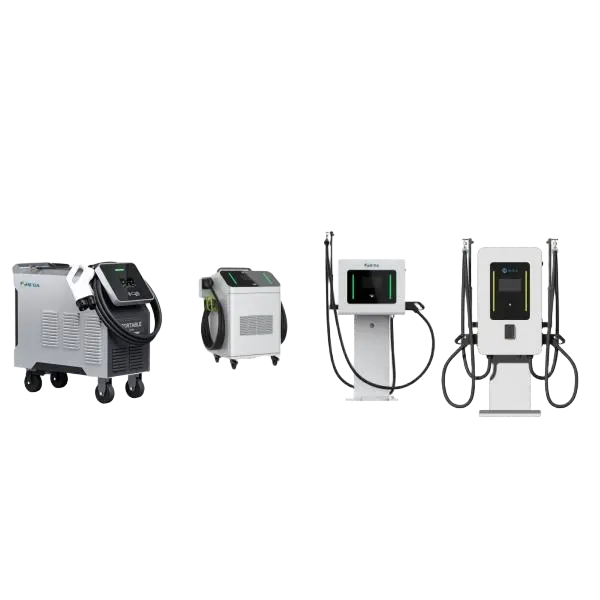
Residential & Commercial
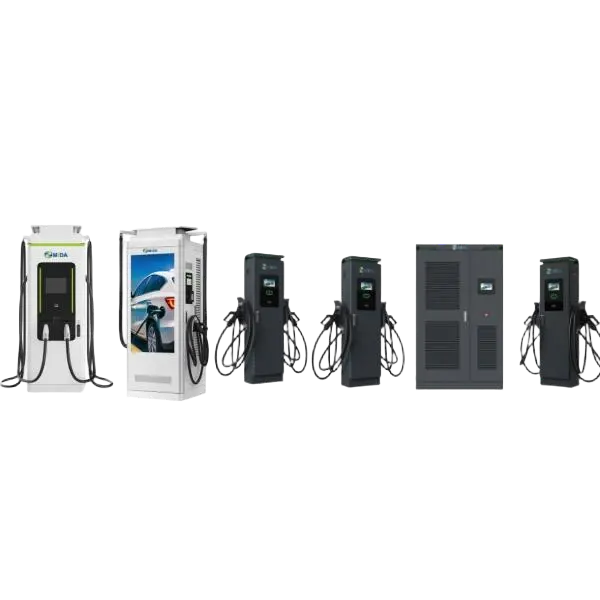
High Power Distribution
Grid-Tethered Storage
Core Conversion Units
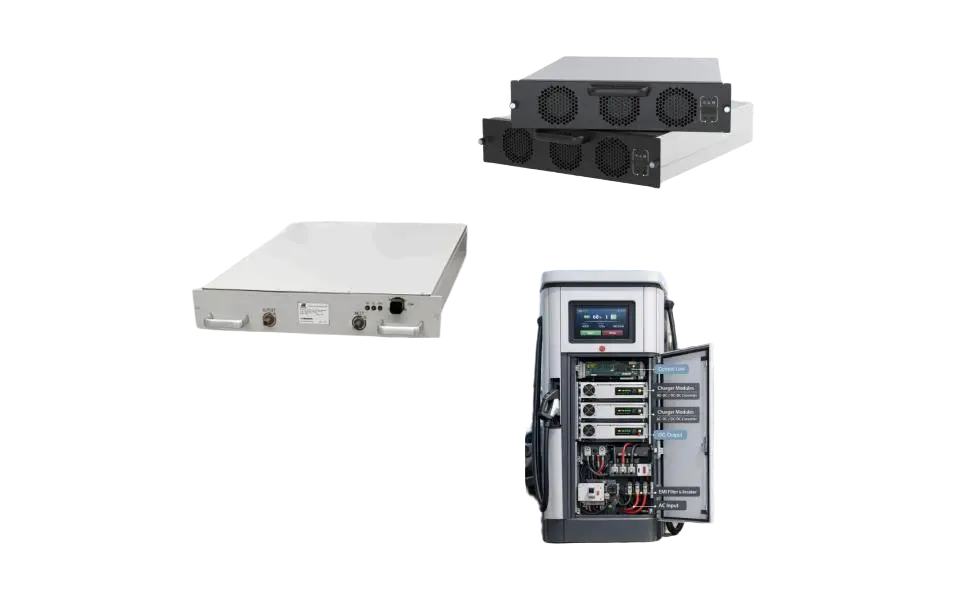
Every module and cable is designed to withstand the highest electrical and environmental stressors.
Our core converters are designed around efficiency, modularity, and easy hot-swap maintenance. These critical components are built with high reliability for continuously operated stations:
MIDA cables and connectors feature exceptional conductivity and low contact resistance, reducing thermal generation under high-amperage loads:
Operating charging networks on a global scale requires absolute alignment with local regulatory grids. MIDA Group ensures that all infrastructure hardware undergoes extensive third-party laboratory evaluations. Our charging stations carry TUV, CE, CB, RoHS, and local grid certifications, ensuring smooth compliance approvals with national power grids.
Furthermore, our systems support advanced electrical safety topologies: Residual Current Devices (RCD Type B / Type A + DC 6mA), Over/Under-voltage, Short Circuit, Over-temperature protection, and surge protection up to 6kV. Communication protocols remain fully aligned with international standards: DIN 70121, ISO 15118 (Plug & Charge), and OCPP integration for automated billing and remote monitoring interfaces.
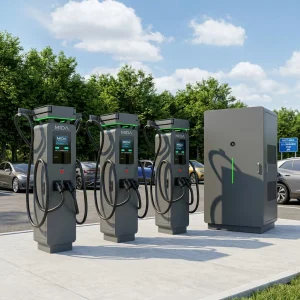
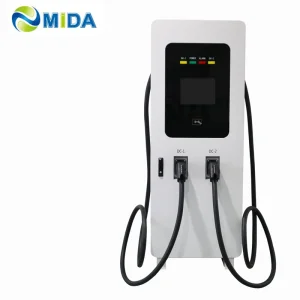
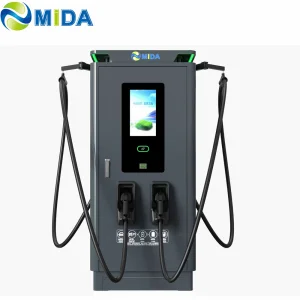
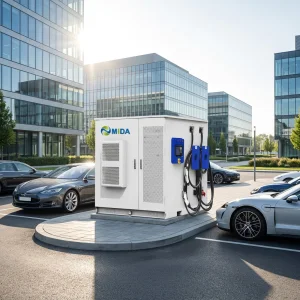
High-durability configurations built for public hubs, highway charging corridors, and commercial depot operations.

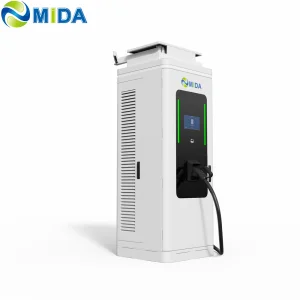
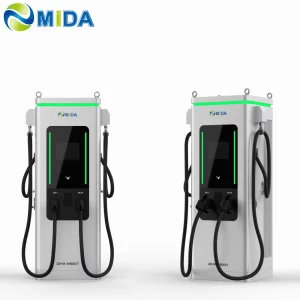
Structuring strategic relationships, OEM/ODM customization, and bulk fulfillment logistics for multinational clients.
We work directly with engineering procurement teams to align custom cable lengths, output power curves, cooling methodologies, and software interfaces with local tender requirements.
MIDA provides full OEM/ODM branding flexibility. From housing geometry modifications and localized paint textures to personalized screen GUIs, our industrial designs integrate with your brand.
Leveraging deep industrial partnerships in Shenzhen and Shanghai ports, we guarantee scheduled delivery batches, secure container packing, and full marine transport insurance options.
Updates from the frontier of high-power fleet systems and overhead rapid transit electrification.
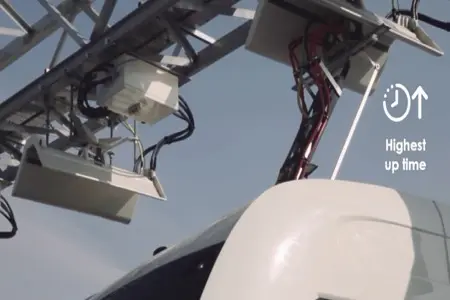
In contrast to classic plug-in charging systems, e-bus pantographs offer high power automated connections ideal for municipal public transport grids. They reduce dynamic manual labor, optimize depot utilization, and allow high-power rapid charging at route terminuses.
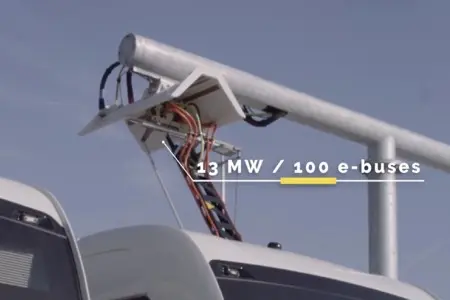
Charging time depends on the vehicle's battery pack capacity and the station's configuration. MIDA's advanced megawatt-range pantograph stations deliver quick charge turnarounds, replenishing a significant percentage of bus battery life in 5 to 15 minutes.
Installing a “Pantograph Up” system requires careful alignment of high-voltage wiring, structural steel columns, communication antennas, and secure pavement foundations. Discover the step-by-step civil engineering guidelines.

Get answers to critical technical questions regarding compatibility, manufacturing, and support.