China 30kW EV Charging Module Manufacturers & Factories

Empowering the Global Infrastructure Migration to High-Efficiency, Ultra-Wide Voltage Range Power Conversion Topologies

Featured Direct Fast Charging Products

Engineered with high-density power architectures, built to withstand extreme environmental parameters.
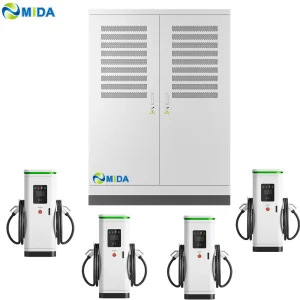
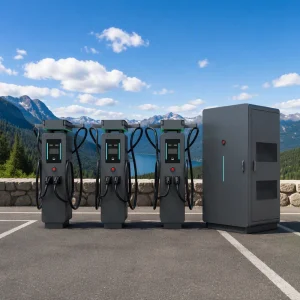
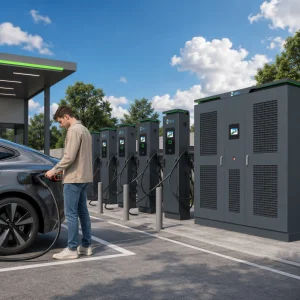
Best DC Fast Charger 480kW 720kw Split Flexible Charging Stack

Best DC Fast Charger 480kW 720kw Split Flexible Charging Stack Urban Public Charging Stations Suppliers, Factories

View Details
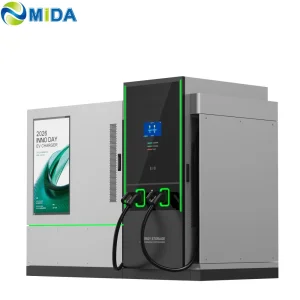
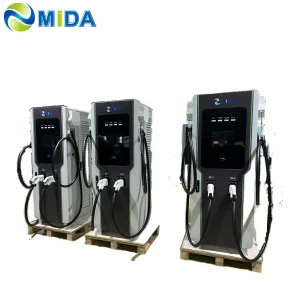
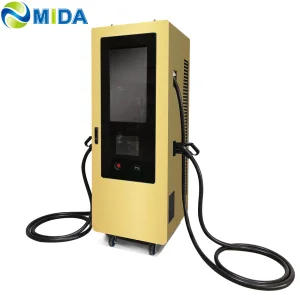
Best China Factory 120KW 180kW 240kw Fast EV Charger

Best China Factory 120KW 180kW 240kw Fast EV Charger Advertising Charging Station Suppliers, Factory

View Details
Best 150kW 180kW 200kW DC Charging Station

Best 150kW 180kW 200kW DC Charging Station Ultra Fast Charger Piles Manufacturers, Suppliers

View Details
China DC Split EV Charger 600kW 720kW 800kW

China DC Split EV Charger 600kW 720kW 800kW Dispenser DC Charging Station Stack Manufacturer, Supplier

View Details
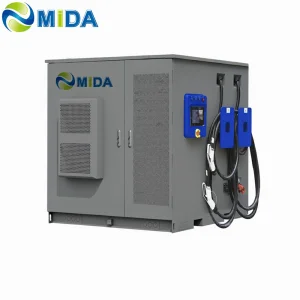
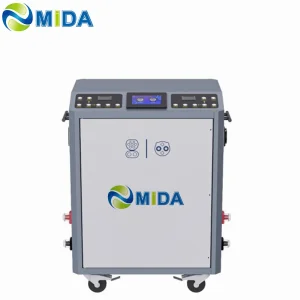
China 120kwh BESS Charger

China 120kwh 60kw CCS2 GBT BESS Charger Energy Storage Charging Station Manufacturer, Supplier

View Details
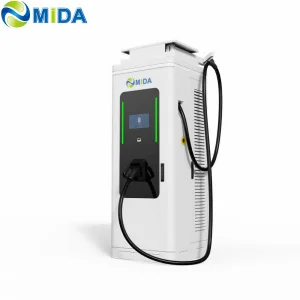
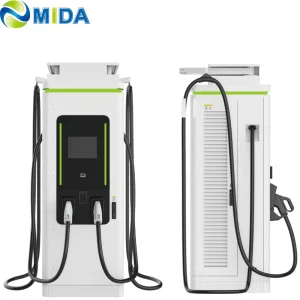
China DC Fast Charger 40KW 60KW 80KW

China DC Fast Charger 40KW 60KW 80KW Pedestal Mount EV Charger Station Manufacturers, Suppliers

View Details
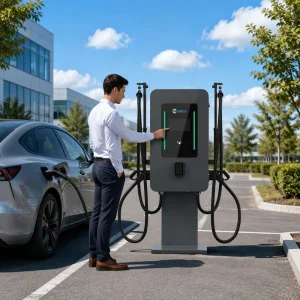
China OCPP 2.0.1 Compliant 160kW 180kW 240kW 300kW

China OCPP 2.0.1 Compliant 160kW 180kW 240kW 300kW DC Fast Charger Station With Advertising System Supplier, Suppliers

View Details
Best 2MWH 960kw BESS Charging Station

Best 2MWH 960kw BESS Charging Station Megawatt EV Charger Solar Battery Storage System Manufacturers, Factory

View Details

Understanding the Strategic Value of 30kW EV Charging Modules

The modular engine behind modern DC fast chargers, translating grid AC voltage into highly stable, fast-acting DC electricity for next-gen transportation.

What is a 30kW EV Charging Module?

At its core, a 30kW EV Charging Module is a high-frequency, high-density switching mode power supply (SMPS) designed explicitly for electric vehicle DC charging infrastructure. It performs the vital function of converting incoming alternating current (AC) from the grid into regulated, clean, high-power direct current (DC) that directly replenishes the battery packs of electric vehicles.

The 30kW variant is universally considered the sweet spot for modern charging stack assembly. Its output range is highly versatile, typically spanning from 150V DC to 1000V DC. This ensures compatibility with both standard passenger vehicles operating on a 400V electrical architecture, and advanced electric sedans, commercial buses, and heavy trucks operating on modern 800V-1000V platforms. By configuring multiple 30kW units in parallel, charger manufacturers can seamlessly scale a charger's capacity from 60kW up to 360kW, 720kW, or more.

≥96.5%
Peak Efficiency
150V-1000V
Ultra-Wide Output Range
≤±0.5%
Steady Voltage Accuracy
>500k Hrs
Calculated MTBF

Why Source 30kW EV Charging Modules from China Factories?

Decades of industrial scaling, complete supply chain ownership, and aggressive R&D investments yield unmatched performance-to-cost metrics.

As the global race towards net-zero carbon accelerates, sourcing reliable and cost-effective power modules has become a key competitive differentiator for EVSE (Electric Vehicle Supply Equipment) manufacturers. China's manufacturing ecosystem provides distinctive structural advantages that set it apart globally:

  • Integrated Silicon Carbide (SiC) and IGBT Supply Chain: Chinese manufacturers have direct, localized partnerships with major semiconductor fabricators. This guarantees steady integration of cutting-edge Silicon Carbide (SiC) MOSFETs, enhancing thermal performance and switching efficiency while minimizing lead times.
  • Unrivaled Scale Economies: Driven by the largest domestic electric vehicle market in the world, Chinese factories produce millions of power modules annually. This massive production scale drives down the unit cost of critical components like high-frequency copper transformers, custom heat sinks, and advanced microcontrollers.
  • Strict Quality Control (IATF 16949): Tier-1 Chinese manufacturers align their assembly processes with automotive-grade quality standards. Factories are equipped with automated optical inspection (AOI), environmental burn-in testing chambers, and full-load validation processes to ensure that each shipped module achieves long-term field reliability.
  • Global Certification Protocols: Leading factories export modules that comply with CE (LVD, EMC), UL, TUV, KC, and FCC requirements. This simplifies the import and compliance engineering phase for operators setting up charging hubs across Europe, North America, and the Asia-Pacific.

Corporate Profile: MIDA Group

A world-class engineering conglomerate driving the deployment of global EV infrastructure.

WELCOME TO MIDA GROUP

Shanghai Mida Cable Group Ltd. operates through its wholly owned subsidiaries: Shanghai Mida EV Power Co., Ltd., Shenzhen Mida EV Power Co., Ltd., and Shanghai Mida New Energy Co., Ltd.

Mida Cable manufactures a comprehensive range of EV charging cables, including 16A–80A J1772 cables, 16A–63A IEC 62196-2 Type 2 cables, and DC fast charging cables: CCS1 (80A–500A), CCS2 (125A–1000A), CHAdeMO (125A–300A), GBT (200A–1000A), and NACS connectors (250A–600A).

MIDA EV Power produces a full lineup of EV charging stations, such as 7kW–50kW mobile chargers, 3.6kW–7.2kW portable DC chargers, 360kW–1440kW split-type DC fast chargers, 20kW–50kW wall-mounted DC chargers, and 60kW–480kW floor-standing DC fast charging stations.

MIDA New Energy specializes in EV charger power modules, offering 20kW–60kW standard modules, 40kW–125kW liquid-cooled modules, 30kW–62.5kW bidirectional modules, and 20kW–45kW V2G charging modules.

Mida Group Facility Overview

Main Product Lines & Tech Specs

Explore our engineering portfolio built to supply power conversion and high-voltage distribution components.

EV Charging Power Module

High efficiency modules for DC conversion
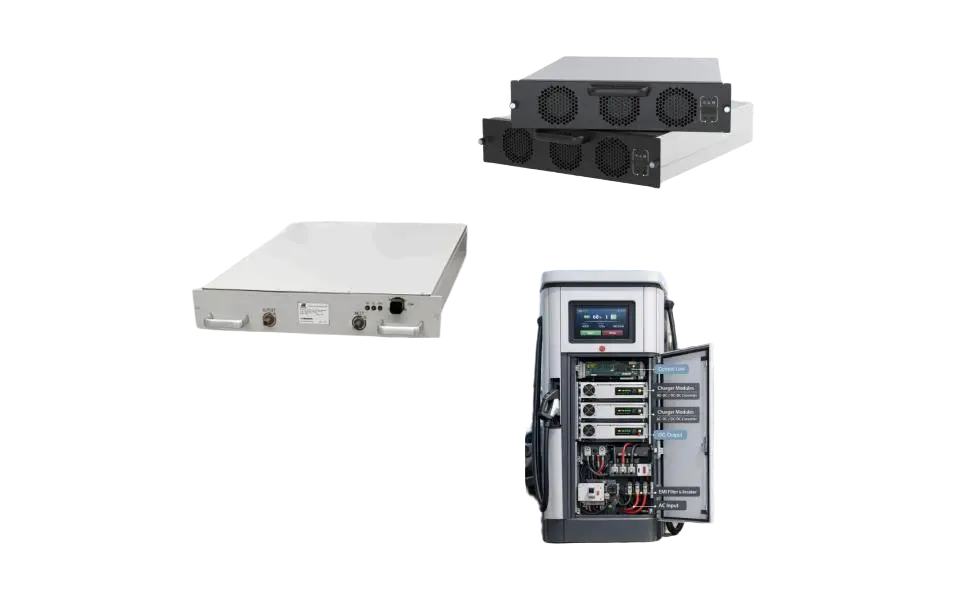
EV Charging Power Module
  • 30kW 40kW 50kW 60kW 80kW AC DC EV Charger Module
  • 30kW 40kW 50kW 60kW DC DC EV Charger Module
  • 40kW 60kW 75kW 125kW Liquid Cooled Power Module
  • 20kW 22kW 30kW 40kW 45kW V2G Power Module
  • 30kW 40kW 50kW 60kW MPPT Power Module
  • 20kW 50kW 62.5kW Bidirectional AC DC Power Module

DC Charging Connector & Cooling

Robust plug configurations & thermal systems
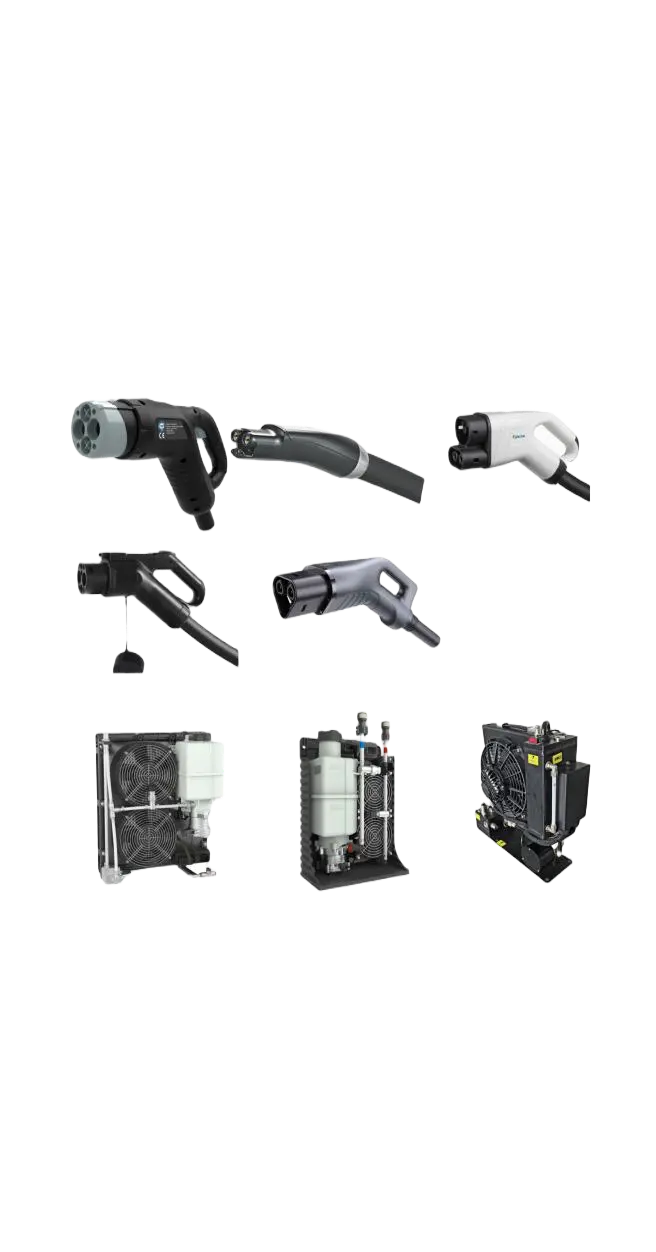
DC Charging Connector & Cooling Unit
  • 500A 600A CCS1 & CCS2 & GBT Connector
  • 125A 250A 300A 350A NACS & CHAdeMO Connector
  • 1500A MCS Connector & CHAOJI Connector
  • 3.5kW 4.5kW 6kW 9kW Integrated Liquid Cooling Unit
  • 2.4kW 3.5kW Split Type Cooling Unit
  • 25kW ~72kW Cooling Unit for HPC Charging

DC Fast Charger Station

Ready-to-deploy charging piles and stacks
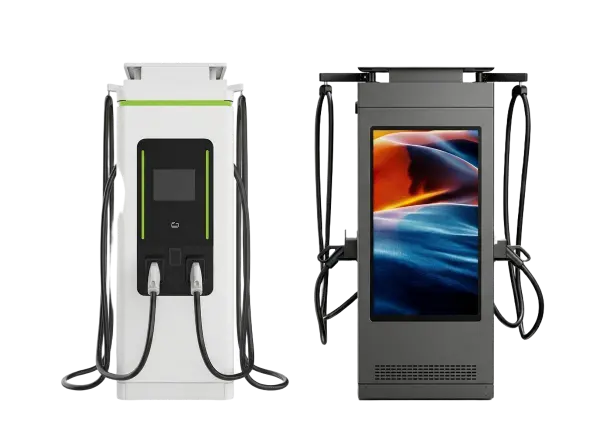
DC Fast Charger Station
  • 7kW~ 60kW Mobile DC Charging Station
  • 20kW ~80kW Wall Mounted DC Charging Station
  • 60kW ~480kW Floor Mounted Charging Station
  • 60kW~240kW Advertising Charging Station
  • 600kW ~1080kW Liquid Cooled Charging Station
  • 360kW ~ 1680kW Split Type DC Charging Station

Energy Storage Charging Station

Integrated microgrid BESS energy solutions
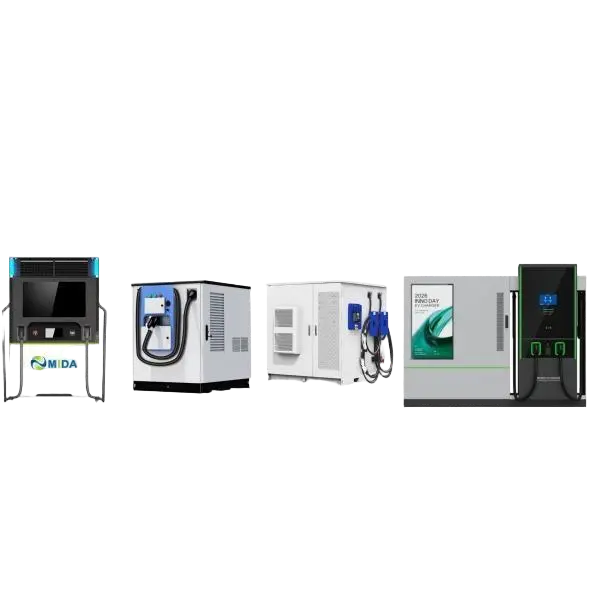
Energy Storage Charging Station
  • 15kW~480kW Mobile ESS Charging Station
  • 60kW ~ 400kW Integrated ESS Charging Piles
  • 65kWh~200kWh Emergency Rescue Charging Station
  • 165kwh Automatic Charging Robot
  • 800kwh~2000kwh Solar Energy Charging System

Key Industry Megatrends (2025–2030)

Where power engineering is heading: high frequency, high density, and modular versatility.

1. Transition from 30kW to High-Density 40kW and 50kW Form Factors

While the 30kW EV charging module remains the global workhorse, the market is experiencing a transition toward 40kW and 50kW modules. Importantly, leading manufacturers maintain the same outer physical chassis dimensions to facilitate backwards-compatible upgrades. This dimensional standardization allows charge point operators to swap out 30kW modules and upgrade existing chassis to 40kW or 50kW without modifying internal cabinet busbars or thermal ventilation pathways.

2. The Rise of Bidirectional (V2G) & Bidirectional AC-DC Topologies

Grid stabilization is becoming a critical priority as regional energy infrastructure transitions to renewable sources. Modern EV charging projects increasingly specify bidirectional power modules. Bidirectional modules allow EVs to act as decentralized battery storage networks (Vehicle-to-Grid, or V2G). Rather than only converting AC to DC, bidirectional power modules can invert DC from the vehicle battery back to the AC grid, enabling operators to arbitrate power, smooth out peak loads, and unlock new revenue streams.

3. Air-Cooling vs. Liquid-Cooled Power Modules

In dusty, high-humidity, or saline-rich coastal environments, traditional forced-air-cooled modules require regular filter maintenance to prevent dust accumulation on internal switching components. To address this, high-reliability infrastructure projects are shifting towards liquid-cooled modules. By circulating coolant through a sealed heat exchanger, the electronics remain fully isolated (IP65 rated), extending the operational lifespan and eliminating environmental failures.

Application Scenarios & Regional Engineering Architectures

Tailored power integration solutions for diversified EV infrastructure deployment.

Urban Public Hyperfast Charging Hubs

In dense municipal areas, passenger EV charge times must be minimized to maximize throughput. Modern public hubs integrate 360kW to 720kW split charging stacks. By packing twelve to twenty-four 30kW modules into a central power cabinet and dynamically routing power allocation, a single station can charge multiple vehicles simultaneously. During low occupancy, the stack can deliver a full 360kW+ blast to a single 800V-enabled vehicle, replenishing its battery in under 15 minutes.

Commercial Fleet Depots (Buses & Logistics Vehicles)

Logistics trucks and municipal electric buses operate on predictable schedules but require massive amounts of energy. Fleet charging depots typically utilize overhead pantograph chargers or heavy-duty plug dispensers powered by robust modular banks. Because depots operate mostly overnight, smart charging controller software can optimize energy consumption by cycling the 30kW modules at their highest efficiency curves, preventing utility peak demand penalties.

Solar-Storage-Charging Microgrids (BESS Integration)

For remote areas with constrained grid capacity, the installation of high-power DC chargers is often impossible without expensive substation upgrades. The solution is integrating solar arrays and Battery Energy Storage Systems (BESS) directly with modular DC chargers. Here, bidirectional 30kW DC-DC power modules transfer energy directly from the station's stationary batteries to the vehicle, bypassing the AC grid entirely to prevent grid thermal strain.

Technical Q&A / FAQ

Critical engineering insights for procurement specialists and design engineers.

Q1: What are the key protection mechanisms built into a high-quality 30kW EV charging module?
A: Premium modules feature comprehensive, automotive-grade electrical protection arrays. This includes Over-Voltage Protection (OVP), Under-Voltage Protection (UVP), Over-Current Protection (OCP), Short Circuit Protection (SCP), Over-Temperature Protection (OTP), and phase-loss detection. Many also incorporate integrated reverse-current prevention diodes to protect internal electronics from sudden back-EMF from vehicle batteries.
Q2: How does the wide output voltage range (150V - 1000V) affect efficiency across different vehicles?
A: Modern modular switchers utilize advanced LLC resonant converters or phase-shifted full-bridge topologies to maintain high efficiency across their entire operating envelope. Even when stepped down to charge a 400V battery pack, the module dynamically adjusts its switching frequency to limit power loss, keeping conversion efficiency above 95.5%, whereas it peaks at 96.5% under native high-voltage configurations.
Q3: How do manufacturers prevent harmonic pollution back into the local grid?
A: Leading China factories implement Active Power Factor Correction (APFC) circuits. By aligning the voltage and current waveforms, these modules achieve a Power Factor (PF) of ≥ 0.99 and keep Total Harmonic Distortion (THD) under 5% at full load, meeting stringent utility grid connection requirements globally.
Q4: Can modules from different manufacturers be combined inside the same charging cabinet?
A: Generally, mixing modules from different manufacturers within the same parallel group is not recommended. Each manufacturer utilizes proprietary CAN bus communication protocols, current sharing algorithms, and firmware control loops. For optimal system stability and load-sharing performance, the parallel module array should consist of identical modules from the same manufacturer.

Corporate & Technical News

Latest insights on electric bus charging infrastructure and modern pantograph deployments.

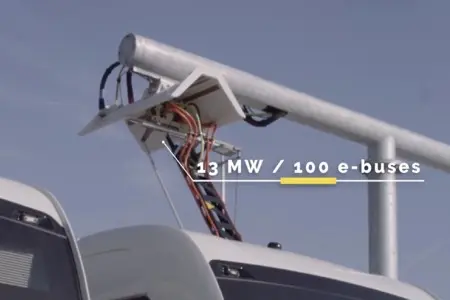
E-bus pantograph dome advantages

What are the advantages of an e-bus pantograph dome? In contrast to classic plug-in charging systems, e-bus pantograph systems optimize fleet turnaround speeds and minimize footprint.
26-07-12 View More
E-bus pantograph charging time

How long does it take to charge with an e-bus pantograph? The charging time depends on the battery capacity and the dynamic output of the modular charging stack powering the grid link.

26-07-12 View More
How to Install the Pantograph Up Charger System

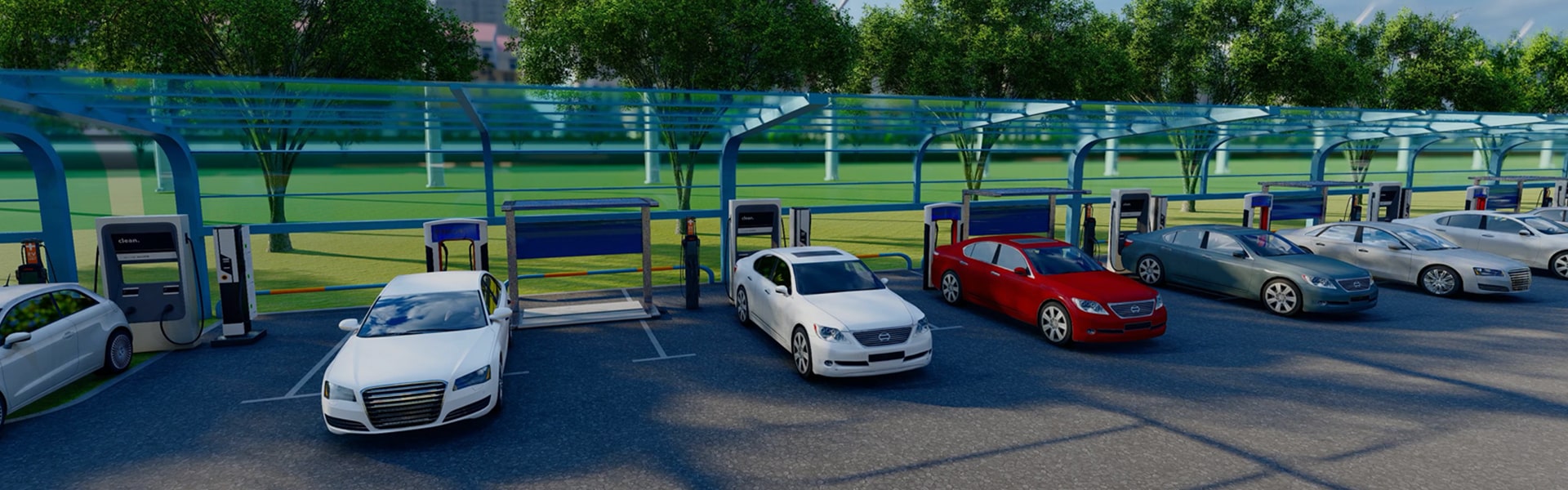
How to Install the Pantograph Up Charger System Dome for Electric Bus. Installing a "Pantograph Up" system requires rigorous high-voltage engineering, mechanical mounting, and precise control module setup.
26-07-12 View More
Mida Production Line Factory Floor

Additional Fast Charging & Support Equipment

Comprehensive component list including high-power liquid chargers and diagnostic tools.
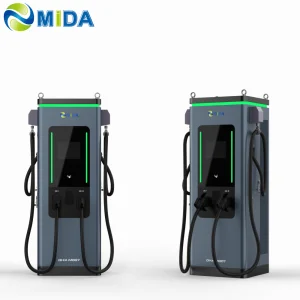
Best 120kW 160kW 180kW DC Fast Solar EV Charger

Best 120kW 160kW 180kW DC Fast Solar EV Charger Station OCPP1.6 CHAdeMO CCS Supplier, Factory

View Details
China 241kwh 120kw CCS CHAdeMO NACS BESS

China 241kwh 120kw CCS CHAdeMO NACS BESS Charging Station Energy Storage EV Charger Manufacturer, Factory

View Details
Best DC Wallbox CCS2 CHAdeMO

Best DC Wallbox CCS2 CHAdeMO 30kw 40kw 50kW Wall Mounted EV Charger Station Manufacturers, Suppliers

View Details
Best Liquid Cooled Ultra 360kw Charging Station

Best Liquid Cooled Ultra 360kw Charging Station RFID OCPP POS DC Fast Charger Station Factory, Factories

View Details
Best Liquid Cooled Split EV Charger

Best Liquid Cooled Split EV Charger 1000KW 1200KW DC Charging Piles Supercharger Stack Factory, Factories

View Details
China CCS1 CCS2 DC Charger Station Tester

China CCS1 CCS2 DC Charger Station Tester EV Charger Load Tester Supplier, Factory

View Details
China 400kW 625kwh BESS Charger

China 400kW 625kwh BESS Charger Station Mobile Charging Battery Energy Storage System Manufacturers, Suppliers

View Details
China Integrated DC Charger

China Integrated DC Charger 120kW 240kW 360kW 400kW Fast EV Charging Station Manufacturer, Factory

View Details