Premium high-performance charging systems designed for global network operators, commercial fleets, and public hubs.
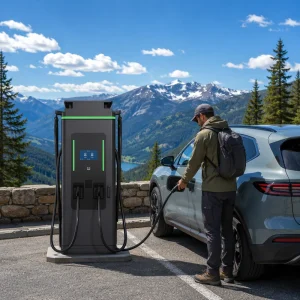
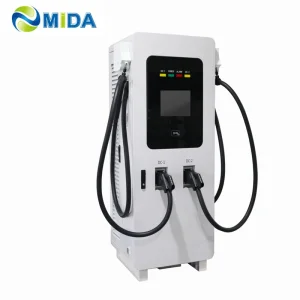
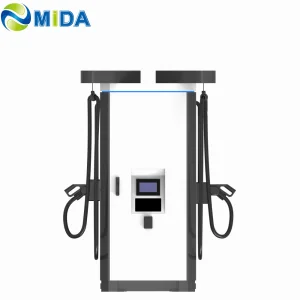
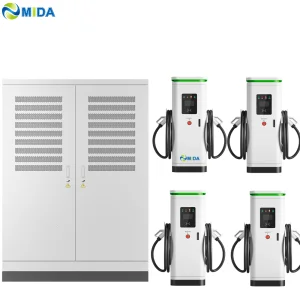
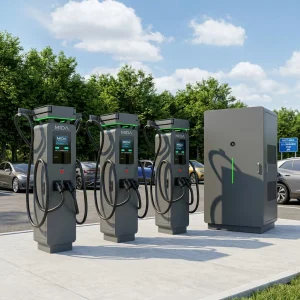
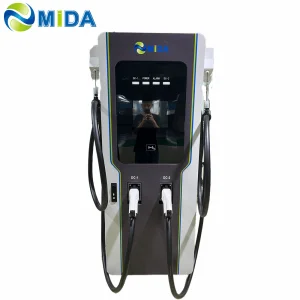
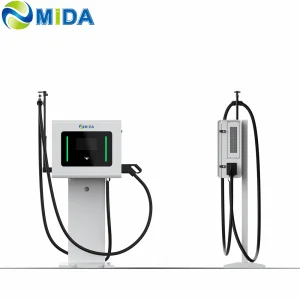
The transition toward electric mobility is no longer a localized phenomenon but a global commercial and industrial imperative. Fleet operators, transit networks, municipalities, and private enterprises are scaling up infrastructure to match the explosive adoption of electric light-duty, medium-duty, and heavy-duty transport. This paradigm shift requires highly standardized, reliable, and intelligent hardware capable of operating under diverse electrical architectures and environmental extremes.
In North America, funding mechanisms like the National Electric Vehicle Infrastructure (NEVI) formula program have established strict rules: chargers must comply with "Buy America" guidelines, utilize the newly standardized SAE J3400 (NACS) interface alongside legacy CCS1 connectors, and achieve an operational reliability of at least 97%. Grid integration requires factories to configure equipment with active power factor correction (PFC) and Total Harmonic Distortion (THD) under 5% to safeguard aging utility grid segments.
Europe is leading regulatory standards via the Alternative Fuels Infrastructure Regulation (AFIR). This mandate forces member states to deploy fast-charging pools every 60 kilometers along core TEN-T corridors. Crucially, the European market relies on CCS2 and IEC 62196 standards, requiring strict compliance with OCPP 2.0.1 for high-fidelity communication, localized Dynamic Load Balancing (DLB), and Plug & Charge (ISO 15118) capability. These measures ensure grid operators can execute remote grid curtailment during periods of peak load.
Explore our specialized business units engineered to deliver custom hardware configurations for global partners.
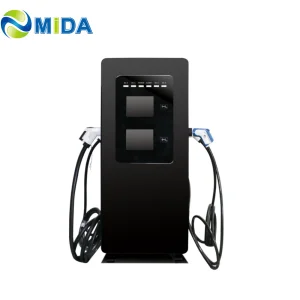
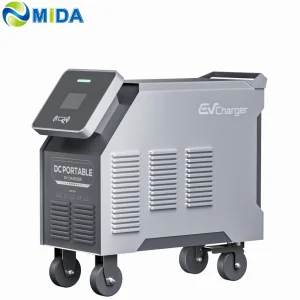
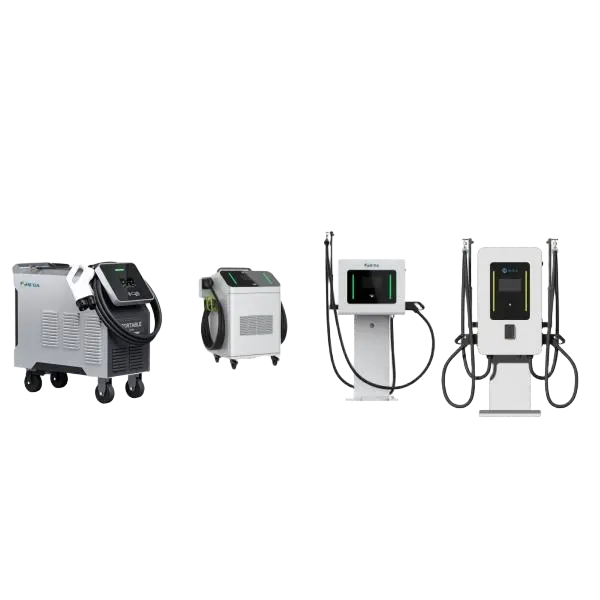
Wall-Mounted/Mobile EV Charger (7kW-80kW)
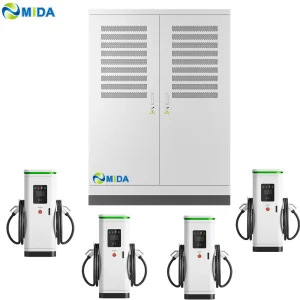
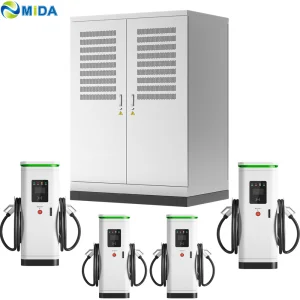
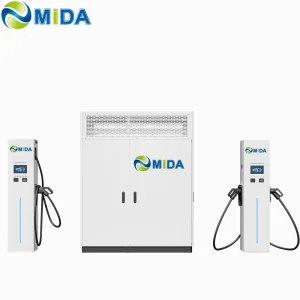
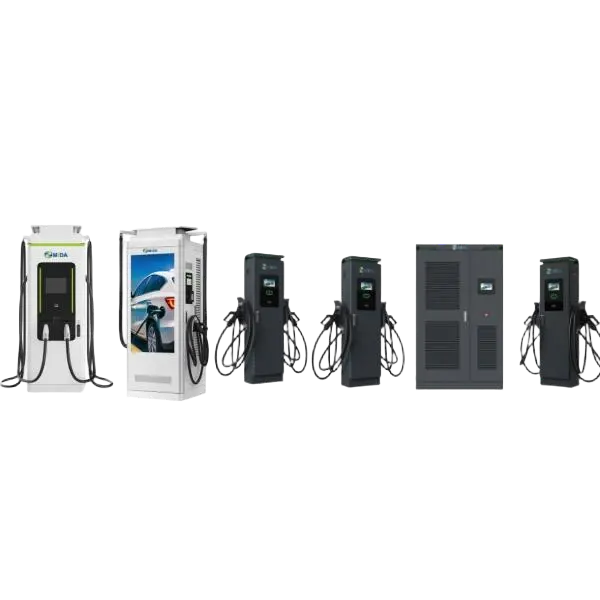
60kW-480kW & 360kW-1440kW Systems
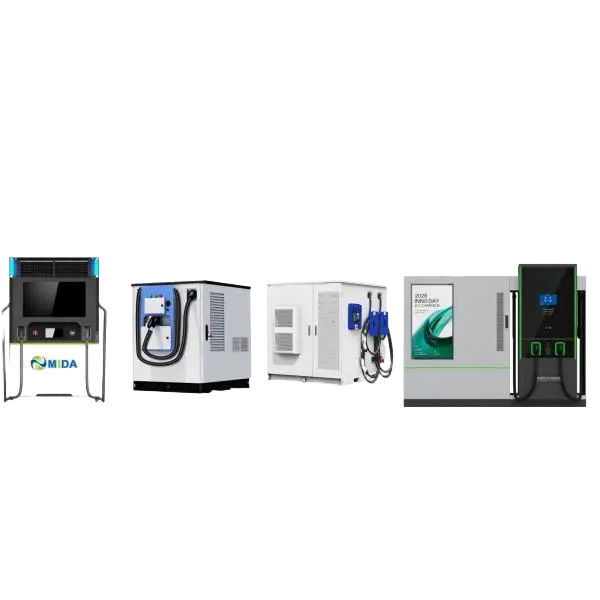
60kWh - 2MkWh Containerized Storage
Building high-power DC infrastructure requires a robust, agile, and mature supply chain. Chinese charging station manufacturing hubs, like Shanghai and Shenzhen, deliver superior cost efficiencies and design iteration speeds. This advantage is rooted in complete vertical integration, combining component manufacturing with advanced final assembly on the same assembly lines.
Unlike western integrators that purchase parts from multiple foreign third-party vendors, leading Chinese manufacturers construct their own power modules, high-frequency transformer coils, liquid-cooling loops, and cable assemblies. This in-house sourcing reduces manufacturing friction, eliminates assembly delays, and guarantees thermal-electrical compatibility at the design phase.
The core of any DC fast charger lies within its power module stack. China's mature semiconductor supply chain facilitates the integration of third-generation Silicon Carbide (SiC) MOSFET technology. These modules provide up to 96.5% peak energy efficiency, dropping heat loss by 30% compared to traditional Silicon IGBT modules. Consequently, operators enjoy a lower Total Cost of Ownership (TCO) through reduced ongoing cooling overheads and minimal degradation over thousands of charging cycles.
Production capacity at scale allows Chinese factories to fulfill multi-megawatt procurements within short lead times. Crucially, this output does not compromise international safety regulations. Tier-1 Chinese factories implement fully automated quality control processes, including computerized burn-in chambers, EMC testing zones, and environmental chambers to meet TUV, CE, UL, ETL, and PSE specifications. This testing ensures seamless deployments in extreme climates, from desert utility projects to Scandinavian transit depots.

Learn about our core product families to find the ideal hardware solution for your operational requirements.
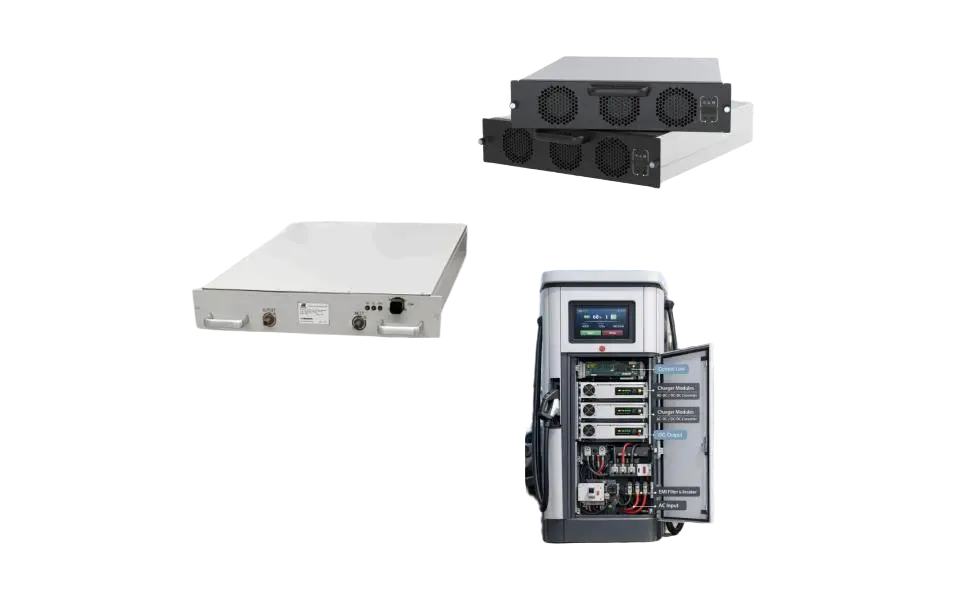
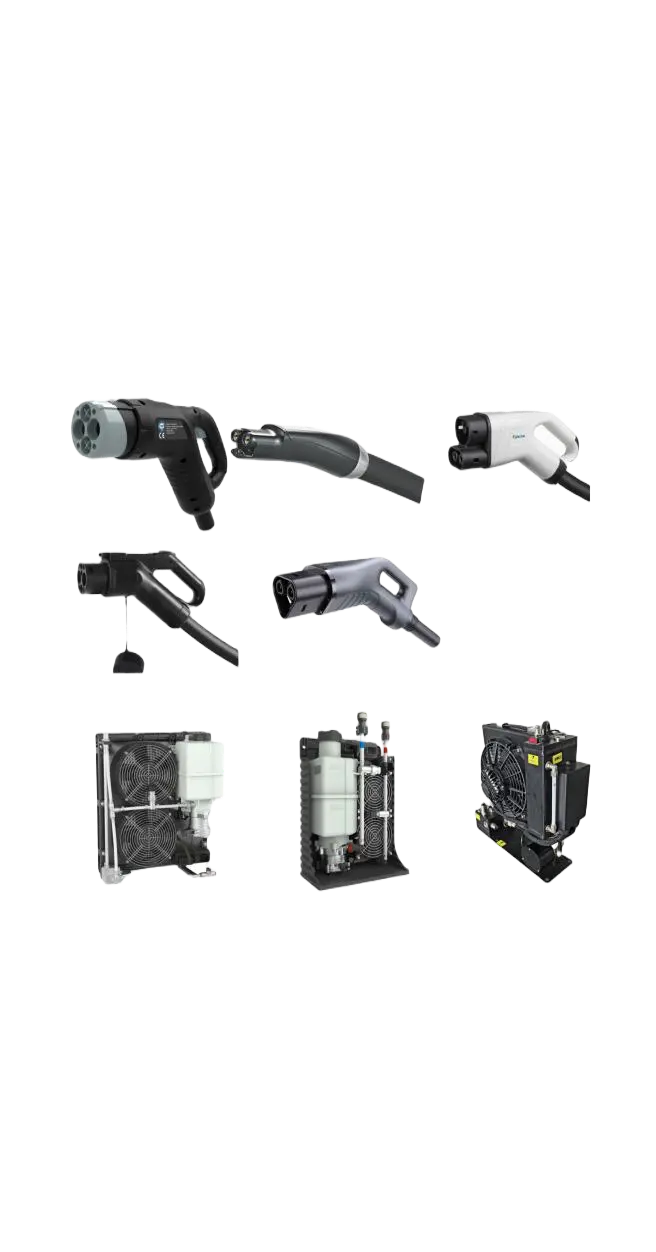
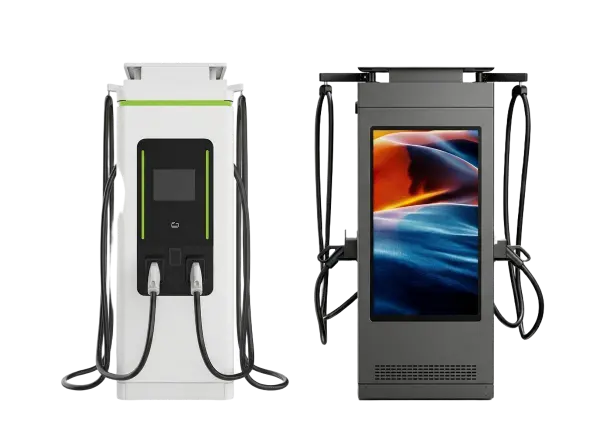
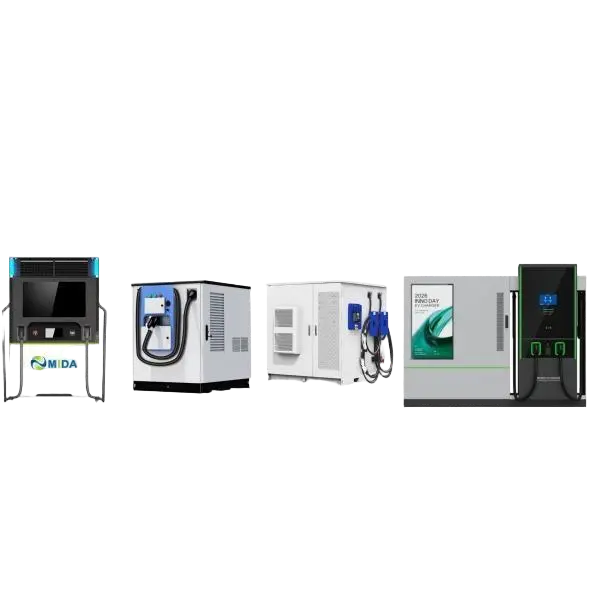
Different industrial sectors require distinct charging architectures. We engineering design our systems to optimize performance for specific commercial use cases.
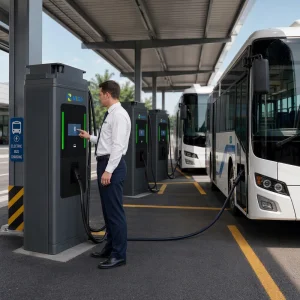
Municipal electric buses and long-haul logistics fleets demand continuous uptime and massive energy delivery. For these scenarios, depots leverage centralized, split-type charging topologies. In this configuration, high-power rectifiers reside in remote utility enclosures, while compact dispensers connect to vehicles. To automate depot processes, we integrate specialized "Pantograph Up" and "Pantograph Down" dome connection configurations. These roof-mounted systems charge city transit buses within short scheduled layovers using automated mechanical arms.
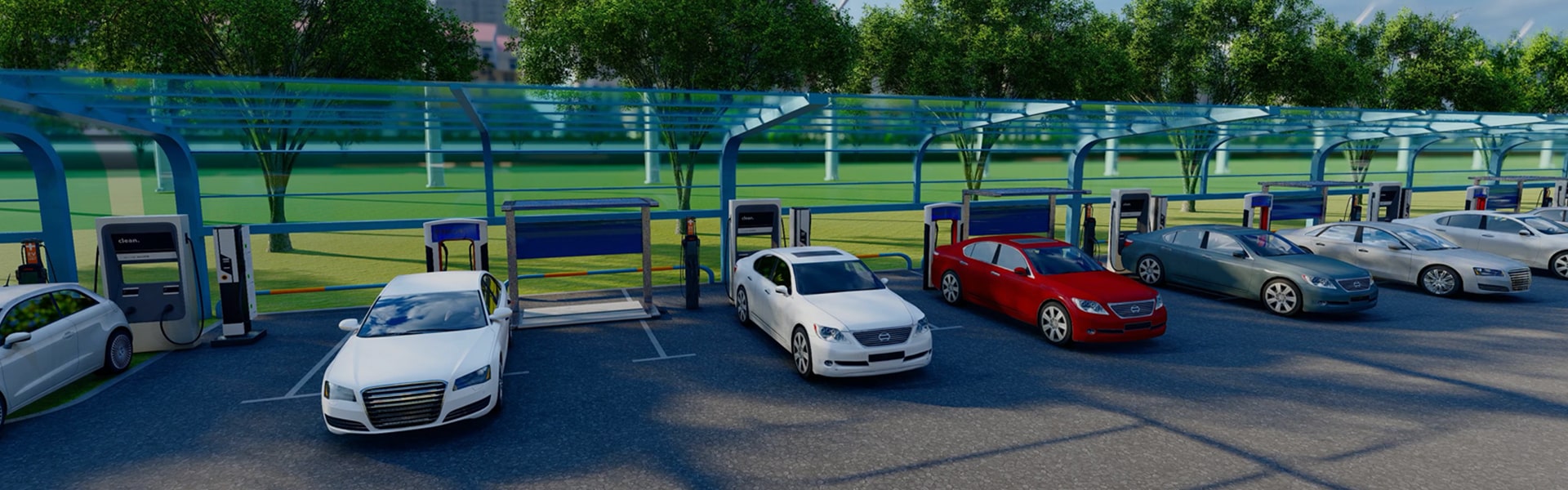
Public shopping facilities, offices, and multi-tenant housing developments require customer convenience and dynamic electrical safety. The primary challenge is avoiding building supply overloads during peak periods. Utilizing Dynamic Load Balancing (DLB), MIDA chargers actively monitor building current draw, realigning charging speeds across up to 32 nodes on a single subnet. Incorporating built-in display panels and integrated credit card readers simplifies POS transactions, generating passive revenue streams for commercial real estate owners.
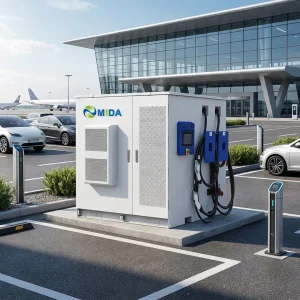
For locations with limited grid supply or long queues for utility transformer upgrades, Battery Energy Storage Systems (BESS) offer a viable alternative. Integrated systems combine 60kWh to 2MWh battery enclosures directly with DC fast dispensers. The BESS buffers power from the grid at off-peak rates, discharging it rapidly to support high-current fast charging when an EV connects. This configuration supports high-power vehicle charging in remote sites while mitigating high demand surcharges.
Get the latest technical analyses and product development updates from our engineering department.
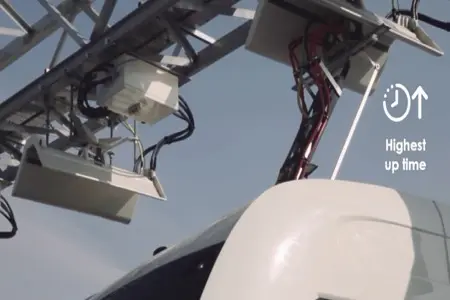
What are the advantages of an e-bus pantograph dome? In contrast to classic plug-in charging systems, e-bus pantograph domes provide rapid, high-voltage automatic connections for transit operators...
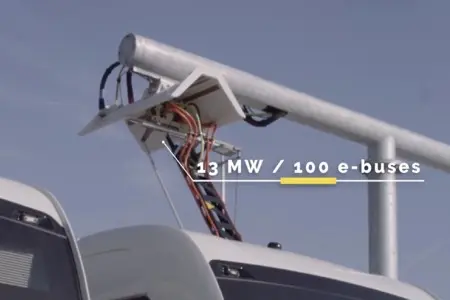
How long does it take to charge with an e-bus pantograph? The charging time depends on the battery capacity and the charging rate, typically achieving full status in under 15-30 minutes for urban operations...
How to Install the Pantograph Up Charger System Dome for Electric Bus. Installing a "Pantograph Up" system dome requires precise alignment, custom mechanical mount structures, and structural wind mitigation testing...
The EV infrastructure landscape is advancing rapidly, requiring manufacturers to continuously innovate. System designs must anticipate future demands to prevent early obsolescence.
Ultra-fast charging creates significant heat. At charging rates above 350kW, air cooling is insufficient for managing terminal heat. To address this, liquid-cooled dispensers use integrated chilling units to circulate coolant through the charging cable directly to the connector pins. This allows continuous operations at up to 600kW-1000kW without thermal throttling, maintaining safe contact temperatures for users.
EV fleets can act as mobile battery resources. Modern DC equipment increasingly utilizes bidirectional power conversion modules, enabling Vehicle-to-Grid (V2G) and Vehicle-to-Building (V2B) operations. In this setup, vehicles can discharge stored energy back to local buildings or the main utility grid during peak demand periods. This capability allows commercial operators to utilize fleet assets for peak shaving and grid stabilization.
Before selecting an industrial EV manufacturing partner, engineering teams should evaluate vendors against these critical parameters:
Get technical insights from our engineering and regulatory compliance teams.
OCPP 2.0.1 offers improved security, advanced device monitoring, and native support for ISO 15118 (Plug & Charge). It enables better transmission of diagnostics, simplifies load balancing configuration, and improves communication between the charging station and central management systems.
DLB monitors real-time building power draw. When building demand increases, the charging station automatically curtails charging output to avoid exceeding utility limits. Once building load decreases, charging speeds resume. This avoids the need for expensive grid connection upgrades.
Charging at 350kW+ creates significant resistive heat in the cable. To keep the cable lightweight and flexible, manufacturers circulate liquid coolant through it. This manages copper temperature, preventing thermal shutdowns and maintaining safe user contact temperatures.
For North America, stations must have UL 2202 and ETL safety certifications, along with FCC compliance. In Europe, CE marking and compliance with EN 61851 are required. Both regions are increasingly mandating MID-certified meters for accurate billing.
Yes. Battery Energy Storage Systems (BESS) function in island mode. When grid power is lost, the station can continue charging vehicles from energy stored in its battery bank, making it a reliable choice for emergency backup systems.
Pantograph systems automate fleet charging. By using roof-mounted connections, buses can charge at high power during short stops without driver interaction. This reduces depot labor costs and improves system safety.
SiC MOSFETs replace traditional Silicon IGBTs in power modules. They offer higher switching frequencies, lower thermal loss, and higher efficiency (up to 96.5%). This reduces operating costs and system size.
Standard product configurations ship within 4-6 weeks. For custom OEM/ODM orders involving cabinet modifications, unique connector layouts, or custom software integration, typical lead times range from 8-12 weeks.
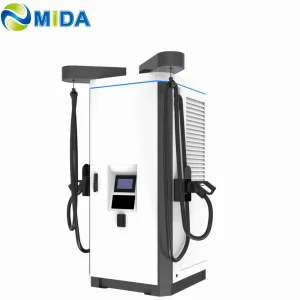
Explore our heavy-duty public charging equipment, battery-integrated solutions, and liquid-cooled ultra-chargers.