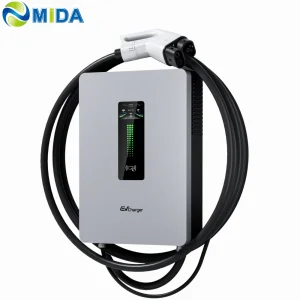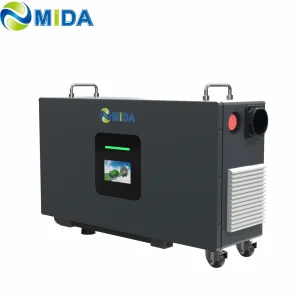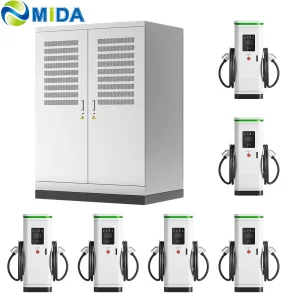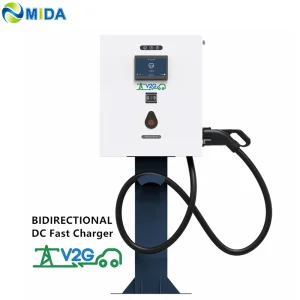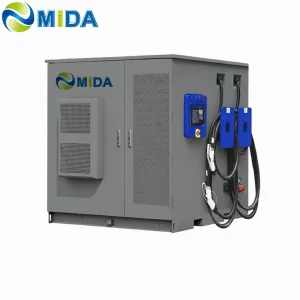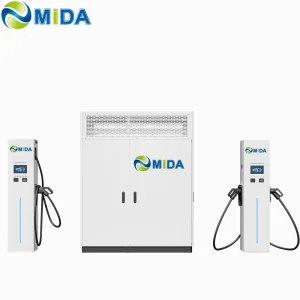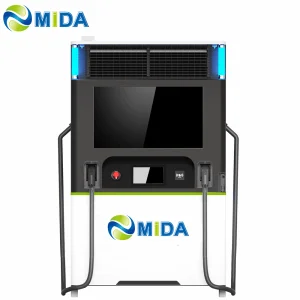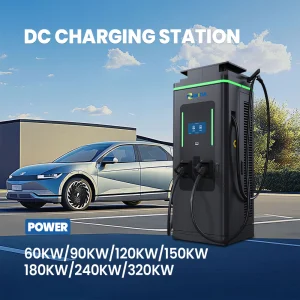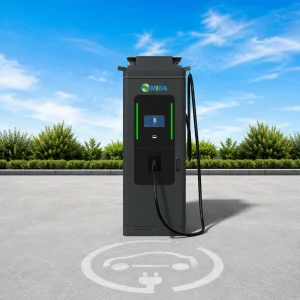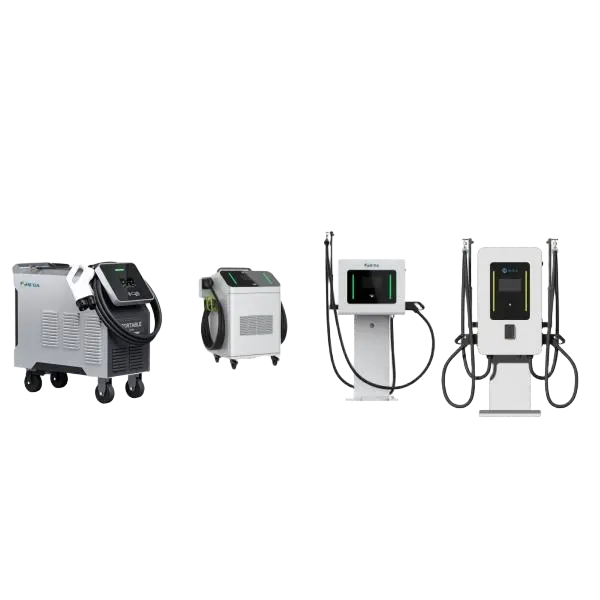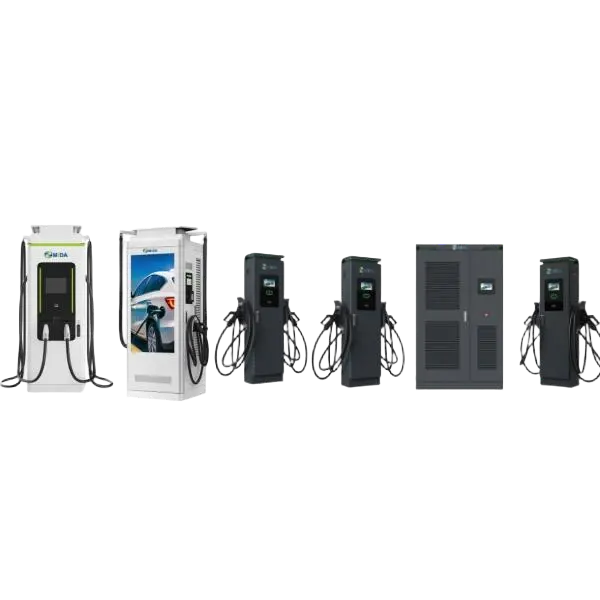
Select from our certified industrial and commercial fast chargers, spanning from portable DC hubs to ultra-fast 360kW/480kW liquid-cooled systems.
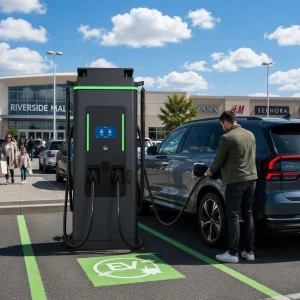
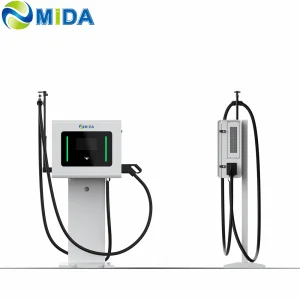
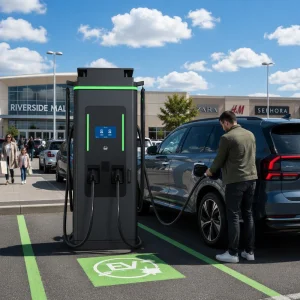
An authoritative breakdown of High-Power Charging (HPC) system architecture, optimization patterns, and grid coordination.
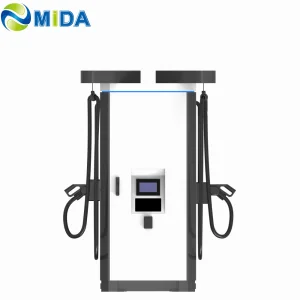
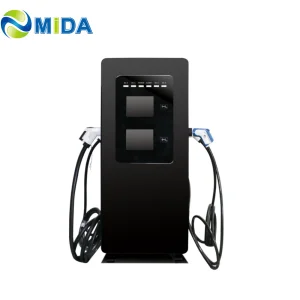
As electric vehicles (EVs) shift toward larger battery capacities and wider 800V architectures (such as Porsche's Taycan, Hyundai's E-GMP, and next-generation commercial trucks), standard 50kW and 150kW chargers no longer meet operator demand for rapid rotation. The 360kW DC Fast Charger has emerged as the definitive global benchmark for highway corridors, logistics hubs, and urban bus depots. By utilizing dynamic power distribution, a single 360kW cabinet can serve multiple vehicles concurrently or deliver extreme fast-charging to high-voltage electric trucks.
At the heart of any 360kW charger is its power conversion topology. Instead of monolithic structures, modern suppliers build these stations using stacked, hot-swappable 20kW, 30kW, 40kW, or 60kW power modules. In a 360kW matrix, nine 40kW modules or twelve 30kW modules work in parallel. This design offers crucial technical advantages:
Modern charging installations require smart network management. With OCPP 2.0.1 (Open Charge Point Protocol), operators secure advanced diagnostics, improved device configuration, and enhanced transaction security over standard OCPP 1.6J.
Simultaneously, compliance with ISO 15118 enables Plug & Charge, automatically verifying the vehicle's identity and billing details via digital certificates upon connector insertion. This level of automation streamlines fleet management, eliminates the need for physical RFID cards or mobile apps, and secures the transaction end-to-end.
Shanghai Mida Cable Group Ltd. operates through its wholly owned subsidiaries: Shanghai Mida EV Power Co., Ltd., Shenzhen Mida EV Power Co., Ltd., and Shanghai Mida New Energy Co., Ltd. We provide a fully integrated engineering approach, manufacturing everything from high-performance charging cables and connectors to sub-assembly power modules and utility-scale, split-type charging systems.

How vertically integrated manufacturing hubs deliver reliable performance, rapid scalability, and cost efficiency for international buyers.
China commands more than 60% of the world's EV charging station supply chain. By sourcing from a vertically integrated factory like MIDA, procurement managers secure significant strategic advantages over local distributors or domestic assembly-only operations.
Unlike assembly shops that purchase cables, PCBs, and connectors from disparate vendors, MIDA controls the production of every vital component. We design and manufacture our own CCS/NACS connectors, custom extrusion power cables, and EV power conversion modules. This horizontal integration prevents interoperability mismatches and ensures uniform quality control under ISO9001 and IATF 16949 standards.
By localizing component sourcing within a 50km industrial ecosystem in China, MIDA eliminates import duties on raw materials, lowers assembly costs, and passes the savings to global operators. A 360kW cabinet manufactured in China offers advanced dynamic load allocation, IP55 enclosure protection, and dual liquid-cooled ports at a fraction of the cost of European or North American counterparts.
Global deployments require regional adjustments. North American markets demand UL 2202 and NACS / CCS1 configurations; European markets require CE, TUV, EN 61851, and Type 2 compliance; Asian markets require CHAdeMO or GBT standards. Our engineering team can modify design topologies, incorporate local payment terminals (POS devices), and implement customized firmware skins inside short turnaround windows.
Explore our core product portfolios designed to meet diverse charging scenarios and infrastructure topologies.
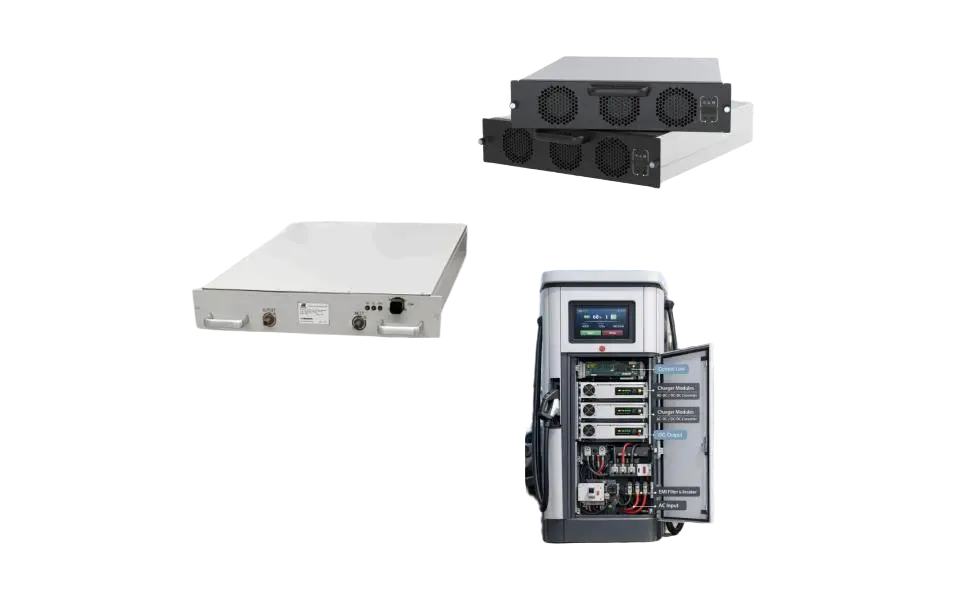
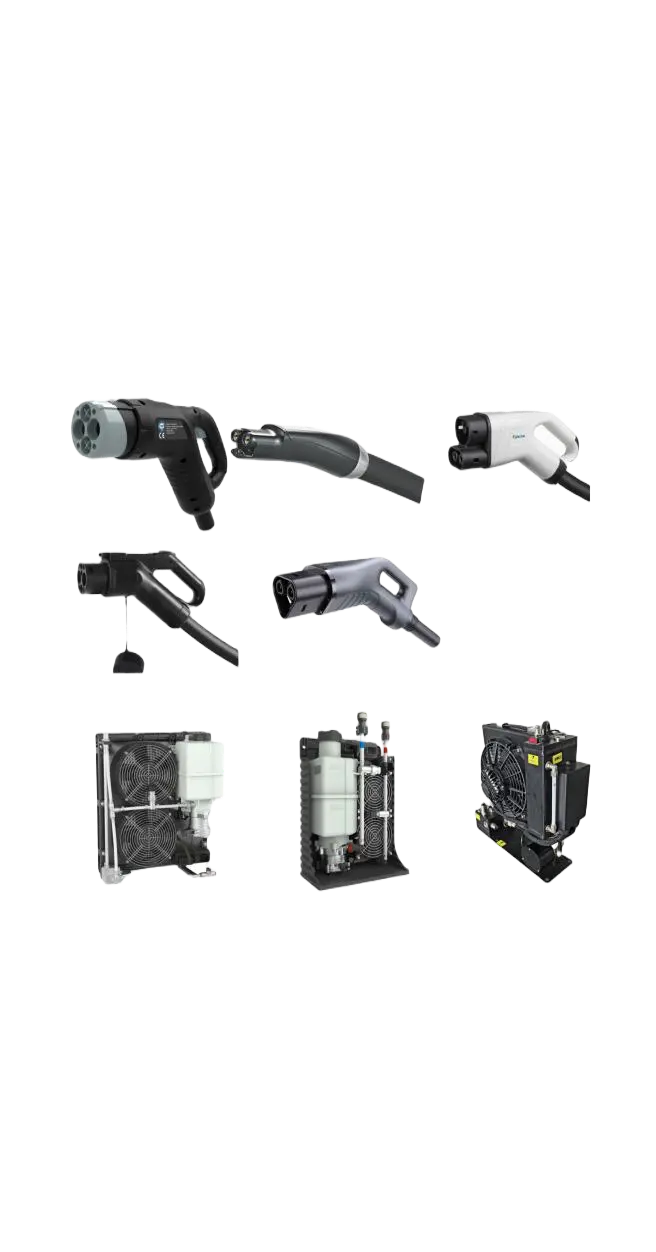
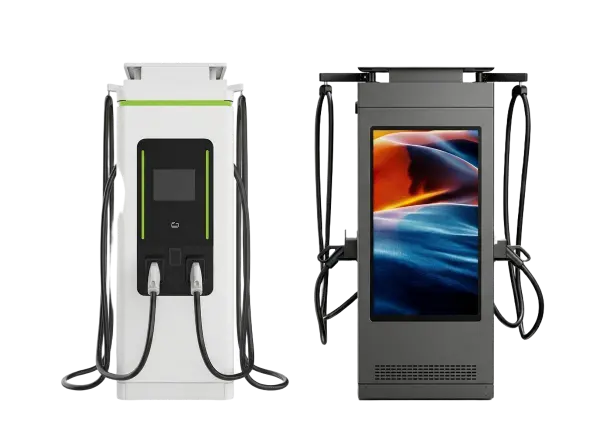
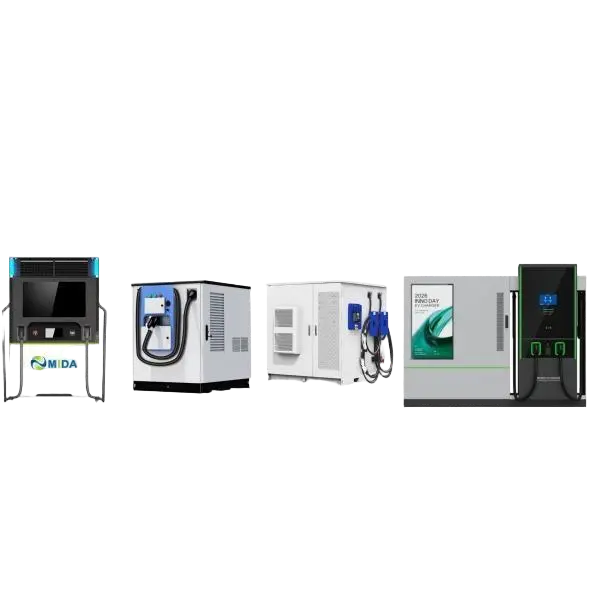
Tailoring ultra-fast 360kW chargers to diverse utility landscapes and operations frameworks.
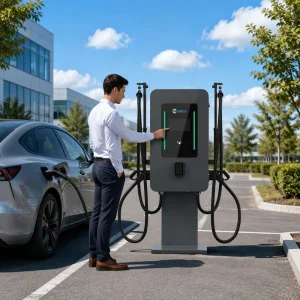
In transit corridors, fast turnover is the primary metric. Installing 360kW chargers allows long-range passenger EVs (such as the Kia EV6 or Tesla Model S) to charge from 10% to 80% SoC in approximately 15 to 18 minutes. Under peak travel loads, the system's dynamic sharing functionality guarantees that two connected cars receive a stable 180kW block. This optimizes service station throughput and drives revenue for charge point operators (CPOs).
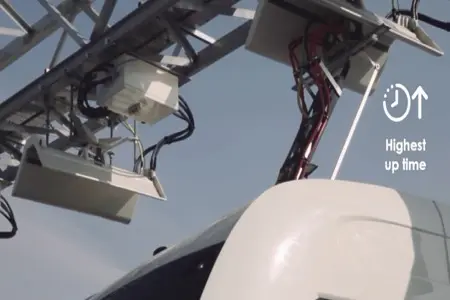
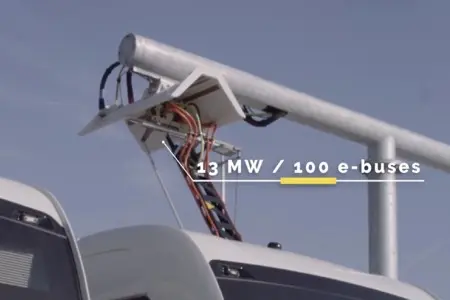
Heavy-duty electric buses and distribution vehicles require massive energy replenishment overnight or during driver shift rotations. In these environments, MIDA's split-system architecture is highly effective: a central power module container sits away from the active lanes, and low-profile satellites or overhead pantograph systems deliver power directly to vehicle bays. This saves valuable space on the depot floor and simplifies cable routing.
Installing multiple 360kW chargers can quickly overload local transformers. To bypass expensive grid upgrades, operators deploy BESS (Battery Energy Storage System) Integrated Charging Stations. These systems pack 200kWh to 2MWh of storage, trickle-charging from the grid during low-cost periods and discharging during peak events. This configuration cuts peak demand fees, optimizes local energy use, and provides emergency power back-up.
| Application Scenario | Recommended Configuration | Core System Benefit |
|---|---|---|
| Highway Corridors | Dual-Port 360kW Integrated Charger (Liquid-Cooled NACS/CCS2) | Maximum vehicle throughput, 18-minute charging cycles. |
| Transit Depots | 360kW–720kW Split Power Cabinet + Satellites / Pantograph | Centralized cooling and power distribution, low footprint. |
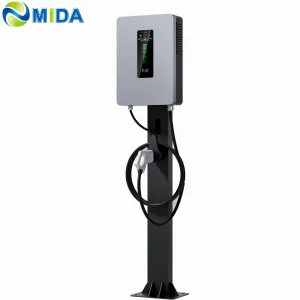
| Urban Hubs | 120kW–240kW Standalone Chargers with Advertising Displays | Ad monetization, compact installation, dual parking bay usage. |
| Grid-Limited Zones | 360kW DC Charger + 200kWh BESS Hybrid System | Peak shaving, avoids transformer upgrades, supports microgrid. |
Critical validation metrics for engineering, procurement, and construction (EPC) professionals.
Procuring 360kW infrastructure requires evaluating more than the initial hardware price. Operators must inspect long-term system performance, safety architectures, and maintenance protocols. Here are the core evaluations:
A mere 1.5% drop in efficiency can lead to thousands of dollars in wasted electricity bills per charger every year. MIDA's 40kW modules boast 96.5% peak conversion efficiency. Look for low standby power profiles (<80W) to minimize losses when the station is idle.
HPC systems run hot and are often exposed to extreme weather. Ensure units carry at least an IP55 protection rating (or NEMA 3R/4 for North America). MIDA enclosures feature double-walled cabinets, anti-corrosion marine-grade primers, and dedicated cooling loops to protect internal electronics from dust, moisture, and salt spray.
Charging networks must resist data breaches and skimming attempts. Look for hardware security modules (HSM) integrated into the mainboard controller. The charger must support over-the-air (OTA) updates to keep pace with evolving vehicle software and OCPP security patches without requiring technician visits.
Stay updated with the latest technological milestones, case studies, and engineering updates from MIDA Group.
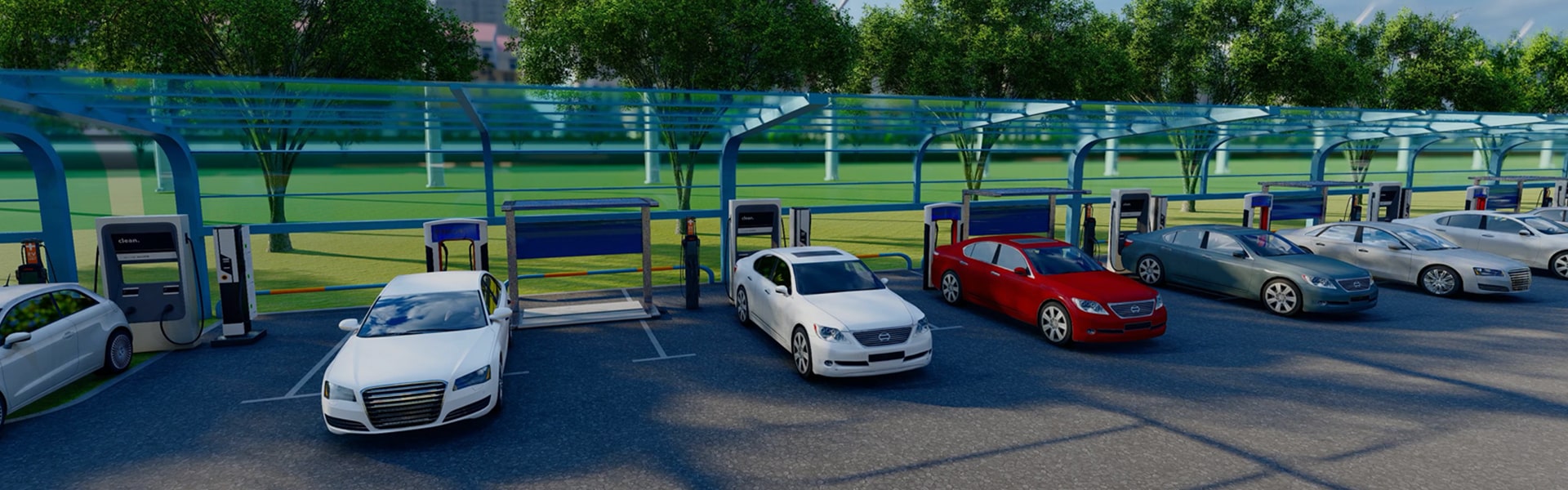
Select from our industrial-grade off-grid solar BESS charging stations, high-capacity mobile units, and mega liquid-cooled chargers.