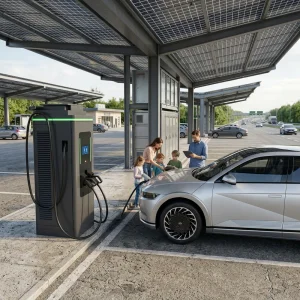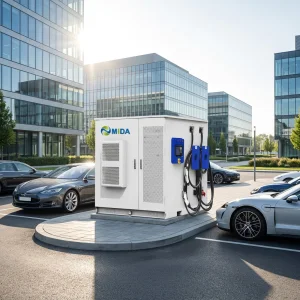
Best CCS DC Fast Charging Manufacturer & Manufacturers

Empowering the Global EV Transition with High-Power Charging Infrastructure, Bidirectional V2G, and Advanced Smart Microgrid Technology

The Critical Evolution of CCS DC Fast Charging Technology

An in-depth analysis of the transition toward ultra-fast, liquid-cooled charging, microgrid integration, and global standards compliance for charge point operators.

Combined Charging System (CCS) Standard

The CCS standard integrates AC and DC charging interfaces, using a single connector system to streamline the infrastructure footprint. With variants like CCS1 for North America and CCS2 for Europe, it supports voltages up to 1000V DC and currents exceeding 500A with liquid cooling, matching the charging profiles of next-generation 800V EV architectures.

High-Power Charging (HPC) & Liquid Cooling

Traditional forced-air cooling methods hit a physical barrier at 150A to 200A due to thermal losses (I²R). Liquid-cooled cables and power modules allow continuous operation at 500A and above, slashing vehicle charging times to under 15 minutes. Advanced coolant chemistry preserves cable flexibility and ensures maximum security at the dispenser.

Grid Stability & BESS Integration

Megawatt-level EV charging stations can strain local power grids. Integrating Battery Energy Storage Systems (BESS) acts as a buffer. BESS stores power during off-peak periods and discharges during high-demand fast charging. This reduces grid connection fees, eliminates peak demand charges, and supports solar integration for zero-emission energy hubs.

1000V
Max DC Charging Voltage
500A+
Liquid Cooled Capacity
96%
Power Module Efficiency
2MWH+
BESS Storage Integration

WELCOME TO MIDA GROUP

Shanghai Mida Cable Group Ltd. operates through its wholly owned subsidiaries: Shanghai Mida EV Power Co., Ltd., Shenzhen Mida EV Power Co., Ltd., and Shanghai Mida New Energy Co., Ltd.

Mida Cable manufactures a comprehensive range of EV charging cables, including 16A–80A J1772 cables, 16A–63A IEC 62196-2 Type 2 cables, and DC fast charging cables: CCS1 (80A–500A), CCS2 (125A–1000A), CHAdeMO (125A–300A), GBT (200A–1000A), and NACS connectors (250A–600A).

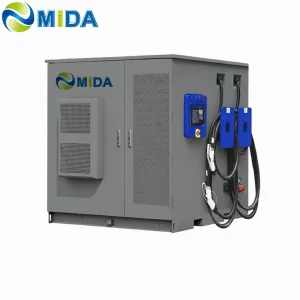
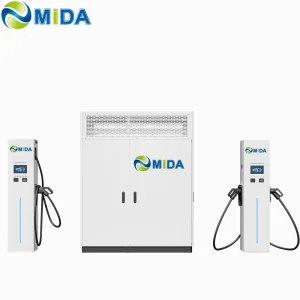
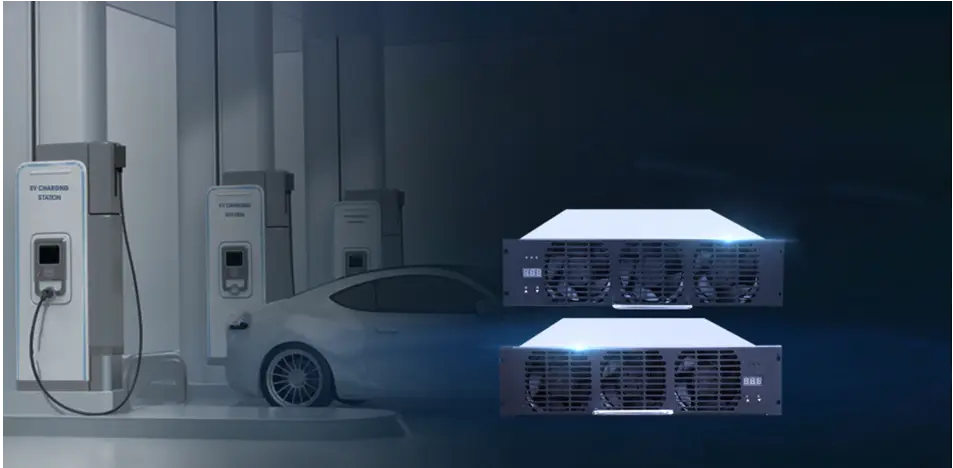
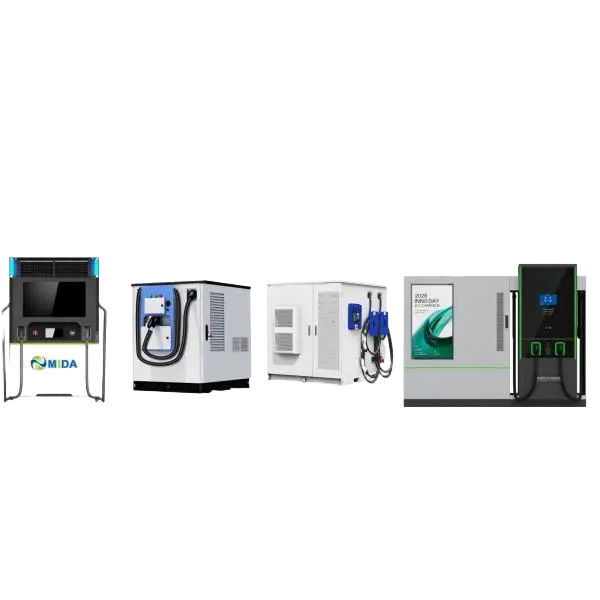
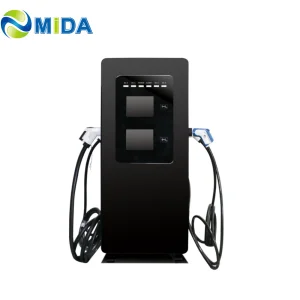
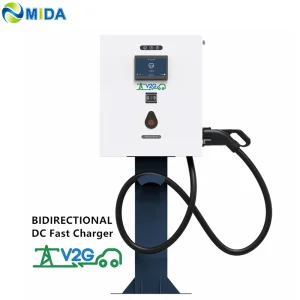
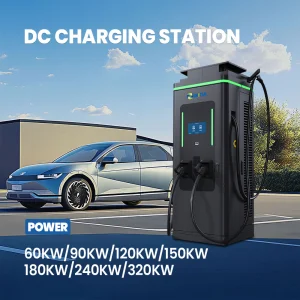
MIDA EV Power produces a full lineup of EV charging stations, such as 7kW–50kW mobile chargers, 3.6kW–7.2kW portable DC chargers, 360kW–1440kW split-type DC fast chargers, 20kW–50kW wall-mounted DC chargers, and 60kW–480kW floor-standing DC fast charging stations.

MIDA New Energy specializes in EV charger power modules, offering 20kW–60kW standard modules, 40kW–125kW liquid-cooled modules, 30kW–62.5kW bidirectional modules, and 20kW–45kW V2G charging modules.

Advanced Sub-Systems & Hardware Architecture

The foundation of reliable DC charging infrastructure lies in modular power allocation and robust cooling units.

EV Charging Power Modules

Mida's power conversion units form the core of our high-capacity DC fast-charging terminals. Designed with wide constant-output voltage ranges (150V - 1000V DC) and silicon carbide (SiC) switching tech, these modules reach up to 96% power conversion efficiency, minimizing heat and optimizing grid draw.

Modular Product Configurations:

  • 30kW, 40kW, 50kW, 60kW, and 80kW AC-to-DC EV Charger Modules
  • 30kW, 40kW, 50kW, and 60kW DC-to-DC Converter Modules
  • 40kW, 60kW, 75kW, and 125kW Liquid-Cooled Power Modules
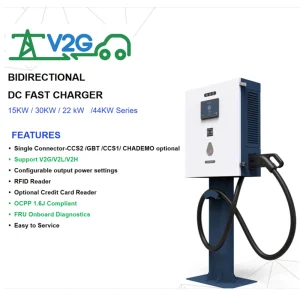
  • 20kW, 22kW, 30kW, 40kW, and 45kW Bidirectional V2G Power Modules
  • 30kW, 40kW, 50kW, and 60kW MPPT Solar Charging Modules
  • 20kW, 50kW, and 62.5kW Bidirectional AC-to-DC Power Modules

DC Charging Connectors & Cooling Sub-Systems

Ensuring safety and thermal equilibrium during high-power charging (HPC) requires precision thermal management. Our proprietary liquid-cooled cables and connectors manage temperatures even under continuous 500A loads, keeping terminal weights manageable and user interfaces easy to handle.

Connector & Cooling Components:

  • 500A and 600A liquid-cooled CCS1, CCS2, and GBT Connectors
  • 125A, 250A, 300A, and 350A NACS & CHAdeMO Interface Connectors
  • 1500A Megawatt Charging System (MCS) and CHAOJI Connectors
  • 3.5kW, 4.5kW, 6kW, and 9kW Integrated Liquid Cooling Units
  • 2.4kW and 3.5kW Split-Type Dispenser Cooling Units
  • 25kW to 72kW Industrial Cooling Units designed for HPC Stations

China's EV Supply Chain Advantages & Manufacturing Scale

How China's production ecosystem drives value, accelerated deployment, and high-precision quality control.

Industrial Clustering & Component Sourcing

By clustering major semiconductor, high-voltage component, and copper wiring manufacturers, China avoids the logistics delays typical of fragmented supply chains. Every component, from raw silicon carbide substrates to the final outdoor enclosure, is sourced locally, ensuring quick turnarounds and rapid prototyping cycles.

Advanced Automation & Quality Control

China's smart factories use robotic optical inspection, automatic circuit testers, and real-time environment-controlled chambers. Thermal cycling and aging tests under full load are standard. This approach minimizes defect rates (DPPM) and guarantees performance in harsh conditions, from desert heat to Arctic cold.

Unmatched Cost-to-Performance Ratio

High manufacturing volumes and refined automation significantly lower the cost per kilowatt. This efficiency allows global Charge Point Operators (CPOs) to upgrade their networks with advanced dual-outlet CCS fast chargers, keeping capital expenditures (CAPEX) in line with operational models.

Core Product Offerings & Specifications

Explore our complete product portfolio, designed to meet diverse charging power and station requirements.
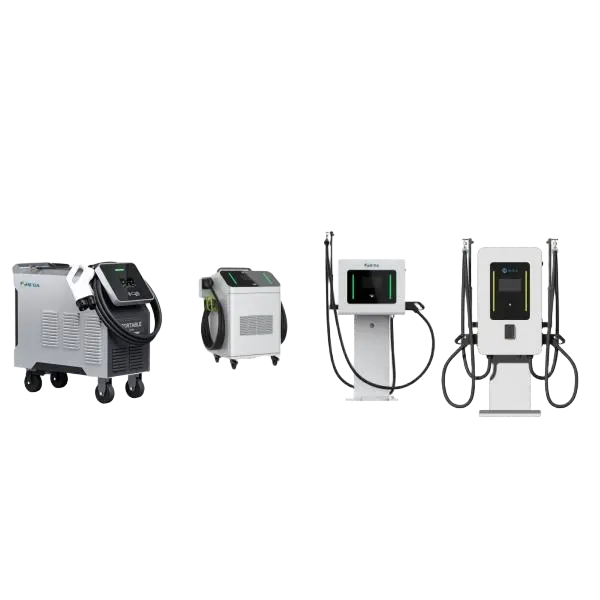
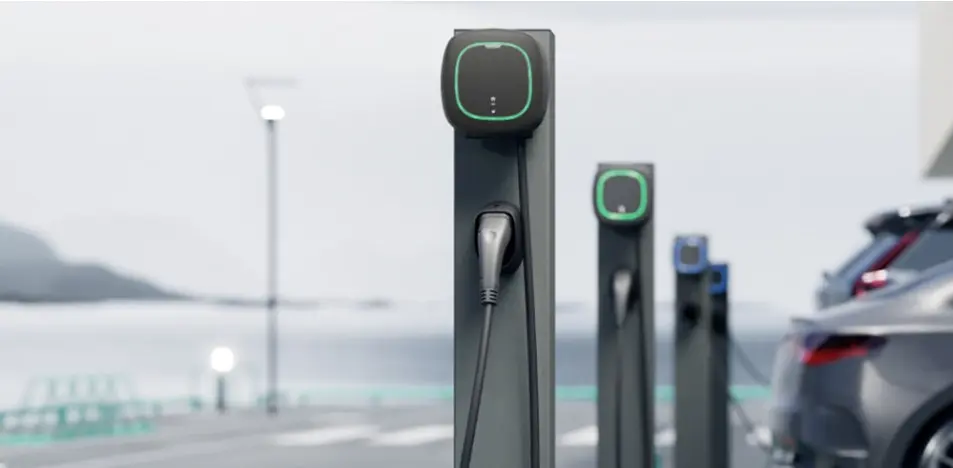
Wall-Mounted/Mobile EV Charger
7kW 20kW 30kW 40kW 60kW 80kW
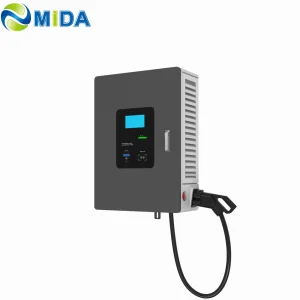
Wall-Mounted EV Charger
  • Compact, lightweight chassis for space-limited fleet yards
  • Ideal for overnight light-commercial fleets and workplace depots
  • Equipped with optional CCS1, CCS2, and NACS outputs
  • Secondary option: Mobile Charger
View More
DC Charger Station
60kW-480kW / 360kW-1440kW
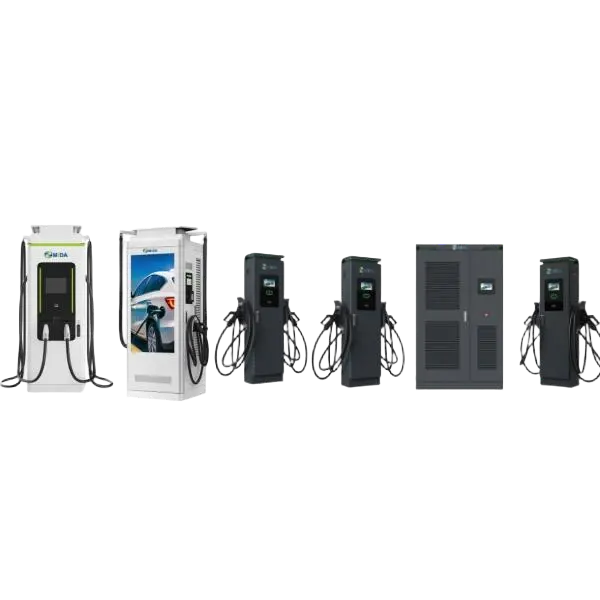
DC Charger Station
  • High-power highway charging depots
  • Dynamic power sharing algorithms optimize dispenser usage
  • Dual and multi-gun configurations for fast turnarounds
  • Secondary option: High Power Charger
View More
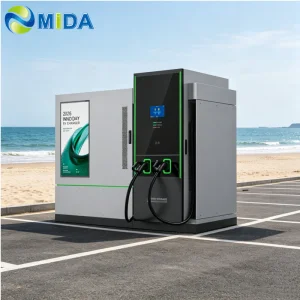
BESS Charging Station
60kWh 261kWh 418kWh 625kWh 2MkWh
BESS Charging Station
  • Integrated containerized lithium storage with high-power DC charging
  • Ideal for off-grid operations and microgrids
  • Protects stations against demand charge utility spikes
  • Secondary option: BESS Solution
View More

Localization Support, Grid Interoperability & Compliance

Ensuring global operation through regional standard compliance, dynamic load management, and certified safety protocols.

Regulatory Certification & Standards Compliance

Navigating global grid requirements demands compliance with key standards. Our CCS chargers are built and tested to meet essential regulatory frameworks: CE for the European Economic Area, UL/ETL for North American electrical grids, and KC for Korea. This approach ensures safety and facilitates quick regulatory approval for local installations.

Key Compliance Benchmarks:

  • UL 2202 & UL 2594: Safety standards for DC fast charging systems and AC chargers in North America.
  • IEC 61851-1 & IEC 61851-23: General safety and performance guidelines for AC/DC conductive charging systems globally.
  • Eichrecht Conformity: Specialized German calibration compliance for transparent consumer energy billing.

Interoperability & Software Integrations

Consistent communication between the EV, the charger, and the network is vital for billing, peak load reduction, and user convenience. Our hardware supports OCPP 1.6J and OCPP 2.0.1, enabling smooth connections to backend software, payment terminals, and building automation controllers.

Software Capabilities:

  • ISO 15118 (Plug & Charge): Secure digital certificates handle authentication and billing automatically upon plugging in.
  • Dynamic Load Management (DLM): Smart power sharing balances charging speeds across vehicles without overloading the main panel.
  • Automated Firmware Updates (OTA): Remote updates patch communication bugs and improve security without requiring a site visit.

Localized Application Scenarios

Discover how our systems fit into various infrastructure, depot, commercial, and highway settings.

Fleet Depots & Heavy Logistics

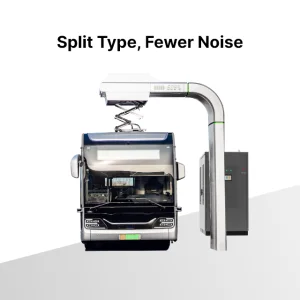
For municipal bus agencies, delivery services, and heavy-duty logistics firms, uptime is the priority. Our high-power DC systems and automated pantographs supply fast, high-voltage charges to commercial trucks and buses during off-shifts, helping operators keep their fleets running efficiently.

Highway Corridor Stations

Drivers on major highways expect charging times that mimic traditional fuel stops. Our liquid-cooled 600kW systems charge high-voltage EVs in 10 to 15 minutes, maximizing throughput for station operators and easing range anxiety for long-distance travelers.

Commercial Real Estate & Retail

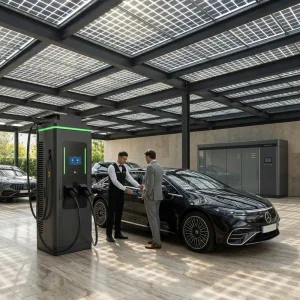
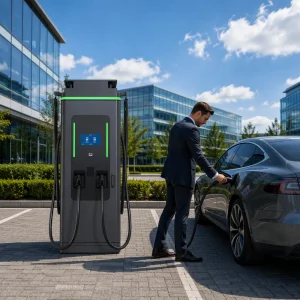
Retail centers, office parks, and multi-family communities benefit from adding DC fast chargers. Medium-capacity, wall-mounted, or floor-mounted stations (30kW to 120kW) attract premium visitors who charge while they shop, dine, or work, creating new revenue streams for property owners.

Industry Trends & Future Outlook

A technical overview of upcoming changes in grid technology, megawatt charging, and fleet vehicle utilization.

The Rise of V2G & Bidirectional Power Flow

Electric vehicles are transitioning from energy consumers to mobile storage assets. Bidirectional Vehicle-to-Grid (V2G) technology allows EV batteries to supply power back to the building or utility grid during peak pricing periods. This helps stabilize local distribution systems and lowers energy costs for businesses and fleet operators.

Transitioning to the Megawatt Charging System (MCS)

Heavy-duty trucks and marine vessels with large battery packs require faster charging than typical CCS stations can provide. The Megawatt Charging System (MCS) supports charging up to 3.75MW (3,000A at 1,250V DC). Transitioning to MCS enables quick charging for class 8 trucks, helping short-haul logistics maintain tight delivery windows.

Technical & Strategic Q&A

Answers to common questions about power modules, thermal management, and station installation.

1. What distinguishes liquid-cooled DC fast chargers from standard forced-air cooled systems?
Liquid cooling uses a closed-loop system circulating non-conductive coolant to manage heat in the charging cable and connector. This allows continuous charging up to 500A or higher without overheating. It keeps cables lighter and easier for drivers to handle compared to thick, heavy, air-cooled cables, which typically top out around 200A.
2. How does the integration of a Battery Energy Storage System (BESS) benefit a DC charging station?
A BESS stores energy during off-peak times and discharges it to assist during high-demand fast charging. This peak-shaving capability reduces demand charges from the utility, prevents local grid overloads, and allows operators to deploy fast chargers in areas where the grid connection is limited.
3. What is the difference between OCPP 1.6J and OCPP 2.0.1 for charging station management?
While OCPP 1.6J is widely used for basic monitoring, transactions, and reservation management, OCPP 2.0.1 offers improved device configuration, advanced security protocols (like TLS encryption), support for ISO 15118 (Plug & Charge), and better display message management directly from the management system.
4. Why are bidirectional V2G power modules becoming a requirement for commercial fleets?
Bidirectional V2G power modules enable fleet operators to use parked vehicles to store and discharge energy. By supplying power back to the grid or facility during peak demand, companies can offset energy costs and participate in grid frequency regulation programs, turning vehicles into revenue-generating assets.
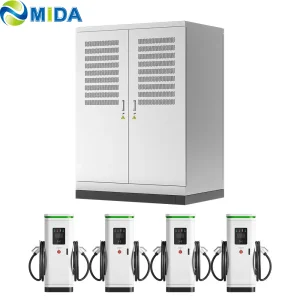
5. How does a split-type DC charging architecture optimize capital investment in large stations?
A split-type architecture separates the central power matrix cabinet from the individual dispensers. The central cabinet allocates power dynamically to each dispenser based on the vehicle's state of charge and battery capacity. This reduces overall capital expenditure by using fewer power modules to service multiple vehicles efficiently.
6. What certifications are critical when sourcing CCS DC fast chargers for the North American and European markets?
For North America, chargers require UL 2202 and ETL certification, alongside FCC compliance for electromagnetic interference. For Europe, CE marking according to the IEC 61851 series is standard, and Germany requires Eichrecht calibration conformity for public billing.

Mida Corporate News

Stay informed on the latest trends and updates regarding electric bus pantograph charging and infrastructure.
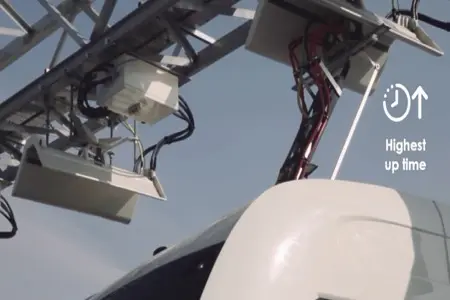
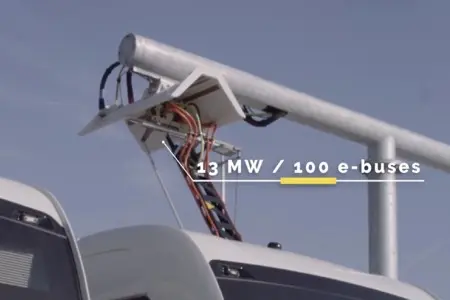
Pantograph dome
What are the advantages of an e-bus pantograph dome? In contrast to classic plug-in charging systems, e-bus pantograph systems automate the high-power connection process...
Pantograph charge time
How long does it take to charge with an e-bus pantograph? The charging time depends on the battery capacity, state of charge, and the output power of the pantograph system...
Pantograph installation
How to Install the Pantograph Up Charger System Dome for Electric Bus: Installing a "Pantograph Up" system requires precise positioning, structural support foundations...