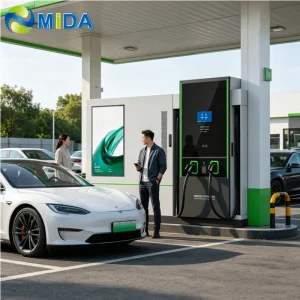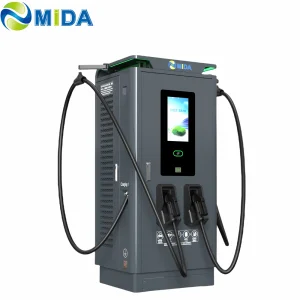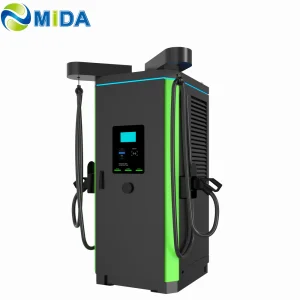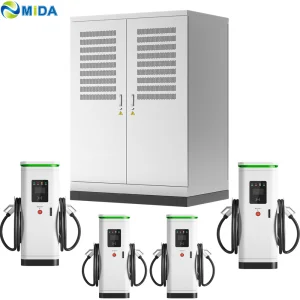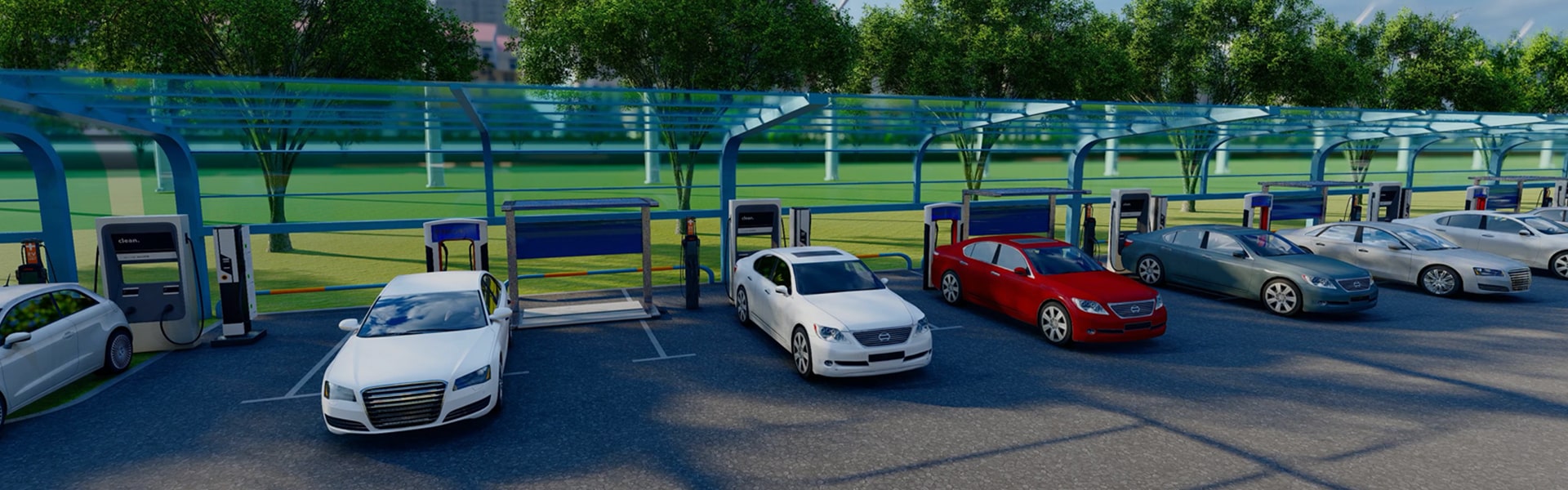
Explore our selection of top-tier industrial chargers. Engineered for grid compliance, high efficiency, and maximum reliability across standard CCS, NACS, and CHAdeMO connections.
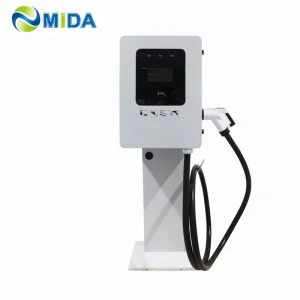
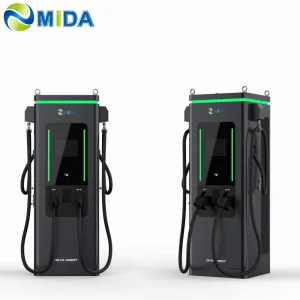
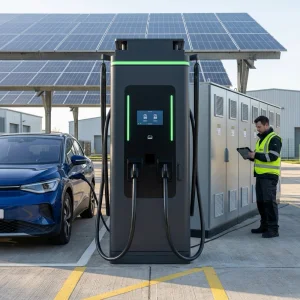
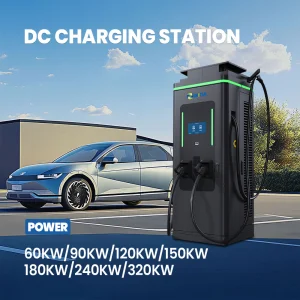
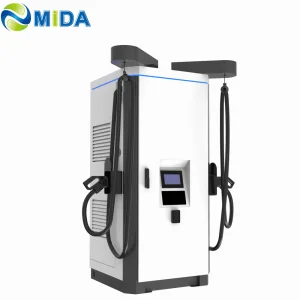
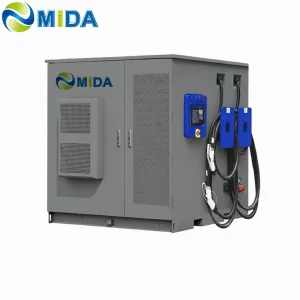
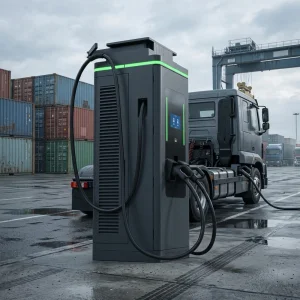
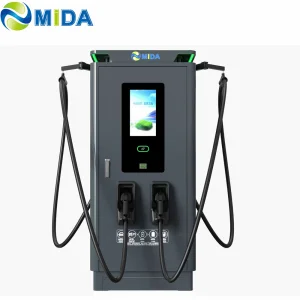
In global fleet management, commercial real estate, and municipal planning, selecting the correct energy throughput is critical. While 50kW chargers struggle with modern commercial turnaround requirements, and 350kW systems demand significant grid upgrades, 120kW DC fast charging stations present the ideal balance of installation cost (CapEx) and operational turnaround (OpEx).
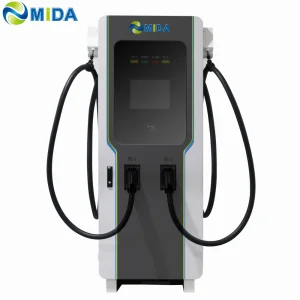
A 120kW system can deliver approximately 100 kilometers of range to a modern electric vehicle in under 10 minutes. For dual-port configurations, it dynamically splits into 2 x 60kW streams, allowing cost-effective dual charging that supports overnight commercial fleets, retail destinations, and regional logistic hubs without overtaxing localized transformer networks.
Our intelligent controller algorithm monitors real-time Battery Management System (BMS) requests and divides the 120kW throughput dynamically across dual ports (e.g., 60kW+60kW, or 80kW+40kW) to ensure optimal efficiency and protect EV battery health.

Shanghai Mida Cable Group Ltd. operates through its wholly owned subsidiaries: Shanghai Mida EV Power Co., Ltd., Shenzhen Mida EV Power Co., Ltd., and Shanghai Mida New Energy Co., Ltd. This structure allows us to maintain a fully integrated ecosystem spanning power electronics R&D, structural manufacturing, and cable thermal engineering.
By controlling every critical sub-component—from high-voltage charging connectors to complex silicon carbide (SiC) switching power modules—we guarantee long-term stability and system reliability. Our production capacities align with international automotive-grade standards, serving clients in over 50 countries.
Manufactures a comprehensive range of EV charging cables, including 16A–80A J1772 cables, 16A–63A IEC 62196-2 Type 2 cables, and DC fast charging cables: CCS1 (80A–500A), CCS2 (125A–1000A), CHAdeMO (125A–300A), GBT (200A–1000A), and NACS connectors (250A–600A).
Produces a full lineup of EV charging stations, such as 7kW–50kW mobile chargers, 3.6kW–7.2kW portable DC chargers, 360kW–1440kW split-type DC fast chargers, 20kW–50kW wall-mounted DC chargers, and 60kW–480kW floor-standing DC fast charging stations.
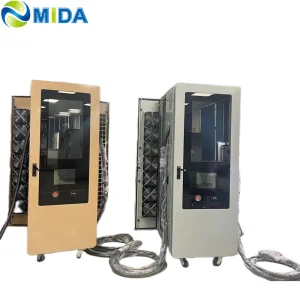
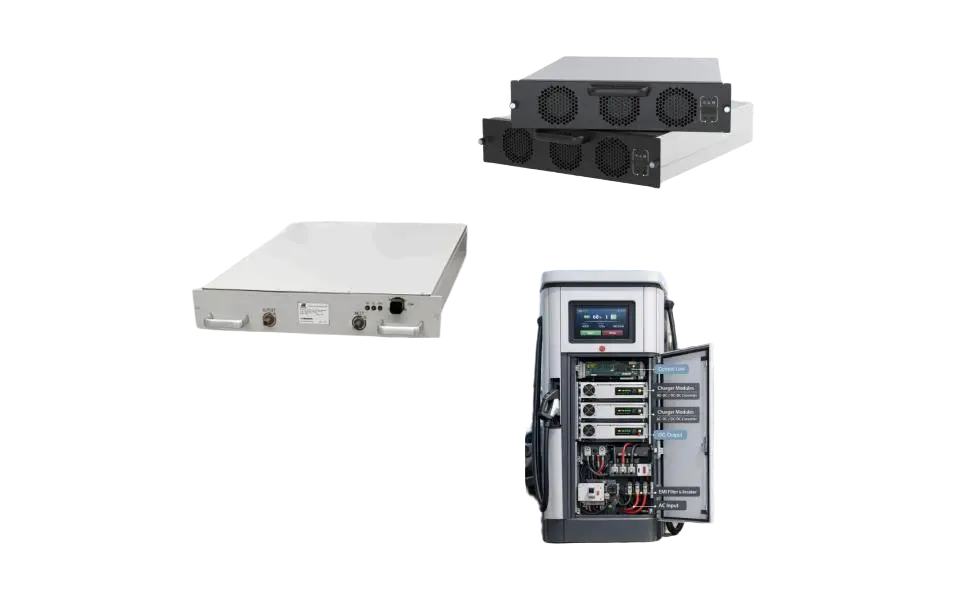
Specializes in EV charger power modules, offering 20kW–60kW standard modules, 40kW–125kW liquid-cooled modules, 30kW–62.5kW bidirectional modules, and 20kW–45kW V2G charging modules.
Our proximity to local supply chains for semiconductor switching devices, specialized magnetic components, and thermal dissipation systems allows us to lower manufacturing costs while maintaining high-grade quality control.
We perform systematic verification to ensure compliance with standards like CE, TUV, and UL. Our infrastructure features multi-layer insulation systems and advanced leakage monitoring (RCD Type B) for safe operations worldwide.
We provide full structural customization, tailorable OCPP-compliant backend integrations, local billing interfaces, and branded wraps for operators who require customized fast-charging solutions.
Whether you require compact footprint designs for urban parkings, advertising-supported units for retail centers, or multi-megawatt systems for highway stops, MIDA provides configured solutions tailored to your operational needs.
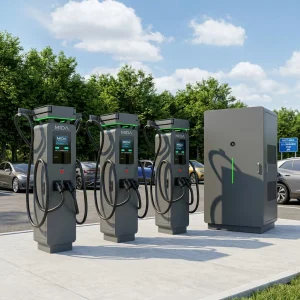
By utilizing modular power components, we can scale individual columns from 60kW up to 480kW, or deploy split-type charging topologies where a centralized power bank services several independent columns.
The core of any fast-charging station is the power module. We manufacture specialized units designed for durability and thermal efficiency:
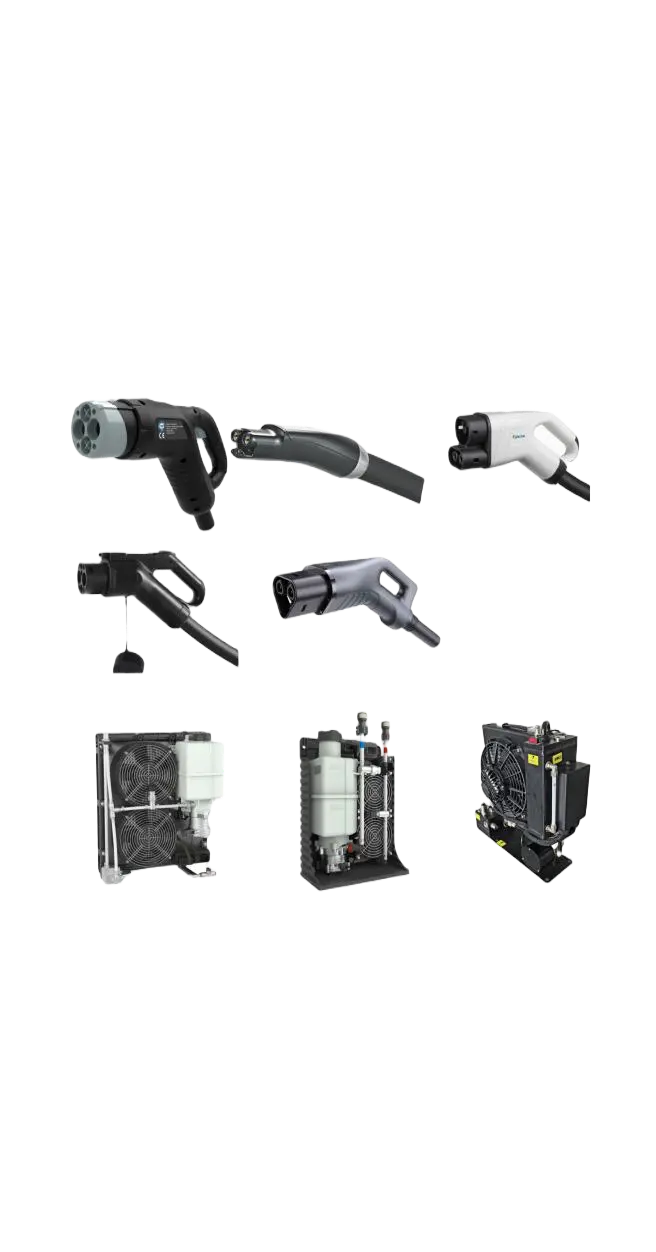
Cable assemblies are a common failure point for outdoor charging installations. We address this through dedicated component testing, refining the internal terminal connections and structural materials to minimize resistive heating.
Our range includes standard connectors (CCS1, CCS2, CHAdeMO, GBT, and NACS) as well as advanced liquid-cooled solutions rated for up to 1000A, helping to maintain safe, touchable temperatures during high-rate charging cycles.
Perfect for light and medium-duty delivery vans. A 120kW charger can top up two vans simultaneously overnight, or quickly top off single vehicles between shifts.
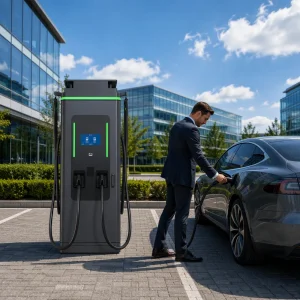
Provides a convenient high-speed option for visitors at shopping centers, hotels, or corporate complexes, encouraging longer visits and supporting public charging access.
Allows fuel stations and highway stops to offer reliable fast-charging options that integrate smoothly into their existing grid connections.
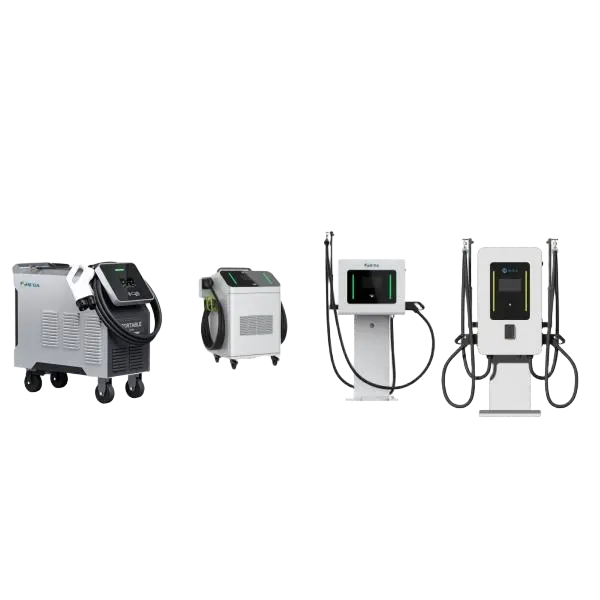
High-durability configurations supporting 7kW, 20kW, 30kW, 40kW, 60kW, and 80kW outputs. Designed for private garages, workplace parking, and service vehicles.
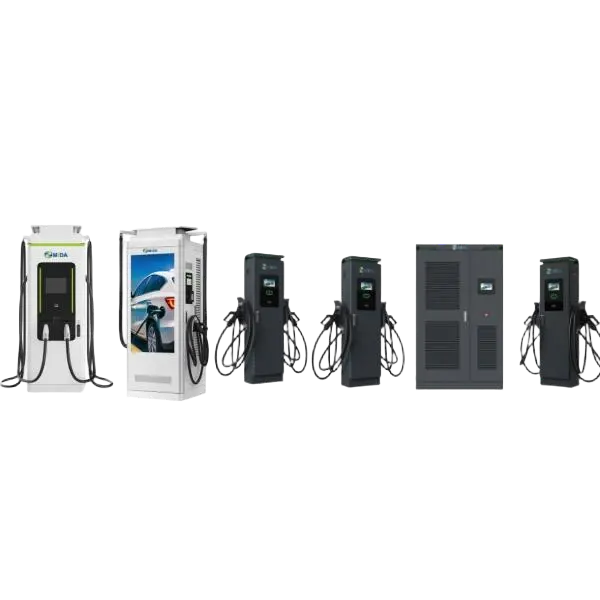
From 60kW–480kW stand-alone systems up to 360kW–1440kW split-type configurations. Built for heavy commercial use and high-throughput sites.
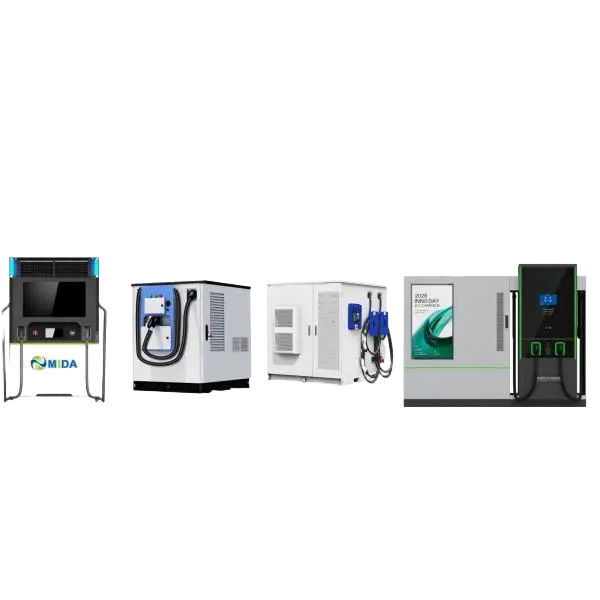
Battery Energy Storage Systems ranging from 60kWh, 261kWh, 418kWh, 625kWh, to 2MkWh. Helps mitigate peak grid demand and lower operational costs.
Bidirectional power flow enables EV fleets to act as mobile energy storage networks. In high-demand scenarios, V2G-enabled chargers can feed electricity back into the grid, helping stabilize localized distribution systems and providing a potential secondary revenue source for fleet operators.
Upgrading to the OCPP 2.0.1 standard improves cybersecurity, supports advanced smart charging algorithms, and simplifies ISO 15118 integrations (enabling "Plug & Charge" functionality). Our latest firmware releases are optimized to ensure smooth integration with modern management backends.
Direct grid connections for high-power DC chargers are not always feasible due to transformer limits or installation costs. Integrating local solar arrays and Battery Energy Storage Systems (BESS) allows sites to store energy during low-demand periods and deliver high power output without putting excessive strain on the utility grid.
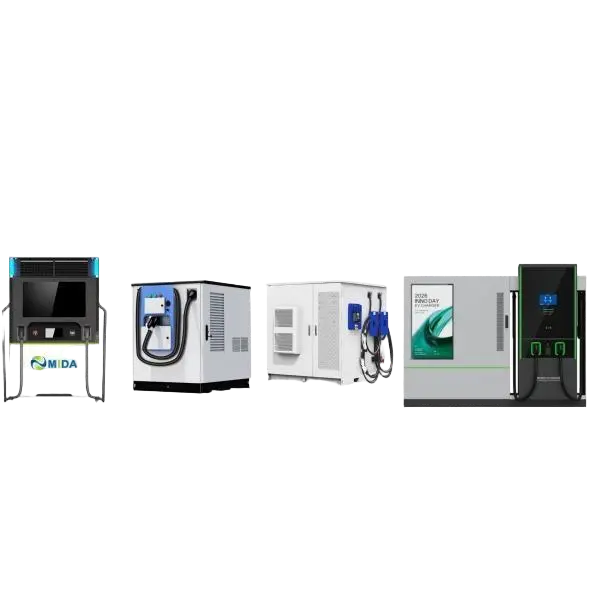
A 120kW DC charger generally requires a 3-phase AC input (typically 380V, 400V, or 480V depending on local grid specifications) with a dedicated circuit breaker. It is recommended to install standard circuit protections, including RCD Type B, overcurrent, and overvoltage protections, to ensure safe and reliable operation.
Our chargers feature smart controller cards that monitor communication from the vehicle's BMS. When two cars are plugged in simultaneously, the system divides the available 120kW power based on each vehicle's real-time battery status and charging capability, adjusting the output dynamically to maximize overall charging efficiency.
Yes. All MIDA DC fast charging stations natively support the OCPP 1.6J protocol, allowing you to connect them to any compatible charge point management platform. This ensures operators can manage access, configure billing models, and monitor hardware performance remotely.
Extreme temperatures can impact the performance of power electronics. Our chargers utilize robust cabinets rated for outdoor use (IP54 or IP55) with forced-air cooling systems, ensuring stable operation from -30°C to +50°C. For hotter climates, liquid-cooled power modules are available to maintain efficiency under heavy workloads.
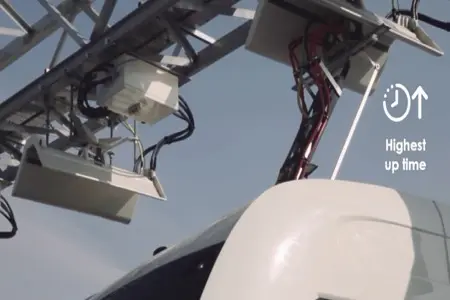
What are the advantages of an e-bus pantograph dome? In contrast to classic plug-in charging systems, e-bus pantograph setups offer rapid automated connection for transit networks...
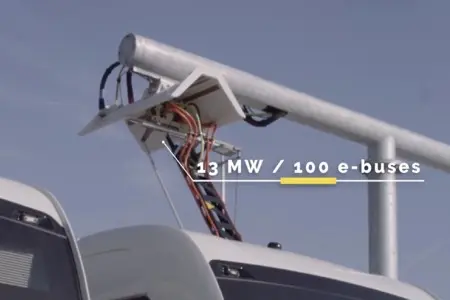
How long does it take to charge with an e-bus pantograph? The charging time depends on the battery capacity and the station's maximum power output...
How to Install the Pantograph Up Charger System Dome for Electric Bus. A look at the key steps and structural requirements for installing standard overhead pantograph connections...