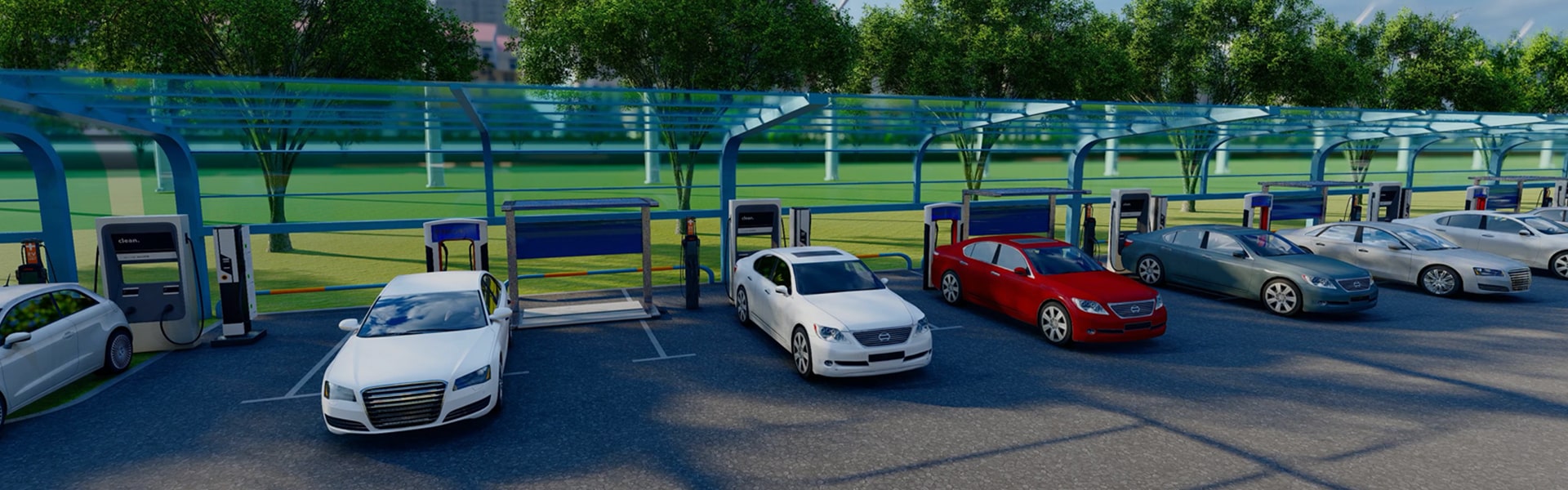
Engineered for mission-critical industrial charging. Deploying next-generation silicon carbide (SiC) technology for ultra-high efficiency power distribution.
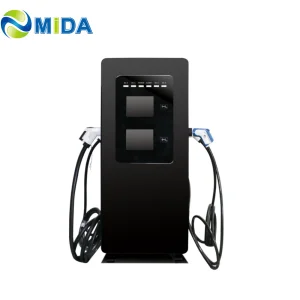
Industrialization, Grid Harmonization, and the Evolution of Megawatt-Scale Networks.
The global transition to electric mobility has reached an inflection point where vehicle deployment is outstripping infrastructure capability. Industrial fleets, public transit agencies, and heavy-duty logistics operators require power delivery metrics that standard utility connections cannot support natively. High-power DC fast charging (HPC) stations, coupled with local Battery Energy Storage Systems (BESS), represent the foundational architecture needed to bridge the gap between grid constraints and modern operational demands.
China continues to dominate both production and installation scales worldwide. Leveraging robust supply chains for critical sub-components—such as power modules, high-voltage liquid-cooled connectors, and intelligent controllers—China-based OEMs have established standardized engineering protocols that lower systemic installation costs while ensuring maximum operational uptime. This structural superiority allows China manufacturers to deliver ISO 15118 compliance, Din 70121 compatibility, and multi-standard connectivity (NACS, CCS1, CCS2, CHAdeMO, and GB/T) globally, satisfying diverse international regulatory requirements.
To succeed in today's market, fleet operators must look beyond individual charging piles. The integration of modern software protocols (OCPP 2.0.1), dynamic load management algorithm structures, and active power distribution architectures is necessary to avoid exorbitant utility demand charges. Modern charging networks are transitioning from passive power distribution units into active nodes of localized microgrids that optimize energy flow based on real-time grid conditions, battery degradation rates, and site-level constraints.
Shanghai Mida Cable Group Ltd. serves as a premier manufacturer of high-current power transmission and advanced electric vehicle charging systems. Operating through its specialized subsidiaries—Shanghai Mida EV Power Co., Ltd., Shenzhen Mida EV Power Co., Ltd., and Shanghai Mida New Energy Co., Ltd.—the group provides end-to-end integration for the global e-mobility market.
Our division, Mida Cable, manufactures a comprehensive range of EV charging cables, including 16A–80A J1772 cables, 16A–63A IEC 62196-2 Type 2 cables, and specialized high-power DC fast charging cables: CCS1 (80A–500A), CCS2 (125A–1000A), CHAdeMO (125A–300A), GBT (200A–1000A), and NACS connectors (250A–600A) capable of meeting liquid-cooled requirements.
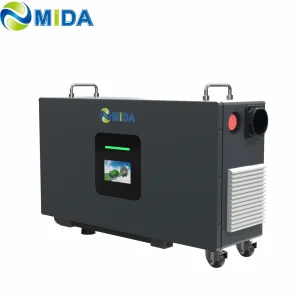
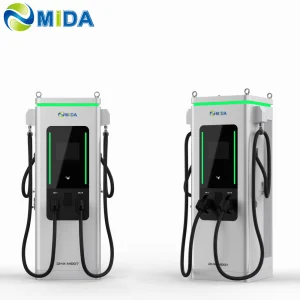
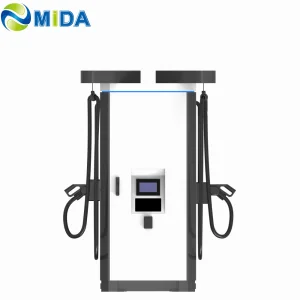
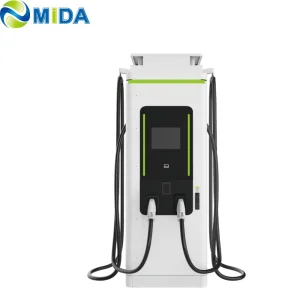
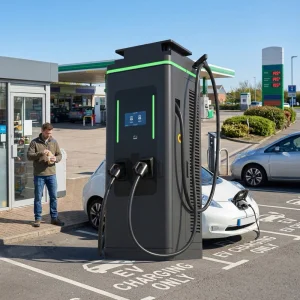
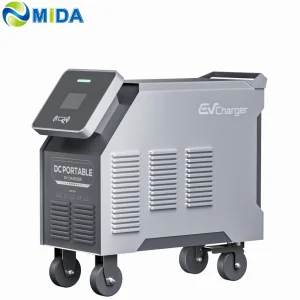
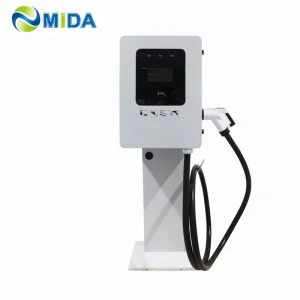
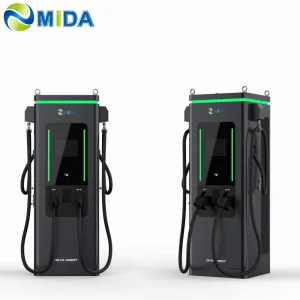
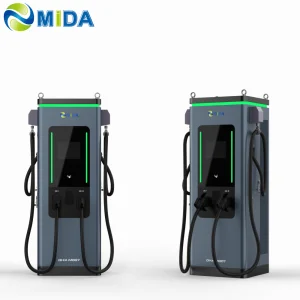
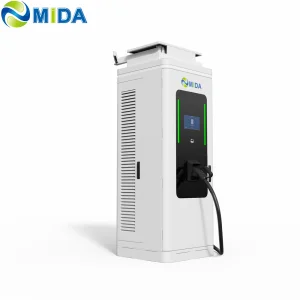
MIDA EV Power produces a full lineup of EV charging stations, such as 7kW–50kW mobile chargers, 3.6kW–7.2kW portable DC chargers, 360kW–1440kW split-type DC fast chargers, 20kW–50kW wall-mounted DC chargers, and 60kW–480kW floor-standing DC fast charging stations.
MIDA New Energy focuses on core component innovation, manufacturing advanced EV charger power modules: 20kW–60kW standard modules, 40kW–125kW liquid-cooled modules, 30kW–62.5kW bidirectional modules, and 20kW–45kW V2G charging modules.

Engineered hardware categories configured to meet residential, commercial, industrial, and microgrid deployments globally.
Residential & Workplace Infrastructure
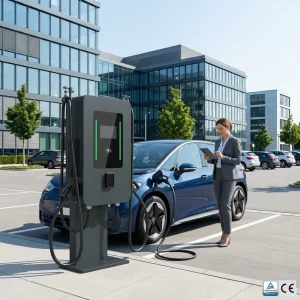
Available in various formats from 7kW to 22kW. Features high durability enclosures, smart app communication via Wi-Fi/Bluetooth, and dynamic load balancing for multi-vehicle tracking.
7kW - 80kW Compact DC Power Solutions
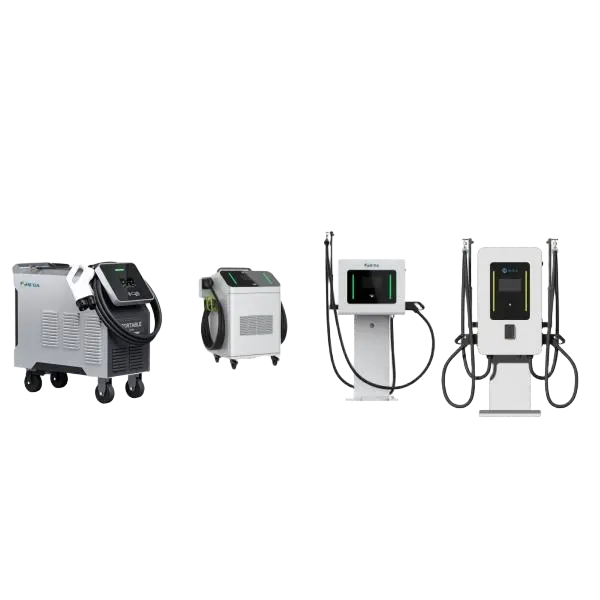
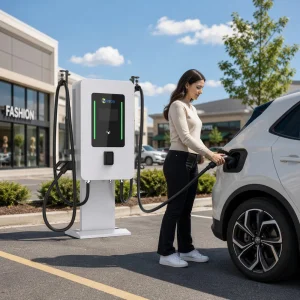
Compact, high-speed DC charging units designed for depots, commercial hubs, and roadside assistance vehicles. Equipped with robust thermal control logic and IP54 protection ratings.
60kW - 1440kW Distributed Systems
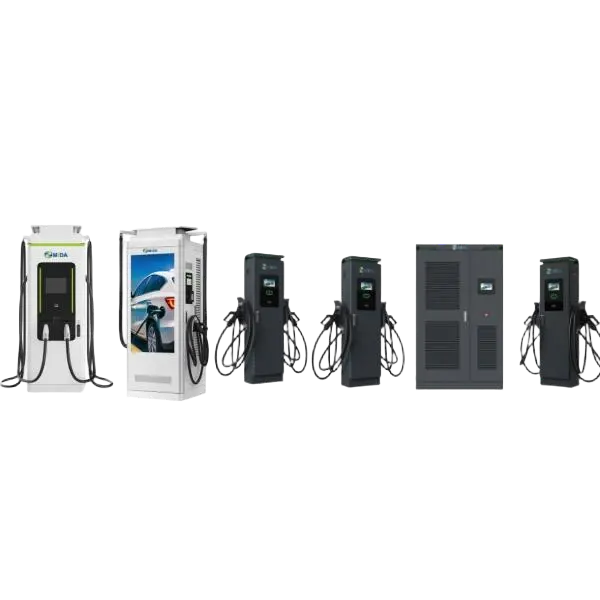
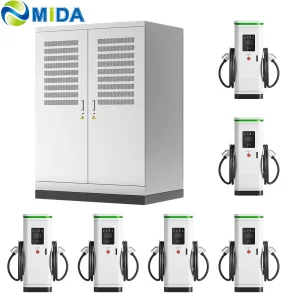
Split-type architectures and standard cabinet stacks configured for public charging networks and major highway transit terminals. Supports liquid-cooled operations for continuous power.
60kWh - 2MWh Energy Storage Integrated
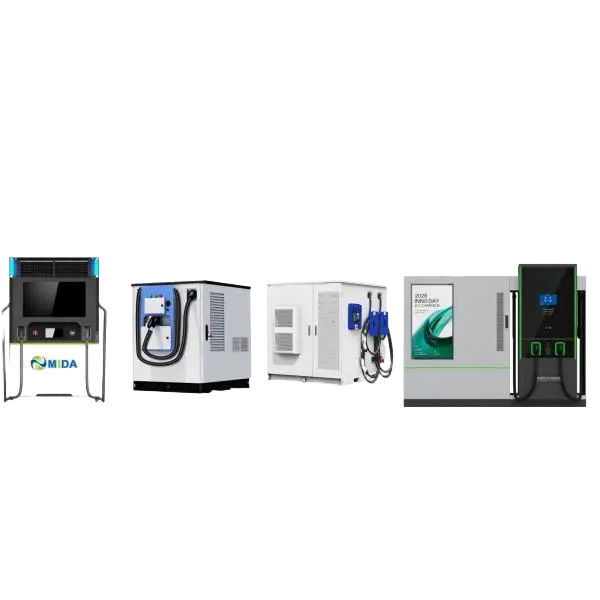
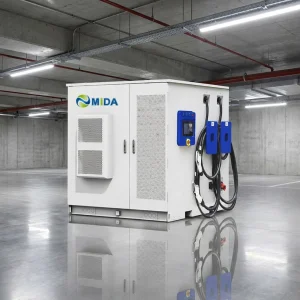
Integrates high-capacity lithium battery storage with charging stations. Buffers peak grid demands, allows solar integration, and enables fast charging in low-grid infrastructure regions.
Explore detailed technical modules, sub-assemblies, and specialized charging equipment manufactured in MIDA's advanced production facilities.
An in-depth analysis of how liquid cooling, bidirectional V2G power, and high-frequency SiC conversion modules are scaling megawatt-level charging networks.
Standard power modules rely on legacy silicon IGBT designs, capping efficiency at 94%. MIDA utilizes high-frequency Silicon Carbide (SiC) MOSFETs within our 40kW and 60kW modules. This reduces thermal dissipation requirements by 40% while pushing conversion efficiency to an industry-leading 97.5%. The result is lower operational overhead, smaller cabinet sizes, and less heat generation at peak current outputs.
Charging currents exceeding 250A generate significant heat in standard copper cables. Liquid-cooled charging technology bypasses physical cable limits by circulating coolant directly to the terminal contacts. Mida’s 500A/600A CCS2/NACS connectors feature active coolant channels integrated with a high-capacity chill unit, reducing overall cable diameter by 50% while operating safely and efficiently.
Modern fleet depots are no longer passive loads. Using MIDA's 30kW and 45kW bidirectional V2G (Vehicle-to-Grid) power modules, fleet operators can discharge bus and truck batteries back into the local microgrid during peak utility tariff periods. This capability transforms stored mobile energy into a valuable grid asset, lowering Total Cost of Ownership (TCO) and supporting grid stability.
Installing high-power charging setups often requires expensive grid upgrades. MIDA's BESS Charging Stations integrate lithium battery storage with direct MPPT solar inputs. By coupling local solar generation with a stationary battery, chargers can deliver peak energy spikes of up to 480kW even when the utility grid feed is restricted to a fraction of that load.
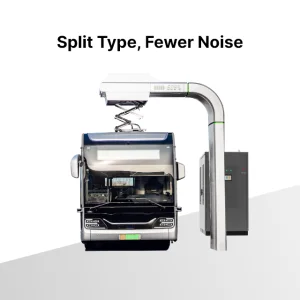
Heavy-duty trucks and public transit systems cannot afford long charging windows. Standard manual plug-in protocols present safety concerns and operational bottlenecks in high-voltage industrial yards. The transition toward automated overhead pantograph systems represents a major evolutionary step in commercial fleet management. Pantograph charging systems deliver high currents (up to 1500A) at voltage levels reaching 1000V. By integrating overhead charging arches directly into bus depots or highway stops, heavy-duty buses and freight trucks can replenish up to 80% of their battery capacity in under 15 minutes. This automated, contact-based system ensures safe energy transfer, zero manual intervention, and optimal space utilization in dense urban maintenance facilities.
Stay updated with our latest field deployments, technical analyses, and guidelines on advanced EV charging infrastructure integration.

In contrast to classic plug-in charging systems, e-bus pantograph systems allow for high-current automated charging directly at the bus stop, eliminating manual labor and reducing down-time...
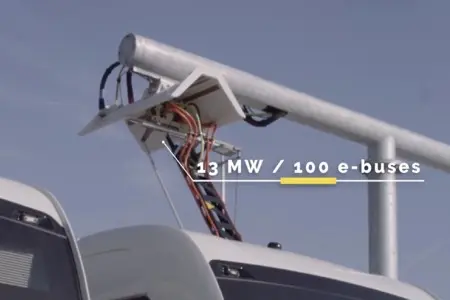
The charging time depends directly on the battery capacity and the station output power. Utilizing our 600kW supercharger pantograph system, typical transit buses can be charged within 10-15 minutes...
Installing a "Pantograph Up" system requires precise positioning, robust civil foundation engineering, high-power grid integration, and alignment with automated communication controls...
Essential answers regarding compliance, electrical safety standards, infrastructure requirements, and liquid cooling operations.
CCS1 (Combined Charging System 1) is the standard in North America, utilizing a single-phase AC pin structure alongside DC pins. CCS2 is the dominant European standard, featuring three-phase AC pins alongside DC pins. NACS (North American Charging Standard), developed by Tesla and now standardized under SAE J3400, integrates AC and DC charging through a single compact connector. MCS (Megawatt Charging System) is a specialized standard designed specifically for commercial and heavy-duty vehicles, supporting currents up to 3000A and voltages up to 1250V DC to deliver power levels in the megawatt range.
Traditional air-cooled copper conductors generate high levels of heat when carrying currents above 250A. To prevent overheating, the copper cross-section must be made larger, which results in thick, heavy, and difficult-to-handle cables. Liquid-cooled cables circulate a non-conductive coolant mixture directly to the connector terminals. This active heat dissipation reduces the required copper size, keeping the cables thin, lightweight, flexible, and safe to use, even while delivering continuous currents up to 600A.
A Battery Energy Storage System (BESS) acts as a local energy buffer. It stores power by charging slowly from the utility grid or local solar arrays during periods of low demand. When an EV plugs in to fast charge, the BESS discharges energy to the vehicle alongside the grid connection. This capability allows a facility with a limited 100kW grid connection to deliver peak charging rates of 300kW or more, helping operators avoid expensive utility upgrade fees and peak demand charges.
Deploying EV chargers internationally requires meeting specific regional safety and performance standards. In North America, equipment must carry UL or ETL safety listings alongside FCC compliance. In Europe, CE marking and TUV certifications are required, showing compliance with relevant IEC standards (such as IEC 61851-1 and IEC 61851-23). Additionally, communication interfaces must comply with ISO 15118 for vehicle-to-grid capabilities, and stations must support OCPP 1.6J or OCPP 2.0.1 protocols for network integration.
Bidirectional V2G (Vehicle-to-Grid) power modules enable two-way energy flow, allowing energy to move from the grid to the vehicle or back from the vehicle to the grid. For commercial fleets, like electric buses or delivery trucks that sit idle overnight or during mid-day breaks, V2G turns the vehicles into a mobile battery system. Fleet managers can discharge stored energy back into the local building or grid during peak demand hours, lowering energy costs and creating new revenue options through grid support services.
Industrial charging systems designed for fleet depots, heavy machinery, and emergency backup configurations.