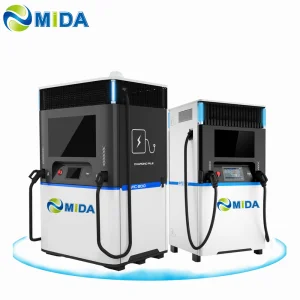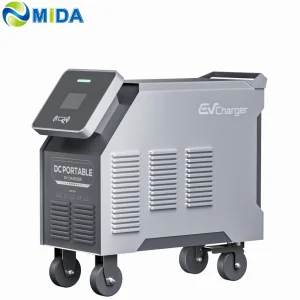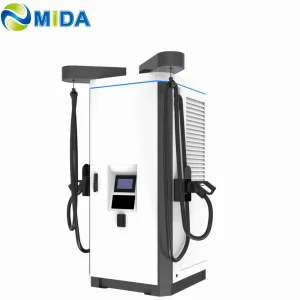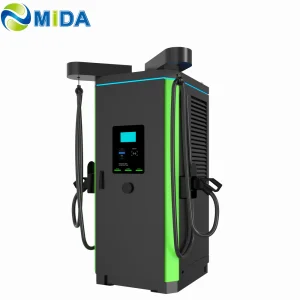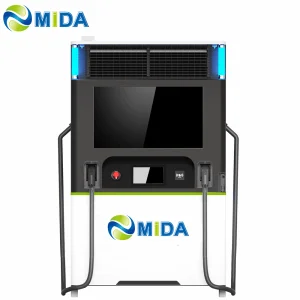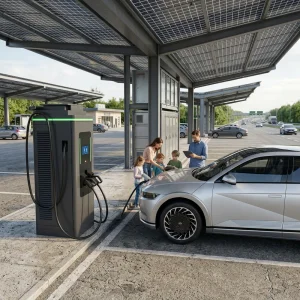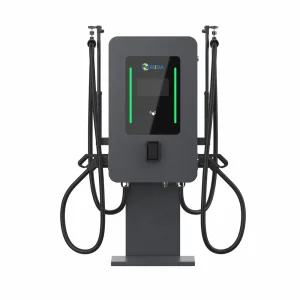
Explore our industrial-grade, certified DC fast charging stations designed for public networks, heavy-duty fleets, and commercial operations.
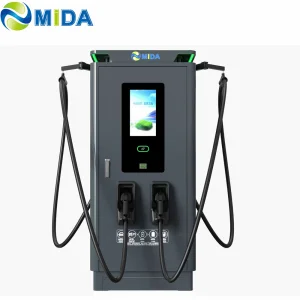
An Industry Whitepaper on Core Engineering, Chinese Manufacturing Strengths, and Strategic Global Deployment.
The global transition to sustainable mobility has moved past early adoption into heavy fleet electrification and ultra-fast transit corridors. The key constraint is no longer the availability of electric vehicles, but the
This document details the engineering specifications, integration processes, and supply chain efficiencies that position Chinese manufacturers as critical enablers of international charging networks. By integrating advanced silicon carbide (SiC) power modules, active liquid-cooling heat dissipation, and local battery storage buffers, modern DC fast chargers handle the thermal and electrical stress of high-duty-cycle operations.
By shifting from standard IGBTs to next-generation SiC MOSFETs, our internal power conversion modules decrease switching losses by up to 50%, maintaining high efficiency even at high temperatures.
Using synthetic coolant flow paths directly to the connector terminals allows for long-duration 500A continuous charging without thermal throttling or hardware wear.
Intelligent power allocation matrices dynamically route power in increments of 10kW or 20kW based on real-time BMS feedback, increasing overall station utilization.
Why China-based manufacturing provides high performance, reliability, and cost-efficiency for global EVSE procurement.
The Yangtze River Delta and Pearl River Delta regions contain a complete raw materials and components ecosystem for EV infrastructure. From raw copper cabling and magnetic core components to power module semiconductors, display controllers, and outdoor powder coatings, every tier of the manufacturing supply chain is located in close proximity. This concentration yields significant advantages:
Unlike regional manufacturers focused on a single localized plug type, Chinese EVSE suppliers support multiple global standards, including
Engineering compliance to meet safety and grid standards across North America, Europe, and Asia-Pacific.
A primary challenge for international procurement is ensuring compliance with regional safety codes, grid codes, and software protocols. MIDA Group platforms are designed to meet international standards. Below is a summary of our primary regulatory alignment:
| Target Region | Required Standards | MIDA Compliance Solutions |
|---|---|---|
| North America | UL 2231-1/-2, UL 2594, NEC Article 625, FCC Part 15 Class A | ETL and UL listed cabinet systems, CCS1 & NACS connector setups, leakage current protection (CCID20). |
| Europe & UK | CE-EMC, CE-LVD, EN 61851-1/-23, UK CA, MID (Measuring Instruments Directive) | CCS2 interface integration, built-in MID certified AC/DC energy meters, Class B EMC shielding. |
| Asia Pacific | GB/T 18487.1, GBT 20234, RCM (Australia) | High-voltage GB/T system layouts (up to 1000V/1000A), local utility standard approvals. |
| Global Protocol | OCPP 1.6J, OCPP 2.0.1, ISO 15118 (Plug & Charge) | Pre-configured cloud integration, encrypted TLS security, auto-negotiating dynamic authorization. |
Shanghai Mida Cable Group Ltd. operates through its wholly owned subsidiaries: Shanghai Mida EV Power Co., Ltd., Shenzhen Mida EV Power Co., Ltd., and Shanghai Mida New Energy Co., Ltd. Together, we provide complete, end-to-end design and manufacturing across three major divisions:
Mida Cable manufactures a comprehensive range of EV charging cables, including 16A–80A J1772 cables, 16A–63A IEC 62196-2 Type 2 cables, and DC fast charging cables: CCS1 (80A–500A), CCS2 (125A–1000A), CHAdeMO (125A–300A), GBT (200A–1000A), and NACS connectors (250A–600A).
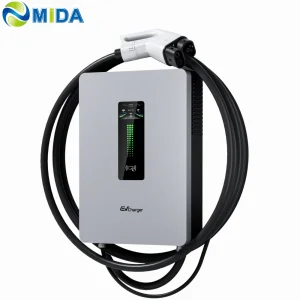
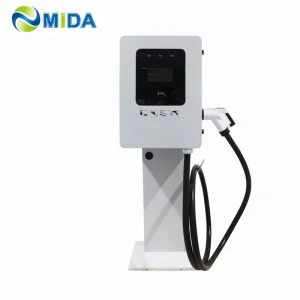
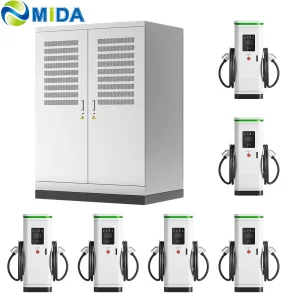
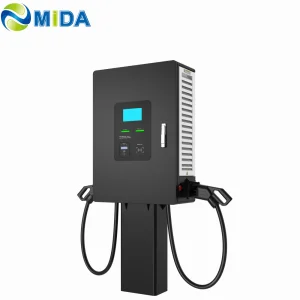
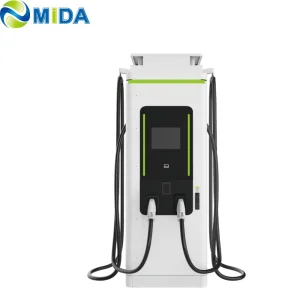
MIDA EV Power produces a full lineup of EV charging stations, such as 7kW–50kW mobile chargers, 3.6kW–7.2kW portable DC chargers, 360kW–1440kW split-type DC fast chargers, 20kW–50kW wall-mounted DC chargers, and 60kW–480kW floor-standing DC fast charging stations.
MIDA New Energy specializes in EV charger power modules, offering 20kW–60kW standard modules, 40kW–125kW liquid-cooled modules, 30kW–62.5kW bidirectional modules, and 20kW–45kW V2G charging modules.

A comprehensive overview of MIDA Group's vertically integrated product offerings.
Tailored infrastructure designs optimized for specific business models and geographical challenges.
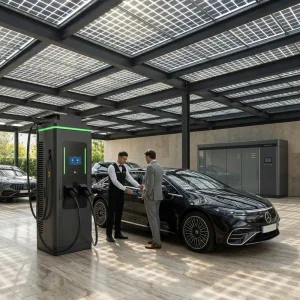
Minimize transit vehicle downtime using high-output dual-connector systems. The system integrates directly with fleet management software via custom APIs to prioritize charging based on route schedules.
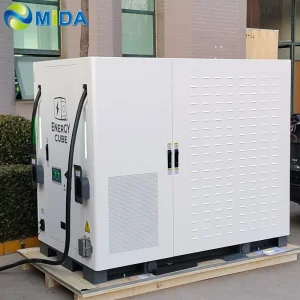
Combine local MPPT solar arrays with battery energy storage systems (BESS) to supply high-power DC fast charging in remote locations without requiring expensive utility grid upgrades.
Generate secondary revenue streams by integrating digital ad displays (43" to 55" high-brightness screens) with OCPP-compliant charging stations in high-foot-traffic commercial areas.
Key considerations when sourcing DC chargers at scale to ensure long-term ROI and grid compatibility.
While the initial purchase cost of a charger is important, operating expenses (OpEx) typically make up the largest portion of life cycle costs. Investing in power modules with high conversion efficiency (e.g., >96%) and liquid-cooled designs significantly reduces long-term maintenance costs and energy losses.
A commercial station must manage grid constraints. Our chargers support real-time local load balancing, allowing multiple chargers to share a fixed grid connection without exceeding utility capacity. This avoids costly transformer upgrades.
Ensure your hardware supplier supports open standards. OCPP 1.6J and OCPP 2.0.1 compliance prevent vendor lock-in, letting operators switch network management platforms. Data transmission must be secured using TLS encryption (HTTPS/WSS) to safeguard payment and user data.
Answers to common engineering, regulatory, and commercial questions from global EVSE buyers.
Stay informed on the latest high-power vehicle charging developments, including pantograph charging and heavy fleet electrification.
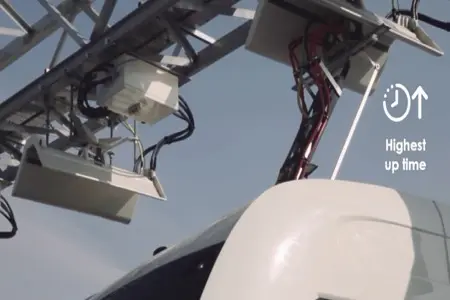
Unlike traditional manual plug-in systems, automated overhead pantograph systems enable high-power contact-free charging for transit buses, reducing driver interaction and wear on connectors.
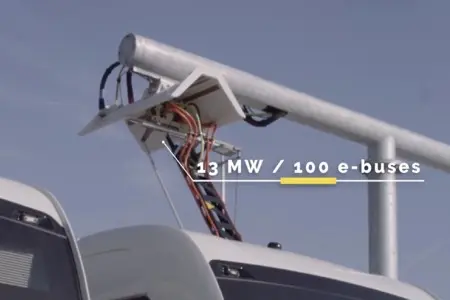
Charging times depend on battery capacity and output power. High-power overhead systems can deliver significant range during brief schedule stops, often in under 10 minutes.
Installing an overhead contact system requires careful structural alignment, grid integration, and safety checks to ensure reliable alignment with bus-mounted contact bars.
Explore our mobile fast chargers, wall-mounted stations, and integrated battery energy storage systems (BESS) for high-performance off-grid charging.