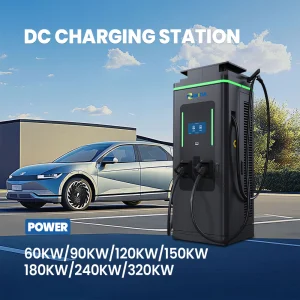
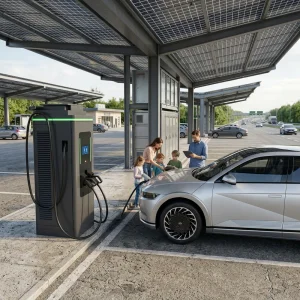
Operating through its wholly owned subsidiaries—Shanghai Mida EV Power Co., Ltd., Shenzhen Mida EV Power Co., Ltd., and Shanghai Mida New Energy Co., Ltd.—Mida Group is a vertically integrated power technology corporation. We lead the design, safety engineering, and large-scale manufacturing of electric vehicle charging infrastructure.
By consolidating our expertise in high-voltage metallurgy, thermal fluid dynamics, communication protocols, and industrial power electronics, Mida Group provides end-to-end solutions for global charge point operators (CPOs), transit operators, and hardware distributors.

The rapid maturation of electric vehicle propulsion technologies demands charging systems that are faster, more efficient, and dynamically responsive to the electrical grid.
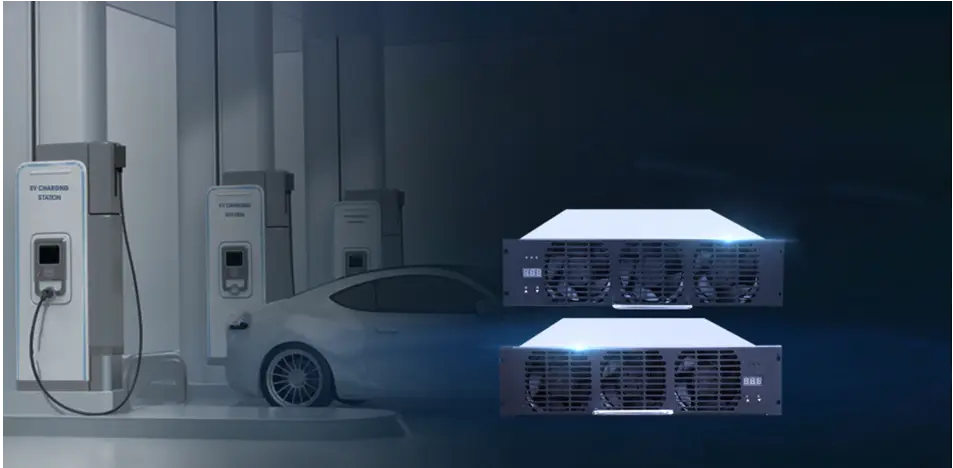
Transitioning from traditional silicon IGBTs to wide-bandgap Silicon Carbide (SiC) MOSFETs within our power modules allows switching frequencies to increase by up to 3x. This significantly reduces magnetic component volumes, cuts thermal energy dissipation by 35%, and yields power conversion efficiencies exceeding 96.5%.
To address heavy-duty maritime, logistics fleet, and long-haul trucking requirements, Mida's developmental roadmap includes active investments in the Megawatt Charging System (MCS) and ChaoJi architectures. Operating at voltages up to 1500V and currents up to 3000A, these systems bypass the traditional limitations of standard passenger vehicle connectors.
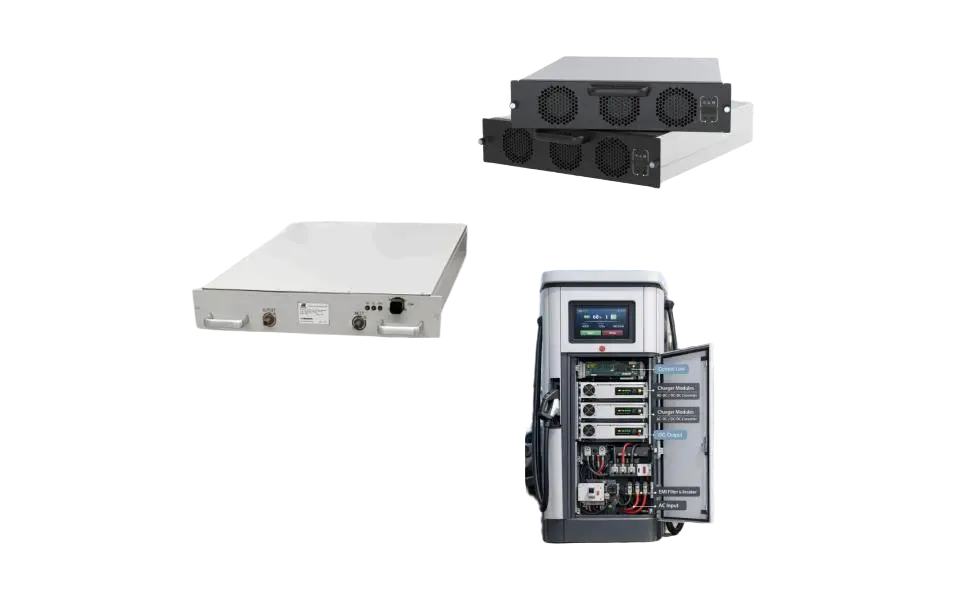
MIDA New Energy's bi-directional AC/DC power modules (20kW–62.5kW) enable Vehicle-to-Grid (V2G) topologies. These chargers treat the electric vehicle battery pack as a mobile energy node, providing ancillary services such as frequency regulation, peak shaving, and active load balancing back into commercial building microgrids.
Operating state-of-the-art facilities in key Chinese manufacturing hubs allows Mida Group to control every step of the supply chain. This vertical integration guarantees high quality, lowers costs, and speeds up time-to-market.
At Mida Cable, we control the entire lifecycle of high-performance EV charging cables. This spans copper drawing, polymer compounding for TPE/TPU insulation, and automated connector overmolding.
Under MIDA New Energy and MIDA EV Power, our factories use automated SMT (Surface Mount Technology) and robotic testing systems to manufacture critical power modules and control units.
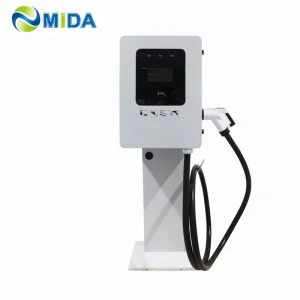
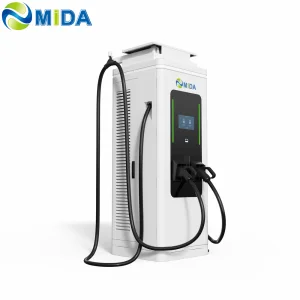
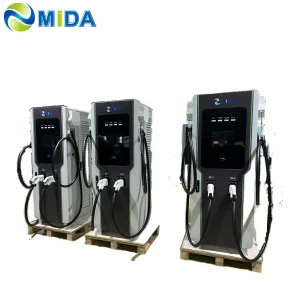
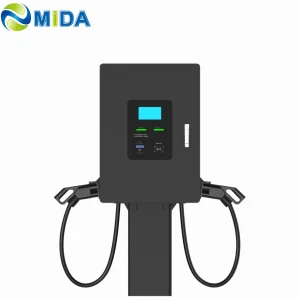
Explore our comprehensive product groups, designed to support everything from compact wall-mounted charging stations to high-voltage, megawatt-class charging hubs.
High-efficiency conversion cores
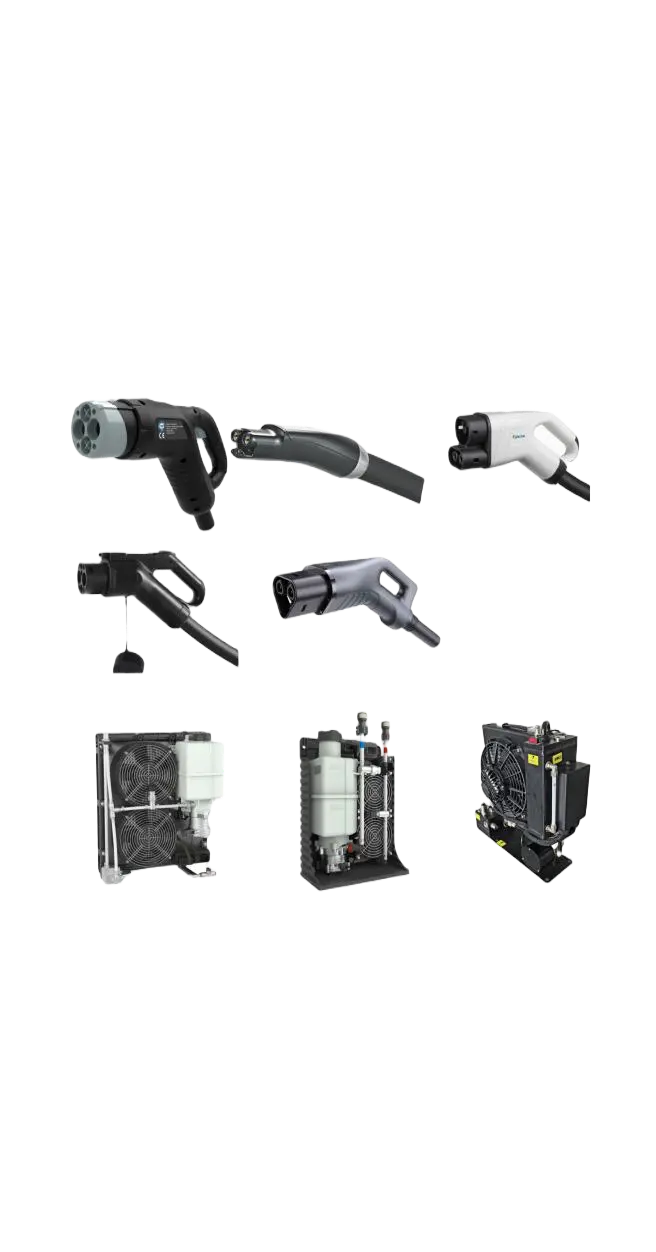
Heavy duty current delivery
Turnkey grid-connected solutions
Grid-buffered charging systems
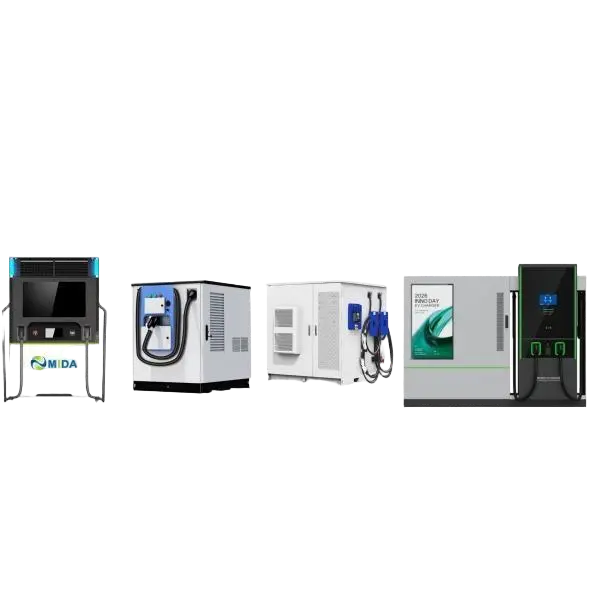
Deploying EV infrastructure requires customized solutions tailored to specific commercial use cases. Here is how Mida addresses key industry challenges.
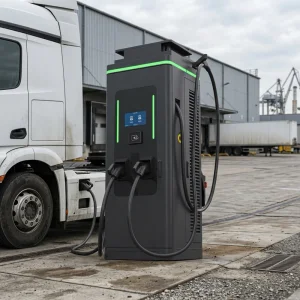
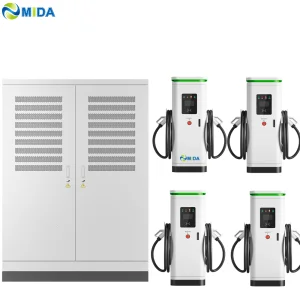
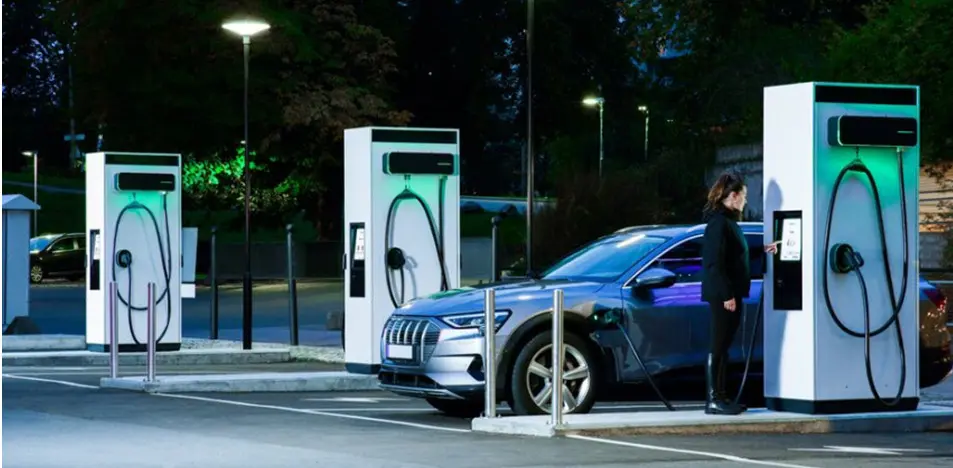
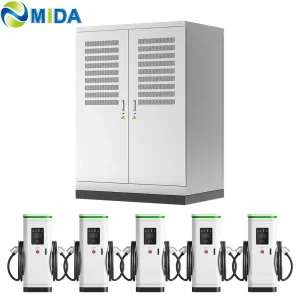
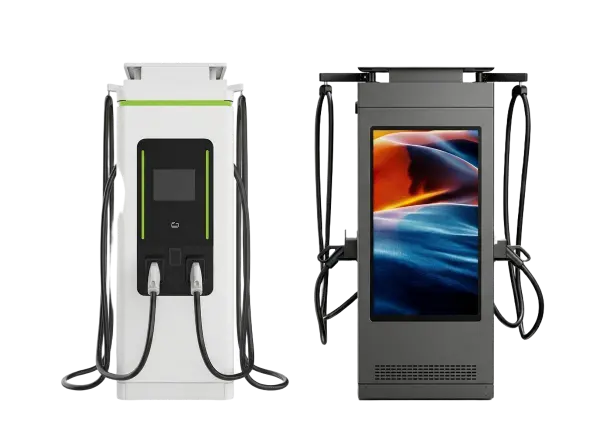
Our high-power split DC hubs (360kW to 1680kW) dynamically allocate power across multiple dispensers. This allows fleet operators to charge vehicles based on their schedules and SOC (State of Charge), keeping demand charges low and maximizing uptime.
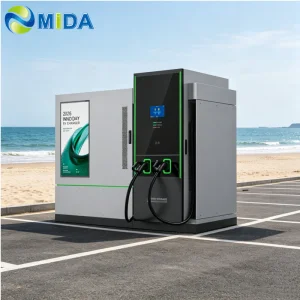
Built with OCPP 2.0.1 compliance, ISO 15118 (Plug & Charge), and secure POS credit card readers. These advertising-capable stations (available with 43-inch and 55-inch displays) help network operators drive advertising revenue while offering ultra-fast charging.
Our BESS-integrated systems (60kWh to 2MkWh battery options) store energy during off-peak times. This enables high-power DC fast charging in areas with limited grid capacity without requiring expensive substation upgrades.
Deploying charging equipment internationally requires strict adherence to regional safety standards and grid codes. Mida Group's entire hardware portfolio is engineered to meet and exceed global regulatory frameworks.
By working with international testing laboratories like TUV, Intertek, and SGS, we ensure our products comply with local safety requirements. This helps operators streamline their grid-connection approvals.
Hardware compatibility is only half the battle. True interoperability is achieved through robust protocol support at the local charging station level:
As a procurement director or infrastructure engineer, choosing the right manufacturer is key to minimizing Total Cost of Ownership (TCO). Here are the primary factors to evaluate:
Buying modular systems allows operators to swap components, like power modules, in the field. This lowers maintenance costs and keeps uptime high, avoiding the need to replace entire units.
Whether you need specific brand colors, custom wraps, unique payment reader mounts, or customized telemetry software, Mida provides scalable OEM/ODM services for global deployments.
We offer comprehensive spare part packages (such as charging cables, contactors, control boards, and filters) with standardized diagnostic APIs. This makes it easy for local technicians to maintain the equipment.
Keep up with Mida Group's latest research, product launches, and updates on automated heavy transport projects.
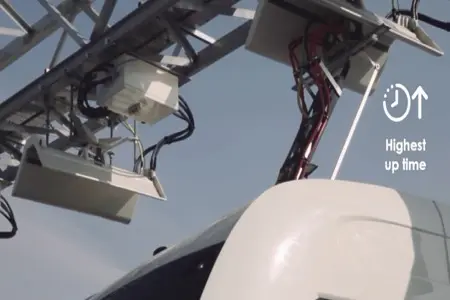
What are the advantages of an e-bus pantograph dome? In contrast to classic plug-in charging systems, e-bus pantograph systems offer automated connection capability, high power delivery, and minimal mechanical wear on the bus connector port.
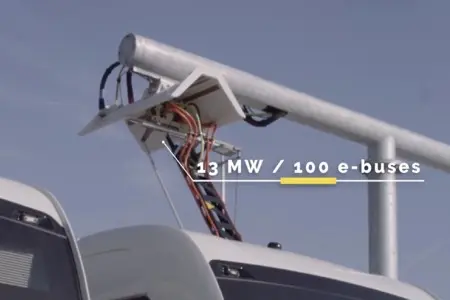
How long does it take to charge with an e-bus pantograph? The charging time depends on the battery capacity and the charging station's power output. In-route charging can add significant range during short 5-minute stops.
How to Install the Pantograph Up Charger System Dome for Electric Bus. Installing a "Pantograph Up" system requires precise spatial alignment, mechanical support structures, and integration with the electrical grid.
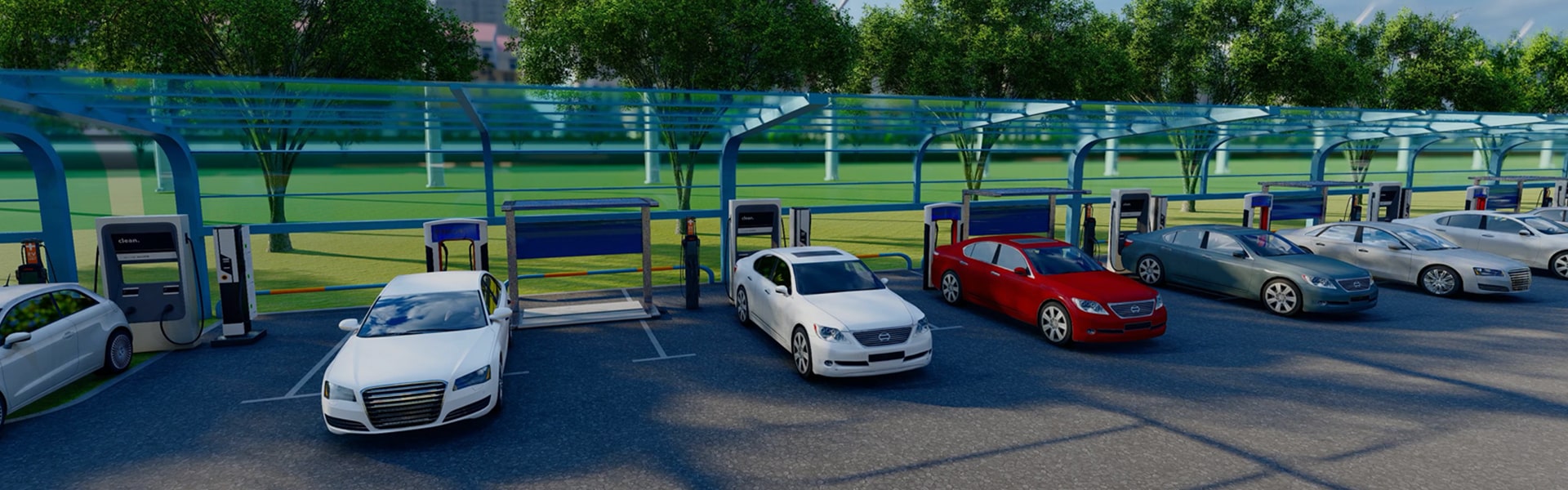
Find detailed answers to common technical, manufacturing, and regulatory questions about deploying DC fast charging systems.
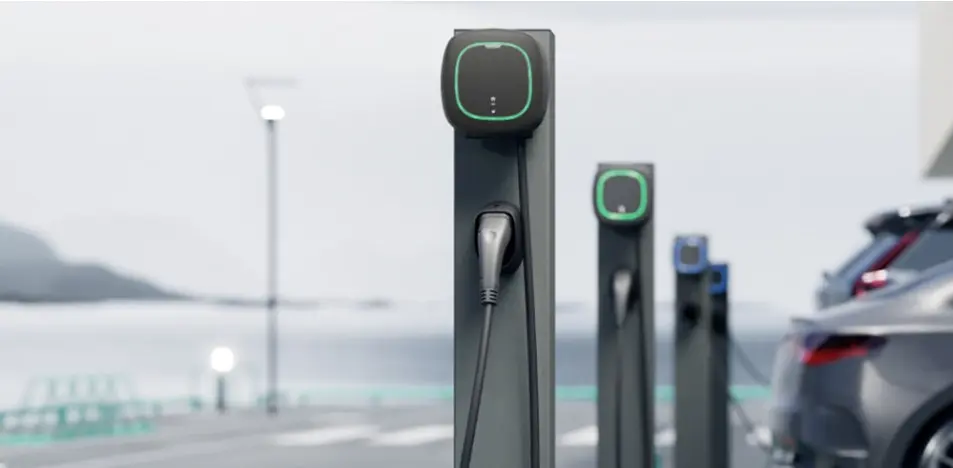
Explore our flexible wall-mounted, floor-standing, and portable configurations built for varying site layouts.