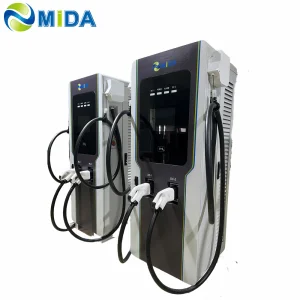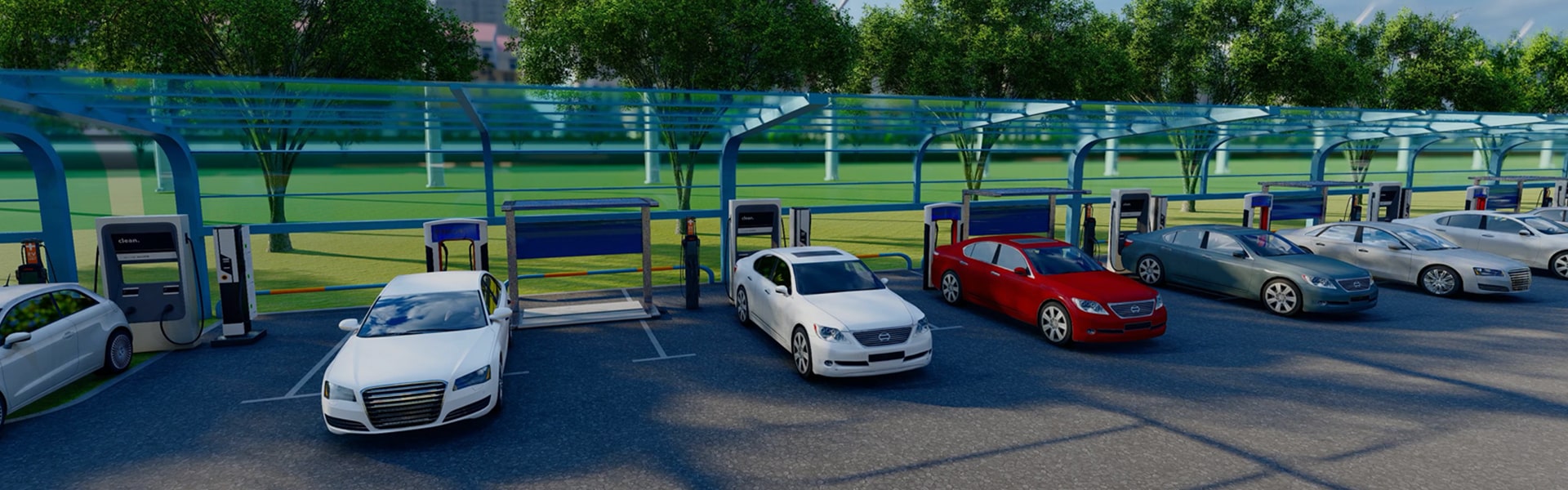
High-efficiency, future-proof EV charging points engineered for commercial networks and fleet operations.
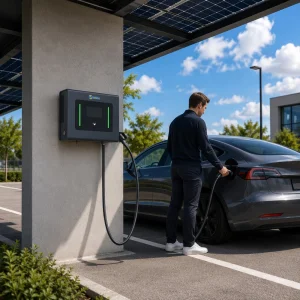
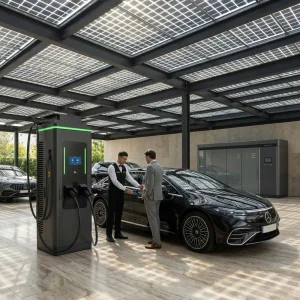
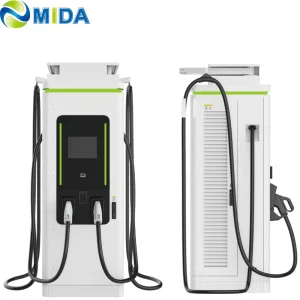
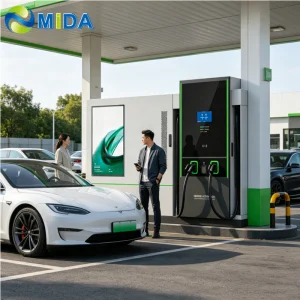
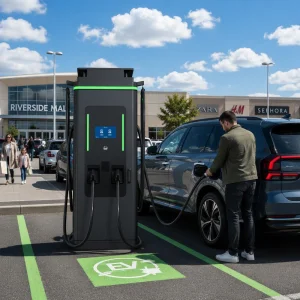
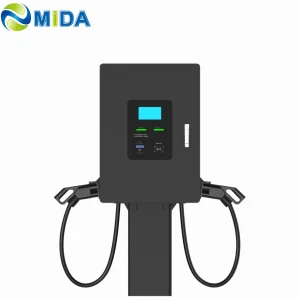
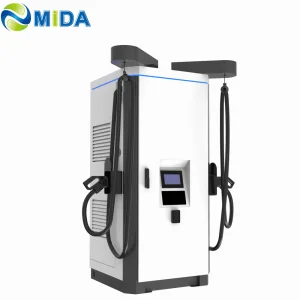
The global EV fast-charging landscape is transforming rapidly. From the pioneering CHAdeMO 1.0 (up to 50 kW) to the ultra-high-power CHAdeMO 2.0 delivering up to 400 kW, and the co-developed ChaoJi (CHAdeMO 3.0) offering over 900 kW, these protocols represent the forefront of grid-to-vehicle innovation. China's top-tier manufacturers are at the vanguard, engineering multi-protocol hardware that seamlessly integrates CCS1, CCS2, NACS, and CHAdeMO connectors to future-proof investments.
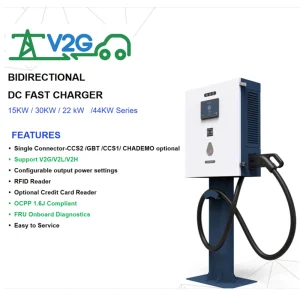
Unlike CCS, CHAdeMO has natively supported Vehicle-to-Grid (V2G) bidirectional communication for over a decade. As global grid stability faces stress from renewable integration, modern CHAdeMO DC chargers function as critical decentralized energy nodes. By employing advanced bidirectional AC/DC power modules (20kW–62.5kW), grid operators can utilize electric fleet batteries for load peak-shaving and ancillary services.
SEO Insights & Semantic Intent: Global search queries targeting "China CHAdeMO DC charger manufacturers" are shifting from simple hardware sourcing to comprehensive system compatibility: OCPP 2.0.1 integrations, MID/PTB compliance for billing, and dynamic load balancing architectures.
As governments globally implement stringent carbon neutrality mandates, utility companies, CPOs (Charge Point Operators), commercial fleets, and logistics networks require resilient, high-power DC infrastructure. When sourcing CHAdeMO DC fast chargers from Chinese suppliers, procurement executives evaluate beyond nominal power outputs to scrutinize core engineering specifications:
| Procurement Priority | Critical Engineering Metric | Strategic Business Advantage |
|---|---|---|
| Protocol Interoperability | OCPP 1.6J / OCPP 2.0.1 & ISO 15118-20 | Seamless cloud-platform monitoring and simplified OTA diagnostics. |
| Operational Longevity | Dual-chamber IP54/IP55 isolation, Liquid-cooled modules | Drastically reduced maintenance intervals in high dust or coastal environments. |
| Financial Compliance | PTB & MID Certifications, integrated POS terminals | Compliant billing structures across European and North American municipal regions. |
| Grid Friendly Integration | Active Harmonics Control < 5%, PF ≥ 0.99 | Reduced structural upgrades, mitigating grid distortion penalties from local utility grids. |
Shanghai Mida Cable Group Ltd. operates through its wholly owned subsidiaries: Shanghai Mida EV Power Co., Ltd., Shenzhen Mida EV Power Co., Ltd., and Shanghai Mida New Energy Co., Ltd.
Mida Cable manufactures a comprehensive range of EV charging cables, including 16A–80A J1772 cables, 16A–63A IEC 62196-2 Type 2 cables, and DC fast charging cables: CCS1 (80A–500A), CCS2 (125A–1000A), CHAdeMO (125A–300A), GBT (200A–1000A), and NACS connectors (250A–600A).
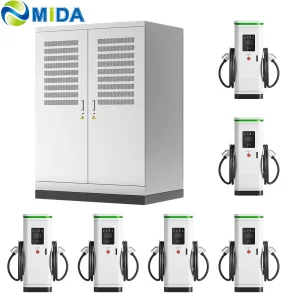
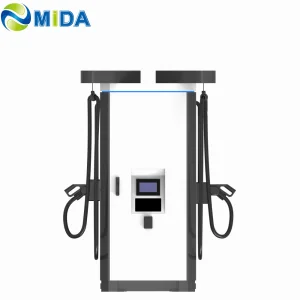
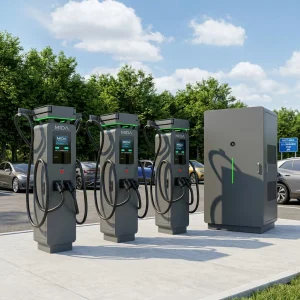
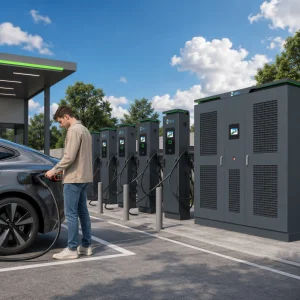
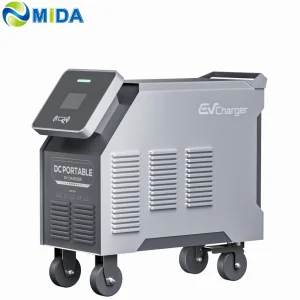
MIDA EV Power produces a full lineup of EV charging stations, such as 7kW–50kW mobile chargers, 3.6kW–7.2kW portable DC chargers, 360kW–1440kW split-type DC fast chargers, 20kW–50kW wall-mounted DC chargers, and 60kW–480kW floor-standing DC fast charging stations.
MIDA New Energy specializes in EV charger power modules, offering 20kW–60kW standard modules, 40kW–125kW liquid-cooled modules, 30kW–62.5kW bidirectional modules, and 20kW–45kW V2G charging modules.

Global procurement teams face strict project deadlines and regional regulatory barriers. Deciding on a Chinese manufacturing partner involves assessing structural advantages that go beyond low labor costs. Industry 4.0 processes ensure consistent production quality, long-term stability, and supply chain control:
From custom copper wire drawing and raw polymer compounding at the cable level to proprietary PCB assembly and design of 40kW/125kW power modules. By controlling all phases of production, MIDA eliminates mid-tier markups and prevents production bottlenecks.
Every CHAdeMO charger undergoes multi-point testing, including insulation resistance validation, surge simulation, high-temperature load cycles, and end-to-end communication handshakes using EV simulators. This ensures compliance with CE, TUV, and UL standards.
Our localized engineering support ensures configurations align with local regulations, including CE compliance for Europe, UL standards for the Americas, and specific CHAdeMO 2.0.1 integrations for rapid charging projects in Japan and APAC.
Explore our core manufacturing competencies across power modules, heavy-duty connectors, and modular charging stations.
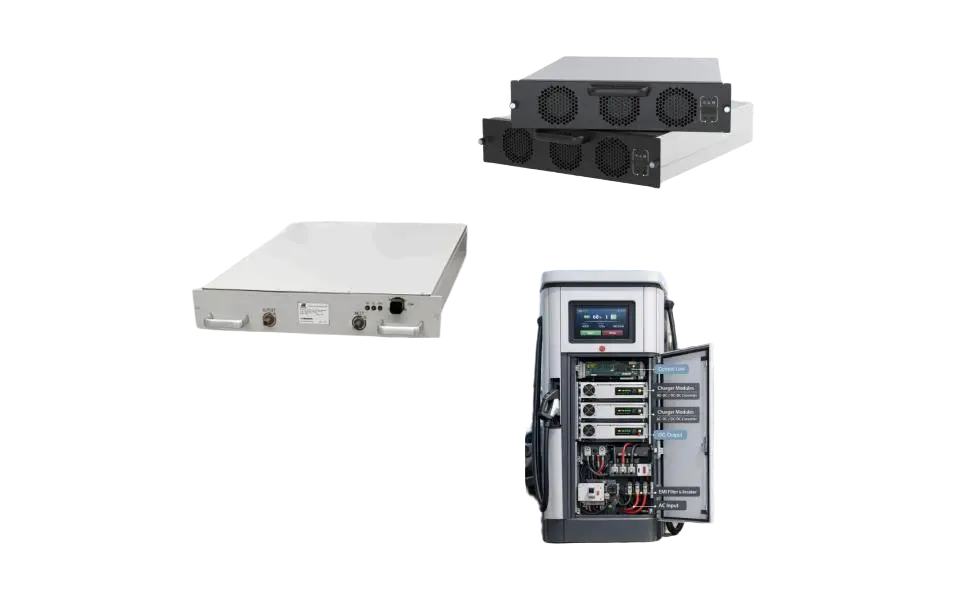
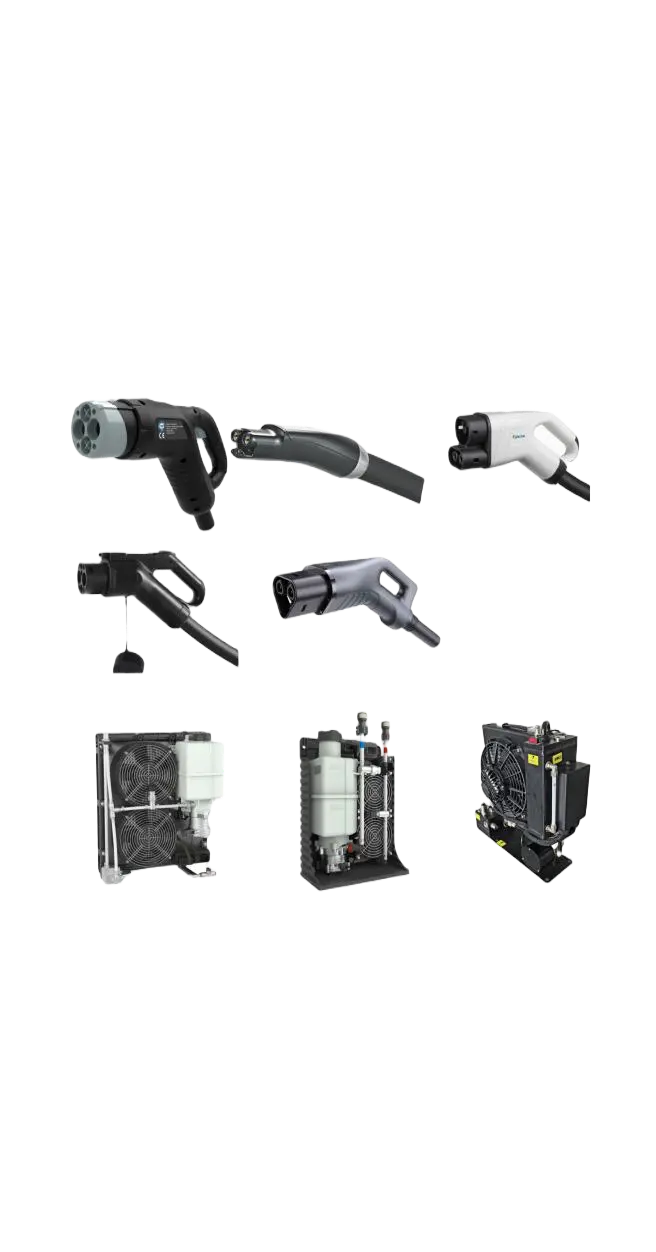
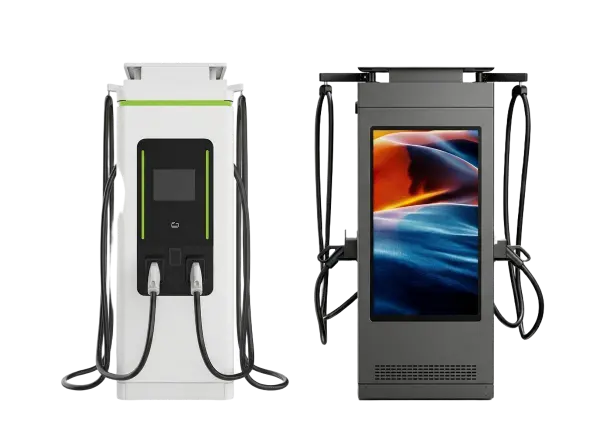
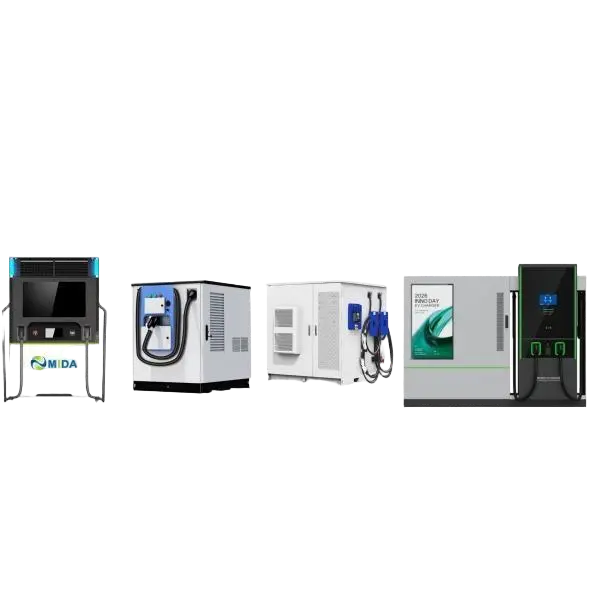
Modern electrical grids and localized logistics infrastructures demand specialized DC charging systems. Below are three deployment environments where our multi-standard CHAdeMO and CCS integration proves highly effective:
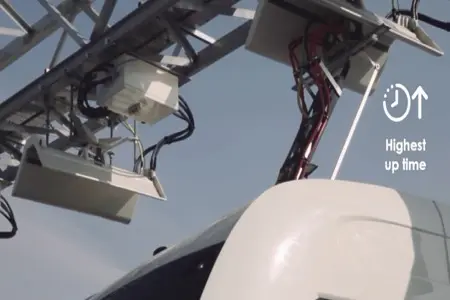
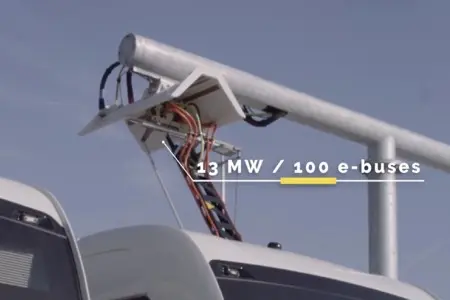
Transit systems require high uptime. MIDA's split-type high-power systems support overnight fleet charging and pantograph-up fast charging. They are compatible with CHAdeMO 2.0.1 standards, delivering reliable power for commercial transit vehicles.
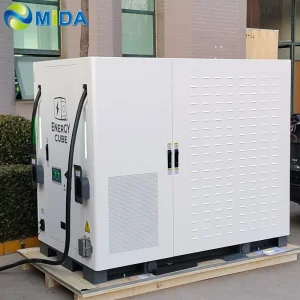
For smart commercial parks, integrating solar PV, Battery Energy Storage Systems (BESS), and DC fast chargers lowers peak grid demand. Our integrated BESS chargers let facilities offer fast EV charging without expensive local grid upgrades.
For highway breakdown services, utility providers, and remote operations, mobile EV chargers equipped with off-grid solar inputs and built-in batteries supply quick power where traditional grid access is unavailable.
Technical innovations and updates from the MIDA R&D centers.
Technical and regulatory answers for global purchasing managers and engineers.
Standard standalone chargers configured only for CHAdeMO cannot interface directly with CCS or NACS because of protocol differences. However, MIDA manufactures dual and multi-outlet chargers that integrate CHAdeMO, CCS, and NACS connectors within a single housing, sharing the internal DC power module stack.
Liquid-cooled systems route specialized coolant through the cables, connectors, and power modules. This configuration improves heat dissipation, allowing thin, lightweight cables to safely handle currents up to 600A. It also isolates sensitive components, protecting them from dust, humidity, and salt spray in coastal zones.
CHAdeMO uses bidirectional CAN bus communications. When integrated with bidirectional power modules, the charger reads the vehicle's battery state of charge (SoC) and commands the inverter to feed power back to the building (V2B) or grid (V2G) during periods of high demand, complying with ISO 15118-20 standards.
For European markets, CE certification and MID compliance for billing accuracy are required. In North America, chargers must carry UL certification (such as UL 2202 and UL 2231). MIDA stations comply with these standards, ensuring smooth customs clearance and local utility approval.
From modular DC power components to ultra-high output split configurations.