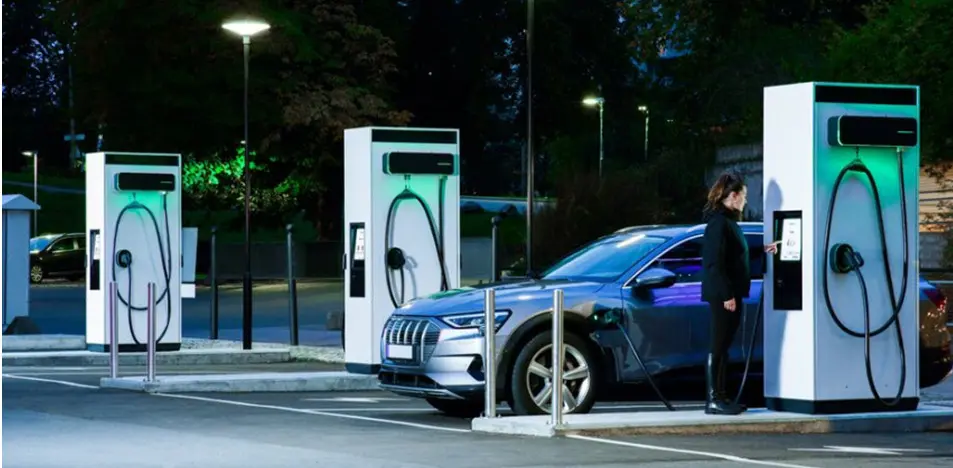
Premium grade, multi-protocol compatible EV fast charging stations certified for utility-scale deployment globally.
As the electrification of transportation accelerates globally, the demand for robust utility-grade battery car charging systems has expanded from public passenger vehicle setups to complex industrial depot operations. Heavy logistics networks, municipal transit agencies, and commercial properties now face the challenge of scale. Charging systems are no longer standalone devices but critical nodes integrated with distribution grids, regional battery storage, and dynamic local energy generation systems.
In North America, Europe, and the Asia-Pacific region, the growth of heavy transport electric vehicles (e-trucks, municipal electric buses) has forced charging topologies to shift towards ultra-high-power charging (HPC) ecosystems. To support this growth without causing localized grid collapse, manufacturing standards must align with grid compliance certificates including OCPP 1.6J/2.0.1, CE, UL, PSE, and GB/T. Modern tier-1 factories must not only produce hardware but engineer holistic energy transformation stations capable of handling megawatts of continuous power demand while maximizing overall thermal efficiency.
Shanghai Mida Cable Group Ltd. operates through its wholly owned specialized subsidiaries: Shanghai Mida EV Power Co., Ltd., Shenzhen Mida EV Power Co., Ltd., and Shanghai Mida New Energy Co., Ltd. This strategic integration allows us to cover the entire value chain of EV charging infrastructure manufacturing.
Mida Cable manufactures a comprehensive range of EV charging cables, including 16A–80A J1772 cables, 16A–63A IEC 62196-2 Type 2 cables, and heavy-duty DC fast charging cables: CCS1 (80A–500A), CCS2 (125A–1000A), CHAdeMO (125A–300A), GBT (200A–1000A), and NACS connectors (250A–600A).
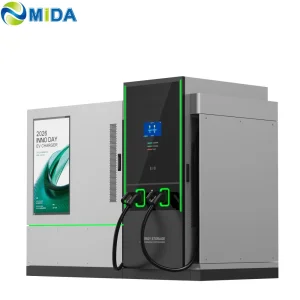
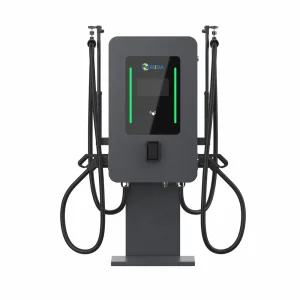
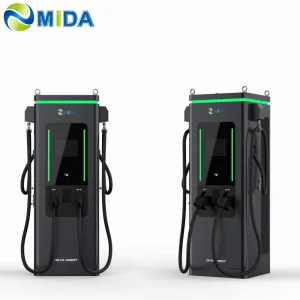
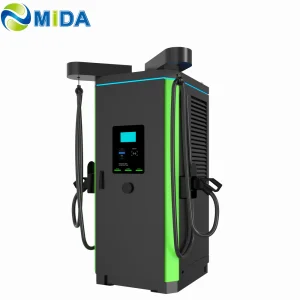
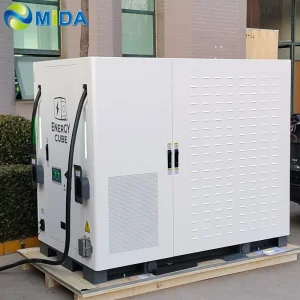
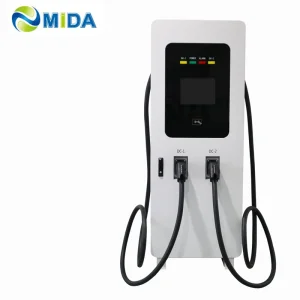
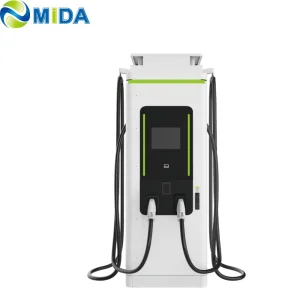
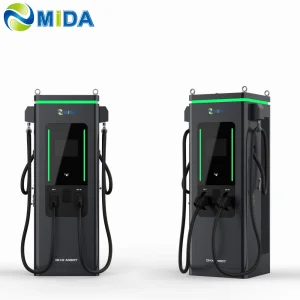
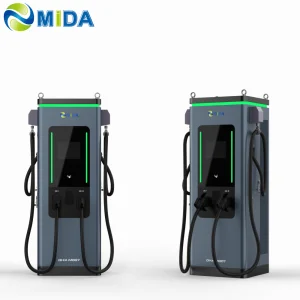
Our infrastructure division, MIDA EV Power, produces an extensive range of chargers including 7kW–50kW mobile chargers, 3.6kW–7.2kW portable DC chargers, 360kW–1440kW split-type DC fast chargers, 20kW–50kW wall-mounted DC units, and 60kW–480kW floor-standing DC fast charging stations.
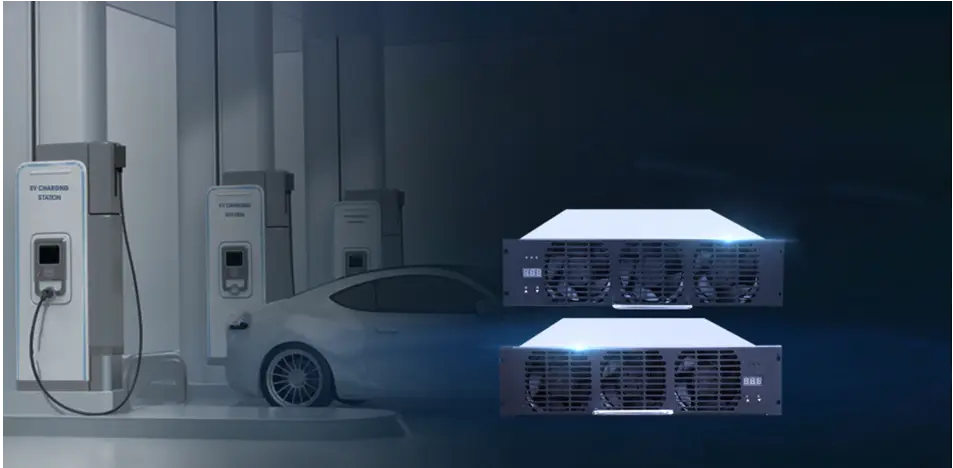
Meanwhile, MIDA New Energy focuses on state-of-the-art power components, offering 20kW–60kW standard power modules, 40kW–125kW liquid-cooled power modules, 30kW–62.5kW bidirectional modules, and 20kW–45kW specialized V2G charging modules.

Explore the four primary divisions of Mida Group's hardware and components manufacturing ecosystem.
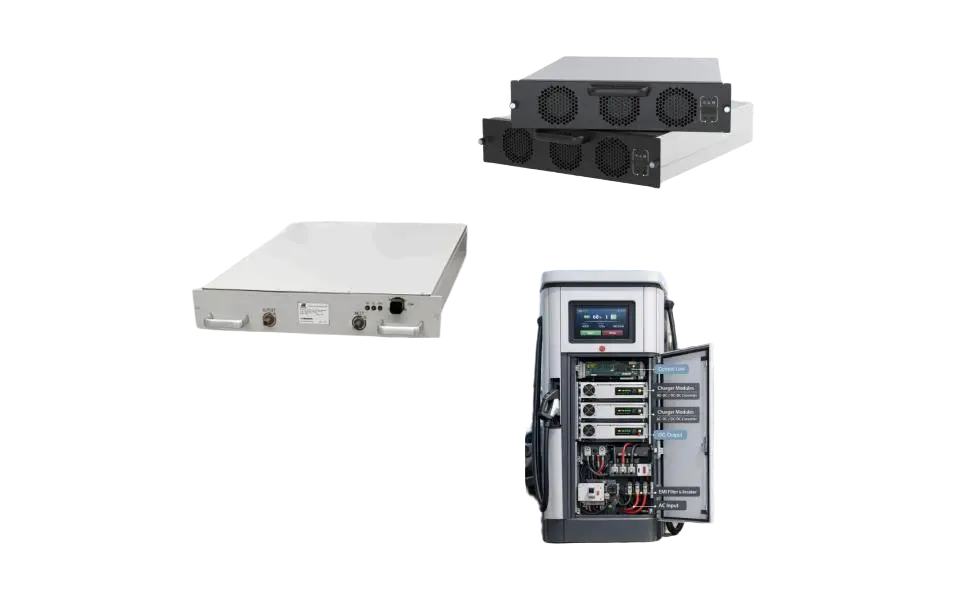
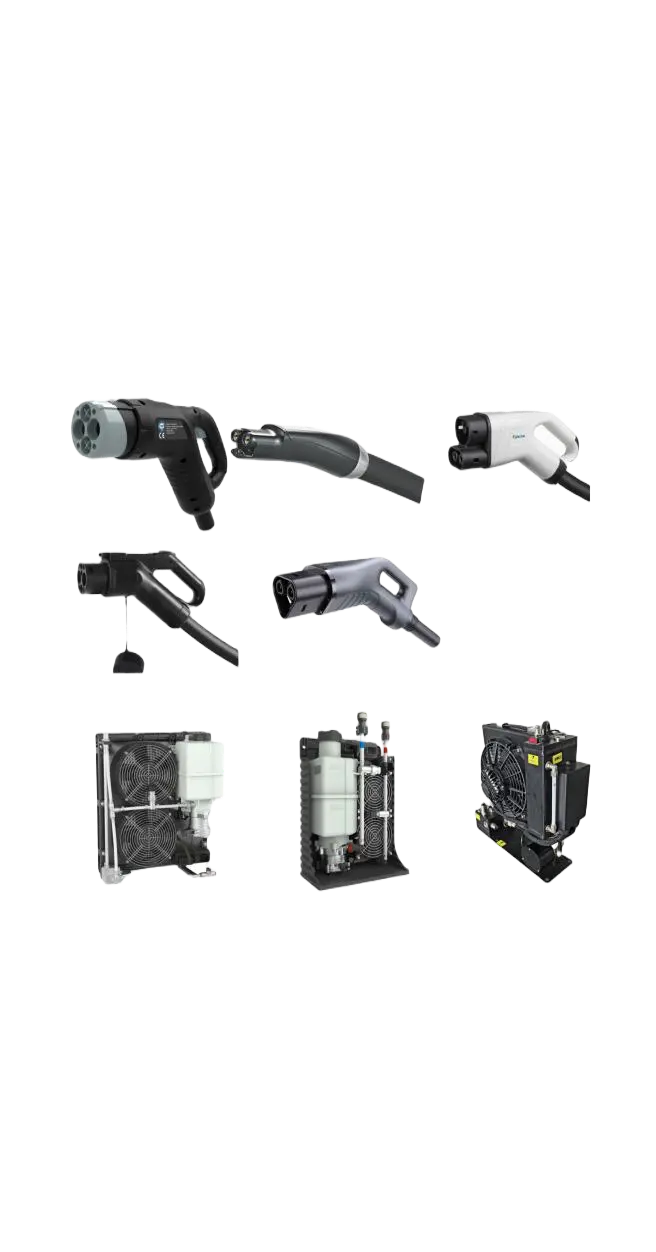
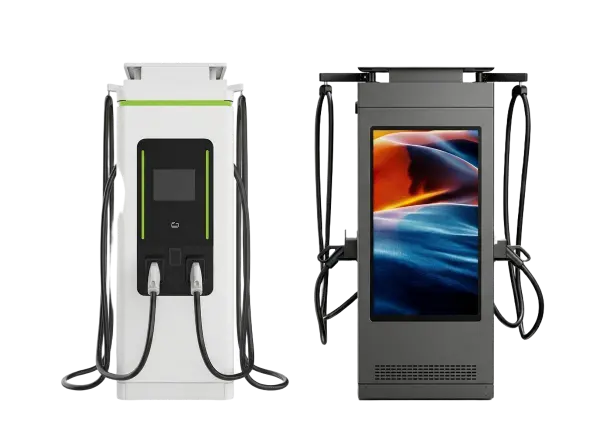
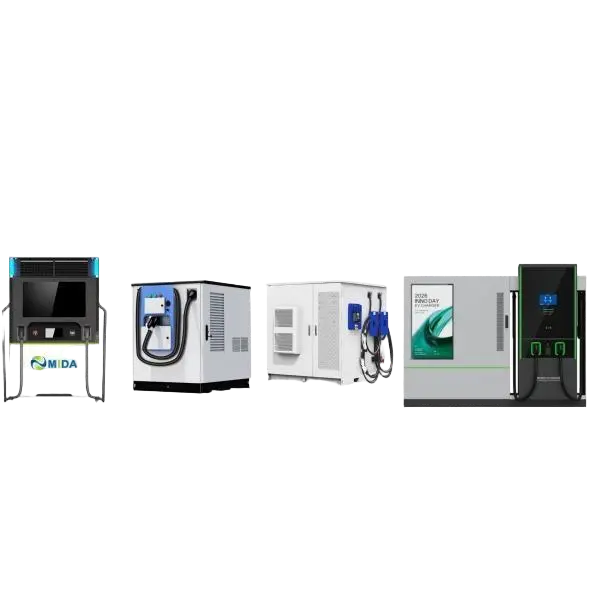
Tailored high-performance categories designed for residential, commercial, and off-grid peak energy operations.
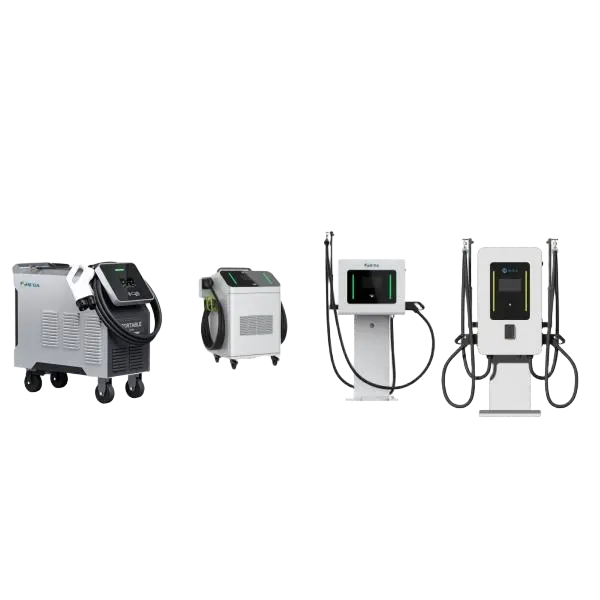
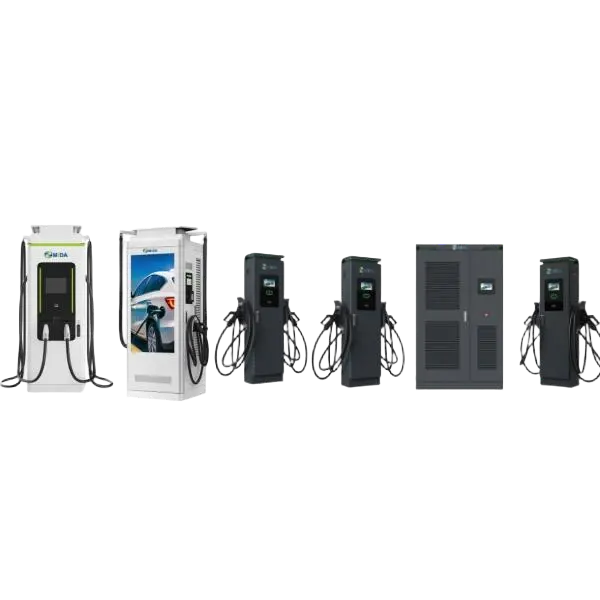
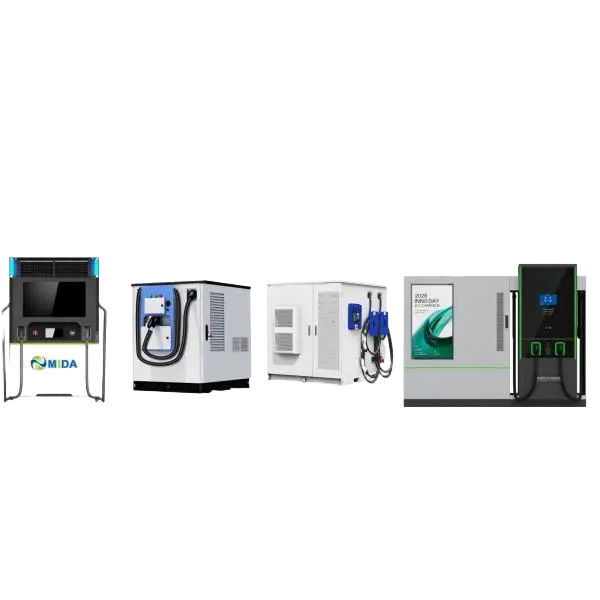
Developing industrial battery car charging stations requires balancing power density, thermal performance, and grid compatibility. Mida Group's technical roadmap addresses these factors through thermal optimization and high-frequency power conversion design.
Modern power conversion relies on Silicon Carbide (SiC) MOSFET-based topologies in the AC/DC rectifier and DC/DC stage. Compared to traditional Silicon IGBTs, SiC components operate at higher switching frequencies (above 100 kHz), reducing the size of magnetic components and filters. This technology enables MIDA to build 40kW and 60kW modules with over 96.5% peak conversion efficiency. The modular design ensures that if one module fails, the station continues operating at reduced capacity, improving system reliability.
Charging at currents above 250A increases heat generation inside charging cables and connector pins. Liquid-cooled charging technology address this thermal load. By circulating coolant (typically a water-glycol mixture) through integrated channels inside the cable jacket directly to the contacts, Mida Group's liquid-cooled stations deliver up to 600kW through a single light-weight cable. This setup maintains connector temperature below 50°C, ensuring safety and continuous operation.
As fast-charging stations reach megawatt levels, grid capacity becomes a limiting factor. Implementing Battery Energy Storage Systems (BESS) allows operators to buffer local power. During low-demand periods, the integrated BESS charges slowly from the grid. When a vehicle requires high-power charging, the station draws from both the grid and the BESS. This approach prevents voltage drops, reduces peak demand fees, and enables fast charging in areas with limited grid infrastructure.
Explore the practical integration of our Pantograph and high-power transport line solutions.

In contrast to classic plug-in charging systems, e-bus pantograph dome architectures allow autonomous charging during short driver breaks. The overhead mechanism automates electrical connection, enabling higher safety margins and automated megawatt power transfer.
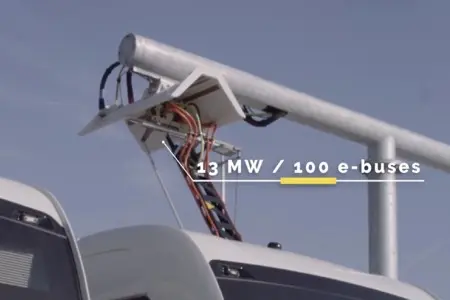
Charging time depends on the battery pack capacity and the maximum output of the charger system. Utilizing our high-voltage 450kW pantograph interfaces, e-buses can recover up to 80% range within 10 to 15 minutes of opportunity charging at stops.
Installing a “Pantograph Up” system involves structural alignment of overhead trusses, electrical calibration of telemetry sensors, and setting up communication lines based on ISO 15118 protocols for vehicle detection.
Advanced V2G compatible infrastructure hardware and ultra-fast DC systems.
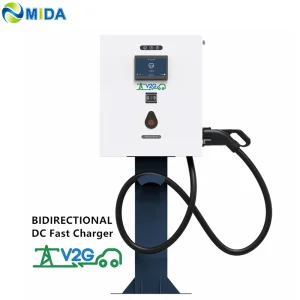
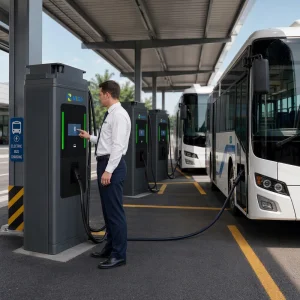
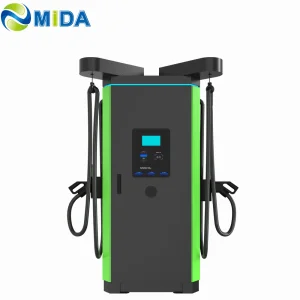
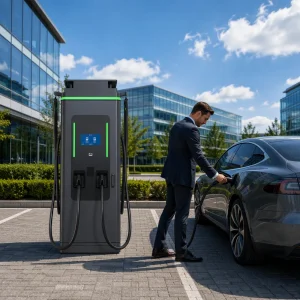
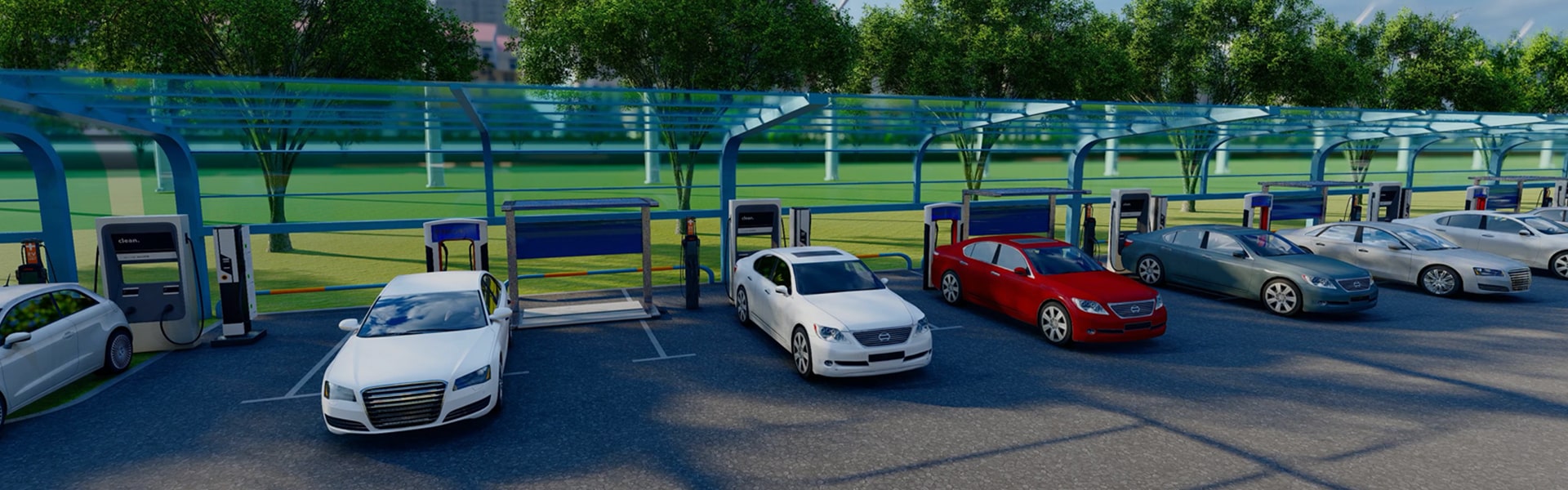
As electric vehicle infrastructure moves beyond standard public chargers, implementation requires specialized configurations for specific commercial scenarios. Below are three primary application cases built around Mida Group's manufacturing line.
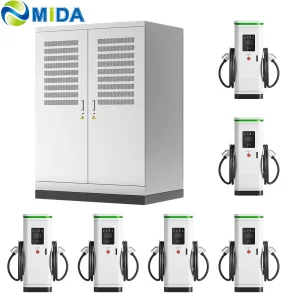
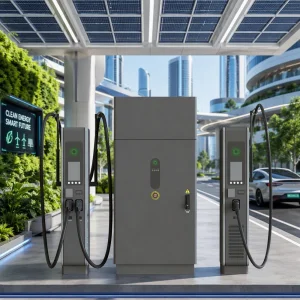
Commercial transport fleets require highly reliable charging infrastructure. Downtime directly impacts operational efficiency. Depot installations utilize 360kW to 1680kW Split Type DC Charging Stations. In this configuration, the power conversion modules are located in a centralized utility enclosure away from the active work areas, while low-profile charging satellites are installed next to the loading docks. This setup optimizes yard space and simplifies technical maintenance, as technicians can service the main power cabinet without disrupting site operations.
Highway locations require high power transfer to minimize charging stops. The standard configuration uses Liquid Cooled Split charging stacks rated at 600kW to 960kW. Equipped with dual CCS2 or GBT high-capacity liquid-cooled connectors, these systems can charge modern EVs from 10% to 80% state-of-charge (SoC) in approximately 10 minutes. The integrated liquid cooling system maintains stable cable and terminal temperatures, ensuring consistent high-speed charging even during hot weather.
In rural areas, park locations, or construction zones, grid connection is often limited. Mida Group's Mobile ESS Charging Stations (ranging from 15kW to 480kW with integrated 60kWh to 2MkWh battery storage) address this challenge. These units operate independently of local utility connections. Utilizing solar arrays and MPPT controller modules, they capture local energy, store it, and deliver stable DC fast-charging to electric vehicles on-demand.
B2B technical questions and specifications answered by Mida Group's engineering division.