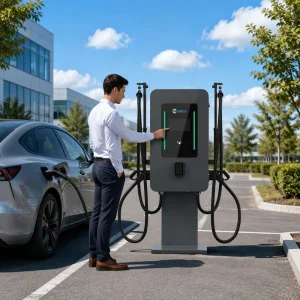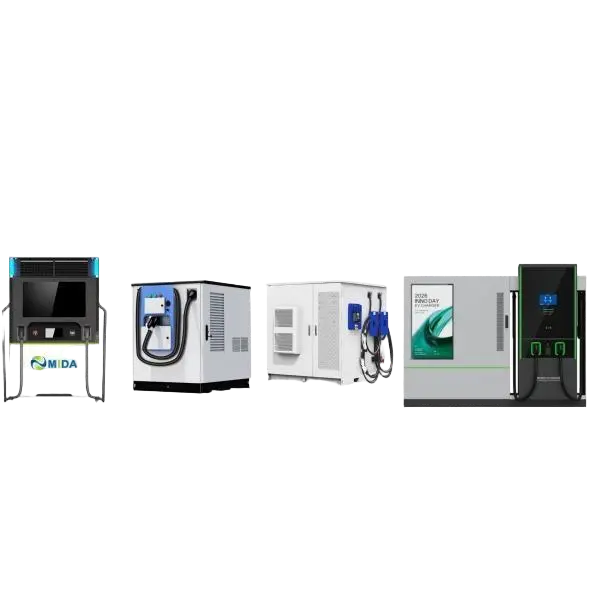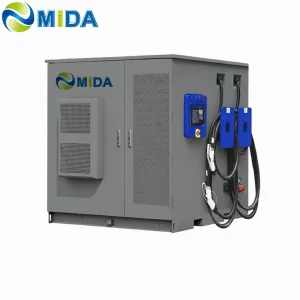
High-performance charging stations supporting dynamic load management, universal standards, and ruggedized environmental protections.
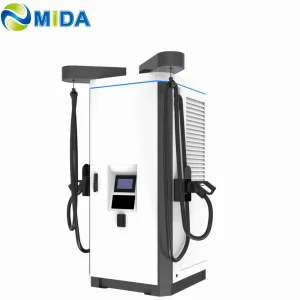
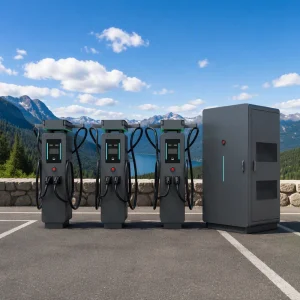
Shanghai Mida Cable Group Ltd. operates through its wholly owned subsidiaries: Shanghai Mida EV Power Co., Ltd., Shenzhen Mida EV Power Co., Ltd., and Shanghai Mida New Energy Co., Ltd. We occupy an authoritative position in the electric vehicle supply equipment (EVSE) market, specializing in advanced high-voltage component manufacturing and electrical transmission interfaces.
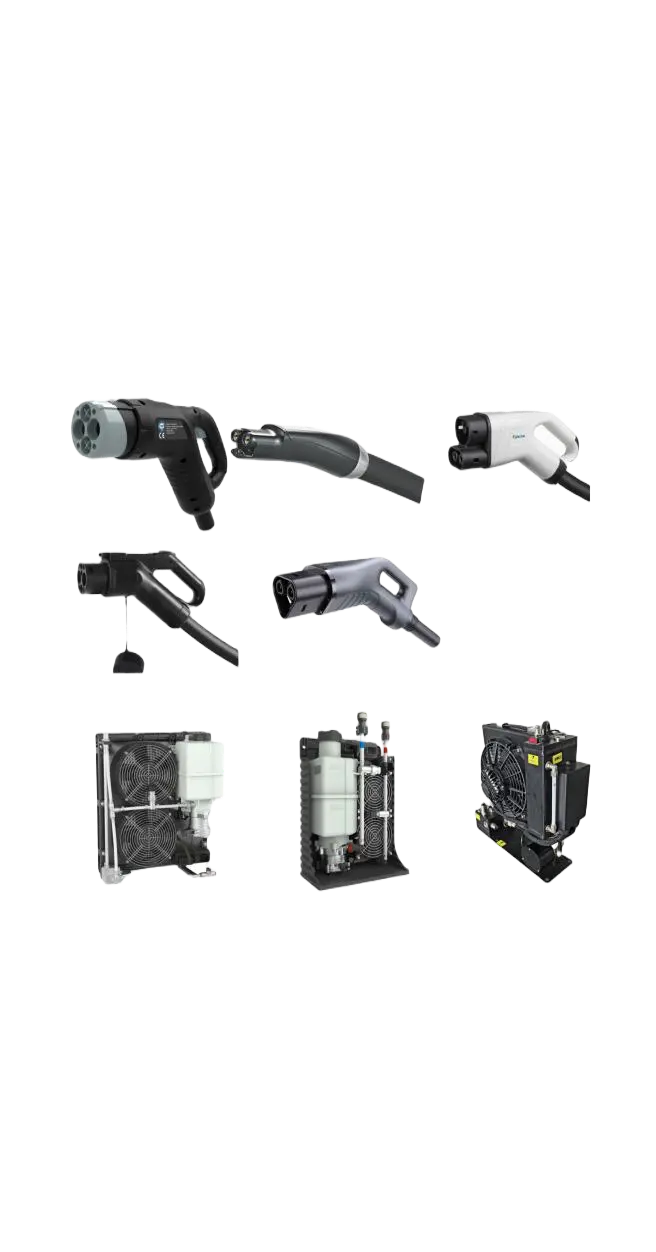
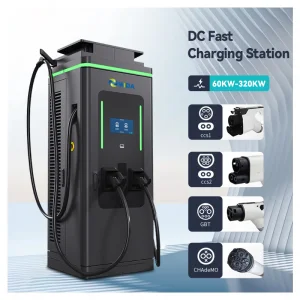
Mida Cable manufactures a comprehensive range of EV charging cables, including 16A–80A J1772 cables, 16A–63A IEC 62196-2 Type 2 cables, and DC fast charging cables: CCS1 (80A–500A), CCS2 (125A–1000A), CHAdeMO (125A–300A), GBT (200A–1000A), and NACS connectors (250A–600A).
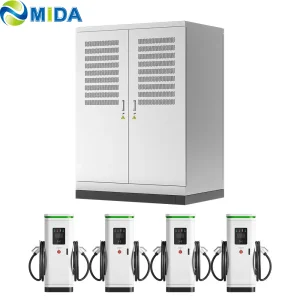
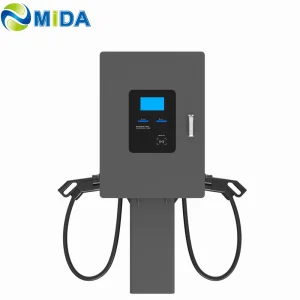
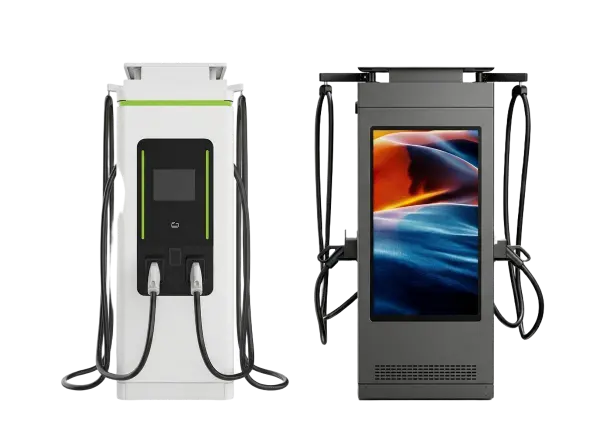
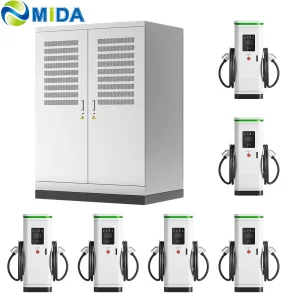
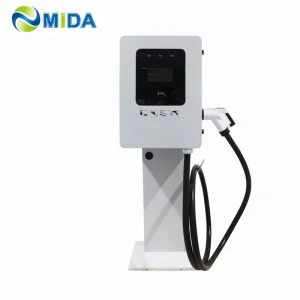
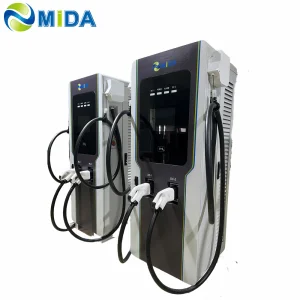
MIDA EV Power produces a full lineup of EV charging stations, such as 7kW–50kW mobile chargers, 3.6kW–7.2kW portable DC chargers, 360kW–1440kW split-type DC fast chargers, 20kW–50kW wall-mounted DC chargers, and 60kW–480kW floor-standing DC fast charging stations.
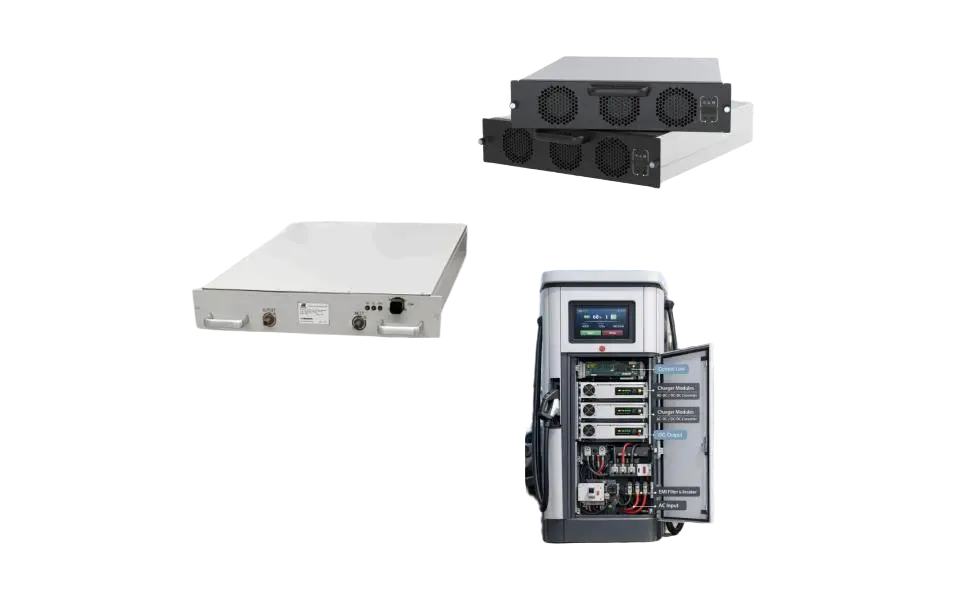
MIDA New Energy specializes in EV charger power modules, offering 20kW–60kW standard modules, 40kW–125kW liquid-cooled modules, 30kW–62.5kW bidirectional modules, and 20kW–45kW V2G charging modules. Our vertical integration strategy ensures strict control over both component level metallurgy and software integration.

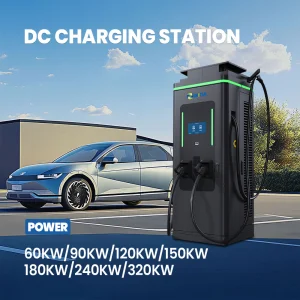
In the global landscape of electric vehicle (EV) supply equipment, the 60kW DC charging station represents the optimal sweet spot matching distribution grid limitations with user dwell-time requirements. While high-power chargers (HPCs) ranging from 150kW to 480kW draw significant capital expenditures and strain local MV grids, the 60kW variant provides commercial operators, municipalities, and fleet managers with an accessible capital profile. It offers an efficient balance of charging speed and infrastructural investment.
A typical electric passenger vehicle equipped with a 60kWh to 80kWh battery pack can charge from 20% to 80% state of charge (SoC) in approximately 45 to 60 minutes using a 60kW DC station. This corresponds precisely with dwell patterns at retail complexes, medical offices, municipal garages, and logistics hubs.
| Metric | 60kW DC Fast Charger | 150kW Ultra Fast Charger | 11kW AC Destination Charger |
|---|---|---|---|
| Typical Grid Connection Req. | 65-70 kVA (Low Voltage) | 165-180 kVA (Medium Voltage required frequently) | 11-12 kVA (Standard LV) |
| Avg. Charge Time (80% SoC) | 45-60 minutes | 15-25 minutes | 5-7 hours |
| Module Configuration | 2x 30kW or 3x 20kW Modules | 5x 30kW or 4x 40kW Modules | On-board vehicle inverter dependent |
| Primary Use Cases | Retail hubs, Fleet depots, Workplaces | Highway rest areas, En-route charging | Residential, Overnight parking |
From the standpoint of utility interconnect approvals, a 60kW system can often be connected directly to existing low-voltage secondary networks without necessitating dedicated transformer installations. This significantly reduces installation timelines and engineering overhead, providing a rapid pathway to network scale.
MIDA's engineering catalog spans localized AC hubs to high-power grid-tied DC architectures.
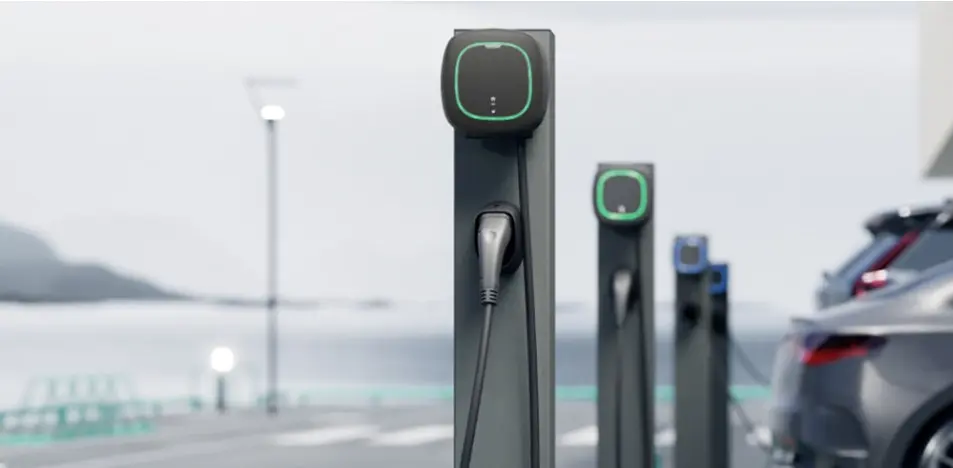
Residential and workplace optimization. Secure, slow-charging units designed for long-dwell environments with standard grids.
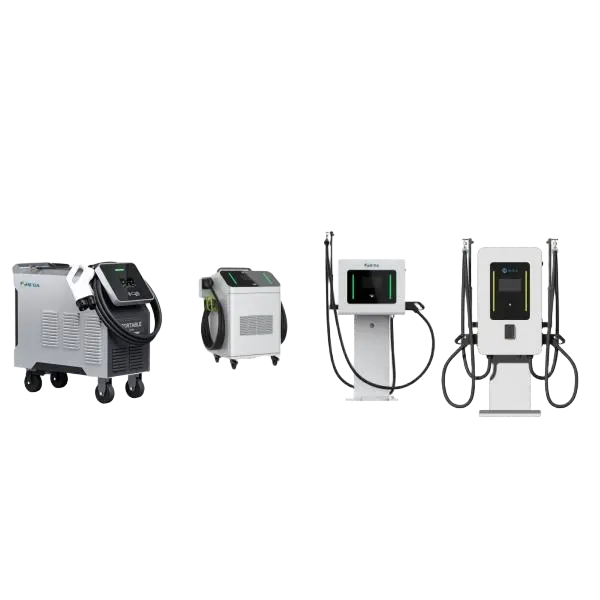
7kW to 80kW versatile configurations. Perfect for service centers, fleet garages, and transport operations requiring mobility.
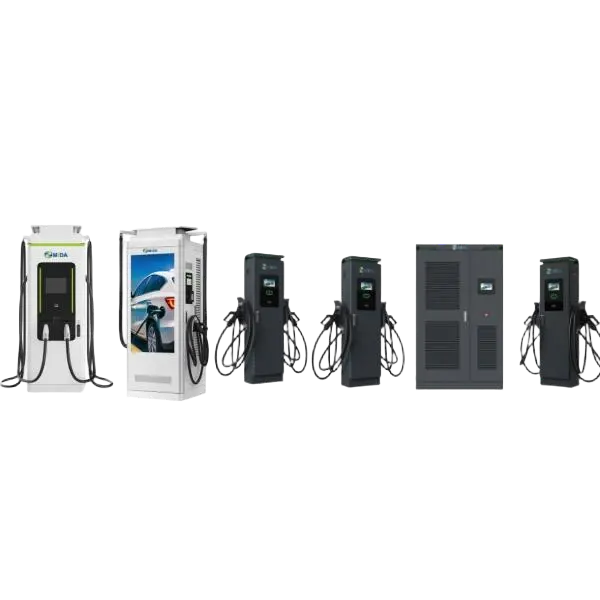
60kW to 1440kW rapid chargers. Employs advanced active power sharing and modular rectifiers for high-frequency public usage.
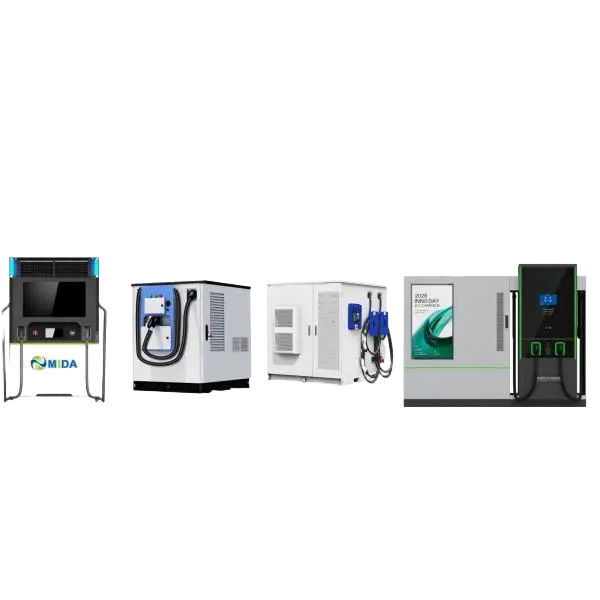
60kWh to 2MWh battery integration. Enables high-current charging off grid-restricted nodes via peak-shaving techniques.
Understanding the internal topology of a 60kW DC charging system is critical for engineering procurement. The cabinet typically houses multiple switched-mode power supply (SMPS) rectifiers operating in parallel. A standard configuration utilizes three 20kW modules or two 30kW modules. These rectifiers convert 3-phase AC input (typically 380V-480V AC, 3P+N+PE) into a regulated high-voltage DC output (ranging from 150V to 1000V DC) depending on the vehicle's battery voltage profile.
By utilizing a modular design, the system achieves redundant operation. If a single 20kW rectifier module encounters an over-temperature or phase fault, the control board automatically isolates the faulty component. This allows the station to continue operating at a reduced output of 40kW, avoiding complete downtime and maintaining station availability metrics.
Crucial components include:
Dynamic distribution switches output seamlessly between two guns (CCS2, NACS, or CHAdeMO), optimizing charge curves based on real-time feedback.
Silicon Carbide (SiC) MOSFET-based modules offering power conversion efficiencies exceeding 96.5% under varying load conditions.
Integrated Type B leakage current detection, surge protective devices (SPD Type II), and real-time insulation monitoring (IMD).
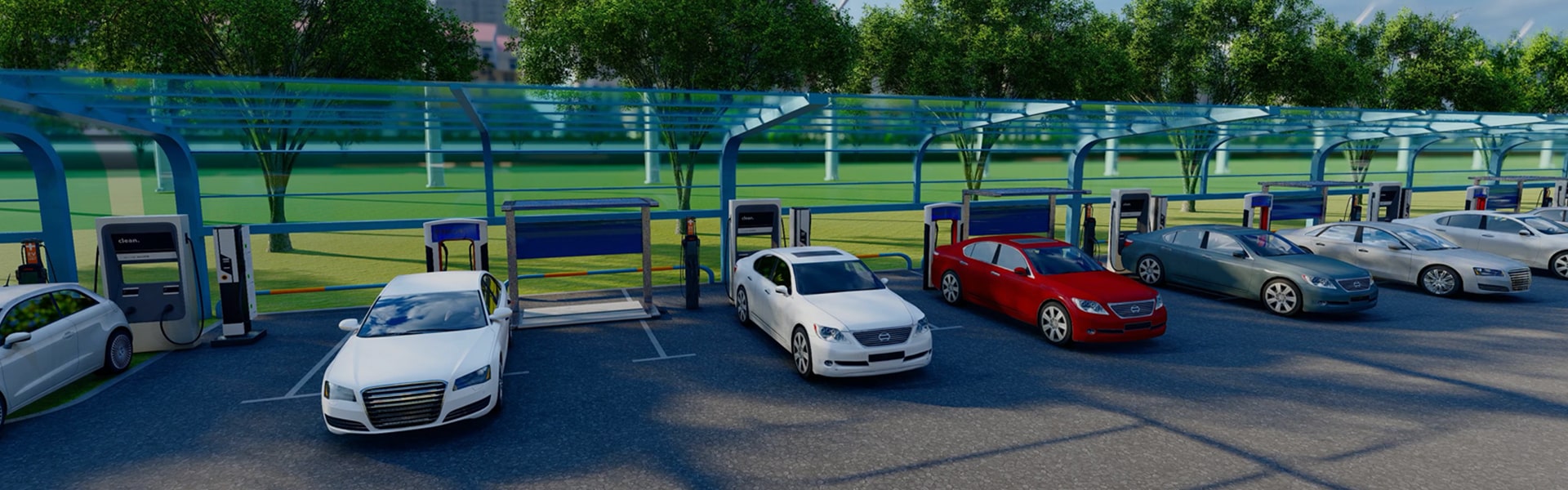
The applicability of a 60kW DC EV charger is highly dependent on regional grid infrastructure and targeted user behaviors. For instance, in municipal or public charging hubs, space constraints require high-density integration. Let's analyze how various geographic markets implement these chargers:
Urban Multi-Family Housing & Commercial Parking: In cities like Munich, London, and Tokyo, vehicles remain parked for 1 to 2 hours at supermarkets or retail strips. Setting up a 60kW DC charger allows drivers to recover approximately 150-200 km of driving range while completing their shopping. This offers a highly convenient user experience compared to slow AC charging posts.
Last-Mile Delivery and E-Bus Depots: Delivery vans and logistics vehicles operate on predictable routes with tight turnarounds. A 60kW DC charger matches fleet dwell patterns during driver shift changes or overnight operations. By avoiding high-power systems, operators mitigate massive demand charges on utility bills while maintaining a fully energized fleet.
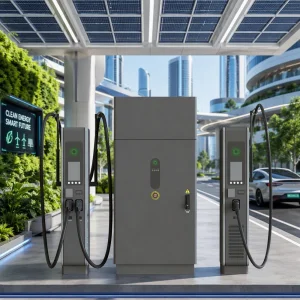
Solar-Assisted Microgrids: Combining energy storage systems (BESS) with localized photovoltaic generation allows for off-grid or weak-grid installations. Here, the charger relies on an integrated MPPT controller and a battery buffer to output 60kW DC, while drawing only minimal base power from the primary grid. This reduces infrastructure costs in remote regions.
Explore our specialized technologies designed for commercial charging operators and global supply networks.
Selecting a manufacturer for a 60kW DC charger requires analyzing the underlying supply chain structure. Factories located in mainland industrial sectors (particularly in Shanghai, Shenzhen, and Jiangsu) possess distinct advantages in terms of ecosystem integration and vertical manufacturing capacity. By producing high-voltage cabling and charging connectors in-house (as done by MIDA Cable), we eliminate third-party logistics markup and ensure high control over safety-critical interfaces.
A highly robust local supply chain optimizes costs across three major components:
This vertical integration reduces global logistics lead times and helps defend against price shocks in raw commodities, providing international clients with stable, predictable price-to-performance metrics.
A critical factor in the deployment of 60kW DC charging stations is compliance with regional regulations. EV charging stations are grid-interactive electrical equipment, necessitating rigorous certifications to protect both the end-user and the power grid. MIDA ensures full compliance across all major standard systems:
European Market (CE-Red / EN 61851-1): Chargers deployed in the EU must bear the CE mark. They must adhere strictly to EMC standards (Class B for residential/commercial exposure, Class A for industrial locations). In addition, they must support OCPP 1.6J or OCPP 2.0.1 for open-access backend communications.
North American Market (UL 2231 / UL 2202 / NACS): In North America, complying with Underwriters Laboratories (UL) standards is critical for commercial insurance and municipal utility rebates. Systems must include Ground Fault Circuit Interrupter (GFCI) protection and comply with FCC Class A electromagnetic limitations. They must also interface natively with both CCS1 and the emerging SAE J3400 (NACS) connector standards.
Open Charge Point Protocol (OCPP): Interoperability is the cornerstone of modern charging network operations. An integrated OCPP client inside a 60kW DC charging station allows site hosts to switch charge point operators (CPOs) without needing to replace the physical hardware, preserving capital investments.
Stay up to date with the latest innovations in heavy vehicle charging interfaces and advanced grid connections.

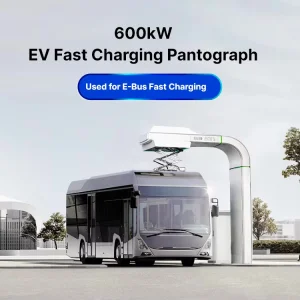
What are the advantages of an e-bus pantograph dome? In contrast to classic plug-in charging systems, e-bus pantographs offer automated high-power power transmission directly through the roof infrastructure.
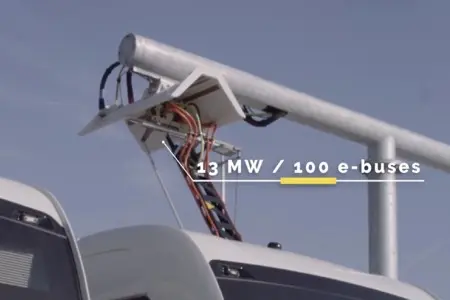
How long does it take to charge with an e-bus pantograph? The charging time depends on the battery capacity and the station output, typically delivering 150kW to 600kW of continuous power.
How to Install the Pantograph Up Charger System Dome for Electric Bus. Installing a "Pantograph Up" system requires precise positioning, robust civil foundations, and dedicated medium-voltage transformers.
Detailed technical answers to common queries regarding 60kW DC charging system design, operations, and logistics.
A: Dual-port 60kW DC chargers utilize an internal matrix contactor or digital power allocation software. When one vehicle connects, the station delivers the full 60kW (depending on the vehicle BMS request). When a second vehicle connects, the station dynamically divides the power, allocating 30kW to each port, or scaling output depending on each vehicle's real-time charge curve.
A: Air-cooled systems rely on high-volume fans, making them susceptible to fine dust, humidity, and coastal salt spray. Liquid-cooled power modules are fully sealed (IP65/IP67 equivalent), protecting internal circuitry from ambient elements. Liquid cooling also reduces operational noise and improves thermal dissipation, allowing the charger to run at peak capacity under high temperatures.
A: Standard protective systems include over-current relays, short-circuit protection via fast-acting semiconductor fuses, surge protection (SPD Type 2), Type B residual current devices (RCD) for DC leakage current isolation, and continuous insulation monitoring. Continuous insulation monitoring checks for isolation loss between the high-voltage busbar and the grounding system.
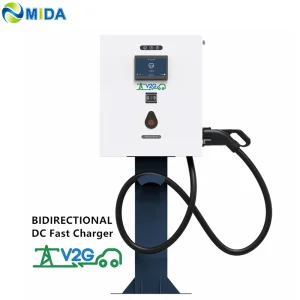
A: Yes, provided the internal power module rectifiers are bidirectional (AC-to-DC and DC-to-AC) and the station controller supports bidirectional communication protocols (ISO 15118-20 V2G protocol). Standard unidirectional modules must be swapped for bidirectional variants, and a grid-interactive inverter control board must be calibrated to feed electricity back into the grid.
High-power split charging systems, solar integration units, V2G bidirectional cabinets, and utility-scale energy storage charging arrays.