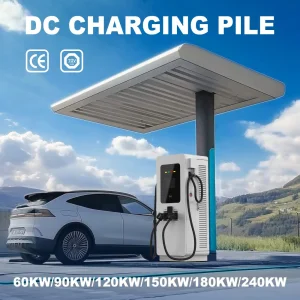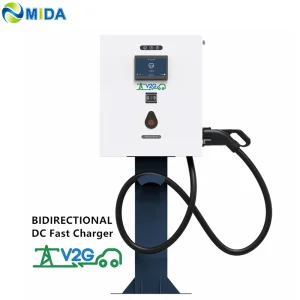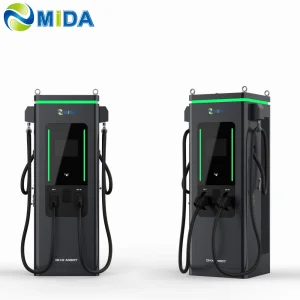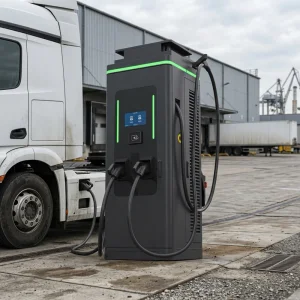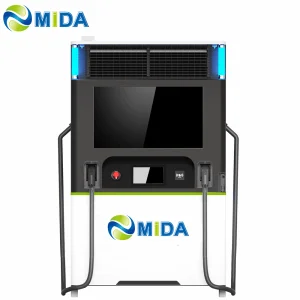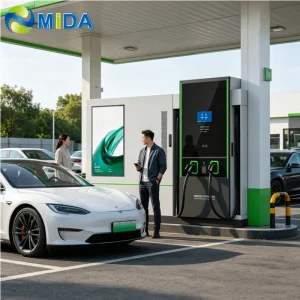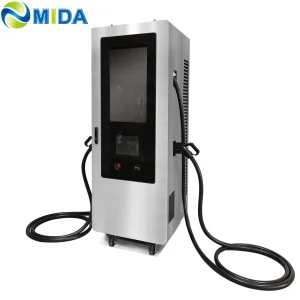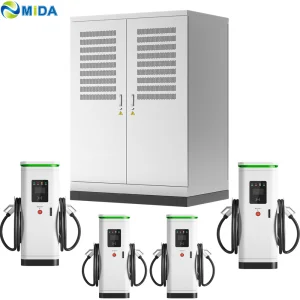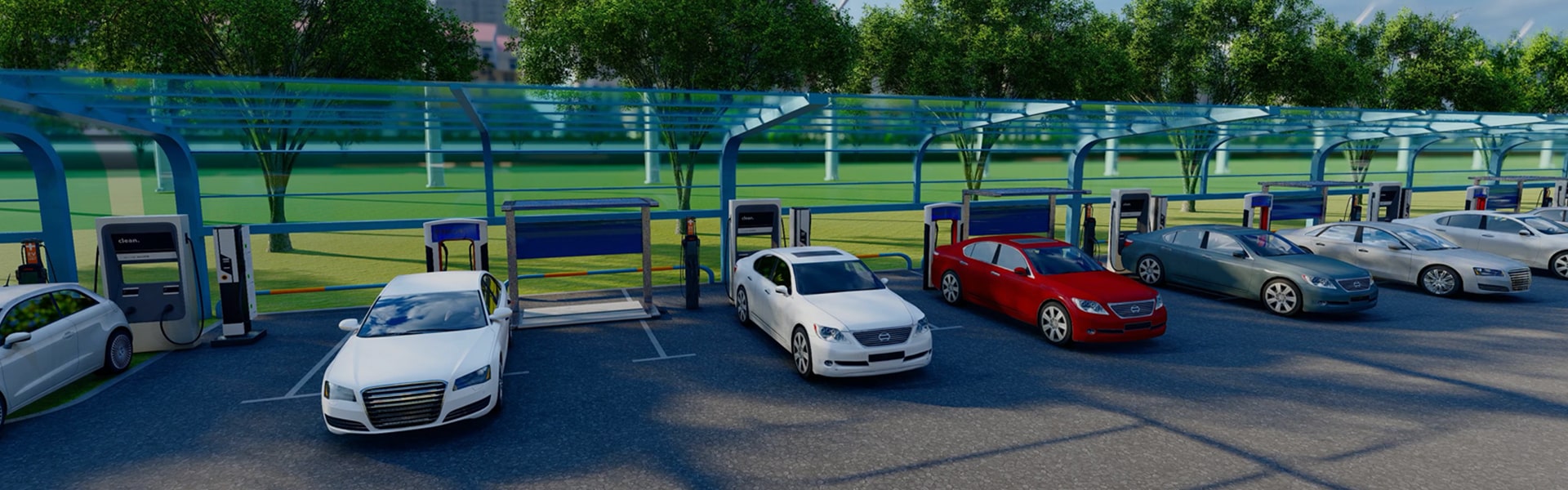
Advanced high-power charging platforms engineered for maximum efficiency, safety, and compatibility across international standards.
As the international transition to battery electric vehicles (BEVs) accelerates, commercial enterprises, municipality operators, and highway service stations face a critical infrastructure bottleneck. Among the spectrum of charging capacities, the 180 kW EV charging station has emerged as the definitive global sweet spot. This power rating satisfies the complex equilibrium between capital expenditure (CapEx), grid upgrade limitations, and driver turnaround times.
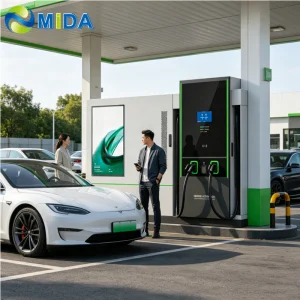
For logistics fleets, delivery networks, and C&I (Commercial and Industrial) hubs, the decision to install 180 kW DC chargers hinges on optimal asset utilization. Delivering up to 180 kW allows passenger EVs and commercial vans to recharge from 20% to 80% state-of-charge (SoC) in approximately 20 to 30 minutes. This aligns perfectly with mandatory driver break cycles and urban delivery route turnarounds, maximizing daily fleet uptime.
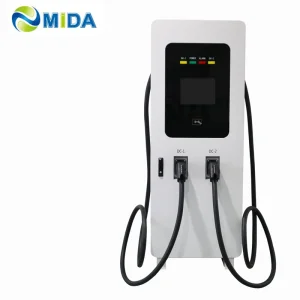
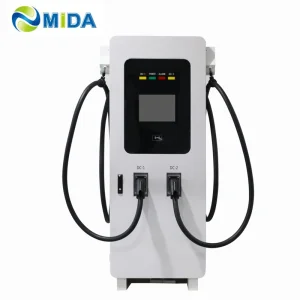
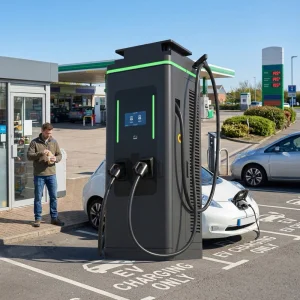
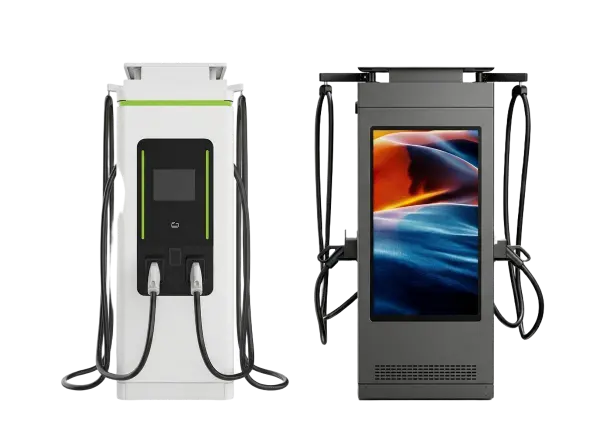
Furthermore, when deployed in a dual-outlet structure, a single 180 kW charger splits into two 90 kW lines. This allows simultaneous charging of two vehicles without overloading local grid connections, lowering the cost per plug and saving footprint space in densely populated metropolitan depots.
1. Grid Connection Optimization: Installing chargers over 200 kW often triggers expensive medium-voltage substation overhauls. 180 kW platforms operate within existing commercial low-voltage allocations (typically 400V AC in Europe/Asia or 480V AC in North America).
2. Future-Proof Scalability: MIDA's modular architecture allows operators to start at 90 kW or 120 kW and easily upgrade to 180 kW via simple module insertion, preserving capital while accommodating future vehicle battery upgrades.
Providing vertically integrated manufacturing solutions from cable extrusion to intelligent power module synthesis.
Shanghai Mida Cable Group Ltd. operates through its wholly owned subsidiaries: Shanghai Mida EV Power Co., Ltd., Shenzhen Mida EV Power Co., Ltd., and Shanghai Mida New Energy Co., Ltd. This strategic integration allows us to master the entire supply chain of electric vehicle supply equipment (EVSE).
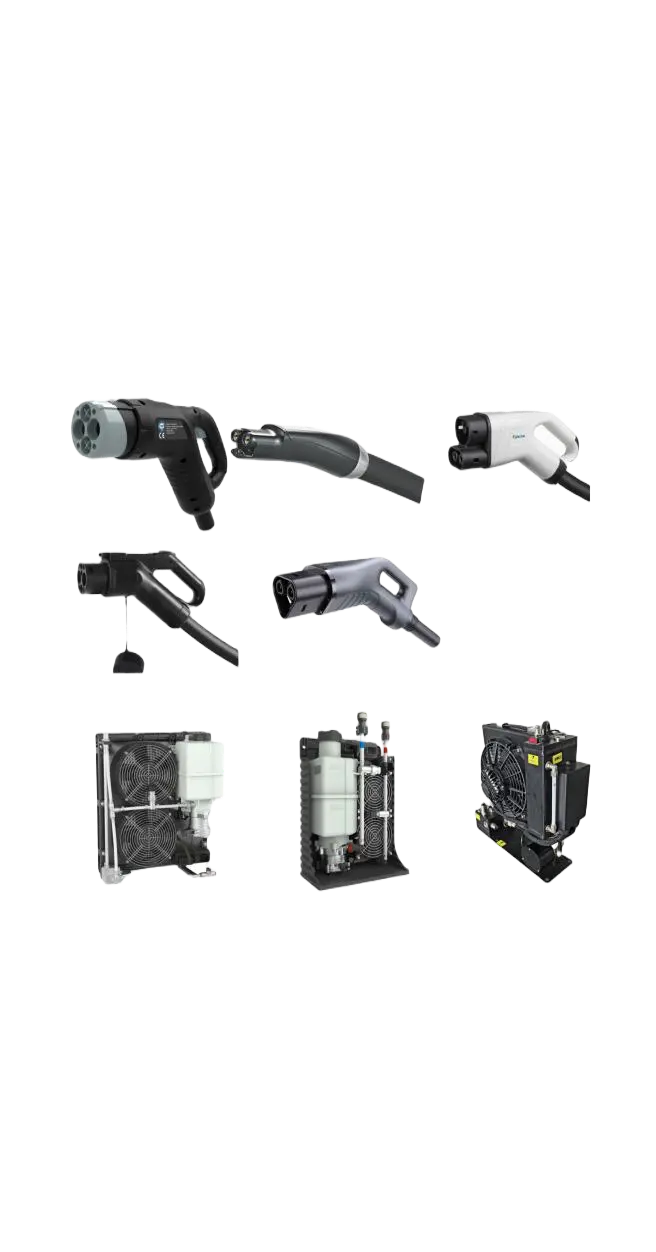
Our cable division, Mida Cable, manufactures a comprehensive range of premium EV charging cables, including 16A–80A J1772 cables, 16A–63A IEC 62196-2 Type 2 cables, and heavy-duty DC fast charging cables. Our liquid-cooled CCS1, CCS2, and NACS connectors support current capacities from 125A up to 1000A, paving the way for next-generation Megawatt charging systems (MCS).
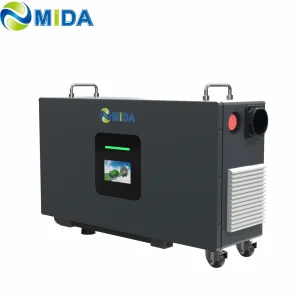
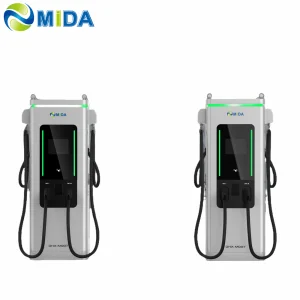
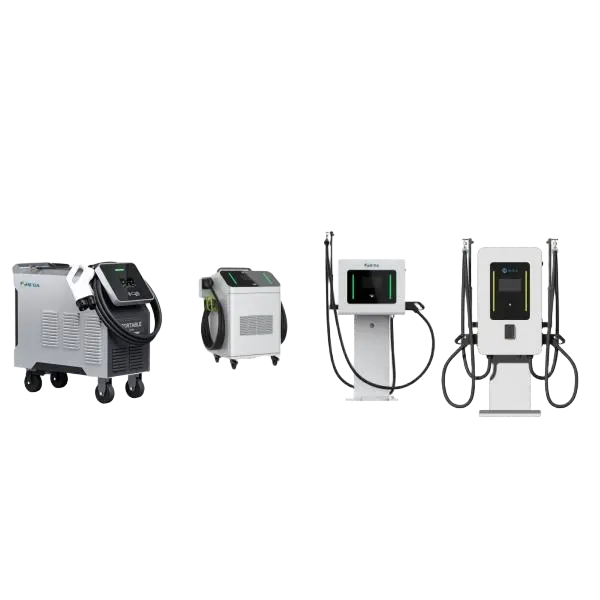
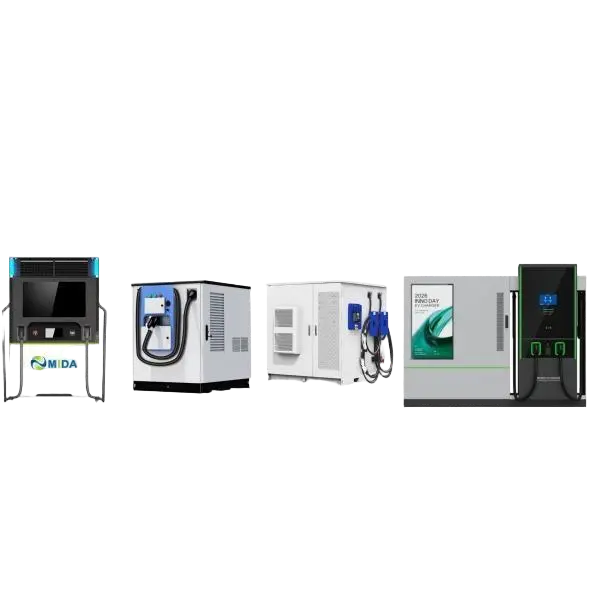
MIDA EV Power delivers completed, certified charging stations ranging from 7kW–50kW mobile chargers to 60kW–480kW floor-standing DC fast charging stations. By producing our own charging modules, control boards, and thermal management units, we ensure unparalleled consistency, reliability, and firmware-hardware alignment.

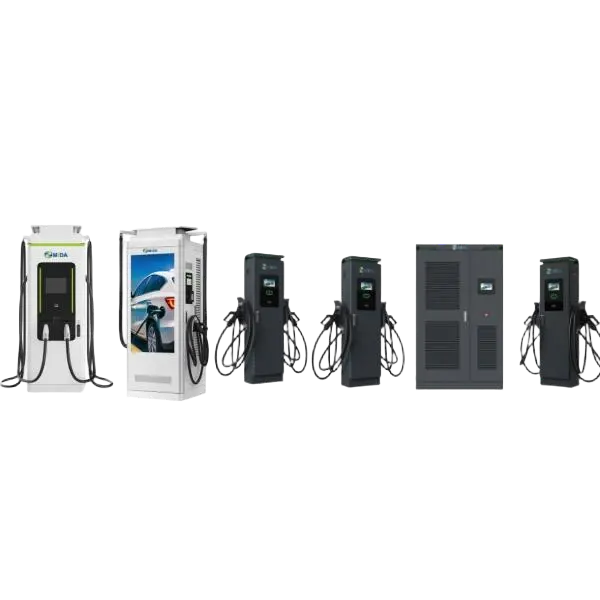
MIDA Group designs and manufactures three main infrastructure segments optimized for reliability in harsh grid environments.
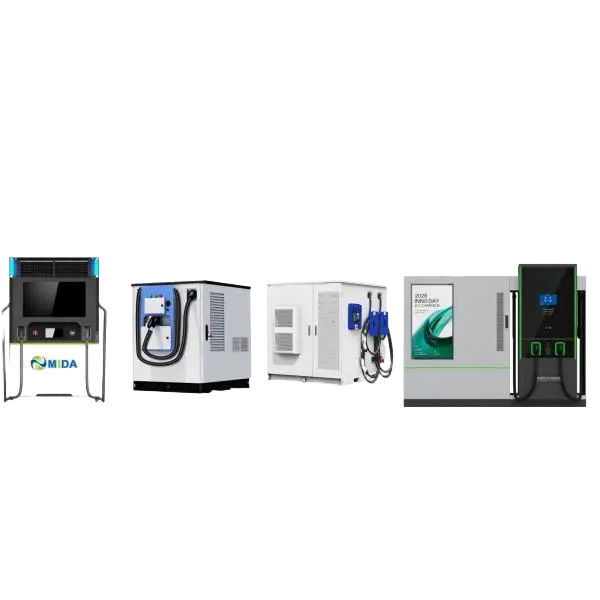
Modern charging infrastructure requires more than standalone hardware. Industrial sites and municipal depots are transitioning toward integrated energy systems. By combining solar photovoltaics, Battery Energy Storage Systems (BESS), and 180 kW DC chargers, operators can shield their sites from localized grid constraints and peak demand surcharges.
Utilize integrated BESS configurations (from 60kWh up to 2MkWh) to store electricity during off-peak windows. When a fleet vehicle connects for a 180 kW fast charge, the system draws partial energy from the storage batteries, protecting the local grid transformer.
MIDA's MPPT-enabled solar chargers couple DC solar arrays directly to the charging station's DC link. This eliminates the conversion losses associated with converting solar power to AC and back to DC, boosting efficiency by up to 8%.
Incorporating OCPP 2.0.1, our charging stations interact dynamically with utility virtual power plants (VPPs). During periods of extreme grid stress, charging rates are throttled gracefully, or grid-to-vehicle (V2G) discharge is initiated.
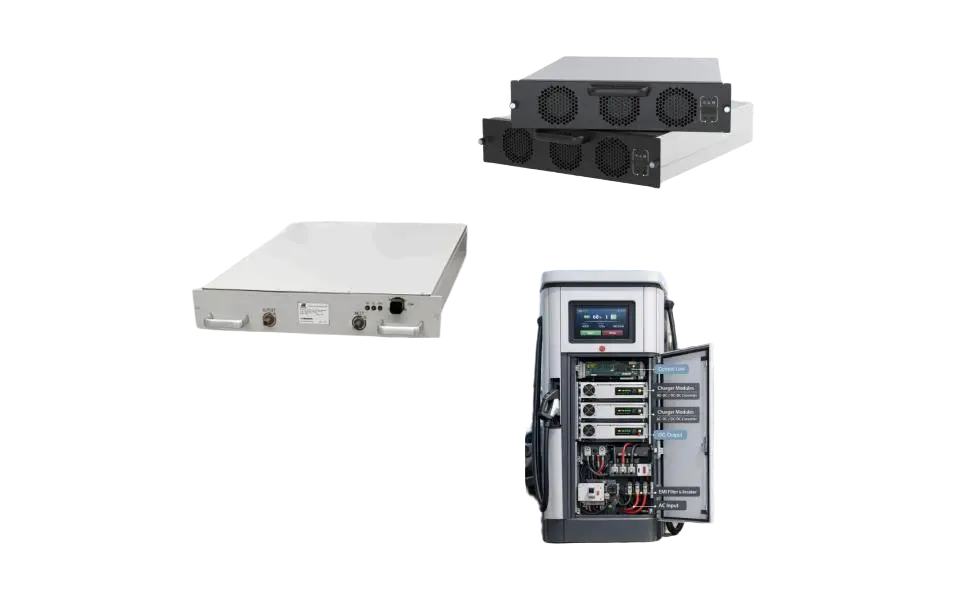
Inside every MIDA 180 kW DC fast charging pile sits our proprietary high-frequency power electronics. The efficiency, reliability, and lifespan of a fast charger are determined entirely by the topology of its internal modules. Unlike suppliers who source off-the-shelf parts, MIDA New Energy engineers standard and liquid-cooled power modules in-house.
We are migrating our standard module line (30kW, 40kW, 50kW, and 60kW modules) to Silicon Carbide (SiC) MOSFET semiconductors. Compared to traditional Silicon IGBT components, SiC technology offers significantly lower switching losses, allowing higher switching frequencies. This reduces the size of passive magnetic components, resulting in a module efficiency exceeding 96.5% and a wider voltage range (typically 150V DC to 1000V DC) to accommodate both 400V passenger cars and 800V heavy commercial vehicles.
For high-power charging (HPC) environments subject to extreme temperatures or high levels of airborne pollutants (dust, saline mist, coal ash), we offer liquid-cooled power modules (40kW to 125kW) paired with integrated cooling units. Because the modules are hermetically sealed, heat is dissipated through a glycol-water loop rather than forced air. This eliminates the intake of dust and moisture, extending the MTBF (Mean Time Between Failures) of the charging station past 10 years, even in industrial environments.
MIDA Group designs, builds, and tests its primary components to satisfy the highest international certifications.
Exporting high-voltage charging hardware demands strict compliance with diverse electrical codes. At MIDA, we design our products to navigate these local regulatory frameworks. This ensures fast grid connection approvals and maximum electrical safety.
Technical and procurement answers addressing grid capacity, dual-plug load sharing, thermal cooling, and certification requirements.
Recent technical reports from MIDA's research division on heavy-duty and transit fleet charging technologies.

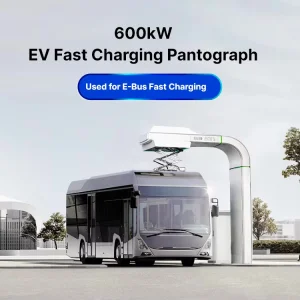
In contrast to classic plug-in charging systems, e-bus pantograph solutions automate fast charging for urban transit lines, maximizing route uptime.
26-07-12 • Read Technical Report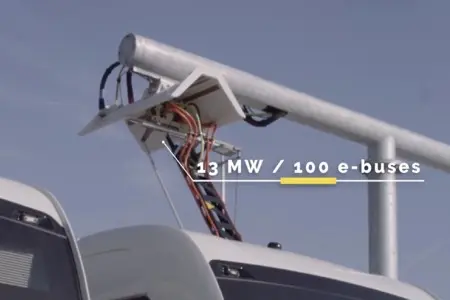
Evaluating transit recharge speed based on grid feed capacity, battery pack size, and roof-mounted automated contact interfaces.
26-07-12 • Read Technical Report
Site installation guidelines for "Pantograph Up" dome receivers, including structural alignment, utility hookup, and civil engineering rules.
26-07-12 • Read Technical ReportAlternative power capacities and configurations designed for fleet yards, public hubs, and integrated battery energy storage environments.