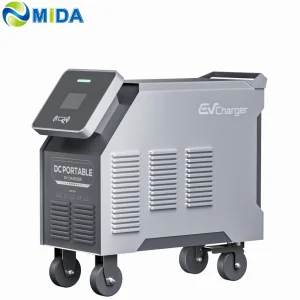
Best Home DC EV Charger Manufacturers & Factory

Empowering the Future of Residential e-Mobility with Premium Bidirectional Power Modules, Ultra-Fast Power Transformation, and Vertical Supply Chain Excellence.

The Evolution of Residential EV Infrastructure

An in-depth look at how Low-Power DC Fast Chargers are redefining the home and localized fleet ecosystems.

Why Low-Power Home DC Charging is Overcoming AC Performance Bottlenecks

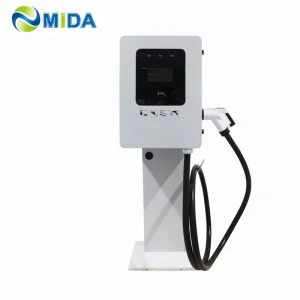
For years, residential EV charging was dominated by AC Level 2 chargers. While these units are cheap to manufacture, they are inherently bottlenecked by the vehicle's On-Board Charger (OBC). Most passenger EVs feature an OBC limited to 7.4 kW or 11 kW, meaning that even if you install a high-power AC wallbox, the vehicle cannot draw power any faster. A Home DC EV Charger bypasses the OBC entirely, supplying clean, high-amperage direct current straight to the traction battery pack.

By moving the AC-to-DC rectifying stage from the hot, space-constrained vehicle interior to a stationary wall-mounted unit, manufacturers can deploy high-frequency silicon carbide (SiC) switching modules. This allows homeowners to consistently charge at speeds of 20 kW to 40 kW, effectively cutting charging times by 60% to 75% compared to standard AC chargers. Additionally, having a dedicated DC pathway opens up seamless, high-speed Vehicle-to-Home (V2H) and Vehicle-to-Grid (V2G) capabilities, positioning the EV as an active power node in residential microgrids.

Localized Scenarios: Adapting DC Fast Chargers to Specific Environments

While the label "Home" suggests a single-family garage, modern applications of compact DC chargers span multiple localized configurations:

  • Smart Home Integration & HEMS (Home Energy Management Systems): Combined with solar PV systems and home battery storage (BESS), a 20kW DC wallbox operates dynamically. It senses grid demand, pricing tiers, and solar generation, directly routing surplus DC power from the panels into the EV without multiple energy-wasting conversion cycles.
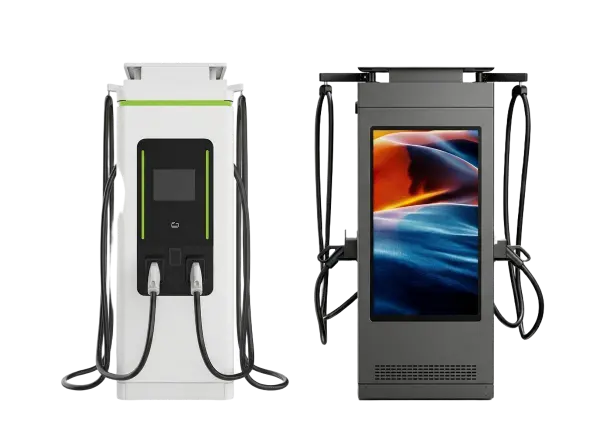
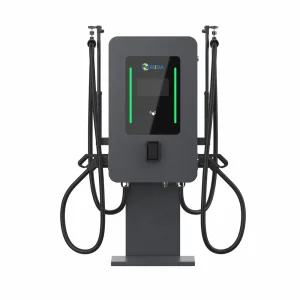
  • Multi-Family Residential & Condominiums: Deploying 20kW to 60kW wall-mounted DC chargers with dual-gun configuration (e.g., the MIDA Wall-Mounted Series) allows property managers to offer premium charging amenities with integrated billing systems (OCPP 1.6/2.0.1) over 4G/Wi-Fi. This optimizes space while avoiding massive utility service upgrades.
  • Fleet Depots and Light Commercial: Small logistics fleets, courier vehicles, and corporate passenger fleets utilize wall-mounted low-power DC chargers. These systems provide rapid turnarounds during midday shift shifts when standard AC is too slow, yet keep total draw within localized grid parameters.

Bidirectional V2G Topology

Mida's proprietary bidirectional DC/AC power modules (20kW–62.5kW) permit smooth power flow to and from the vehicle battery, enabling energy arbitrage and peak shaving.

Active Dynamic Balancing

Intelligent algorithm allocations balance power output across dual connectors or multiple nodes in a home network, preventing household breaker tripping.

Silicon Carbide (SiC) Efficiency

Utilizing high-temperature, high-frequency semiconductor components to achieve conversion efficiencies exceeding 96.5% under typical operating loads.

WELCOME TO MIDA GROUP

Shanghai Mida Cable Group Ltd. operates through its wholly owned subsidiaries: Shanghai Mida EV Power Co., Ltd., Shenzhen Mida EV Power Co., Ltd., and Shanghai Mida New Energy Co., Ltd. This unique corporate ecosystem allows us to bridge the gap between raw component engineering and full-system integrations.

Mida Cable manufactures an exhaustive array of EV charging cables, supporting high-amperage installations: from 16A–80A J1772 cables, 16A–63A IEC 62196-2 Type 2 cables, up to heavy-duty DC fast charging cables (CCS1 80A–500A, CCS2 125A–1000A, CHAdeMO 125A–300A, GBT 200A–1000A, and NACS connectors 250A–600A).

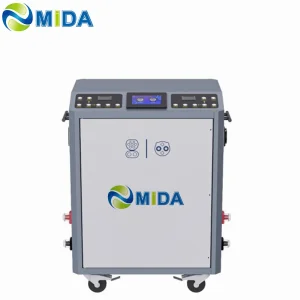
MIDA EV Power focus on complete assembly systems, offering everything from 3.6kW portable DC chargers up to ultra-fast 1440kW split-type DC charging structures. Our 20kW–50kW wall-mounted DC chargers are particularly engineered for premium home and municipal applications.

MIDA New Energy manufactures the technical core of the system: the EV charger power modules, offering advanced standard modules (20kW–60kW), state-of-the-art liquid-cooled options (40kW–125kW), bidirectional modules (30kW–62.5kW), and highly efficient V2G modules.

Mida Group Certification Badge

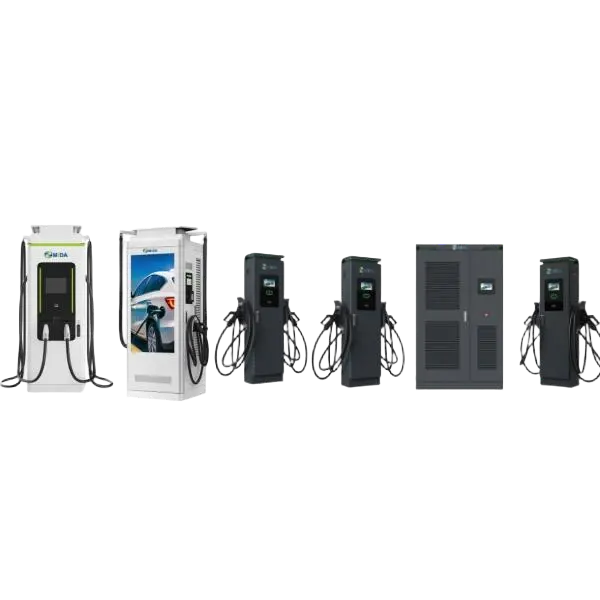
Mida Group Product Architectures

Four cornerstones of our clean-energy infrastructure development portfolio.
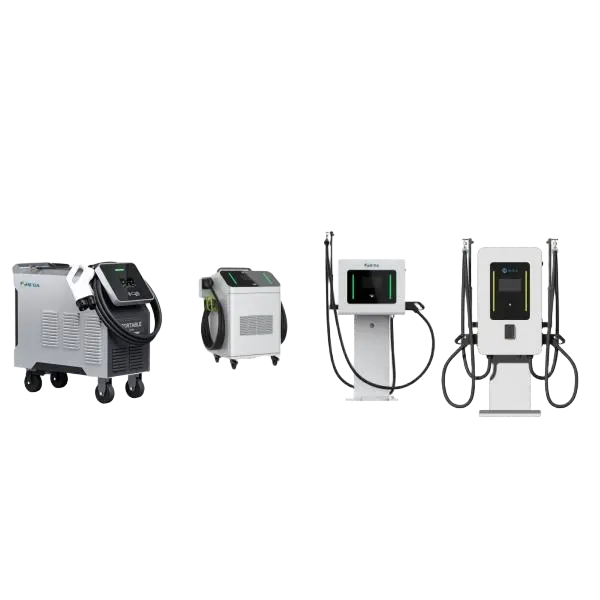
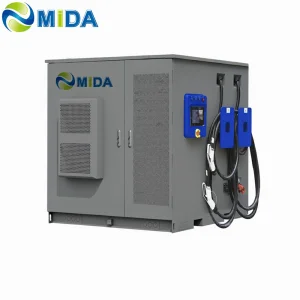
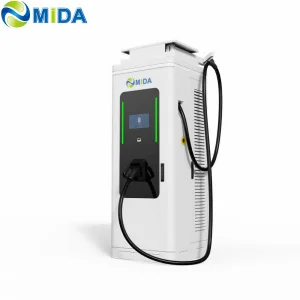
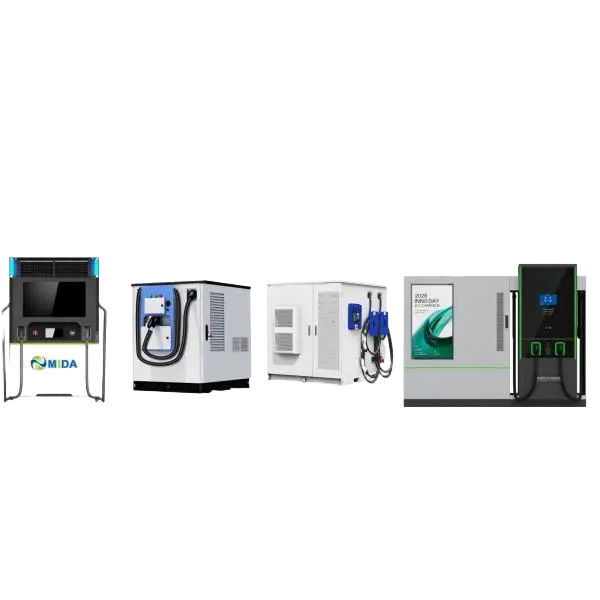
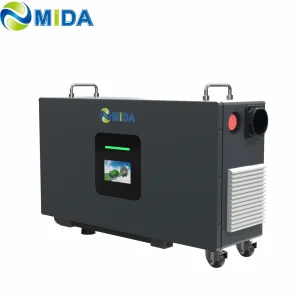
Wall-Mounted/Mobile DC Chargers
Compact low-power DC systems ranging from 7kW to 80kW, designed for fast localized installations and space efficiency.
Wall-mounted mobile
Explore Series
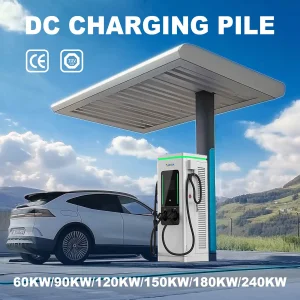
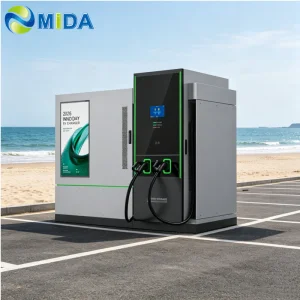
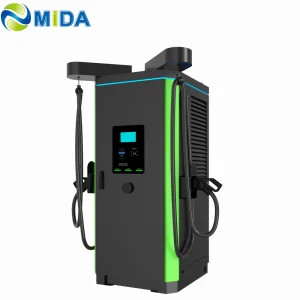
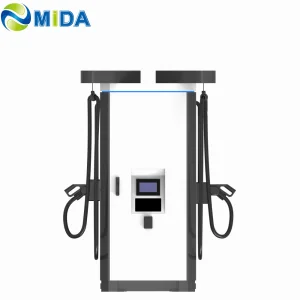
DC Charging Stations
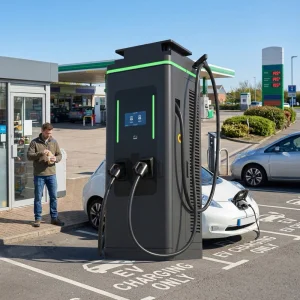
Heavy-duty floor-mounted systems from 60kW up to 480kW, and split-architecture configurations up to 1440kW.
DC station
Explore Series
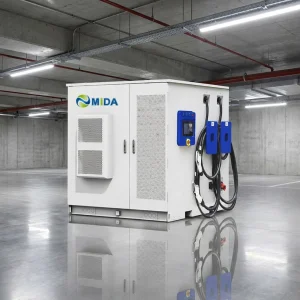
BESS Charging Stations
Integrated energy storage and fast charging stations from 60kWh to 2MkWh, offering smart off-grid charging capability.
BESS station
Explore Series
150+
Global Patents
98.5%
Conversion Efficiency
80+
Countries Exported
1.4GW+
Annual Manufacturing Capacity

Supply Chain Resilience & Industrial Competitiveness

How MIDA achieves unprecedented price-to-performance ratio and hardware durability through vertical integration.

The Power of Vertical Integration in Shanghai & Shenzhen Factories

The global EV infrastructure market faces severe challenges, including chip shortages, copper price volatility, and fluctuating quality components. As a premier Chinese manufacturer, MIDA Group mitigates these risks through a fully integrated supply chain:

  • In-house Cable Drawing & Compound Extrusion: Because MIDA manufactures its own liquid-cooled and standard DC cables, we control the purity of the copper core, shielding layers, and outer polyurethane (TPU) sheathing. This ensures that the cable remains highly flexible at temperatures as low as -40°C while resisting heavy UV exposure and vehicle drive-over wear.
  • Integrated Power Module Development: While most charger assembly factories purchase off-the-shelf power modules from third parties, MIDA New Energy designs and manufactures the internal conversion modules. This allows us to optimize the cooling layout, align firmware (via CAN bus protocols) directly with our central controller board, and reduce acoustic noise levels below 55dB—a vital parameter for home residential deployment.
  • Advanced Heat Management: Heat is the biggest threat to high-power electronics. Our liquid-cooled technology handles high currents without bulkiness. Using ultra-quiet mini water pumps and premium coolants, we offer thin, lightweight cables that are comfortable for daily residential use.

Global Compliance & Localized Support Architecture

Entering international markets requires absolute compliance with regional grid codes and safety standards. MIDA Group structures its products with global requirements in mind:
  • North America (UL/FCC/NACS): All components intended for the US and Canadian markets meet UL 2202 and UL 2231 standards. We integrate NACS connectors natively, keeping pace with Tesla's standard adoption, and ensure FCC Class B compliance to protect home wireless networks from electromagnetic interference.
  • Europe (CE/TUV/UKCA/IEC): Our European-market units comply with EN 61851-1/23 standards. They feature built-in 6mA DC residual current detection, making expensive Type B RCD installations at home unnecessary. We also implement local grid stability controls like G99 (UK) and CE requirements.
  • Dynamic OCPP Backends: By integrating with major local software backends via OCPP 1.6J or OCPP 2.0.1, MIDA chargers easily link with national load management programs, municipal billing services, and user-facing mobile apps.

MIDA Main Component Offerings

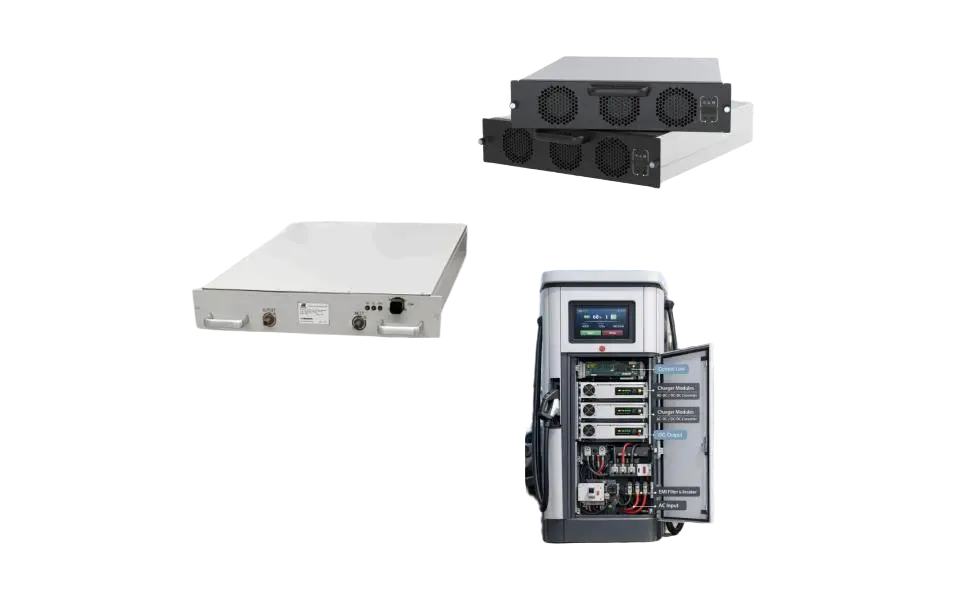
EV Charging Power Modules

  • 30kW to 80kW AC/DC conversion modules for standard charging piles.
  • 40kW, 60kW, 75kW, and 125kW Liquid-Cooled Power Modules for extreme power densification.
  • 20kW to 45kW V2G modules designed for bidirectional home and fleet discharge.
  • 30kW to 62.5kW Bidirectional AC/DC Modules supporting localized energy arbitrage.
EV Power Module

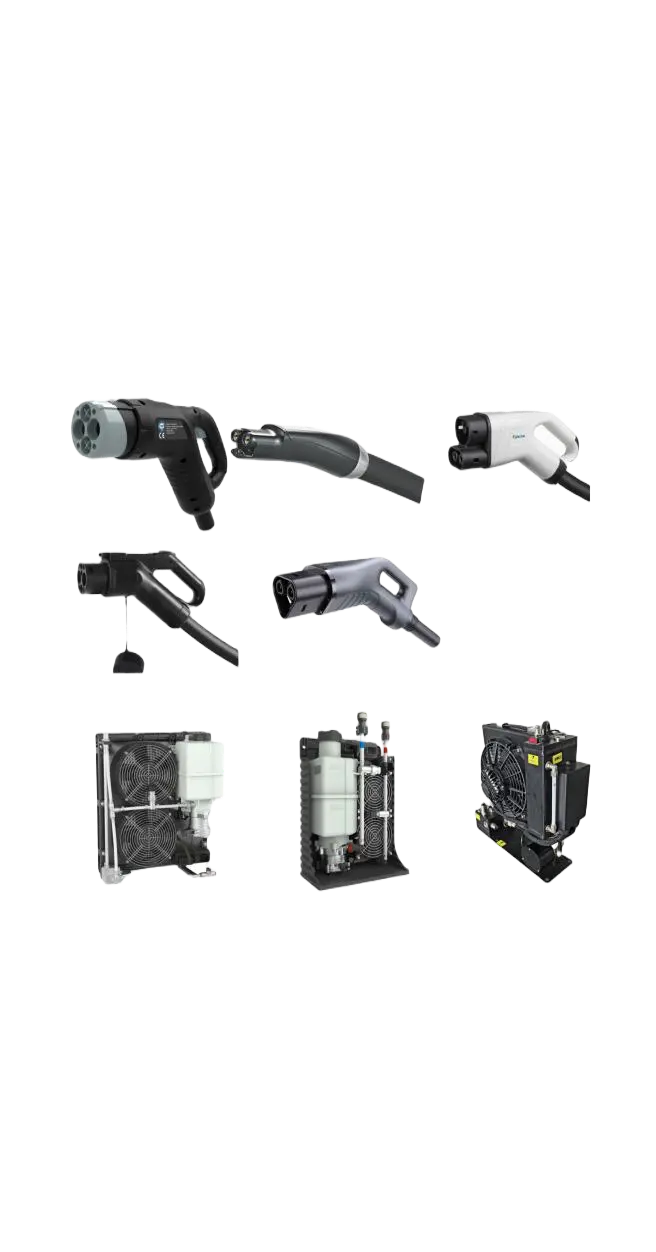
DC Connectors & Liquid Cooling Units

  • 500A to 600A liquid-cooled CCS1, CCS2, and GBT charging connectors.
  • 125A to 350A NACS & CHAdeMO premium connector options.
  • Next-generation 1500A Megawatt Charging System (MCS) and ChaoJi connectors.
  • Integrated liquid cooling units (3.5kW–9kW) and split cooling systems.
DC Connector Cooling

DC Fast Charger Stations

  • 7kW to 60kW Mobile DC Chargers for emergency services and flexible workshops.
  • 20kW to 80kW Wall-Mounted DC chargers for high-speed home and business applications.
  • 600kW to 1080kW Ultra-high-power liquid-cooled public stations.
  • 360kW to 1680kW split-architecture charging systems for major highway plazas.
DC Charging Station

Energy Storage Charging Solutions

  • 15kW to 480kW mobile battery-integrated charging options.
  • 60kW to 400kW BESS hybrid charging systems for grid-constrained areas.
  • 165kWh automated robotic charging vehicles.
  • 800kWh to 2000kWh MW-level solar-assisted battery storage charging ecosystems.
Energy Storage Station

Corporate News & Technical Insights

Stay up to date with MIDA Group's latest hardware milestones, system installations, and structural updates.

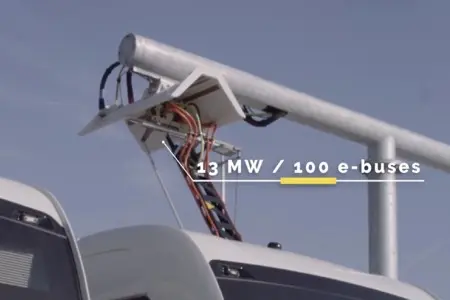
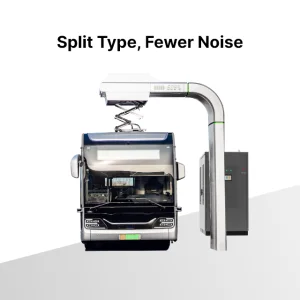
Pantograph dome
What are the advantages of an e-bus pantograph dome? In contrast to classic plug-in charging systems, e-bus pantographs offer automated charging, high power delivery, and minimal human intervention.
Pantograph charging time
How long does it take to charge with an e-bus pantograph? The charging time depends on the battery capacity and output speed, typically taking only 5 to 15 minutes for a boost charge.
Pantograph install
How to Install the Pantograph Up Charger System Dome for Electric Bus: Detailed steps, electrical parameters, structural load balancing, and connection setup for bus depots.
MIDA Factory Manufacturing Line

Frequently Asked Questions (FAQ)

Clear, direct answers regarding Home DC EV charging systems, OEM/ODM processes, and regional parameters.

What makes a Home DC charger better than a traditional AC charger?

A Home DC charger bypasses the vehicle’s On-Board Charger (OBC) and delivers power directly to the battery. This allows for significantly faster charging speeds (e.g., 20kW–40kW compared to typical 7kW–11kW AC limits) and enables advanced bidirectional Vehicle-to-Home (V2H) functionality without heat build-up inside the car.

Does my home grid service support a 20kW or 30kW DC Fast Charger?

A standard single-phase residential connection (e.g., 240V in the US) can support up to 20kW if configured with smart load shedding. In countries with three-phase power (common in Europe), installing 20kW or 30kW DC chargers is straightforward and places less unbalanced load on the grid than single-phase systems.

What standards and certifications do MIDA Group products hold?

Our charging systems and cables are fully certified to international standards, including CE, TUV, UKCA, CB, FCC, UL, and RoHS. We support multiple connectors such as NACS, CCS1, CCS2, CHAdeMO, and GB/T.

Can MIDA accommodate custom branding and OCPP software integration?

Yes, as a vertically integrated manufacturer, we offer comprehensive OEM and ODM services. This includes physical branding, custom enclosure paint jobs, tailored cable lengths, and custom firmware configurations for OCPP 1.6J and OCPP 2.0.1 integrations.