Engineered for continuous operation, dynamic capacity management, and diverse vehicle compatibility protocols.
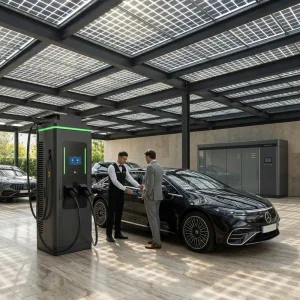
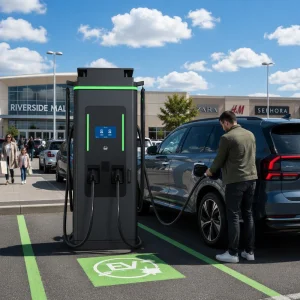
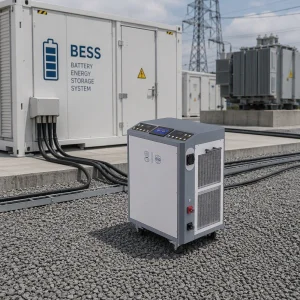
As the commercial transport sector undergoes a paradigm shift toward complete decarbonization, fleet operators, real estate developers, and charge point operators (CPOs) are encountering unprecedented technical challenges. Electrification is no longer merely a compliance check; it is a complex infrastructure overlay requiring deep technical alignment with local distribution networks, sophisticated power flow management, and dynamic peak-load integration.
When selecting the best EV charging station for business suppliers, enterprise procurement teams must move beyond basic unit cost parameters. Critical consideration parameters now include dynamic load management (DLM) performance, native OCPP 2.0.1 compliance for secured system-wide communications, phase-balancing capability, and integrated battery energy storage (BESS) provisions that bypass costly grid upgrades. These components decide whether a site operates at optimal profitability or experiences constant localized outages and demand-charge penalties.
Information Gain Metric: Standard level 2 AC chargers often fail to deliver the speed required for short dwell-time businesses, while unmitigated ultra-fast DC systems trigger severe utility penalties. Our architecture solves this dilemma through distributed power matrix topology and integrated local storage, smoothing power draws and maximizing capital investment returns.
Modern commercial properties face static load capacity allocations from local distribution network operators (DNOs). Installing multiple 180kW or 240kW DC fast charging stations without smart power allocation quickly breaches site capacities. Our proprietary algorithms implement Active Dynamic Load Balancing (ADLB). By monitoring the real-time electrical demand of the building and comparing it against the maximum rated substation capacity, the system automatically regulates the duty cycle of individual power modules in milliseconds, preventing breaker trippings while ensuring vehicles receive the fastest charge possible.
Shanghai Mida Cable Group Ltd. operates through its wholly owned subsidiaries: Shanghai Mida EV Power Co., Ltd., Shenzhen Mida EV Power Co., Ltd., and Shanghai Mida New Energy Co., Ltd.
Mida Cable manufactures a comprehensive range of EV charging cables, including 16A–80A J1772 cables, 16A–63A IEC 62196-2 Type 2 cables, and DC fast charging cables: CCS1 (80A–500A), CCS2 (125A–1000A), CHAdeMO (125A–300A), GBT (200A–1000A), and NACS connectors (250A–600A).
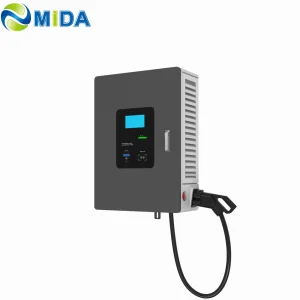
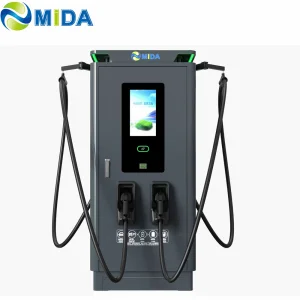
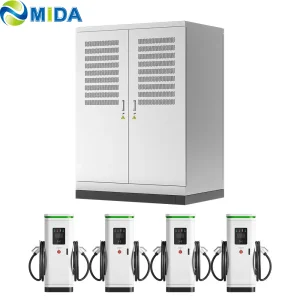
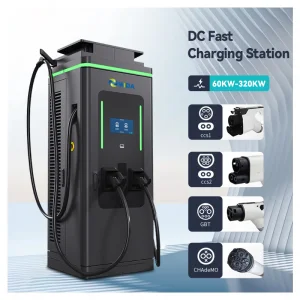
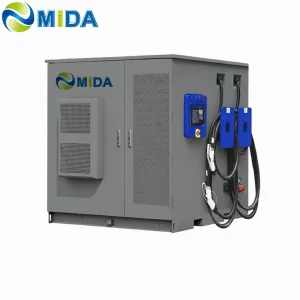
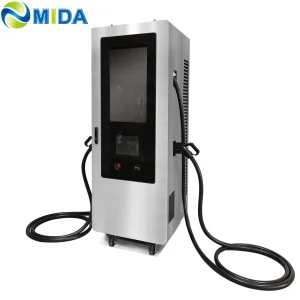
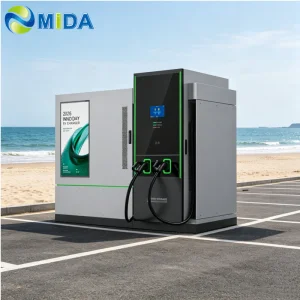
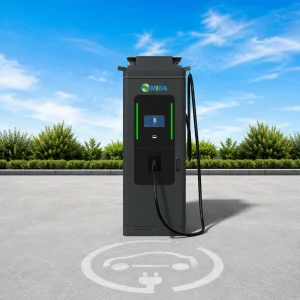
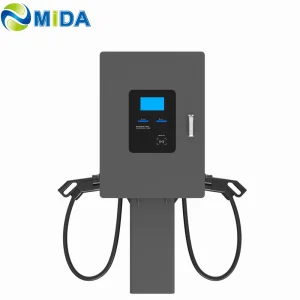
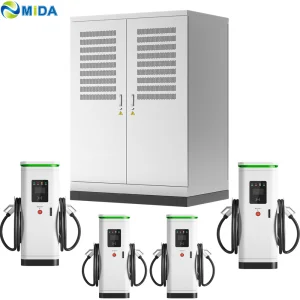
MIDA EV Power produces a full lineup of EV charging stations, such as 7kW–50kW mobile chargers, 3.6kW–7.2kW portable DC chargers, 360kW–1440kW split-type DC fast chargers, 20kW–50kW wall-mounted DC chargers, and 60kW–480kW floor-standing DC fast charging stations.
MIDA New Energy specializes in EV charger power modules, offering 20kW–60kW standard modules, 40kW–125kW liquid-cooled modules, 30kW–62.5kW bidirectional modules, and 20kW–45kW V2G charging modules.

The standard topology for DC fast chargers has relied on traditional Silicon (Si) IGBT power modules. However, the industry is transitioning rapidly toward Silicon Carbide (SiC) MOSFET semiconductors. SiC power modules deliver superior thermal conductivity, reduced switching losses, and significantly higher power density. This allows MIDA to design ultra-slim 40kW and 60kW charging modules operating at temperatures up to 150°C, reducing cooling requirements and decreasing cabinet footprints by 35% compared to legacy architectures.
As battery packs trend toward higher C-rates (e.g., 4C and 5C charging curves), charging infrastructure must scale accordingly. Standard air-cooled cables are limited to ~200A before physical weight and heat generation compromise safety. High-Power Charging (HPC) architectures utilize active coolant circulation (propylene glycol-water blends) through the cable and connector contacts. This enables continuous current ratings of up to 600A at 1000V, allowing vehicles to add up to 400km of range in under 10 minutes.
Vehicle-to-Grid (V2G) represents a vital revenue stream for commercial installations. Using bidirectional AC/DC power modules (such as our 20kW-45kW modules), commercial fleets serve as distributed energy resources (DERs). Fleet operators can charge vehicles during low tariff windows and discharge back to the facility grid during peak load events, transforming a capital expenditure into a grid-interactive asset.
Explore our core infrastructure divisions tailored to diverse industry deployments and scale requirements.
7kW 20kW 30kW 40kW 60kW 80kW
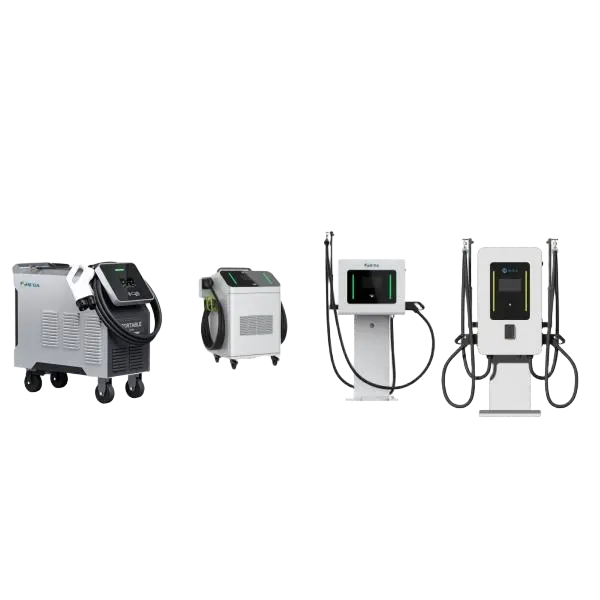
Versatile, high-efficiency compact charging units built for depot workplace grids, offering robust structural weatherproofing and modular mounting flexibility.
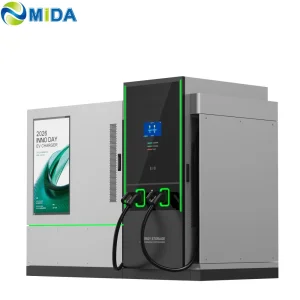
60kW-480kW / 360kW-1440kW
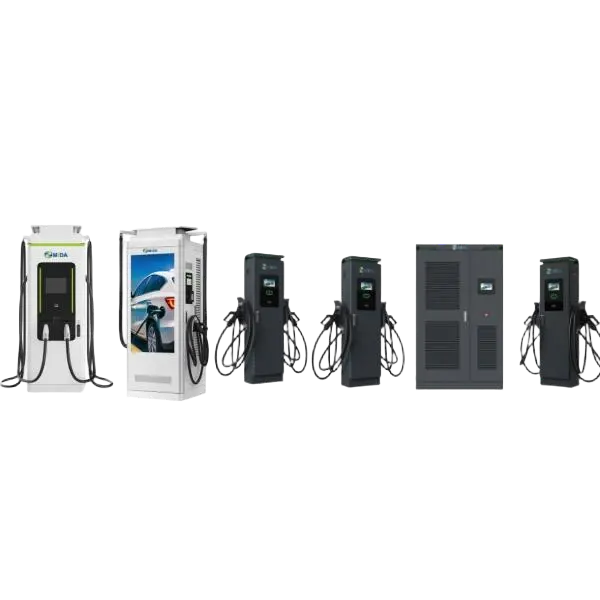
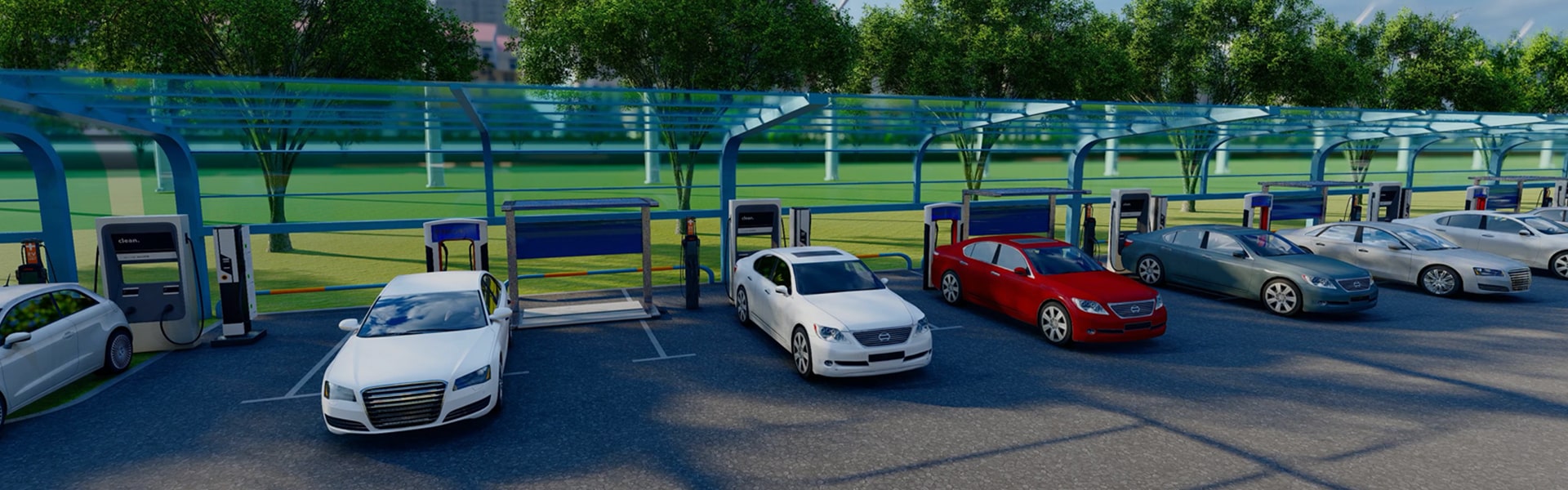
Engineered for heavy fleet hubs, highway travel plazas, and charging operator networks demanding maximum throughput and automated multi-dispenser power routing.
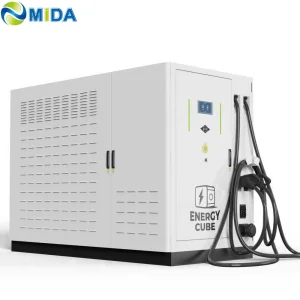
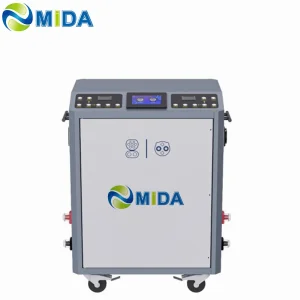
60kWh 261kWh 418kWh 625kWh 2MkWh
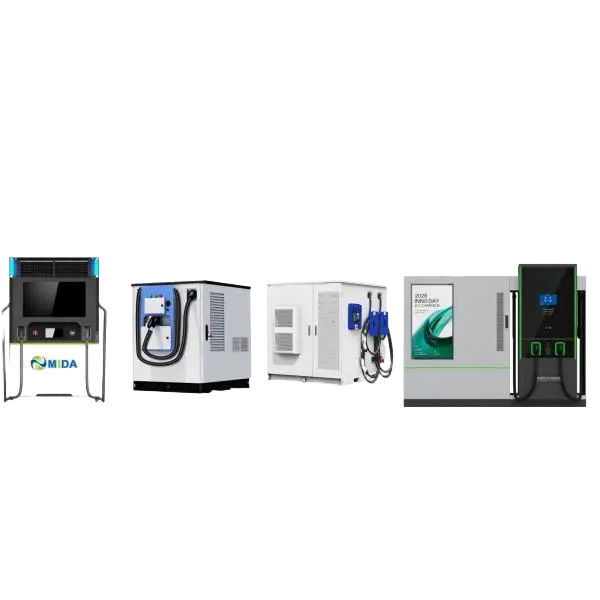
Battery-buffered fast charging stations that store low-cost off-peak energy, mitigating peak grid consumption and enabling fast charging on weak grids.
Commercial electrification projects differ significantly by industry vertical. Proper hardware specification requires choosing custom configurations tailored to specific usage patterns, turnaround schedules, and business models:
True zero-emission fleet operation is achieved by charging directly from on-site solar generation. Standard designs convert solar DC output to AC via inverters, and then back to DC inside the EV charger, losing up to 15% efficiency in the process. Our DC-DC MPPT solar charging units eliminate these conversion steps by connecting solar arrays directly to the charging bus, maximizing clean energy usage and reducing operating costs.
Explore the specialized components that form our comprehensive commercial charging ecosystem.
Expanding EV charging infrastructure globally requires strict adherence to regional safety and interoperability standards. Failure to meet these criteria can lead to installation delays, regulatory fines, or insurance invalidations. MIDA hardware is certified to meet leading regional requirements, guaranteeing seamless utility connections and safe everyday operation:
As a vertically integrated manufacturer, Shanghai Mida Cable Group controls every stage of production—from the raw copper drawing and polymer compounding for high-power DC cables, to surface mount technology (SMT) for mainboards and power module assembly. This control minimizes supply chain disruptions and ensures high reliability across all product lines.
Our Factory 4.0 assembly facilities use automated testing bays to subject every unit to simulated full-load operations, climate chamber stress tests (from -30°C to +55°C), and insulation resistance verifications. By keeping manufacturing in-house, MIDA maintains a consistent supply chain, offering predictable lead times and reliable global shipping even during periods of high raw material demand.
Read about our latest research, project deployments, and global infrastructure projects.

What are the advantages of an e-bus pantograph dome? In contrast to classic plug-in charging systems, e-bus pantograph connections facilitate high-power charging for heavy urban transit operations without manual operator intervention.
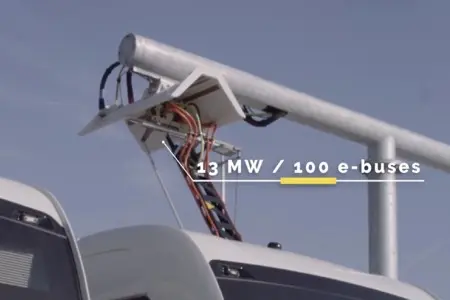
How long does it take to charge with an e-bus pantograph? Total duration varies with battery capacity and the station's electrical throughput, but megawatt-level overhead structures can charge standard transit buses in minutes.
How to Install the Pantograph Up Charger System Dome for Electric Buses. Learn how to mount automated inverted pantographs on urban structures, align collector plates, and configure regional transit networks.
Durable, high-throughput solutions designed to support modern enterprise fleet and public network requirements.