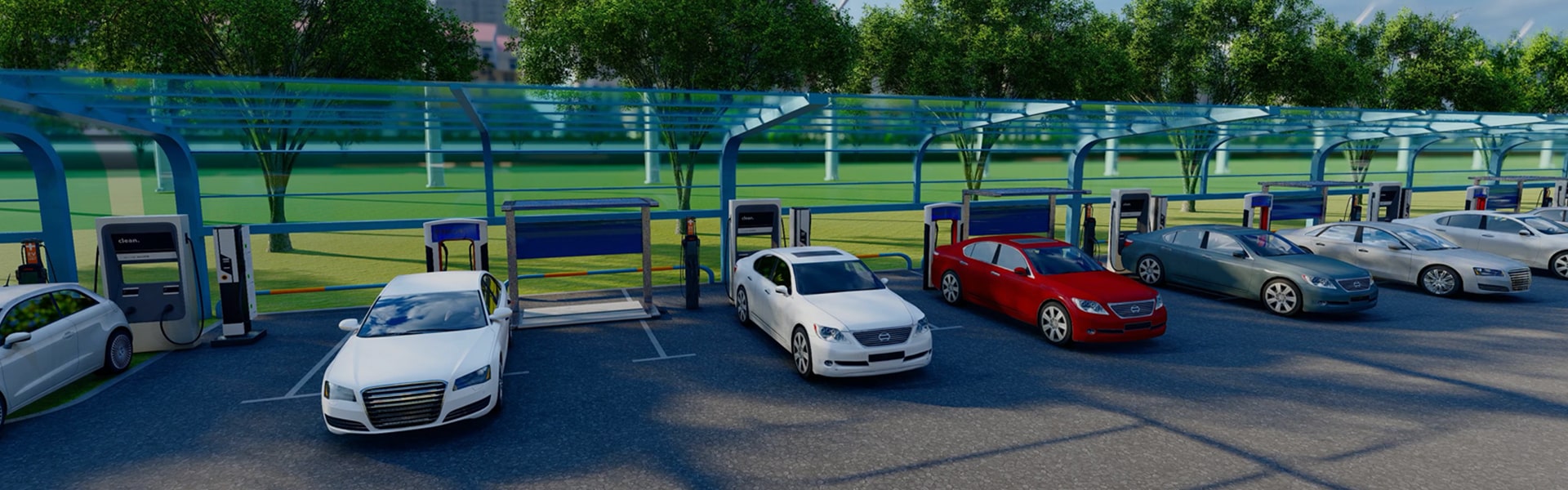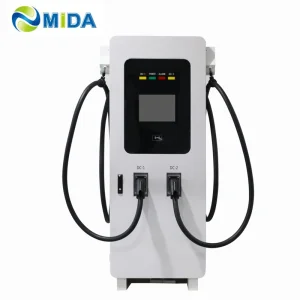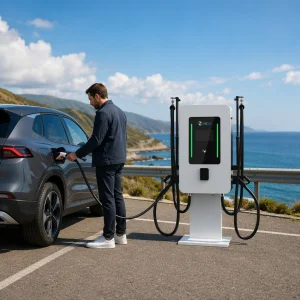
Industrial-grade Fast Charging Stations, Megawatt Units, and Vehicle-to-Grid (V2G) systems customized for global infrastructure networks.
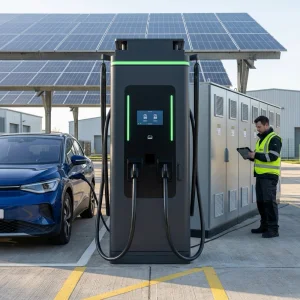
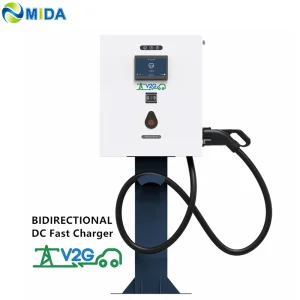
Scalable infrastructure architectures built for heavy-duty transit networks, commercial charge point operators (CPOs), and smart city developments.
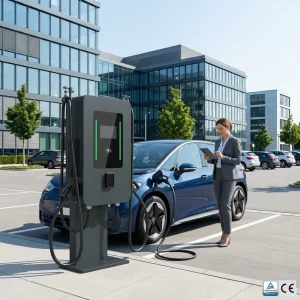
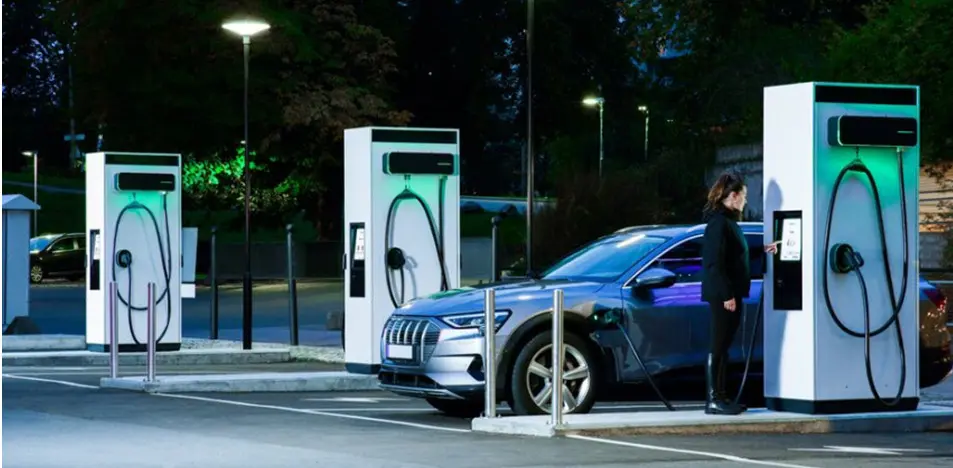
Maximizing station uptime with modular dynamic power allocation. Operators demand high power density, integrated payment systems, remote diagnostics, and OCPP 1.6J/2.0.1 compliance to optimize total cost of ownership (TCO).
Deploying ultra-fast split-charging topologies (360kW-1440kW) with megawatt connectors. Demanding sequential dispatch algorithms and industrial-grade reliability to charge commercial trucks and municipal buses in minutes.
Integrating Solar-Plus-Storage architectures (BESS) to buffer the grid against extreme demand spikes. Implementing Bidirectional V2G charging systems that return energy back to utilities during peak periods.
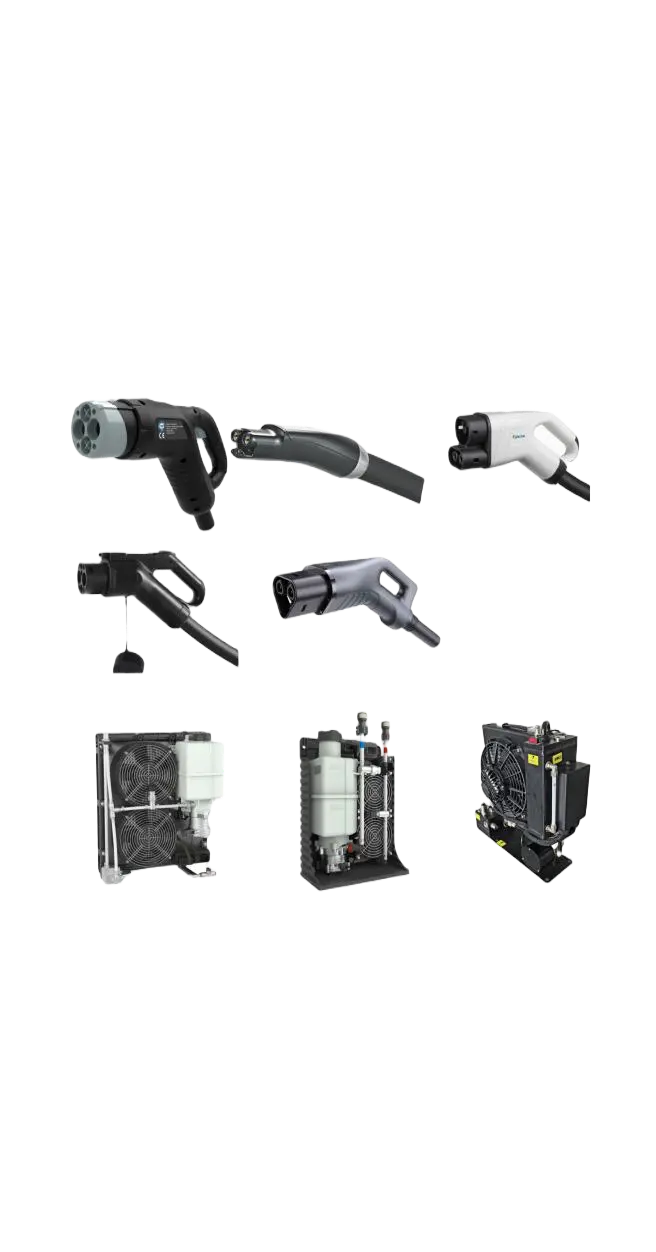
The performance of a modern Level 3 DC Fast Charging Station relies entirely on its modular power electronics and active thermal management. Our factory manufactures high-frequency power modules and specialized cooling systems that support charging outputs from 60kW to 1440kW.
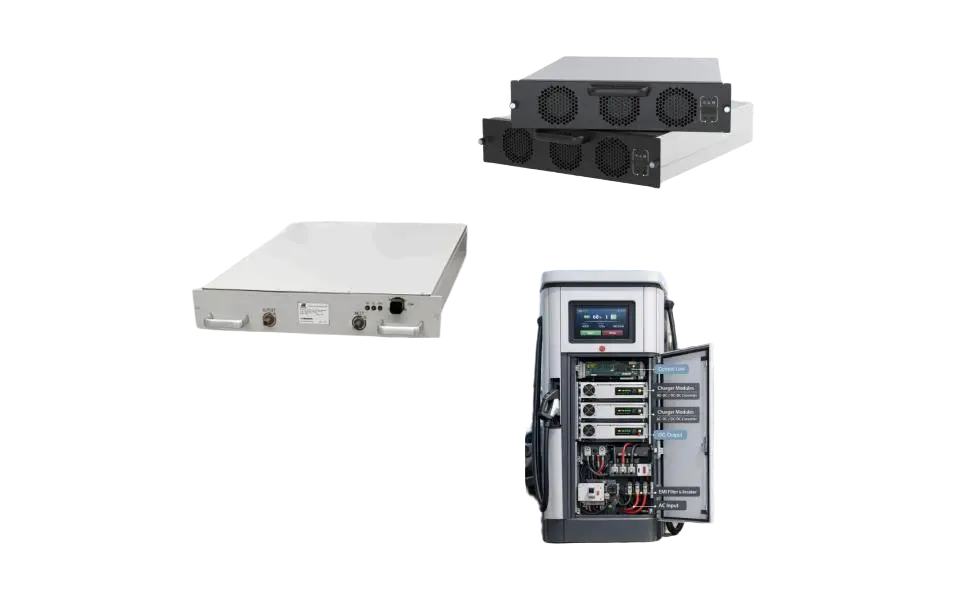
30kW-80kW AC/DC, 40kW-125kW Liquid-Cooled, Bidirectional & V2G Modules.
500A-600A CCS1, CCS2, GBT, NACS, and MCS systems up to 1500A.
Leveraging China's world-class raw materials, cable extrusion, copper processing, and power module production ecosystems.

As an integrated cable and station manufacturer, MIDA Group controls the entire engineering lifecycle: from high-current cable design to dynamic load-balancing software architecture. This eliminates intermediate supplier markups and reduces lead times by up to 40%.
Through our specialized operations across Shanghai Mida Cable Group Ltd., Shanghai Mida EV Power Co., Ltd., and Shanghai Mida New Energy Co., Ltd., we deliver advanced power systems globally.
Navigating complex international certifications, utility grid codes, and regional communication protocol compliance.
Our stations are designed and certified to meet regional grid safety criteria: UL 2202, CE-EMC Class B, CE-LVD, FCC, KC, and CB. We support automatic reactive power compensation to maintain grid stability under full charging load conditions.
Fully compliant with OCPP 1.6J and OCPP 2.0.1 JSON. We implement ISO 15118 (including Plug and Charge features), ensuring secure data exchange between the vehicle, charger, and backend operator platforms.
Our global system supports multiple payment methods (RFID, credit card, Apple Pay) and is compatible with regional open networks like Hubject and Gireve. We partner with local engineering teams to provide ongoing technical maintenance support.
Explore our technical portfolio, engineered to provide high-performance solutions for charging infrastructure developers.
Customized high-power topologies and interfaces engineered to meet the unique challenges of regional operating environments.
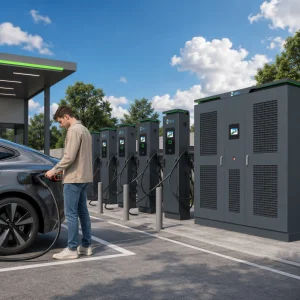
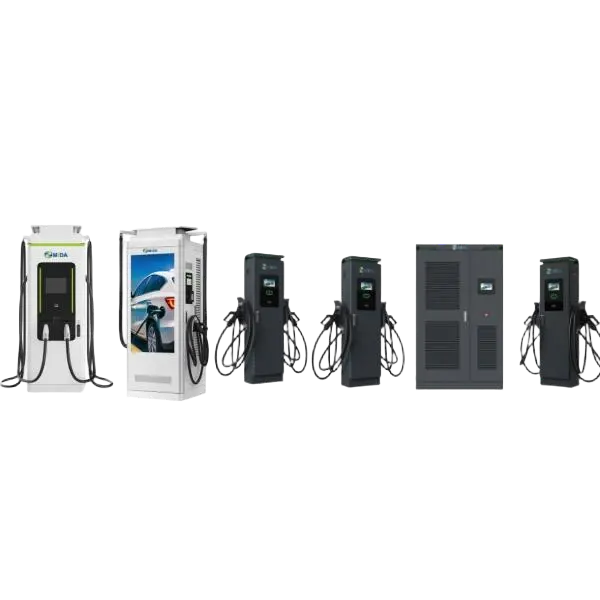
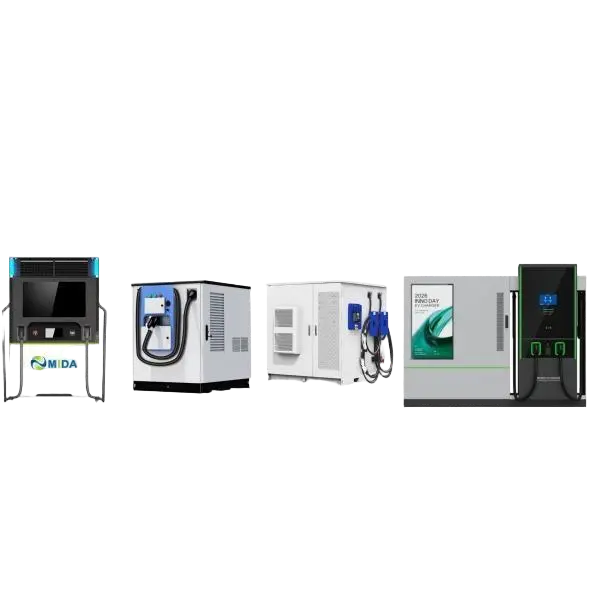
Utilizing high-power split DC chargers (360kW-1440kW) with active cooling. Dynamic power matrixing allocates power to vehicles based on their real-time state of charge (SoC), minimizing vehicle dwell times at roadside rest areas.
Ideal for electric delivery fleets and municipal buses requiring sequential overnight charging. Features scheduled power limits and system management integration to charge fleets sequentially and optimize energy costs.
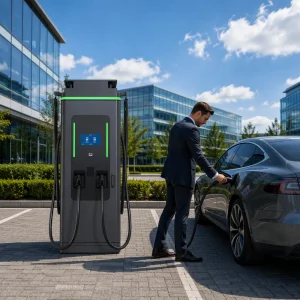
Designed for corporate campuses and commercial parking centers. Combines BESS charging systems with smart bidirectional energy transfer (V2G), reducing peak energy fees and feeding power back to the building during peak periods.
Explore our line of integrated battery energy storage chargers, dual-protocol stations, and high-capacity split charging systems.

Shanghai Mida Cable Group Ltd. operates through its wholly owned subsidiaries: Shanghai Mida EV Power Co., Ltd., Shenzhen Mida EV Power Co., Ltd., and Shanghai Mida New Energy Co., Ltd.
By combining high-capacity charging cable extrusion with in-house power module R&D, we offer complete control over safety parameters, heat dissipation performance, and hardware manufacturing costs.
Mida Cable manufactures a comprehensive range of EV charging cables, including 16A–80A J1772 cables, 16A–63A IEC 62196-2 Type 2 cables, and DC fast charging cables: CCS1 (80A–500A), CCS2 (125A–1000A), CHAdeMO (125A–300A), GBT (200A–1000A), and NACS connectors (250A–600A).
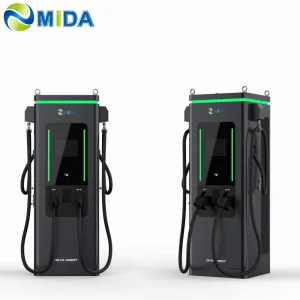
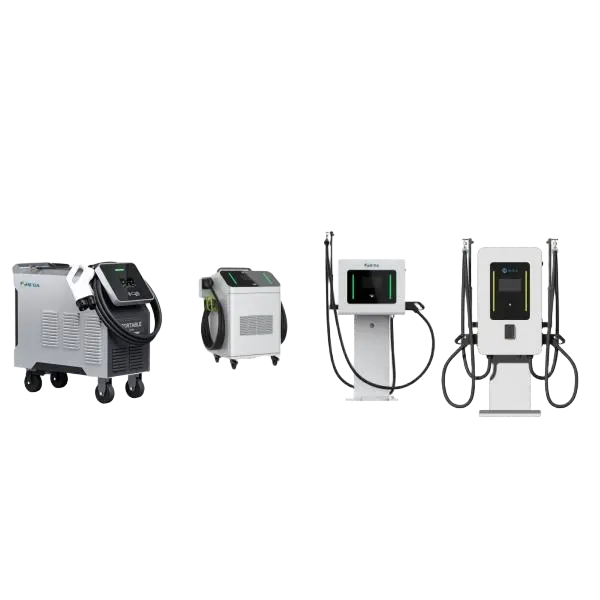
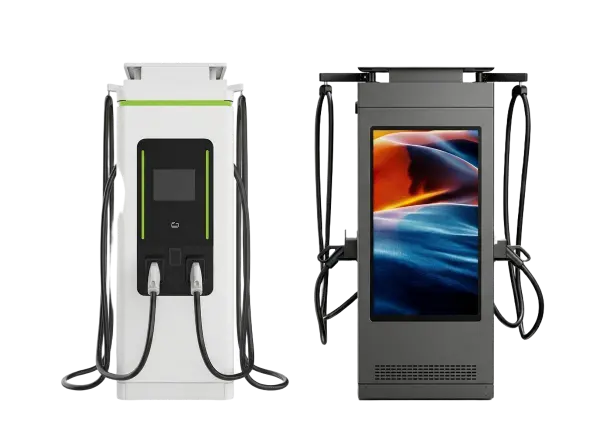
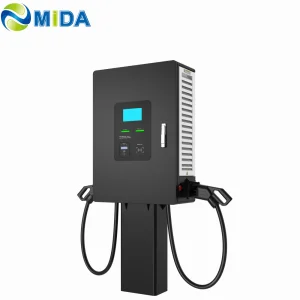
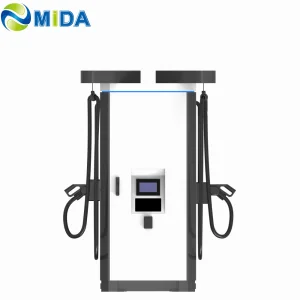
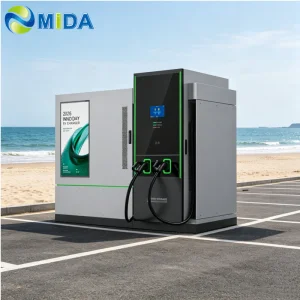
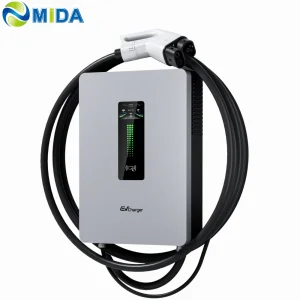
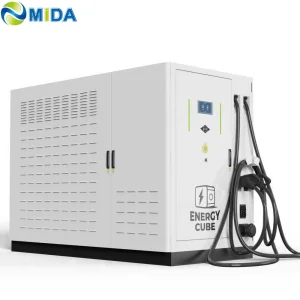
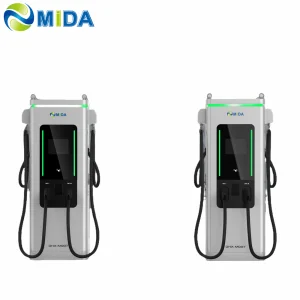
MIDA EV Power produces a full lineup of EV charging stations, such as 7kW–50kW mobile chargers, 3.6kW–7.2kW portable DC chargers, 360kW–1440kW split-type DC fast chargers, 20kW–50kW wall-mounted DC chargers, and 60kW–480kW floor-standing DC fast charging stations.
MIDA New Energy specializes in EV charger power modules, offering 20kW–60kW standard modules, 40kW–125kW liquid-cooled modules, 30kW–62.5kW bidirectional modules, and 20kW–45kW V2G charging modules.
Stay updated with the latest technological developments in pantographs, transit charging systems, and megawatt power delivery.
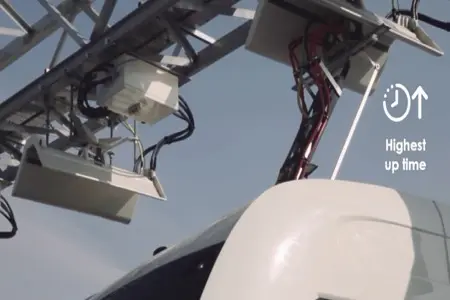
What are the advantages of an e-bus pantograph dome? In contrast to classic plug-in charging systems, e-bus pantograph charging simplifies high-current charging, increases passenger safety, and optimizes turnaround times for urban bus transit fleets.
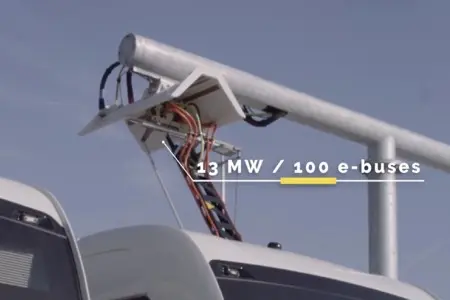
How long does it take to charge with an e-bus pantograph? The charging time depends on the battery capacity and the operating voltage of the vehicle, as well as the maximum power output of the charging system.
How to Install the Pantograph Up Charger System Dome for Electric Bus. Installing a "Pantograph Up" system requires precise structural integration, alignment calibration, and high-power grid connections to ensure reliable charging cycles.
Deep engineering answers for utility planners, compliance officers, and commercial charge point operators.
Traditional air-cooled copper cables are limited to around 200A due to rapid heat generation. Liquid-cooled systems circulate synthetic cooling fluid or water-glycol mixtures through internal cooling ducts inside the cable. This active heat dissipation allows the copper conductor size to be reduced, making the cable lighter and more flexible while safely carrying continuous currents up to 600A (and peak megawatt levels up to 1000A) without exceeding the safe operating temperature limits defined by ISO 15118 and IEC 62196.
While OCPP 1.6J is widely deployed using JSON over WebSockets, OCPP 2.0.1 introduces significant improvements in security, device management, and smart charging. It features certificate-based authentication, TLS encryption, and secure firmware updates. In terms of functionality, OCPP 2.0.1 supports complex smart charging profiles, provides detailed diagnostic logging, and integrates native support for ISO 15118 "Plug and Charge" and bidirectional V2G power dispatch.
Battery Energy Storage Systems (BESS) act as a local power buffer. When multiple high-power DC chargers (e.g., 360kW each) are active simultaneously, they can create sudden high-demand spikes that trigger expensive utility demand charges. A BESS system charges slowly from the grid during low-demand periods and discharges during peak charging events, reducing peak load on the grid. This integration enables operators to install high-power charging stations in locations where the local grid connection would not otherwise support high peak demand.
V2G requires a bidirectional DC charging station equipped with bidirectional AC/DC power modules, a vehicle that supports bidirectional power transfer (compliant with ISO 15118-20 or CHAdeMO protocol), and a secure connection to a grid utility communication system. The charger manages reactive power, active power dispatch, and grid synchronization in compliance with local utility standards like IEEE 1547 or UL 1741 SA/SB, protecting the grid against voltage fluctuations.
In a multi-dispenser configuration powered by a centralized power cabinet, dynamic power allocation monitors the real-time power demand of each connected vehicle. Instead of splitting power equally (which can waste capacity when a vehicle near full charge slows down its charging rate), the system dynamically routes power in modular steps (typically 20kW or 30kW modules). This directs available power to the vehicles that can accept it, maximizing overall station throughput and reducing average charging times.