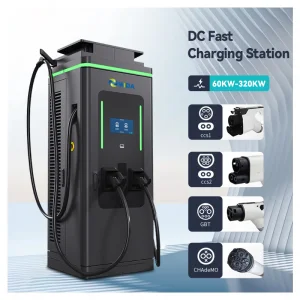
Engineered for high availability, multi-standard compatibility (CCS, CHAdeMO, GBT, NACS), and seamless smart network integrations.
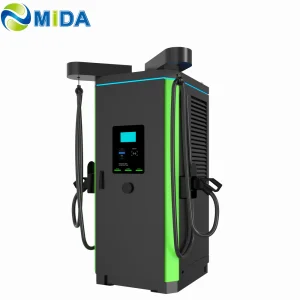
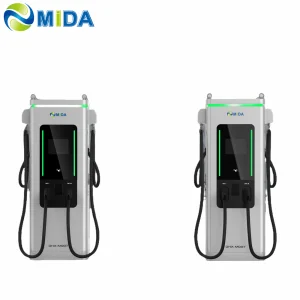
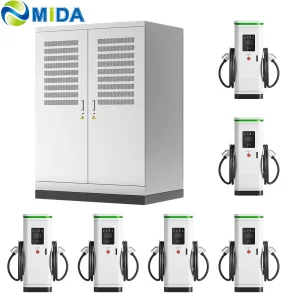
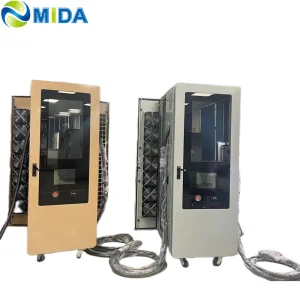
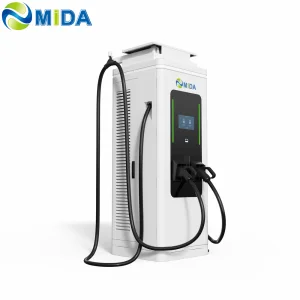
As the global electrical vehicle (EV) landscape transitions from early adoption to mass deployment, infrastructure planners and fleet operators face a critical engineering challenge: balancing speed, capital expenditure (CAPEX), and grid limitations. While ultra-fast megawatt chargers (>350kW) capture media headlines, the 30kW DC charging station has quietly emerged as the operational workhorse of commercial, urban, and industrial fleet electrification.
From an electrical engineering perspective, a 30kW DC charger operates in the optimal zone between typical Level 2 AC chargers (typically 7kW to 22kW) and high-power Level 3 DC stations (60kW to 150kW+). Level 2 chargers rely on the vehicle's onboard charger (OBC) to convert AC to DC, which acts as a bottleneck, restricted to 7kW or 11kW in most commercial passenger vehicles. By bypassing the OBC and feeding DC current directly to the battery management system (BMS), a 30kW DC charger drastically reduces charge times without triggering the massive grid upgrade requirements associated with 100kW+ systems.
Deploying charging stations at scale requires a deep analysis of utility grid infrastructure. A standard commercial facility usually has a low-voltage service panel capable of supporting minor additions. Introducing a 120kW or 150kW charger frequently requires dedicated medium-voltage transformers, extensive civil engineering, and substantial utility hookup fees. Conversely, a 30kW DC charger draws around 32-45 Amps on a three-phase 400V supply. This allows many fleet depots, retail parking structures, and workplace facilities to install multiple 30kW charging points directly onto their existing electrical panels, saving thousands of dollars in infrastructure preparation.
The demand drivers for 30kW DC charging stations vary globally, but share a common thread: efficiency and space constraints:
Shanghai Mida Cable Group Ltd. operates through its wholly owned subsidiaries: Shanghai Mida EV Power Co., Ltd., Shenzhen Mida EV Power Co., Ltd., and Shanghai Mida New Energy Co., Ltd. We are a vertically integrated manufacturer specializing in EV components, fast-charging hardware, and advanced energy storage solutions.
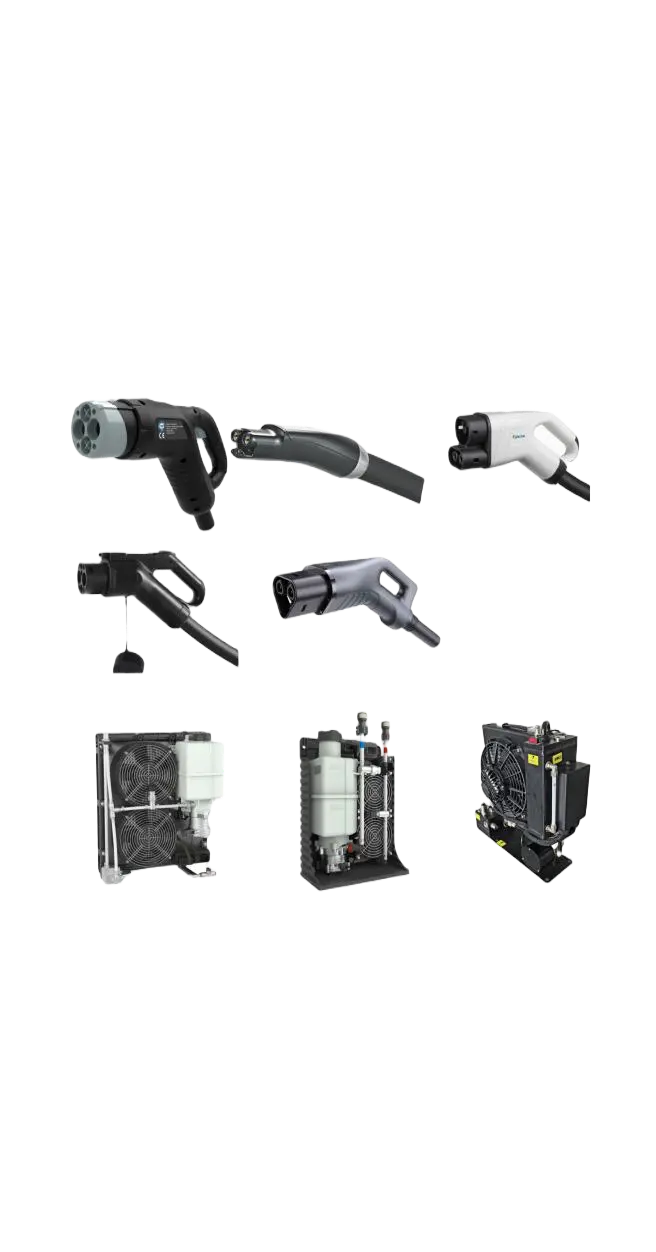
Mida Cable manufactures a comprehensive range of EV charging cables, including 16A–80A J1772 cables, 16A–63A IEC 62196-2 Type 2 cables, and DC fast charging cables: CCS1 (80A–500A), CCS2 (125A–1000A), CHAdeMO (125A–300A), GBT (200A–1000A), and NACS connectors (250A–600A).
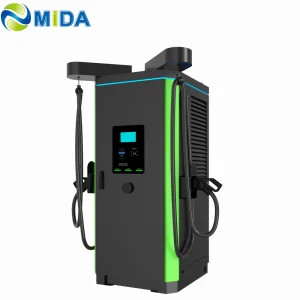
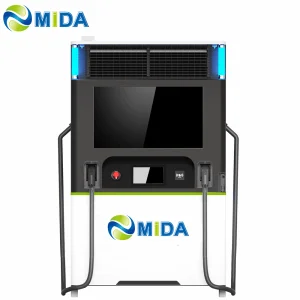
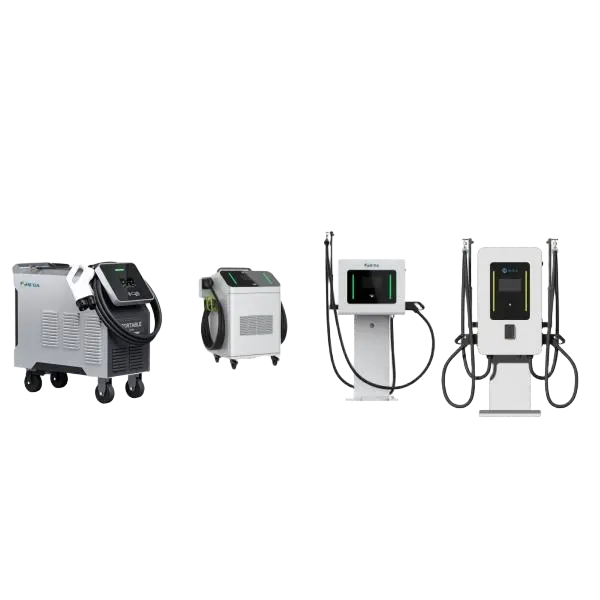
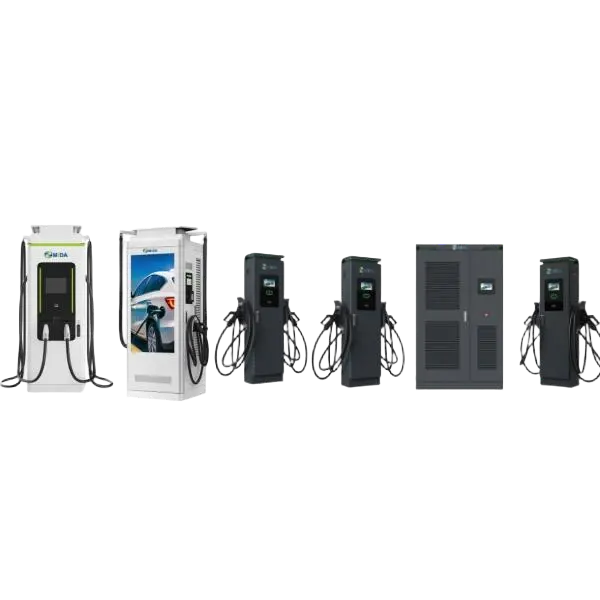
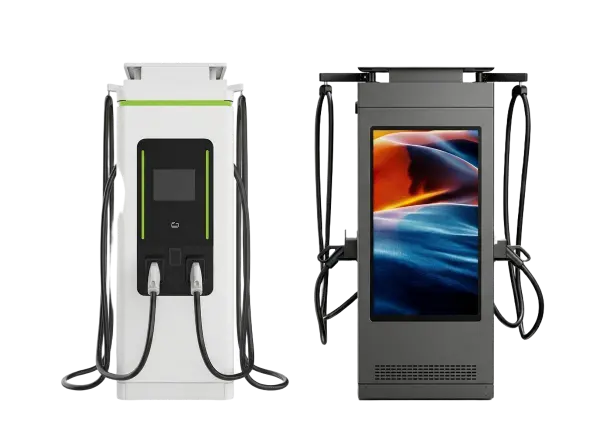
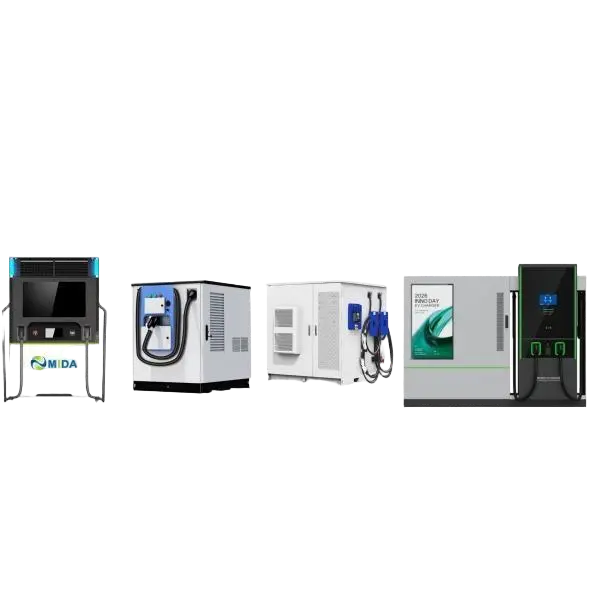
MIDA EV Power produces a full lineup of EV charging stations, such as 7kW–50kW mobile chargers, 3.6kW–7.2kW portable DC chargers, 360kW–1440kW split-type DC fast chargers, 20kW–50kW wall-mounted DC chargers, and 60kW–480kW floor-standing DC fast charging stations.
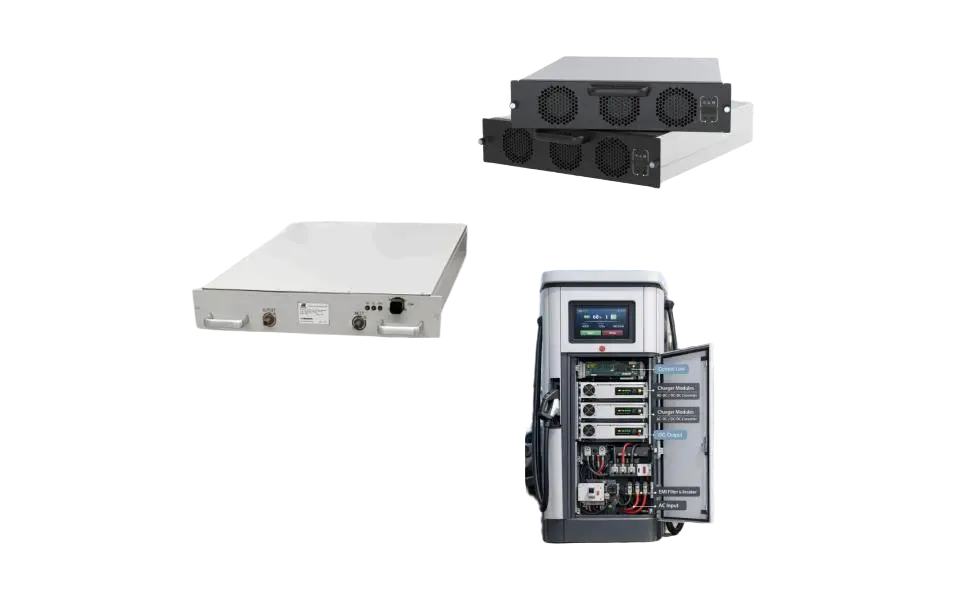
MIDA New Energy specializes in EV charger power modules, offering 20kW–60kW standard modules, 40kW–125kW liquid-cooled modules, 30kW–62.5kW bidirectional modules, and 20kW–45kW V2G charging modules.

Power Conversion Efficiency
All-Weather Ingress Protection
Global Installations
Future-Proof Smart Integration
Explore our core business segments engineered to deliver optimized charging solutions from component-level manufacturing to turn-key fast charging stations.
Power Output Range: 7kW | 20kW | 30kW | 40kW | 60kW | 80kW
High Power Output: 60kW-480kW | 360kW-1440kW Split Solutions
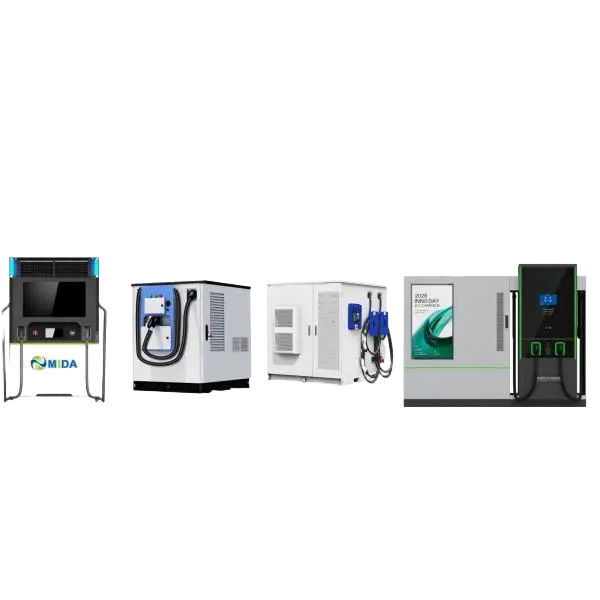
Battery Capacity: 60kWh | 261kWh | 418kWh | 625kWh | 2MkWh
The architecture of a modern 30kW DC charging station relies on state-of-the-art power conversion technology. Historically, chargers used silicon-based IGBT modules. However, the industry is transitioning rapidly to Silicon Carbide (SiC) MOSFETs. SiC technology enables higher switching frequencies, which reduces the size of passive components (like inductors and capacitors) and improves overall efficiency to over 96%. This minimises thermal dissipation and enables the compact, wall-mounted form factors popular in urban parking structures.
In high-power environments, thermal management is critical. While air cooling remains the standard for 30kW charging systems due to its simplicity and cost-effectiveness, liquid cooling is becoming dominant in high-power applications (ranging from 120kW up to 1000kW systems). Liquid-cooled cables and power modules protect electrical contacts from thermal degradation and allow continuous high-current delivery without throttling. At Mida, our product matrix includes integrated and split cooling units designed to match high-power CCS2 and NACS configurations, ensuring reliability under extreme ambient temperatures.
Looking ahead, the role of a DC charging station is expanding from a simple power source to a bidirectional energy node. Using Mida's bidirectional AC-DC modules (ranging from 20kW to 62.5kW), operators can implement Vehicle-to-Grid (V2G) and Vehicle-to-Building (V2B) configurations. During peak tariff hours, the 30kW DC charger can draw energy from the vehicle's battery pack to power facility loads or stabilize the local utility grid. This turns the fleet into a decentralized virtual power plant (VPP), creating new revenue streams for fleet managers.
Engineered with industrial precision, our core technologies support global clean energy transitions.
Keep up with our latest technical breakthroughs, system integration guides, and research on e-bus pantograph systems.

What are the advantages of an e-bus pantograph dome? In contrast to classic plug-in charging systems, e-bus pantograph charging optimizes overhead automated contacts, boosting terminal convenience and electrical safety.
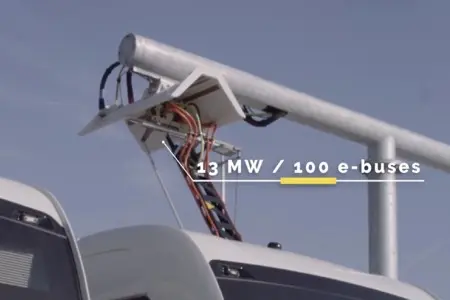
How long does it take to charge with an e-bus pantograph? The charging time depends on the battery capacity and the station's configuration. Automated overhead connections enable rapid en-route high-power charging.
How to Install the Pantograph Up Charger System Dome for Electric Bus. Installing a “Pantograph Up” system requires precise civil alignment, high-power substation coupling, and rugged weather-proof overhead protection.
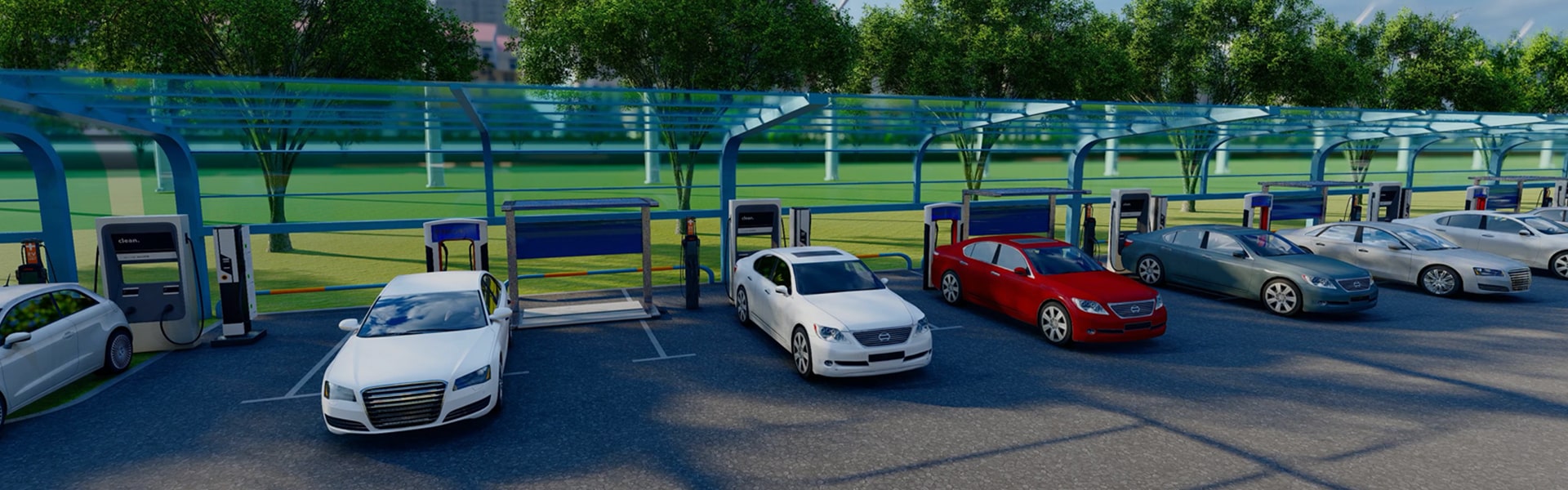
A key aspect of building robust EV networks is tailoring charging stations to specific regional environments and business models. 30kW DC charging stations are highly versatile, serving as central hubs for various applications:
Logistics operators must maximize vehicle uptime. Overnight charging using 7kW AC systems can be too slow for vehicles arriving late or departing early. Installing a 30kW DC charger ensures that mid-sized commercial delivery vans are fully charged within 2 to 3 hours, allowing operators to rotate fleets quickly without upgrading building transformers.
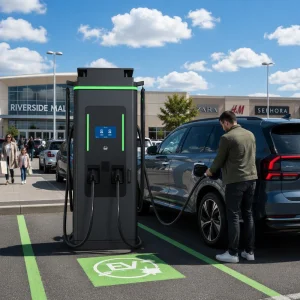
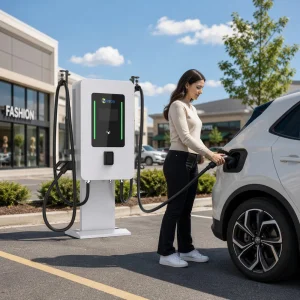
The average dwell time for consumers at supermarkets, restaurants, and shopping outlets ranges from 45 to 90 minutes. A standard AC charger only adds about 10-20 miles of range during this time. In contrast, a 30kW DC fast charging station can replenish a modern EV to 50%-80% within an hour, making it an attractive amenity for customers.
Modern residential complexes face the challenge of sharing limited charging points among tenants. A 30kW DC charger offers a fast-turnaround charging hub, allowing tenants to charge their vehicles in under an hour rather than taking up a slow AC charger overnight. This helps property managers maximize the utility of their charging infrastructure.
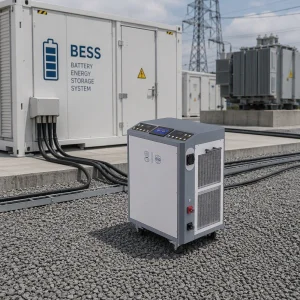
In regions with weak grids or high peak demand tariffs, pairing a 30kW DC charger with a Solar MPPT and Battery Energy Storage System (BESS) is highly effective. The storage system acts as a buffer, charging from solar or off-peak power and discharging during fast-charging sessions. This minimizes peak demand charges and ensures reliable operation even during local grid outages.
Find answers to common technical, compliance, and installation questions about 30kW DC charging systems.
Explore our high-performance liquid-cooled systems, testing equipment, advertising displays, and large-scale battery storage chargers.