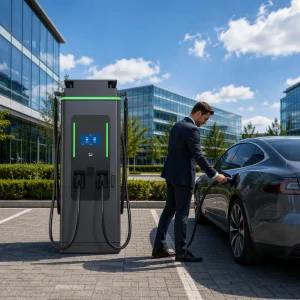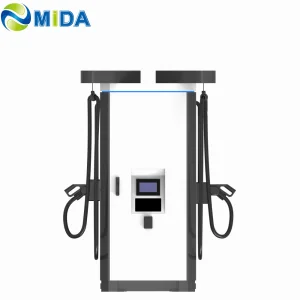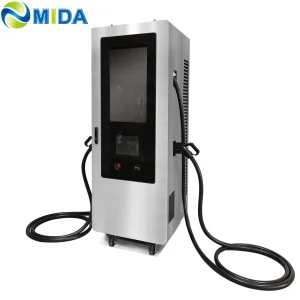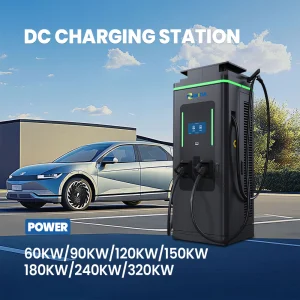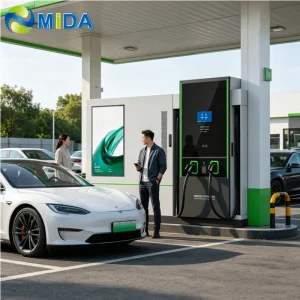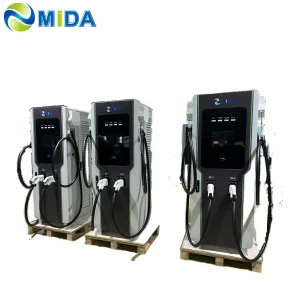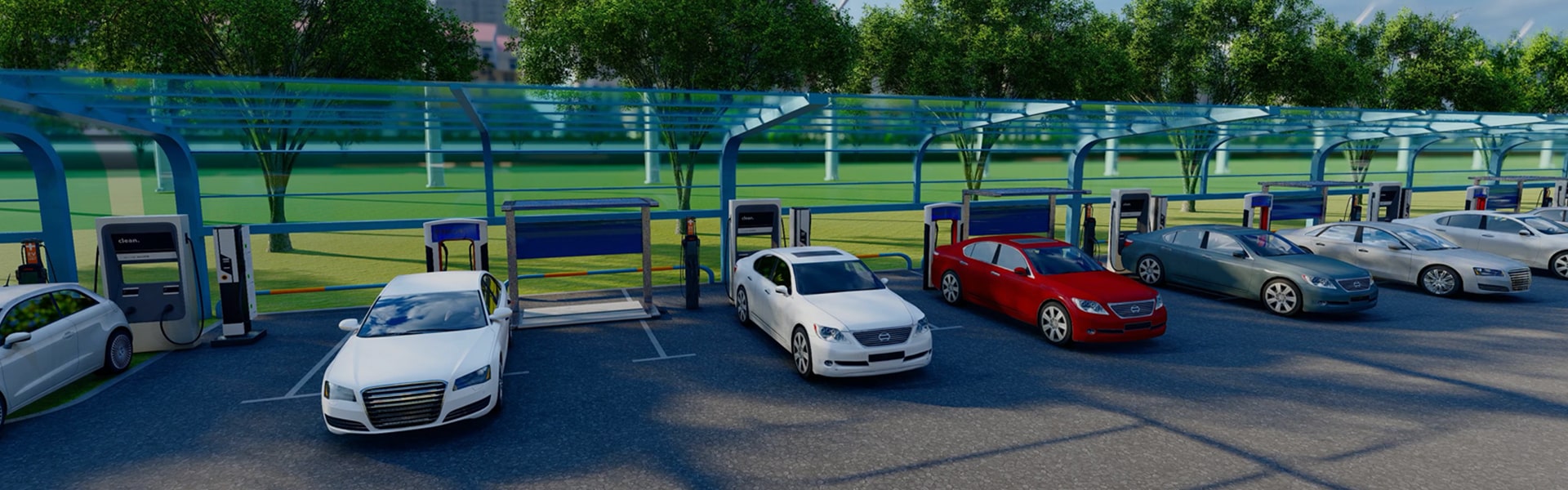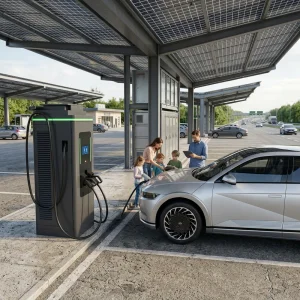
Certified CCS2 DC Fast Chargers ranging from mobile calibration configurations to megawatt-level split architectures.
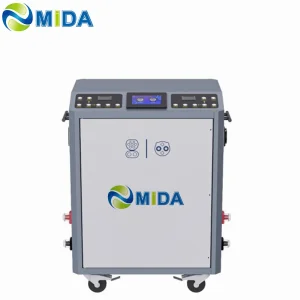
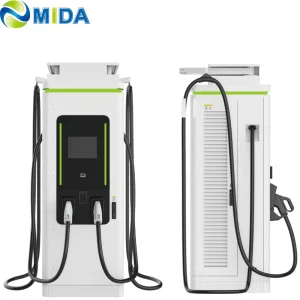
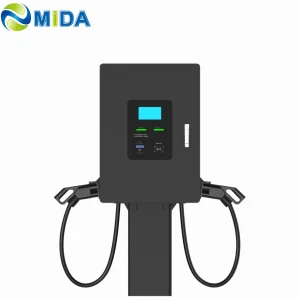
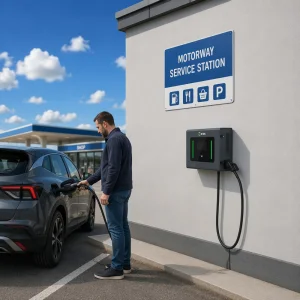
As global electrification transitions from light-passenger fleets to commercial heavy-duty logistics and urban public transit, the Combined Charging System Type 2 (CCS2) has emerged as the definitive standard across Europe, Asia-Pacific, South America, and Oceania. Sourcing industrial-grade CCS2 DC Chargers requires more than cross-referencing basic power capabilities; it demands deep alignment with ISO 15118 communication interfaces, multi-vector liquid cooling paradigms, and complex power module topologies.
Unlike AC charging configurations where the vehicle's onboard converter acts as the power bottleneck, a CCS2 DC Charger rectifies alternating current directly into high-voltage direct current within the station cabinet. This architecture minimizes thermal stress inside the vehicle chassis, allowing transfer rates from 30kW up to megawatt scales. For tier-one purchasing officers, procurement decisions must evaluate active power factor correction (PFC), galvanic isolation topologies, and modular power-sharing systems that dynamically distribute energy load across multiple dispensers based on real-time Battery Management System (BMS) telemetry.
When deploying infrastructure at scale, professional Charge Point Operators (CPOs) focus heavily on electrical efficiency, safety parameters, and the adaptability of the firmware stacks. The modern standard relies on the DIN 70121 and ISO 15118 communication standards. ISO 15118, in particular, enables crucial capabilities like "Plug & Charge" secure authentication via cryptographic key exchanges, as well as bidirectional V2G (Vehicle-to-Grid) power routing, ensuring that local fleets can act as distributed energy resource management assets.
China remains the uncontested nucleus of the worldwide electric vehicle supply chain. Sourcing CCS2 DC Fast Chargers from specialized Chinese factories such as MIDA Group unlocks significant competitive advantages:
1. Vertical Supply Chain Consolidation: Chinese manufacturers maintain close partnerships or direct internal production lines for the primary building blocks of high-power chargers. This includes DC contactors, high-performance liquid cooling systems, billing systems, and the critical EV power modules. By controlling the complete stack, factories mitigate component integration challenges, shorten lead times, and optimize production costs.
2. Rigorous Validation & Compliance: Top-tier Chinese exporters adhere strictly to European Norms (EN) and IEC standards. Leading factories conduct full-scale electromagnetic compatibility (EMC) testing, high-temperature environmental aging chambers, and structural dynamic stress analysis. Certified components ensure immediate compliance with local grid connections globally.
Click on our primary categories to view detailed architectures tailored to your application needs.
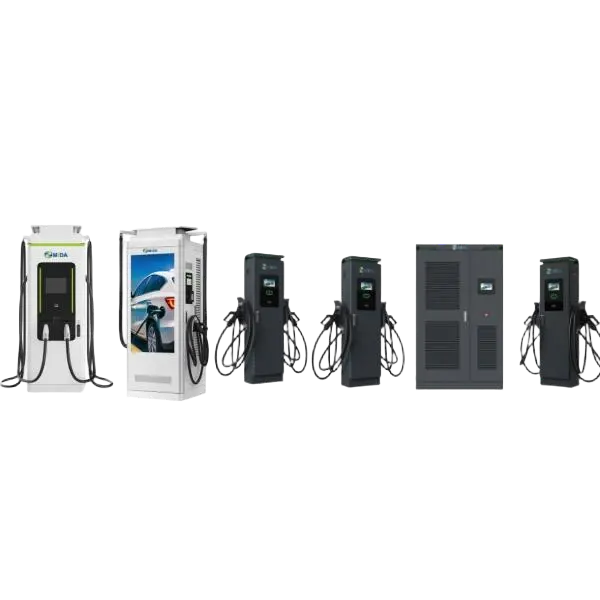
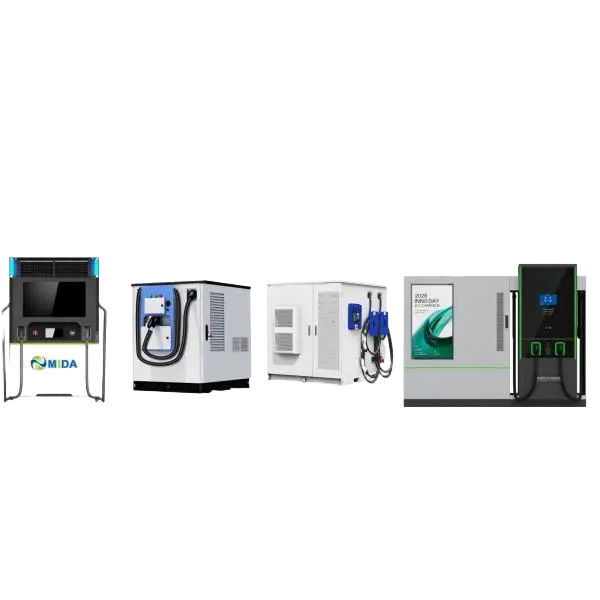
Shanghai Mida Cable Group Ltd. operates through its wholly owned subsidiaries: Shanghai Mida EV Power Co., Ltd., Shenzhen Mida EV Power Co., Ltd., and Shanghai Mida New Energy Co., Ltd.
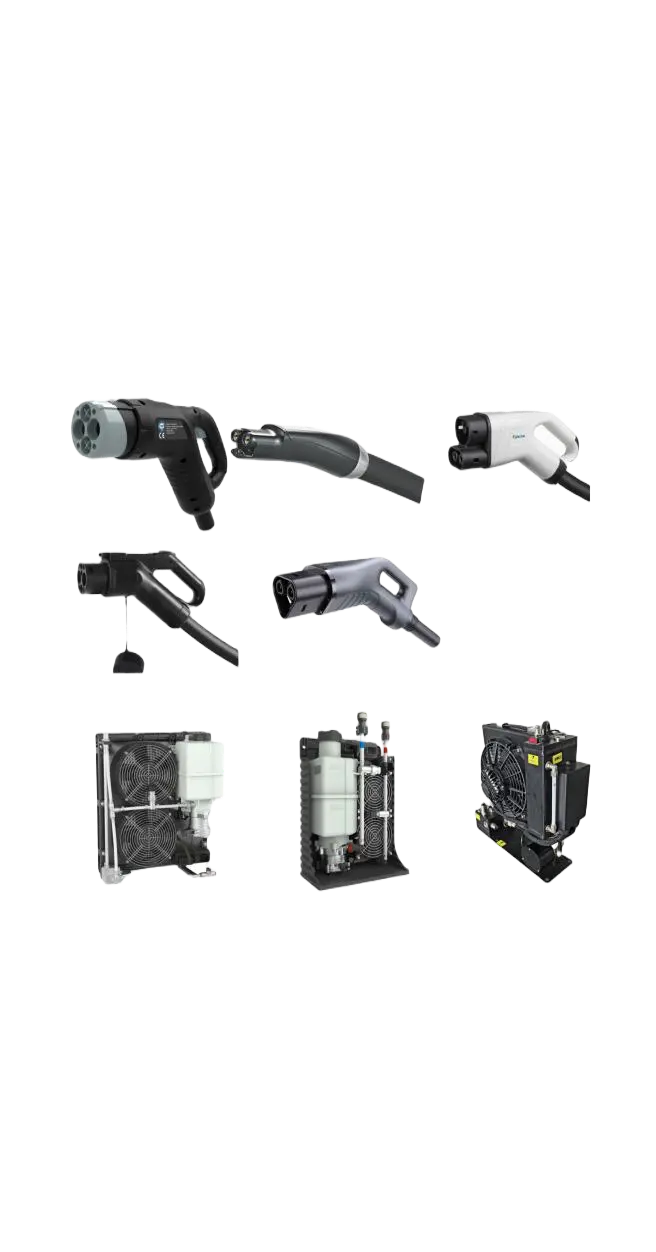
Mida Cable manufactures a comprehensive range of EV charging cables, including 16A–80A J1772 cables, 16A–63A IEC 62196-2 Type 2 cables, and high-capacity DC fast charging cables: CCS1 (80A–500A), CCS2 (125A–1000A), CHAdeMO (125A–300A), GBT (200A–1000A), and NACS connectors (250A–600A).
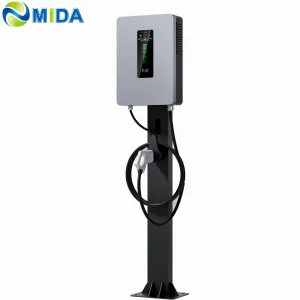
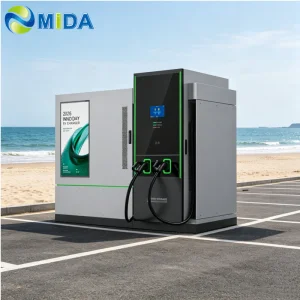
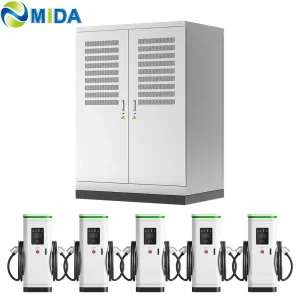
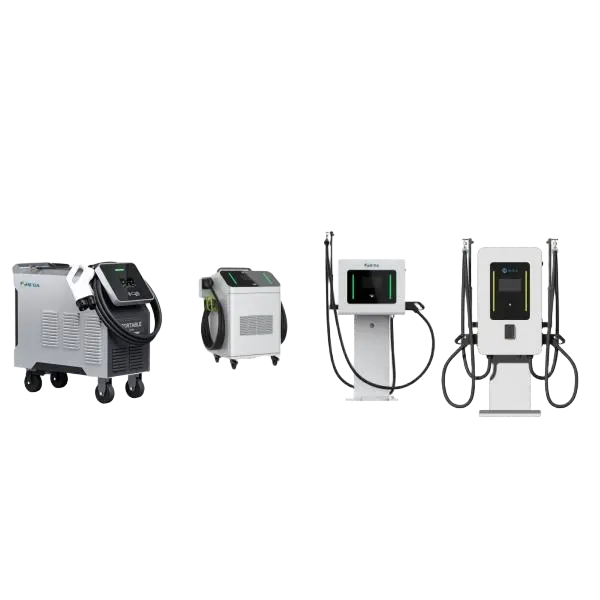
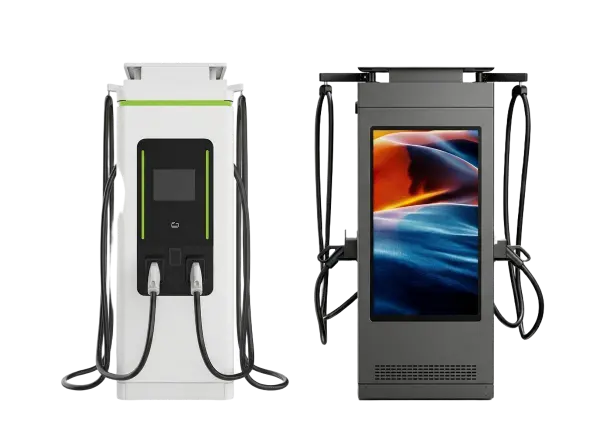
MIDA EV Power produces a full lineup of EV charging stations, such as 7kW–50kW mobile chargers, 3.6kW–7.2kW portable DC chargers, 360kW–1440kW split-type DC fast chargers, 20kW–50kW wall-mounted DC chargers, and 60kW–480kW floor-standing DC fast charging stations.
MIDA New Energy specializes in EV charger power modules, offering 20kW–60kW standard modules, 40kW–125kW liquid-cooled modules, 30kW–62.5kW bidirectional modules, and 20kW–45kW V2G charging modules.

A complete technological matrix covering critical power modules, active cooling assemblies, and integrated charging storage equipment.
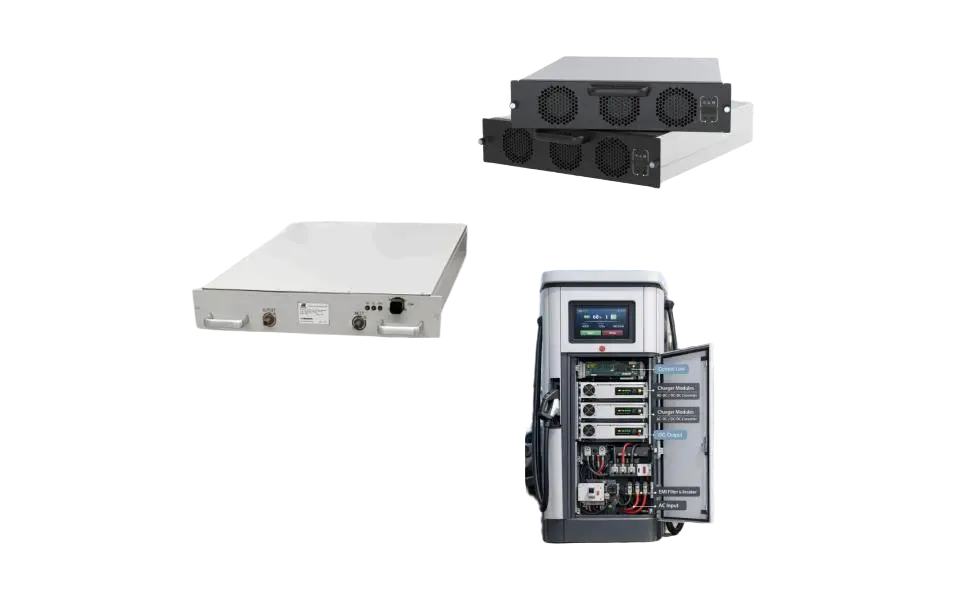
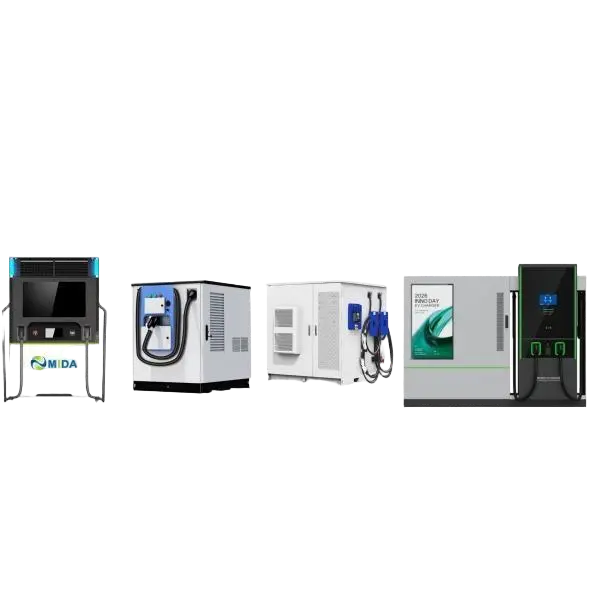
Deploying megawatt-class charging hubs presents significant challenges for local distribution grids. As fleets demand ultra-fast charging turnarounds, standard grid connections often cannot support localized load surges. Sourcing CCS2 infrastructure integrated with BESS (Battery Energy Storage Systems) provides an elegant microgrid buffer. During off-peak windows, the integrated BESS charges slowly at low demand rates; when high-power commercial vehicles arrive, the battery bank discharges simultaneously with the grid, outputting massive power loads without triggering peak-demand tariffs.
In high-power charging, managing thermal energy is crucial for maintaining performance and safety. Standard air-cooled power modules are limited by physical space and ambient air temperature, often struggling to sustain peak output during prolonged high-demand cycles. Liquid-cooled power modules solve this by routing a dielectric coolant mixture through sealed cold plates directly adjacent to the power electronics (IGBTs and MOSFETs).
This system improves thermal dissipation, allowing chargers to operate consistently at full power even in extreme climates, while protecting the components from dust, humidity, and corrosive coastal air. As a result, operators benefit from a lower Total Cost of Ownership (TCO) and significantly longer equipment lifespans.
Key engineering questions answered by MIDA's Technical Engineering Director.
Stay informed on the latest technical trends, product installations, and industry standards from MIDA Group.
Discover the full technical line up of MIDA CCS2 DC Charging Stations for global public charging projects.