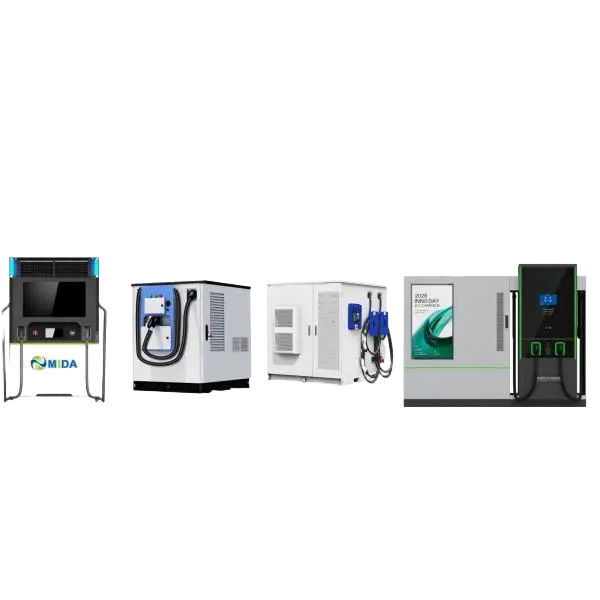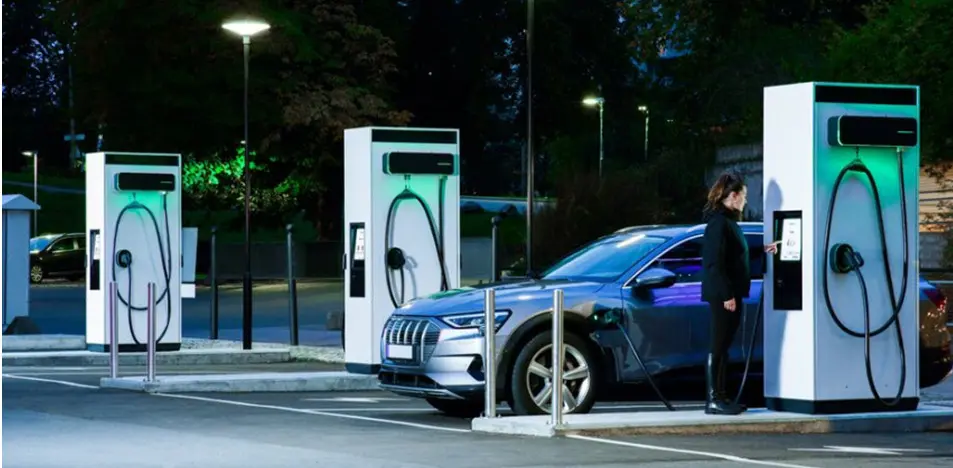
Discover top-tier, high-power DC fast-charging solutions custom-engineered for maximum efficiency and uptime.
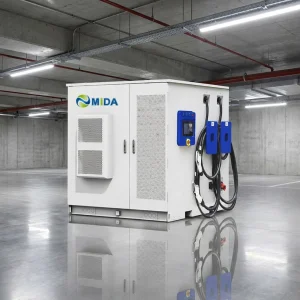
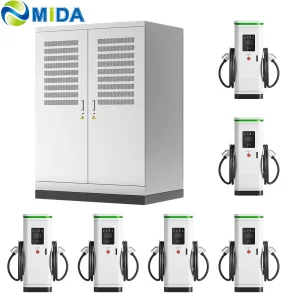
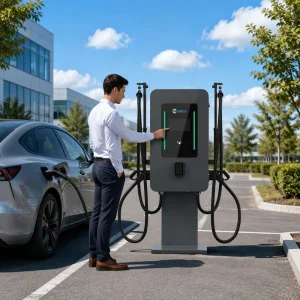
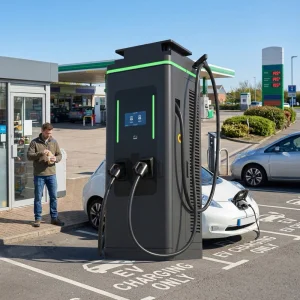
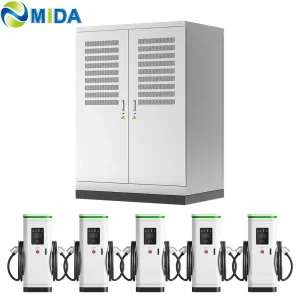
The global transition toward electromobility has generated a critical bottleneck: the geographical inflexibility of grid-tied charging infrastructures. Across the Americas, Europe, and the Asia-Pacific region, commercial and industrial enterprises are discovering that fixed fast-charging stations alone cannot satisfy complex fleet operation timelines, utility peak-demand charges, or emergency roadside recovery needs. Here, the 30kW mobile EV charger serves as a versatile bridge.
By decoupling the charger from a permanent grid drop, operators can deploy immediate DC fast-charging capacity at construction sites, mining outposts, automotive staging lots, and logistics hubs. This mobile paradigm significantly decreases operational downtime, eliminates long lead times required for utility transformer upgrades, and optimizes energy deployment strategies. It functions as a resilient asset within modern smart grids, transforming localized fleet operations into responsive nodes of a broader energy network.
Securing medium-voltage power configurations from local distribution system operators (DSOs) can take anywhere from six months to two years. For enterprises scaling up their electric commercial vehicle operations, this delay translates directly to lost operational throughput. A mobile 30kW DC charger, when paired with an onboard energy storage system (BESS), enables fleets to run high-capacity logistical routes immediately, avoiding delayed expansion plans and costly peak demand penalties.
High-performance charging topologies, scalable power distribution, and modular energy storage systems.
The technological architecture of 30kW mobile chargers is shifting toward silicon carbide (SiC) power semiconductor topologies, high-voltage battery storage coupling, and bidirectional energy conversion pathways. Traditional silicon IGBT-based converters often struggle to maintain efficiency at thermal limits under rugged field conditions. By integrating SiC MOSFET power modules, modern mobile chargers achieve high switching frequencies, reduce heat generation, and deliver efficiencies exceeding 96%.
"The integration of Silicon Carbide (SiC) semiconductors, paired with dynamic thermal dissipation paths, enables 30kW mobile chargers to operate at continuous maximum load from -30°C to +55°C without current de-rating."
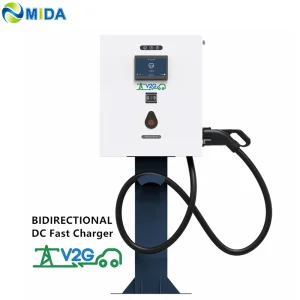
At the system level, the technological roadmap focuses on bidirectional power flow capabilities, allowing these units to serve as V2G (Vehicle-to-Grid) or V2X (Vehicle-to-Everything) energy nodes. They can charge electric vehicles from an internal battery pack or discharge connected vehicles to power on-site equipment, critical facilities, or support the local grid during periods of peak demand.
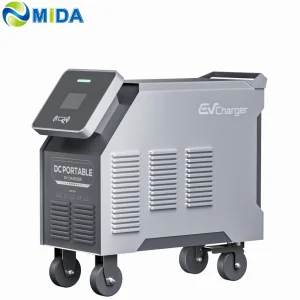
SiC technology significantly reduces switching and conduction losses compared to standard silicon components. This enables designers to use smaller, lighter magnetic components and cooling systems. The resulting reduction in physical volume makes the 30kW charger truly mobile—easy to mount on handcarts, place inside rescue vehicles, or integrate into compact, self-contained mobile charging pods.
Shanghai Mida Cable Group Ltd. operates through its wholly owned subsidiaries: Shanghai Mida EV Power Co., Ltd., Shenzhen Mida EV Power Co., Ltd., and Shanghai Mida New Energy Co., Ltd. We design, engineer, and manufacture advanced EV charging infrastructure components and systems.
Mida Cable manufactures a comprehensive range of EV charging cables, including 16A–80A J1772 cables, 16A–63A IEC 62196-2 Type 2 cables, and DC fast charging cables: CCS1 (80A–500A), CCS2 (125A–1000A), CHAdeMO (125A–300A), GBT (200A–1000A), and NACS connectors (250A–600A).
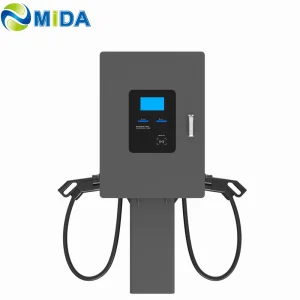
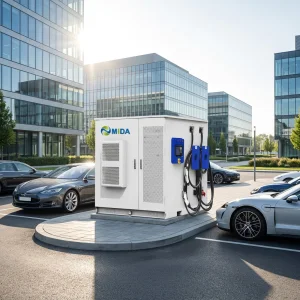
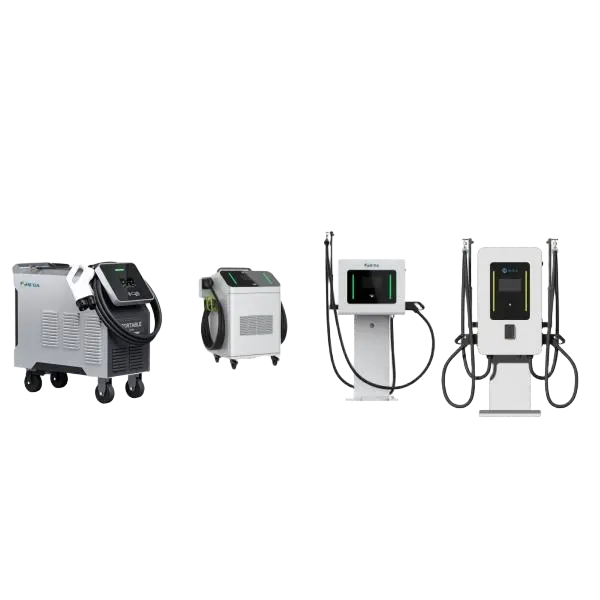
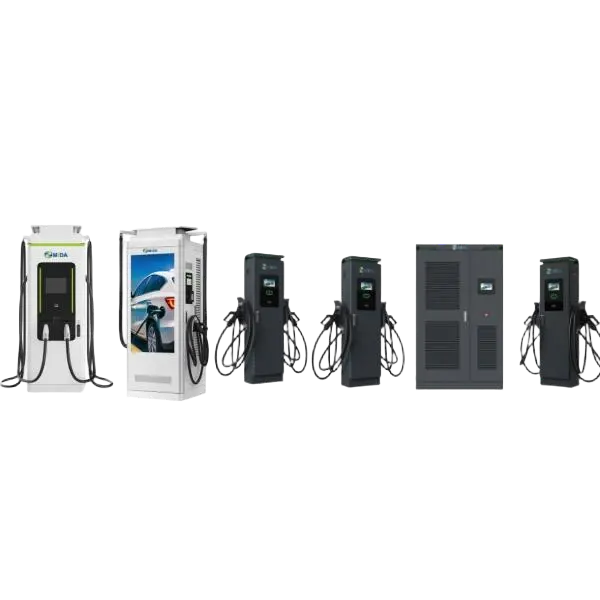
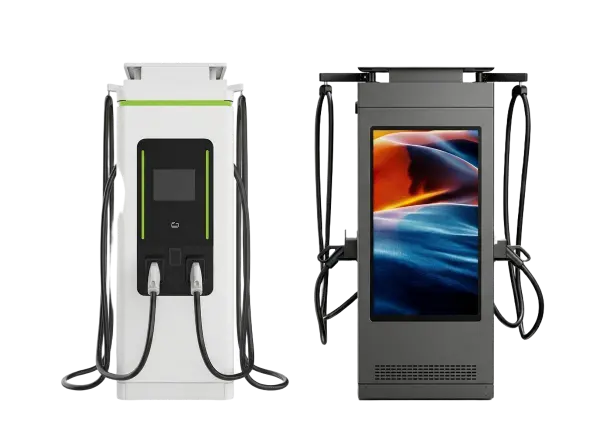
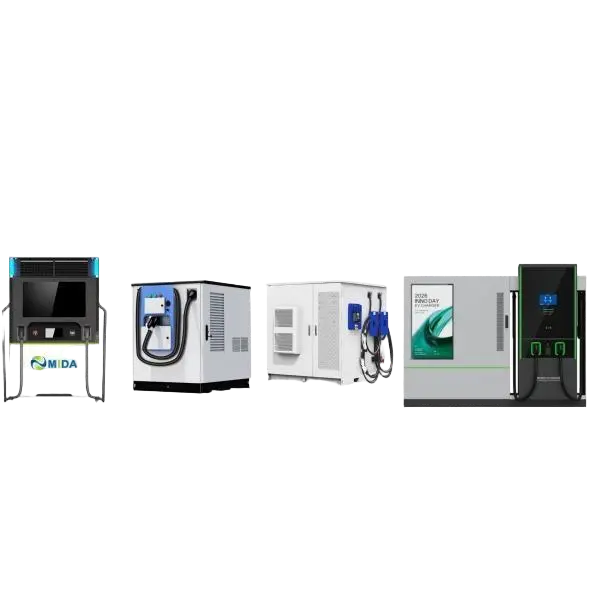
MIDA EV Power produces a full lineup of EV charging stations, such as 7kW–50kW mobile chargers, 3.6kW–7.2kW portable DC chargers, 360kW–1440kW split-type DC fast chargers, 20kW–50kW wall-mounted DC chargers, and 60kW–480kW floor-standing DC fast charging stations.
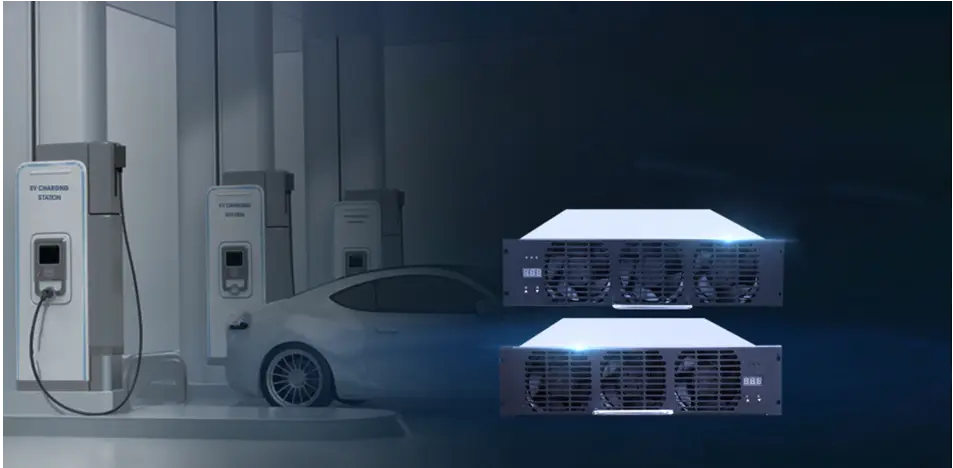
MIDA New Energy specializes in EV charger power modules, offering 20kW–60kW standard modules, 40kW–125kW liquid-cooled modules, 30kW–62.5kW bidirectional modules, and 20kW–45kW V2G charging modules.

Deploying mobile charging solutions requires navigating different regional grid standards, electrical codes, and vehicle connector formats. The table below outlines how 30kW mobile chargers adapt to key geographic markets:
In North America, commercial operators face complex transition phases involving J1772, CCS1, and NACS standards. Large logistics fleets use 30kW mobile charging units to manage vehicle shifts without installing fixed chargers at every bay. They also serve as emergency roadside backup units, allowing service vehicles to quickly add driving range to stranded EVs.
The European market demands compliance with CE, IEC 61851-23 standards, and OCPP 2.0.1 communication protocols. Local municipalities use mobile DC stations to provide charging at public events and temporary job sites. Additionally, Dynamic Load Balancing (DLB) features allow these units to charge multiple vehicles without overloading local grid connections.
With rapid urban growth and remote industrial projects, the Asia-Pacific region relies heavily on off-grid power solutions. Integrated BESS mobile charging trailers, utilizing GB/T connectors and high-capacity battery packs, supply clean power to mining sites, remote infrastructure projects, and urban fleet depots.
Industrial-grade components built for high reliability and demanding charging applications.
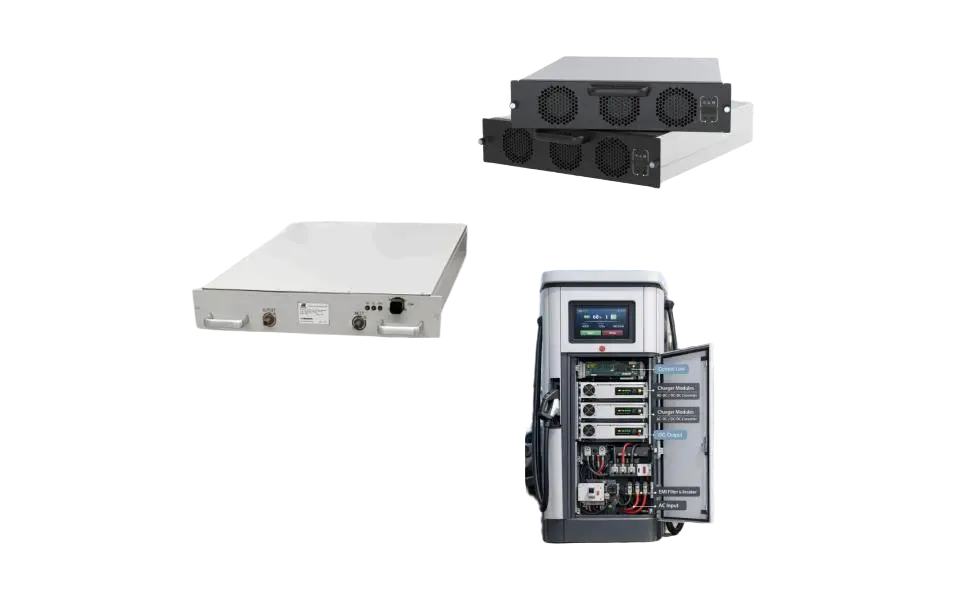
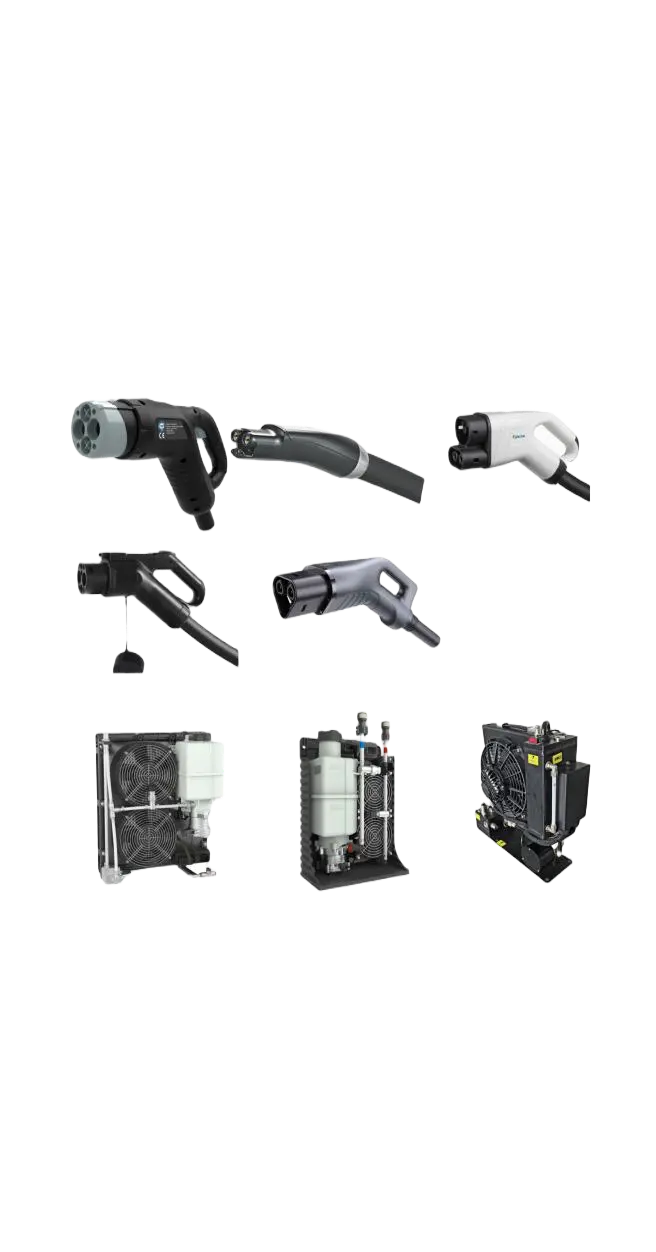
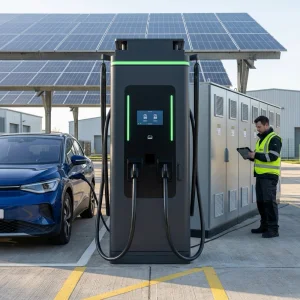
Modern energy systems increasingly combine localized power generation with smart distribution. Integrating a 30kW mobile charger into a microgrid that includes solar photovoltaics (PV) and battery energy storage (BESS) provides a clean, independent power loop.
During peak solar production hours, the BESS stores clean energy via maximum power point tracking (MPPT) DC-DC converters. When fleet vehicles return for service or charging, the stored energy is delivered directly to them, bypassing AC grid conversion steps. This direct DC-to-DC topology reduces conversion losses and avoids peak demand pricing, lowering total operating costs.
Industrial plants and depots face steep demand charges if their power draw spikes during peak utility hours. Mobile BESS charging stations act as buffers. By charging during off-peak hours and discharging when demand peaks, they protect the primary facility connection from high load spikes.
Read the latest engineering articles and technology insights from MIDA Group's technical team.

What are the advantages of an e-bus pantograph dome? In contrast to classic plug-in charging systems, e-bus pantograph systems offer automated connection for rapid charging during regular route stops...
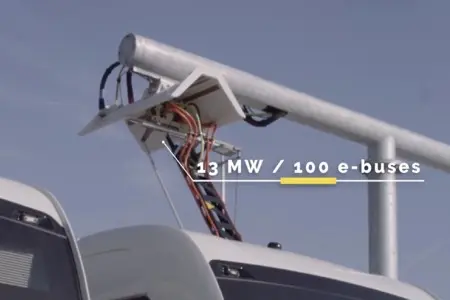
How long does it take to charge with an e-bus pantograph? The charging time depends on the battery capacity, state of charge, and the output capability of the high-power station...
How to Install the Pantograph Up Charger System Dome for Electric Bus: Installing a "Pantograph Up" system requires precise physical alignment, structural calibration, and robust grid integration...
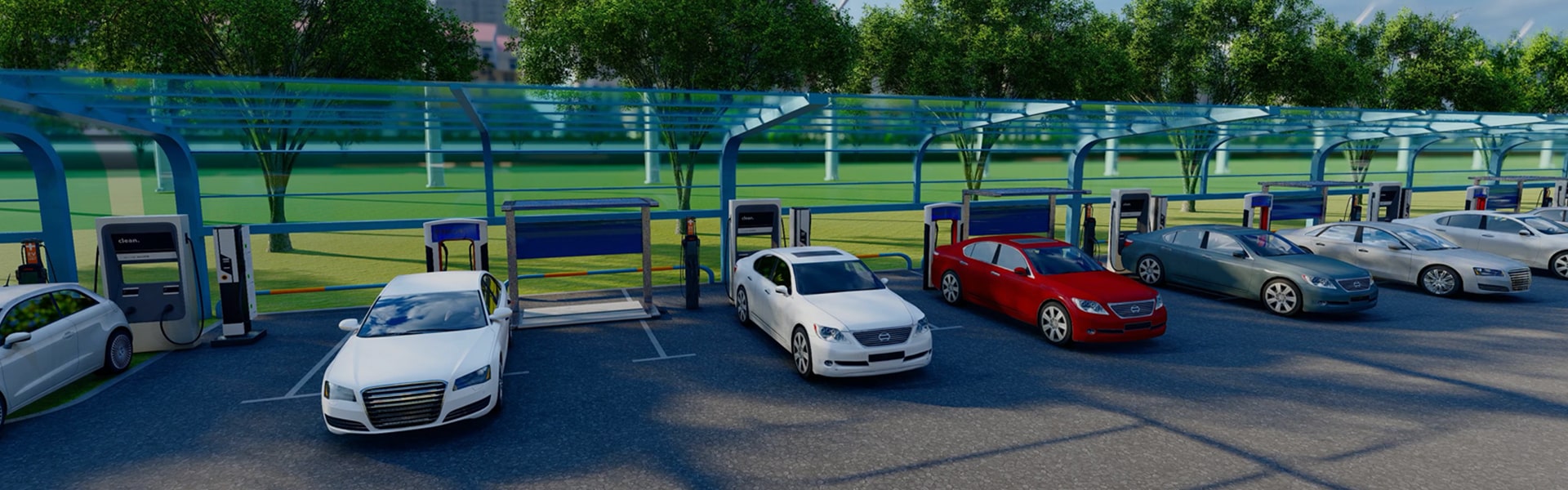
High-capacity energy systems, bidirectional V2G chargers, and off-grid solar-coupled stations.